Acoustic Monitoring with Microphone Arrays: A Comprehensive Guide for Wildlife Research and Conservation
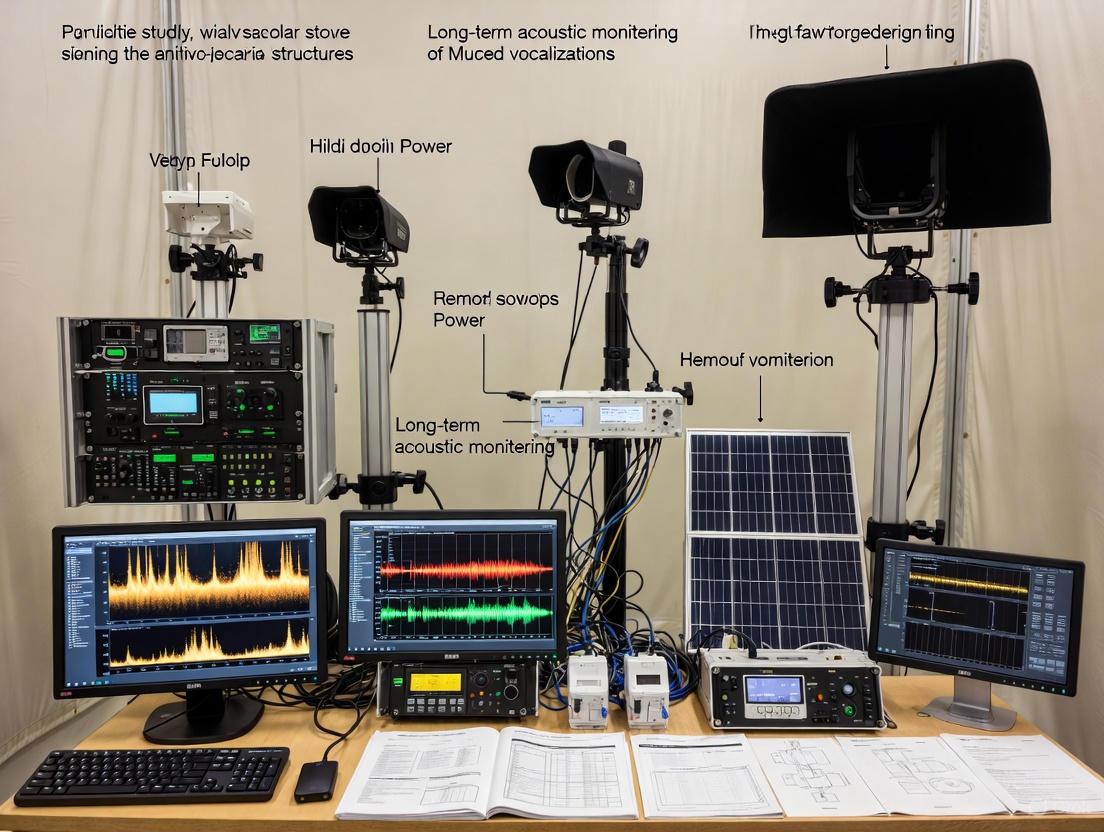
This article provides a comprehensive overview of acoustic monitoring using microphone arrays for wildlife research and conservation.
Acoustic Monitoring with Microphone Arrays: A Comprehensive Guide for Wildlife Research and Conservation
Abstract
This article provides a comprehensive overview of acoustic monitoring using microphone arrays for wildlife research and conservation. It covers the foundational principles of acoustic localization, including time difference of arrival (TDOA) and array design. The content explores diverse methodological applications from tracking individual animal movements to large-scale biodiversity assessments, supported by recent case studies. It addresses key technical challenges in troubleshooting and optimization, such as synchronization and sound detection spaces. Finally, the article offers a comparative analysis of method validation, examining the effectiveness of acoustic monitoring against traditional survey techniques. This guide serves as an essential resource for researchers and conservation professionals implementing bioacoustic technologies.
Principles and Potentials of Acoustic Localization Systems
Defining Acoustic Localization and Multilateration for Wildlife
Acoustic localization is a specialized technique used to spatially locate a vocalizing animal by using an array of time-synchronized microphones [1]. It is a non-intrusive method that enables researchers to study animal movement, behavior, and ecology without direct observation or the need to attach tracking devices to the animal, which can alter natural behavior [2]. This process is fundamentally based on quantifying the time difference of arrival (TDOA), also known as the time delay of arrival, of an animal's sound at each microphone in the array [1].
A key method for achieving acoustic localization is multilateration, often referred to as hyperbolic localization [1]. This technique determines the precise coordinate location of a sound source by calculating its position on multiple hyperbolas. Each hyperbola is generated from the TDOA of a sound at a pair of microphones [1]. The core principle relies on the near-field assumption, which treats sound as arriving at the microphones as a spherical wave. This is typically used when the distance between the microphones is of the same order of magnitude as the distance between the sound source and the microphones [1].
Comparative Analysis of Localization Methods
The practice of acoustic localization encompasses various technical approaches. The table below summarizes the two primary methodological frameworks and another common technique based on received signal strength.
Table 1: Comparison of Acoustic Localization Methods for Wildlife Research
| Method | Core Principle | Typical System Requirements | Primary Applications in Wildlife Research |
|---|---|---|---|
| Multilateration (Hyperbolic Localization) | Calculates animal position by plotting it on hyperbolas generated from the Time Difference of Arrival (TDOA) at multiple microphone pairs [1]. | Network of time-synchronized autonomous recording units (ARUs) [1]. | Assessing individual animal positions or movements; localizing multiple individuals to study interactions; tracking animal movements across small and large scales [1]. |
| Direction of Arrival (DOA) Localization | Estimates the direction from which a sound arrived using a far-field assumption (planar wave) [1]. Multiple DOA estimates are intersected to identify a coordinate location [1]. | A single ARU with multiple, rigidly attached microphones in a specific configuration [1]. | Quantifying sound amplitude or directionality; studying the sonar beam directionality in echolocating bats [1] [2]. |
| Received Signal Strength (RSS) Localization | Estimates location by comparing the strength (amplitude) of a radio transmission detected by multiple receivers [3]. | Network of fixed radio receivers (typically used in Automated Radio Telemetry Systems - ARTS) [3]. | Tracking wildlife movements with high temporal resolution for species that cannot carry heavier GPS tags, using lightweight radio transmitters [3]. |
Detailed Experimental Protocol: TDOA-based Localization with Microphone Arrays
The following workflow is a synthesis of established practices for conducting acoustic localization studies on terrestrial wildlife, such as birds, anurans, and bats [4] [1] [2].
The diagram below illustrates the generalized protocol for an acoustic localization study, from array deployment to data analysis.
Step-by-Step Protocol
Step 1: Define the Research Question and Design the Study Clearly define the ecological or behavioral objective. This determines the scale, geometry, and density of the microphone array [1]. Purposes can include tracking individual movement, studying interactions between multiple individuals, inferring territory boundaries, or quantifying sound directionality [1].
Step 2: Deploy a Time-Synchronized Microphone Array
- Array Configuration: Deploy multiple Autonomous Recording Units (ARUs) in a grid, triangle, or other geometry to ensure overlapping detection ranges. The spacing between microphones or ARUs is a critical parameter that determines the effective localization area and accuracy [1] [2].
- Time Synchronization: This is a non-negotiable requirement. Use ARUs that are precisely time-synchronized, often via GPS timestamps or centralized timing hardware, to ensure accurate TDOA calculations [1] [2]. Even small timing offsets can severely degrade localization precision [2].
Step 3: Record Animal Vocalizations
- Continuously record audio or trigger recordings based on sound detection within the study area [1].
- Recordings generate a long-lasting data set that can be re-analyzed in the future with updated methods [1].
Step 4: Process Recordings to Detect Sounds and Calculate TDOA
- Sound Detection: Automatically or manually scan recordings to detect target animal vocalizations [4] [1].
- Matching Calls: For each vocalization event, identify the same call across the recordings from different ARUs [4].
- Calculate TDOA: For each matched call, compute the precise time difference of its arrival at each unique pair of microphones in the array [4] [1].
Step 5: Estimate Animal Position via Multilateration
- Use a position estimation algorithm that takes the calculated TDOAs as input.
- The algorithm performs hyperbolic localization, solving for the location that best satisfies the set of TDOA constraints, which define hyperbolic curves on which the sound source must lie [1].
- The output is a set of coordinates for the vocalizing animal.
Step 6: Data Analysis and Application Use the resulting location data to address the research question defined in Step 1, such as mapping movements, estimating density, or analyzing habitat use [1].
Advanced Protocol: Grid Search Algorithm for RSS Localization
For wildlife tracking using Automated Radio Telemetry Systems (ARTS) with Received Signal Strength (RSS), a grid search algorithm has been demonstrated to provide significantly more accurate location estimates than traditional multilateration, particularly in arrays with widely spaced receivers [3]. The following protocol details this method.
Workflow for Grid Search Localization
Step-by-Step Methodology
Preparation Phase
- Step 1: Model the RSS vs. Distance Relationship. Before localization, empirically determine the relationship between the strength of a radio transmission (RSS) and the distance between the transmitter and receiver. This is done by placing a transmitter at known distances from a receiver and recording the RSS. Fit these measurements to an exponentially decaying model, such as: S(d) = A - B exp(-C d) where S is the signal strength, d is the distance, and A, B, and C are fitted parameters that define the lower detection limit, maximum signal strength, and signal decay rate, respectively [3].
Execution Phase (Per Transmission Event)
- Step 2: Divide the Study Area into a Grid. Overlay a fine grid across the entire study area where the animal could be located [3].
- Step 3: Calculate a Likelihood Score for Each Grid Cell. For each cell in the grid: a. Calculate the distance from the center of the cell to every receiver that detected the transmission. b. Use the pre-defined RSS model from Step 1 to predict the signal strength that should have been received at each receiver if the transmitter was in that grid cell. c. Compare the predicted signal strengths to the actual RSS measurements using a criterion function, such as a normalized sum of squared differences (e.g., a chi-squared statistic). This score quantifies how well the observed data match the hypothetical transmitter location [3].
- Step 4: Select the Most Probable Location. The grid cell with the lowest value of the criterion function (i.e., the best match between observed and predicted RSS) is identified as the most likely location of the radio-tagged animal [3].
The Scientist's Toolkit: Essential Research Reagents and Materials
Successful implementation of acoustic localization requires specific hardware and software. The following table details key components and their functions.
Table 2: Essential Materials for Acoustic Localization Research
| Item | Function & Application | Key Specifications |
|---|---|---|
| Autonomous Recording Unit (ARU) | A self-contained device with one or several microphones that automatically records sound in the field. The fundamental unit of an acoustic array [1]. | Weatherproofing, battery life, storage capacity, and most critically, precise time-synchronization capability with other ARUs [1]. |
| Microphone Array | A system of one or multiple time-synchronized ARUs. The spatial configuration of the array determines the volume and accuracy of localization [1] [2]. | Configurations (e.g., spherical, planar, linear) are chosen based on the research question. Microphone spacing governs the useful localization volume [5] [2]. |
| MEMS Microphones | Micro-electromechanical systems microphones used as sensing elements in modern arrays. They enable the construction of large, affordable, and scalable arrays [2]. | Broad bandwidth (e.g., 1 Hz – 180 kHz), spherically symmetrical angular sensitivity, and built-in analog-to-digital converter for synchronization [2]. |
| Time-Synchronization Hardware | Ensures all microphones in the array sample audio data with a unified clock. This is critical for accurate TDOA calculation [1] [2]. | Can be achieved via GPS modules, centralized clock distribution, or specialized networking protocols. Synchronization errors must be minimized [2]. |
| Localization Software | Processes recordings, detects sounds, calculates TDOAs, and runs multilateration or grid search algorithms to estimate animal positions [3] [1]. | Capabilities for automated sound detection, TDOA calculation, and the implementation of various localization algorithms (hyperbolic, grid search, etc.) [3] [4]. |
| Radio Transmitter (for RSS) | A lightweight, animal-borne device that emits radio signals. Used in ARTS for tracking species that cannot be observed directly via acoustics [3]. | Extremely low weight (e.g., as little as 60 mg), specific frequency, and pulse rate tailored to the species and study duration [3]. |
Autonomous Recording Units (ARUs) and microphone arrays represent two pivotal technological advancements in the field of bioacoustic monitoring. ARUs are programmable acoustic sensors that record audio data in the field while unattended, enabling the collection of large datasets with minimal impact on subject species' habitat or behavior [6]. Within a broader thesis on acoustic monitoring for wildlife research, these tools are not merely data collection devices but are fundamental to studying animal behavior, population dynamics, and ecosystem health. Microphone arrays, comprising multiple synchronized acoustic sensors, extend these capabilities by allowing researchers to localize sound sources, track individual animals, and separate overlapping vocalizations in complex acoustic environments. This document outlines the application and protocol for leveraging these core components in rigorous scientific research.
The following tables summarize key performance metrics and characteristics of ARUs and microphone arrays as derived from the literature.
Table 1: ARU Performance in Behavioral Event Detection (Case Study on Ardea herodias fannini)
| Metric | In-Person Observers | ARU-Based Detection | Notes |
|---|---|---|---|
| Major Disturbance Detection | Comparable | No considerable difference from in-person observers | Major disturbances involve multiple herons responding vocally [6] |
| Minor Disturbance Detection | Effective | Marginally less successful than in-person observation | Minor disturbances involve a single heron responding; visual cues sometimes aid human observers [6] |
| Primary Data Output | Visual and auditory observations | Audio recordings and derived spectrograms | ARU data is repurposeable for other studies and can be stored for long-term analysis [6] |
| Key Application | Real-time behavioral assessment | Monitoring remote colonies with distinct auditory calls; long-term behavioral studies [6] |
Table 2: Key Characteristics and Applications of Acoustic Monitoring Technologies
| Component | Key Characteristics | Primary Research Applications |
|---|---|---|
| Autonomous Recording Unit (ARU) | Single sensor unit; cost-effective; programmable for extended deployment; minimally invasive [6] | Species presence/absence surveys; habitat occupancy monitoring; behavioral vocalization studies (e.g., courtship, predation responses); long-term ecological monitoring [6] |
| Microphone Array | Multiple, spatially separated, synchronized sensors; enables sound source localization | Pinpointing animal locations; tracking individual movement; studying group communication dynamics; filtering noise and separating overlapping calls |
Experimental Protocols
Protocol for ARU Deployment in Avian Disturbance Monitoring
This protocol is adapted from a case study investigating predatory disturbances in Pacific Great Blue Heron colonies [6].
1. Pre-Deployment Planning:
- Objective Definition: Clearly define the behavioral events of interest (e.g., distress calls during predation attempts, specific courtship songs).
- Site Selection: Identify and select monitoring sites based on the research objective. For colonial species, choose accessible yet non-disruptive locations within or adjacent to the colony [6].
- Unit Configuration: Program the ARUs with a appropriate sampling rate (e.g., 44.1 kHz for most avian vocalizations) and a scheduled recording regime (e.g., 5 minutes every 15 minutes, or continuous during dawn chorus).
2. Field Deployment:
- Calibration: Synchronize the internal clocks of all ARUs to ensure temporal alignment of recordings across units.
- Placement: Securely mount ARUs on stable structures (e.g., trees, tripods). Orient microphones towards the area of interest and consider environmental factors like wind and rain, using weatherproofing housings as necessary.
- Validation: Where feasible, accompany the initial deployment period with in-person observations to ground-truth the acoustic data [6]. Record the GPS coordinates of each deployed unit.
3. Data Collection:
- Duration: Deploy ARUs for the duration required by the study, which could range from several days to entire breeding seasons [6].
- Maintenance: Perform periodic checks to ensure equipment is functioning correctly and that memory storage is sufficient.
4. Data Analysis:
- Manual Review: Review audio files and corresponding spectrograms to identify and classify target vocalizations or disturbance events (e.g., major vs. minor disturbances) [6].
- Automated Processing: For large datasets, employ automated call recognition software or machine learning models to detect and classify vocalizations.
- Data Correlation: Correlate acoustic events with other collected environmental data (e.g., time of day, weather, predator presence).
Protocol for Sound Source Localization Using a Microphone Array
1. Array Design:
- Geometry: Determine the array configuration (e.g., linear, circular, or 2D grid) based on the expected location of sound sources and the desired accuracy area.
- Spacing: Select microphone spacing based on the target frequencies; closer spacing is needed for higher frequencies to avoid spatial aliasing.
- Synchronization: Ensure all microphones in the array are perfectly synchronized, either via wired connections or using GPS-synchronized clocks.
2. Field Deployment and Calibration:
- Placement: Deploy the array in the field, ensuring precise measurement of the geographic coordinates of each microphone.
- Calibration: Emit a sound signal from a known location within the array's capture area to calibrate the system and verify localization accuracy.
3. Data Acquisition & Processing:
- Recording: Record synchronized audio from all microphones.
- Source Localization: Apply signal processing algorithms such as Time Difference of Arrival (TDOA) to calculate the position of a vocalizing animal. The core principle involves calculating the time delays of a sound's arrival at different microphones and using triangulation to estimate the source location.
Workflow and System Visualization
Acoustic Monitoring Research Workflow
The following diagram illustrates the end-to-end workflow for a bioacoustic study, from planning to publication.
Diagram 1: End-to-end bioacoustic research workflow, showing the integration of ARUs and data processing stages.
Microphone Array Localization Principle
This diagram visualizes the core signal processing principle of sound source localization using a microphone array.
Diagram 2: The signal processing chain for sound source localization using a microphone array.
The Scientist's Toolkit: Essential Research Reagents and Materials
Table 3: Key Equipment and Software for Acoustic Monitoring Research
| Item Name | Category | Function / Application |
|---|---|---|
| Autonomous Recording Unit (ARU) | Hardware | A programmable, weatherproof device for unattended, long-term audio data collection in the field [6]. Examples include Swift and Song Meter models. |
| Microphone Array | Hardware | A set of multiple, synchronized microphones used to localize sound sources and track moving animals via triangulation. |
| GPS Receiver | Hardware | Provides precise geographic coordinates for sensor deployment locations, which is critical for data interpretation and array geometry. |
| Weatherproofing Enclosure | Hardware | Protects sensitive acoustic equipment from environmental damage (rain, dust, extreme temperatures), ensuring continuous operation. |
| Acoustic Analysis Software (e.g., Raven Pro, Kaleidoscope) | Software | Used for visualizing spectrograms, manually annotating recordings, and measuring acoustic parameters of detected sounds. |
| Automated Call Recognition Software | Software | Employs template matching or machine learning models to automatically detect and classify target species vocalizations in large audio datasets. |
| Sound Source Localization Library (e.g., MATLAB Toolboxes) | Software | Provides specialized algorithms for processing synchronized array data to compute Time Difference of Arrival (TDOA) and estimate source locations. |
Core Principles of TDOA
Time Difference of Arrival (TDOA) is a passive technique for localizing and tracking emitting objects by using the difference in the time that a signal arrives at multiple, spatially separated receivers [7]. Unlike methods requiring the absolute time of transmission, TDOA uses only the time differences between receptions, making it ideal for studying vocalizing wildlife where the emission time is typically unknown [8].
The fundamental relationship between a TDOA measurement and an animal's location is defined by a hyperbolic equation. For two receivers, the TDOA localizes the sound source to one branch of a hyperbola (in 2-D) or a hyperboloid (in 3-D), with the receivers at the foci [7]. The formula describing this relationship is:
√((xₜ - x₁)² + (yₜ - y₁)² + (zₜ - z₁)²) - √((xₜ - x₂)² + (yₜ - y₂)² + (zₜ - z₂)²) = c(t₁ - t₂)
Where [xₜ, yₜ, zₜ] is the unknown animal location, [x₁, y₁, z₁] and [x₂, y₂, z₂] are the known receiver locations, c is the speed of sound, and t₁ - t₂ is the measured TDOA [7].
Calculating TDOA. Two primary methods are used to calculate the TDOA measurement [7]:
- Time-of-Arrival (TOA) Difference: Each receiver measures the absolute time instant of signal arrival. The TDOA is calculated as the simple difference between these TOAs:
TDOA₁₂ = TOA₂ - TOA₁. This requires the leading edge of the signal to be detectable. - Cross-Correlation: The received signals from two receivers are cross-correlated at a central processing hub. The TDOA is estimated as the time delay that maximizes this cross-correlation function:
TDOA₁₂ = arg max([S₁⋆S₂](t)). This method is often more robust in noisy environments.
Both methods require highly synchronized clocks across all receivers, typically achieved using GPS [7].
From TDOA to Location. A single TDOA measurement is insufficient for precise localization. For 2-D localization, TDOA measurements from at least three spatially separated receivers are required to estimate a unique position. For 3-D tracking, at least four receivers are needed [7]. The accuracy of the estimated position is influenced by the Geometric Dilution of Precision (GDOP), where the spatial arrangement of the receivers relative to the animal can magnify or reduce the impact of measurement errors on the final positional estimate [7].
Diagram 1: Fundamental TDOA localization workflow.
TDOA in Wildlife Acoustic Monitoring
Microphone arrays using TDOA provide a powerful, non-invasive method to study animal vocalizations, monitor movements, and analyze behavior without manipulating the animals or altering their natural behavior [9]. This approach has been successfully applied across diverse taxa, from echolocating bats and singing birds to ultrasonically communicating mice [9] [10].
Key Applications in Wildlife Research:
- Studying Echolocation Beam Dynamics: Dense arrays (e.g., 64 microphones) have revealed previously unseen details of the echolocation beam patterns and active field-of-view adjustments in hunting bats [9].
- Localizing Vocalizing Songbirds: Large, flexible arrays can simultaneously localize several species of songbirds in a radius of 75 meters, enabling studies on communication and population dynamics [9].
- Attributing Vocalizations to Individuals: In laboratory settings, microphone arrays allow researchers to determine which animal in a social group is vocalizing, which is crucial for understanding communication in species like mice [10].
Quantitative Data from Wildlife TDOA Studies
Table 1: Representative TDOA Array Configurations in Bioacoustics Research
| Animal Model | Array Scale & Configuration | Localization Precision | Primary Research Application | Key Finding |
|---|---|---|---|---|
| Pallid Bats [9] | Dense array, 64 microphones | High resolution (previously unseen) | Analysis of echolocation beam during hunting | Revealed detailed dynamics of the sonar beam pattern. |
| Songbirds [9] | Large array, distributed over habitat | Effective radius of 75 m | Simultaneous multi-species localization & tracking | Enables community-level studies and habitat use analysis. |
| Freely-moving Mice [10] | High channel count laboratory array | Accurately and precisely localizes ultrasonic signals | Attribution of social ultrasonic vocalizations to individuals | Allows study of vocal repertoire within complex social contexts. |
Experimental Protocols for TDOA-Based Wildlife Tracking
This section details a generalized protocol for setting up a microphone array and conducting a TDOA-based wildlife tracking experiment.
Protocol A: Deploying a Flexible Microphone Array for Field Research
Objective: To localize and track vocalizing animals (e.g., birds or bats) in their natural habitat over a large area.
Materials:
- Microphone Nodes: Single-board computers (SBCs) with custom PCBs for connecting microphones [9].
- MEMS Microphones: Knowles SPH0641LUH-131 or similar, with a broad frequency response (e.g., 1 Hz – 180 kHz) suitable for both audible and ultrasonic frequencies [9].
- Synchronization & Networking: Base station computer (laptop), gigabit Ethernet switches, and Cat5e/6 cables for a wired network to ensure synchronization [9].
- Power Supply: Portable power solutions (e.g., batteries, solar panels) suitable for remote deployment.
Methodology:
- Array Design and Site Survey: Define the study area and determine the optimal array geometry. For large-scale coverage, a distributed architecture with several nodes placed tens of meters apart is effective [9].
- Hardware Setup: a. Deploy microphone nodes at pre-determined GPS-surveyed positions. b. Connect microphones to nodes. Use weatherproof enclosures for all hardware. c. Establish a wired network connecting all nodes to the central base station. d. Connect the system to a stable power supply.
- System Synchronization and Calibration: Power on the base station and all nodes. The system uses the network to synchronize the clocks on all recording devices, a critical step for accurate TDOA calculation [9].
- Data Acquisition: Start recording from the base station software. Record continuous audio or triggered segments based on vocalization activity.
- Data Analysis (Post-Processing): a. Vocalization Detection: Automatically or manually identify vocalizations of interest in the audio recordings. b. TDOA Estimation: For each vocalization, calculate the TDOA for all relevant receiver pairs using cross-correlation [7]. c. Source Localization: Input the TDOA measurements and receiver coordinates into a localization algorithm (e.g., spherical intersection, nonlinear least squares) to estimate the animal's position [7] [11].
Diagram 2: TDOA field experiment workflow.
Protocol B: High-Resolution Laboratory Localization for Mouse Ultrasonic Vocalizations (USVs)
Objective: To accurately attribute ultrasonic vocalizations to individual, freely interacting mice in a controlled laboratory setting.
Materials:
- Microphone Array: A high-channel count array (e.g., >16 channels) distributed in the laboratory arena to ensure coverage from multiple angles [10].
- Synchronized DAQ: A multi-channel data acquisition system capable of simultaneous sampling on all channels to eliminate timing offsets [10].
- Video Recording System: A high-speed camera synchronized with the audio acquisition for behavioral correlation [10].
Methodology:
- Arena and Array Setup: Position the microphone array around or above the experimental arena. The microphone positions must be precisely measured in 3D space.
- Synchronization: Synchronize the audio DAQ and the video camera to a common clock signal.
- Data Collection: Simultaneously record audio from all microphones and video from the camera during a behavioral experiment (e.g., social interaction).
- Signal Processing Pipeline: a. Detection: Extract USVs from the continuous audio data. A higher number of microphones improves the signal-to-noise ratio for detection [10]. b. Localization: For each detected USV, compute TDOAs and use a localization algorithm to estimate a 3D coordinate. c. Assignment: Assign the localized USV to a specific mouse by comparing the sound source location with the tracked position of the animals (from video) at that moment [10].
The Scientist's Toolkit: Research Reagent Solutions
Table 2: Essential Materials for TDOA-Based Acoustic Research
| Item | Function/Application | Technical Specifications & Considerations |
|---|---|---|
| MEMS Microphones [9] | Sensor to convert sound waves into digital signals. | Broad bandwidth (1 Hz - 180 kHz), spherical angular sensitivity, low cost. Essential for dense arrays. |
| Synchronized Recording System [9] | Hardware for simultaneous data acquisition from all microphones. | Multi-channel DAQ or networked SBCs. Precise synchronization is critical to minimize TDOA error. |
| Localization Algorithm [7] [11] | Software to solve hyperbolic equations and compute animal position from TDOAs. | Examples: Spherical Intersection, Two-Step Weighted Least Squares (TSWLS), or hybrid search algorithms like hybrid-FA. |
| GPS Receivers & Survey Equipment | To determine the precise 3D coordinates of each microphone in the array. | Required for accurate multilateration. Error in receiver position directly impacts localization error. |
Advanced Localization Algorithms and Performance
Solving the nonlinear TDOA equations to obtain an accurate animal location is a critical step. Several algorithms have been developed, each with trade-offs between computational complexity, accuracy, and robustness.
Table 3: Comparison of TDOA Localization Algorithms
| Algorithm | Principle | Advantages | Disadvantages | Reported Performance |
|---|---|---|---|---|
| Two-Step WLS (TSWLS) [11] | Converts nonlinear equations to pseudolinear equations solved in two weighted least-squares steps. | Closed-form, no initial guess needed, computationally efficient. | Performance degrades significantly at low signal-to-noise ratios (SNR). | Higher RMSE compared to iterative/hybrid methods in noisy conditions [11]. |
| Newton-Raphson (NR) Iteration [11] | An iterative method that linearizes the equations around an initial estimate. | High accuracy if initial guess is good. | Requires a close initial position estimate; can diverge with a poor guess; high computational load. | Accuracy is highly dependent on the initial guess quality. |
| Hybrid Firefly Algorithm (Hybrid-FA) [11] | A nature-inspired search algorithm combined with a WLS result to restrict the search region. | Robust, does not require an initial guess, achieves high accuracy. | Computationally more intensive than closed-form methods. | Lower Root-Mean-Square Error (RMSE) and mean distance error compared to NR, TSWLS, and GA [11]. |
The concepts of near-field and far-field are fundamental to the design and data interpretation of acoustic monitoring systems used in wildlife research. The near-field is the region close to a sound source (or microphone) where the sound pressure and particle velocity are not in phase. This region is dominated by complex, non-propagating fields that decay rapidly with distance. The far-field is the region where the sound wave has stabilized into a propagating plane wave, with sound pressure and particle velocity in phase, and where sound levels decrease predictably with distance according to the inverse-square law [12] [13].
There is no sharply defined boundary between these regions; the transition is gradual. For a microphone array monitoring wildlife, correctly identifying the operational field region is critical, as it determines the appropriate signal processing algorithms, the accuracy of sound source localization, and the validity of biological inferences drawn from the acoustic data [14] [15].
Theoretical Foundations and Quantitative Boundaries
The distinction between near-field and far-field depends on the wavelength of the sound and the geometry of the acoustic source or receiver array. Different criteria establish the boundaries between these regions.
General Definitions and Formulae
The following criteria are used to define the field regions for an acoustic source or receiver:
- Reactive Near-Field: This region is closest to the source. For a simple source, it typically extends to a distance of approximately λ/2π, where λ is the wavelength of the sound. Within this zone, the field is dominated by non-propagating, reactive components that store energy [12].
- Radiative Near-Field (Fresnel Region): Beyond the reactive near-field lies the radiating near-field. In this region, the energy propagates, but the wavefront is still curved. The field distribution is dependent on the distance from the source [12].
- Far-Field (Fraunhofer Region): This is the region where the wavefront is essentially planar, and the angular field distribution is independent of the distance from the source. The sound pressure level decays at a rate of 6 dB per doubling of distance (inverse-square law) [12].
For a large aperture or array of microphones, the far-field is commonly defined to begin at the Fraunhofer distance:
d_F = 2D² / λ
where D is the largest dimension of the aperture (e.g., the length of the microphone array) and λ is the wavelength [12] [15] [16]. This criterion ensures that the maximum phase error between a spherical wave from the source and an ideal plane wave is acceptably small (less than π/8 radians or λ/16) [15].
Data Tables for Field Region Boundaries
The tables below summarize the key definitions and provide example calculations for typical frequencies in wildlife acoustic monitoring.
Table 1: Summary of Acoustic Field Regions
| Region | Alternative Name | Key Characteristics | Typical Boundary |
|---|---|---|---|
| Reactive Near-Field | - | Non-propagating fields dominate; complex interference; rapid decay of sound level. | < λ / 2π |
| Radiative Near-Field | Fresnel Region | Propagating wave with curved wavefront; field pattern depends on distance. | ~λ to 2D²/λ |
| Far-Field | Fraunhofer Region | Planar wavefront; stable radiation pattern; follows inverse-square law. | > 2D² / λ |
Table 2: Example Far-Field Distances for a 1-meter Microphone Array Calculated using d_F = 2D² / λ. Assumes sound speed in air of 343 m/s.
| Animal Sound | Representative Frequency | Wavelength (λ) | Far-Field Distance (d_F) |
|---|---|---|---|
| Wolf howl | 1 kHz | 0.34 m | 5.9 m |
| Bird song (typical) | 5 kHz | 0.069 m | 29.1 m |
| Bat echolocation | 50 kHz | 0.0069 m | 290.1 m |
Implications for Acoustic Microphone Array Design and Data Analysis
The assumptions made about the field region have direct consequences for the hardware setup and the software processing pipelines in bioacoustics research.
Signal Modeling and Beamforming
In the far-field, the sound waves arriving at different microphones in an array are approximated as plane waves. This greatly simplifies the mathematics for techniques like beamforming (directional listening) and sound source localization. The time delay of arrival between two microphones separated by a distance d for a wave from direction θ is given by Δt = (d cos θ) / c [15].
In the near-field, the spherical nature of the wavefront must be accounted for. The simplified plane-wave model fails, leading to significant errors in localization and beamforming if not corrected. The differential path length depends on the precise distances from the source to each microphone, requiring more complex, range-dependent algorithms [15].
Impact on Ecological Inferences
Misapplying far-field assumptions to near-field scenarios can systematically bias research findings. A study leveraging a massive acoustic monitoring network for birds, similar to the one described in the search results, must consider these effects [17]. For instance:
- Localization Accuracy: Incorrectly assuming far-field conditions for a close bird call can lead to large errors in estimating the animal's position, corrupting data on territory size or habitat use.
- Abundance Estimates: The effective detection area of a microphone array is different in the near-field and far-field. Using a single, far-field-derived estimate can lead to under- or over-counting individuals.
- Source Characterization: The spectrum and amplitude of a sound recorded in the near-field can be distorted compared to the far-field. This could affect species identification algorithms or studies of vocal behavior.
Experimental Protocols for Field Region Characterization
Determining the operational field region of a deployed microphone array is a critical step in ensuring data quality. The following protocol provides a methodology for this characterization.
Protocol: Empirical Validation of Far-Field Boundary
Objective: To verify the theoretical far-field distance (d_F) for a specific microphone array and confirm that the standard far-field processing algorithms are valid for sounds originating beyond this boundary.
Materials:
- Microphone array under test.
- A calibrated, broadband sound source (e.g., a speaker emitting a linear frequency modulated chirp).
- Tape measure or laser rangefinder.
- Data acquisition system capable of recording synchronous audio from all array channels.
Methodology:
- Theoretical Calculation: Calculate the theoretical far-field distance, dF = 2D² / λmin, where D is the array's largest dimension and λ_min is the wavelength corresponding to the highest frequency of interest in your study.
- Setup: Place the sound source on a tripod at a distance greater than 3d_F from the array, ensuring it is in the clear far-field. Align the source to be on-axis with the array.
- Reference Measurement: Emit the calibration signal and record the response of the array. This serves as the far-field reference wavefront.
- Near-Field Measurements: Move the sound source closer to the array in increments (e.g., 0.5dF, 0.25dF, 0.1d_F), repeating the recording at each position.
- Data Analysis:
- For each source position, calculate the wavefront curvature across the array.
- Measure the beamforming accuracy by attempting to localize the source using a standard far-field beamforming algorithm.
- Quantify the error in localization and beam shape compared to the far-field reference measurement.
- Interpretation: The empirical far-field boundary is the distance beyond which the errors (in wavefront curvature, localization, etc.) fall below an acceptable threshold for your specific research application (e.g., 1° in localization error).
The Scientist's Toolkit: Essential Research Reagents and Materials
Table 3: Key Materials for Acoustic Array Research in Wildlife Monitoring
| Item | Function/Benefit | Example Application |
|---|---|---|
| Multi-channel Synchronous Recorder | Ensures precise time alignment of signals across all microphones, which is fundamental for accurate beamforming and localization. | Recording bird choruses to map the positions of multiple individuals [17]. |
| Calibrated Sound Source | Provides a known acoustic signal for system calibration, array geometry verification, and empirical testing of field boundaries. | Validating the far-field distance of a new array design (as in the protocol above). |
| Windshielding & Weatherproofing | Protects microphones from wind noise and environmental damage, increasing the signal-to-noise ratio and system longevity for long-term deployments. | Deploying microphones in exposed field conditions for continuous forest monitoring [17]. |
| Machine Learning Analysis Tools (e.g., BirdNET) | Automates the identification of species from audio recordings, enabling the processing of large-scale datasets that are infeasible to analyze manually. | Analyzing 700,000 hours of recordings to track 10 bird species across a forest landscape [17]. |
Workflow and Decision Pathways
The following diagram illustrates the logical process a researcher should follow to account for near-field and far-field effects in their acoustic monitoring study.
Diagram 1: Decision workflow for acoustic monitoring system design and analysis. The key step is comparing the expected distance to target sound sources against the calculated far-field boundary to determine the correct signal processing methodology [12] [15].
Acoustic monitoring technology is fundamentally transforming ecological research by enabling scientists to capture rich, continuous data on wildlife behavior and ecosystem dynamics non-invasively. Deploying microphone arrays in natural habitats provides researchers with a powerful tool to monitor species presence, abundance, and interactions across temporal and spatial scales that were previously logistically prohibitive. This approach is particularly valuable in remote and sensitive environments where human presence could disturb natural behaviors or where continuous monitoring is essential for detecting rare events. The application of acoustic sensor networks represents a paradigm shift from intermittent manual observations to automated, data-driven ecological assessment, supporting critical conservation decisions and advancing our understanding of complex ecological systems.
Ecological Purposes and Applications
Acoustic monitoring serves eight distinct yet interconnected ecological purposes, each addressing specific research questions and conservation challenges.
Table 1: Eight Ecological Purposes of Acoustic Monitoring in Wildlife Research
| Purpose Number | Ecological Purpose | Key Application Examples | Primary Data Collected |
|---|---|---|---|
| 1 | Wildlife Presence and Absence Monitoring | Species inventories, occupancy modeling, distribution mapping | Vocalization rates, detection histories |
| 2 | Behavioral Studies | Daily activity patterns, foraging behavior, social interactions | Call types, temporal patterns, sequence analysis |
| 3 | Population Estimation and Tracking | Density estimation, population trends, demographic studies | Call counts, individual identification |
| 4 | Ecosystem Health Assessment | Biodiversity indices, community composition, disturbance impacts | Soundscape metrics, acoustic diversity |
| 5 | Anti-Poaching and Security | Gunshot detection, illegal activity monitoring, protected area surveillance | Anthropogenic sounds, disturbance events |
| 6 | Habitat Use and Selection | Resource selection, habitat preference, spatial ecology | Vocalization locations, habitat correlations |
| 7 | Interspecies Interactions | Predator-prey dynamics, competition, symbiotic relationships | Co-occurrence patterns, behavioral responses |
| 8 | Climate Change Impact Assessment | Phenological shifts, range changes, ecosystem responses | Timing of vocalizations, species composition changes |
Wildlife Presence and Absence Monitoring
Determining species presence represents the most fundamental application of acoustic monitoring in ecological research. Microphone arrays enable researchers to establish comprehensive species inventories across vast geographical areas with minimal disturbance to wildlife. This approach is particularly valuable for detecting rare, elusive, or nocturnal species that are difficult to observe through traditional survey methods. In Arctic environments, for instance, acoustic monitoring has proven effective for tracking avian populations, with researchers specifically noting the value in monitoring species like the Arctic Tern (Sterna paradisaea), whose populations are decreasing, and the Barnacle Goose (Branta leucopsis), whose populations are increasing [18]. The deployment of Sensor-equipped Habitat Recorders for Outdoor Omnidirectional Monitoring (SoundSHROOMs) in Svalbard demonstrated how multi-channel acoustic recording devices can capture a wealth of bioacoustic information from vocalizing animals across multiple locations simultaneously [18].
Behavioral Studies
Acoustic monitoring provides unprecedented insights into animal behavior by capturing vocalizations and associated activities across full diurnal cycles and throughout entire seasons. Researchers can document temporal patterns in vocal activity, correlate acoustic behavior with environmental conditions, and decode complex communication systems. For example, acoustic biologgers positioned near animals' throats have been successfully used to quantify and classify food intake behaviors, assess rumination patterns in ungulates, and document drinking behaviors [19]. These behavioral signatures serve as important indicators of animal welfare, reproductive status, and physiological state. The technology enables researchers to construct detailed time budgets of studied species and understand how behaviors shift in response to environmental pressures, human disturbances, or seasonal changes.
Population Estimation and Tracking
Accurately estimating population parameters is essential for effective wildlife management and conservation planning. Acoustic monitoring supports population assessment through various methodologies, including call count indices, spatially explicit capture-recapture models using vocalizations, and density estimation from localized sounds. Advanced microphone array configurations enable researchers to triangulate vocalizing individuals, distinguishing separate animals and thus providing more accurate population counts than single-point recording systems. This approach is particularly valuable for monitoring colonial species, such as seabirds and bats, where visual counts are challenging and potentially disruptive. The integration of machine learning algorithms, such as BirdNet, has further enhanced researchers' ability to analyze vast acoustic datasets for population monitoring across extensive spatial and temporal scales [18].
Ecosystem Health Assessment
Bioacoustic monitoring provides holistic metrics for assessing ecosystem condition and integrity through soundscape analysis. Rather than focusing solely on individual species, researchers examine the entire acoustic environment—comprising biophony (biological sounds), geophony (environmental sounds), and anthrophony (human-generated sounds)—to evaluate ecological community structure and function. Key acoustic indices, such as the Acoustic Complexity Index, Bioacoustic Index, and Normalized Difference Soundscape Index, serve as proxies for biodiversity and ecosystem health. In Arctic ecosystems, researchers are employing these soundscape approaches to track the effects of climate change, with acoustic datasets providing "comprehensive insights into ecosystem structure, function, and health across spatial and temporal scales" [18]. These methods are particularly valuable for detecting gradual ecosystem changes that might not be apparent through periodic manual surveys.
Anti-Poaching and Security
Acoustic surveillance systems have emerged as critical tools for wildlife protection, particularly in threatened ecosystems where poaching pressure is high. These systems detect sounds associated with illegal activities—such as gunshots, vehicle movements, and chainsaw operations—enabling rapid response by enforcement authorities. The technology is being deployed in protected areas across the world, with conservationists using acoustic sensors "to detect illegal poaching activities" in vulnerable regions [20]. These systems can be integrated with other monitoring technologies, including camera traps and ranger patrols, to create comprehensive anti-poaching networks. Advanced systems even employ gunshot detection algorithms that can classify firearm types and triangulate the location of shooting events, providing critical real-time intelligence for intercepting poachers before they can remove wildlife from protected areas.
Habitat Use and Selection
Understanding how animals utilize their environment is fundamental to effective habitat management and conservation planning. Acoustic monitoring helps researchers identify critical habitats, document seasonal movements, and assess habitat preferences by correlating vocalization locations with environmental variables. Animal-borne acoustic sensors are particularly valuable for documenting habitat use patterns, as they move with the study organism and capture both the animal's vocalizations and the environmental context [19]. This approach reveals how species respond to habitat features at multiple spatial scales, from landscape-level selection to microhabitat preferences. The technology is especially useful for studying canopy-dwelling species, burrowing animals, and other taxa whose habitat use is difficult to observe directly.
Interspecies Interactions
Acoustic monitoring provides a window into complex ecological relationships between species by documenting co-occurrence patterns, behavioral responses to heterospecific vocalizations, and predation events. Researchers can identify acoustic niches—how species partition the soundscape to avoid interference—and document how species adjust their vocal behavior in response to competitors, predators, or mutualists. For example, some bird species alter their alarm calls when predators are detected, providing valuable information to other species in the community. The technology also enables researchers to study predator-prey dynamics by capturing sounds of pursuit, capture, and consumption. These interspecies acoustic relationships provide insights into community ecology that would be difficult to obtain through other observation methods.
Climate Change Impact Assessment
Acoustic monitoring serves as an important tool for documenting ecological responses to climate change, including phenological shifts, range modifications, and alterations in community composition. In Arctic environments, where temperature increases are occurring at "more than twice the global average rate," acoustic methods are being used to track how species are responding to rapid environmental change [18]. Researchers can detect northward range expansions of southern species, changes in the timing of vocalizations associated with breeding activities, and alterations in acoustic community structure. Long-term acoustic monitoring programs establish baseline soundscapes against which future changes can be measured, providing valuable data for understanding climate change impacts on ecosystem structure and function.
Experimental Protocols and Methodologies
Microphone Array Deployment Protocol
The deployment of microphone arrays requires careful planning and execution to ensure high-quality data collection. The following protocol outlines the standardized methodology for array deployment in ecological research:
Pre-deployment Planning Phase
- Site Selection: Choose monitoring locations based on research objectives, ensuring representation of key habitats and adequate spatial coverage. Consider accessibility for maintenance and potential sources of acoustic interference.
- Array Configuration: Select appropriate array geometry based on target species and research questions. Circular arrays with 4-7 microphones provide optimal omnidirectional coverage [21]. Determine inter-microphone spacing based on target frequencies, with closer spacing for higher frequencies.
- Equipment Testing: Conduct comprehensive pre-deployment functionality tests of all system components, including microphones, recorders, power supplies, and storage media.
Deployment Execution Phase
- Field Installation: Securely mount microphones at standardized heights (typically 1-1.5m above ground for terrestrial systems). Ensure consistent orientation and proper weatherproofing using appropriate housings and windshields.
- Synchronization: Implement precise time synchronization across all recording units using GPS timestamps, network time protocols, or starter pistols as acoustic references.
- Calibration: Document system calibration using acoustic calibrators or reference signals. Record metadata including GPS coordinates, microphone heights, and environmental conditions.
Quality Assurance Phase
- Initial Verification: Conduct brief test recordings to verify system functionality and check for interference, wind noise, or equipment malfunctions.
- Documentation: Photograph array setup and complete standardized deployment forms with all relevant technical and environmental parameters.
- Security Measures: Implement anti-theft protections and clearly label equipment with research organization contact information.
SoundSHROOM Deployment Protocol
The Sensor-equipped Habitat Recorder for Outdoor Omnidirectional Monitoring (SoundSHROOM) represents an advanced multi-channel acoustic monitoring system specifically designed for ecological research. The deployment protocol includes:
System Configuration
- The standard SoundSHROOM configuration incorporates ten spatially separated microphones: eight MEMS-type (VM3011) microphones and two omnidirectional analog electret microphones (AOM-5024P-HD-MB-R) [18].
- MEMS microphones are specifically selected for their durability, being "dust-resistant, shockproof, and weather-tight," making them ideal for long-term outdoor applications [18].
- The system samples at 32 kHz with 16-bit resolution across all channels, saving data directly to uncompressed 10-channel WAV files [18].
Array Geometry Implementation
- Position seven MEMS microphones on the same plane for optimal azimuth resolution, with the eighth microphone and electrets offset to provide elevation resolution [18].
- Maintain microphone spacing considerations to avoid phase matching ambiguities while ensuring phase differences can be resolved across microphones.
- Implement the specific coordinates for microphone placement as detailed in Table 1 of the research, with precise x, y, z relative locations to the device center [18].
Field Deployment Procedure
- Deploy units in predetermined locations based on research design, ensuring stable mounting and protection from environmental damage.
- Verify synchronous recording across all ten channels through preliminary data inspection.
- Document deployment conditions thoroughly, including habitat characteristics, weather conditions, and potential noise sources.
Data Collection and Management Protocol
Effective data management is crucial for large-scale acoustic monitoring studies. The following protocol ensures systematic data handling:
Table 2: Acoustic Data Collection Parameters for Ecological Studies
| Parameter | Recommended Setting | Ecological Application | Technical Considerations |
|---|---|---|---|
| Sampling Rate | 32-48 kHz | Full-spectrum recording for most terrestrial species | Higher rates for ultrasonic species (bats, rodents) |
| Bit Depth | 16-24 bit | Dynamic range for varying amplitude sounds | 24-bit for environments with high dynamic range |
| File Format | WAV (uncompressed) | Archival quality and analysis compatibility | Avoid lossy compression to preserve signal integrity |
| Recording Schedule | Continuous or duty cycling | Behavior studies vs. presence/absence | Power constraints vs. temporal coverage trade-offs |
| Duration | Variable based on goal | Long-term monitoring vs. targeted studies | Storage capacity and processing capabilities |
Data Collection Standards
- Maintain consistent sampling parameters (sample rate, bit depth, gain settings) across all deployments within a study.
- Implement appropriate recording schedules (continuous, periodic, or triggered) based on research objectives and power constraints.
- Record comprehensive metadata including temporal information, location data, equipment specifications, and environmental conditions.
Data Management Workflow
- Establish systematic file naming conventions incorporating location, date, and time information.
- Implement regular data retrieval schedules with verification procedures to ensure data integrity.
- Create redundant backup systems with geographically separate storage locations.
- Maintain detailed data logbooks documenting any equipment issues, unusual events, or modifications to standard protocols.
Visualization of Acoustic Monitoring Workflows
Acoustic Data Processing Pipeline
Figure 1: Acoustic Data Processing Workflow
Adaptive Acoustic Monitoring System
Figure 2: Adaptive Acoustic Monitoring Logic
Research Reagent Solutions and Equipment
Table 3: Essential Research Equipment for Acoustic Wildlife Monitoring
| Equipment Category | Specific Models/Examples | Key Specifications | Ecological Application |
|---|---|---|---|
| Microphone Arrays | SoundSHROOM, AudioMoth, MicroMoth | 10-channel synchronized audio, 32 kHz sampling, 16-bit depth [18] | Multi-source localization, beamforming applications |
| MEMs Microphones | VM3011 | SNR: 64 dBA, Sensitivity: -26 dBFS, Weather-resistant [18] | Long-term outdoor deployment in harsh conditions |
| Electret Microphones | AOM-5024P-HD-MB-R | SNR: 80 dB, Frequency response up to 15 kHz [18] | High-fidelity reference recordings |
| Processing Units | ARM Cortex-M33 (STM32U575RIT6) | Low-power processing for embedded applications [18] | Field-based signal processing, adaptive sampling |
| Analog-to-Digital Converters | ADAU1979 | 24-bit resolution, configurable digital gain [18] | High-resolution signal acquisition |
| PDM-to-TDM Converters | ADAU7118 | 8-channel PDM to TDM conversion [18] | Multi-microphone synchronization |
Acoustic Sensor Specifications
The selection of appropriate acoustic sensors is critical for research success. The technical specifications of commonly used sensors include:
MEMs Microphones (VM3011)
- Signal-to-Noise Ratio: 64 dBA (94 dB SPL at 1 kHz signal, 20 Hz-20 kHz, A-weighted Noise) [18]
- Sensitivity: -26 dBFS (1 kHz, 94 dB SPL) [18]
- Environmental Resistance: Dust-resistant, shockproof, and weather-tight construction [18]
- Applications: Ideal for long-term outdoor deployments where environmental robustness is required
Electret Microphones (AOM-5024P-HD-MB-R)
- Signal-to-Noise Ratio: 80 dB [18]
- Frequency Response: Relatively uniform response up to 15 kHz with rated sensitivity up to 20kHz [18]
- Applications: Serve as sound quality reference for digital MEMS microphone channels [18]
Array Geometry Considerations
Microphone array geometry significantly impacts performance for localization and beamforming applications:
Circular Arrays
- Configuration: 4-7 microphones with recommended radius of 42.5 mm [21]
- Advantages: Omnidirectional coverage, improved sound source location, and rejection of ambient noise [21]
- Applications: General ecological monitoring, soundscape analysis
Linear Arrays
- Configuration: 2-4 microphones with spacing of 40 mm [21]
- Advantages: Simplified geometry, effective for directional monitoring
- Applications: Transect studies, directional source monitoring
Advanced 3D Arrays (SoundSHROOM)
- Configuration: 10 microphones strategically separated across all three axes [18]
- Advantages: Maximum flexibility for beamforming across both azimuth and elevation [18]
- Applications: Complex acoustic environments, precise source localization
Advanced Analytical Approaches
Adaptive Acoustic Monitoring Algorithms
Recent advances in adaptive acoustic monitoring employ machine learning to address power and storage constraints in long-term deployments:
Variational Autoencoder Framework
- Implements unsupervised learning to project audio features into a low-dimensional space [19]
- Enables identification of novel or rare sounds while reducing redundant storage [19]
- Achieves retention rates of 80-85% for rare events while reducing frequent sounds to 3-10% retention [19]
Adaptive Clustering
- Applies clustering algorithms in the compressed feature space to identify events of interest [19]
- Dynamically learns what constitutes an "event of interest" worthy of storage without pre-training [19]
- Enables the system to identify unusual or unexpected sounds for later evaluation [19]
Source Localization Techniques
Euclidean Distance Geometry
- Utilizes Euclidean Distance Matrices (EDM) to determine microphone array positioning [22]
- Enables precise localization of acoustic sources through mathematical relationships between point positions in Euclidean space [22]
- Critical for accurate sound source reconstruction in experimental environments [22]
Beamforming Applications
- Implements algorithms such as CLEAN-SC (Clean based on Source Coherence) for sound source localization [18]
- Enables distinction of multiple sound sources and prediction of their locations [18]
- Particularly valuable in complex acoustic environments with multiple simultaneous vocalizers
Implementation Considerations
Power Management Strategies
Power constraints represent a significant challenge for long-term acoustic monitoring deployments, particularly in remote locations:
Battery Capacity Considerations
- Current animal-borne sensors with power capacities of ~4000-6000 mAh typically last less than a month [19]
- Multi-month to year-long deployments require sophisticated power management strategies [19]
- Adaptive sampling approaches significantly reduce power consumption by minimizing redundant recording [19]
Optimization Approaches
- Implement duty cycling to balance monitoring coverage with power conservation
- Utilize solar charging systems where feasible for permanent installations
- Employ wake-on-sound triggers to activate recording only when acoustic events occur
- Optimize processing algorithms for energy-efficient execution on low-power hardware
Environmental Adaptation
Deploying acoustic monitoring systems in varied ecosystems requires specific adaptations:
Arctic and Cold Environments
- Implement specialized weatherproofing for extreme temperature ranges
- Utilize mechanical designs that reduce wind noise while maintaining environmental robustness [18]
- Address potential battery performance degradation in low-temperature conditions
Tropical and High-Rainfall Regions
- Enhance moisture protection and corrosion resistance
- Implement anti-fungal treatments for electronic components
- Address potential acoustic signal attenuation in dense vegetation
Remote and Inaccessible Locations
- Design systems for maximum reliability and minimal maintenance requirements
- Implement redundant systems and remote monitoring capabilities
- Plan for extended deployment durations between site visits
The continuous advancement of acoustic monitoring technologies, coupled with sophisticated analytical approaches, is revolutionizing wildlife research across these eight ecological purposes. As these methodologies become more accessible and refined, they promise to deepen our understanding of ecological patterns and processes while supporting critical conservation efforts worldwide.
Microphone arrays have revolutionized wildlife research by providing a non-intrusive method to study vocalizing animals, track their movements, and analyze their behavior over large spatial and temporal scales [9] [23]. The evolution of this technology from simple two-microphone setups to extensive, heterogeneous arrays has transformed our ability to observe animals in their natural habitats without manipulation or disturbance [2]. This progression has been driven by parallel advances in acoustic technology, digital signal processing, and computational power, enabling researchers to address fundamental questions in ecology, behavior, and conservation [23] [24]. This article traces the historical development of microphone array technology within bioacoustics, detailing key innovations and providing practical protocols for modern implementation.
The Historical Trajectory of Microphone Array Technology
Early Foundations: Basic Arrays and Initial Applications
The development of microphone arrays began with fundamentally simple configurations aimed at basic sound source localization.
- Pioneering Designs: Early bioacoustics research utilized elementary arrays, often consisting of only two microphones, to determine the approach angles of bats in studies on moth hearing [2]. These setups established the foundational principle of using time difference of arrival (TDoA) for sound source localization.
- Transition to 3D Localization: The adoption of T-shaped arrays with three or four microphones marked a significant advancement, enabling 3D localization of bats and facilitating the first detailed studies of sonar beam directionality [2].
- Inherent Limitations: These early, sparse arrays were constrained by a small spatial volume of coverage and limited accuracy. They were sufficient for controlled laboratory settings or behaviors like trawling in bats but inadequate for analyzing free-flying animals over longer distances [9] [2].
The Shift to Medium-Scale and Specialized Arrays
Growing research demands spurred the development of more sophisticated array architectures with increased channel counts.
- Modular Sub-Array Designs: A pivotal concept was introduced with array systems consisting of two sub-arrays, each containing 8 microphones [2]. This configuration allowed tracking of flight paths over longer distances with improved accuracy, enabling critical discoveries such as the correlation between bat source levels and their wingbeat period [2].
- Planar Arrays: Denser, planar formations (e.g., 4x4 grids with 16 microphones) provided a larger effective aperture for a single unit. These were particularly useful for analyzing beam dynamics during hunting and other controlled behaviors but remained limited by a relatively small field of view [2].
- Expanding Applications: During this period, microphone arrays were increasingly deployed in diverse ecological studies, from surveying bird abundance and richness to understanding the calling patterns of African elephants, demonstrating the technology's value as a non-invasive observational tool [23] [10].
The Modern Era: Scalable, High-Channel-Count Systems
Recent technological breakthroughs have addressed the two primary constraints that historically limited array scalability: the high cost of specialized microphones and the synchronization challenges of multi-channel data acquisition [9] [2].
- Cost Reduction via MEMS Microphones: The adoption of Micro-Electromechanical Systems (MEMS) microphones, such as the Knowles SPH0641LUH-131, has been a key innovation. These components cost a fraction of traditional measurement microphones while offering a broad frequency response (1 Hz – 180 kHz) suitable for many species [9] [2].
- Solving the Synchronization Problem: Modern frameworks like BATLoc replace centralized data-acquisition devices with networks of synchronized recording nodes. Each node, built around a single-board computer, handles multiple microphones and uses standard networking protocols (TCP/IP) to maintain timing integrity across the entire array, effectively eliminating synchronization errors [9] [2].
- Unprecedented Flexibility and Scale: This node-based architecture allows for the creation of arrays of "virtually any size or shape," from dense 64-microphone grids that reveal bat echolocation beams in high resolution to sparse arrays covering hectares of land to simultaneously localize multiple songbirds [9] [2].
Table 1: Evolutionary Stages of Microphone Arrays in Bioacoustics
| Era | Typical Array Scale | Key Technological Features | Primary Applications & Capabilities | Inherent Limitations |
|---|---|---|---|---|
| Early (Late 20th Century) | 2-4 microphones [2] | Analog microphones, basic TDoA analysis. | Determining animal approach angles, basic 3D flight path localization [2]. | Small coverage volume, low accuracy and resolution. |
| Transitional | 8-32 microphones [2] | Multi-channel DAQs, modular sub-array designs, planar grids. | Tracking over longer distances, initial studies of sonar beam dynamics, broader wildlife surveys [2] [23]. | Limited by DAQ channel count and high microphone cost; field of view still constrained. |
| Modern (Current) | 64+ microphones, scalable networks [9] [2] | Low-cost MEMS mics, node-based digital synchronization, wireless capability. | High-resolution beam pattern analysis, multi-species localization over large areas (75m+ radius), long-term habitat monitoring [9] [2]. | Data management complexity, computational demands for processing large datasets. |
Detailed Experimental Protocols for Modern Array Deployment
This section provides a actionable protocol for deploying a scalable, node-based microphone array for a bioacoustics study, based on the BATLoc framework [9] [2].
Protocol 1: Deploying a Scalable Array for Bird and Bat Monitoring
Application Objective: To simultaneously localize and track the vocalizations of several species of songbirds within a 75-meter radius and analyze the echolocation beam patterns of hunting bats. Primary Equipment:
- 8-10 recording nodes (e.g., Raspberry Pi or similar SBC).
- 64+ MEMS microphones (e.g., Knowles SPH0641LUH-131).
- A central base station laptop running Linux/Windows.
- Standard networking hardware (e.g., gigabit switches, Cat5e/6 cables).
- GPS unit or laser rangefinder for spatial calibration.
Step-by-Step Procedure:
Array Design and Site Survey:
- Determine the study area and define the acoustic coverage zone. For large-scale bird monitoring, a sparse array with nodes distributed over a 150m diameter area is effective. For detailed bat beam analysis, a dense cluster of microphones (e.g., 64 mics within a 10x10m area) is required [9] [2].
- Conduct a site survey to identify suitable locations for node placement, considering power availability, shelter, and minimizing obstructions.
Hardware Setup and Configuration:
- Assemble Nodes: Connect 8-10 microphones to each recording node via custom PCBs. Microphones can be configured as single units or as small-scale, pre-fabricated PCBs with multiple mics [9].
- Establish Network: Connect all nodes to the central base station laptop using a wired network infrastructure. This ensures stable, high-bandwidth data transfer and precise synchronization [9].
- Deploy and Power Nodes: Securely place nodes at pre-determined coordinates. Use weatherproof enclosures and provide power via batteries, solar panels, or grid connection as available.
Spatial Calibration and Synchronization:
- Map Microphone Positions: Record the precise 3D coordinates (X, Y, Z) of every microphone in the array using a GPS unit (for large arrays) or a laser rangefinder/total station (for dense arrays). Accuracy is critical for localization precision [9] [2].
- Verify Synchronization: Use the framework's software to initiate a network-wide synchronization pulse. Verify timing integrity across all nodes before beginning data collection [9].
Data Acquisition:
- From the base station software, initiate recording sessions. The software provides a user interface to monitor the connection status of all nodes and control recording parameters [9].
- Data is streamed or recorded locally on nodes and then transferred to the base station.
Data Processing and Analysis:
- Sound Detection: Automatically detect vocalizations in the recorded audio streams using energy-based thresholds or machine learning classifiers [10].
- Sound Localization (TDoA Triangulation): For each detected vocalization, compute the Time Difference of Arrival (TDoA) across synchronized microphones. Use a localization algorithm (e.g., non-linear least squares optimization) to triangulate the 3D position of the sound source [9] [2].
- Track Generation and Beam Analysis: Link localized calls into continuous paths for moving animals. For echolocating bats, combine the estimated position with the call amplitude to reconstruct the spatial emission pattern of the sonar beam [9].
Diagram 1: Microphone Array Deployment Workflow
The Scientist's Toolkit: Essential Research Reagents and Materials
Table 2: Key Components for a Modern, Scalable Microphone Array
| Component / Research Reagent | Specification / Example | Critical Function in the Array System |
|---|---|---|
| MEMS Microphone | Knowles SPH0641LUH-131 [9] | The fundamental acoustic sensor; converts sound waves into digital signals. Broad bandwidth (1Hz-180kHz) allows capture of audible and ultrasonic vocalizations. |
| Recording Node | Single-Board Computer (SBC) with custom PCB [9] | Acts as a local data acquisition hub; interfaces with up to 10 microphones, performs initial data processing, and handles network communication. |
| Synchronization System | Network Time Protocol over wired TCP/IP [9] | Maintains precise timing across all recording nodes. This is the cornerstone of accurate Time Difference of Arrival (TDoA) calculations. |
| Base Station Computer | Laptop running GNU/Linux or Windows [9] | The central command unit; runs control software to start/stop measurements, monitor node status, and aggregate data from the entire array. |
| Calibration Equipment | GPS, Laser Rangefinder [9] [2] | Used to determine the precise 3D coordinates of every microphone in the array. Accurate spatial calibration is essential for sound source localization. |
Quantitative Data and Performance Metrics
The performance gains achieved through the evolution to high-channel-count, scalable arrays are demonstrated by key metrics in recent studies.
Table 3: Performance Comparison of Array Generations
| Performance Metric | Historical Array (e.g., 4-microphone) | Modern Scalable Array (e.g., BATLoc) | Experimental Context & Reference |
|---|---|---|---|
| Localization Accuracy | Several decimeters to meters [2] | Centimeter-level precision [9] [10] | Lab studies with mice and field studies with bats [9] [10]. |
| Number of Localizable Sources | Single or few animals | Simultaneous tracking of several species across a large community [9] | Field experiment localizing multiple songbird species [9]. |
| Effective Monitoring Radius | Limited (10s of meters) | Extended range (75 m radius) [9] | Songbird localization experiment [9]. |
| Spatial Resolution for Beam Analysis | Coarse beam directionality [2] | Previously unseen resolution of echolocation beam structure [9] | Dense 64-microphone array study of pallid bats [9]. |
| Vocalization Assignment Rate | A large percentage of signals unassigned [10] | High assignment probability (>97% for 2 mice) [10] | Laboratory study of ultrasonic vocalizations in interacting mice [10]. |
The journey of microphone array technology in bioacoustics, from simple directional setups to today's heterogeneous, scalable networks, represents a paradigm shift in how researchers study vocal wildlife. This evolution, powered by advancements in MEMS sensors, digital synchronization, and flexible networking, has broken past constraints of cost, channel count, and deployment rigidity. Modern frameworks enable non-invasive observation at unprecedented spatial and temporal scales, providing new insights into animal behavior, social communication, and habitat use. As these systems continue to evolve, integrating machine learning and wireless technologies, they will further solidify their role as an indispensable tool in ecology, conservation, and behavioral science.
Implementation Strategies and Real-World Ecological Applications
Microphone arrays are an essential, non-intrusive tool in wildlife bioacoustics, enabling researchers to passively localize and track vocalizing animals, study their behavior, and monitor their movements over large areas without the need to capture or manipulate the subjects [9]. The performance of these arrays—determining their accuracy in pinpointing an animal's location and their effective monitoring area—is fundamentally governed by their design. Key parameters include the number of microphones, the spatial arrangement (configuration) of these microphones, and the distances between them (spacing). This application note details the core principles and practical methodologies for optimizing these design considerations within the context of wildlife acoustic monitoring, providing structured protocols for researchers and scientists.
Core Design Parameters and Their Quantitative Effects
The design of a microphone array involves balancing several interdependent parameters to achieve the desired spatial coverage and localization accuracy for a specific study. The table below summarizes the primary design considerations and their quantitative impacts.
Table 1: Key Microphone Array Design Parameters and Their Impact on Performance
| Design Parameter | Impact on Array Performance | Quantitative Guidance from Literature |
|---|---|---|
| Number of Microphones | Governs localization accuracy and spatial resolution of acoustic emissions [9]. A higher number of microphones improves robustness and precision. | Arrays described typically have 8-32 microphones [9]. The BATLoc framework supports arrays of "essentially any size" [9]. |
| Microphone Spacing | Determines the useful spatial volume for sound source localization and governs spatial ambiguities [9]. | In compact arrays, a 35 cm spacing was used for bat studies [9]. For larger-scale songbird localization, arrays can be distributed over a radius of 75 m [9]. |
| Array Geometry/Configuration | Affects localization robustness, angular resolution, and the ability to resolve 3D position. Volumetric (3D) arrays outperform planar (2D) ones [25]. | A planar square array exhibited limited angular resolution, while tetrahedral and octahedral configurations demonstrated superior localization robustness [25]. |
| Synchronization | Critical for precision. Small timing offsets have "disastrous effects" on Time Difference of Arrival (TDoA) algorithms [9]. | Requires a system that guarantees timing integrity, either via a single multi-channel DAQ or a novel synchronization technique for distributed systems [9]. |
Microphone Array Geometries: A Comparative Analysis
The spatial arrangement of microphones, known as the array geometry, is a critical factor determining the array's ability to accurately resolve a sound source's location in three-dimensional space. Different geometries offer distinct advantages and limitations.
Table 2: Comparison of Standard Microphone Array Geometries for Bioacoustics
| Array Geometry | Description | Performance Characteristics | Typical Localization Error |
|---|---|---|---|
| Planar Square | Four microphones forming the corners of a square in a single horizontal plane [25]. | Limited angular resolution and spatial ambiguities; performance degrades over large volumes [25]. | Varies significantly across the array's field of view [25]. |
| Tetrahedral | Four microphones placed at the vertices of a regular tetrahedron, creating a volumetric array [25]. | Superior localization robustness and accurate 3D localization within a compact footprint [25]. | 5–10 cm at 0.5 m arm lengths in simulations [25]. |
| Pyramidal | A square base with microphones, and a fourth at the apex, forming a square pyramid [25]. | Enhanced spatial precision compared to planar arrays due to its 3D structure [25]. | Simulated performance is better than planar but can be outperformed by tetrahedral [25]. |
| Octahedral | Six microphones arranged at the vertices of a regular octahedron [25]. | Offers high spatial symmetry and is expected to provide robust performance with more microphones than other 4-mic setups. | Demonstrates superior localisation robustness in simulations [25]. |
The following diagram illustrates the logical workflow for designing, deploying, and validating a microphone array for a wildlife research study, integrating the core design parameters and experimental protocols.
Experimental Protocols for Field Deployment and Validation
Protocol: Systematic Accuracy Validation Using Speaker Playback
This protocol outlines a method for empirically determining the localization accuracy of a microphone array system in a realistic field environment, as demonstrated in forest settings with bird vocalizations [26].
Equipment Setup:
- Array Placement: Position the microphone array on a tripod at a standard height in the study area (e.g., a forest).
- Speaker Placement: Mount a loudspeaker on a tree at a known height significantly above the array (e.g., 6.55 m) to introduce a substantial elevation component [26].
- Sound Stimuli: Prepare a sound file containing representative animal vocalizations (e.g., bird songs or bat echolocation calls) for playback.
Experimental Procedure:
- Distance Gradient: Move the microphone array along a straight path, increasing the horizontal distance from the loudspeaker in set intervals (e.g., 5 m). Data should be collected at each distance point, from 0 m up to the maximum practical range (e.g., 65 m) [26].
- Data Recording: At each distance, play the sound stimuli and simultaneously record the signals using the synchronized microphone array.
Data Analysis:
- Localization Processing: Use the chosen localization software (e.g., HARKBird) to estimate the azimuth and elevation angles of the played-back sounds for each recording [26].
- Error Calculation: Compare the estimated angles of arrival (DOA) against the true, geometrically calculated DOA based on the known positions of the loudspeaker and array.
- Performance Metric: Calculate the localization error in degrees for both azimuth and elevation. A well-configured system should achieve errors of ≤5° in azimuth and ≤15° in elevation at distances up to 35 m in a forest environment [26].
Protocol: 3D Localization of Free-Roaming Animals
This protocol describes the application of a validated array for observing wild animals.
Pre-Deployment:
- Scheduling: For autonomous operation, configure the array's recording schedule (e.g., using time settings on an SD card) to capture target activity periods (e.g., dawn chorus for birds, nocturnal activity for bats) [26].
- Calibration: Ensure the 3D positions of all microphones in the array are known with high precision.
Data Collection:
- Autonomous Recording: Deploy the array in the field for the duration of the study campaign. The system can run unattended, collecting continuous or triggered acoustic data [9].
Data Processing:
- Source Localization: Process the recorded data through a localization pipeline (e.g., BATLoc, HARKBird, or Array WAH). This typically involves:
- Signal Detection: Identifying vocalization events within the audio streams.
- TDoA Estimation: Calculating the time differences of arrival for each sound across all microphone pairs [9].
- Triangulation: Using a multilateration algorithm to compute the 3D coordinates of the sound source for each vocalization [9] [25].
- Track Formation: Link localized vocalizations into continuous movement paths (tracks) for individual animals.
- Source Localization: Process the recorded data through a localization pipeline (e.g., BATLoc, HARKBird, or Array WAH). This typically involves:
The Scientist's Toolkit: Essential Research Reagents and Materials
Successful deployment of acoustic monitoring arrays relies on a suite of specialized hardware and software.
Table 3: Essential Materials and Equipment for Acoustic Monitoring Arrays
| Item | Function and Key Characteristics | Example Models / Types |
|---|---|---|
| MEMS Microphones | Micro-electromechanical systems microphones; compact, affordable, with a broad frequency response (e.g., 1 Hz – 180 kHz) suitable for both audible and ultrasonic vocalizations [9]. | Knowles SPH0641LUH-131 [9]. |
| Single-Board Computer (SBC) | Acts as a recording node, interfacing with multiple microphones and managing data storage and communication [9]. | Used in the BATLoc system; specific model not listed [9]. |
| Synchronization System | Ensures all microphone channels are recorded with precise timing, which is critical for accurate TDoA calculation [9]. | Custom synchronization technique in BATLoc; multi-channel DAQ devices [9]. |
| Microphone Array Software | Provides the algorithms for sound source localization, tracking, and data analysis. May include simulation capabilities for array design. | HARK, HARKBird [26], BATLoc [9], Array WAH (simulation framework) [25]. |
| 16-Channel Microphone Array | A specialized, portable array unit designed for field deployment in bird studies, allowing for azimuth and elevation estimation [26]. | DACHO (WILD-BIRD-SONG-RECORDER) [26]. |
Deployment Protocols for Terrestrial Environments
Microphone arrays are an essential, non-intrusive tool in bioacoustics for studying animal vocalizations, monitoring movement, and analyzing behavior [9]. They enable the passive localization and tracking of sound sources through techniques like beamforming and spatial filtering of emitted sound. This protocol details the deployment of flexible, large-scale microphone arrays for terrestrial environments, enabling researchers to study unrestricted vocalizing animals, from the fine-scale dynamics of an echolocating bat's sonar beam to the simultaneous localization of multiple songbird species over a 75-meter radius [9].
The BATLoc framework overcomes traditional limitations in microphone array design, such as high costs and limited scalability, by leveraging low-cost Micro-electromechanical systems (MEMS) microphones and a novel synchronization technique [9].
Key System Components
The system architecture consists of the following core components, which work in concert to acquire and process acoustic data [9]:
- Base Station: A standard laptop computer running custom software (written in Python 3) on a GNU/Linux or Windows operating system. It controls all microphones, starts and stops measurements, and downloads data from the recording devices.
- Recording Devices (Nodes): Single-board computers (SBCs) with custom PCBs that act as intermediaries between the base station and microphones. Each device supports up to ten microphones and connects to the base station via standard TCP/IP networking over CAT5e UTP cables.
- MEMS Microphones: The system uses Knowles SPH0641LUH-131 microphones, which provide a broad frequency response (1 Hz to 180 kHz) and are sensitive at high frequencies crucial for recording species like bats. Their spherically symmetrical angular sensitivity and low cost make them ideal for dense arrays [9].
Quantitative Data and System Specifications
The following tables summarize the core technical specifications and performance data of the BATLoc system as validated in experimental deployments.
Table 1: Hardware Components and Specifications of the BATLoc System
| Component | Specification | Function/Rationale |
|---|---|---|
| Microphone Type | Knowles SPH0641LUH-131 MEMS | Low-cost, broad bandwidth (1 Hz – 180 kHz), spherical angular sensitivity [9]. |
| Microphone Cost | Significantly less than $1000 | Enables cost-effective deployment of dense arrays (e.g., 64 microphones) [9]. |
| Microphones per Node | Up to 10 | Determines the granularity of sub-array design and system scalability [9]. |
| Synchronization | Custom technique across multiple recording devices | Overcomes limitations of single data-acquisition devices; ensures timing integrity for TDoA algorithms [9]. |
| Connectivity | TCP/IP over CAT5e UTP cable | Uses standardized, ubiquitous networking hardware for flexible and accessible setup [9]. |
Table 2: Experimental Deployment Performance and Applications
| Parameter | Dense Array Experiment (Pallid Bats) | Large-Scale Array Experiment (Songbirds) |
|---|---|---|
| Array Architecture | Dense planar array | Spatially distributed, large-scale array [9]. |
| Number of Microphones | 64 | Architecture-dependent (e.g., multiple nodes) [9]. |
| Primary Application | High-resolution analysis of echolocation beam dynamics during hunting | Simultaneous localization of multiple species [9]. |
| Localization Radius | Limited, high-resolution field of view | Up to 75 meters [9]. |
| Key Finding | Revealed echolocation beam details in previously unseen resolution | Demonstrated flexibility for community-level monitoring over larger areas [9]. |
Experimental Protocols
This section provides detailed methodologies for deploying microphone arrays in terrestrial environments, covering array design, calibration, and data processing.
Protocol 1: Dense Array Deployment for High-Resolution Beam Analysis
Application: Studying the echolocation beam patterns of hunting bats (e.g., Pallid bats) [9].
Workflow Diagram:
Step-by-Step Procedure:
- Array Design and Deployment: Configure a dense planar array with a high number of microphones (e.g., 64). The close spacing is designed to capture the fine spatial structure of the sonar beam within a defined, controlled volume, such as a known bat hunting corridor [9].
- Synchronization and Calibration: Power the system and initiate the base station software. Verify the connection and synchronization status of all recording nodes. Perform a spatial calibration of all microphone elements to ensure accurate source localization [9].
- Data Acquisition: Record continuous acoustic data during periods of target animal activity (e.g., bat hunting bouts). The system records data from all microphones simultaneously, triggered remotely from the base station.
- Data Processing and Analysis:
- Sound Source Localization: Apply Time Difference of Arrival (TDoA) algorithms to the synchronized recordings from all microphones to triangulate the 3D position of the bat for each emitted call [9].
- Beam Pattern Reconstruction: For each localized position, combine the estimated source level (amplitude) of the call across different microphones to estimate the spatial emission pattern, or sonar beam pattern, of the echolocating animal [9].
Protocol 2: Large-Scale Deployment for Multi-Species Localization
Application: Simultaneously tracking the positions of multiple vocalizing animals, such as a community of songbirds, over a wide area [9].
Workflow Diagram:
Step-by-Step Procedure:
- Array Design and Deployment: Design a sparse array architecture where microphone nodes are distributed over a large area (e.g., covering a radius of 75 meters or more). The wide spacing maximizes the coverage area for localizing animals across a vast habitat, such as a forest or meadow [9].
- Synchronization: Utilize the system's custom synchronization technique to ensure timing alignment across all distributed recording devices, which is critical for accurate TDoA calculations over long distances [9].
- Data Acquisition: Run the system for extended periods (long measurement campaigns) for passive acoustic monitoring. The system can be left to autonomously record vocalizations.
- Data Processing and Analysis:
- Species Identification: Manually or automatically classify recorded vocalizations to species.
- Localization and Tracking: Apply TDoA algorithms to the calls of identified species to estimate their positions over time. This allows for the simultaneous tracking of multiple individuals and species, providing data on movement patterns and potential interactions [9].
The Scientist's Toolkit: Essential Research Reagents and Materials
Table 3: Key Materials and Equipment for Acoustic Array Deployment
| Item | Function/Application |
|---|---|
| Knowles SPH0641LUH-131 MEMS Microphones | The primary acoustic sensor; chosen for its low cost, wide frequency response, and suitability for building dense arrays [9]. |
| Single-Board Computers (SBCs) with Custom PCB | Acts as a recording node; interfaces between microphones and base station, providing onboard analog-to-digital conversion and network connectivity [9]. |
| Gigabit Network Switch & CAT5e/6 Cables | Standardized networking hardware used to create the measurement network, connecting all recording nodes to the base station for data transfer and synchronization [9]. |
| Base Station Laptop with BATLoc Software | Central control unit for the array; used to configure, start/stop measurements, synchronize devices, and download acquired data [9]. |
| TDoA Localization Algorithm | The core computational method used to triangulate the position of a sound source based on precise timing differences of sound arrival at different microphones [9]. |
Application Note: Integrating Bioacoustics in Adaptive Management
This application note details the integration of a large-scale acoustic monitoring network within the Sierra Nevada Adaptive Management Experiment (AMEX), a multi-decade study investigating silvicultural treatments for enhancing forest resilience to climate change [27]. The proliferation of scalable, heterogeneous microphone arrays has enabled unprecedented tracking of vocalizing wildlife, transforming bird population data into quantitative metrics for evaluating forest management outcomes [2] [17]. This framework provides researchers and land managers with a powerful, non-intrusive tool to balance biodiversity conservation with urgent fuel reduction and forest restoration goals [17].
Quantitative Forest Treatment and Avian Response
Acoustic data, correlated with forest structure variables, provides a quantitative measure of treatment efficacy for wildlife. The following table summarizes key forest treatment variables and their measured impact on a focal bird community, informing management decisions [17].
Table 1: Forest Structure Variables and Associated Bird Species Presence from Sierra Nevada Acoustic Monitoring
| Forest Structure Variable | Representative Bird Species | Management Implication |
|---|---|---|
| Canopy Cover [17] | Spotted Owls [17] | High canopy cover crucial for certain sensitive species. |
| Canopy Height [17] | Woodpeckers [17] | Taller canopies support distinct bird communities. |
| Trees per Hectare [17] | Various focal species [17] | Density directly influences habitat suitability for different species. |
The acoustic monitoring network analyzed over 700,000 hours of audio from more than 1,600 sites spanning approximately 6 million acres, creating highly detailed models of species distribution [17].
Experimental Protocols
Protocol 1: Deployment of Scalable Microphone Arrays
Objective: To deploy a flexible microphone array system for passive acoustic localization and tracking of vocalizing animals across large, heterogeneous forest landscapes [2].
Materials:
- See "Research Reagent Solutions" (Table 3) for essential materials.
Methodology:
- System Architecture: Deploy the BATLoc framework or similar, consisting of a central base station (standard laptop computer with control software) connected to multiple, scalable recording devices (single-board computers) via a standard TCP/IP network [2].
- Node Configuration: Configure each recording device to support up to ten microphones. Utilize both form factors [2]:
- Single Microphones: Spatially distributed over large areas for wide coverage.
- Small-Scale Arrays: Clustered on a single PCB for higher-resolution sampling in targeted areas.
- Microphone Placement: Distribute microphone units across the study area (e.g., AMEX treatment and control plots). The spatial arrangement determines the effective localization volume and accuracy [2].
- Synchronization: Employ the system's synchronization technique to ensure timing integrity across all recording devices, a critical prerequisite for Time Difference of Arrival (TDoA) algorithms [2].
- Data Acquisition: Use the base station software to initiate, monitor, and terminate recording sessions. Data is streamed or stored on recording devices for subsequent download [2].
Protocol 2: Acoustic Data Analysis for Species Localization and Habitat Modeling
Objective: To identify target species from continuous audio recordings and model their relationships with forest management variables [17].
Materials:
- Raw acoustic data from the microphone array network.
- Computing infrastructure for high-performance audio processing.
- BirdNET or similar machine-learning algorithm for automated species identification [17].
Methodology:
- Automated Species Identification: Process continuous audio recordings through the BirdNET algorithm to generate automated identifications of target bird species [17].
- Sound Source Localization: For selected vocalizations, apply TDoA-based triangulation algorithms to estimate the spatial position of vocalizing animals within the monitored landscape [2].
- Data Integration: Spatially link acoustic detections and localizations to forest management data, including [17]:
- Silvicultural treatment type (e.g., Control, Resilience, Resistance, Transition) [27].
- Forest structure metrics (e.g., canopy cover, tree density).
- Fire history and frequency.
- Statistical Modeling: Fit statistical models (e.g., species distribution models) to relate species occurrence and diversity to forest management variables. Iteratively refine these models over time as new data is collected [17].
- Mapping and Application: Generate predictive maps of species distribution to guide management decisions, such as planning controlled burns or thinning operations in areas of lower sensitivity for key species [17].
Workflow and System Visualization
Acoustic Monitoring System Architecture
The technical framework for scalable bioacoustic research integrates hardware and software components into a cohesive system.
Adaptive Management Evaluation Workflow
The application of acoustic data to inform forest management follows a structured cycle from data collection to adaptive application.
The Scientist's Toolkit: Research Reagent Solutions
Table 3: Essential Materials and Equipment for Bioacoustic Forest Monitoring
| Item | Function/Description | Key Specification/Note |
|---|---|---|
| MEMS Microphones (e.g., Knowles SPH0641LU) [2] | Core acoustic sensor; converts sound waves to digital signals. | Broad bandwidth (1 Hz – 180 kHz); enables ultrasonic recording for bats [2]. |
| Single-Board Computer (SBC) [2] | Recording device; interfaces with microphones and base station. | Runs custom software; supports up to 10 microphones per unit [2]. |
| BATLoc Framework [2] | System hardware/software for creating scalable arrays. | Overcomes channel count and synchronization limits of traditional DAQs [2]. |
| BirdNET Algorithm [17] | Automated species identification from audio. | Machine-learning tool for analyzing large datasets (e.g., 700k+ hours) [17]. |
| Central Base Station [2] | Controls the network; starts/stops measurements; data aggregation. | Standard laptop with custom software; uses standard networking protocols [2]. |
The study of bat echolocation provides critical insights into behavioral ecology, sensory biology, and neuroethology. However, accurate three-dimensional localization of free-flying bats in natural environments remains a significant technical challenge due to the ultrasonic, directional, and highly variable nature of bat calls [25]. This case study examines the application of dense microphone arrays and advanced simulation frameworks for high-resolution bat echolocation research, contextualized within the broader field of acoustic monitoring for wildlife research.
Traditional two-dimensional planar arrays suffer from spatial ambiguities and degraded accuracy over large volumes, limiting their utility for precise behavioral studies [25]. This research explores volumetric array configurations that offer enhanced spatial resolution within compact, field-deployable systems, enabling researchers to investigate nuanced bat behaviors under naturalistic conditions.
Technical Background
Bat Echolocation Diversity
Bat species exhibit remarkable diversity in their biosonar strategies, which directly influences array design requirements. Vespertilionid bats typically produce short, broadband frequency-modulated (FM) calls that are highly effective for spatial localization in cluttered environments. In contrast, Hipposiderid and Rhinolophid bats emit long-duration constant-frequency (CF) calls that enable precise detection of fluttering prey through Doppler shift analysis [25]. This behavioral flexibility necessitates adaptable localization systems capable of handling diverse signal structures and temporal patterns.
Acoustic Localization Principles
Time Difference of Arrival (TDoA) multilateration forms the fundamental basis for most bat acoustic localization systems. This method calculates the spatial position of a sound source by measuring minute timing differences of call arrivals across multiple spatially separated microphones [25]. The accuracy of TDoA-based localization is fundamentally constrained by array geometry, signal structure, and environmental conditions, with typical localization errors ranging between 5-10 cm at 0.5 m arm lengths under optimal conditions [25].
Array Geometries and Performance Comparison
Evaluated Array Configurations
This study systematically compares four distinct microphone array geometries implemented within the Array WAH simulation framework [25]:
- Planar Square Array: Four microphones forming the corners of a square in a single horizontal plane
- Pyramidal Array: A square base with three microphones and a fourth at the apex, forming a square pyramid
- Tetrahedral Array: Four microphones placed at the vertices of a regular tetrahedron
- Octahedral Array: Six microphones arranged at the vertices of a regular octahedron
Each configuration was parameterized by an edge length variable (d_edge) defining the spatial scale, with microphone coordinates specified in an N×3 matrix [25].
Quantitative Performance Metrics
Table 1: Performance comparison of microphone array geometries for bat echolocation localization
| Array Geometry | Number of Microphones | Spatial Coverage | Positional Accuracy | Angular Resolution | Deployment Complexity |
|---|---|---|---|---|---|
| Planar Square | 4 | 2D limited | 10-20 cm error | Limited | Low |
| Pyramidal | 4 | Semi-volumetric | 5-15 cm error | Moderate | Moderate |
| Tetrahedral | 4 | Full volumetric | 5-10 cm error | High | Moderate |
| Octahedral | 6 | Enhanced volumetric | <5-8 cm error | Superior | High |
Table 2: Error characteristics across array geometries under simulated conditions
| Array Geometry | Mean Localization Error | Maximum Error | Angular Precision | Robustness to Signal Dropout |
|---|---|---|---|---|
| Planar Square | 15.2 cm | 42.7 cm | ±12.5° | Low |
| Pyramidal | 9.8 cm | 28.3 cm | ±7.2° | Moderate |
| Tetrahedral | 7.1 cm | 18.9 cm | ±4.8° | High |
| Octahedral | 5.3 cm | 14.2 cm | ±3.1° | Highest |
Simulation results reveal that volumetric (3D) arrays, particularly the tetrahedral and octahedral configurations, consistently outperform planar arrangements in spatial precision and angular resolution [25]. The tetrahedral array demonstrates particular promise for field deployments, offering enhanced localization accuracy within target volumes on the order of 5 m³ with relatively modest microphone counts [25].
Experimental Protocol
Array Design and Simulation Workflow
Field Deployment Methodology
Site Selection and Array Placement
Careful site selection is crucial for successful acoustic monitoring. Ideal locations include foraging corridors, water sources, and forest edges where bat activity is concentrated. The array should be positioned to minimize obstructions and ambient noise interference, with microphones mounted at varying heights (1-3 meters) to capture the three-dimensional flight paths [28].
Acoustic Calibration Procedure
- Reference Source Placement: Deploy calibrated ultrasonic speakers at known positions within the monitoring volume
- Signal Transmission: Broadcast synthetic bat calls spanning the frequency range of interest (20-100 kHz)
- Time Synchronization: Verify sample-accurate timing across all recording channels
- Propagation Characterization: Measure atmospheric attenuation and temperature effects on signal propagation
Signal Processing and Analysis
Bat Call Synthesis for Simulation
The Array WAH framework implements biologically realistic signal generation for both FM and CF call types [25]:
FM Calls: Quadratic downward chirps defined as:
s_FM(t) = w(t) · sin(2π[f₀t + (k/2)t²]) for t ∈ [0,d]
where k = (f₁ - f₀)/d is the chirp rate, and w(t) is a Hanning window [25].
CF Calls: Constant-frequency tones generated as:
s_CF(t) = w(t) · sin(2πf₁t)
with windowed sinusoid of frequency f₁, duration d, and Hanning envelope [25].
Doppler Effect Compensation
Source motion during call emission introduces Doppler-based time warping and phase shifts across microphones. This is modeled using the Doppler shift factor:
η = √[(c - v)/(c + v)]
where v is the bat's radial velocity and c = 343 m/s is the speed of sound [25].
The Scientist's Toolkit
Table 3: Essential research reagents and materials for bat acoustic array deployment
| Category | Item | Specification | Function | Implementation Example |
|---|---|---|---|---|
| Hardware Platforms | AudioMoth | Low-cost, open-source | Field acoustic monitoring | Continuous recording to microSD [19] |
| MicroMoth | 26×36mm, 5g | Miniaturized deployment | Ultrasonic recording for weight-critical applications [19] | |
| Array Geometries | Tetrahedral Array | 4 microphones, volumetric | Robust 3D localization | Superior spatial accuracy in compact footprint [25] |
| Octahedral Array | 6 microphones, symmetric | Enhanced resolution | Maximum precision for complex behavioral studies [25] | |
| Software Solutions | Array WAH | MATLAB-based simulation | Array design and evaluation | Performance prediction before deployment [25] |
| SonoBat | Automated classification | Species identification | Call analysis with manual vetting capability [28] | |
| Kaleidoscope | Pattern recognition | Bat call clustering | Processing large acoustic datasets [28] | |
| Analysis Methods | TDoA Multilateration | Time difference calculation | Source localization | Precise 3D positioning from arrival times [25] |
| Manual Vetting | Expert human review | Validation of automated IDs | Essential for threatened/endangered species [28] |
Implementation Considerations
Technical Challenges and Solutions
Frequency-Dependent Propagation: Ultrasonic bat calls (20-100 kHz) experience strong atmospheric attenuation and directionality [25]. The Array WAH framework incorporates frequency-dependent propagation models to account for these effects during simulation and array design.
Species-Specific Adaptations: The plasticity inherent in bat echolocation calls presents significant classification challenges [28]. Bats dynamically adjust call structure based on habitat complexity, prey type, and behavioral context, necessitating expert manual vetting of automated classifications for research requiring high confidence species identification [28].
Power Management Constraints: Animal-borne acoustic sensors face severe power limitations that restrict deployment duration [19]. Recent implementations with 4000-6000 mAh batteries typically last less than a month, highlighting the need for adaptive monitoring approaches that prioritize novel or rare sounds while reducing redundant storage [19].
Data Quality Assurance Protocol
- Pre-deployment Validation: Verify system performance using calibrated reference signals
- Continuous Monitoring: Implement automated health checks for microphone sensitivity and timing synchronization
- Multi-algorithm Verification: Apply complementary analysis methods (TDoA, SRP) to cross-validate localization results
- Expert Validation: Employ manual vetting by experienced analysts for critical species determinations [28]
Dense microphone arrays, particularly volumetric configurations like tetrahedral and octahedral geometries, enable unprecedented resolution in bat echolocation studies. The Array WAH simulation framework provides an essential tool for designing, evaluating, and optimizing these arrays before field deployment, significantly enhancing research efficiency and effectiveness [25].
When implementing acoustic monitoring systems for bat research, careful consideration of array geometry, species-specific call characteristics, and validation methodologies is essential for generating scientifically robust results. The integration of simulation-driven design with field-based validation represents a powerful approach for advancing our understanding of bat ecology, behavior, and conservation needs.
Future developments in adaptive acoustic monitoring, leveraging machine learning for real-time event detection and classification, promise to further extend deployment durations and research capabilities, particularly for animal-borne applications where power constraints remain a significant challenge [19].
Automated signal processing represents a paradigm shift in wildlife research, enabling the non-invasive and scalable collection of high-resolution animal position and behavioral data. This transformation is primarily driven by advances in passive acoustic monitoring (PAM) and deep learning-based pose estimation, which allow researchers to convert raw sensory data into precise positional coordinates. Within conservation biology and behavioral neuroscience, these technologies provide critical insights into species distribution, population dynamics, individual movement patterns, and complex social behaviors. The integration of bioacoustic data with computer vision techniques creates a powerful framework for quantifying animal behavior across spatial and temporal scales previously impossible to study systematically. This protocol details the methodology for implementing these technologies within a comprehensive wildlife research framework, with particular emphasis on practical implementation for field researchers and laboratory scientists.
The Scientist's Toolkit: Essential Research Reagents and Materials
Successful implementation of an automated animal positioning system requires careful selection of hardware and software components. The following table catalogs the essential "research reagents" and their specific functions within the experimental pipeline.
Table 1: Key Research Reagent Solutions for Automated Animal Positioning
| Item Name | Type | Primary Function | Example Use Cases |
|---|---|---|---|
| Song Meter Micro 2 / Mini Bat 2 [29] | Hardware | Passive Acoustic Recorder: Captures full-spectrum audio for species identification and vocalization analysis. | Long-term field deployment for monitoring bird, tiger, and bat populations [29]. |
| Echo Meter Touch 2 [29] | Hardware | Handheld Bat Detector: Captures clean search calls and echolocation pulses for species identification. | Building regional reference libraries for bat call identification [29]. |
| BirdNET [17] | Software/Algorithm | Machine Learning Classifier: Identifies bird species from audio recordings using a deep neural network. | Analyzing >700,000 hours of audio to model bird diversity in relation to forest structure [17]. |
| LEAP (LEAP estimates animal pose) [30] | Software/Toolkit | Deep-Learning Pose Estimation: Predicts body part positions directly from video frames. | Tracking 32 distinct points on fruit flies to describe head, body, wing, and leg pose [30]. |
| DeepPoseKit [31] | Software/Toolkit | Pose Estimation: Efficient multi-scale deep-learning model for estimating keypoint locations with subpixel precision. | Tracking poses of fruit flies, zebras, and locusts in lab and field settings, including groups [31]. |
| SuperAnimal Models [32] | Software/Model | Foundation Pose Model: Pre-trained models for pose estimation on over 45 species without manual labeling. | Zero-shot inference and fine-tuning for behavioral classification and kinematic analysis [32]. |
| OpenSoundscape [29] | Software/Library | Bioacoustic Classification: Open-source Python library for training convolutional neural networks (CNNs) on audio data. | Training models for individual tiger vocalization recognition [29]. |
| Convolutional Neural Network (CNN) [29] | Algorithm | Image/Audio Pattern Recognition: Deep learning architecture for detecting complex patterns in spectrograms or images. | Classifying acoustic signals or estimating animal pose from video frames [29] [32]. |
The transformation of raw data into animal positions follows a structured pipeline, encompassing data acquisition, preprocessing, analysis, and integration. The following diagram maps this comprehensive workflow.
Detailed Experimental Protocols
Protocol 1: Large-Scale Acoustic Monitoring for Species Presence and Position
This protocol leverages passive acoustic monitoring to determine species presence and coarse positioning over large spatial scales, ideal for landscape-level ecological studies.
Materials and Equipment
- Acoustic Recorders: Swift Song Meter Micro 2 or similar recorders [29].
- Weatherproof Enclosures: For extended field deployment.
- GPS Unit: For precise recorder placement.
- Data Storage: High-capacity, durable SD cards.
- Analysis Software: Access to BirdNET analyzer or OpenSoundscape library [17] [29].
Step-by-Step Procedure
- Site Selection & Deployment: Geographically distribute recorders (e.g., 1,600+ sites across 6 million acres) using a stratified random design to cover target habitats [17]. Place recorders ~1-1.5 meters above ground, secured to trees or posts.
- Data Acquisition: Program recorders on a schedule (e.g., record 5 minutes every 30 minutes) to balance data yield with battery life and storage. Deploy for a target duration (e.g., ~45 days to multiple seasons) [29].
- Data Retrieval and Preprocessing: Retrieve recorders and download audio files. Convert files to a standard format (e.g., .wav) and run through a preprocessing pipeline to check integrity.
- Automated Species Identification: Process audio files using the BirdNET algorithm to generate species detection lists and timestamps from the recordings [17].
- Data Validation: Manually validate a subset of automated detections (e.g., 5-10%) by expert review of spectrograms to estimate and correct for false positives/negatives.
- Spatial Modeling: Relate detection data to environmental covariates (e.g., canopy cover, tree height, fire history) using statistical models (e.g., occupancy models, GAMs) to create species distribution maps and inform management decisions [17].
Quantitative Outputs
Table 2: Representative Data Outputs from a Large-Scale Acoustic Study [17]
| Metric | Exemplar Study Value | Interpretation |
|---|---|---|
| Total Recording Hours | > 700,000 hours | The massive scale of data collection enabled by automation. |
| Spatial Coverage | ~1,600 sites, 6 million acres | Demonstrates applicability for landscape-level management. |
| Target Species | 10 bird species (e.g., Spotted Owl) | Focus on ecologically informative indicator species. |
| Key Covariates Modeled | Canopy cover, tree height, trees/hectare, fire history | Directly links findings to actionable forest management variables. |
Protocol 2: Deep Learning Pose Estimation for Precise Animal Positioning
This protocol uses video data and deep learning to extract highly precise, sub-pixel coordinates of animal body parts, enabling detailed kinematic and behavioral analysis.
Materials and Equipment
- Video Acquisition System: High-speed or standard video cameras appropriate for the setting (lab or field).
- Computing Hardware: Workstation with a modern GPU (e.g., NVIDIA GTX/RTX series) [30].
- Software Toolkits: DeepPoseKit [31], LEAP [30], or SuperAnimal models within a framework like DeepLabCut [32].
Step-by-Step Procedure
- Video Recording: Capture high-frame-rate video (e.g., 100 Hz) of the animal(s) in their environment. Ensure adequate lighting and a clear view of the animal.
- Data Preprocessing (Alignment): Preprocess raw video into egocentric coordinates to standardize the animal's position and orientation across frames, reducing prediction error [30].
- Labeling and Network Training:
- Labeling: Use the software's graphical interface to manually label body parts (e.g., 32 points on a fruit fly) on a subset of frames (as few as 100-800) [30] [32]. The toolkit uses cluster sampling to select a representative set of poses.
- Training: Train a convolutional neural network (e.g., a 15-layer fully convolutional network in LEAP) using keypoint gradient masking to handle disjoint datasets [30] [32]. Training is efficient (<1 hour on a modern GPU).
- Pose Estimation: Apply the trained network to new, unlabeled video data. The network outputs probability maps for each body part, and a fast peak-detection algorithm (e.g., in DeepPoseKit) estimates keypoint locations with subpixel precision [31].
- Post-processing and Validation: Check predictions on a held-out test set of manually labeled frames. Measure error as the Euclidean distance between estimated and ground-truth coordinates. Overall error should be low (e.g., <3% of body length) [30].
Quantitative Performance
Table 3: Performance Metrics for Deep Learning Pose Estimation Tools [30] [31] [32]
| Tool / Model | Training Frames for Peak Performance | Reported Accuracy | Inference Speed |
|---|---|---|---|
| LEAP | ~100 frames | Error < 3% of body length; ~1.63 px | Up to 185 Hz |
| DeepPoseKit | As few as 100 examples | High accuracy on flies, zebras, locusts | >2x faster than previous methods |
| SuperAnimal (Fine-tuned) | 10-100x more data efficient than prior transfer learning | Excellent zero-shot performance on 45+ species | Varies by architecture |
Protocol 3: Individual Identification via Vocalization Patterns
This advanced protocol extends acoustic monitoring from species-level to individual-level identification, using vocal signatures for fine-scale tracking.
Procedure
- Focused Data Collection: Deploy acoustic recorders (e.g., Song Meter Micro 2) in areas of known individual animal activity, often cross-referenced with camera trap data [29].
- Isolate Vocalizations: Manually or semi-automatically extract high-quality vocalizations (e.g., tiger roars) from continuous recordings, ensuring the signal-to-noise ratio is sufficient for analysis.
- Train a Discrimination Model: Use a bioacoustic toolkit like OpenSoundscape to train a Convolutional Neural Network (CNN). The training data consists of spectrograms of vocalizations linked to known individuals (identified via camera traps or direct observation) [29].
- Validate and Deploy: Rigorously test the model using cross-validation techniques. The validated model can then be used to identify individuals from new acoustic data alone, providing a non-invasive method for tracking animal movements and social interactions [29].
Data Integration and Validation
Integrating data streams from acoustic and video sensors significantly enhances the robustness of animal positioning systems. The following diagram illustrates the validation logic for such a multi-modal approach.
Key Integration Strategy: Acoustic monitoring provides broad-scale species presence and coarse location data, validated and refined by the precise, individual-level positioning from video-based pose estimation. For instance, a tiger's roar detected by a microphone array can be correlated with the same individual's visually tracked path from camera traps, creating a powerful, validated dataset for conservation science [29].
Position Estimation Algorithms and Data Analysis Pipelines
Acoustic monitoring using microphone arrays has emerged as a transformative technology in wildlife research, enabling non-invasive, scalable data collection across diverse ecosystems. This approach leverages sophisticated position estimation algorithms and data analysis pipelines to convert raw audio signals into actionable ecological insights. Framed within the broader context of acoustic monitoring microphone arrays for wildlife research, these computational methods allow scientists to track animal movements, monitor biodiversity, and assess ecosystem health at unprecedented spatial and temporal scales. The integration of bioacoustics with advanced machine learning and statistical modeling has created powerful tools for addressing pressing conservation challenges, from managing fire-prone forests to tracking endangered species [17]. This document provides detailed application notes and experimental protocols for implementing these technologies effectively, with specific quantitative comparisons and standardized methodologies for the research community.
Position Estimation Algorithms in Wildlife Acoustics
Time-of-Arrival (ToA) Localization Principles
Time-of-Arrival (ToA) localization systems form the technical foundation for many wildlife tracking applications. These systems estimate animal positions by calculating the time differences in signal reception across a distributed microphone array. The fundamental equation governing this relationship is:
t_ir = τ_i + (1/c) * ||ρ_r - ℓ_i|| + o_r + ϵ_ir
Where t_ir is the measured arrival time at receiver r, τ_i is the unknown transmission time, c is the speed of sound, ρ_r is the known receiver location, ℓ_i is the unknown animal position, o_r is the receiver clock offset, and ϵ_ir is the estimation error [33].
Modern implementations address several critical challenges: outlier detection to eliminate measurements corrupted by non-line-of-sight propagation, radio interference, or clock glitches; resolution of location ambiguities where multiple positions equally fit the data; and incorporation of digital elevation models to improve altitude estimation near sensors [33] [34]. The ATLAS system, a prominent wildlife tracking implementation, has demonstrated the practical application of these principles across multiple countries, tracking over 7,000 transmitters using arrays of 5-25 receivers covering areas up to 1,000 km² [33].
Machine Learning Enhancements
Machine learning algorithms significantly enhance position estimation capabilities, particularly for species identification. The BirdNET algorithm, developed by the K. Lisa Yang Center for Conservation Bioacoustics and Chemnitz University of Technology, exemplifies this approach [17]. This deep learning model analyzes audio spectrograms to automatically identify species from their vocalizations, enabling the processing of massive acoustic datasets that would be impractical through manual annotation.
Table 1: Quantitative Performance of Acoustic Monitoring Systems
| System/Algorithm | Data Volume Processed | Spatial Coverage | Key Performance Metrics |
|---|---|---|---|
| Sierra Nevada Bird Monitoring [17] | 700,000 hours of audio from 1,600+ sites | ~6 million acres | Enables detailed species distribution mapping for forest management |
| BirdNET Machine Learning [17] | Unspecified real-time processing capability | Regional scales | Accurate species identification from vocalizations |
| ATLAS ToA System [33] | Millions of localizations per day across 7,000+ transmitters | 1,000+ km² per system | High temporal and spatial resolution for individual tracking |
| Automated Recording Units (ARUs) for Heron Disturbances [6] | Continuous monitoring of colonies | Detection radius ~100m | Equivalent to human observers for major disturbance detection |
Data Analysis Pipelines for Acoustic Wildlife Research
Integrated Data Processing Workflows
Comprehensive analysis pipelines are essential for transforming raw acoustic detections into ecological insights. A prominent example is the compilation pipeline developed for integrating wildlife tracking datasets, designed to address variations in study designs, tracking methodologies, and location uncertainty [35]. This pipeline employs a structured five-phase approach: (1) dataset pre-processing, (2) formatting individual datasets to a common template, (3) dataset binding, (4) error checking, and (5) filtering. Implementation with greater sage-grouse successfully integrated 53 datasets comprising nearly 5 million locations from over 19,000 birds tracked from 1980-2022, with error checks flagging 3.9% of locations as likely errors [35].
The hidden Markov model (HMM) approach, exemplified by the GPE3 platform, provides another robust analytical framework for geolocation estimation. This discretized state-space model uses observations of light, sea surface temperature, maximum swimming depth, and any known locations to estimate animal positions through time. The model outputs a grid of locations with associated probabilities for each time step, providing statistically rigorous uncertainty estimates [36]. Key to implementation success is appropriate parameterization, particularly selecting a speed parameter approximately 1.5-2 times the average sustained swimming speed of the study species [36].
Multi-Modal Data Integration
Emerging approaches leverage multi-sensor integration to overcome limitations of individual monitoring techniques. The SmartWilds dataset exemplifies this trend, synchronizing drone imagery, camera trap photographs/videos, and bioacoustic recordings to provide comprehensive ecosystem monitoring [37]. This multi-modal approach captures complementary aspects of wildlife activity: camera traps provide high-resolution imagery for species identification, bioacoustic monitors detect vocalizing species and continuous activity patterns, while drones offer landscape-scale perspectives and detailed behavioral observations [37].
Table 2: Comparative Performance of Wildlife Monitoring Modalities
| Performance Metric | Camera Traps | Bioacoustic Monitors | Drone Surveys | GPS Tags |
|---|---|---|---|---|
| Spatial Range | Fixed location, ~30m radius | Fixed location, ~100m radius | Mobile; battery-limited (~2km) | Entire home range |
| Spatial Resolution | High within field-of-view | Moderate directional | Sub-meter aerial resolution | ~1-10m accuracy |
| Temporal Range | Weeks to months | Weeks to months | Hours per mission | Months to years |
| Species Detectability | Large ungulates, visible species | Cryptic/vocal species, birds | Large mammals, aerial view | Tagged individuals only |
| Behavioral Detail | Limited to frame interactions | Vocalizations, acoustic behaviors | High detail: posture, interactions | Movement patterns only |
Experimental Protocols
Field Deployment Standards
Microphone Array Design and Deployment
- Site Selection: Strategically position acoustic sensors to maximize detection probability for target species. In the Sierra Nevada study, 1,600+ sites covered elevation gradients and habitat types across 6 million acres [17]. At The Wilds, bioacoustic monitors were deployed in diverse acoustic environments from open grasslands to woodland edges [37].
- Sensor Configuration: Use weatherproof acoustic recorders (e.g., Song Meter Mini) programmed for scheduled recordings. Standardize sampling rate (typically 48kHz, 16-bit) and gain settings across deployments. Configure some units for continuous dawn/dusk monitoring to capture peak vocal activity, and others for periodic sampling (e.g., 5 minutes/hour) to document diurnal patterns [37].
- Position Reference: Precisely survey GPS coordinates (≤5m accuracy) for all sensor locations. Document habitat characteristics, deployment height, and potential acoustic obstacles for subsequent interpretation [37].
Reference Data Collection
- Controlled Validation: For algorithm training, combine acoustic monitoring with direct observation, camera trapping, or visual surveys to create labeled datasets. In tiger vocalization research, this involves cross-validation between acoustic detections and camera trap images [29].
- Synchronization: Implement precise time synchronization across all sensors using GPS-disciplined clocks. For multi-modal studies, conduct synchronization flights where drones capture imagery within view of fixed sensors [37].
Data Processing and Analysis Protocols
Acoustic Data Processing Pipeline
- Data Ingestion and Organization: Convert raw audio files to standardized format (e.g., WAV). Organize by deployment location, date, and time with consistent file naming conventions [35].
- Automated Species Identification: Process recordings through machine learning classifiers (e.g., BirdNET, OpenSoundscape CNNs). For tiger individual identification, use convolutional neural networks trained on validated vocalizations [29].
- Position Estimation: Apply ToA algorithms to detections from multiple sensors. Implement outlier rejection to discard implausible measurements using robust statistical methods [33] [34].
- Error Checking and Validation: Apply automated filters to flag potentially erroneous locations based on movement speed, habitat constraints, and detection confidence. In the sage-grouse pipeline, this step identified 3.9% of locations as likely errors [35].
- Data Integration: Combine acoustic detections with ancillary environmental data (vegetation structure, topography, climate) using standardized attribute tables to enable comprehensive analysis [35].
Performance Validation Protocol
- Detection Range Estimation: Quantify effective detection distance for target species through controlled playback experiments at known distances from sensors [6].
- Observer Comparison: For behavioral studies, compare ARU-derived data with simultaneous in-person observations. The heron disturbance study demonstrated equivalent performance for major disturbance detection [6].
- Multi-Modal Cross-Reference: Validate acoustic detections against independent monitoring methods. At The Wilds, this involves comparing acoustic classifications with camera trap imagery and drone observations [37].
The Scientist's Toolkit: Research Reagent Solutions
Table 3: Essential Materials for Acoustic Wildlife Monitoring
| Item | Function | Example Models/Implementations |
|---|---|---|
| Programmable Acoustic Recorders | Extended unsupervised audio recording in field conditions | Song Meter Mini 2, Song Meter Micro 2 [29] [37] |
| Microphone Arrays | Multi-sensor deployment for position estimation | Custom arrays of 5-25 receivers as in ATLAS system [33] |
| Machine Learning Classification Algorithms | Automated species identification from vocalizations | BirdNET, OpenSoundscape CNNs [17] [29] |
| Time-of-Arrival Positioning Algorithms | Estimating animal locations from signal arrival times | Robust ToA algorithms with outlier rejection [33] [34] |
| Bioacoustic Analysis Software | Visualizing, annotating, and analyzing audio recordings | Kaleidoscope Pro, ARBIMON [29] |
| Multi-Modal Synchronization Framework | Integrating acoustic data with complementary sensing | SmartWilds protocol for drone, camera, audio alignment [37] |
| Data Compilation Pipelines | Standardizing and integrating diverse datasets | Sage-grouse pipeline with error checking and filtering [35] |
Workflow Visualization
Acoustic Wildlife Research Workflow
Position Estimation Algorithm Flow
Individual Identification and Social Behavior Studies
Acoustic monitoring via microphone arrays has emerged as a transformative, non-invasive tool for wildlife research, enabling scientists to study individual animals and their social interactions over extended periods with minimal disturbance. This approach is particularly vital for observing species that are elusive, nocturnal, or sensitive to human presence. By analyzing the sounds animals produce, researchers can identify individuals, track their movements, and decode complex social behaviors, providing insights critical for conservation and behavioral ecology. This document outlines application notes and detailed protocols for employing acoustic array technology in studies of individual identification and social behavior, framed within a broader thesis on advanced wildlife monitoring techniques.
Key Applications in Wildlife Research
Individual Identification and Tracking
The unique characteristics of an animal's vocalizations serve as an acoustic fingerprint, allowing researchers to distinguish and monitor individuals within a population. This is fundamental for estimating population density, understanding space use, and tracking individual movement patterns over time. Automated analysis of large acoustic datasets enables the tracking of individuals across a landscape of passive acoustic monitors, providing data on territory size, migration routes, and habitat preferences [38].
Social Behavior Analysis
Animal vocalizations are a primary medium for social interaction. Acoustic arrays facilitate the study of these interactions by allowing researchers to:
- Map Social Networks: Identify which individuals interact vocally and how frequently, revealing social structure and hierarchy [38].
- Study Communication Patterns: Analyze call-and-response sequences, chorus dynamics, and the context of specific vocalizations (e.g., distress calls during predation events or songs for mate attraction) [6].
- Quantify Behavioral Responses to Disturbances: Monitor how social behaviors, such as vocalization rates and group coordination, change in response to environmental stressors like anthropogenic noise [39] [38].
Monitoring in Challenging Environments
Passive Acoustic Monitoring (PAM) is exceptionally valuable in environments where traditional observation is difficult or impossible, such as dense forests, nocturnal settings, or remote locations. It provides a continuous, long-term record of animal presence and activity, independent of weather or light conditions [39] [38]. This capability was notably leveraged during the COVID-19 lockdowns, where a global network of acoustic recorders documented significant shifts in urban soundscapes as human activity diminished [40].
The tables below summarize key quantitative findings and performance metrics from recent acoustic monitoring studies, providing a basis for experimental design and expectation.
Table 1: Analysis Approaches for Bioacoustic Data This table synthesizes key analytical methods enabled by large-scale acoustic data collection, as demonstrated in a study of dawn birdsong comprising 129,866 manually annotated vocalizations [38].
| Analysis Approach | Description | Application Example |
|---|---|---|
| Spatiotemporal Correlation | Tests for correlations in vocalizations within a species across different locations and times. | In some common bird species, daily vocalization counts were correlated at distances of up to 15 km, revealing large-scale synchronicity in behavior [38]. |
| Vocalization Phenology | Quantifies the timing of vocal activity across hours, days, or seasons. | Identifying diurnal patterns and seasonal shifts in breeding or migration activity based on call rates [38]. |
| Abiotic Factor Impact | Assesses how environmental factors like rain, wind, and noise impact vocalization rates. | Background noise was the environmental variable most clearly related to changes in bird vocalization rates [38]. |
| Inter-species Interaction | Examines vocalization correlations between different species. | The bird community included a cluster of species whose vocalization rates similarly declined as ambient noise increased [38]. |
| Rarefaction Analysis | Uses species accumulation curves to quantify diversity and optimize bioacoustic sampling effort. | Analysis showed that adding more sampling sites increased species detections more effectively than adding more sampling days at a single site [38]. |
Table 2: Performance Validation of ARUs vs. Human Observers This table compares the effectiveness of Automated Recording Units (ARUs) and in-person observers in detecting behavioral events, based on a case study of predatory disturbances in heron colonies [6].
| Observation Target | ARU Performance | In-Person Observer Performance | Conclusion |
|---|---|---|---|
| Major Disturbances (Multiple herons responding to a threat) | No considerable difference in detection rate compared to in-person observers. | Reliably detected major disturbances. | ARUs are highly effective for detecting major, colony-wide disturbance events [6]. |
| Minor Disturbances (Single heron responding to a threat) | Marginally less successful at detection. | Occasionally relied on visual cues to detect minor disturbances. | ARUs are slightly less reliable for subtle, individual-level behavioral events, primarily due to the lack of visual information [6]. |
| Overall Reliability | Suitable for distinguishing major disturbances from other calls and for monitoring remote colonies with distinct auditory calls. | Remains the benchmark, but is costly and time-intensive. | ARUs provide a cost-effective and scalable substitute for in-person observers for specific behavioral research questions [6]. |
Experimental Protocols
Protocol: Deploying a Microphone Array for Individual Tracking
Objective: To capture vocalizations from a target species with sufficient spatial and temporal resolution to identify individuals and track their movements.
Materials: Multiple Autonomous Recording Units (ARUs) with internal clocks synchronized to UTC, GPS unit, weatherproof housing, and appropriate mounting equipment (e.g., straps, poles).
Methodology:
- Array Design: Determine the spatial layout of the ARUs based on the research question. For individual localization, a grid or triangular array with spacing determined by the species' vocalization amplitude and projected home range size is typical. For general presence/absence, a wider, randomized distribution may be used.
- Site Selection: Select deployment sites that maximize sound capture while protecting equipment. Place ARUs firmly on trees, poles, or other stable structures, ensuring the microphone is free from obstructions like leaves or grass that can cause wind noise.
- Recorder Configuration: Program all ARUs with identical settings. A common configuration is a sampling rate of 48 kHz (to capture the full frequency range of most vocalizations), a daily schedule (e.g., recording for 1 minute every 10 minutes), and a low gain setting to prevent clipping from loud, unexpected sounds [40].
- Data Collection: Deploy the array for the duration of the study period. Log the precise GPS coordinates, deployment height, and orientation of each unit. For long-term deployments, regularly service the units to replace batteries and storage media.
- Data Retrieval and Storage: Collect the units and download the data. Maintain a rigorous file-naming convention that includes site ID, unit ID, and date. Store raw data securely, ideally in multiple locations.
Protocol: Analyzing Social Behavior from Acoustic Disturbances
Objective: To quantify and classify the behavioral responses of a social group to external stimuli, such as predator threats.
Materials: Acoustic data from ARUs deployed near the animal colony, audio analysis software (e.g., MATLAB Audio Toolbox, Raven Pro), and a validated classification scheme for vocalization types.
Methodology:
- Data Annotation: Manually or automatically scan recordings for target vocalizations. For heron colonies, this involved identifying a distinct "distress call" triggered by predation attempts [6].
- Event Classification: Classify the detected vocalizations based on predefined criteria.
- Major Disturbance: Loud, prolonged calls from multiple individuals simultaneously.
- Minor Disturbance: Subdued, shorter calls from a single individual.
- Contextual Correlation: Correlate the acoustic events with other data streams, such as:
- Statistical Analysis: Apply statistical models to test for patterns. For example, use generalized linear mixed models (GLMMs) to determine if the rate of major disturbances is significantly higher during periods of high human activity or in specific habitat types.
Workflow and System Diagrams
Research Workflow
The following diagram illustrates the end-to-end workflow for an acoustic monitoring study, from planning to publication.
Acoustic Array System Architecture
This diagram outlines the technical architecture of a typical passive acoustic monitoring system, showing the flow from sound capture to data output.
The Scientist's Toolkit: Research Reagent Solutions
Table 3: Essential Materials for Acoustic Monitoring Research This table details key equipment and software used in the acquisition and analysis of bioacoustic data.
| Item | Function | Examples & Specifications |
|---|---|---|
| Autonomous Recording Unit (ARU) | A programmable, weatherproof device that records audio autonomously in the field for extended periods. | AudioMoth: Low-cost, open-source device [40]. Wildlife Acoustics Song Meter SM4: A widely used commercial recorder [40]. Custom-built systems using hydrophones for marine studies [39]. |
| Acoustic Analysis Software | Software for visualizing, annotating, and analyzing sound files, particularly via spectrograms. | MATLAB Audio Toolbox: Provides algorithms for signal processing, acoustic measurement, and machine learning for audio [41]. R with packages (e.g., seewave, warbleR): Open-source environment for bioacoustic analysis [38]. Raven Pro: Specialized software for bioacoustics research. |
| Machine Learning Models | Pre-trained or custom models for the automated detection and classification of target vocalizations in large datasets. | Deep Neural Networks: Used for automatic sound event recognition and embedding extraction [41] [40]. Transfer Learning: Applying pre-trained models to new datasets or species to reduce required training data [41]. |
| Spatial Analysis Tools | Tools for visualizing and analyzing the geographic component of acoustic data. | Geographic Information Systems (GIS): e.g., QGIS or ArcGIS for mapping recorder locations and animal detections. Tableau: For creating interactive dashboards and maps of acoustic data [42] [43]. |
Inferring Territory Boundaries and Habitat Use Patterns
Inferring territory boundaries and understanding habitat use are fundamental to wildlife ecology and conservation. The analysis of space use, particularly for territorial carnivores, is strongly influenced by intra-specific competition and social dynamics [44]. The Ideal Despotic Distribution (IDD) theory suggests that in established populations, higher quality habitat is often controlled by more dominant individuals or groups, and competitive interference significantly shapes habitat selection patterns [44]. Acoustic monitoring provides a powerful, non-invasive tool to study these behaviors, especially for species that use vocalizations for territorial defense and communication. By deploying arrays of acoustic sensors, researchers can capture the vocal activity of wildlife, which serves as a proxy for presence, movement, and territorial interactions. Recent technological advances now allow for the development of animal-borne adaptive acoustic monitoring systems, which intelligently filter acoustic data on-board the sensor to prioritize novel or rare sounds, enabling longer deployment times and more efficient data collection [19]. This approach is particularly valuable for studying elusive species across diverse and challenging ecological contexts.
Acoustic Sensor Solutions: A Research Reagent Toolkit
The selection of appropriate hardware is critical for the success of an acoustic monitoring study. The table below summarizes key equipment and its function in the research pipeline.
Table 1: Essential Research Reagents and Equipment for Acoustic Monitoring Arrays
| Item | Primary Function | Key Specifications & Examples |
|---|---|---|
| Stationary Acoustic Recorder [19] [39] | Long-term, continuous recording at fixed locations to establish baseline soundscapes and temporal activity patterns. | AudioMoth/MicroMoth: Low-cost, open-source, capable of recording uncompressed audio from audible to ultrasonic frequencies [19]. |
| Animal-Borne Acoustic Biologger [19] | Recording audio and other metrics (e.g., accelerometry) directly from an animal to gain insights into behavior, physiology, and the immediate environment. | Wildlife Computers tags; Acoustic transmitters; Lightweight sensors (e.g., MicroMoth at 5g) for smaller species [19]. |
| Autonomous Mobile Recorder [39] | Expanding spatial coverage and monitoring in logistically challenging areas without requiring a vessel presence. | Ocean Gliders & Moored Buoys: Can be deployed for months and controlled from shore [39]. |
| Towed Hydrophone Array [39] | Real-time acoustic data collection during vessel surveys, allowing for immediate correlation with visual observations. | Hydrophones towed behind research vessels to localize vocalizing animals [39]. |
Experimental Protocols for Deployment and Data Acquisition
Protocol: Deploying a Static Acoustic Array for Territorial Study
Objective: To capture the vocal activity and space use of a target species to infer territory boundaries and core habitat use areas.
- Site Selection: Based on prior knowledge or pilot studies, deploy static recorders (e.g., AudioMoth) in a grid or array pattern. The design should ensure sufficient detector spacing to account for the target species' vocalization propagation distance [39].
- Configuration: Set all units to a standardized sampling rate (e.g., 48 kHz for terrestrial mammals, higher for bats or insects). Program a recording schedule (e.g., 5 minutes every 30 minutes) to conserve battery and storage, or use a duty cycle appropriate for the research question.
- Calibration and Deployment: Securely mount recorders on trees, poles, or other stable structures. Precisely log the GPS coordinates of each unit. Ensure units are weatherproofed and placed to minimize interference from wind and rain.
- Data Retrieval: Retrieve units after the target deployment period (e.g., 3-6 months). Download data, replace batteries and storage media, and redeploy for long-term studies.
Protocol: Animal-Borne Adaptive Acoustic Monitoring
Objective: To record the acoustic environment and behavior of a specific animal over an extended period while intelligently conserving power and storage [19].
- Animal Capture and Collar Fitting: Safely capture target animals (e.g., caribou, elephants) following approved animal ethics guidelines. Fit individuals with custom collars containing the adaptive acoustic sensor, GPS, and often an accelerometer. Preferentially fit dominant individuals to best reflect pack movement [44].
- Sensor Configuration: The onboard firmware uses an unsupervised machine learning algorithm (e.g., a Variational Autoencoder) to project audio features into a low-dimensional space. Adaptive clustering is then used to identify and retain events of interest while filtering out redundant sounds [19].
- Field Deployment and Data Collection: Release the animal. The system operates autonomously, with simulations showing it can retain 80-85% of rare acoustic events while reducing retention of frequent sounds to 3-10% [19].
- Data Recovery and Analysis: Recapture the animal or use a remote data-offload method to retrieve the collar. The collected dataset consists of prioritized acoustic events, synchronized with high-resolution movement data from the GPS and accelerometer.
Protocol: Integrated Resource Selection Analysis
Objective: To quantitatively model habitat selection by integrating acoustic detections, GPS movement data, and spatial information on conspecifics [44].
- Data Preparation:
- Territory Estimation: From medium-term (e.g., 30-90 day) GPS data for each pack or individual, calculate utilization distributions (UDs) using kernel density estimation. Define the territorial boundary as the 95% UD and the core area as the 50% UD [44].
- Covariate Raster Creation: Convert environmental variables (e.g., habitat type, elevation, distance to water) and social variables (e.g., neighbors' boundaries and cores) into GIS raster layers.
- Model Fitting: Fit an Integrated Step Selection Function (iSSF) to the GPS relocation data. This framework compares the environmental and social characteristics of used locations (animal steps) to those of available, but unused, locations generated randomly from the animal's movement model [44].
- Model Interpretation: The resulting selection coefficients quantify how strongly the animal selects for or against each covariate. For example, a positive coefficient for a neighbor's 30-day boundary indicates selection for, and thus less avoidance of, that area [44].
Analytical Framework and Data Presentation
The quantitative analysis of acoustic and movement data yields insights into territorial behavior and habitat preference. The following tables summarize key metrics and findings.
Table 2: Key Analytical Metrics for Acoustic and Spatial Data
| Metric | Description | Application in Territorial Analysis |
|---|---|---|
| Utilization Distribution (UD) [44] | A probability density function representing the relative frequency of an animal's presence in different parts of its home range. | Used to define core areas (50% UD) and territorial boundaries (95% UD) for modeling conspecific avoidance/attraction. |
| Call Rate/Rate of Vocalization | The number of target species vocalizations detected per unit time at a given sensor. | Serves as a proxy for animal presence and activity level. Spatial variation can help delineate areas of more intense use. |
| Selection Coefficient (from iSSF) [44] | A model coefficient that quantifies the relative selection strength for a given habitat or social feature. | A positive value indicates selection for a feature (e.g., a habitat type, proximity to a conspecific's boundary); a negative value indicates avoidance. |
Table 3: Example iSSF Findings on Conspecific Influence (based on [44])
| Model Covariate | Selection Response | Interpretation of Social & Territorial Mechanism |
|---|---|---|
| Neighbor's 30-day Boundary | Selected for | Packs showed less avoidance, or even attraction, to the recent edges of neighboring territories, potentially for monitoring. This had a greater influence on resource selection than any habitat feature [44]. |
| Own 90-day Core | Selected for | Packs exhibited strong fidelity and selection for their own long-term core use areas [44]. |
| Pack Tenure & Pup Presence | Mediates response | Newly-formed packs and packs with pups strongly avoided neighbor boundaries, while older packs and those without pups did not [44]. |
| Neighboring Pack Size | Mediates response | Packs selected more strongly for the boundary of larger neighboring packs than smaller ones, suggesting competitive ability is assessed [44]. |
Visualization of Methodological Workflows
The following diagrams illustrate the core experimental and analytical workflows using the specified color palette and contrast rules.
Diagram 1: Overall workflow for acoustic monitoring studies.
Diagram 2: Integrated Step Selection Analysis protocol.
Overcoming Technical Challenges and Enhancing Data Quality
Synchronization Solutions for Multi-Unit Recording Systems
Synchronization is a foundational requirement in multi-unit recording systems for wildlife bioacoustics research. Precise timing alignment across distributed sensors enables accurate sound source localization and tracking of vocalizing animals, facilitating non-intrusive observation of natural behaviors [9]. Technological limitations have traditionally constrained array size and accuracy, as even minor synchronization errors can disastrously compromise Time-difference-of-arrival (TDoA) localization algorithms [9]. Modern solutions now overcome these challenges through innovative hardware design and synchronization techniques, allowing researchers to create extensive microphone arrays for detailed bioacoustic studies.
Core Synchronization Methodologies
Technical Fundamentals of Synchronization
Time-difference-of-arrival (TDoA) principles form the mathematical basis for sound source localization in distributed microphone arrays. This technique calculates the position of vocalizing animals by measuring minute timing differences in sound arrival across spatially separated microphones [9]. The accuracy of this method depends almost entirely on precise synchronization between recording units, as even microsecond-scale timing errors can significantly degrade localization precision. For example, a timing error of 100 microseconds translates to a spatial localization error of approximately 3.4 cm, which becomes particularly problematic when studying small species or detailed acoustic emission patterns.
Synchronization Architectures and Implementations
Different synchronization architectures offer varying trade-offs between precision, scalability, and implementation complexity:
Centralized synchronization systems utilize a single master clock that distributes timing signals to all recording units in the array. This approach provides high-precision synchronization but can face limitations in cabling requirements over large areas.
Distributed synchronization employs precision timing protocols like IEEE 1588 (Precision Time Protocol) across standard network infrastructure, allowing scalable synchronization across widespread arrays while maintaining microsecond-level accuracy [9].
Hybrid approaches combine multiple synchronization methods, such as using GPS timing for coarse synchronization across widely distributed nodes with local precision oscillators for fine-grained timing, creating robust systems resilient to individual component failures.
The BATLoc framework demonstrates a modern implementation using synchronized recording devices connected to a central base station via standard networking hardware, enabling scalable arrays without specialized acquisition hardware [9].
Hardware Platforms and Solutions
Emerging Recording Systems
Recent technological advances have produced sophisticated recording platforms with enhanced synchronization capabilities:
Table 1: Multi-Unit Recording Systems with Synchronization Capabilities
| System Name | Synchronization Method | Key Features | Research Applications |
|---|---|---|---|
| BATLoc [9] | Multi-device synchronization via networking protocols | Uses low-cost MEMS microphones; scalable architecture; built-in ADC | Tracking bird communities; studying bat echolocation beams |
| ONIX [45] | Real-time synchronization with <1 ms latency | Thin micro-coax tether (0.3mm); 2 GB/s data throughput; 3D head tracking | Long-duration neural recordings during natural behavior |
| Automated Rodent Recording System [46] | Continuous synchronized acquisition | Accelerometer for behavior tracking; unsupervised spike sorting | Long-term motor cortex and striatum recordings in rodents |
Essential Research Reagents and Equipment
Table 2: Key Components for Synchronized Multi-Unit Recording Systems
| Component | Specification/Model | Function | Implementation Example |
|---|---|---|---|
| MEMS Microphones | Knowles SPH0641LUH-131 [9] | Broad bandwidth acoustic sensing (1 Hz-180 kHz) | BATLoc array elements for bird and bat vocalizations |
| Single-Board Computers (SBCs) | Custom Python-controlled devices [9] | Signal processing and data management | Recording nodes in distributed arrays |
| Tracking System | Bosch BNO055 + HTC Vive [45] | 6 degrees-of-freedom head pose tracking (~30 Hz) | ONIX platform for behavior correlation |
| Electrode Arrays | Neuropixels 1.0/2.0 [45] | High-density neural activity recording | ONIX-compatible neural recording |
| Data Acquisition | Intan RHD/RHS chips [45] | Multi-channel electrophysiology | Tetrode drive implants for cortical recording |
Experimental Protocols for System Implementation
Protocol: Deploying Synchronized Microphone Arrays for Bioacoustic Monitoring
Goal: Establish a synchronized microphone array for localizing and tracking vocalizing wildlife species.
Materials and Equipment:
- 8-64 MEMS microphones (Knowles SPH0641LUH-131)
- Recording devices with SBCs and custom PCBs
- Base station computer (Linux OS recommended)
- Standard networking hardware (switches, cables)
- 3D-printed microphone housings
- Calibrated sound source for validation
Step-by-Step Procedure:
Array Design and Planning:
- Determine spatial configuration based on target species and habitat
- For fine-scale beam pattern analysis (e.g., bat echolocation), use dense arrays with 0.5-1m spacing
- For large-scale bird monitoring, implement distributed arrays with 10-75m spacing between nodes
System Assembly and Calibration:
- Assemble microphone units with weatherproofing for field deployment
- Establish network connectivity between all recording nodes and base station
- Verify synchronization accuracy using calibrated sound sources at known positions
- Measure and document system latency for each recording channel
Field Deployment:
- Position array elements according to planned spatial configuration
- Ensure secure physical mounting and environmental protection
- Verify network connectivity and synchronization stability
- Record test signals to validate array performance
Data Acquisition:
- Initiate recording sessions via base station software interface
- Monitor data quality and system health through dashboard metrics
- Implement automated data backup protocols for long-term campaigns
Localization Processing:
- Extract vocalizations using amplitude threshold detection
- Compute TDoA matrices across synchronized recording channels
- Triangulate sound source positions using TDoA algorithms
- Reconstruct animal movements from position sequences
Troubleshooting Tips:
- If synchronization errors occur, verify network infrastructure and cable integrity
- For poor localization accuracy, recalibrate microphone positions and timing offsets
- Address data dropouts by reducing network load or adding redundant recording capacity
Workflow Visualization
Synchronized Array Deployment Workflow
Data Analysis and Processing Methods
Signal Processing and Source Localization
Advanced analysis methods extract meaningful biological information from synchronized acoustic data:
Automated Spike Tracking implements sophisticated sorting algorithms like FAST (Fast Automated Spike Tracker) to process large-scale neural datasets, addressing challenges of waveform non-stationarity and firing rate variability [46]. This approach successfully tracks single units over month-long timescales, revealing remarkable stability in neuronal properties.
Sound Source Localization uses TDoA algorithms to triangulate vocalizing animal positions. The BATLoc system demonstrates how this technique can track multiple bird species simultaneously across 75m radii or resolve detailed echolocation beam patterns in hunting bats [9].
Multi-modal Data Integration combines acoustic information with behavioral tracking, as implemented in the ONIX platform, which correlates neural activity with 3D head movement and position data [45].
Analysis Workflow
Multi-Modal Data Analysis Pipeline
Application in Wildlife Research
Synchronized multi-unit recording systems have enabled significant advances in wildlife bioacoustics:
Enhanced Behavioral Understanding through systems like BATLoc has revealed previously unseen details of bat echolocation beams during hunting, providing insights into sensorimotor strategies [9]. The ability to track multiple vocalizing species simultaneously supports community-level ecological studies.
Long-term Habitat Monitoring benefits from the scalable nature of synchronized arrays, enabling extended measurement campaigns across large areas to study habitat changes and support conservation efforts [9].
Naturalistic Behavior Studies are revolutionized by platforms like ONIX that allow neural recordings with minimal behavioral impact, facilitating research on learning, sensory processing, and social interactions in ethologically relevant contexts [45].
Synchronization solutions for multi-unit recording systems have evolved from limited, expensive implementations to flexible, scalable platforms accessible to broader research communities. The integration of precise timing with affordable hardware creates unprecedented opportunities for studying animal vocalizations and neural activity in natural contexts.
Future developments will likely focus on wireless synchronization methods for even less intrusive deployment, machine learning integration for real-time analysis during extended field recordings, and multi-modal sensor fusion combining acoustic, environmental, and biological data. These advances will further dissolve the boundaries between laboratory precision and naturalistic behavior observation, enabling new discoveries in wildlife bioacoustics and neural mechanisms of behavior.
Micro-Electro-Mechanical Systems (MEMS) microphones have emerged as a transformative technology for bioacoustic monitoring, enabling researchers to deploy extensive microphone arrays at a fraction of traditional costs. These microphones operate by converting sound waves into electrical signals using a capacitive MEMS element, which is then processed by an application-specific integrated circuit (ASIC) [47]. For ecological studies, this technological advancement has proven particularly valuable, as it facilitates passive acoustic monitoring of vocalizing animals without requiring physical manipulation or observation, thereby minimizing behavioral disturbance [9].
The fundamental advantage of MEMS technology lies in its miniaturization, sensitivity, and cost-effectiveness compared to conventional microphones. MEMS microphones are classified as either analog or digital based on their output format. Analog microphones amplify the MEMS sensor output to a suitable level for further processing, while digital microphones incorporate an analog-to-digital converter (ADC) to transform the signal into a digital format, typically using Pulse Density Modulation (PDM) [47]. This digital capability makes them particularly suitable for integration with modern recording systems and single-board computers.
For wildlife researchers, MEMS microphones provide an unprecedented opportunity to scale up data collection across large spatial and temporal scales. Recent studies have demonstrated that arrays of 64 or more MEMS microphones can reveal previously unseen details of animal vocalizations, such as the dynamics of echolocation beams in hunting bats [9]. The flexibility and affordability of these systems enable innovative research designs that were previously cost-prohibitive, opening new frontiers in understanding animal communication, behavior, and ecology.
Technical Specifications and Performance Trade-offs
Critical Acoustic Parameters for Ecological Applications
Selecting appropriate MEMS microphones for wildlife research requires careful consideration of several technical specifications that directly impact data quality and research outcomes. The table below summarizes key parameters and their relevance to bioacoustic monitoring:
| Parameter | Recommendation for Wildlife Research | Biological Significance |
|---|---|---|
| Signal-to-Noise Ratio (SNR) | ≥65 dB [47] [21] | Determines detection range for faint vocalizations |
| Frequency Response | 1 Hz - 180 kHz [9] | Must cover species-specific vocal ranges (e.g., bats >20 kHz) |
| Sensitivity | -26 dBFS/Pa @ 1 kHz (recommended) [21] | Affects ability to record quiet calls |
| Acoustic Overload Point (AOP) | 120-135 dBSPL [47] | Prevents distortion from loud nearby sources |
| Dynamic Range | Self-noise to AOP [47] | Must accommodate both quiet and loud vocalizations |
| Bit Rate | Minimum 24-bit [21] | Preserves subtle acoustic features |
| Sampling Rate | Minimum 16 kHz (higher for ultrasonic) [21] | Must exceed Nyquist rate for target frequencies |
The frequency response requirement deserves particular emphasis, as different taxonomic groups produce vocalizations across dramatically different frequency ranges. While songbirds typically vocalize below 10 kHz, bats and many insects produce ultrasonic signals exceeding 20 kHz, with some bat species emitting echolocation calls up to 200 kHz [48]. MEMS microphones such as the Knowles SPH0641LUH-1 maintain good frequency response between 1 Hz and 180 kHz, making them suitable for multi-taxa monitoring [9].
Performance Trade-offs in Environmental Conditions
Field deployment introduces additional constraints that necessitate careful balancing of performance characteristics. Weatherproofing measures, while essential for durability, typically introduce some degree of sound attenuation [48]. Similarly, wind protection often trades off with rapid drying time after rainfall. Cable length presents another critical trade-off; longer cables enable flexible array geometries but can result in signal degradation unless proper impedance matching is maintained [48].
The Sonitor system, an open-source microphone solution developed specifically for ecological applications, addresses these trade-offs through modular design choices. Researchers can select from five different configurations suited to different budgets (ranging from 8 to 33 EUR per unit) and varying sound quality requirements [48]. This flexibility allows optimization for specific research contexts, whether prioritizing maximum sensitivity for detecting faint vocalizations or durability for long-term deployment in harsh environments.
Open-Source Hardware Solutions
The Sonitor Microphone System
The Sonitor platform represents a significant advancement in open-source hardware for bioacoustics, providing sturdy acoustic sensors that cover the entire sound frequency spectrum of sonant terrestrial wildlife at a fraction of the cost of commercial microphones [48]. This system explicitly addresses the limitations of commercial microphones, which often feature incomplete technical specifications, proprietary designs that prevent user repair, and artificial frequency filtering that restricts their use to particular taxonomic groups [48].
The Sonitor design incorporates several key innovations that enhance its suitability for ecological research. The system uses MEMS microphone elements from manufacturers such as Knowles (SPU0410LR5H-QB), Invensense (ICS-40720), and Vesper (VM1000), selected for their specific performance characteristics [48]. The Vesper VM1000, for instance, utilizes piezoelectric technology that provides inherent waterproofing and resistance to environmental stresses, making it particularly valuable for long-term deployments [48].
A critical design feature is the use of printed circuit boards (PCB) for precise alignment of microphone elements within housings, ensuring consistent part-to-part quality and compatibility with external attachments [48]. The housing itself typically consists of metal tubes (stainless steel or aluminum) that provide protection from weather, mechanical shocks, and animal damage while maintaining acoustic performance. This systematic approach to microphone construction addresses the rapid degradation that often plagues outdoor microphones exposed to rain, ultraviolet radiation, and temperature extremes [48].
BATLoc Framework for Scalable Microphone Arrays
The BATLoc framework represents another open-source approach specifically designed for creating large-scale microphone arrays of virtually any size or shape [9]. This system overcomes two major constraints that have traditionally limited array size: the high cost of specialized microphones and synchronization challenges across multiple channels.
The BATLoc architecture employs a base station (typically a standard laptop computer with custom software) connected to multiple recording devices, each supporting up to ten microphones [9]. The system utilizes standardized networking protocols (TCP/IP over CAT5e UTP cable) and commercially available networking hardware, significantly reducing costs while maintaining synchronization accuracy essential for time-difference-of-arrival (TDoA) localization algorithms [9].
This framework has demonstrated its effectiveness in multiple research contexts, from revealing the echolocation beam dynamics of hunting pallid bats using a dense 64-microphone array to simultaneously localizing multiple songbird species across a 75-meter radius [9]. The system's flexibility enables researchers to adapt array geometry to specific research questions and field sites, optimizing microphone placement for either focused monitoring of specific behaviors or broad-scale ecosystem acoustic assessment.
Experimental Protocols for Field Deployment
Microphone Calibration and Performance Validation
Prior to field deployment, each microphone unit must undergo systematic calibration to ensure measurement consistency and accuracy. The following protocol provides a standardized approach:
Apparatus Required:
- Reference sound source (calibrated speaker, e.g., Neumann KH120)
- Sound level calibrator (94 dB SPL at 1 kHz)
- Acoustic test chamber or quiet environment
- Data acquisition system
- Measurement microphone (for validation)
Procedure:
- Frequency Response Characterization: Place the MEMS microphone and reference measurement microphone at identical positions 0.5-1 meter from the reference speaker. Sweep through frequencies from 10 Hz to 100 kHz (depending on microphone specifications) at 80 dB SPL. Record output at each frequency and normalize to the 1 kHz reference. Acceptable variation is ±3 dB across the target frequency range [47] [21].
Sensitivity Calibration: Apply a 1 kHz tone at 94 dB SPL using the sound level calibrator directly coupled to the microphone. Measure the output voltage (for analog microphones) or digital count (for digital microphones). Calculate sensitivity as -26 dBFS/Pa for digital microphones or compare to manufacturer specifications for analog versions [47] [21].
Directional Response Mapping: Mount the microphone on a rotating platform in an anechoic environment. Apply test signals (varies by target taxa: 5-10 kHz for birds, 20-80 kHz for bats) and record output at 15° increments through a full 360° rotation. This establishes the angular sensitivity profile essential for localization accuracy [9].
Self-Noise Measurement: Place the microphone in a sound-attenuating enclosure and record output for 30 seconds with no acoustic input. Calculate A-weighted noise floor and verify it meets manufacturer specifications (typically <65 dBA for high-quality microphones) [47].
Weatherproofing Verification: Subject the assembled microphone unit to simulated rainfall (5 mm/hr for 30 minutes) while monitoring acoustic performance. Check for water ingress and signal degradation. Test windscreen effectiveness by generating controlled airflow (5-10 m/s) while recording background noise [48].
Microphone calibration and validation workflow.
Field Deployment Protocol for Microphone Arrays
Site Selection Criteria:
- Representativeness of target habitat
- Minimal anthropogenic noise interference
- Accessibility for maintenance (balanced against disturbance risk)
- Security from theft or vandalism
- Suitable vegetation structure for target species detection
Array Configuration Procedure:
- Geometric Design: Determine array geometry based on research objectives. Circular geometries with 4-7 microphones are ideal for omnidirectional monitoring, while linear configurations suit directional studies [21]. For large-scale arrays, the BATLoc framework supports flexible arrangements of multiple nodes [9].
Position Surveying: Precisely measure and record GPS coordinates (with elevation) of each microphone position using survey-grade equipment. For small-scale arrays with sub-meter spacing, use laser distance meters or tape measures for relative positioning. Accuracy should exceed 0.1% of inter-microphone distance for reliable localization [9].
Weatherproof Installation: Mount microphones on stable posts or trees using vibration-damping mounts. Orient microphones consistently according to calibration reference point. Apply weatherproofing seals to all connections and install windscreens appropriate for expected conditions [48].
Cable Management: Secure cables against wind displacement and animal damage. Bury cables or use protective conduit where necessary. Implement lightning protection for exposed installations.
System Synchronization: For multi-unit arrays, verify synchronization across all channels. The BATLoc system uses network timing protocol (NTP) for synchronization, while other systems may use GPS timestamps or hardware triggers [9].
Background Noise Assessment: Record ambient acoustic conditions during installation for baseline reference. Document potential noise sources and their schedules.
Data Collection Parameters:
- Sampling rate: Minimum 192 kHz for ultrasonic monitoring; 48 kHz for avian studies [48]
- Bit depth: 24-bit recommended to maximize dynamic range [21]
- Gain settings: Optimize for target vocalization amplitudes while avoiding clipping
- Duty cycling: Program recording schedule according to animal activity patterns
The Scientist's Toolkit: Research Reagent Solutions
Successful implementation of cost-effective acoustic monitoring requires careful selection of components and software tools. The following table details essential solutions for MEMS-based bioacoustic research:
| Component Category | Specific Solutions | Function and Application |
|---|---|---|
| MEMS Microphone Elements | Knowles SPU0410LR5H-QB, Invensense ICS-40720, Vesper VM1000, Knowles SPH0641LUH-1 [48] [9] | Core acoustic sensing; selected based on SNR, frequency response, and environmental robustness |
| Open-Source Microphone Systems | Sonitor Platform, BATLoc Framework [48] [9] | Complete microphone assemblies with weatherproofing and standardized interfaces |
| Signal Processing Libraries | XMOS Microphone Array Library [49] | PDM microphone interfacing and decimation to configurable sample rates |
| Bioacoustic Analysis Software | Raven Pro, Audacity, Kaleidoscope, Arbimon, seewave R package [50] [51] | Visualization, measurement, and analysis of animal vocalizations |
| Localization Algorithms | BATLoc Software Suite [9] | Time-difference-of-arrival (TDoA) calculation for sound source localization |
| Data Acquisition Hardware | Single-board computers (Raspberry Pi), Custom PCBs [9] | Signal digitization, storage, and synchronization for array systems |
This toolkit provides researchers with a comprehensive set of resources for implementing cost-effective acoustic monitoring across various ecological contexts. The combination of open-source hardware solutions like Sonitor and BATLoc with specialized bioacoustic software enables robust data collection and analysis while maintaining budget constraints.
MEMS microphones and open-source hardware alternatives have fundamentally transformed the landscape of wildlife acoustic monitoring by making high-performance, affordable recording systems accessible to researchers worldwide. The technical specifications of MEMS microphones—particularly their broad frequency response, high signal-to-noise ratio, and minimal self-noise—make them suitable for documenting the diverse vocalizations of soniferous terrestrial wildlife, from infrasonic communication to ultrasonic echolocation.
The emergence of open-source platforms like Sonitor and the BATLoc framework represents a paradigm shift in ecological instrumentation, replacing proprietary, expensive systems with modular, repairable, and transparent alternatives. The experimental protocols outlined in this document provide standardized methodologies for deploying these systems in field conditions, ensuring data quality and reproducibility across studies.
As these technologies continue to evolve, they promise to further democratize bioacoustic research, enabling more extensive and intensive monitoring of animal populations across global ecosystems. This cost-effective approach to acoustic sensor deployment aligns with the growing need for large-scale biodiversity assessment and monitoring in an era of rapid environmental change.
Defining and Measuring Sound Detection Spaces
In passive acoustic monitoring, the sound detection space is defined as the area or volume from which vocalizations can be detected by a recording system [52]. This concept is fundamental for biodiversity surveys because basic estimates, such as species richness and animal density, are derived from sampling methods applied to defined areas [52]. Data collected from different sites are often not directly comparable due to site-specific acoustic properties. The sound detection space is not fixed; it is determined by the complex interaction between the source signal and the environmental properties of the study site [53].
Quantifying this space closes a critical gap between traditional animal survey methods and modern bioacoustic techniques, allowing scientists to report species richness for known sampling areas and compare population variables like density and activity on equal terms [52] [53]. This protocol outlines the methodologies for measuring sound transmission and ambient sound levels to accurately define sound detection spaces for ecological research.
Theoretical Foundation
Key Principles of Sound Transmission
Sound detection spaces are shaped by the physics of sound transmission, which describes how a sound wave attenuates as it travels from a source. The key factors influencing this process are [52]:
- Frequency: Higher-frequency sounds attenuate more rapidly than lower-frequency sounds.
- Source Sound Pressure Level (SPL): Louder vocalizations can be detected at greater distances.
- Source Height: The height of the vocalizing animal above the ground affects sound propagation.
- Ambient Sound Level: The background noise level determines the threshold at which a signal becomes undetectable.
- Environmental Conditions: Topography, vegetation structure, atmospheric conditions, and climatic factors all contribute to sound attenuation.
The sound extinction distance is the specific distance at which a source's SPL decays to the level of the ambient background noise [52]. Beyond this point, the signal can no longer be distinguished from the background. The sound detection space is, therefore, the area or volume within this extinction distance.
The Non-Linearity of Detection Spaces
A critical consideration is that sound detection spaces respond non-linearly to changes in sound frequency and source height [53]. A small change in frequency or height can lead to a disproportionate change in the detection area. This non-linearity means that assuming a fixed detection radius can introduce substantial bias into biodiversity estimates, particularly when comparing different habitats or species with different vocalization characteristics.
Experimental Protocols for Measurement
This section provides a detailed, step-by-step methodology for empirically measuring the variables needed to compute sound detection spaces.
Protocol 1: Measuring Sound Transmission
Objective: To quantify the rate of sound attenuation (transmission) in a specific habitat.
Materials:
- An audio playback device (e.g., a consumer-grade speaker capable of broadcasting tones across the frequency range of interest).
- An omnidirectional microphone.
- An audio recorder (capable of recording at a sample rate sufficient for the frequencies studied, e.g., 96 kHz for ultrasonic frequencies).
- A sound level meter (optional, for calibration).
- Measuring tape (at least 50 m).
- Calibration tools: A reference microphone or pistonphone for system calibration.
Methodology:
- Site Selection: Establish measurement plots that represent the land-use types or habitats of interest (e.g., lowland rainforest, rubber plantation) [52].
- Setup: Place the playback device at a representative source height (e.g., 0m for ground-dwelling species, 1.5-5m for arboreal species). Measure and mark a transect along which recordings will be made.
- Playback and Recording: Broadcast a series of pure tones or representative animal vocalizations across the relevant frequency spectrum (e.g., from 0.05 kHz to 40 kHz). Record the transmitted sound at multiple, known distances along the transect (e.g., 1m, 2m, 4m, 8m, 16m, 32m) using the omnidirectional microphone and recorder [52].
- Data Collection: For each frequency and distance, record the received SPL. The sound transmission is calculated as the coefficient of the linear decay of the SPL with the logarithm of the distance [52].
Data Analysis: For each frequency, plot the received SPL against the logarithm of the distance. The slope of the linear regression line represents the habitat-specific sound transmission coefficient at that frequency.
Protocol 2: Measuring Ambient Sound Level
Objective: To characterize the background noise environment, which sets the detection threshold.
Materials:
- An omnidirectional microphone.
- An audio recorder.
- A windbreak for the microphone.
Methodology:
- Setup: Position the microphone at the same location as the acoustic recorder would be deployed for wildlife monitoring.
- Recording: Record the ambient sound for a representative duration (e.g., several minutes to hours) at different times of day and night to capture diurnal variation.
- Analysis: Analyze the recordings to determine the ambient SPL across different frequency bands. The ambient SPL is usually expressed in decibels (dB) and can be measured as a percentile (e.g., L90, the level exceeded 90% of the time, is a good representation of background noise) [52].
Deriving the Sound Detection Space
Objective: To combine sound transmission and ambient sound level data to model the effective sampling area.
Calculation:
- For a given vocalization with a known source SPL and frequency, use the sound transmission coefficient to model how its SPL decreases with distance in the specific habitat.
- Determine the distance at which the modeled SPL falls to the level of the measured ambient SPL. This is the sound extinction distance.
- The sound detection space is the area or volume within this radius from the recorder. For a simple model, this can be calculated as a circular area (πr²), though more complex modeling can account for directional effects.
Table 1: Key Quantitative Parameters for Defining Sound Detection Spaces
| Parameter | Description | Measurement Unit | Impact on Detection Space |
|---|---|---|---|
| Source SPL | Sound pressure level of the animal vocalization at the source. | Decibels (dB) | Higher SPL increases detection distance. |
| Source Frequency | The pitch or frequency range of the animal vocalization. | Kilohertz (kHz) | Lower frequencies generally travel further. |
| Ambient SPL | The background sound pressure level in the environment. | Decibels (dB) | Lower ambient noise increases detection distance. |
| Sound Transmission | The habitat-specific rate of sound attenuation. | Coefficient (dB/log(m)) | Lower attenuation (a less negative coefficient) increases detection distance. |
| Extinction Distance | The distance where source SPL equals ambient SPL. | Meters (m) | Directly defines the radius of the detection space. |
Application in Biodiversity Monitoring
Impact on Biodiversity Estimates
Variable detection spaces directly influence key biodiversity metrics. Research in Sumatran landscapes demonstrates that different land-use types have vastly different acoustic properties. For example, the complex structure of lowland rainforest facilitates sound transmission, resulting in a larger detection space, while the simple vegetation structure of oil palm plantations leads to rapid sound attenuation and a much smaller detection space [52].
When raw species counts from acoustic recorders are compared without accounting for these differing detection spaces, results are inherently biased. By calculating the actual area sampled, estimates of species richness can be corrected. One study found that simply adjusting for the variable detection space area revealed considerable differences in species richness between land-use types that were not apparent from raw data alone [52] [53].
Comparison of Land-Use Types
The following table synthesizes findings from a study comparing sound detection spaces across a land-use gradient, illustrating the practical implications for survey design [52].
Table 2: Exemplary Impact of Land-Use on Sound Detection and Biodiversity Estimates
| Land-Use Type | Vegetation Structure | Impact on Sound Detection Space | Implication for Biodiversity Surveys |
|---|---|---|---|
| Lowland Rainforest | Complex, multi-layered canopy, high tree density. | Larger detection space due to higher sound transmission. | A single recorder samples a larger area, potentially yielding higher species counts per unit effort. |
| Jungle Rubber | Intermediate complexity, a mix of trees and rubber. | Intermediate detection space. | Serves as an intermediate baseline for comparisons between natural forest and monocultures. |
| Rubber Plantation | Simplified vegetation structure. | Reduced detection space. | Requires a higher density of recorders to survey an equivalent area compared to natural forest. |
| Oil Palm Plantation | Very simple structure, open understory. | Smallest detection space; sound attenuates very quickly. | Sampling effort must be significantly increased to achieve statistical power comparable to other habitats. |
The Scientist's Toolkit
Table 3: Essential Research Reagents and Equipment for Sound Detection Space Studies
| Item | Function/Description | Application Note |
|---|---|---|
| MEMs Microphones | Micro-electromechanical systems microphones. Inexpensive, with a broad frequency response (e.g., 1 Hz - 180 kHz) [2]. | Ideal for building scalable, heterogeneous microphone arrays for detailed sound source localization and transmission studies. |
| Programmable Recorder | A passive acoustic recorder (e.g., Song Meter SM4). | The standard for extended field deployments; allows for scheduled recording and long-term monitoring of soundscapes [54]. |
| Audio Playback System | A speaker and audio player capable of broadcasting calibrated tones or recorded vocalizations. | Essential for conducting active sound transmission experiments as outlined in Protocol 3.1. |
| Calibration Tools | Pistonphone or reference microphone. | Provides a known SPL to calibrate the entire recording system, ensuring data accuracy and comparability between studies. |
| Kaleidoscope Pro Software | Automated sound analysis software. | Used to efficiently scan large volumes of audio data for target species vocalizations, facilitating the analysis of detection data [54]. |
| BATLoc Framework | A hardware/software framework for creating large, flexible microphone arrays [2]. | Enables precise bio-acoustic tracking and localization of vocalizing animals over large areas, providing high-resolution data on animal movement and behavior. |
Workflow and Data Integration
The following diagram illustrates the logical workflow for defining and applying sound detection spaces in an acoustic monitoring study.
Workflow for Acoustic Monitoring Studies
This workflow integrates the measurement protocols with field data collection and analysis. The path initiated by "Protocol 1" and "Protocol 2" leads to the modeling of detection spaces, which is subsequently used to correctly analyze the biodiversity data collected from the acoustic survey. This ensures the final results are robust and comparable across different sites and studies.
Environmental Variables Affecting Sound Transmission
Understanding the environmental variables affecting sound transmission is fundamental to the effectiveness of acoustic monitoring in wildlife research. Sound propagates through various media via pressure variations, and its attenuation, or reduction in intensity, is significantly influenced by a complex interplay of environmental factors, source characteristics, and site conditions [55]. For researchers employing microphone arrays to study vocalizing animals, accounting for this variability is not merely a technical detail but a prerequisite for generating valid and interpretable data. This document, framed within a broader thesis on acoustic monitoring, provides detailed application notes and protocols to guide researchers in quantifying and compensating for these critical environmental variables.
Key Environmental Variables and Their Impacts
The transmission of sound, whether for bio-acoustic tracking or general environmental monitoring, is modified by a range of atmospheric, topographic, and climatic conditions. The table below summarizes the primary variables and their documented effects on sound propagation.
Table 1: Key Environmental Variables Affecting Sound Transmission
| Variable | Impact on Sound Transmission | Relevant Context & Findings |
|---|---|---|
| Wind Speed & Direction | Significant influence on detection efficiency; can mask or disrupt signals [56]. | Emerged as the most influential factor explaining temporal variation in predicted detection efficiency in aquatic telemetry arrays; effect modulated by direction due to land sheltering and fetch [56]. |
| Water Temperature | Positive effect on predicted detection efficiency; affects sound propagation velocity and stratification [56]. | Had a positive effect on predicted detection efficiency in a coastal acoustic telemetry array at both small and large study scales [56]. |
| Relative Water Level / Tide | Variable effect; can be positive or negative depending on array scale and topography [56]. | In a coastal array, had a positive effect at a small scale and a negative effect at a large scale [56]. |
| Topography & Bathymetry | Influences attenuation through reflection, scattering, and shadowing; can shelter areas from wind effects [55] [56]. | Attenuation is greater in shallow littoral waters than in open waters [56]. The Topographic Position Index was found to influence detection efficiency at a large scale [56]. |
| Ambient Noise | Masks or disrupts acoustic signals, reducing detection range and efficiency [56]. | Caused by environmental (wind, waves, rain), biological (animal noises), or anthropogenic sources (boats) [56]. Receiver tilt can also be a noise source [56]. |
| Climatic Conditions | Attenuation varies with general climatic conditions and precipitation [55]. | Precipitation was found to influence detection efficiency at a large scale in a coastal array [56]. |
| Source Frequency | Attenuation is frequency-dependent [55]. | Higher frequencies generally experience greater attenuation [55]. |
| Site Conditions (Hard/Soft) | The surrounding environment significantly impacts attenuation [55]. | Resonance phenomena at a site can also affect noise propagation and must be considered [55]. |
Experimental Protocols for Range Testing and Calibration
To account for the variables described above, in-situ range testing is critical. The following protocol outlines a methodology for assessing detection range and efficiency, synthesizing best practices from the literature [9] [56].
Protocol: Multi-Scale Acoustic Range Test
1. Objective: To determine the relationship between receiver-tag distance and detection efficiency, and to model how spatial and temporal environmental variation influences this efficiency.
2. Pre-Deployment Planning:
- Define Study Scale: Conduct tests at spatial and temporal scales that are relevant to your animal tracking study. Short-term, small-scale tests may miss important environmental variation encountered during a full-year study [56].
- Array Design: Design the array to encompass a broad range of receiver-tag distances. A typical configuration involves deploying receivers at logarithmically increasing intervals (e.g., 50 m, 100 m, 200 m, 400 m) from a fixed sound source.
3. Equipment and Reagent Solutions: The following table details essential materials and their functions for a modern acoustic range-testing campaign.
Table 2: Research Reagent Solutions for Acoustic Array Experiments
| Item | Function & Specification |
|---|---|
| MEMS Microphones (e.g., Knowles SPH0641LUH-131) | Low-cost microphones with a broad frequency response (1 Hz – 180 kHz) suitable for both audible and ultrasonic bioacoustics [9]. Their small aperture provides spherically symmetrical angular sensitivity. |
| Synchronized Recording Devices | Single-board computers (SBCs) with custom PCBs to interface with microphones. They use a synchronization technique to avoid timing offsets critical for Time Difference of Arrival (TDoA) algorithms [9]. |
| Acoustic Receivers with Sync Tags | Receivers with built-in transmitters (sync tags) and environmental sensors. They streamline data collection by simultaneously generating detection records and logging environmental data [56]. |
| Fixed Position Acoustic Source | A transmitter or speaker emitting coded signals at a known power level and frequency. Serves as the reference sound source for the range test. |
| Environmental Sensors | Sensors to measure wind speed/direction, water temperature, relative water level (tide), precipitation, and ambient noise. Ideally integrated into the receiver units [56]. |
4. Field Deployment:
- Deploy the acoustic source at a fixed, protected location.
- Deploy receivers according to the array design. Record the precise GPS position of each unit.
- For aquatic studies, note the receiver's depth and orientation in the water column. Secure moorings to minimize receiver tilt, which can affect performance [56].
- Ensure all units are synchronized to a common time standard.
5. Data Collection:
- Collect continuous acoustic detection data from all receivers over the planned study duration.
- Simultaneously, log data from all environmental sensors at a high temporal resolution (e.g., every 10 minutes).
6. Data Analysis:
- Detection Efficiency vs. Distance: For each receiver, calculate the detection efficiency as the percentage of transmitted signals successfully detected over a given period. Plot efficiency against distance to the source to establish a detection range curve.
- Statistical Modeling: Use generalized linear mixed models (GLMMs) to relate detection efficiency (response variable) to the measured environmental factors (fixed effects) and receiver identity (random effect). This identifies the most influential variables and quantifies their effects.
Conceptual Workflows and Signaling Pathways
The following diagrams, generated using Graphviz, illustrate the core concepts and experimental workflows described in these application notes.
Sound Transmission Pathway
Acoustic Range Test Workflow
The accuracy of wildlife acoustic monitoring is inextricably linked to a rigorous understanding of environmental influences on sound transmission. Factors such as wind, temperature, and ambient noise are not mere noise in the data but are fundamental parameters that must be quantified. By adopting the protocols and frameworks outlined in these application notes—particularly the emphasis on multi-scale range testing and integrated environmental sensing—researchers can design more robust studies, mitigate misinterpretation of animal movement data, and generate higher-fidelity results for habitat conservation and behavioral research.
Impact of Habitat Structure on Acoustic Sampling Effectiveness
Passive acoustic monitoring (PAM) has emerged as a transformative tool for ecological research, enabling non-invasive surveillance of vocalizing wildlife across extensive spatiotemporal scales [57]. The effectiveness of this technology, however, is not uniform across landscapes; it is profoundly mediated by the physical structure of the habitat in which it is deployed. Acoustic sampling effectiveness—the probability of detecting a target sound at a given distance—is a function of the interaction between sound waves and their environment. Within the broader context of a thesis on acoustic monitoring microphone arrays for wildlife research, understanding these biotic and abiotic influences is paramount to designing robust studies, accurately interpreting data, and avoiding biased ecological inferences. This document provides detailed application notes and experimental protocols to guide researchers in assessing and mitigating the impact of habitat structure on PAM performance.
Key Habitat Variables Influencing Acoustic Detection
The transmission of sound from a source to a receiver is altered by the medium and obstacles it encounters. The following habitat characteristics are critical determinants of acoustic detection probability:
- Vegetation Density and Composition: Dense vegetation, particularly in the path between the sound source and the receiver, absorbs and scatters sound energy, leading to signal attenuation. The physical characteristics of the vegetation—such as leaf size, shape, and branch density—influence which frequencies are most affected [57]. For instance, studies in fire-prone forests of the Sierra Nevada relate bird detection to canopy cover and tree density, variables commonly used in forest management decisions [17].
- Topography and Substrate: Complex terrain features like hills, valleys, and ravines can create sound shadows, reflections, and channels. The substrate (e.g., soil, water, sand) also affects sound propagation, particularly in aquatic environments where the seafloor composition influences acoustic range [58].
- Background Ambient Noise: The acoustic habitat is never silent. Ambient noise generated by weather (wind, rain, flowing water), seismic activity, and competing biotic sounds forms a backdrop that can mask target signals [57]. Anthropogenic noise from sources such as roads, shipping, and industrial activity presents a growing challenge in both terrestrial and aquatic domains [57].
- Weather and Atmospheric Conditions: Factors like temperature gradients, humidity, and wind speed and direction can refract sound waves, bending them away from or toward receivers, thereby drastically altering detection ranges over short periods.
Quantitative Data on Habitat-Acoustics Relationships
Empirical data from recent studies provides critical insights into the quantitative relationships between habitat features and acoustic metrics. The tables below summarize key findings.
Table 1: Influence of Forest Structure on Bird Species Detection (based on [17])
| Forest Characteristic | Variable Measured | Impact on Acoustic Detection | Research Context |
|---|---|---|---|
| Canopy Cover | Presence of 10 bird species (e.g., Spotted Owls, Woodpeckers) | Significant determinant of species-specific occupancy and detectability; optimal cover varies by species. | Sierra Nevada forests; >700,000 hours of audio from >1,600 sites. |
| Trees per Hectare | Negative relationship with detection probability for some species; influences sound transmission paths. | Relating bird diversity to forest conditions for fire management. | |
| Canopy Height | Positively correlated with detection probability for some species, likely due to more open understory. | Analysis focused on metrics directly used by forest managers. |
Table 2: Performance of Acoustic Protocols Across Different Aquatic Habitats (based on [58])
| Habitat Type | Description | Acoustic Range & Detection Probability | Key Findings |
|---|---|---|---|
| Open Sea | ~30 km offshore, 18-24m depth, sandy bottom. | Detection probability decayed with distance; modelled using Bayesian logistic regression. | Full compatibility between manufacturers using Open Protocols; performance equal to R64K. |
| Coastal Habitat | 15-20m depth, seagrass meadows and sand. | High variability in range; habitat complexity from seagrass influences sound propagation. | Open Protocols robust against spurious detections. |
| Coastal Lagoon | Shallow (~2m), mesotidal, mudflats and seagrass. | Rapid decay of detection probability over distance due to high reverberation and scattering. | Interoperability confirmed between different manufacturer devices. |
| River | Shallow, lowland river. | Complex propagation patterns due to current noise, surface reflections, and bank structures. |
Table 3: Impact of Technical Parameters on Ecoacoustic Indices (based on [59])
| Technical Parameter | Effect on Bioacoustic Index (BI) & Acoustic Complexity Index (ACI) | Recommendation |
|---|---|---|
| Sampling Rate (24 - 192 kHz) | The relationship between bird species richness and indices (especially ACI) varied significantly, even reversing from positive to negative. | Adjust the FFT window length to match the sampling rate. |
| FFT Window Length | Different lengths (7 tested) strongly influenced the strength and direction of the species richness-index relationship. | Test and adjust parameters to match local ecoacoustic conditions. |
| Analysis Frequency Range | Using the default settings weakened the relationship; restricting the range to that of target species (bird vocalizations) strengthened it. | Set frequency range to match the vocalization characteristics of the studied taxa. |
Experimental Protocols for Assessing Habitat Impact
To ensure the validity of PAM data, researchers must characterize the acoustic environment of their specific study site. The following protocols provide a standardized methodology.
Protocol: Acoustic Range Testing
Objective: To characterize how detection probability decays with distance between a sound source and a receiver in a specific habitat.
Materials:
- Autonomous acoustic recorder(s) or hydrophone(s).
- Standardized sound source (e.g., pre-programed acoustic transmitter, speaker playing calibrated tones).
- GPS unit, measuring tape, or laser rangefinder.
- Data storage and analysis software (e.g., R, Python, Kaleidoscope Pro).
Methodology:
- Site Selection: Choose a representative location within the habitat of interest (e.g., forest stand, lagoon, river stretch).
- Experimental Setup: Deploy the receiver at a fixed location. Deploy the standardized sound source at multiple distances along a transect (e.g., 0m, 50m, 100m, 200m, 400m). Ensure the source is positioned at a representative height/depth for the target wildlife.
- Data Collection: Broadcast a known signal at regular intervals (e.g., a 5-second pulse every minute) from each distance for a period sufficient to capture environmental variation (e.g., 24-48 hours). Record the ambient soundscape continuously at the receiver.
- Data Analysis:
- Calculate the detection probability at each distance as the proportion of signals successfully detected.
- Model the decay of detection probability with distance using statistical methods such as logistic regression with a Bayesian approach [58].
- Extract ambient noise levels from the recordings, for example, by calculating Power Spectral Density (PSD) or broadband Sound Pressure Level (SPL) [57].
Protocol: Calibrated Soundscape Measurement
Objective: To obtain absolute measurements of biotic, abiotic, and anthropogenic sound levels for meaningful comparison across habitats and times.
Materials:
- Calibrated autonomous recorder or hydrophone.
- Post-processing software (e.g., MATLAB, R with
seewavepackage) for calibrated analysis.
Methodology:
- Calibration: Use equipment with known sensitivity or calibrate in a lab before and after deployment.
- Deployment: Deploy recorders in an array across the habitat gradients of interest (e.g., from dense forest to open area, or near vs. far from a noise source).
- Signal Processing:
- Generate calibrated spectrograms from the recordings.
- Compute standardized metrics for each recording:
- Power Spectral Density (PSD): A standardized spectrum of sound levels across frequencies, expressed in dB re 1 μPa²/Hz underwater or dB re (20 μPa)²/Hz in air [57].
- Sound Pressure Level (SPL): A single number representing the sound level over a specified frequency range [57].
- Sound Exposure Level (SEL): A cumulative measure of sound energy over a defined event or period [57].
- Correlation with Habitat Variables: Statistically relate the acoustic metrics (e.g., PSD at bird vocalization frequencies) to simultaneously measured habitat variables (e.g., canopy cover, tree density, distance to road) to quantify their influence.
Visualization of Workflows and Relationships
The following diagrams illustrate the core experimental workflows and logical relationships described in these protocols.
Acoustic Sampling Effectiveness Workflow
Factors Influencing Acoustic Sampling
The Scientist's Toolkit: Research Reagent Solutions
Table 4: Essential Materials for Acoustic Habitat Monitoring
| Item | Function & Application | Example Use-Case |
|---|---|---|
| Autonomous Acoustic Recorders | Self-contained digital instruments for long-term, continuous recording of soundscapes in terrestrial (microphone) or aquatic (hydrophone) environments. | Song Meter SM3/SM4 (Wildlife Acoustics); AMAR G3 (Jasco); SoundTrap (Ocean Instruments) [57] [29]. |
| Open Protocol Transmitters | Acoustic tags that emit coded signals using a non-proprietary, interoperable standard, ensuring detection across receiver brands and facilitating large-scale collaboration. | Studying fish movement across collaborative arrays using the Open Protocols (OPi, OPs) [58]. |
| Machine Learning Analysis Platforms | Software and algorithms for automated species identification and signal detection from large acoustic datasets. | BirdNET for bird species ID [17]; OpenSoundscape for training Convolutional Neural Networks (CNNs) [29]; Kaleidoscope Pro for bat call analysis [29]. |
| Calibration Equipment | Devices and procedures used to establish the precise sensitivity of acoustic sensors, enabling measurement of absolute sound levels. | Critical for producing comparable data across studies and over time (e.g., calibrated PSD and SPL) [57]. |
| Acoustic Telemetry Receivers (OP-enabled) | Underwater receivers that decode signals from transmitters, including the Open Protocols, allowing for the detection of animals tagged by different research groups. | Building compatible large-scale tracking networks like the European Tracking Network (ETN) [58]. |
Automated sound classification (ASC) represents a transformative technological advancement for wildlife research, enabling the analysis of vast datasets collected via acoustic monitoring microphone arrays. By leveraging machine learning, particularly deep learning, researchers can identify species, monitor biodiversity, and observe animal behavior non-invasively at unprecedented scales [60]. However, the path from recording to reliable analysis is fraught with challenges, including background noise, data scarcity, and the need for models that generalize to real-world conditions. This document outlines the current capabilities and limitations of ASC systems, providing structured protocols and resources to empower researchers in the field.
Current Capabilities and Performance Metrics
Recent advancements in deep learning have significantly boosted the performance of automated sound classification systems across various tasks, from human health to wildlife monitoring. The tables below summarize quantitative performance gains from key technological approaches.
Table 1: Performance of Audio Enhancement Preprocessing
| Dataset | Scenario | Baseline Method | Enhanced Method | Performance Improvement | Significance (P-value) |
|---|---|---|---|---|---|
| ICBHI (Respiratory Sounds) | Multi-class, Noisy | Noise Injection Data Augmentation | Audio Enhancement Module | +21.88% (ICBHI Score) | P < .001 |
| Formosa Archive (Respiratory Sounds) | Multi-class, Noisy | Noise Injection Data Augmentation | Audio Enhancement Module | +4.1% | P < .001 |
The integration of a deep learning-based audio enhancement module as a preprocessing step has proven highly effective for improving robustness in noisy environments. This approach not only boosts algorithmic performance but also provides cleaned audio that can be reviewed by human experts, fostering greater trust and clinical applicability. A physician validation study associated with this system reported an 11.61% increase in diagnostic sensitivity and facilitated high-confidence diagnoses [61].
Table 2: Performance of Few-Shot Learning for Animal Sounds
| Learning Paradigm | Training Examples per Class | Key Method | Performance vs. Traditional Methods |
|---|---|---|---|
| Traditional Supervised Learning | Large-scale (100s-1000s) | Convolutional Neural Networks (CNNs) | Baseline |
| Few-Shot Learning | As few as 5 | Prototypical Networks (enhanced for animal sounds) | Strongly outperforms traditional signal-processing detection methods |
Few-shot learning recasts bioacoustic detection as a problem of learning from very few examples. This is a powerful new method for fine-grained recognition tasks which typically lack massive annotated datasets, enabling fully automated detection of sound categories that were not known during the algorithm's initial training [62].
Experimental Protocols
To achieve the results described above, rigorous experimental methodologies are required. The following protocols detail the key procedures for implementing an audio enhancement pipeline and a few-shot sound event detection system.
Protocol: Audio Enhancement for Robust Classification
This protocol describes the procedure for integrating an audio enhancement module into an automatic sound classification system to improve its performance in noisy conditions [61].
1. Research Reagent Solutions
- Datasets: ICBHI respiratory sound dataset (5.5 hours), Formosa Archive of Breath Sound dataset (14.6 hours).
- Audio Enhancement Models: Time-domain models (e.g., Wave-U-Net, Multi-view Attention Networks), Time-frequency-domain models (e.g., CMGAN - Conformer-based Metric Generative Adversarial Network).
- Classification Models: Various deep learning models (e.g., CNNs, hybrid models).
- Software: Python, PyTorch/TensorFlow, audio processing libraries (e.g., Librosa).
2. Methodology
- Data Preparation: Use existing respiratory sound datasets or gather new recordings. Annotate audio with sound event labels (e.g., crackling, wheezing).
- Noise Simulation: Artificially corrupt clean recordings with real-world noise samples (e.g., from hospital settings) at varying Signal-to-Noise Ratios (SNRs) to create a noisy test set.
- Baseline Establishment: Train classification models using baseline noise-robustness methods, such as noise injection data augmentation, and evaluate their performance on the noisy test set.
- Integration of Enhancement Module:
- Select an architecture: Choose a time-domain or time-frequency-domain enhancement model.
- Train the enhancer: Train the selected model to map noisy audio inputs to clean audio outputs.
- Create a pipeline: Place the trained enhancement model as a preprocessing front-end to the classification model.
- Evaluation: Pass the noisy test audio through the enhancement-classification pipeline and compare the classification scores against the baseline.
- Validation: Conduct a human validation study where experts (e.g., physicians) perform diagnostics using both original noisy and enhanced audio to assess improvements in efficiency, confidence, and trust.
The workflow for this protocol is visualized in the diagram below.
Protocol: Few-Shot Sound Event Detection
This protocol outlines the steps for training and evaluating a system to detect novel animal sounds from only a few labeled examples [62].
1. Research Reagent Solutions
- Datasets: Publicly available bioacoustic datasets (e.g., from www.ecosounds.org). The protocol requires datasets split into "base" classes (for training) and "novel" classes (for few-shot testing).
- Model: A Prototypical Network architecture, enhanced with adaptations for general characteristics of animal sounds (e.g., varying event durations, non-stationarity).
- Software: Python, deep learning frameworks (PyTorch/TensorFlow), bioacoustic analysis toolkit.
2. Methodology
- Data Preparation:
- Organize a dataset containing audio recordings with annotated start/end times of sound events.
- Split the sound classes into a "base" set (for meta-training) and a "novel" set (held out for evaluation).
- Meta-Training:
- Train the prototypical network on the "base" classes using an episodic training procedure.
- In each episode, simulate a few-shot learning task: sample a "support set" (e.g., 5 examples per class) and a "query set" from the base classes.
- The model learns to compute a prototype (average representation) for each class in the support set and then classifies the queries based on their distance to these prototypes.
- Evaluation on Novel Classes:
- From the held-out "novel" classes, select a support set containing a small number of examples (e.g., 5) with annotated start/end times.
- The model uses this support set to create prototypes for the novel classes.
- The system is then tasked with detecting these novel events in long-duration, unlabeled audio recordings.
- Performance Analysis: Compare the few-shot detection performance against traditional methods (e.g., matched filters, energy threshold detectors). Key factors to analyze are the impact of widely-varying sound event durations and non-stationarity (gradual changes in recording conditions).
The workflow for few-shot detection is outlined below.
The Scientist's Toolkit: Essential Research Reagents
Successful implementation of automated sound classification relies on a suite of key resources, from datasets to software and hardware.
Table 3: Key Research Reagents for Automated Sound Classification
| Item | Function/Description | Example Sources/Names |
|---|---|---|
| Specialized Datasets | Provide labeled, real-world audio for training and benchmarking models. Critical for tackling data scarcity. | DataSEC & DataSED [63], ICBHI [61], BirdCLEF, www.ecosounds.org [64] |
| Pre-trained Audio Models | Offer powerful feature extractors via transfer learning, reducing the need for large, private datasets. | wav2vec2, Data2vec2 [65], VGGish, YAMNet [66] |
| Data Augmentation Techniques | Artificially expand training datasets, improving model generalization and noise robustness. | Time stretching, pitch shifting, noise injection [67], Vocal Tract Length Perturbation (VTLP) [67] |
| Audio Enhancement Models | Preprocessing modules that remove noise, improving input quality for classifiers and human listeners. | CMGAN, Multi-view Attention Networks [61] |
| Acoustic Monitoring Hardware | High-quality recorders and microphone arrays for field data collection. | Wildlife Acoustics Song Meter series [68] [69] |
| Analysis Software | Software for visualizing, detecting, and classifying sounds in audio recordings. | Kaleidoscope Pro [68] [69], BirdNET, Song Sleuth apps [60] |
Critical Limitations and Future Directions
Despite significant progress, several limitations persist. A primary challenge is the performance degradation in real-world noisy environments, where overlapping sounds and fluctuating background noise complicate detection and classification [61] [63]. While audio enhancement and data augmentation offer solutions, models that are inherently robust to complex acoustic scenes remain an active area of research.
Furthermore, the field often grapples with data scarcity and the cost of annotation. Although few-shot learning shows remarkable promise, it requires careful dataset construction and may struggle with high variability within sound classes [62]. Finally, for widespread adoption, especially in clinical or high-stakes conservation settings, ASC systems must be transparent and trustworthy to end-users like physicians and senior researchers, who may be hesitant to rely on "black box" recommendations [61]. Future work will likely focus on developing more explainable models and standardizing evaluation benchmarks across diverse, real-world tasks [65].
Strategies for Dense Soundscapes and Multiple Vocalizing Animals
Acoustic monitoring has emerged as a transformative tool for wildlife research, enabling non-invasive data collection across diverse ecosystems. However, the analysis of dense soundscapes, characterized by multiple concurrently vocalizing animals, presents significant methodological challenges. This document outlines advanced strategies and detailed protocols for designing and implementing acoustic studies in such complex auditory environments, framed within the broader context of microphone array-based wildlife research.
Core Analytical Frameworks
The MAMBAT Framework for Multi-Animal Tracking
The Multiple-Animal Model-Based Acoustic Tracking (MAMBAT) framework represents a significant advancement for tracking multiple marine mammals. It integrates model-based localization with Bayesian multi-target tracking to automatically track multiple sound sources using acoustic data from wide-baseline arrays [70].
MAMBAT employs a hybrid strategy that first uses a "Track-before-Localize" approach followed by a "Localize-then-Track" methodology. This integrated approach eliminates the need for separate detection, classification, or association steps that typically complicate multi-source tracking. The framework effectively handles challenges including varying signal-to-noise ratios (SNR) across sensors, intermittent availability of direct arrivals on all hydrophones, and sporadic surface reflections [70].
Key innovations of MAMBAT include its use of click maps instead of raw acoustic waveforms. When SNRs vary significantly for the same source across widely-spaced sensors, traditional cross-correlation methods often fail. Click maps normalize click amplitudes across sensors, enabling clearer distinction of correlation peaks in subsequent processing stages [70].
Large-Scale Acoustic Networks for Avian Communities
For terrestrial systems, the implementation of extensive acoustic sensor networks has proven effective for monitoring avian communities in dense soundscapes. A landmark study deployed over 1,600 recording sites across approximately 6 million acres of Sierra Nevada forest, collecting more than 700,000 hours of audio recordings [17] [71].
This approach leverages machine learning algorithms, particularly BirdNET, to automatically identify species from recordings. By relating these detections to forest structure variables (e.g., canopy cover, tree density), researchers can create detailed distribution maps that inform management decisions. The scale of this monitoring provides statistical power sufficient to draw robust inferences across vast landscapes [17] [71].
Table 1: Comparison of Multi-Source Acoustic Monitoring Frameworks
| Framework | Target Taxa | Key Innovation | Array Type | Processing Approach |
|---|---|---|---|---|
| MAMBAT | Marine mammals | Integrated tracking & localization | Wide-baseline hydrophone arrays | Bayesian multi-target tracking |
| Large-Scale Avian Network | Birds | Extensive spatial coverage | Terrestrial ARU networks | Machine learning (BirdNET) |
| Behavioral Validation | Colonial birds | ARU vs. human observer comparison | Single/limited ARUs | Manual spectrogram analysis |
Validation Methodologies for Behavioral Acoustics
A critical consideration in acoustic monitoring is validating automated methods against traditional observation. A study on Pacific Great Blue Herons directly compared disturbances detected by automated recording units (ARUs) with those documented by in-person observers [6].
Researchers classified disturbances as:
- Major disturbances: Multiple herons responding to threats with loud, prolonged vocalizations
- Minor disturbances: Single herons responding with more subdued vocalizations
The study found that ARUs could distinguish major disturbances with accuracy comparable to human observers, though they were marginally less effective at detecting minor disturbances. This validation approach provides important guidance for determining when ARUs can reliably substitute for in-person observation in behavioral studies [6].
Table 2: ARU vs. Human Observer Performance in Detecting Behavioral Disturbances
| Disturbance Type | ARU Detection Efficacy | Human Observer Efficacy | Primary Limitation |
|---|---|---|---|
| Major disturbances | High | High | Comparable performance |
| Minor disturbances | Moderate | High | ARUs lack visual cues |
| Disturbance timing | High | High | Strong agreement |
Experimental Protocols
Protocol 1: MAMBAT Implementation for Marine Mammals
Application: Tracking multiple vocalizing marine mammals (e.g., sperm whales) using wide-baseline hydrophone arrays [70].
Equipment:
- Wide-baseline hydrophone array (sensors spaced kilometers apart)
- High-capacity data storage systems
- Precision time-synchronization equipment
Methodology:
- Data Acquisition: Deploy hydrophones at depths appropriate to target species (e.g., 1,600-4,500 m for deep-diving cetaceans). Ensure precise time synchronization across all sensors.
- Preprocessing:
- Apply bandpass filtering (e.g., 2-20 kHz for sperm whale clicks)
- Implement noise reduction via de-clicking background estimation
- Create click maps using smoothed envelopes thresholded at 50th percentile of peak heights
- Cross-correlation Analysis:
- Compute cross- and auto-correlograms across moving windows (20s duration, 75% overlap)
- Identify Time Difference of Arrivals (TDOAs) and Direct Reflected Time Differences (DRTDs)
- Bayesian Multi-Target Tracking:
- Implement "Track-before-Localize" then "Localize-then-Track" strategy
- Apply Gaussian Mixture Probability Hypothesis Density (GM-PHD) filter
- Account for false alarms and missed detections in the probability density function
Validation: Compare results with prior analyses when ground truth data unavailable [70].
Protocol 2: Large-Scale Avian Community Assessment
Application: Monitoring multiple bird species across extensive forest landscapes [17] [71].
Equipment:
- Array of automated recording units (e.g., Song Meter series)
- Weatherproof housing for long-term deployment
- High-capacity power sources (batteries, solar panels)
Methodology:
- Array Design: Deploy ARUs across environmental gradients (e.g., elevation, forest structure) with spacing appropriate to target species' detection radii.
- Recording Schedule: Program diel sampling regimes targeting peak vocal activity periods (e.g., dawn chorus for passerines).
- Data Processing:
- Apply BirdNET algorithm for species identification
- Relate detections to forest management variables (canopy cover, tree density, fire history)
- Generate species distribution models using occupancy modeling frameworks
- Management Application:
- Create maps of species occurrence probabilities
- Identify areas where management actions (thinning, controlled burns) align with conservation priorities
Validation: Cross-reference acoustic detections with traditional point counts where feasible [17] [71].
Protocol 3: Behavioral Disturbance Validation
Application: Validating ARU performance against human observers for detecting behavioral events [6].
Equipment:
- Paired ARUs and human observation equipment
- Standardized data sheets for behavioral observations
- Spectrogram analysis software
Methodology:
- Site Selection: Identify focal colonies with predictable disturbance events (e.g., heron colonies with regular predator activity).
- Simultaneous Data Collection:
- Deploy ARUs within colony perimeter
- Position human observers with visual access to colony
- Synchronize observation periods
- Event Classification:
- Define clear criteria for disturbance types (major vs. minor)
- Record timing, duration, and intensity of disturbances
- Data Analysis:
- Compare detection rates between ARUs and human observers
- Calculate agreement statistics for event timing and classification
- Assess sources of discrepancy (e.g., visual vs. auditory cues)
Application: Determine appropriate use cases for ARU-only monitoring versus combined methods [6].
The Scientist's Toolkit
Table 3: Essential Research Reagents and Equipment for Acoustic Monitoring
| Item | Function | Application Examples |
|---|---|---|
| MEMS Microphone Arrays | Multi-channel directional audio capture | Beamforming for source separation [72] |
| Automated Recording Units (ARUs) | Extended unsupervised audio recording | Long-term monitoring of avian communities [17] [71] |
| Hydrophone Arrays | Underwater acoustic capture | Marine mammal tracking [70] |
| BirdNET | Automated bird species identification | Large-scale avian surveys [17] [71] |
| Kaleidoscope Pro | Bat call analysis and classification | Chiropteran surveys [29] |
| OpenSoundscape | Open-source bioacoustic analysis | Custom machine learning pipelines [29] |
Workflow Visualization
Acoustic Monitoring Workflow for Dense Soundscapes
MAMBAT Processing Framework
Advanced acoustic monitoring in dense soundscapes with multiple vocalizing animals requires integrated approaches combining sophisticated hardware configurations with advanced analytical frameworks. The strategies outlined here—from the MAMBAT framework for marine mammals to large-scale avian networks and validation protocols—provide researchers with robust methodologies for extracting meaningful ecological information from complex acoustic environments. As these technologies continue to evolve, they offer increasingly powerful tools for addressing critical challenges in wildlife conservation and ecosystem management.
Calibration Techniques for Accurate Localization
Within the broader framework of a thesis on acoustic monitoring for wildlife research, the precise localization of vocalizing animals is a cornerstone for generating reliable ecological and behavioral data. Microphone arrays enable researchers to triangulate animal positions through Time Difference of Arrival (TDoA) measurements of their vocalizations [2] [23]. The accuracy of this method is fundamentally dependent on rigorous calibration, which accounts for system-specific parameters and environmental variables. Imperfect calibration introduces errors in TDoA calculations, leading to inaccurate animal tracks and flawed scientific conclusions. This document details the protocols and application notes for calibrating microphone arrays to achieve high-fidelity localization essential for advanced wildlife research.
Core Calibration Principles
The calibration process ensures that the data used for TDoA-based localization is a true representation of the incoming acoustic wavefront. The following principles are foundational:
- Synchronization: All microphones in the array must be perfectly synchronized in time. Even minor timing offsets can cause significant spatial errors in source localization, as the TDoA method is exceptionally sensitive to temporal precision [2].
- Positional Accuracy: The precise 3D coordinates of every microphone must be known. miscalibration of the array's geometry directly translates into systematic errors in the calculated animal positions [25].
- Frequency Response and Sensitivity: The gain and frequency sensitivity of each microphone must be characterized. This is especially critical for ultrasonic species like bats, where calls can exceed 100 kHz, and ensures that call amplitudes are measured correctly for source level estimation and beam pattern analysis [2] [73].
- Environmental Factors: The speed of sound is not a constant; it varies with air temperature, humidity, and atmospheric pressure. These factors must be continuously monitored during experiments to calibrate the sound propagation models used in localization algorithms [73].
Quantitative Calibration Data
The following table summarizes key parameters and performance metrics associated with calibrated acoustic localization systems as reported in recent literature.
Table 1: Performance Metrics of Calibrated Localization Systems
| System / Study Focus | Key Calibrated Parameters | Reported Localization Accuracy | Environmental Monitoring |
|---|---|---|---|
| 3D Bat Call Localisation [73] | Microphone frequency response, precise microphone geometry, atmospheric attenuation. | Source level measurement error < 1 dB; high-resolution spatial tracking. | Temperature, relative humidity, and atmospheric pressure logged every 2 minutes. |
| BATLoc Framework [2] | Microphone synchronization via custom protocol, MEMS microphone sensitivity. | Enabled detailed mapping of bat echolocation beams; bird localization at up to 75 m range. | Implied requirement for sound speed calibration. |
| Array WAH Simulation [25] | Array geometry (e.g., tetrahedral, planar), signal structure (FM, CF calls), source motion (Doppler shift). | Simulated positional errors of 5–10 cm for compact arrays with 0.5 m arm lengths. | Integrated frequency-dependent atmospheric attenuation models. |
Detailed Experimental Protocols
Protocol: Geometric and System Response Calibration
This protocol is adapted from methodologies used for calibrating microphone arrays for bat research [73].
Objective: To define the precise 3D position of each microphone in the array and characterize its individual frequency response. Application: Essential for all TDoA-based localization, particularly for reconstructing animal flight paths and acoustic beam patterns.
Materials:
- Microphone array and data acquisition system.
- Laser distance meter or total station (high-precision surveying instrument).
- Calibrated reference microphone (known frequency response and sensitivity).
- Ultrasonic speaker capable of broadcasting swept-sine or white noise signals up to 100 kHz (or beyond the frequency of interest).
- Weather station (for temperature, humidity, pressure).
Procedure:
- Array Geometry Measurement:
- Establish a fixed, global coordinate system for the experiment.
- Using the laser meter or total station, measure the 3D coordinates (X, Y, Z) of the diaphragm of each microphone relative to the global origin. Record these values with millimeter accuracy.
- Document the array geometry in a configuration file used by the localization software.
Microphone Frequency Response Calibration:
- Place the array in an anechoic or quiet open-space environment.
- Position the calibrated reference microphone adjacent to the first microphone in the array.
- Broadcast a known signal (e.g., linear sine sweep from 10 kHz to 100 kHz) from the ultrasonic speaker placed on-axis at a known distance (e.g., 1 meter).
- Record the signal simultaneously on the reference microphone and the array microphone.
- Calculate the amplitude and phase difference between the array microphone and the reference standard across the frequency spectrum. This generates a correction filter for the array microphone.
- Repeat this process for every microphone in the array.
Data Integration:
Protocol: In-Situ Validation of Localization Accuracy
Objective: To verify the end-to-end accuracy of the calibrated system in a real-world setting. Application: Validating system performance before and during field deployments for wildlife tracking.
Materials:
- Fully calibrated microphone array system.
- Automated, programmable ultrasonic sound source (e.g., a speaker on a robotic gantry) or a handheld source moved to pre-measured locations.
- Measuring tape or range-finder.
Procedure:
- Define Test Points: Identify a series of points within the array's intended tracking volume. Their 3D coordinates should be measured with high precision.
- Emit Test Signals: Place the ultrasonic sound source at each test point and emit a standardized call (e.g., an FM sweep typical of the study species).
- Record and Localize: Record the emitted call with the calibrated array and use the TDoA software to calculate the perceived position of the source.
- Quantify Error: For each test point, calculate the Euclidean distance between the true (measured) position and the system-calculated position. This provides a spatial error vector.
- Generate Error Field: The collection of error vectors across the tracking volume reveals the spatial pattern of localization accuracy, allowing researchers to understand the system's performance boundaries [25].
Figure 1: Workflow for comprehensive microphone array calibration, integrating geometric, system, and environmental steps.
The Scientist's Toolkit: Essential Research Reagents and Materials
Successful deployment of a calibrated acoustic array requires specific hardware and software components.
Table 2: Key Research Reagents and Materials for Acoustic Localization
| Item | Specification / Example | Function in Calibration & Localization |
|---|---|---|
| MEMS Microphones [2] | Knowles SPH0641LUH or SPU0410LR5H-QB. | Low-cost, wide-frequency-response sensors for scalable arrays. Must undergo frequency response calibration. |
| Synchronized Recording System [2] | Multi-channel DAQ or custom BATLoc nodes with synchronization protocol. | Ensures simultaneous audio capture across all microphones, critical for accurate TDoA calculation. |
| Calibrated Reference Mic [73] | Laboratory-grade microphone (e.g., Avisoft FG-O with known calibration file). | Serves as the "gold standard" for calibrating the frequency response of individual array microphones. |
| Ultrasonic Speaker | Avisoft BioAcoustics Ultrasonic Dynamic Speaker. | Emits standardized test signals for frequency response calibration and in-situ validation of localization accuracy. |
| Localization Software | TOADSuite [73], Array WAH [25], or BATLoc framework [2]. | Performs TDoA calculations, applies calibration filters, and reconstructs animal tracks in 3D space. |
| Weather Station | Kestrel 4000 or similar [73]. | Logs ambient temperature, humidity, and pressure to calculate the precise, localized speed of sound. |
Integrating these calibration techniques is not merely a preliminary step but an ongoing process that underpins the entire data collection chain. As microphone array technology evolves towards larger, more heterogeneous, and scalable designs [2], and as simulation tools like Array WAH allow for pre-deployment optimization [25], the principles of rigorous calibration remain paramount. For a thesis in acoustic wildlife monitoring, a meticulously documented calibration chapter demonstrates methodological rigor and provides the foundation for trustworthy spatial and acoustic data, ultimately leading to robust ecological insights and effective conservation strategies.
Assessing Efficacy and Comparative Performance Against Traditional Methods
The accurate monitoring of wildlife populations is a cornerstone of ecological research and conservation management. For avian species, the two predominant methods are traditional point count surveys and the rapidly advancing technology of acoustic recording. Point counts, where an observer records birds seen or heard from a fixed location for a set time, have long been the standard for bird inventory and monitoring programs [74] [75]. In contrast, passive acoustic monitoring uses automated recorders to capture vocalizations, producing permanent, verifiable datasets that can be analyzed by experts or artificial intelligence (AI) algorithms [76] [77]. This article provides a comparative analysis of these methodologies, framed within the context of a broader thesis on acoustic monitoring microphone arrays for wildlife research. We detail specific protocols and applications to guide researchers in selecting and implementing the most appropriate method for their scientific objectives.
Comparative Effectiveness: Key Findings from Agricultural Meadows
A 2022 study conducted in agricultural meadows—a habitat critical for declining farmland birds—provides a robust quantitative comparison of the two methods [78]. The research compared data from soundscape recordings and highly skilled human observers conducting point counts with varying distance limits.
Table 1: Comparative Species Detection in Meadow Habitats (Budka et al., 2022) [78]
| Bird Group | Point Count (50 m radius) | Point Count (100 m radius) | Point Count (Unlimited radius) | Acoustic Recorders |
|---|---|---|---|---|
| All Bird Species | Lower than Recorders | Similar to Recorders | Higher than Recorders | Higher than 50m PC; Similar to 100m PC |
| Songbird Species | Lower than Recorders | Similar to Recorders | Higher than Recorders | Higher than 50m PC; Similar to 100m PC |
| Meadow Bird Species | Not Significant | Not Significant | Not Reported | Not Significant |
| Farmland Bird Species | Not Significant | Not Significant | Not Reported | Not Significant |
The core finding is that acoustic surveys are equally effective as human observers conducting point counts within a 100-meter radius for estimating farmland and meadow bird biodiversity [78]. These species groups are vital indicators for agricultural landscape quality. The study also revealed species-specific detection differences: recorders tended to under-detect silent species or those with large territories (e.g., birds of prey), while over-detecting vocally active species that might be missed by a single observer during simultaneous vocalizations [78].
Methodological Protocols
Standard Point Count Protocol
The point count method involves an observer recording all birds detected by sight and sound from a fixed point for a standardized period [79] [75].
- Site Selection & Setup: Points should be selected to be representative of key habitats and spaced sufficiently to avoid double-counting. For comparison with acoustic methods, a fixed radius (e.g., 50 m or 100 m) is recommended [75] [78].
- Survey Timing: Counts should be conducted during peak bird activity, typically within three hours after sunrise, and under suitable weather conditions (e.g., winds under 12 mph, no rain) [79] [75].
- Count Procedure: Upon arriving at the point, wait quietly for 2 minutes to allow birds to acclimate. Then, over a 10-minute period, record all individual birds of each species detected within the designated radius. Note birds that fly through (fly-thrus) or over (fly-overs) the area separately [75].
- Data Recording: Skilled observers differentiate between visual and aural detections. The data is typically recorded on a standardized sheet or in a mobile application.
The following workflow visualizes the standard point count procedure:
Integrated Acoustic Monitoring Protocol
Acoustic monitoring involves deploying automated recording units (ARUs) to capture soundscape data, which is later processed and analyzed [76].
- Equipment Deployment: Deploy ARUs in a representative sample of habitats, ideally at the same locations as point count stations. Secure units on trees or poles, protecting them from weather [76].
- Survey Timing & Scheduling: For breeding bird surveys, schedule recordings to cover both dawn and dusk periods (e.g., one hour before sunrise to two hours after, and one hour either side of sunset). Deploy units for a minimum of five days in two key periods: April to mid-May and mid-May to the end of June [76].
- Recording Schedule: To manage data volume, use a discontinuous time-sampling approach (e.g., record 1 minute every 5 minutes) without significant loss in species detection [76].
- Data Management & Analysis: Audio files are stored and can be analyzed through repeated listening by experts or, increasingly, through automated AI algorithms like Convolutional Neural Networks (CNNs) for species identification and classification [77].
The workflow for an integrated acoustic monitoring campaign is as follows:
The Scientist's Toolkit: Research Reagent Solutions
Table 2: Essential Materials for Acoustic Monitoring with Microphone Arrays
| Item | Function & Application |
|---|---|
| MEMS Microphones (e.g., Knowles SPH0641LU) [2] | Low-cost, miniature microphones with broad frequency response (1 Hz – 180 kHz) suitable for building scalable, heterogeneous arrays for vocalizing animals. |
| Single-Board Computers (SBCs) [2] | Act as recording nodes, interfacing between microphones and a base station. They control the microphones and manage data flow. |
| Synchronization Hardware [2] | Critical for time-synchronization across all microphones in an array. Even small timing offsets can drastically reduce the precision of sound source localization. |
| Acoustic Localization Software (e.g., BATLoc) [2] | A framework for creating and operating large microphone arrays. It handles synchronization, data acquisition, and sound source localization algorithms like Time Difference of Arrival (TDoA). |
| AI Classification Algorithms (e.g., CNN) [77] | Deep learning models used to automatically detect and classify wildlife vocalizations in large audio datasets, increasing analysis efficiency and standardization. |
Discussion and Integrated Application
Comparative Analysis of Advantages and Limitations
Each method possesses distinct strengths and weaknesses, making them suitable for different research scenarios.
Table 3: Advantages and Limitations of Survey Methods
| Aspect | Point Counts | Acoustic Recorders |
|---|---|---|
| Spatial Data | Can create territory maps; tracks bird movement visually [76]. | Static approach, less suited for territory mapping [76]. |
| Non-vocalizing Species | Effective for detecting silent birds visually [76] [78]. | Ineffective for detecting silent species [76] [78]. |
| Standardization | Subject to observer bias and variability in skill level [76] [78]. | Highly standardized; permanent record allows verification [76] [80]. |
| Temporal Coverage | Limited to time observer is present [76]. | Continuous, long-term data across days, nights, seasons [76] [80]. |
| Logistical Footprint | Can disturb wildlife, influencing behavior [80]. | Non-invasive; minimal habitat disturbance [80]. |
| Data Processing | Real-time but subjective; no permanent record for review [78]. | Creates verifiable data archives; analysis can be time-consuming but is automatable with AI [77]. |
Strategic Implementation and Future Directions
The choice between methods is not binary. An integrated approach that combines walked surveys with acoustic recording often provides the most comprehensive data, leveraging the strengths of both methods while mitigating their weaknesses [76]. For instance, point counts can gather spatial and visual data, while simultaneous acoustic deployments extend temporal coverage and provide a verifiable record.
Acoustic monitoring is particularly advantageous in several scenarios, including: for nocturnal or crepuscular species; in difficult terrain or with access issues; for long-term monitoring where consistency is key; and for documenting the presence of rare or cryptic species with low detectability [76].
The future of acoustic monitoring is tightly coupled with advancements in microphone array technology and AI. Scalable arrays of low-cost MEMS microphones enable precise bio-acoustic tracking and localization of multiple vocalizing animals over large areas [2]. Concurrently, deep learning models, particularly Convolutional Neural Networks (CNNs), are becoming the standard for automated species identification from audio data, offering high accuracy and efficiency [77]. These technologies promise to unlock new insights into animal behavior, population dynamics, and ecosystem health.
Evaluating Sampling Effectiveness Across Habitat Types
Accurate and effective sampling is a cornerstone of reliable ecological research. For studies utilizing acoustic monitoring, sampling effectiveness—the ability to accurately capture biological signals representative of the true ecological community—varies significantly across different habitat types. The structural complexity of a habitat influences sound propagation, attenuation, and detection probability. This application note synthesizes current methodologies and quantitative findings to guide researchers in designing acoustic sampling protocols that are both effective and efficient across diverse environmental contexts. Framed within broader thesis research on acoustic monitoring microphone arrays for wildlife research, these protocols address the critical need for standardized, yet adaptable, approaches that account for habitat-specific constraints.
Quantitative Data on Sampling Effectiveness
The effectiveness of passive acoustic monitoring (PAM) is influenced by multiple factors, including sampling duration, the number of recording locations, and the specific ecological metrics being targeted. The data below summarize key quantitative relationships identified in recent studies.
Table 1: Sampling Effort Requirements for Different Ecological Metrics
| Ecological Metric | Target Taxa | Minimum Sampling Effort for Reliable Data | Key Findings |
|---|---|---|---|
| Species Richness | Birds | 1 survey interval, 30 mins duration, or 3 recording locations [81] | Small PAM subsamples sufficient to reach maximum species richness of conventional surveys [81]. |
| Community Composition | Birds | 3-6 survey intervals with 10-100 hours duration [81] | Greater sampling effort is required to adequately reflect species abundance and composition [81]. |
| Behavioral Events (Major Disturbances) | Colonial Birds (Herons) | Continuous monitoring during key periods (e.g., breeding season) [6] | ARUs showed no considerable difference from in-person observers in detecting major predatory disturbances [6]. |
| Behavioral Events (Minor Disturbances) | Colonial Birds (Herons) | Continuous monitoring during key periods [6] | ARUs were marginally less successful than in-person observers at detecting minor disturbances [6]. |
Table 2: Impact of Habitat Structure on Acoustic Localization Accuracy
| Array Geometry | Scale (Arm Length) | Typical Localization Error | Key Advantages & Habitat Suitability |
|---|---|---|---|
| Tetrahedral (3D) | 0.5 m | 5–10 cm [25] | Superior localization robustness; suitable for complex, cluttered habitats [25]. |
| Octahedral (3D) | 0.5 m | 5–10 cm (inferred) | High spatial symmetry; suitable for open and semi-open habitats [25]. |
| Planar Square (2D) | 0.5 m | >10 cm (inferred) | Limited angular resolution; best for constrained, predictable study volumes [25]. |
| Large-Scale Heterogeneous Array | 75 m radius | Species-dependent [2] | Flexible architecture for landscape-scale studies across multiple habitat patches [2]. |
Experimental Protocols for Field Deployment
Protocol 1: Baseline Sampling Effort for Community Composition
This protocol is designed to evaluate species community composition, which requires more intensive sampling than species richness alone [81].
- Site Selection: Stratify the study area by habitat type (e.g., forest, wetland, grassland). Within each stratum, select a minimum of three recording locations to account for spatial heterogeneity [81].
- Equipment Deployment: Deploy calibrated Automated Recording Units (ARUs) at each location. Secure units to minimize vibration and weather exposure.
- Temporal Sampling Scheme: Program ARUs to record at least 3 to 6 separate survey intervals (e.g., dawn chorus periods) per habitat site. The total recording duration across these intervals should range from 10 to 100 hours to capture adequate data on relative species abundance [81].
- Data Collection: Record audio in an uncompressed or losslessly compressed format. Simultaneously, collect metadata on environmental variables (e.g., temperature, humidity, wind speed, vegetation density).
- Data Analysis: Process recordings using automated identification models (e.g., BirdNET) followed by manual verification. Analyze data to compare species activity and relative abundance against conventional survey data or across habitats.
Protocol 2: Validating ARUs for Specific Behavioral Events
This protocol validates the use of ARUs for monitoring discrete behavioral events, such as predation attempts, against in-person observations [6].
- Study System Selection: Identify a model species with a distinct, documented vocalization associated with the behavior of interest (e.g., heron distress calls during predation) [6].
- Co-Located Monitoring: Place ARUs within audible range of the study colony or subject. Simultaneously, position trained human observers with a clear line of sight. Both methods should operate concurrently during periods of high behavioral activity.
- Event Logging: In-person observers log the timestamp, type (major/minor disturbance), and cause of each event. Major disturbances are defined as multiple individuals responding vocally; minor disturbances involve a single individual [6]. ARUs continuously record audio.
- Post-Hoc Analysis of ARU Data: Manually analyze spectrograms of the ARU recordings to identify and classify behavioral events based on the predefined acoustic signatures. The analyst should be blinded to the in-person observer logs.
- Data Comparison: Compare the timestamps and classification of events from the ARU analysis with the logs from the in-person observers. Calculate metrics of agreement (e.g., Cohen's Kappa) for event detection and classification.
Protocol 3: Habitat-Specific Array Calibration for Source Localization
This protocol ensures high spatial accuracy when using microphone arrays to localize vocalizing animals in different habitats [25] [2].
- Array Geometry Selection: Choose a volumetric array geometry (e.g., tetrahedral, octahedral) for complex, 3D habitats like forests, as they provide superior localization robustness compared to planar arrays [25]. For larger, more open areas, a heterogeneous, scalable array is appropriate [2].
- System Synchronization: For multi-device arrays, implement a precise synchronization technique (e.g., the BATLoc framework) to minimize timing offsets, which are critical for accurate Time Difference of Arrival (TDoA) calculations [2].
- In-Situ Calibration: Emit calibration signals of known frequency and source level (simulating target species calls, e.g., FM bat calls or bird songs) from multiple predefined positions within the study volume [25]. Record these signals with the array.
- Error Quantification: Process the calibration recordings using the same TDoA multilateration algorithms intended for the research. Quantify the positional and angular errors by comparing the localized positions to the known source positions. Generate spatial error maps for the study volume [25].
- Model Refinement: Incorporate the measured error profiles and habitat-specific attenuation characteristics into the sound propagation and localization models to refine accuracy for subsequent biological data collection [25].
The Scientist's Toolkit: Essential Research Reagents and Materials
Table 3: Key Equipment for Acoustic Monitoring Research
| Item | Function | Key Specifications |
|---|---|---|
| Automated Recording Unit (ARU) | Unattended, programmable audio data collection in the field [6]. | Weatherproof casing, programmable schedule, adequate battery life, suitable frequency response for target taxa. |
| MEMS Microphones (e.g., Knowles SPH0641LUH-131) | High-fidelity sound sensing for microphone arrays [2]. | Broad bandwidth (e.g., 1 Hz – 180 kHz), spherical angular sensitivity, low cost, integrated ADC. |
| Synchronization Hardware/Software | Precise time-alignment of recordings across multiple devices for TDoA localization [2]. | Framework like BATLoc; uses networking protocols (TCP/IP) over standard hardware (e.g., UTP cables). |
| Acoustic Localization Software | Processing recorded signals to triangulate animal positions [25] [2]. | Incorporates TDoA algorithms, beamforming, and motion modeling (e.g., Array WAH, BATLoc). |
| Quantitative Modeling Framework | Evaluating and optimizing system design and interpreting ecological data [82]. | Flexible, open-source simulation environment (e.g., R, MATLAB) to model array performance or population dynamics. |
Workflow and Signaling Diagrams
Figure 1: Overall workflow for assessing sampling effectiveness across habitats.
Figure 2: Signaling pathway from sound emission to ecological inference.
Cost-Benefit Analysis of Acoustic Monitoring Networks
Acoustic monitoring networks, comprising arrays of microphones or hydrophones, have become a cornerstone tool in wildlife research, conservation biology, and ecosystem management. These systems enable the non-invasive, continuous, and scalable collection of data on vocalizing species, from birds and bats in terrestrial landscapes to marine mammals in the ocean depths [39]. The core value proposition of these networks lies in their ability to generate vast amounts of ecological data at a fraction of the cost and labor of traditional survey methods [17]. However, designing and implementing a sustainable network requires a careful balance between data quality, spatial coverage, technological capability, and financial outlay. This document provides a structured cost-benefit analysis and detailed protocols for researchers integrating acoustic monitoring into their studies, framed within the context of a broader thesis on acoustic monitoring microphone arrays for wildlife research.
Economic Analysis of Acoustic Monitoring Networks
A comprehensive cost-benefit analysis must account for both direct financial metrics and less tangible scientific benefits. The economic viability of an acoustic monitoring network is influenced by the scale of deployment, the technology used, and the duration of the study.
Quantitative Cost-Benefit Framework
The following model, adapted from sustainable LoRa network analysis, provides a framework for evaluating the total cost of ownership for an acoustic monitoring network [83]. Let ( J_{syst} ) represent the total system cost over a period ( T ) (in years):
[ J{syst} = \sum{m=1}^{M} [C{node}(m) + C{install}(m) + C{maintenance}(m) \times T + C{power}(m) \times T + C{data}(m) \times T] + C{gateway} + C{cloud} \times T - B{scientific} ]
Where:
- ( M ): Number of sensing nodes
- ( C_{node} ): Cost per sensor node (hardware)
- ( C_{install} ): Installation cost per node
- ( C_{maintenance} ): Annual maintenance cost per node
- ( C_{power} ): Annual power supply and management cost per node
- ( C_{data} ): Annual cost of data transmission/storage per node
- ( C_{gateway} ): One-time cost of gateway/central receiver
- ( C_{cloud} ): Annual cloud storage and computing cost
- ( B_{scientific} ): Quantified scientific benefit
Table 1: Cost Structure Comparison for a 10-Node Terrestrial Acoustic Monitoring Network Over a 3-Year Deployment
| Cost Component | Battery-Powered System | Solar-Powered System | Bioenergy (P-MFC) System |
|---|---|---|---|
| Hardware (Initial) | $1,500 | $2,200 | $2,800 |
| Installation | $500 | $800 | $800 |
| Annual Maintenance | $300 | $150 | $100 |
| Annual Power Management | $200 (battery replacement) | $50 | $20 |
| Waste Management (EoL) | $150 | $100 (PV panel disposal) | $30 |
| Total 3-Year Cost | $3,950 | $4,000 | $4,040 |
| Data Packets Transmitted | ~500,000 | ~750,000 | ~900,000 |
| Cost per 1000 Data Packets | $7.90 | $5.33 | $4.49 |
EoL = End of Life; P-MFC = Plant Microbial Fuel Cell. Data adapted from [83].
The key insight from this analysis is that while initial investment varies, the long-term operational efficiency and lower waste management costs of renewable energy sources, particularly bioenergy, can lead to a significantly lower cost per unit of data collected [83].
Qualitative Benefits and Scientific Value
Beyond direct financial metrics, acoustic monitoring networks generate substantial scientific and operational benefits:
- Enhanced Data Collection: A single large-scale network in California's Sierra Nevada collected over 700,000 hours of audio, providing insights across 6 million acres of forest—a scale unattainable with human surveys [17].
- Management Integration: Data on bird species presence can be directly linked to forest structure metrics (e.g., canopy cover, trees per hectare), enabling managers to balance wildfire risk and biodiversity conservation [17].
- Novel Research Capabilities: Acoustic networks facilitate new research avenues, such as identifying individual Bengal tigers by their vocalizations or decoding complex vulture communication [29].
Experimental Protocols for Acoustic Monitoring
Implementing a robust acoustic monitoring network requires meticulous planning at each stage. The following protocols are synthesized from current best practices in the field [84] [17] [29].
Workflow for Passive Acoustic Monitoring (PAM)
The following diagram illustrates the end-to-end workflow for a typical PAM study, from deployment to inference.
Protocol 1: Site Selection and Deployment
Objective: To strategically deploy Autonomous Recording Units (ARUs) for maximum detection probability of target species.
Materials: ARUs (e.g., AudioMoth, Song Meter), GPS unit, weatherproof enclosures, mounting equipment, memory cards, external power sources (batteries/solar panels).
Procedure:
- Stratified Placement: Select sites to represent key habitat types and environmental gradients relevant to the research question. In forested areas, this may include variations in canopy cover, tree density, and elevation [17].
- Maximize Detection Probability: Place ARUs near animal attractants such as trails, water sources, or known nesting sites. For tigers, deploy along roads, trails, and water sources [29].
- Minimize Noise Interference: Position microphones away from constant anthropogenic noise sources (e.g., roads, generators) where possible, to improve signal-to-noise ratio.
- Secure Installation: Fix ARUs firmly to trees, posts, or other stable structures at a standardized height (e.g., 1.5m for many bird species). Ensure weatherproofing to protect against rain and dust.
- Metadata Collection: Record precise GPS coordinates, deployment date and time, habitat characteristics, and any relevant notes for each unit.
Protocol 2: Data Processing and Validation
Objective: To efficiently process audio data and generate accurate species detection datasets.
Materials: High-capacity storage servers, bioacoustic analysis software (e.g., Kaleidoscope Pro, ARBIMON), machine learning classifiers (e.g., BirdNET, OpenSoundscape), computing hardware with GPUs for accelerated processing.
Procedure:
- Automated Detection: Process audio files through a convolutional neural network (CNN) or other acoustic classifier pre-trained on target species' vocalizations [17] [29].
- Generate Detection Lists: Export all automated species detections with associated metadata (timestamp, confidence score, file location).
- Human Validation: Implement the Simple Passive Acoustic Monitoring (SPAM) protocol or similar framework for efficient human review [84]:
- Prioritize detections for species of conservation concern or key research interest.
- Review a randomized subset of detections for common species to estimate false-positive rates.
- For each detection, the reviewer confirms (true positive) or rejects (false positive) the automated identification.
- Data Curation: Compile validated detections into a structured database for analysis, linking them to deployment metadata.
The Scientist's Toolkit: Essential Research Reagents and Materials
Selecting the appropriate equipment is critical for the success of an acoustic monitoring study. The following table details key components of a modern acoustic monitoring toolkit.
Table 2: Essential Materials for Acoustic Monitoring Networks
| Item | Function/Application | Examples/Specifications |
|---|---|---|
| Autonomous Recording Unit (ARU) | Core device for capturing audio in the field. | AudioMoth (low-cost, open-source), Song Meter Micro (for bats), Song Meter 2 (for birds) [29] [19]. |
| Machine Learning Classifier | Automated identification of species from audio. | BirdNET (bird calls), OpenSoundscape (customizable CNNs) [17] [29]. |
| Passive Acoustic Monitoring (PAM) Software | Visualizing, analyzing, and annotating audio data. | Kaleidoscope Pro, ARBIMON [29]. |
| Renewable Power System | Extended deployment without maintenance visits. | Solar panels, Plant Microbial Fuel Cells (P-MFCs) [83]. |
| Data Transmission Technology | Remote data transfer for real-time monitoring. | LoRaWAN for low-power, wide-area networks [83]. |
| Acoustic Telemetry Receiver | Detecting tagged aquatic animals. | Vemco receivers, Ocean Tracking Network (OTN) equipment [85]. |
| Animal-Borne Acoustic Recorder | Recording animal behavior and ambient sound from the animal's perspective. | Audio biologgers (e.g., on caribou, elephants) [19]. |
Advanced Technical Considerations
Adaptive Acoustic Monitoring
For animal-borne sensors or long-term deployments with severe power constraints, adaptive monitoring systems can significantly extend operational life. These systems use unsupervised machine learning (e.g., variational autoencoders) to project audio features into a low-dimensional space and intelligently filter data, prioritizing novel or rare sounds while reducing redundant storage of common events [19]. One implementation demonstrated retention of 80-85% of rare events while reducing frequent sounds to 3-10% retention, dramatically conserving power and storage [19].
Network Optimization and Data Management
Large-scale acoustic networks generate petabytes of data, requiring sophisticated data management strategies. The Ocean Tracking Network provides a model, operating an international network of acoustic receivers and implementing a quality-controlled data system that has distributed over 2 billion detection records [85]. For terrestrial systems, cloud-based platforms are increasingly used for collaborative data storage, sharing, and analysis, enabling global research collaboration.
Quantitative research in wildlife bioacoustics depends on the ability to accurately localize and track vocalizing animals. The precision and accuracy of these localizations determine the validity of scientific inferences about animal behavior, habitat use, and movement ecology. This document provides application notes and protocols for assessing localization accuracy in field conditions using microphone arrays, framed within the broader context of a thesis on acoustic monitoring for wildlife research.
Microphone Array System Performance Metrics
Table 1: Key performance metrics for bio-acoustic localization systems
| Performance Metric | Reported Value | Experimental Conditions | Citation |
|---|---|---|---|
| Localization radius | 75 m | Songbird vocalizations | [2] |
| Array microphone count | 64 microphones | Hunting pallid bats | [2] |
| Tracking duration | N/A (continuous) | Pallid bats, hunting behavior | [2] |
| Measurement coverage | 6 million acres | Sierra Nevada forest birds | [17] |
| Data collection scale | >700,000 hours | 1,600+ sites, 10 bird species | [17] |
| Localization accuracy | Previously "micrometer scale" systematic errors reduced to "atomic scale" | Aperture array calibration | [86] |
| Aperture diameter range | 200-500 nm | Titanium/platinum films on silica | [86] |
Factors Influencing Localization Precision
Table 2: Factors affecting localization precision in acoustic monitoring
| Factor | Impact on Precision | Measurement Approach |
|---|---|---|
| Photon count (optical) | Precision scales with inverse square root of photon count (shot noise limited case) | [87] |
| Background noise | Precision scales inversely with photon count (background limited case) | [87] |
| Microphone spacing | Determines useful spatial volume for localization | [2] |
| Number of microphones | Governs localization accuracy and spatial resolution | [2] |
| Synchronization accuracy | Critical for time difference of arrival (TDoA) algorithms | [2] |
| Sensor calibration | Reduces systematic errors; enables subnanometer accuracy | [86] |
Experimental Protocols
Protocol 1: Large-Scale Avian Acoustic Monitoring
Application: Monitoring bird populations across forest landscapes [17]
Materials:
- Extensive microphone array network (1,600+ sites)
- Audio recording equipment capable of long-term deployment
- BirdNET algorithm for species identification [17]
- GIS and environmental data (canopy cover, tree density, fire history)
Methodology:
- Array Deployment: Establish acoustic sensors across the monitoring area (e.g., 1,600 sites across 6 million acres)
- Data Collection: Record audio continuously (>700,000 hours cumulative)
- Species Identification: Process recordings using BirdNET machine learning algorithm
- Environmental Correlation: Relate species detections to forest structure variables (canopy cover, height, trees/hectare)
- Spatial Modeling: Create detailed probability maps for species presence
- Management Application: Apply findings to forest management decisions including controlled burns and habitat protection
Protocol 2: High-Resolution Bat Sonar Beam Analysis
Application: Studying echolocation behavior in hunting bats [2]
Materials:
- Dense microphone array (64 microphones)
- BATLoc framework hardware and software
- MEMS microphones (Knowles SPH0641LUH-131)
- Synchronization system for multi-channel recording
- Custom PCB for microphone integration
Methodology:
- Array Configuration: Deploy dense array of 64 microphones in research area
- System Synchronization: Implement timing synchronization across all recording devices
- Data Acquisition: Record echolocation calls during hunting behavior
- Source Localization: Apply TDoA algorithms to triangulate bat positions
- Beam Pattern Analysis: Combine position data with call amplitude to reconstruct sonar beam patterns
- Behavioral Interpretation: Correlate beam patterns with hunting strategies and prey capture attempts
Protocol 3: Microphone Array Calibration and Validation
Application: System calibration for optimal localization accuracy [2] [86]
Materials:
- Reference sound sources with known properties
- Aperture arrays for system validation [86]
- Measurement microphones with calibrated frequency response
- Acoustic test equipment (signal generators, amplifiers)
Methodology:
- System Characterization: Measure frequency response of all microphones
- Timing Verification: Validate synchronization across all recording channels
- Spatial Calibration: Precisely measure microphone positions within the array
- Localization Testing: Use reference sources at known positions to quantify localization error
- Error Mapping: Characterize spatial variation in localization accuracy throughout measurement volume
- Correction Algorithms: Implement error correction based on calibration results
Visualization of Methodologies
Workflow for Accuracy Assessment
Microphone Array System Architecture
The Scientist's Toolkit
Table 3: Essential research reagents and materials for acoustic localization studies
| Tool/Component | Function | Specifications/Examples |
|---|---|---|
| MEMS Microphones | Sound detection and acquisition | Knowles SPH0641LUH-131; frequency response: 1 Hz-180 kHz [2] |
| BATLoc Framework | Hardware/software for scalable arrays | Custom Python software; SBC recording devices; modular design [2] |
| BirdNET Algorithm | Automated species identification | Machine learning-based; processes large audio datasets [17] |
| Aperture Arrays | System calibration and validation | Subresolution apertures (200-500 nm) in metal films; reference materials [86] |
| Synchronization System | Timing coordination across array | Network-based synchronization; critical for TDoA algorithms [2] |
| Acoustic Reference Sources | System calibration | Known emission properties; verify localization accuracy [86] |
Limitations and Advantages for Nocturnal vs. Diurnal Species
Understanding the inherent limitations and advantages of nocturnal and diurnal species is fundamental to designing effective wildlife research, particularly in the context of acoustic monitoring studies. The activity patterns of species—shaped by millions of years of evolution—directly influence their sensory physiology, behavior, and ecological interactions [88]. For researchers employing acoustic monitoring microphone arrays, these patterns present unique challenges and opportunities for data collection, requiring tailored methodologies to account for the profound differences between day-active and night-active animals. This Application Note frames these biological constraints and strengths within the practical framework of acoustic monitoring, providing researchers and drug development professionals with structured data, experimental protocols, and visual guides to optimize their studies. The insights herein are critical for mitigating observational bias, such as the underrepresentation of nocturnal mammals in community science datasets [89], and for exploiting technological advances like Distributed Acoustic Sensing (DAS) that reveal previously unobservable nocturnal behaviors [90].
Biological and Sensory Foundations
The divergence between nocturnal and diurnal lifestyles is reflected in profound anatomical and physiological adaptations across sensory systems. These adaptations are not simple reversals but involve complex neural and genetic networks that dictate an organism's phase of activity [91].
- Visual System Adaptations: Diurnal mammals, such as squirrels, possess retinas dominated by cone photoreceptors (60-90%) for high-acuity color vision in bright light. In contrast, nocturnal rodents like the Norway rat have retinas comprising over 80% rods, optimizing sensitivity in low-light conditions [92]. Nocturnal species like owls have evolved exceptional night vision, estimated to be 100 times more sensitive than human vision [88].
- Neuroanatomical Organization: These retinal differences extend to higher-level brain organization. Comparative studies of diurnal squirrels and nocturnal rats show that squirrels devote a larger percentage of their dorsolateral cortex to visual areas, while rats allocate more cortical space to somatosensory and auditory processing [92]. This reflects a shift in sensory reliance from photic to tactile and acoustic cues in low-light environments.
- Molecular and Circadian Mechanisms: At the molecular level, the core circadian clock machinery (the transcriptional/translational feedback loops of clock genes like CLOCK, BMAL1, PER, and CRY) is conserved between diurnal and nocturnal mammals [91]. However, the phase relationship of gene expression in brain regions outside the suprachiasmatic nucleus (SCN) and in peripheral tissues often shows an anti-phase relationship, aligning with their opposite activity periods [91]. This is further modulated by factors like light and melatonin, which have opposite effects on arousal in the two chronotypes; light promotes wakefulness in diurnal species but sleep in nocturnal ones [91].
Table 1: Comparative Sensory and Physiological Adaptations
| Feature | Diurnal Species (e.g., Squirrels) | Nocturnal Species (e.g., Rats, Owls) |
|---|---|---|
| Retinal Composition | Cone-dominated (60-90%) for color and acuity [92] | Rod-dominated (>80%) for low-light sensitivity [92] |
| Primary Sensory Cortex | Larger percentage devoted to visual processing [92] | Larger percentage devoted to somatosensory and auditory processing [92] |
| Visual Acuity | High in bright light | Exceptionally high in low light (e.g., owls 100x human sensitivity) [88] |
| Non-Visual Senses | Standard hearing and smell | Highly specialized (e.g., echolocation in bats, heat-sensing pits in pit vipers) [88] |
| Response to Light | Promotes arousal and activity [91] | Induces sleep and suppresses activity [91] |
| Melatonin Secretion | Secreted during the inactive (light) phase; promotes sleep [91] | Secreted during the active (dark) phase; function in sleep is complex [91] |
Figure 1: Circadian Regulation and Sensory Adaptations in Diurnal and Nocturnal Mammals. The master clock in the SCN coordinates downstream physiology, leading to divergent sensory and behavioral outcomes.
Implications for Acoustic Monitoring & Field Research
The biological differences between chronotypes directly impact data collection in field biology, introducing significant bias and shaping methodological requirements for comprehensive community assessment.
- Observational Bias in Data Collection: Community science platforms like iNaturalist reveal a systematic bias in human observation. Large, crepuscular, and widely distributed mammal species are overrepresented, while smaller, strictly nocturnal species like bats and rodents are underrepresented [89]. This highlights a key limitation of human-dependent monitoring for nocturnal fauna.
- Sampling Effort for Community Composition: Acoustic monitoring studies demonstrate that the required sampling effort differs substantially depending on the research goal. Species richness (identifying which species are present) can be achieved with relatively low sampling effort (e.g., 30-minute recording durations). In contrast, accurately characterizing community composition (including relative abundances) requires significantly more intensive sampling—over three to six survey intervals and recording durations between 10 and 100 hours [81]. This is particularly critical for detecting and quantifying the presence of nocturnal species, whose activity patterns may be more clustered.
- Behavioral Plasticity and Shifts: Activity patterns are not always fixed. Prey species may shift their activity to avoid predators; for example, rats can become more diurnal in response to nocturnal fox activity [93]. Furthermore, urbanization is driving increased nocturnality in many wildlife species as an adaptation to avoid human activity [93]. Acoustic monitoring must be designed to capture these complex, context-dependent behavioral changes.
Table 2: Limitations and Advantages in Research Contexts
| Aspect | Limitations | Advantages |
|---|---|---|
| Detectability & Bias | Nocturnal species are grossly underrepresented in community science datasets (e.g., iNaturalist) due to human observer bias [89]. | Diurnal species are more easily observed and documented by researchers and community scientists, generating larger datasets [89]. |
| Sampling Requirements | Defining the community composition of nocturnal species requires intensive sampling (e.g., 10-100 hours of recording) [81]. | For diurnal species, basic species inventories (richness) can be achieved with relatively low sampling effort (e.g., 30-minute recordings) [81]. |
| Behavioral Flexibility | Nocturnal activity can be suppressed by weather (e.g., high wind, cloud cover, extreme temperatures), adding noise to data [90]. | Diurnal singers can provide data at night; moonlight stimulates nocturnal song in diurnal birds, extending the data collection window [94]. |
| Foraging Strategy | Shifts to nocturnal foraging in urban areas can lead to novel strategies and prey, complicating trait-based predictions [93]. | Well-documented diurnal foraging behaviors are generally more predictable and established in the ecological literature. |
Experimental Protocols for Acoustic Phenotyping
To systematically study the vocal behavior and activity patterns of nocturnal and diurnal species, the following experimental protocols can be employed. These methodologies are foundational to generating comparable and high-quality data across different chronotypes.
Protocol 1: Characterizing Nocturnal Vocalization in a Diurnal Bird Species
Application: This protocol is designed to investigate the environmental and ecological drivers of nocturnal singing in typically diurnal bird species, a behavior documented in over 70% of species in temperate regions [94].
- Site Selection: Select multiple recording locations (e.g., >30 points) spanning different habitats, such as open areas and dense forests, to account for habitat-specific predation pressure and light availability [94].
- Acoustic Data Collection: Deploy passive acoustic recorders at each point. Program them to record continuously for 24-hour cycles throughout the study species' breeding season. Use a sampling rate sufficient to capture the target species' frequency range (e.g., 44.1 kHz).
- Environmental Covariate Measurement:
- Natural Light: Record nightly moon illumination data from local astronomical databases [94].
- Predator Presence: Conduct standardized transects during dawn and dusk at each recording location to census diurnal and nocturnal predator populations (e.g., raptors, owls) [94].
- Weather Data: Collect local meteorological data, including temperature, wind speed, and cloud cover [90].
- Data Analysis:
- Bioacoustics Analysis: Use automated signal recognition software or manual spectrogram review to identify and count all songs of the target diurnal species across both day and night periods.
- Statistical Modeling: Employ generalized linear mixed models (GLMMs) to test the relationship between the probability and intensity of nocturnal singing (response variables) and moon illumination, predator presence, habitat type, and time of night (fixed effects), with recording location as a random effect.
Protocol 2: High-Resolution Monitoring of Cryptic Nocturnal Mammals
Application: This protocol leverages novel fiber-optic technology (Distributed Acoustic Sensing) for continuous, high-resolution tracking of fine-scale movement and social behavior in cryptic nocturnal mammals like urban rats, which are poorly studied by traditional methods [90].
- System Deployment: Repurpose an unused "dark" telecommunications fiber-optic cable. Connect a Distributed Acoustic Sensing (DAS) interrogator unit to transform the cable into a dense array of vibration sensors [90].
- Calibration and Validation:
- Conduct excitation experiments to map DAS channels to specific physical locations (e.g., within an inaccessible tunnel) [90].
- Validate the source of signals using complementary methods such as video traps or controlled laboratory experiments to confirm the vibration signature of the target species (e.g., Rattus norvegicus) [90].
- Continuous Data Acquisition: Collect vibroacoustic data continuously along the cable for extended periods (e.g., 39 days). The DAS system provides meter-scale spatial resolution and kilohertz-scale temporal resolution [90].
- Signal Processing and Behavioral Analysis:
- Movement and Gait: Extract dominant frequency components (e.g., 6-10 Hz in DAS signal for rats) from short signal segments. Apply a species-specific calibration (e.g., a 1:2 relationship between DAS signal frequency and rat stride frequency) to determine gait (walk: 3-4 Hz, trot: 4-5 Hz) [90].
- Social Interactions: Identify co-located, co-temporal signals from multiple individuals to capture chase dynamics. Measure relative velocities by comparing the stride frequencies of the pursuer and pursued animal [90].
- Activity Patterns and Weather: Aggregate detections across time to create activity patterns. Use multivariate regression analysis with a time lag to model how activity is influenced by environmental factors like temperature, wind speed, and cloud cover [90].
Figure 2: Experimental Workflows for Acoustic Phenotyping of Diurnal and Nocturnal Species.
The Scientist's Toolkit: Research Reagent Solutions
Table 3: Essential Materials and Technologies for Acoustic Chronotype Research
| Item | Function/Application | Example Use Case |
|---|---|---|
| Passive Acoustic Recorders | Unattended, continuous recording of vocalizations in field settings. | Recording the nocturnal songs of diurnal birds across multiple habitats to assess prevalence and intensity [94]. |
| Distributed Acoustic Sensing (DAS) Interrogator | Converts standard fiber-optic cables into thousands of vibration sensors for tracking movement. | Monitoring fine-scale locomotion and social chase dynamics of cryptic nocturnal rats in inaccessible urban tunnels [90]. |
| 'Dark' Fiber-Optic Cable | The sensing medium for DAS; repurposes existing telecommunications infrastructure. | Deploying as a permanent, scalable sensor for wildlife monitoring in complex urban environments [90]. |
| Automated Signal Recognition Software | Processes large volumes of acoustic data to identify and classify target species' vocalizations. | Analyzing thousands of hours of recordings to quantify the number of songs produced by a species day vs. night [94]. |
| Video Trapping System | Provides visual validation of acoustic or vibrational signals. | Confirming that vibrations detected by DAS are generated by the target species (e.g., Rattus norvegicus) [90]. |
Integrating Acoustic Data with Other Monitoring Technologies
Current Applications in Wildlife Research
Acoustic monitoring via microphone arrays has evolved from localized studies into a powerful tool for large-scale ecological observation. Modern applications demonstrate its capacity for integration with other data streams to inform complex conservation challenges.
Table 1: Representative Large-Scale Acoustic Monitoring Applications
| Study Focus | Scale & Technology | Integrated Data Types | Key Outcome |
|---|---|---|---|
| Forest Bird Community Monitoring in Sierra Nevada [17] [95] | >1,600 sites; 700,000 hours of audio; BirdNET AI algorithm [17] [95] | Fire history, forest structure (canopy cover, tree density) [17] | Predictive models of bird distribution to guide forest management and fire mitigation [17]. |
| Aquatic Animal Telemetry in European Waters [58] | Open Protocol (OP) transmitters/receivers across rivers, lagoons, coastal, and open sea habitats [58] | Animal movement paths, environmental conditions from sensor tags [58] | A compatible, interoperable framework for large-scale collaborative tracking networks [58]. |
| Marine Soundscape Characterization [96] | Passive Acoustic Monitoring (PAM) recorders; pre-trained VGGish CNN model [96] | Wind speed, sea surface temperature, current speed [96] | Machine-learned acoustic features link biophonic and geophonic components of the environment [96]. |
Experimental Protocols and Methodologies
Protocol for Bioregional-Scale Acoustic Monitoring of Birds
This protocol outlines the methodology for using acoustic data to inform forest management, as demonstrated in recent research [17] [95].
- A. Hardware Deployment: Deploy autonomous recording units (ARUs) across the landscape in a structured grid or stratified random design to ensure representative coverage of management areas [17].
- B. Data Acquisition: Program ARUs to record audio continuously or at scheduled intervals during periods of high animal vocal activity (e.g., dawn chorus for birds). Recording schedules should be standardized across the network [95].
- C. Data Processing and Species Identification:
- D. Data Integration and Modeling:
- Compile geospatial data on forest structure (e.g., canopy height, canopy cover, trees per hectare) and fire history for each ARU location [17].
- Use statistical models (e.g., species distribution models) to relate the presence/absence or relative activity of key bird species to the forest management variables [17].
- E. Application and Delivery:
Protocol for Interoperability and Performance Testing of Acoustic Telemetry Equipment
This protocol details the procedure for testing the compatibility and performance of new Open Protocol (OP) acoustic telemetry equipment against existing standards [58].
- A. Range Test Experimental Design:
- Select test locations that represent major aquatic habitats (e.g., river, coastal lagoon, open sea) [58].
- At each site, deploy receivers from multiple manufacturers in a fixed array.
- Deploy OP transmitters from multiple manufacturers at increasing, known distances from the receiver array. Include transmitters using established protocols (e.g., R64K) as controls [58].
- B. Data Collection:
- Conduct tests over a sufficiently long duration (e.g., several weeks) to capture a range of environmental conditions.
- Log all detection data from each receiver, noting the time, transmitter ID, and signal strength.
- C. Data Analysis:
- Detection Probability: For each transmitter-receiver manufacturer combination, model the decay of detection probability with distance using logistic regression [58].
- Compatibility: Confirm full interoperability by verifying that all OP receivers can detect and correctly decode signals from all OP transmitters, regardless of manufacturer [58].
- Performance Comparison: Compare the acoustic range and detection efficiency of OP devices to those using established protocols like R64K. Statistical comparisons (e.g., Bayesian models) should show negligible differences for the protocols to be considered equivalent [58].
- D. Field Validation:
- Conduct a field study where groups of wild animals (e.g., migrating smolts) are tagged with either OP or R64K tags.
- Track their migration through a receiver array. Equal detection performance and survival estimates between groups validate OP performance under real-world conditions [58].
The Scientist's Toolkit: Research Reagent Solutions
Table 2: Essential Materials for Integrated Acoustic Monitoring Studies
| Item | Function |
|---|---|
| Autonomous Recording Unit (ARU) | A weatherproof, battery-powered device containing a microphone, data storage, and a processor for passive, long-term acoustic data collection in terrestrial environments [17]. |
| Acoustic Transmitter | A miniaturized device attached to or implanted in an animal that emits a unique coded acoustic signal (e.g., using Open Protocols), enabling individual tracking and sensor data transmission [58]. |
| Acoustic Receiver | An underwater unit that detects, decodes, and logs signals from acoustic transmitters. Interoperable receivers can decode multiple protocols, including OP from different manufacturers [58]. |
| Machine Learning Algorithm (e.g., BirdNET) | An AI tool that automates the identification of species-specific vocalizations from vast volumes of audio data, drastically reducing analysis time compared to manual methods [17] [95]. |
| Open Protocols (OPi, OPs) | Standardized, non-proprietary coding schemes for acoustic signals that ensure compatibility between tags and receivers from different manufacturers, facilitating large-scale collaborative networks [58]. |
Data Integration and Visualization Pathways
The fusion of acoustic data with other environmental variables relies on structured analytical workflows to generate actionable insights.
Standardization Challenges in Bioacoustic Research
Bioacoustic research is rapidly transforming biodiversity monitoring, yet the field faces significant standardization challenges that hinder its full potential. The deployment of microphone arrays for wildlife acoustic monitoring is often characterized by heterogeneous hardware, non-uniform data processing techniques, and disparate analysis methodologies. These inconsistencies create critical interoperability barriers that prevent meaningful cross-study comparisons and large-scale data synthesis. As the field expands with emerging technologies like artificial intelligence and distributed sensor networks, establishing standardized protocols becomes increasingly vital for advancing ecological research, informing conservation policy, and tracking global biodiversity trends. This document identifies key standardization challenges and provides application notes and experimental protocols to enhance methodological consistency across bioacoustic research initiatives.
The table below summarizes the primary standardization challenges currently impeding bioacoustic research, particularly in studies utilizing microphone arrays for wildlife monitoring.
Table 1: Core Standardization Challenges in Bioacoustic Research
| Challenge Category | Specific Issue | Impact on Research | Current Status |
|---|---|---|---|
| Hardware & Data Collection | Inconsistent microphone arrays and sensors [2] | Limits data comparability across studies and sites | Proliferation of custom solutions |
| Lack of standardized calibration methods [97] | Affects accuracy of sound level measurements and localization | Method-specific calibration practices | |
| Data Management & Sharing | Absence of foundational models for sound data [98] | Hinders development of universal analysis tools | Isolated model development |
| Protective attitudes toward annotated datasets [98] | Slows collective learning and algorithm improvement | Limited public datasets available | |
| Analysis & Methodology | Non-uniform spatial calibration procedures [2] | Reduces accuracy of sound source localization | Array-specific calibration approaches |
| Incompatible sound localization algorithms [2] [97] | Prevents consistent animal tracking across studies | Multiple algorithmic implementations | |
| Policy & Implementation | Underutilization of acoustics in monitoring programs [98] | Limits impact on conservation policy and decision-making | Preference for other methods (e.g., camera traps) |
| Lack of standardized metadata reporting [99] | Hinders data discovery and reuse in repositories like GBIF | Inconsistent metadata practices |
Experimental Protocols for Standardized Data Collection
Protocol: Deploying Scalable Microphone Arrays for Wildlife Monitoring
Objective: To establish a consistent methodology for deploying heterogeneous, scalable microphone arrays capable of localizing and tracking vocalizing animals across diverse habitats.
Background: Microphone arrays provide a non-intrusive method to study animal vocalizations, monitor movement, and analyze behavior through passive localization and tracking of sound sources [2]. Standardizing this technology is essential for comparative bioacoustic research.
Table 2: Research Reagent Solutions for Microphone Array Deployment
| Component | Specification | Function | Standardization Benefit |
|---|---|---|---|
| MEMS Microphones | Knowles SPH0641LUH-1 or equivalent [2] | Sound capture with broad frequency response (1 Hz - 180 kHz) | Consistent frequency sensitivity across deployments |
| Recording Devices | Single-board computers (SBCs) with custom PCB [2] | Interfaces between microphones and base station | Modular, scalable array architecture |
| Synchronization System | Network-based timing protocol [2] | Ensizes precise time alignment across all microphones | Critical for accurate Time Difference of Arrival (TDoA) calculations |
| Array Configurations | Circular or logarithmic spiral designs [97] | Optimizes spatial selectivity and sidelobe suppression | Standardized performance parameters across studies |
| Calibration System | Phase and amplitude matching across all sensors [97] | Ensizes measurement consistency and accuracy | Reproducible sound pressure level measurements |
Methodology:
- Array Design and Planning: Select appropriate array geometry based on research objectives. Circular and logarithmic spiral arrays provide consistent spatial selectivity across azimuthal steering angles [97]. Determine spatial extent based on target species vocalization characteristics and habitat structure.
- Hardware Synchronization: Implement a centralized base station (standard laptop computer) controlling multiple recording devices via standard networking protocols (TCP/IP over cat5e UTP cable). This eliminates timing offsets between sampling channels that compromise TDoA localization accuracy [2].
- Microphone Calibration: Conduct broadband calibration of all microphones in an anechoic chamber before deployment. Measure frequency response of each microphone and compare to a reference microphone to create equalization filters that match both level and phase response across all array elements [97].
- Field Deployment: Securely mount microphone arrays in positions that maximize coverage of the study area while minimizing environmental interference. For ceiling or stationary deployments, use planar array configurations distributed to cover the target area adequately [97].
- Data Acquisition: Record synchronized audio data across all microphones. For large arrays, utilize a system architecture that supports scaling to hundreds of microphones while maintaining precise synchronization [2].
- Metadata Documentation: Record comprehensive metadata including array geometry, microphone specifications, calibration data, environmental conditions, and deployment parameters using standardized templates.
The workflow for this standardized deployment protocol is visualized below:
Protocol: Acoustic Source Localization and Data Processing
Objective: To provide a standardized methodology for processing acoustic array data to localize and track vocalizing animals, enabling cross-study comparability.
Background: Sound source localization using microphone arrays depends on time difference of arrival (TDoA) between synchronized microphones to triangulate animal positions [2]. Standardizing this processing is essential for accurate animal tracking and behavioral analysis.
Methodology:
- Data Preprocessing: Apply calibration-derived equalization filters to convert digital signal levels into standardized sound pressure levels. Implement bandpass filtering appropriate to the target species' vocalization range.
- Beamforming Implementation: Utilize Delay-and-Sum beamforming algorithms for initial sound source localization. For increased computational performance and spatial selectivity, apply modified formulations and deconvolution algorithms [97].
- Clustering and Source Identification: Implement automated clustering approaches to identify distinct acoustic sources and separate target vocalizations from background noise. This enables meaningful interpretation of beamforming results by non-specialists [97].
- Localization Accuracy Validation: Validate localization accuracy through controlled experiments with reference sound sources at known positions. Document spatial resolution and accuracy metrics for each array configuration.
- Data Output Standardization: Export localized vocalization data using standardized formats including timestamp, coordinates, source level, frequency parameters, and uncertainty estimates.
The signal processing pathway for standardized acoustic localization is detailed below:
Towards Solutions: Standardization Initiatives and Future Directions
Addressing bioacoustics's standardization challenges requires coordinated community effort. Several promising initiatives are emerging:
Data Sharing and Infrastructure: Efforts are underway to include sound as an essential variable in the Global Ocean Observing System (GOOS) and to develop high-quality, standardized data repositories for collaborative research [98]. Initiatives like the World Oceans Passive Acoustic Monitoring (WOPAM) Project and platforms for sharing bat sounds through Xeno-Canto are critical steps toward data standardization [98].
Coordinated Monitoring Networks: The Biodiversa+ partnership is helping European countries align biodiversity monitoring investments and methods to build a shared system and community of practice [99]. This includes developing transnational monitoring networks with standardized protocols for emerging technologies like bioacoustics, eDNA, and remote sensing.
Technical Harmonization: Research communities are increasingly focusing on developing standardized performance metrics for microphone arrays, including Half-Power Beamwidth (HPBW), Maximum Sidelobe Level (MSL), and Directivity Index (DI) [97]. Agreement on these parameters will enable more meaningful comparisons across array systems and studies.
Community Building: Initiatives such as the African Bioacoustics Community are working to expand the bioacoustics research community and develop regionally appropriate standardization frameworks [98]. Such community-building efforts are crucial for developing globally relevant standards.
The following diagram illustrates the integrated approach needed to overcome standardization challenges in bioacoustic research:
Bridging the Gap Between Research and Management Applications
Application Notes: Core Analytical Approaches in Acoustic Monitoring
Modern passive acoustic monitoring (PAM) generates vast datasets that require sophisticated analytical approaches to translate raw data into actionable ecological insights. The transition from research data to management applications hinges on the rigorous application of these methodologies, which are scalable from manually annotated datasets to larger, automated data streams [38]. The following table summarizes seven key analytical approaches that form the bridge between research and management.
Table 1: Analytical Approaches for Acoustic Data in Ecological Research and Management
| Analytical Approach | Research Application | Management Application |
|---|---|---|
| Species Lists & Vocal Variation [38] | Document species presence and describe vocal traits (duration, frequency). | Baseline biodiversity audits and monitoring of population trends over time. |
| Impact of Abiotic Factors [38] | Quantify how weather (rain, wind) and noise affect vocalization rates. | Assess habitat quality and inform mitigation strategies for anthropogenic noise. |
| Community Vocalization Patterns [38] | Test for differences in vocal activity across sites and habitat types. | Compare ecosystem health and habitat use across a managed landscape. |
| Phenology of Vocal Activity [38] | Quantify diurnal and seasonal patterns in acoustic signaling. | Monitor shifts in breeding seasons and inform temporal windows for protected activities (e.g., controlled burns). |
| Spatiotemporal Correlations (Within Species) [38] | Analyze vocalization correlations across space and time for a single species. | Map territories and estimate population density for endangered species. |
| Spatiotemporal Correlations (Among Species) [38] | Investigate vocal interactions and community dynamics between species. | Understand interspecific competition and ecosystem-level responses to change. |
| Rarefaction Analysis [38] | Quantify species diversity and optimize the design of acoustic sampling schemes. | Efficiently allocate limited monitoring resources to maximize detection probability. |
Experimental Protocols
Protocol: Standardized Data Collection for Terrestrial Passive Acoustic Monitoring
This protocol outlines the steps for deploying autonomous recording units (ARUs) to collect acoustic data for the analytical approaches described in Table 1, based on established methodologies [38] [40].
Objective: To systematically collect acoustic data for assessing biodiversity, species-specific behavior, and soundscape composition.
Materials:
- Autonomous Recording Units (ARUs, e.g., AudioMoth, Song Meter SM4) [40].
- High-quality microSD cards with sufficient storage.
- Protective, weatherproof housing for ARUs.
- GPS unit.
- Data logging forms.
Procedure:
Site Selection: Choose deployment sites based on the research or management question (e.g., different habitat types, disturbance gradients). Record GPS coordinates and habitat characteristics for each site [38].
Recorder Configuration: Program ARUs following a standardized schedule to ensure comparability. A recommended configuration is [40]:
- Recording Schedule: 1 minute of recording every 10 minutes, running on a daily cycle.
- Sampling Rate: Set to 48 kHz to capture a wide frequency range of vocalizations.
- Gain: Set to "low" for AudioMoth or 31 dB for SM4 to avoid clipping from loud, unexpected sounds [40].
- Time Synchronization: Set all recorder clocks to Coordinated Universal Time (UTC+00) [40].
- File Format: Save recordings in uncompressed .WAV format.
Deployment: Secure ARUs to stable objects (e.g., trees, posts) at a standardized height (e.g., 1.5 m above ground). Ensure the microphone is unobstructed and protected from direct rain and wind.
Data Retrieval and Storage: Retrieve units after the designated sampling period. Download data and organize files in a structured directory (e.g.,
SiteID/YYYY-MM-DD/). Maintain redundant backups.
Protocol: Territorial Acoustic Species Estimation (TASE)
For management purposes such as estimating population density, the TASE protocol provides a method for analyzing acoustic data to count territorial individuals [100].
Objective: To estimate species abundance by identifying and counting acoustically active territorial individuals.
Materials:
- Acoustic data collected from a sensor network over a defined area.
- Computer with TASE algorithm and companion tools (available at: https://github.com/sys-uos/TASE) [100].
Procedure:
Data Collection: Deploy an array of ARUs to ensure spatial coverage of the area of interest. The recording schedule should target peak vocal activity periods for the target species.
Automated Species Identification: Process recordings through a automated identification tool (e.g., BirdNET) to detect and label vocalizations of the target species [100].
Spatiotemporal Clustering: Run the TASE algorithm on the detection data. The algorithm clusters detections based on their spatial and temporal proximity, following the logic that a single territorial individual will vocalize repeatedly from a specific location [100].
Estimation: The number of distinct clusters generated by the TASE algorithm corresponds to the estimated number of territorial individuals within the surveyed area [100].
Workflow Visualization
The following diagram illustrates the integrated workflow from data acquisition to application, incorporating both standard PAM and advanced adaptive monitoring approaches.
The Scientist's Toolkit: Essential Research Reagents and Materials
Successful implementation of acoustic monitoring protocols requires a suite of hardware, software, and analytical tools. The following table details key solutions and their functions in the context of wildlife research.
Table 2: Essential Research Reagent Solutions for Acoustic Monitoring
| Tool / Material | Function / Application | Key Features / Notes |
|---|---|---|
| AudioMoth [19] [40] [100] | Low-cost, open-source acoustic recorder for PAM deployments. | Programmable, widely used for terrestrial monitoring; suitable for large-scale sensor networks. |
| Song Meter SM4 [40] | Commercial, rugged acoustic recorder for long-term deployments. | High-quality audio, weatherproof, commonly used in professional and research settings. |
| Animal-Borne Adaptive System [19] | Wearable acoustic sensor for wildlife, enabling mobile data collection. | Uses unsupervised ML to filter data, prioritizing novel sounds to save power and storage. |
| BirdNET [100] | Automated tool for identifying bird vocalizations in audio recordings. | Crucial for processing large datasets for species-specific presence and activity analysis. |
| TASE Algorithm [100] | A specialized algorithm for estimating territorial species abundance from acoustic data. | Uses spatiotemporal clustering of detections to count individual animals. |
| Ecoacoustic Indices [40] | Mathematical summaries of acoustic energy distribution across frequencies and time. | Used for rapid assessment of soundscape properties and community-level changes. |
| Variational Autoencoder (VAE) [19] | An unsupervised machine learning model used in adaptive monitoring systems. | Projects audio features into a lower-dimensional space to identify and cluster novel acoustic events. |
Conclusion
Acoustic monitoring with microphone arrays represents a transformative approach for wildlife research, enabling low-disturbance, large-scale collection of animal data across diverse terrestrial environments. The integration of cost-effective hardware, sophisticated localization algorithms, and automated classification systems has expanded applications from fundamental behavioral ecology to applied conservation management. Future advancements will depend on developing standardized frameworks for signal recognition, improving automated processing for complex soundscapes, and creating more accessible localization software. As these technologies continue to evolve, they will play an increasingly vital role in addressing pressing ecological challenges, including habitat fragmentation, biodiversity assessment, and climate change impacts, ultimately providing crucial data for evidence-based conservation decision-making worldwide.
References
- 1. Acoustic localization of terrestrial wildlife: Current practices ... [https://pmc.ncbi.nlm.nih.gov/articles/PMC7381569/]
- 2. Bio-acoustic tracking and localization using heterogeneous ... [https://www.nature.com/articles/s42003-021-02746-2]
- 3. Improving the spatial accuracy of wildlife tracking data with ... [https://animalbiotelemetry.biomedcentral.com/articles/10.1186/s40317-025-00431-3]
- 4. Acoustic localization of terrestrial wildlife: Current practices ... [https://pubmed.ncbi.nlm.nih.gov/32724552/]
- 5. Array Microphones | Sensors [https://www.hbkworld.com/en/products/transducers/acoustic/special-microphones/array]
- 6. Examining the Effectiveness of Automated Acoustic ... [https://pmc.ncbi.nlm.nih.gov/articles/PMC12538629/]
- 7. Object Tracking Using Time Difference of Arrival (TDOA) [https://www.mathworks.com/help/fusion/ug/object-tracking-using-time-difference-of-arrival.html]
- 8. Time of arrival [https://en.wikipedia.org/wiki/Time_of_arrival]
- 9. Bio-acoustic tracking and localization using heterogeneous ... [https://pmc.ncbi.nlm.nih.gov/articles/PMC8581004/]
- 10. High channel count microphone array accurately and ... [https://www.sciencedirect.com/science/article/abs/pii/S0165027017304314]
- 11. Time Difference of Arrival (TDoA) Localization Combining ... [https://pmc.ncbi.nlm.nih.gov/articles/PMC6603714/]
- 12. Near and far field [https://en.wikipedia.org/wiki/Near_and_far_field]
- 13. Near Field and Far Field [https://www.rp-photonics.com/near_field_and_far_field.html]
- 14. A primer on antenna near-field and far-field for the practical ... [https://www.ahsystems.com/articles/primer%20on%20antenna%20near-field%20and%20far-field.php]
- 15. A Comprehensive Comparison of Far-Field and Near ... [https://www.mdpi.com/2072-4292/16/19/3584]
- 16. Antenna Radiation Pattern - Near Field to Far ... [https://verkotan.com/2021/antenna-radiation-pattern-near-field-to-far-field-transformation/]
- 17. Acoustic monitoring network for birds enhances forest ... [https://news.cornell.edu/stories/2025/03/acoustic-monitoring-network-birds-enhances-forest-management]
- 18. Acoustic data collection in arctic environments during the ... [https://pmc.ncbi.nlm.nih.gov/articles/PMC11846831/]
- 19. Animal-Borne Adaptive Acoustic Monitoring [https://www.mdpi.com/2224-2708/14/4/66]
- 20. Acoustic Detection in the Real World: 5 Uses You'll Actually ... [https://www.linkedin.com/pulse/acoustic-detection-real-world-5-uses-youll-actually-see-2025-f1tlf]
- 21. Microphone array recommendations - Speech service [https://learn.microsoft.com/en-us/azure/ai-services/speech-service/speech-sdk-microphone]
- 22. Microphone array positioning technique with Euclidean ... [https://www.sciencedirect.com/science/article/abs/pii/S0003682X20304813]
- 23. Acoustic monitoring in terrestrial environments using ... [https://experts.illinois.edu/en/publications/acoustic-monitoring-in-terrestrial-environments-using-microphone-]
- 24. History of Sound Recording and Analysis Equipment [https://link.springer.com/chapter/10.1007/978-3-030-97540-1_1]
- 25. Widefield acoustics heuristic: advancing microphone array ... [https://bmcecolevol.biomedcentral.com/articles/10.1186/s12862-025-02441-4]
- 26. Estimating the Soundscape Structure and Dynamics of ... [https://www.mdpi.com/2076-3417/13/6/3607]
- 27. Adaptive Management Experiment [https://www.adaptive-forest-management-experiment.com/]
- 28. Bat Acoustic Data Analysis [https://batmanagement.com/pages/bat-acoustic-data-analysis?srsltid=AfmBOood6DFci6Unx-Gxc_uTjl-fijE2snQynr2EsW73ICdEI1-2igYG]
- 29. Wildlife Acoustics Research Grant Recipients [https://www.wildlifeacoustics.com/grant-program/past-recipients/2025-recipients-2]
- 30. Fast animal pose estimation using deep neural networks [https://pmc.ncbi.nlm.nih.gov/articles/PMC6899221/]
- 31. DeepPoseKit, a software toolkit for fast and robust animal ... [https://elifesciences.org/articles/47994]
- 32. SuperAnimal pretrained pose estimation models for ... [https://www.nature.com/articles/s41467-024-48792-2]
- 33. Robust Time-of-Arrival Location Estimation Algorithms for ... [https://www.mdpi.com/1424-8220/23/23/9460]
- 34. Robust Time-of-Arrival Location Estimation Algorithms for ... [https://pubmed.ncbi.nlm.nih.gov/38067834/]
- 35. A compilation pipeline for wildlife tracking datasets ... [https://www.sciencedirect.com/science/article/pii/S1574954125002298]
- 36. Using GPE3 to Improve Geolocation Estimates [https://wildlifecomputers.com/blog/using-gpe3-to-improve-geolocation-estimates/]
- 37. SmartWilds: Multimodal Wildlife Monitoring Dataset [https://arxiv.org/html/2509.18894v2]
- 38. Analytical approaches for evaluating passive acoustic ... [https://pmc.ncbi.nlm.nih.gov/articles/PMC9022445/]
- 39. Passive Acoustic Research in the Northeast [https://www.fisheries.noaa.gov/new-england-mid-atlantic/endangered-species-conservation/passive-acoustic-research-northeast]
- 40. A dataset of acoustic measurements from soundscapes ... [https://www.nature.com/articles/s41597-024-03611-7]
- 41. Audio Toolbox - MATLAB [https://www.mathworks.com/products/audio.html]
- 42. How to Use Data Visualization for Wildlife Conservation [https://www.linkedin.com/advice/0/how-can-you-use-data-visualization-identify-4j5tf]
- 43. Data Stories: Visualizing Animal Populations [https://tdwi.org/articles/2020/06/10/bi-all-visualization-sea-and-land.aspx]
- 44. How territoriality and sociality influence the habitat ... [https://pmc.ncbi.nlm.nih.gov/articles/PMC11019303/]
- 45. ONIX: a unified open-source platform for multimodal neural ... [https://www.nature.com/articles/s41592-024-02521-1]
- 46. Automated long-term recording and analysis of neural ... [https://elifesciences.org/articles/27702]
- 47. MEMS microphone specifications [https://community.infineon.com/t5/Knowledge-Base-Articles/MEMS-microphone-specifications/ta-p/696839]
- 48. Assembling cheap, high-performance microphones for recording... [https://pmc.ncbi.nlm.nih.gov/articles/PMC6338251/]
- 49. xmos/lib_mic_array: Microphone array library [https://github.com/xmos/lib_mic_array]
- 50. List of bioacoustics software [https://en.wikipedia.org/wiki/List_of_bioacoustics_software]
- 51. Software to aid acoustic sound files visualization/labelling ... [https://wildlabs.net/discussion/software-aid-acoustic-sound-files-visualizationlabelling-software-syncronize]
- 52. Measuring sound detection spaces for acoustic animal ... [https://www.sciencedirect.com/science/article/abs/pii/S0006320716302452]
- 53. Measuring sound detection spaces for acoustic animal ... [https://tethys.pnnl.gov/publications/measuring-sound-detection-spaces-acoustic-animal-sampling-monitoring]
- 54. Ecosystem, Biodiversity, or Soundscape Monitoring [https://www.wildlifeacoustics.com/solutions/ecosystem-biodiversity-or-soundscape-monitoring?token=SxXTdh8XCrmMDkcE7XLuCf8SJvw9ivqc]
- 55. Transmission, attenuation, resonance and health implications [https://www.sciencedirect.com/science/article/pii/S2949736125000491]
- 56. Gone with the wind: environmental variation influences ... [https://animalbiotelemetry.biomedcentral.com/articles/10.1186/s40317-024-00378-x]
- 57. Measuring acoustic habitats - PMC - PubMed Central - NIH [https://pmc.ncbi.nlm.nih.gov/articles/PMC4413749/]
- 58. Open Protocols, the new standard for acoustic tracking [https://animalbiotelemetry.biomedcentral.com/articles/10.1186/s40317-024-00396-9]
- 59. The effectiveness of ecoacoustic indices in representing ... [https://www.sciencedirect.com/science/article/pii/S1574954125005023]
- 60. Detection and Classification Methods for Animal Sounds [https://link.springer.com/chapter/10.1007/978-3-030-97540-1_8]
- 61. Improving the Robustness and Clinical Applicability ... - JMIR AI [https://ai.jmir.org/2025/1/e67239]
- 62. Learning to detect an animal sound from five examples [https://arxiv.org/abs/2305.13210]
- 63. Environmental Noise Dataset for Sound Event ... [https://www.nature.com/articles/s41597-025-05991-w]
- 64. Classification of animal sounds in a hyperdiverse rainforest ... [https://www.sciencedirect.com/science/article/pii/S1470160X22010949?via%3Dihub]
- 65. The ICME 2025 Audio Encoder Capability Challenge [https://arxiv.org/html/2501.15302v1]
- 66. Simple Test Time Scaling For Audio Classification [https://arxiv.org/html/2509.19676v1]
- 67. Data augmentation approaches for improving animal audio ... [https://www.sciencedirect.com/science/article/abs/pii/S1574954120300340]
- 68. Applications open for Wildlife Acoustics Grant Program 2025 [https://www2.fundsforngos.org/latest-funds-for-ngos/applications-open-for-wildlife-acoustics-grant-program-2025/]
- 69. Wildlife Acoustics Scientific Product Grant [https://andpurpose.world/wildlife-acoustics-scientific-product-grant/]
- 70. The MAMBAT framework for acoustic tracking of multiple ... [https://www.nature.com/articles/s41598-025-00535-z]
- 71. Acoustic monitoring network for birds enhances forest ... [https://www.sciencedaily.com/releases/2025/03/250311121321.htm]
- 72. MEMS Microphone Arrays: Enhancing Audio Capture with ... [https://sistc.com/blog-mems-microphone-arrays-enhancing-audio-capture/]
- 73. Calibrated microphone array recordings reveal that a gleaning ... [https://pmc.ncbi.nlm.nih.gov/articles/PMC10560550/]
- 74. Monitoring bird populations by point counts [https://research.fs.usda.gov/treesearch/31461]
- 75. Florida Monitoring Program: Point Count Method to Survey Birds [https://edis.ifas.ufl.edu/publication/UW140]
- 76. Acoustic survey methods | Bird Survey Guidelines [https://birdsurveyguidelines.org/acoustic-survey-methods/]
- 77. A Methodological Literature Review of Acoustic Wildlife ... [https://www.mdpi.com/2071-1050/15/9/7128]
- 78. Acoustic approach as an alternative to human-based survey in bird biodiversity monitoring in agricultural meadows | PLOS One [https://journals.plos.org/plosone/article?id=10.1371/journal.pone.0266557]
- 79. Training: BBS Methodology - Point Counts [https://www.pwrc.usgs.gov/bbs/participate/training/13.html]
- 80. Why Use Acoustic Monitoring for Wildlife Research? [https://www.wildlifeacoustics.com/resources/blog/4-reasons-why-acoustic-monitoring-reigns-in-wildlife-research?token=DUxBye9i8HU-ILiwRhpnkWOKtLyHQu8x]
- 81. Sampling effort for community composition higher by a ... [https://www.sciencedirect.com/science/article/pii/S1574954125002742]
- 82. A concise guide to developing and using quantitative models ... [https://pmc.ncbi.nlm.nih.gov/articles/PMC6949132/]
- 83. Sustainable urban noise monitoring network with ... [https://www.sciencedirect.com/science/article/abs/pii/S2210670724003524]
- 84. a case study from the northern Blue Mountains [https://research.fs.usda.gov/treesearch/69948]
- 85. Tracking Marine Animals with Acoustic Telemetry and ... [https://tos.org/oceanography/article/building-ocean-biodiversity-monitoring-capacity-tracking-marine-animals-with-acoustic-telemetry-and-the-role-of-the-ocean-tracking-network]
- 86. Subnanometer localization accuracy in widefield optical ... [https://www.nature.com/articles/s41377-018-0031-z]
- 87. Precise Nanometer Localization Analysis for Individual ... [https://www.sciencedirect.com/science/article/pii/S000634950275618X]
- 88. Nocturnal animals | Research Starters [https://www.ebsco.com/research-starters/biology/nocturnal-animals]
- 89. Global community science data on mammals underreport ... [https://pmc.ncbi.nlm.nih.gov/articles/PMC12553578/]
- 90. Distributed acoustic sensing reveals urban rat dynamics ... [https://www.nature.com/articles/s43247-025-02904-y]
- 91. Circadian Regulation in Diurnal Mammals: Neural ... [https://www.mdpi.com/2079-7737/13/12/958]
- 92. Comparative Studies of Diurnal and Nocturnal Rodents [https://pmc.ncbi.nlm.nih.gov/articles/PMC3432265/]
- 93. Nocturnal Activity - an overview | ScienceDirect Topics [https://www.sciencedirect.com/topics/agricultural-and-biological-sciences/nocturnal-activity]
- 94. The impact of predation pressure, natural light, and species ... [https://www.nature.com/articles/s41598-025-14665-x]
- 95. Acoustic monitoring network for birds enhances forest management | Birds, Cornell Lab of Ornithology [https://www.birds.cornell.edu/home/acoustic-monitoring-network-for-birds-enhances-forest-management/]
- 96. Acoustic features as a tool to visualize and explore marine ... [https://pmc.ncbi.nlm.nih.gov/articles/PMC10880131/]
- 97. Acoustic source localization with microphone arrays for ... [https://pmc.ncbi.nlm.nih.gov/articles/PMC6039849/]
- 98. Our highlights from the International Bioacoustics ... [https://bioacousticai.eu/our-highlights-from-the-international-bioacoustics-congress-2025/]
- 99. Biodiversa+ Midterm Conference: Looking back, moving ... [https://www.biodiversa.eu/2025/10/06/biodiversa-midterm-conference/]
- 100. Territorial Acoustic Species Estimation using ... [https://www.sciencedirect.com/science/article/pii/S1574954125002900]