Beyond Kin Selection: Evolutionary Altruism as a Framework for Modern Biomedical Collaboration
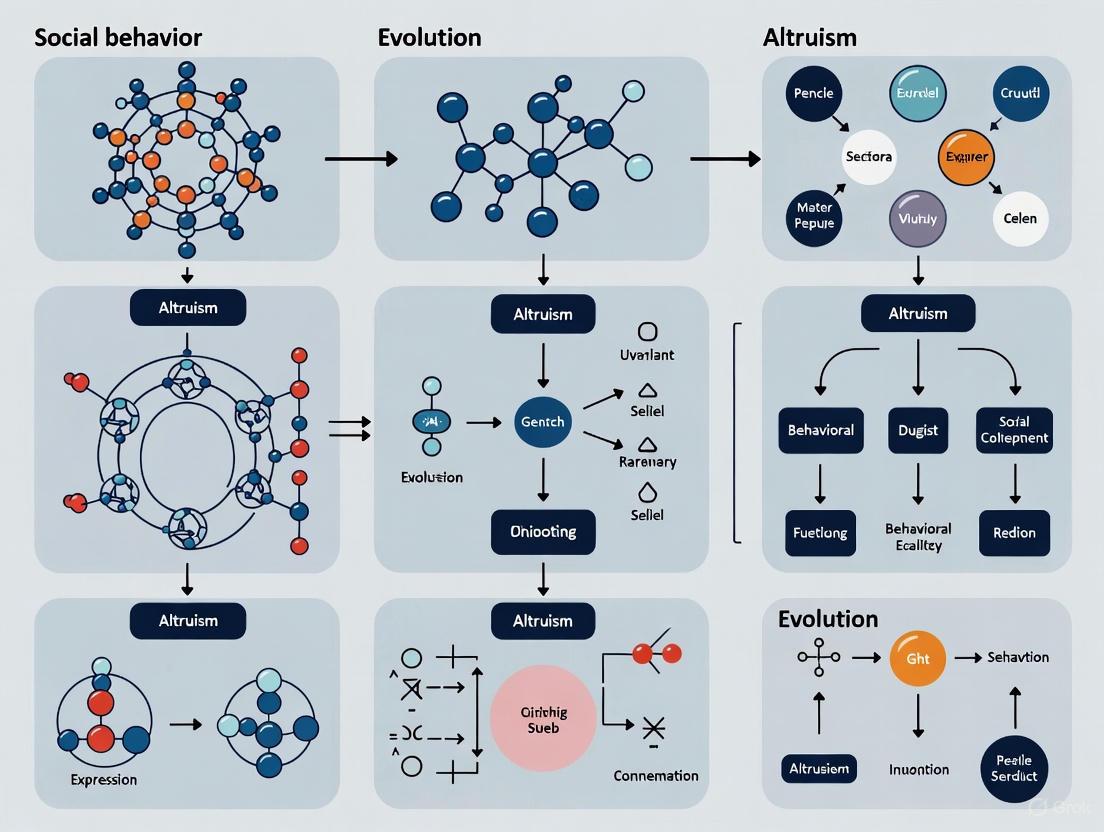
This article synthesizes foundational theories on the evolution of social behavior and altruism with contemporary challenges in drug discovery and development.
Beyond Kin Selection: Evolutionary Altruism as a Framework for Modern Biomedical Collaboration
Abstract
This article synthesizes foundational theories on the evolution of social behavior and altruism with contemporary challenges in drug discovery and development. It explores the fundamental requirement of assortment for altruism to evolve, from Hamilton's rule to modern generalized models. For an audience of researchers and drug development professionals, the article examines how principles of biological cooperation—such as reciprocal exchanges and synergistic interactions within structured populations—provide a powerful metaphorical and practical framework for optimizing scientific collaboration. It further investigates methodological applications of these evolutionary concepts to improve target assessment, troubleshoot high-attrition rates in R&D, and validate collaborative models through quantitative network analysis, ultimately proposing a roadmap for building more resilient and productive biomedical research ecosystems.
The Evolutionary Puzzle of Altruism: From Selfish Genes to Cooperative Systems
In evolutionary biology, biological altruism describes a behavior that benefits other organisms at a cost to the actor's own reproductive fitness. This concept is defined by its consequences for an organism's expected number of offspring, rather than by the conscious intentions behind the action [1]. The existence of such self-sacrificing behaviors in nature—from sterile insect workers to alarm-calling vertebrates—presented a fundamental challenge to Darwinian theory, which predicts that natural selection should favor traits that enhance an individual's own survival and reproduction [1]. This whitepaper examines the theoretical frameworks resolving this paradox, synthesizing key quantitative tests, experimental methodologies, and the consequences of altruism for understanding social evolution. The resolution of the altruism puzzle has profound implications for research spanning evolutionary biology, behavioral ecology, and social science, providing a foundational framework for investigating cooperative behaviors across species.
Theoretical Frameworks and Key Concepts
Hamilton's Rule and Kin Selection
William Hamilton's inclusive fitness theory provided the seminal solution to the altruism puzzle. The theory demonstrates that altruism can evolve when the genetic benefits to relatives, weighted by their relatedness, outweigh the costs to the actor. This logic is captured by Hamilton's rule: ( rb - c > 0 ), where ( b ) is the benefit to the recipient, ( c ) is the cost to the actor, and ( r ) is the coefficient of genetic relatedness between them [1] [2]. The coefficient of relationship (( r )) represents the probability that two individuals share genes that are "identical by descent" from a common ancestor [1]. For example, in diploid species, full siblings have an ( r ) value of 0.5, as they share half their genes on average [1].
This principle of kin selection explains how genes for altruism can spread indirectly through the enhanced reproduction of relatives who carry those same genes [1] [3]. A classic example occurs in eusocial insects like honeybees, where sterile worker bees sacrifice their own reproduction to support the queen. From a genetic perspective, the worker's self-sacrifice is evolutionarily advantageous because she is closely related to the siblings she helps raise [3].
Group Selection and Assortment
An alternative framework for understanding altruism focuses on group selection and population structure. Darwin himself suggested that groups containing altruistic individuals might have a survival advantage over groups composed mainly of selfish organisms, even if altruists are at a disadvantage within each group [1].
Modern evolutionary theory reframes this insight around the concept of assortment—the association between carriers of altruistic genes and the helping behaviors they receive from others [4]. For altruism to evolve, individuals with cooperative genotypes must experience interaction environments that are richer in cooperation than the population average. The fundamental requirement is that altruists must interact disproportionately with other altruists, which can occur through various mechanisms including kinship, limited dispersal, or cognitive recognition [4]. The following diagram illustrates this core logic of assortment:
Comparative Analysis of Evolutionary Theories
Table 1: Theoretical Frameworks Explaining the Evolution of Altruism
| Theory | Key Mechanism | Primary Mathematical Expression | Strengths | Limitations |
|---|---|---|---|---|
| Kin Selection | Indirect genetic benefits via relatives | ( rb - c > 0 ) [1] [2] | Powerful predictive framework; extensive empirical support | Requires genetic relatedness or reliable proxies; less effective for explaining interspecies altruism |
| Group Selection | Differential survival of groups | Group benefit > within-group cost [1] | Intuitive for understanding group-level adaptations | Vulnerable to "subversion from within" by selfish mutants [1] |
| Reciprocal Altruism | Direct future benefits from recipients | Long-term payoff > short-term cost [5] | Explains altruism among unrelated individuals | Requires repeated interactions and cognitive capabilities for recognition and memory |
| Assortment Framework | Non-random interaction between altruists | Positive covariance between genotype and received benefits [4] | Unifies various mechanisms; highlights fundamental requirement | Does not specify biological mechanisms creating assortment |
Quantitative Tests and Experimental Evidence
Experimental Evolution with Robotic Systems
A groundbreaking quantitative test of Hamilton's rule employed experimental evolution in populations of simulated foraging robots [2]. This innovative approach enabled precise manipulation of the costs, benefits, and genetic relatedness parameters that are difficult to control in biological systems.
Experimental Protocol: The study utilized 200 groups of 8 simulated Alice robots (2×2×4 cm) foraging in an arena with one white and three black walls [2]. Each robot was equipped with motorized wheels, three infrared distance sensors for detecting food items (3 cm range), a fourth infrared sensor with longer range (6 cm) to distinguish food from other robots, and two vision sensors to perceive wall colors [2]. These sensors connected to a neural network with 6 input neurons, 3 hidden neurons, and 3 output neurons controlling wheel speeds and food-sharing behavior [2]. The robots' "genomes" encoded the 33 connection weights of these neural networks, determining how sensory information was processed into behavior [2].
Methodology: Over 500 generations, researchers conducted selection experiments with five different cost-to-benefit ((c/b)) ratios (0.01, 0.25, 0.50, 0.75, 0.99) crossed with five relatedness values (0, 0.25, 0.50, 0.75, 1.00), with 20 independently evolving populations per treatment [2]. The experimental workflow is summarized below:
Key Findings: The research demonstrated that Hamilton's rule accurately predicted the minimum relatedness necessary for altruism to evolve across all treatment conditions [2]. The level of altruism remained low when ( r < c/b ) and increased sharply when ( r > c/b ), with the transition occurring precisely at the point predicted by Hamilton's rule [2]. This quantitative validation is particularly remarkable given the presence of pleiotropic and epistatic effects in the neural networks, as well as mutations with strong effects on behavior—conditions that deviate from the simplifying assumptions of Hamilton's original 1964 model [2].
Cross-Cultural Psychological Studies
Research on human altruism has revealed important cultural variations in how altruism is conceptualized and experienced. Studies distinguish between "pure" altruism (focused on benefit to the recipient) and "impure" altruism (where the helper derives self-benefit) [6]. Collectivist cultures typically exhibit more "pure" altruism focused on recipient benefit, while individualistic cultures display more "impure" altruism where helping behavior enhances the helper's own happiness [6]. This cultural difference manifests in measurable outcomes: altruistic behavior has a stronger positive effect on the helper's happiness in individualistic cultures compared to collectivist cultures [6].
Quantitative Parameters from Key Experiments
Table 2: Experimental Parameters and Outcomes in Altruism Research
| Study System | Measured Cost (c) | Measured Benefit (b) | Relatedness (r) | Key Outcome |
|---|---|---|---|---|
| Foraging Robots [2] | Fitness points sacrificed when sharing food | Fitness points gained when receiving shared food | 0, 0.25, 0.50, 0.75, 1.00 (experimentally set) | Hamilton's rule predicted evolutionary outcome with 100% accuracy |
| Vervet Monkeys [1] | Increased predation risk from alarm calls | Warning of predator presence | ~0.25-0.50 (estimated for group members) | Alarm calling persists despite individual cost due to group benefits |
| Social Insects [1] | Complete loss of personal reproduction | Enhanced queen reproduction and colony success | 0.75 (full sisters in haplodiploid system) | Sterile workers evolve when benefits to closely related queen outweigh costs |
| Human Cross-Cultural Studies [6] | Time, resources, or effort expended | Emotional satisfaction or happiness | Not applicable (cultural focus) | Altruism-happiness link stronger in individualistic (vs. collectivist) cultures |
The Scientist's Toolkit: Research Methods and Reagents
Experimental Models and Research Solutions
Table 3: Essential Research Tools for Studying Biological Altruism
| Research Tool | Function/Application | Key Features | Representative Use |
|---|---|---|---|
| Alice Robots [2] | Experimental evolution platform for testing evolutionary theories | 2×2×4 cm size; infrared sensors; neural network controllers; physics-based simulation | Quantitative testing of Hamilton's rule with precise parameter control |
| Graph Neural Networks (SocialGNN) [7] | Modeling social interaction recognition from visual input | Relational inductive bias; graph structure representing entity relationships | Predicting human social interaction judgments in animated videos |
| Inverse Planning Models (SIMPLE) [7] | Bayesian inference of social goals from observed behavior | Generative model of agent interactions; physics simulator | Benchmark comparison for bottom-up visual models of social perception |
| PHASE Dataset [7] | Standardized stimuli for social perception research | 500 animated videos (Heider-Simmel style) with ground truth interaction labels | Training and testing computational models of social judgment |
| Public Goods Game [4] | Experimental economics framework for studying cooperation | N-player game where cooperators contribute to public good at personal cost | Fundamental metaphor for studying cooperation dilemmas in controlled settings |
Methodological Considerations
When designing experiments on biological altruism, researchers must address several methodological challenges. The definition and measurement of fitness costs and benefits requires careful consideration, as these are quantified in terms of reproductive fitness (expected number of offspring) rather than short-term rewards [1]. In animal behavior studies, this typically involves longitudinal monitoring of survival and reproductive success. For human studies, researchers must distinguish between biological altruism (defined by fitness consequences) and psychological altruism (defined by motivational states) [1] [6].
The manipulation of genetic relatedness presents another experimental challenge. In animal studies, this often requires controlled breeding designs or genetic fingerprinting. In the robotic evolution experiments, relatedness was precisely controlled through algorithmic manipulation of genome similarity [2]. For human studies, researchers often rely on naturally varying relationships or perceptual manipulations of relatedness.
Biological altruism, once considered a fundamental challenge to evolutionary theory, is now understood through multiple complementary frameworks centered on the core requirement of assortment between altruistic genotypes and received benefits [4]. Hamilton's rule (( rb - c > 0 )) provides a powerful predictive framework that has been quantitatively validated in experimental systems [2], while cultural studies reveal how expressions of altruism vary across human societies [6].
The consequences of altruism research extend beyond theoretical biology into practical applications. Understanding the evolutionary foundations of cooperation informs social policy, organizational design, and conservation strategies. In biomedical research, evolutionary perspectives on altruism provide insights into social behaviors and group dynamics that influence public health outcomes. The experimental paradigms and computational models developed in altruism research continue to provide innovative approaches for investigating complex social behaviors across species, from robotic systems to human societies.
This technical guide examines Hamilton's rule, the foundational rB > C equation in evolutionary biology, which quantifies how altruistic behaviors can evolve through kin selection. We explore the mathematical foundations of inclusive fitness theory, present experimental validations across biological systems, and discuss modern generalizations that account for non-additive fitness effects. The Whitepaper provides researchers with structured quantitative data, detailed experimental methodologies, and analytical tools for applying Hamilton's rule to research in social evolution, with particular relevance to understanding cooperative behaviors in microbial and multicellular systems.
Kin selection represents a fundamental process in evolutionary biology whereby natural selection favors traits that enhance the reproductive success of an organism's relatives, even at a cost to the individual's own survival and reproduction [8]. This concept resolves Darwin's original puzzle about sterile social insects—how traits that reduce direct reproduction can evolve through benefits to related individuals [8]. The theoretical framework was formally developed by W.D. Hamilton in 1964 through his inclusive fitness theory, which quantifies genetic success not only through direct offspring but also through the reproductive success of relatives who share identical genes by descent [9].
Hamilton's contribution provided a mathematical basis for understanding altruism, establishing that genetic success encompasses both direct parentage and indirect assistance to relatives [9]. This conceptual advance created the foundation for sociobiology as a discipline and offered explanations for diverse biological phenomena from eusocial insect colonies to cooperative breeding in vertebrates and microbial cooperation [8] [10].
The Mathematical Foundation of Hamilton's Rule
Core Equation and Parameters
Hamilton's rule states that natural selection will favor altruistic behaviors when the following inequality holds:
rB > C
Where:
- r = the genetic relatedness between actor and recipient (probability that genes at a locus are identical by descent)
- B = the additional reproductive benefit gained by the recipient of the altruistic act
- C = the reproductive cost suffered by the individual performing the altruistic act [9] [8]
The rule specifies that altruism evolves when the benefit to the recipient, weighted by relatedness, exceeds the cost to the actor. This occurs because copies of the altruism gene are statistically likely to be present in relatives, and their enhanced reproduction can indirectly propagate the gene [9].
Quantitative Example in Lions
A concrete example from lion behavior illustrates the application of Hamilton's rule:
- A female lion with a well-nourished cub may nurse a starving cub of her full sister
- Benefit (B) = one offspring that would otherwise die (value of 1)
- Cost (C) = approximately one-quarter of an offspring (value of 0.25)
- Relatedness (r) between full sisters = 0.5
- Calculation: (0.5 × 1) > 0.25 → 0.5 > 0.25
- Since the inequality holds, the altruistic behavior is favored by natural selection [9]
Table 1: Key Parameters of Hamilton's Rule
| Parameter | Definition | Measurement | Biological Significance |
|---|---|---|---|
| r (Relatedness) | Probability that two individuals share identical genes at a locus by descent | 0.5 for full siblings; 0.125 for cousins | Quantifies genetic similarity between individuals |
| B (Benefit) | Increased reproductive success of the recipient | Number of offspring equivalents gained | Fitness advantage conferred by altruistic act |
| C (Cost) | Decreased reproductive success of the actor | Number of offspring equivalents lost | Fitness sacrifice made by altruistic individual |
Genetic Interpretation
The genetic interpretation of Hamilton's rule emphasizes that genes for altruism can spread by promoting aid to copies of themselves present in relatives [9]. As J.B.S. Haldane famously quipped, "I would lay down my life for two brothers or eight cousins" [8]. This reflects the genetic calculation that:
- Brothers share 50% of genes (r = 0.5), so saving two brothers preserves 100% of one's genes
- Cousins share 12.5% of genes (r = 0.125), so saving eight cousins preserves 100% of one's genes Thus, sacrificing one's life can be evolutionarily advantageous if it saves sufficient close relatives [8].
Experimental Validation and Protocols
Experimental Evidence Across Species
Hamilton's rule has been empirically tested across diverse taxa, from microorganisms to vertebrates. A 2014 review found its predictions confirmed in a broad phylogenetic range of birds, mammals, and insects [8].
Red Squirrel Adoption Study: A 2010 study of wild red squirrels in Yukon, Canada, demonstrated precise adherence to Hamilton's rule in adoption behavior [8]. Surrogate mothers adopted related orphaned squirrel pups but not unrelated orphans. Researchers calculated:
- Cost (C): Decrease in survival probability of the entire litter after adding one pup
- Benefit (B): Increased survival chance of the orphan
- Relatedness (r) determined whether adoption occurred based on the rB > C condition
- Females always adopted when rB > C, and never adopted when rB < C [8]
Human Financial Decision-Making: A 2022 MIT Sloan study provided the first experimental evidence of Hamilton's rule in human financial contexts [11]. Researchers asked subjects how much they would pay for someone else to receive $50, with recipients of varying genetic relatedness. The results showed that cutoff costs aligned precisely with genetic relatedness as predicted by Hamilton's rule, demonstrating these evolutionary principles extend to complex human economic behavior [11].
Microbial Experimental Protocol
Myxococcus xanthus Sporulation Assay: This protocol measures cooperative behavior in bacteria with strong nonadditive fitness effects [10].
Table 2: Research Reagent Solutions for Microbial Kin Selection Studies
| Reagent/Material | Specifications | Function in Experiment |
|---|---|---|
| Myxococcus xanthus strains | Wild-type cooperator and cheater strains | Subject organisms for studying social behaviors |
| Starvation media | Defined minimal media lacking amino acids | Induces fruiting body formation and sporulation |
| Sporulation quantification system | Flow cytometry or spore viability counts | Measures fitness outcomes of social interactions |
| Gelatin support matrix | Food-grade gelatin at specified concentrations | Provides three-dimensional environment for development |
Methodological Steps:
- Strain Preparation: Grow cooperator and cheater strains to mid-exponential phase in nutrient-rich media
- Mixing Protocol: Mix strains at different initial frequencies (e.g., 10%, 30%, 50%, 70%, 90% cooperators)
- Starvation Induction: Transfer cells to starvation media to initiate fruiting body development
- Sporulation Incubation: Allow 5-7 days for complete fruiting body formation and sporulation
- Fitness Measurement: Heat-treat samples to kill vegetative cells, then quantify spore counts for each strain
- Data Analysis: Calculate fitness parameters and apply generalized Hamilton's rule [10]
Modern Generalizations and Extensions
The Generalized Hamilton's Rule
Traditional Hamilton's rule assumes additive fitness effects, where costs and benefits remain constant across different social environments [10]. However, many biological systems exhibit nonadditive fitness effects, where the fitness consequences of social interactions depend nonlinearly on the frequency of genotypes in the population [10].
For such systems, a generalized version of Hamilton's rule has been derived:
r • b - c + m • d > 0
Where:
- r = vector of relatedness coefficients measuring how social environments of cooperators and noncooperators differ across distribution moments
- b = vector describing noncooperator fitness as a function of social environment
- c = cost of cooperation when all neighbors are noncooperators
- m = moments vector for cooperators
- d = difference between Taylor series of cooperators and noncooperators [10]
This generalization accommodates nonlinear interactions and strong selection, which are particularly relevant in microbial systems where frequency-dependent selection is common [10].
Addressing Theoretical Controversies
The generality of Hamilton's rule has generated significant debate among evolutionary biologists [12] [13]. Some researchers argue that certain formulations become tautological (true by definition rather than predictive) when costs and benefits are defined as regression coefficients that inherently contain the outcome information [13].
The "exact and general" formulation derived via the Price equation has been criticized because:
- Benefit (B) and cost (C) parameters depend on the change in average trait value (Δg¯) that they are supposed to predict
- The prediction BR-C discards information about population structure despite R incorporating this information
- No conceivable experiment could test or invalidate this formulation, as all possible outcomes satisfy it [13]
However, proponents maintain that proper specification of statistical models within the Generalized Price equation framework resolves these issues and provides meaningful insights into social evolution [12].
Table 3: Comparison of Hamilton's Rule Formulations
| Formulation | Application Scope | Key Assumptions | Limitations |
|---|---|---|---|
| Classical Hamilton's Rule | Linear, independent fitness effects | Additive fitness, weak selection | Fails with strong nonadditivity |
| HRG (General Hamilton's Rule) | Arbitrary fitness functions | Correct model specification | Potential for tautology if misapplied |
| Moments-Based Generalization | Strong nonadditive selection | Smooth fitness functions | Requires estimation of multiple parameters |
Research Applications and Future Directions
Practical Research Applications
Hamilton's rule provides a quantitative framework for investigating social behaviors across diverse biological systems:
Microbial Cooperation: The generalized rule has been successfully applied to bacterial systems like Myxococcus xanthus, where nonadditive fitness effects dominate social evolution [10]. These principles help explain why cooperative sporulation remains resistant to exploitation by cheater strains despite strong within-group selection advantages for cheaters.
Medical Implications: Understanding kin selection in microbes informs strategies for controlling pathogens by introducing "cheater" strains that exploit cooperative behaviors without contributing to virulence [10]. This "trojan horse" approach could provide novel antimicrobial strategies.
Conservation Biology: Kin selection principles inform understanding of cooperative breeding in endangered species and population dynamics in structured populations [14].
Analytical Toolkit for Researchers
Quantitative Genetic Approaches: Modern research on social evolution employs quantitative genetic models of indirect genetic effects, which capture how genes in social partners influence trait expression [14]. These models provide a framework for estimating genetic parameters of social traits and predicting their evolutionary trajectories.
Statistical Methods: Implementation of Hamilton's rule in empirical research requires:
- Multivariate regression to estimate fitness costs and benefits
- Relatedness estimation using molecular markers or pedigree data
- Model selection procedures to specify appropriate fitness functions [12] [10]
Future Research Directions: Emerging areas include:
- Integrating Hamilton's rule with game-theoretic approaches
- Understanding kin recognition mechanisms across taxa
- Applying social evolution principles to microbiome dynamics
- Exploring cultural evolution and gene-culture coevolution in humans [8] [10]
Hamilton's rule, encapsulated in the rB > C inequality, remains a cornerstone of evolutionary biology, providing a powerful quantitative framework for understanding the evolution of altruism and social behaviors. While the classical formulation applies to systems with additive fitness effects, modern generalizations accommodate nonadditive selection through higher-order moments of population structure. Experimental validations across diverse taxa confirm the predictive power of this principle, though careful attention to model specification is required to avoid tautological applications. For researchers investigating social behaviors from microbes to humans, Hamilton's rule continues to offer invaluable insights into the evolutionary dynamics of cooperation, with implications for medicine, conservation, and fundamental biology.
Assortment—the non-random distribution of interactions among individuals—serves as a foundational mechanism in the evolution of social behavior. Within the broader thesis of social evolution and altruism research, understanding assortment is critical because it determines the population structure within which natural selection operates. By shaping who interacts with whom, assortment creates the statistical environment that can favor the emergence and stability of cooperative and altruistic behaviors that would otherwise be vulnerable to exploitation. This technical guide examines assortment through its dual manifestations: in external interaction environments shaped by behavior and ecology, and in internal genetic correlations that emerge from evolutionary processes. The integration of these perspectives provides researchers with a comprehensive framework for investigating how social behaviors evolve and persist across biological systems, from microbial communities to human societies.
The central challenge in explaining altruism has always been the problem of fitness costs: how can behaviors that reduce an individual's fitness persist evolutionarily? The solution lies squarely in the role of assortment. When altruists disproportionately interact with and benefit other altruists, the fitness costs of cooperative acts can be overcome. As research in evolutionary biology has matured, we have come to understand that assortment operates through multiple, mutually reinforcing channels that form the focus of this review: the spatial and social structure of populations, the cognitive mechanisms of partner choice, and the genetic architectures that correlate social traits with preferences for those traits.
Theoretical Foundations: Assortment in Social Evolution
Historical Context and Key Concepts
The formal study of assortment represents a pivotal shift from models assuming perfectly mixed populations to those recognizing the fundamental importance of population structure. Its necessity became mathematically evident with W.D. Hamilton's formulation of inclusive fitness theory, which provided the first rigorous framework for understanding how altruism could evolve through genetic relatedness [8]. Hamilton's rule (rB > C) explicitly quantifies the degree of assortment (r) necessary for an altruistic act to be favored by selection, where r represents the genetic correlation between interacting individuals, B the benefit to the recipient, and C the cost to the actor [8] [15].
Hamilton identified two primary mechanisms for achieving assortment: kin recognition (active discrimination based on phenotypic cues) and viscous populations (limited dispersal that automatically creates local genetic structure) [8]. In viscous populations, limited dispersal creates a default scenario where interactions occur predominantly among relatives, facilitating the evolution of altruistic behaviors even in the absence of sophisticated recognition mechanisms.
Beyond kinship, the concept of biological markets further expanded our understanding of assortment by framing social interactions as trading relationships where individuals select partners based on the value they provide [16]. This theoretical perspective emphasizes how partner choice in competitive social environments creates powerful selection for cooperative traits, as individuals preferentially form associations with those offering superior benefits. The market framework naturally leads to positive assortment as cooperators selectively interact with other cooperators who offer mutual benefits.
The Fundamental Theorem of Assortment
We can formalize the relationship between assortment and altruism evolution in what might be termed the Fundamental Theorem of Assortment: The evolutionary viability of any social trait depends on the product of its fitness effects and the degree of assortment surrounding its expression. Mathematically, this can be expressed as:
[ \Delta p > 0 \quad \text{when} \quad \rho \cdot B > C ]
Where ρ represents the assortment coefficient quantifying the correlation between the social traits of interacting individuals, B the fitness benefit provided to social partners, and C the fitness cost incurred by the actor. This generalization subsumes Hamilton's rule (where ρ = r) while extending to non-kin contexts, providing a unified framework for understanding diverse social evolution phenomena.
Interaction Environments: The External Dimension of Assortment
Spatial and Population Structure
The physical distribution of individuals constitutes the most fundamental source of assortment, creating what evolutionary biologists term interaction environments. Limited dispersal and population viscosity generate automatic assortment by constraining possible interactions to geographically proximate individuals, who are often genetically related [8]. This spatial structure explains the prevalence of cooperative behaviors in systems ranging from microorganism biofilms to nesting colonies in birds and mammals.
Table 1: Types of Interaction Environments and Their Effects on Assortment
| Environment Type | Mechanism | Assortment Level | Empirical Examples |
|---|---|---|---|
| Viscous Populations | Limited dispersal | High (kin-based) | Ground squirrel alarm calls [17] |
| Structured Habitats | Patchy resources | Moderate to High | Reef-dwelling shrimp colonies [8] |
| Random Mixing | Unconstrained movement | Low | Marine planktonic organisms |
| Social Groups | Active association | Variable | Human friendship networks [18] |
Behavioral and Cognitive Mechanisms
Beyond passive spatial constraints, active behavioral processes generate assortment through decision-making mechanisms:
Partner choice represents perhaps the most potent behavioral mechanism creating assortment in animal and human societies. Experimental evidence demonstrates that when individuals can select their social partners, cooperation and fairness increase dramatically. In economic games with partner choice, participants consistently prefer partners who demonstrate cooperative tendencies, creating a biological market where prosocial behavior becomes the currency of social value [16].
Social network structures emerge from these partner choices, creating durable interaction environments that can be analyzed using social network analysis (SNA). SNA quantifies assortment through metrics including:
- Homophily: The tendency to associate with similar others, creating assortment along traits such as cooperativeness, generosity, and even genetic ancestry [19] [20] [21]
- Transitivity: The tendency for friends of friends to become friends, creating clustered interaction environments
- Degree centrality: The number of direct connections an individual maintains, influencing their social influence [18]
These network properties create the social niche within which selection operates, determining the fitness consequences of different behavioral strategies.
Genetic Correlation: The Internal Dimension of Assortment
The Genetic Architecture of Assortment
While interaction environments represent the external manifestation of assortment, recent research reveals that assortment also operates through internal genetic mechanisms. Assortative mating—the non-random pairing of mates based on phenotypic similarity—creates genetic correlations between preferred traits and preferences for those traits [22]. This occurs because "If you are tall, you may have inherited tallness from one parent (say, your mother) and the preference for tallness in a romantic partner from your other parent (in this case, your father). The combination of those inherited traits means that you exist in the world as a tall person and are attracted to tall people" [22].
This simple yet powerful mechanism generates what might be termed assortment potential within populations—a genetic predisposition toward specific forms of social discrimination that can facilitate the evolution of correlated social behaviors.
Table 2: Quantitative Evidence for Genetic Correlations in Assortative Mating
| Trait Category | Correlation Strength (r) | Study Methodology | Citation |
|---|---|---|---|
| Physical Traits | 0.2 - 0.4 | Spouse correlation in admixed populations | [20] |
| Cooperativeness | 0.3 | Public goods game with couples | [19] |
| Generosity | 0.25 | Donation behavior in spouses | [19] |
| Educational Attainment | 0.4 | Population genomic studies | [22] |
Evolutionary Dynamics of Genetic Assortment
Agent-based modeling demonstrates how heritable variation in both traits and preferences naturally produces assortative mating as an emergent property without requiring additional evolutionary mechanisms. Harper and Zietsch (2025) simulated partner choice over 100 generations and found that "even with up to 10 preferences for traits in a partner, clear genetic correlations formed between traits and preferences for those traits, which resulted in the agents choosing partners similar to themselves" [22].
This evolutionary process creates a self-reinforcing cycle: genetic correlations lead to phenotypic assortment, which in turn strengthens genetic correlations through non-random mating. The resulting population structure provides the necessary conditions for the evolution of altruism toward similar individuals, effectively solving the evolutionary puzzle of cooperation without requiring traditional kin recognition mechanisms.
Experimental Protocols and Methodologies
Measuring Assortment in Natural Populations
Field Protocol: Spatial Genetic Correlation Analysis
- Sampling: Collect tissue samples from individuals across a continuous population with documented interaction patterns (e.g., nesting sites, foraging associations)
- Genotyping: Use high-throughput sequencing (ddRAD or whole-genome) to obtain genome-wide SNP data
- Relatedness Estimation: Calculate pairwise relatedness using maximum likelihood methods (e.g., ML-Relate or COANCESTRY)
- Spatial Analysis: Map interaction locations and calculate spatial autocorrelation of genetic markers
- Quantifying Assortment: Compute the regression coefficient of genetic similarity against interaction frequency, controlling for geographical distance
This approach successfully demonstrated ancestry-assortative mating in admixed human populations, revealing how mate choice based on ancestry produces measurable genetic correlations between spouses [20].
Experimental Economics Approaches
Laboratory Protocol: Partner Choice in Behavioral Games
- Participant Recruitment: Standardized recruitment avoiding pre-existing social connections
- Baseline Assessment: Measure prosocial tendencies using standardized instruments
- Game Implementation:
- Treatment Condition: Implement partner selection mechanism where participants can choose interaction partners after initial rounds
- Control Condition: Random partner assignment throughout experiment
- Behavioral Metrics: Quantify cooperation rates, fairness in resource distribution, and partner selectivity
- Network Analysis: Map emergent social networks using preference data
This methodology revealed that "when partner selection is allowed, the offers made in the partner selection treatment are fairer than those in the treatment where partners are randomly assigned" [16], demonstrating how partner choice creates assortment that favors prosocial behavior.
Research Toolkit: Essential Methodologies and Reagents
Table 3: Essential Research Reagents and Solutions for Assortment Studies
| Reagent/Resource | Function/Application | Field-Specific Examples |
|---|---|---|
| SNP Genotyping Arrays | Genome-wide association studies for trait-preference correlations | HumanCore array for ancestry analysis [20] |
| Agent-Based Modeling Platforms | Simulating evolutionary dynamics of assortment | NetLogo for 100-generation simulations [22] |
| Social Network Analysis Software | Quantifying homophily and clustering coefficients | PARTNER software for organizational networks [18] |
| Standardized Behavioral Games | Measuring cooperation and partner choice | Public Goods Game, Ultimatum Game [19] [16] |
| Relatedness Estimation Algorithms | Calculating genetic correlations between interactants | ML-Relate, COANCESTRY for wild populations [8] |
Integration and Synthesis: Assortment as a Unifying Principle
The interplay between external interaction environments and internal genetic correlations creates a comprehensive framework for understanding assortment's role in social evolution. External environments create the ecological stage for social interactions, while genetic correlations provide the evolutionary script that guides behavioral development. Their interaction produces the rich diversity of social systems observed in nature, from the complex colonies of eusocial insects to the sophisticated cooperation in human societies.
This integrated perspective reveals assortment not as a secondary phenomenon but as a primary architect of social evolution. By structuring who interacts with whom, assortment determines the fitness consequences of social traits, thereby shaping their evolutionary trajectory. The genetic correlations produced by assortment further create evolutionary feedback loops that can accelerate social evolution, potentially explaining the rapid emergence of complex sociality in certain lineages.
The central role of assortment in social evolution emerges from its dual function as both product and process: assortment is simultaneously the result of evolutionary pressures and the mechanism that enables further social evolution. By creating correlated interaction environments—whether through spatial structure, behavioral choice, or genetic inheritance—assortment provides the essential statistical foundation for the evolution of altruism and cooperation.
Future research should focus on integrating genomic approaches with behavioral ecology to quantify the relative contributions of external environments versus internal genetic correlations in producing assortment. Particularly promising are studies of human-induced rapid environmental change (HIREC), which create natural experiments in how assortment patterns shift in response to novel selection pressures [23]. Additionally, the development of more sophisticated agent-based models that incorporate realistic genetic architectures and learning mechanisms will further illuminate how assortment emerges and evolves across different social contexts.
For researchers investigating social behavior evolution, the practical implication is clear: understanding assortment is not optional but essential. Whether studying the molecular basis of cooperation or designing interventions to promote prosocial behavior, accounting for the non-random distribution of social interactions provides the key to unlocking the most fundamental puzzles of social evolution.
Reciprocal altruism represents a cornerstone concept in evolutionary biology, explaining how cooperative behaviors can evolve among non-kin individuals through the expectation of future returned benefits. First formally developed by Robert Trivers in 1971, this mechanism describes behavior whereby an organism temporarily reduces its own fitness to increase another's fitness, with the expectation that the other will act similarly in the future [24]. The concept finds its roots in the work of W.D. Hamilton, who developed mathematical models for predicting altruistic acts toward kin [24]. Unlike kin selection, which relies on genetic relatedness, reciprocal altruism requires repeated interactions between individuals over time, creating a system of delayed returns that can stabilize cooperation even in the face of short-term incentives to cheat [24] [25].
This whitepaper examines the theoretical foundations, experimental evidence, and mathematical frameworks underlying reciprocal altruism, with particular emphasis on its distinction from other forms of mutualism and cooperation. We explore the cognitive prerequisites and ecological conditions necessary for its emergence across animal species, from cleaner fish to primates, and discuss why humans appear unique in their extensive use of reciprocity [25]. The analysis extends to contemporary research using evolutionary game theory and network models to understand how reciprocal cooperation can be maintained in dynamic social systems, providing researchers with methodological tools and conceptual frameworks for investigating altruistic behaviors in biological and social contexts.
Theoretical Foundations and Key Concepts
Defining Reciprocal Altruism
Reciprocal altruism constitutes a specific form of cooperation characterized by three essential features: (1) a cost incurred by the donor, (2) a benefit received by the recipient that exceeds the donor's cost, and (3) a time delay between the initial altruistic act and the reciprocated benefit [24] [25]. Christopher Stephens formalized the necessary and jointly sufficient conditions for reciprocal altruism: the behavior must reduce a donor's fitness relative to a selfish alternative; the recipient's fitness must be elevated relative to non-recipients; the performance must not depend on immediate benefit; and these conditions must apply reciprocally to both individuals [24].
Two additional conditions are necessary for reciprocal altruism to evolve: a mechanism for detecting 'cheaters' must exist, and a large (indefinite) number of opportunities to exchange aid must be present [24]. These conditions create the evolutionary stability for reciprocity, preventing exploitation by non-cooperators and ensuring sufficient interactions for the long-term benefits of cooperation to outweigh short-term costs.
Distinguishing Reciprocal Altruism from Mutualism
It is crucial to distinguish reciprocal altruism from mutualism, as these concepts are often conflated. Mutualism describes mutually beneficial interactions between species where each species experiences net benefit, but without the requirement of delayed returns or reciprocal exchanges [26]. In mutualistic relationships, benefits are typically simultaneous rather than delayed, as seen in pollination mutualisms where plants provide nectar while pollinators provide fertilization services concurrently [26] [27].
Table 1: Comparison of Reciprocal Altruism and Mutualism
| Feature | Reciprocal Altruism | Mutualism |
|---|---|---|
| Temporal Framework | Delayed returns | Typically simultaneous benefits |
| Species Involvement | Often intraspecific | Primarily interspecific |
| Dependency | Conditional on future reciprocity | Often obligatory for survival |
| Cognitive Demands | Requires memory and recognition | Minimal cognitive requirements |
| Evolutionary Stability | Maintained through threat of retaliation | Maintained through immediate net benefits |
Reciprocal altruism is also distinct from by-product mutualism, where cooperation arises as a incidental consequence of self-interested behavior without the strategic contingent reciprocity that characterizes true reciprocal altruism [25].
Game Theory Foundations
The Prisoner's Dilemma game, particularly in its iterated form, provides the fundamental mathematical framework for understanding reciprocal altruism [28]. In this framework, the "tit-for-tat" strategy introduced by Anatol Rapoport has proven remarkably effective—cooperating initially then mirroring the opponent's previous move in subsequent interactions [24] [29]. This strategy demonstrates how cooperation can emerge and remain stable in evolving populations through direct reciprocity.
The essential game theory parameters include the cost of cooperation (C), the benefit to the recipient (B), and the probability (w) of future interactions. According to Nowak (2006), direct reciprocity evolves when the probability of future interactions exceeds the cost-to-benefit ratio (w > C/B) [25]. This mathematical relationship highlights how ecological factors such as longevity and social stability influence the evolution of reciprocal systems.
Experimental Evidence and Model Systems
Non-Human Primates
Grooming in primates represents a well-documented example of reciprocal altruism. Studies of vervet monkeys demonstrate that grooming increases the likelihood of future aid in conflicts, with individuals preferentially assisting those who have previously groomed them [24]. This exchange extends beyond grooming-for-grooming to include other commodities such as coalitionary support and food sharing, forming a complex economy of reciprocal exchanges [25].
However, methodological challenges persist in distinguishing true contingency from correlated activities. While positive correlations exist between grooming given and received, establishing strict contingency requires experimental manipulation to demonstrate that animals adjust their helping behavior based on prior received benefits [25].
Vampire Bats
Vampire bats (Desmodus rotundus) exhibit one of the clearest examples of reciprocal food sharing. Wilkinson's research demonstrated that bats regurgitate blood meals to feed hungry colony members, with individuals more likely to donate to those who had previously donated to them [24] [25]. This system meets key criteria for reciprocal altruism: blood sharing is costly to donors (who have limited reserves) yet highly beneficial to recipients (who may starve after 70 hours without food) [24].
The vampire bat system satisfies the necessary conditions for reciprocal altruism: repeated interactions in stable social groups, ability to recognize individuals, and a mechanism for tracking exchanges over time. However, some researchers note that the strict conditioning—where previously non-altruistic bats are refused help—has not been unequivocally demonstrated [24].
Avian Mob Behavior
Recent experimental evidence from pied flycatchers (Ficedula hypoleuca) provides compelling support for reciprocal altruism in avian mobbing behavior. Krams et al. (2008) demonstrated that birds selectively assist neighbors in mobbing predators based on prior help received [30]. In controlled experiments, pied flycatchers were more likely to join mobbing calls initiated by neighbors who had previously assisted them, while refusing to join calls from defecting neighbors who had refused assistance just one hour earlier [30].
This experimental paradigm satisfies Trivers' conditions: mobbing carries predation risk (cost) while providing collective security (benefit), and birds modify their behavior based on prior interactions rather than immediate returns [30]. The behavior follows a "tit-for-tat"-like strategy, suggesting sophisticated tracking of cooperative histories.
Cleaner Fish Symbiosis
Cleaning symbiosis between cleaner fish and their hosts presents a potential case of interspecific reciprocity. Host fish allow cleaners to enter their mouths without eating them, signal departure, and sometimes chase off predators threatening cleaners [24]. This meets criteria for delayed return altruism: cleaning is essential for host health, finding alternative cleaners involves difficulty and danger, and individual cleaners and hosts interact repeatedly [24].
However, this system illustrates the challenges in unequivocally demonstrating reciprocal altruism. While cleaner fish and their hosts maintain long-term relationships with repeated interactions, the immediate benefit to cleaners makes it difficult to distinguish from mutualism [24]. Observations that hosts sometimes chase predators threatening cleaners and avoid "cheater" cleaners who bite rather than clean provide some evidence for true reciprocity [24].
Methodological Approaches
Experimental Protocols for Avian Mob Behavior
The pied flycatcher experiments provide a robust methodological template for studying reciprocal altruism:
Experimental Setup:
- Subject Selection: Wild breeding pairs of pied flycatchers in natural nest boxes during breeding season
- Predator Simulation: Placement of stuffed predators (e.g., owls, crows) near nests to elicit mobbing behavior
- Reciprocity Manipulation: Systematic variation of neighbor cooperation through experimental assistance or non-assistance with predator defense
- Response Measurement: Quantification of mobbing responses (calls, dives, strikes) toward co-operating versus defecting neighbors
Key Controls:
- Randomization of treatment order
- Elimination of kin selection confounds through genetic analysis
- Control for mutualism by demonstrating time delay between acts
- Exclusion of pseudo-reciprocity through experimental design [30]
Data Analysis:
- Comparison of response latencies and intensities toward previously cooperative versus non-cooperative neighbors
- Demonstration of contingency through strategic adjustment of helping based on prior experience
- Statistical tests (e.g., ANOVA) to establish significant differences in response to cooperators versus defectors
Evolutionary Game Theory Models
Evolutionary game theory provides mathematical frameworks for studying reciprocal altruism through simulation and analytical models:
Population Structure:
- Well-mixed populations versus structured networks
- Agent-based models with memory-1 strategies (conditional on previous interaction)
- Evolutionary robust strategies resistant to invasion by alternatives
Strategy Evolution:
- Replicator dynamics or Moran process for strategy selection
- Mutation-selection balance in strategy space
- Coevolution of strategies and payoff matrices [28]
Network Reciprocity Models:
- Complex network structures influencing cooperation emergence
- Dynamic relationship weights based on interaction history
- Cluster coefficient measurements to quantify network cohesiveness under cooperation versus defection [31]
Table 2: Quantitative Parameters in Evolutionary Game Theory Models of Reciprocal Altruism
| Parameter | Description | Biological Significance |
|---|---|---|
| B/C Ratio | Benefit-to-cost ratio | Determines threshold for cooperation evolution |
| w | Probability of repeated interaction | Reflects ecological stability and longevity |
| Memory Length | Number of previous interactions remembered | Cognitive constraint on reciprocity |
| Mutation Rate | Rate of strategy change | Exploratory capacity for new cooperative strategies |
| Network Degree | Average number of social connections | Opportunity for multiple reciprocal relationships |
The Scientist's Toolkit: Research Reagent Solutions
Table 3: Essential Research Materials for Studying Reciprocal Altruism
| Research Tool | Function | Application Examples |
|---|---|---|
| Stuffed Predator Models | Elicit anti-predator responses | Pied flycatcher mobbing experiments [30] |
| Video/Audio Recording Systems | Document behavioral exchanges | Primate grooming reciprocity studies [24] |
| RFID Tracking Systems | Monitor individual movements and interactions | Vampire bat blood-sharing networks [25] |
| Game Theory Simulation Software | Model evolutionary dynamics | Iterated Prisoner's Dilemma simulations [28] |
| Genetic Relatedness Analysis | Exclude kin selection | Microsatellite analysis in cooperative breeding systems |
Cognitive Prerequisites and Evolutionary Constraints
Reciprocal altruism imposes significant cognitive demands that may explain its limited distribution in the animal kingdom. Successful reciprocity requires: (1) individual recognition, (2) memory of previous interactions, (3) capacity to calculate costs and benefits, and (4) inhibitory control to delay gratification [25]. These requirements may explain why reciprocal altruism appears rare in non-human animals despite theoretical predictions of its advantages [25].
Humans appear unique in their extensive use of reciprocity, likely due to coevolution of large social groups, future-oriented decision-making, and sophisticated inequity detection mechanisms [25]. The expansion of prefrontal cortex regions in humans supports the executive functions necessary for tracking complex reciprocal relationships over extended timeframes.
The evolution of reciprocal altruism faces significant constraints, including the threat of cooperation collapse under certain conditions. Studies of coevolving strategies and payoffs demonstrate that as individuals maximize cooperative benefits, they may inadvertently create conditions leading to cooperation breakdown [28]. This occurs particularly when there are diminishing returns for mutual cooperation, causing evolutionary trajectories to move away from Prisoner's Dilemma scenarios altogether [28].
Conceptual Framework and Signaling Pathways
The following diagram illustrates the theoretical framework and decision pathways underlying reciprocal altruism:
Decision Pathways in Reciprocal Altruism
This conceptual framework highlights the cognitive processes underlying reciprocal decision-making, including memory retrieval, cost-benefit calculation, and behavioral updating based on outcomes. The pathway illustrates how individuals use interaction histories to make conditional decisions, creating the feedback loop necessary for sustaining cooperation.
Reciprocal altruism represents a powerful evolutionary mechanism for explaining cooperative behaviors among non-kin individuals. While theoretical models predict its potential advantages, empirical evidence remains limited outside of humans and a few select species, likely due to significant cognitive prerequisites and ecological constraints [25]. The distinction between reciprocal altruism and mutualism remains crucial, with the former requiring delayed contingent reciprocity rather than simultaneous benefits.
Future research should focus on developing more sophisticated experimental paradigms that can distinguish true contingency from correlated activities, particularly in long-lived social species. Genomic approaches may identify genetic correlates of reciprocal tendencies, while neurobiological studies can elucidate the neural mechanisms underlying cost-benefit calculations and social memory. Additionally, cross-species comparisons examining the relationship between brain structure and reciprocal behaviors may help explain the phylogenetic distribution of this complex social strategy.
The mathematical framework of evolutionary game theory continues to provide insights into how reciprocity can emerge and be maintained in populations, with recent work on coevolution of strategies and payoffs revealing potential vulnerabilities in cooperative systems [28]. Understanding these dynamics has implications beyond evolutionary biology, informing research in economics, psychology, and organizational behavior where reciprocal exchanges form the foundation of social cooperation.
Multilevel selection (MLS) theory provides a comprehensive framework for understanding how natural selection operates simultaneously at multiple levels of biological organization, from genes to individuals to groups. This theoretical perspective addresses a central paradox in evolutionary biology: the emergence and persistence of prosocial traits—behaviors that benefit others or the group at a potential cost to the individual performer. The foundational logic of MLS, initially articulated by Charles Darwin, recognizes that while prosocial individuals may be at a selective disadvantage within their own social group, groups composed of prosocial individuals can outperform more self-oriented groups in between-group competition [32]. This tension between levels of selection creates evolutionary dynamics that explain how altruism and cooperation emerge and stabilize in social species.
The historical controversy surrounding group selection stems from a period of mid-20th century rejection, when evolutionary biology largely embraced gene-centric explanations for social behavior. This rejection was followed by a contemporary revival fueled by accumulating theoretical sophistication and empirical evidence [32]. Modern MLS theory distinguishes between two primary mechanisms: multi-level selection 1, where supra-individual collectives impart consistent population structure over time to reproductive entities therein, and multi-level selection 2, which asserts heritable features to units above the level of the individual [33]. The resolution of this historical controversy lies in recognizing that these mechanisms are not mutually exclusive but rather operate simultaneously across different levels of biological organization.
Empirical Evidence and Current Support
Contrary to common misconceptions that MLS lacks empirical support, recent bibliometric analyses reveal substantial evidence across diverse taxa and systems. A comprehensive review of 2,950 scientific articles identified 280 studies providing empirical support for MLS, with 100 performed in situ and 180 conducted as laboratory experiments [34]. These studies span a vast range of organisms, from viruses to humans, with particular concentration in eusocial insects and other highly cooperative species. The distribution of this empirical evidence across research categories demonstrates the robustness of MLS theory, with studies classified into artificial selection, breeding through group selection, indirect/social genetic effects, and contextual analysis, among other approaches [34].
Recent research with yellow-bellied marmots (Marmota flaviventer) exemplifies how MLS operates in wild populations. Using 19 years of continuous social, fitness, and life history data from this free-living mammal population, scientists quantified selection on both individual behavior and group social structure using social networks [35]. Through contextual analysis—which explores the impact of individual and group social phenotypes on individual fitness relative to each other—researchers found that selection for group social structure was just as strong, if not stronger, than selection on individual social behavior [35]. This research demonstrates antagonistic multilevel selection gradients within and between levels, potentially explaining why increased sociality is not as beneficial or heritable in this system compared with other social taxa.
Table 1: Key Empirical Studies Supporting Multilevel Selection
| Organism/System | Research Approach | Key Findings | Reference |
|---|---|---|---|
| Yellow-bellied marmots | Contextual analysis with social networks | Selection on group structure as strong as on individual behavior; antagonistic selection gradients | [35] |
| Poultry (chickens) | Artificial group selection | 160% increase in egg production in 6 generations through group-level selection | [33] |
| Various taxa (280 studies) | Bibliometric analysis | Widespread empirical support across viruses to humans; 64% laboratory experiments | [34] |
| Human civilizations | Historical analysis | Socioeconomic factors bias reproductive patterns, influencing social complexity | [33] |
Methodological Framework: Measuring Multilevel Selection
Core Measurement Approaches
The study of multilevel selection requires sophisticated methodologies that can partition selection across different levels of biological organization. Contextual analysis has emerged as a powerful statistical approach for this purpose, using partial regression to partition selection among levels [35]. This method defines individual-level selection as the impact that the individual phenotype has on individual fitness, while group-level selection represents the impact that group phenotype has on individual fitness [35]. Despite the inherent non-independence of individual and group phenotypes, contextual analysis successfully disentangles their relative contributions to fitness outcomes.
Social network analysis provides particularly valuable tools for quantifying social phenotypes at multiple levels. Research on yellow-bellied marmots employed four core social traits, each with analogous individual and group-level measures [35]. The experimental workflow for such studies typically involves (1) longitudinal behavioral observation, (2) social network construction, (3) calculation of individual and group social phenotypes, (4) fitness outcome measurement, and (5) contextual analysis to partition selection across levels.
Table 2: Analogous Individual and Group-Level Social Phenotypes
| Social Trait | Individual-Level Measure | Group-Level Measure | Biological Significance |
|---|---|---|---|
| Connectivity | Degree: number of social relationships | Density: proportion of possible social relationships observed | Measures overall connectedness within social system |
| Closeness | Closeness: number of social links to access all others | Inverse average path length: mean social distance between all individuals | Measures efficiency of information or resource flow |
| Breakability | Embeddedness: connectedness in their cluster and group | Inverse cut points: relationships that if broken fragment the group | Measures resilience and stability of social structure |
| Clustering | Clustering coefficient: proportion of partner interactions | Transitivity: proportion of connected triads actualized | Measures localized connectivity and subgroup formation |
Visualizing Multilevel Selection
Diagram 1: Multilevel selection dynamics. This diagram illustrates the core relationships in multilevel selection theory, showing how individuals and groups interact and how selection operates at both levels within a population.
The Scientist's Toolkit: Research Reagents and Methodologies
Implementing multilevel selection research requires specific methodological approaches and analytical tools. The following table details essential components for designing MLS studies, particularly in behavioral ecology and evolutionary biology.
Table 3: Essential Research Toolkit for Multilevel Selection Studies
| Research Component | Function/Application | Example Implementation |
|---|---|---|
| Social network analysis | Quantifies individual position and group structure | Calculate degree, density, clustering coefficients from interaction data [35] |
| Contextual analysis | Partitions selection between individual and group levels | Partial regression analyzing fitness consequences of individual and group traits [35] |
| Longitudinal demographic data | Tracks fitness outcomes across generations | 19-year study of marmot survival, reproduction, and hibernation success [35] |
| Animal model quantitative genetics | Estimates heritability and genetic constraints | Assessing genetic basis of social behavior and group structure [35] |
| Field experimental manipulations | Tests causal relationships | Temporary removal/addition of individuals to alter group composition |
Laboratory experiments on multilevel selection often employ controlled breeding designs, artificial selection at group levels, and precise fitness measurements. The pioneering poultry research demonstrating response to group selection serves as a methodological template [33]. In this study, hens were housed in groups, and entire groups were selected based on collective productivity rather than individual performance. This approach dramatically increased egg production by 160% in just six generations, demonstrating the efficacy of group-level selection [33]. The methodology involved scoring groups of hens for total egg production, then using hens from the most productive groups as breeders for the next generation of groups.
Applications Beyond Evolutionary Biology
The implications of multilevel selection extend far beyond traditional evolutionary biology, offering insights into diverse fields including human social evolution, cultural dynamics, and even artificial intelligence. The Multilevel Selection Initiative coordinated by ProSocial World represents a concerted effort to establish MLS as a foundational theory for understanding prosocial evolution across multiple domains [32]. This initiative recognizes applications in animal and plant breeding, microbiomes, pathogens and cancer, adaptive management of natural systems, economics and business, systems engineering, artificial intelligence, health, education, and governance [32].
Research on human altruism reveals how multilevel selection has shaped prosocial behavior in our species. Studies of extraordinary altruists—individuals who engage in rare, costly, non-normative acts such as non-directed organ donation and heroic rescues—provide insights into the psychological mechanisms underlying altruism [36]. These individuals display heightened empathic accuracy and neural responding to others' distress in brain regions implicated in prosocial decision-making, without being distinguished by trait agreeableness or self-reported empathy [36]. This suggests that individual variation in altruism reflects stable differences in how much people value others' welfare relative to their own welfare.
Diagram 2: Applications of multilevel selection theory. This diagram shows how MLS principles apply across biological, cultural, and technical domains, demonstrating the theory's broad utility.
The historical controversy surrounding group selection has been resolved through theoretical refinement and empirical demonstration. Modern multilevel selection theory represents a sophisticated framework that recognizes selection operating simultaneously across multiple levels of biological organization. The empirical evidence—from long-term wild population studies to controlled laboratory experiments—confirms that group-level selection can be as strong as individual-level selection, particularly for social behaviors [35] [34]. This resolution does not diminish the importance of gene-centric approaches but rather incorporates them into a more comprehensive evolutionary framework.
The recognition of multilevel selection has profound implications for understanding social behavior evolution and altruism research. It provides a mechanistic explanation for how prosocial traits can evolve despite within-group disadvantages, through the operation of between-group advantages [32]. This theoretical foundation illuminates diverse phenomena from the evolution of human cooperation to the social dynamics of insect societies. Future research directions include further integration of MLS with cultural evolution theory, application to emerging fields like artificial intelligence, and developing more sophisticated methodologies for detecting and quantifying selection across levels in natural populations.
Hamilton's rule, expressed as rb > c, stands as one of the most influential principles in evolutionary biology, providing a mathematical foundation for understanding the evolution of altruism [37]. This rule states that altruistic behavior evolves when the benefit (b) to the recipient, weighted by genetic relatedness (r), exceeds the cost (c) to the actor [37] [38]. Despite its elegant simplicity, the generality of Hamilton's rule has been intensely debated, with positions ranging from "Hamilton's rule almost never holds" to "Inclusive fitness is as general as the genetical theory of natural selection itself" [37] [38].
The claim of generality stems not from Hamilton's original derivation but from later derivations employing the Price equation [37] [38]. This tradition, initiated by Hamilton himself, uses the mathematical framework developed by George Price to partition evolutionary change into components attributable to selection and transmission [39]. However, the Price equation literature has borrowed statistical terminology like regression coefficients without fully embracing statistical considerations such as model choice, creating a theoretical gap this paper aims to address [12] [37].
Here, we demonstrate how deriving general versions of both the Price equation and Hamilton's rule resolves this longstanding debate. The Generalized Price Equation generates a family of Price-like equations, each corresponding to a different statistical model describing how individual fitness depends on genetic makeup [12] [37]. This generalization reveals that there is not one single Hamilton's rule but rather a hierarchy of Hamilton-like rules, each nested within more general versions that accommodate increasingly complex evolutionary scenarios [12].
Theoretical Foundation: From Price Equation to Generalized Price Equation
The Classic Price Equation
The classic Price equation provides a mathematical framework for modeling evolutionary change in a population [39]. In its covariance form, the equation partitions the change in the average value of a trait between generations:
[ \bar{w}\Delta\bar{p} = \text{Cov}(w,p) + E(w\Delta p) ]
Here, (\bar{w}) represents the average fitness in the parent population, (\Delta\bar{p}) is the change in the average p-score (a measure of genetic contribution) between parent and offspring generations, (\text{Cov}(w,p)) is the covariance between fitness and the p-score, and (E(w\Delta p)) is the fitness-weighted expected change in p-scores between parents and their offspring [37] [38]. The Power of the Price Equation lies in its ability to separate evolutionary change into components attributable to selection (the covariance term) and transmission (the expectation term) [39].
Table 1: Components of the Classic Price Equation
| Component | Mathematical Expression | Biological Interpretation |
|---|---|---|
| Selection Differential | (\text{Cov}(w,p)) | Change due to differential reproduction |
| Transmission Bias | (E(w\Delta p)) | Change due to systematic alterations in traits |
| Total Change | (\bar{w}\Delta\bar{p}) | Net evolutionary change in trait mean |
The Generalized Price Equation
The Generalized Price Equation expands this framework by incorporating statistical model selection [12]. Rather than using realized fitness values (wi), it employs model-predicted fitness values (\hat{w}i) derived from a statistical model that must include at least a constant term and a linear term for the p-score [12] [37]:
[ \bar{w}\Delta\bar{p} = \text{Cov}(\hat{w},p) + E(w\Delta p) ]
This generalized form is an identity that holds for any model containing a constant and a linear term for the p-score [37]. The critical insight is that while different models will produce different predicted fitness values (\hat{w}_i), the covariance (\text{Cov}(\hat{w},p)) always equals (\text{Cov}(w,p)) for all these models [37] [38].
To obtain the regression form of the Generalized Price Equation, we consider a set of models:
[ wi = \alpha + \sum{r=1}^R \betar pi^r + \varepsilon_i ]
where (wi) is the fitness of individual (i), (pi) is its p-score, (\alpha) is a constant, (\beta1, \ldots, \betaR) are coefficients, and (\varepsilon_i) is the error term [38]. This formulation generates different models for different values of R—linear (R=1), quadratic (R=2), and higher-order polynomial models [12] [38].
Figure 1: Hierarchical relationship between the Price Equation, its generalization, and resulting Hamilton-like rules. The Generalized Price Equation generates different fitness models, each leading to a specific Hamilton-like rule.
The Family of Hamilton's Rules
Classical Hamilton's Rule
The classical Hamilton's rule (rb > c) emerges from the Price equation when combined with a linear fitness model assuming independent, additive fitness effects [12] [37]. In this specific case, the costs and benefits are defined as linear regression coefficients measuring how an individual's fitness depends on its own trait and the traits of others [12]. The classical rule works effectively for social traits with linear, independent fitness effects but encounters limitations when facing non-linear or interdependent fitness effects [12].
General Hamilton's Rule and Queller's Rule
The Generalized Price Equation reveals that there isn't a single Hamilton's rule but rather a family of Hamilton-like rules, each corresponding to different assumptions about the fitness functions [12] [37]. All these rules are mathematically correct and general, but their meaningfulness depends on selecting an appropriately specified model for the evolutionary system under study [37].
Queller's rule represents a specific extension that accommodates non-linear interactions between traits [12] [38]. By incorporating higher-order regression coefficients, Queller's rule can handle scenarios where the fitness effects of social behaviors are not simply additive, addressing cases where the classical Hamilton's rule fails [12].
Table 2: Hierarchy of Hamilton-like Rules and Their Applications
| Rule Type | Mathematical Form | Fitness Effects Accommodated | Limitations |
|---|---|---|---|
| Classical Hamilton's Rule | rb > c | Linear, independent | Fails with non-additive effects |
| Queller's Rule | Includes interaction terms | Non-linear, interdependent | Requires more parameters |
| General Hamilton's Rule | Model-dependent | Any form specifiable by regression | Requires appropriate model selection |
The hierarchy of Hamilton-like rules mirrors the hierarchy of Price-like equations generated by the Generalized Price Equation [12]. The simplest rule describes selection of non-social traits with linear fitness effects, which is nested within the classical Hamilton's rule, which in turn is nested within more general rules like Queller's rule [12] [38]. This nesting provides a constructive solution for accurately describing when costly cooperation evolves across diverse circumstances [12].
Practical Applications and Experimental Approaches
Research Reagent Solutions for Studying Social Evolution
Table 3: Essential Methodologies for Experimental Research on Hamilton's Rule
| Research Tool | Function/Application | Example Use Cases |
|---|---|---|
| Regression Coefficient Analysis | Quantifies costs, benefits, and relatedness | Parameter estimation in kin selection studies |
| P-score Tracking | Measures genetic contribution to traits | Experimental evolution with model organisms |
| Fitness Landscape Mapping | Models non-linear fitness effects | Studying synergistic interactions in microbial systems |
| Price Equation Partitioning | Separates selection from transmission | Analyzing multilevel selection in social insects |
Experimental Protocol: Testing Hamilton's Rule in Microbial Systems
Objective: To empirically validate Hamilton's rule using microbial model systems and quantify the conditions under which altruistic behaviors evolve.
Materials:
- Genetically manipulable microbial strains (e.g., Escherichia coli, Saccharomyces cerevisiae)
- Fluorescent markers for tracking strain frequencies
- Culture media with varying nutrient compositions
- Chemostat or batch culture apparatus
- Flow cytometer for population composition analysis
Methodology:
- Strain Engineering: Create two isogenic strains - "cooperators" that produce a public good (e.g., digestive enzyme) and "cheaters" that do not produce the good but can utilize it.
- Relatedness Manipulation: Establish populations with varying relatedness (r) by adjusting the initial proportion of cooperators.
- Cost-Benefit Quantification: Measure the fitness cost (c) to cooperators and benefit (b) to recipients through controlled competition assays.
- Evolutionary Tracking: Use the Generalized Price Equation to track changes in cooperative allele frequency over multiple generations.
- Model Selection: Apply statistical model selection criteria to determine whether linear or non-linear Hamilton-like rules best explain the evolutionary dynamics.
Data Analysis:
- Calculate regression coefficients for cost and benefit parameters
- Partition selection and transmission components using the Price equation
- Test the predictive power of classical vs. general Hamilton's rules
- Determine the conditions under which more complex models are necessary
Figure 2: Experimental workflow for testing Hamilton's rule in microbial systems, from strain design to model validation.
Case Study: Altruism in Cancer Cells
Recent research has revealed unexpected examples of biological altruism in cancer cell populations [40]. Some breast cancer cells exhibit altruistic behavior by producing substances that help neighboring cells survive chemotherapy despite incurring fitness costs themselves [40]. Specifically, a subpopulation of cells with high miR-125b expression secretes proteins that activate PI3K signaling, conferring survival advantages to neighboring cells when exposed to taxane chemotherapy [40].
These altruistic cancer cells experience growth retardation and cell cycle arrest, representing a clear fitness cost, while providing benefits to the tumor population [40]. This system provides a compelling model for testing Hamilton's rule in an unconventional context, where the "relatedness" parameter represents the genetic similarity between cancer cell subclones [40].
The application of the Generalized Price Equation to cancer cell altruism demonstrates the framework's versatility beyond traditional evolutionary biology, offering insights into therapeutic resistance and potential strategies for disrupting cooperative behaviors in tumors [40].
Discussion: Implications for Evolutionary Theory and Beyond
Resolving the Generality Debate
The Generalized Price Equation provides a constructive resolution to the debate surrounding Hamilton's rule by showing that all Hamilton-like rules derived through this framework are mathematical identities that hold with complete generality [12] [37]. However, this very generality means that no single rule is universally meaningful—the appropriateness of a specific Hamilton's rule depends on selecting a well-specified statistical model for the evolutionary system under investigation [37].
When applying these concepts to empirical data, researchers must resort to standard statistical considerations to determine which model best fits the data [37]. With sufficient data, statistical model selection points to an appropriate specification, which in turn identifies the most meaningful Hamilton-like rule for the system [37]. An indication of a well-specified model is that the quantities treated as constants (such as costs and benefits) remain constant and do not change with the composition of the parent population [37].
Future Directions and Applications
The general version of Hamilton's rule opens several promising research avenues:
Cross-disciplinary Applications: The framework extends beyond evolutionary biology to economics, ecology, and cancer research [40] [39]. For example, understanding altruistic cooperation in cancer cells may inform novel therapeutic strategies that disrupt social dynamics within tumors [40].
Drug Development Implications: Evolutionary principles, including Hamilton's rule, provide insights into pathogen and cancer cell behavior that could inform treatment strategies aimed at exploiting or disrupting social behaviors [40] [41].
Human Social Evolution: The principles discussed here inform our understanding of human sociality, including the evolution of cooperation, altruism, and complex social behaviors [42] [43].
Methodological Advancements: The Generalized Price Equation enables more sophisticated analyses of multilevel selection and complex social interactions across diverse biological systems [12] [39].
The generalization of both the Price equation and Hamilton's rule represents a landmark contribution to evolutionary theory, providing clarity to long-standing debates about the generality and applicability of inclusive fitness theory [12] [37]. By reconnecting the Price equation with its statistical foundations, the Generalized Price Equation generates a family of Price-like equations, each corresponding to different assumptions about how fitness depends on genetic and social factors [12] [37].
This generalization reveals a corresponding hierarchy of Hamilton-like rules, from the classical version for linear fitness effects to more general versions accommodating non-linear and interdependent effects [12] [38]. All these rules are mathematically correct and general, but their meaningfulness depends on appropriate model specification for the evolutionary system under study [37].
The framework presented here not only resolves theoretical debates but also provides practical tools for empirical researchers across biological disciplines, from behavioral ecology to cancer biology [40] [39]. By enabling more accurate descriptions of when costly cooperation evolves in diverse circumstances, the general version of Hamilton's rule advances our understanding of social evolution while opening new avenues for interdisciplinary research.
Translating Evolutionary Cooperation into R&D Success: Strategies for Biomedical Teams
The formation of academic-industry partnerships represents a sophisticated manifestation of social behavior evolution, where collaborative strategies emerge as solutions to complex scientific challenges that exceed individual or organizational capabilities. Drawing from evolutionary biology, such partnerships can be understood through the lens of synergistic selection, where cooperative behaviors evolve not merely through kin selection or reciprocity, but through the emergent benefits that arise from combining complementary capabilities [44]. The co-evolution between sociality and dispersal in biological systems provides a powerful analog: just as organisms balance the costs and benefits of group living versus dispersal, knowledge-producing institutions navigate the tension between open scientific exploration and proprietary application [45].
In this framework, altruistic behaviors—such as knowledge sharing between academic and industrial partners—can evolve when the synergistic benefits of collaboration counterbalance the inherent costs, including intellectual property concerns, cultural differences, and resource investments [45] [44]. The modern research landscape, particularly in therapeutic development, increasingly demands such collaborative approaches, as scientific complexity outpaces the capacity of any single organization. This whitepaper establishes a model for conceptualizing, implementing, and optimizing academic-industry partnerships as synergistic groups, with specific methodologies for researchers and drug development professionals.
Theoretical Foundations: Synergistic Selection in Partnerships
Evolutionary Models of Social Behavior
The genetic evolution of social behavior has been modeled through two primary approaches: inclusive fitness models and synergistic benefit models. Hamilton's rule, expressed as -c + rb > 0, where c is the cost to the altruist, b is the benefit to the recipient, and r is their genetic relatedness, provides a foundational framework for understanding kin selection [44]. However, this model has limitations when applied to non-kin collaborations, such as academic-industry partnerships, where synergistic effects may be confounded with kinship or operate in its absence [44].
Queller's expansion of this model incorporates synergistic coefficients that are analogous to coefficients of relatedness, thereby creating a more comprehensive framework that accounts for the non-additive benefits that emerge through collaboration [44]. In this model, cooperation can evolve when:
-c + rb + s > 0
Where s represents the synergistic benefits that emerge specifically from the interaction between partners [44]. This theoretical framework provides a powerful lens for understanding academic-industry collaborations, where the synergistic benefits (s) often manifest as accelerated therapeutic development, access to complementary resources, and enhanced innovation capacity beyond what either partner could achieve independently.
Sociality-Dispersal Trade-offs in Knowledge Ecosystems
The co-evolution between sociality (collaboration) and dispersal (independent operation) observed in biological systems offers insightful parallels to knowledge ecosystems [45]. Individual-based modeling reveals that when social behaviors result in synergistic benefits that counterbalance the relative cost of altruism, selection for sociality responds strongly to the cost of dispersal [45]. In practical terms, this means that academic-industry collaborations are most likely to form and succeed when the "cost" of operating independently (dispersal) is high, and the synergistic benefits of partnership (sociality) substantially enhance the fitness of both organizations.
The demographic conditions of the research environment significantly influence this evolutionary dynamic. When resource constraints affect entire organizations (akin to "patch extinction" in biological models), selection favors higher "dispersal propensity"—in organizational terms, maintaining independence and flexibility [45]. Conversely, when constraints affect individual projects or teams within organizations ("random individual mortality" in biological models), collaborative social behaviors spread more readily, even when the initial investment is substantial [45].
Table 1: Evolutionary Concepts and Their Organizational Parallels
| Evolutionary Concept | Biological Definition | Academic-Industry Partnership Parallel |
|---|---|---|
| Synergistic Benefit | Non-additive fitness advantages from interaction [44] | Innovation and productivity exceeding additive contributions |
| Sociality-Dispersal Trade-off | Balance between group living benefits and dispersal costs [45] | Balance between collaboration benefits and independence maintenance |
| Strong Altruism | Behaviors with net cost to actor, benefit to recipient [45] | Knowledge sharing with immediate cost but system benefit |
| Weak Altruism | Behaviors with synergistic benefits counterbalancing costs [45] | Collaboration where benefits eventually offset initial investments |
| Viscous Populations | Limited dispersal promoting local interactions [45] | Regional innovation clusters with frequent local partnerships |
Modeling Partnership Synergy: Components and Mechanisms
The Synergy Partnership Framework
Research on community-academic partnerships has demonstrated that successful collaborations require a conscious and systematic approach to guide development and evaluate progress [46]. The partnership synergy model emphasizes that synergy emerges from effectively combining "perspectives, resources, and skills of a group of people and organizations" [46]. In our adaptation for academic-industry collaborations, synergy becomes a dynamic indicator of partnership sustainability, effectiveness, and efficiency, rather than merely a static outcome.
The core components of partnership synergy include:
- Collaboration: How the partnership functions and how power is perceived, utilized, and shared between partnering entities. In a truly collaborative relationship, full reciprocity exists at all levels with an elimination of power differentials [46].
- Engagement: The full participation of all partner members such that the relationship moves from one between individuals to a community of individuals with shared goals and responsibilities [46].
- Trust: The foundational element that enables vulnerable populations (or organizations) to engage in partnerships despite historical mistrust related to perceived inequities and methodological biases [46].
These components interact dynamically throughout the partnership lifecycle, with trust serving as the critical enabling condition for meaningful collaboration and engagement.
Organizational Influences Framework
Kienast's framework for organizational influences provides a systematic approach for understanding how institutional factors shape collaboration outcomes [47]. This model identifies three organizational domains that can be strategically leveraged to support partnership development:
- Organizational Characteristics: Including proximity to local industry, size, organization type, and reputation, which can limit and/or facilitate partnerships [47].
- Management Strategies: Operationalized through structural measures, incentives, and funding mechanisms that administrators can adjust more readily than organizational characteristics [47].
- Organizational Culture: Encompassing working routines, mission/strategic plans, philosophies, and longer-standing norms that influence collaboration dynamics beneath conscious awareness [47].
The highest-impact efforts are those that synergistically leverage at least two organizational influences, such as utilizing an industry advisory board (management strategy) that is enabled by geographic proximity to industry clusters (organizational characteristic) to design career-relevant curricula [47].
Table 2: Organizational Influences on Partnership Success
| Organizational Influence | Components | Implementation Examples |
|---|---|---|
| Organizational Characteristics | Proximity to industry, size, type, reputation [47] | Regional innovation clusters; Research university with established industry reputation |
| Management Strategies | Structural measures, incentives, funding [47] | Joint appointment positions; Industry-sponsored research funds; Partnership performance metrics |
| Organizational Culture | Mission/strategic plan, working routines, norms [47] | Institutional value placed on translational research; Cultural acceptance of industry engagement |
Experimental Protocols and Methodologies
Partnership Formation and Governance Protocol
Objective: Establish a structured methodology for forming and governing academic-industry partnerships with clearly defined roles, responsibilities, and processes.
Materials:
- Memorandum of Understanding (MOU) template
- Partnership governance charter
- Conflict resolution framework
- Intellectual property agreement framework
Procedure:
- Initial Scoping Phase (Weeks 1-4)
- Conduct stakeholder analysis identifying key representatives from both institutions
- Host exploratory meetings to identify shared goals, potential synergies, and alignment of strategic interests [46]
- Draft preliminary partnership concept document outlining mutual benefits and resource contributions
Partnership Structuring Phase (Weeks 5-8)
- Establish joint advisory board with balanced representation from both partner organizations [46]
- Develop and formalize Memorandum of Understanding (MOU) specifying roles, responsibilities, processes, and timeline for benchmarking and evaluation [46]
- Create governance structure with clear decision-making protocols and conflict resolution mechanisms
Operationalization Phase (Weeks 9-12)
- Implement structured communication plan with regular meeting schedule and documentation procedures
- Establish joint project teams with clearly defined leadership and accountability structures
- Launch initial pilot projects to demonstrate early value and build partnership momentum
Quality Control: Document all partnership agreements in writing; maintain balanced participation from all partners; establish regular evaluation checkpoints to assess partnership health and productivity.
Synergy Measurement and Evaluation Protocol
Objective: Quantitatively and qualitatively assess partnership synergy to guide optimization and demonstrate value.
Materials:
- Partnership synergy assessment tool
- Stakeholder interview protocols
- Collaboration productivity metrics
- Innovation outcome tracking system
Procedure:
- Baseline Assessment (Month 1)
- Administer pre-collaboration surveys to all partnership participants assessing expectations, concerns, and perceived barriers
- Document pre-partnership capabilities and resources available to each organization
- Establish baseline metrics for key performance indicators (publications, patents, products, funding)
Ongoing Monitoring (Quarterly)
- Track collaborative outputs (joint publications, patent applications, grant submissions)
- Document resource sharing (personnel exchanges, equipment sharing, data sharing)
- Conduct brief partnership health surveys assessing trust, communication effectiveness, and perceived value
Comprehensive Evaluation (Annual)
- Perform in-depth stakeholder interviews with representatives from all partnership levels
- Analyze synergistic benefits through quantitative metrics and qualitative case studies
- Assess return on investment for both partners through both tangible and intangible benefits
- Identify partnership adaptation needs based on evaluation findings
Metrics for Success: Increased collaborative outputs; enhanced innovation capacity; improved resource utilization efficiency; stakeholder satisfaction with partnership processes and outcomes.
Implementation Framework: From Theory to Practice
Partnership Development Pathways
The transition from individual relationships to systemic alliances represents a critical juncture in partnership development [46]. This process typically follows one of three pathways:
- Relationship-Based Pathway: Beginning as a relationship between individuals who share common ideas, then systematically expanding to involve multiple stakeholders and formalize structures [46].
- Opportunity-Driven Pathway: Initiated by specific funding opportunities or strategic priorities that create immediate impetus for collaboration.
- Infrastructure-Enabled Pathway: Leveraging existing organizational structures, such as industry liaison offices or technology transfer functions, to systematically develop partnerships.
Each pathway requires different approaches to building synergy, with relationship-based partnerships particularly vulnerable to disruption if key individuals leave, and infrastructure-enabled partnerships potentially struggling with excessive formalization that limits creativity [46].
Navigating Partnership Challenges
Even well-designed partnerships encounter significant challenges that threaten synergy. Research identifies several common threats and mitigation strategies:
- Power Imbalances: Academic and industry partners often bring different resources, creating inherent power differentials. Mitigation requires conscious power-sharing structures, transparent decision-making, and formal agreements that protect the interests of both parties [46].
- Structural Instability: Organizational changes, such as the departure of key champions or restructuring, can destabilize partnerships. Building multi-level engagement and formalizing agreements can enhance resilience during transitions [46].
- Cultural Misalignment: Differing timelines, communication styles, and reward systems create friction. Regular cultural exchange, joint team-building, and adaptation of processes can bridge these divides.
- Trust Erosion: Historical mistrust, particularly regarding intellectual property or publication rights, can undermine collaboration. Transparent protocols, consistent behavior, and early wins build trust over time [46].
Visualization of Partnership Ecosystems
The following diagrams illustrate key structural and procedural components of successful academic-industry partnerships, created using Graphviz DOT language with adherence to specified color contrast requirements.
Diagram 1: Organizational Influences on Partnership Synergy
Diagram 2: Evolutionary Forces in Collaboration
Diagram 3: Partnership Development Protocol
Research Reagent Solutions: Partnership Toolkit
Table 3: Essential Methodologies for Partnership Implementation
| Tool/Method | Function | Application Context |
|---|---|---|
| Memorandum of Understanding (MOU) | Formalizes partnership roles, responsibilities, and processes [46] | Initial partnership establishment phase |
| Joint Advisory Board | Provides balanced governance with representation from all partners [46] | Ongoing partnership oversight and strategic guidance |
| Partnership Health Assessment | Monitors trust, communication, and perceived value metrics [46] | Regular evaluation and continuous improvement |
| Synergistic Benefit Tracking | Documents emergent benefits exceeding additive contributions [44] | Demonstration of partnership value and return on investment |
| Structured Communication Protocol | Ensures consistent information sharing across organizational boundaries | Daily partnership operations and project management |
| Conflict Resolution Framework | Provides systematic approach to addressing partnership challenges | Managing disagreements and power imbalances |
| Joint Pilot Project Funding | Demonstrates early value and builds partnership momentum | Initial partnership phase to establish proof of concept |
Modeling academic-industry partnerships through the theoretical framework of social behavior evolution provides powerful insights for enhancing collaboration effectiveness. The synergistic selection model demonstrates that cooperation thrives when the combined benefits (-c + rb + s > 0) create value exceeding what partners can achieve independently [44]. This theoretical foundation, combined with practical implementation frameworks addressing organizational influences [47] and partnership synergy components [46], enables more deliberate design and management of collaborative ecosystems.
For drug development professionals and researchers, this approach offers systematic methodologies for building partnerships that accelerate therapeutic innovation while navigating the complex challenges of cross-sector collaboration. By applying these evidenced-based principles and protocols, organizations can transform transactional relationships into truly synergistic partnerships that generate novel solutions to pressing health challenges.
The transition from academic discovery to clinical drug development represents a critical juncture in biomedical research, with many potential therapeutic targets failing due to inadequate early-stage assessment. The GOT-IT (Guidelines for Target Assessment) framework provides a structured approach to improve the robustness and efficiency of this process. This whitepaper explores how the core principles of this framework—comprehensive target assessment, strategic prioritization, and cross-sector collaboration—parallel cooperative validation cycles observed in social behavior evolution. By examining target assessment through the lens of altruism research, we reveal how cooperative behaviors between academia and industry enhance the entire drug development ecosystem, ultimately accelerating the delivery of new therapies to patients. The GOT-IT recommendations were designed specifically to support academic scientists and funders of translational research in identifying and prioritizing target assessment activities, defining a critical path to reach scientific goals as well as goals related to licensing, partnering with industry, or initiating clinical development programmes [48] [49].
Academic research plays an indispensable role in identifying new drug targets, including understanding target biology and links between targets and disease states [48]. However, the transition from purely academic exploration to the initiation of efforts to identify and test a drug candidate in clinical trials remains fraught with challenges. This transition, typically facilitated by the biopharma industry, can be significantly improved through timely focus on critical target assessment aspects including target-related safety issues, druggability, assayability, and the potential for target modulation to achieve differentiation from established therapies [48].
The high failure rates in pharmaceutical research and development underscore the critical need for improved target assessment. The GOT-IT working group developed its recommendations specifically to address this challenge, creating a framework intended to stimulate academic scientists' awareness of factors that make translational research more robust and efficient while facilitating academia-industry collaboration [48] [49]. This framework embodies principles of cooperative behavior that align with evolutionary models of social behavior, where shared validation processes ultimately benefit all participants in the research ecosystem.
Core Principles of the GOT-IT Framework
The GOT-IT framework establishes a systematic approach to target assessment based on several foundational principles that emphasize rigorous validation and cooperative advantage:
Comprehensive Risk Mitigation
The framework encourages early identification of target-related safety issues, druggability challenges, and potential assayability limitations that could derail development efforts later stages [48]. This proactive approach to risk management mirrors adaptive behaviors in social species that collectively identify and mitigate environmental threats.
Strategic Prioritization
Based on sets of guiding questions for different areas of target assessment, the GOT-IT framework provides a structured methodology for prioritizing target assessment activities [48]. This strategic approach ensures efficient resource allocation, reflecting the optimal foraging strategies observed in social animals that maximize collective benefit.
Cross-Sector Collaboration
The framework explicitly aims to facilitate academia-industry collaboration by establishing common assessment criteria and shared validation standards [48] [49]. This cooperative mechanism parallels the reciprocal altruism observed in social behavior evolution, where information sharing and resource pooling enhance survival advantage for all participants.
The Cooperative Validation Cycle: From Academic Discovery to Clinical Development
The GOT-IT framework establishes a continuous validation cycle that mirrors cooperative systems observed in social organisms. This cycle transforms the traditional linear progression from academic discovery to clinical development into an iterative, collaborative process that enhances the robustness of target assessment at each stage.
The Validation Workflow
The diagram above illustrates how the cooperative validation cycle creates a continuous feedback loop that enhances assessment quality across the entire drug development ecosystem. This workflow establishes a self-improving system where validation data from later stages informs and refines earlier assessment criteria, creating an upward spiral of increasing reliability and efficiency.
The framework's emphasis on shared validation protocols and data transparency establishes what evolutionary biology would term a "cooperative breeding ground" for high-quality targets, where multiple stakeholders collectively nurture and validate promising candidates through resource sharing and information exchange [48]. This approach stands in stark contrast to traditional isolated research silos that often lead to repetitive validation failures and wasted resources.
Quantitative Assessment Criteria in the GOT-IT Framework
The GOT-IT framework provides structured assessment criteria across multiple domains to enable comprehensive target evaluation. These quantitative and qualitative measures allow for systematic comparison and prioritization of potential therapeutic targets.
Table 1: Core Target Assessment Domains in the GOT-IT Framework
| Assessment Domain | Key Evaluation Criteria | Validation Methods | Decision Gates |
|---|---|---|---|
| Target Safety | Target-related toxicity, mechanism-based safety concerns, genetic validation | Genetic knockout studies, tissue expression analysis, safety pharmacology panels | Proceed/No-go based on risk-benefit profile |
| Druggability | Binding site characteristics, chemical tractability, precedent for target class | High-throughput screening, structural biology, in silico docking studies | Investment priority based on feasibility assessment |
| Assayability | Ability to develop robust assays for compound screening, functional readouts | Assay development feasibility, HTS compatibility, translational biomarkers | Protocol development and screening strategy |
| Differentiation Potential | Competitive landscape, IP position, potential for improved efficacy/safety | Market analysis, patent landscape, preclinical differentiation studies | Development pathway selection |
| Translational Confidence | Human genetic evidence, biomarker strategies, preclinical model predictivity | Genetic validation, biomarker development, species translatability | Clinical trial design and investment level |
Table 2: Success Rate Considerations in Target Assessment
| Development Phase | Historical Success Rates | Key Failure Factors | GOT-IT Mitigation Strategies |
|---|---|---|---|
| Preclinical to Phase I | Approximately 70% for small molecules [48] | Poor target validation, inadequate pharmacokinetics | Enhanced early assessment, improved predictive models |
| Phase II to Phase III | ~50% transition probability [48] | Lack of efficacy, safety issues | Better patient stratification, biomarker development |
| Overall Approval Rate | ~10% from Phase I to approval [48] | Cumulative failures across development | Comprehensive early assessment, portfolio optimization |
Experimental Protocols for Target Validation
The GOT-IT framework emphasizes rigorous experimental validation throughout the target assessment process. The following protocols represent key methodologies that support robust target assessment decisions.
Protocol 1: Comprehensive Druggability Assessment
Purpose: To systematically evaluate the potential of a biological target to be modulated by small molecules or biologics.
Materials and Reagents:
- Purified target protein (minimum 95% purity)
- Compound libraries (diversity-oriented or focused sets)
- Assay reagents optimized for the target class
- Positive and negative control compounds
Procedure:
- Target Characterization: Determine structural features using X-ray crystallography or cryo-EM when possible
- Biophysical Screening: Implement surface plasmon resonance (SPR) or thermal shift assays to identify binders
- Functional Assays: Develop cell-based reporter systems or enzymatic assays relevant to target mechanism
- Counter-Screening: Assess selectivity against related targets to identify potential off-target effects
- Hit Validation: Confirm binding through orthogonal methods and dose-response relationships
Validation Metrics: Minimum significant ratio (MSR) for assay robustness, Z-factor >0.5, coefficient of variation <20%
Protocol 2: Translational Confidence Building
Purpose: To establish compelling evidence linking target modulation to clinically relevant outcomes.
Materials and Reagents:
- Disease-relevant cellular models (primary cells when possible)
- Animal models with demonstrated translational predictivity
- Pharmacodynamic biomarker assays
- Target engagement probes
Procedure:
- Genetic Validation: Use CRISPR/Cas9 or RNAi to modulate target expression in disease models [48]
- Target Engagement: Develop and implement assays to confirm compound-target interaction in physiological environments
- Pharmacodynamic Response: Measure downstream effects of target modulation using transcriptomic, proteomic, or functional endpoints
- Disease Modification: Assess impact on disease-relevant phenotypes in multiple models
- Biomarker Correlation: Establish relationships between target modulation and functional outcomes
Validation Metrics: Effect size calculations, confidence intervals, replication across model systems
Research Reagent Solutions for Target Assessment
Implementing the GOT-IT framework requires specific research tools and reagents that enable comprehensive target evaluation. The following table details essential materials for effective target assessment.
Table 3: Essential Research Reagents for Target Assessment
| Reagent Category | Specific Examples | Primary Function in Assessment | Implementation Notes |
|---|---|---|---|
| Chemical Probes | High-quality inhibitors, agonists, antagonists with known specificity profiles | Target validation, mechanism elucidation, phenotypic screening | Critical for establishing causal relationships between target modulation and phenotypic effects [48] |
| CRISPR Tools | Gene knockout libraries, base editors, conditional knockout systems | Genetic validation, identification of synthetic lethal interactions, resistance modeling | Enables rapid genetic screening and validation of novel targets [48] |
| Assay Systems | Cell-based reporters, enzymatic assays, binding assays, high-content imaging systems | Compound screening, mechanism of action studies, efficacy and potency determination | Must demonstrate robustness, reproducibility, and physiological relevance [48] |
| Animal Models | Genetically engineered models, patient-derived xenografts, disease-relevant models | In vivo target validation, efficacy assessment, safety pharmacology | Selection should be guided by translational predictivity for human disease [50] |
| Biomarker Assays | Target engagement biomarkers, pharmacodynamic markers, predictive biomarkers | Demonstrating proof-of-concept, patient stratification, dose selection | Development should begin early in the assessment process [50] |
Implementing the GOT-IT Framework: Practical Considerations
Successful implementation of the GOT-IT framework requires addressing several practical considerations that influence its effectiveness in real-world research environments.
Stakeholder Alignment and Collaboration Dynamics
The framework's effectiveness depends on establishing productive collaboration between academic researchers, industry partners, and funders. This cooperative dynamic requires:
- Clear Communication Channels: Regular, structured exchanges between academic and industry partners to align on assessment criteria and decision gates
- Intellectual Property Frameworks: Transparent IP agreements that recognize contributions while enabling development progress
- Resource Sharing Mechanisms: Protocols for sharing critical reagents, data, and expertise across institutional boundaries
These collaborative behaviors represent a form of reciprocal altruism in the research ecosystem, where shared investment in validation activities creates collective benefits that exceed what any single organization could achieve independently [48] [49].
Adaptive Decision-Making Processes
The GOT-IT framework emphasizes iterative decision-making based on accumulating evidence. This approach requires:
- Stage-Gate Governance: Clear go/no-go decision points with defined criteria for progression
- Portfolio Management: Strategic balancing of high-risk/high-reward targets with more established mechanisms
- Resource Flexibility: Ability to reallocate resources based on validation outcomes
This adaptive approach mirrors evolutionary processes where successful strategies proliferate while unsuccessful ones are abandoned, creating a continuously improving system.
The GOT-IT framework represents a significant advancement in how the research community approaches one of the most critical challenges in drug development: reliable target assessment. By establishing systematic assessment criteria, promoting collaborative validation workflows, and creating continuous feedback loops, this framework addresses fundamental weaknesses in traditional approaches to translational research.
The cooperative validation cycle embodied in the GOT-IT recommendations aligns with principles observed in social behavior evolution, where collective intelligence and shared validation mechanisms enhance group survival and success. As the framework gains broader adoption, it promises to increase the efficiency of translating academic discoveries into clinically meaningful therapies, ultimately benefiting patients and the entire biomedical research ecosystem.
The social behavior context reveals that the most successful drug discovery ecosystems, like the most successful social species, are those that develop effective mechanisms for cooperation, information sharing, and collective validation – precisely the principles encoded in the GOT-IT framework's approach to target assessment.
In the competitive landscape of drug discovery, the strategic choice between phenotypic and target-based screening paradigms mirrors evolutionary tensions between individual specialization and collective benefit. Phenotypic screening, an altruistic collective strategy, identifies bioactive compounds based on system-level outcomes without predefined molecular targets, fostering discovery of novel mechanisms that benefit the entire therapeutic community. Conversely, target-based screening employs a specialized individual approach, focusing on rational drug design against specific molecular targets to efficiently optimize known pathways. This review examines how integrated workflows leveraging advances in artificial intelligence, functional genomics, and knowledge graphs create cooperative networks that enhance precision and discovery rates, ultimately accelerating therapeutic development for complex diseases.
The drug discovery process embodies a fundamental tension observed in evolutionary systems: the balance between individual specialization and collective gain. Phenotypic screening operates as a collective strategy, prioritizing observable therapeutic outcomes across biological systems without requiring prior knowledge of specific molecular targets. This approach benefits the broader research community by uncovering novel biological mechanisms and first-in-class therapies, much like altruistic behaviors in social species enhance group survival [5] [51]. In contrast, target-based screening exemplifies a specialized strategy, focusing resources on modulating predefined molecular targets with high precision, thereby efficiently advancing validated pathways [52].
The resurgence of phenotypic screening in modern drug discovery, after decades of target-based dominance, reflects an evolutionary adaptation to the limitations of reductionist approaches. While target-based strategies have produced numerous therapeutics, their reliance on predetermined hypotheses has failed to address the complex, polygenic nature of many diseases [51]. Phenotypic screening has yielded a disproportionate share of first-in-class medicines precisely because it embraces biological complexity, capturing emergent properties and compensatory mechanisms that single-target approaches miss [53] [52]. This paradigm mirrors evolutionary psychology principles where cooperative groups outperform collections of specialized individuals when facing complex, adaptive challenges [5].
Modern drug discovery now increasingly embraces integrated approaches that combine the collective intelligence of phenotypic screening with the specialized precision of target-based methods. These hybrid workflows leverage advanced technologies including high-content imaging, CRISPR genomic screening, artificial intelligence, and multi-omics profiling to create adaptive discovery pipelines [52] [54] [55]. This synthesis represents an evolutionary advancement in pharmaceutical research, balancing the individual gains of target specificity with the collective benefits of novel mechanism discovery.
Phenotypic Screening: Collective Intelligence in Drug Discovery
Phenotypic screening functions as a collective intelligence strategy in drug discovery, identifying compounds based on system-level outcomes without presupposing molecular mechanisms. This approach embraces biological complexity, capturing emergent properties that reductionist methods often miss. By prioritizing observable therapeutic effects across cellular or organismal systems, phenotypic screening generates communal knowledge benefits that advance the entire field [51].
Core Principles and Workflows
Phenotypic screening evaluates compounds based on their ability to induce desired changes in observable biological characteristics. These phenotypes may include alterations in cell morphology, viability, motility, signaling pathways, or metabolic activity [51]. The approach is particularly valuable for diseases with complex, polygenic origins where single-target strategies have historically struggled [53].
The standard workflow for phenotypic screening encompasses several key phases:
- Biological Model Selection: Choosing physiologically relevant systems including 2D monolayers, 3D organoids, induced pluripotent stem cell (iPSC)-derived models, patient-derived primary cells, or organ-on-chip platforms [51].
- Compound Library Application: Testing diverse chemical libraries, often prioritizing structurally heterogeneous compounds to maximize novel target discovery.
- Phenotypic Change Measurement: Utilizing high-content imaging, flow cytometry, or biochemical assays to quantify biological effects.
- Hit Identification: Applying AI-driven image analysis and statistical modeling to identify active compounds.
- Target Deconvolution: Determining the molecular mechanism of action for promising hits through functional genomics, proteomics, or chemical biology approaches [51].
Experimental Models and Protocols
The choice of biological model significantly influences the success and translational potential of phenotypic screening campaigns. The following experimental systems represent current best practices:
Table 1: Experimental Models for Phenotypic Screening
| Model Type | Key Applications | Technical Considerations | Physiological Relevance |
|---|---|---|---|
| 2D Monolayers | High-throughput cytotoxicity screening, basic functional assays | High throughput, cost-effective, limited complexity | Low - lacks tissue architecture |
| 3D Organoids/Spheroids | Cancer research, neurological disorders, developmental biology | Medium throughput, recapitulates tissue architecture | Medium - mimics tissue organization |
| iPSC-Derived Models | Patient-specific drug screening, disease modeling, rare diseases | Patient-specific, requires differentiation protocols | Medium to High - patient-specific physiology |
| Organ-on-Chip | ADME toxicity studies, disease modeling, pharmacokinetics | Low throughput, technically challenging, microfluidics | High - recapitulates human physiology |
| Zebrafish | Neuroactive drug screening, toxicology studies, developmental biology | Medium throughput, vertebrate model, transparent embryos | Medium - whole organism with conservation |
Protocol: High-Content Phenotypic Screening Using 3D Spheroids
- Spheroid Generation: Plate cells in ultra-low attachment 384-well plates at optimized density (500-2,000 cells/well depending on cell type) in appropriate medium supplemented with Matrigel or other extracellular matrix components.
- Compound Treatment: After spheroid formation (typically 3-5 days), add compound libraries using acoustic liquid handling or pin transfer systems. Include controls for normalization (vehicle) and reference compounds.
- Staining and Fixation: At appropriate endpoint (typically 72-144 hours), fix with 4% paraformaldehyde, permeabilize with 0.1% Triton X-100, and stain with multiplexed panels (e.g., Hoechst 33342 for nuclei, Phalloidin for actin, antibody markers for key pathways).
- Image Acquisition: Use high-content imaging systems (e.g., ImageXpress Micro Confocal, Opera Phenix) with 10x-20x objectives, acquiring multiple fields and z-stacks per well.
- Image Analysis: Apply machine learning-based segmentation and classification algorithms to quantify spheroid morphology, viability, and specific phenotypic endpoints [51].
Strengths and Limitations
Phenotypic screening offers significant advantages as a collective knowledge strategy, including unbiased discovery of novel mechanisms, ability to capture complex biological interactions, and applicability to diseases with unknown molecular drivers [51]. However, this approach faces particular challenges in target deconvolution - identifying the specific molecular mechanisms responsible for observed phenotypic effects [56] [52]. This process can be time-consuming and resource-intensive, potentially prolonging discovery timelines [52]. Additionally, phenotypic assays may have lower specificity and require more complex screening infrastructure compared to target-based approaches [53].
Target-Based Screening: Specialized Precision in Therapeutic Development
Target-based screening exemplifies the specialized individual strategy in drug discovery, focusing resources on precise molecular interventions with well-defined mechanisms. This approach operates through rational design principles, leveraging deep knowledge of specific biological targets to efficiently optimize therapeutic candidates [52].
Core Principles and Workflows
Target-based screening begins with identifying and validating a specific molecular target—typically a protein, enzyme, or nucleic acid sequence—with demonstrated relevance to disease pathology. The approach relies on several foundational elements:
- Mechanistic Clarity: Targets are selected based on comprehensive understanding of their roles in disease pathways, enabling rational drug design [52].
- High Specificity: Compounds are optimized for selective interaction with predefined targets, minimizing off-target effects [51].
- Efficient Optimization: Structure-activity relationships guide systematic compound improvement using well-defined assay endpoints [52].
The standard workflow for target-based screening includes:
- Target Selection and Validation: Identifying molecular targets with strong genetic or biological evidence for disease involvement.
- Assay Development: Creating biochemical or cell-based systems that specifically measure modulation of the chosen target.
- High-Throughput Screening: Testing compound libraries against the defined target using automated screening platforms.
- Hit-to-Lead Optimization: Using structural biology and medicinal chemistry to improve potency, selectivity, and drug-like properties.
- Mechanistic Validation: Confirming target engagement and functional consequences in relevant biological systems [52].
Experimental Approaches and Methodologies
Target-based screening employs diverse methodological approaches depending on the target class and desired modulation:
Protocol: Biochemical High-Throughput Screening for Enzyme Inhibitors
- Assay Development: Optimize buffer conditions, substrate concentrations, enzyme concentrations, and detection methods to achieve robust signal-to-background ratios and Z' factors >0.5. For kinases, use homogeneous time-resolved fluorescence (HTRF) or mobility shift assays.
- Library Screening: Dispense 2-5 μL of compound solutions (typically 1-10 mM in DMSO) into 1536-well plates using acoustic dispensing technology. Keep final DMSO concentration ≤1%.
- Reaction Initiation: Add enzyme preparation followed by substrate/cofactor mixture using multidispense technologies. Include controls for maximum signal (no inhibitor), minimum signal (reference control compound), and vehicle-only background.
- Incubation and Detection: Incubate plates at controlled temperature for appropriate reaction time (typically 30-90 minutes). Read plates using suitable detection method (fluorescence, luminescence, absorbance).
- Data Analysis: Normalize signals using plate-based controls: % Inhibition = [(Test Compound - Median High Control)/(Median Low Control - Median High Control)] × 100. Apply statistical cutoffs (typically >50% inhibition at screening concentration) for hit identification [52].
Structural Biology in Target-Based Discovery
Target-based approaches heavily leverage structural biology techniques including X-ray crystallography and cryo-electron microscopy (cryo-EM) to visualize target-compound interactions at atomic resolution [52]. These insights enable structure-based drug design, where compounds are rationally optimized to enhance binding affinity and selectivity.
Strengths and Limitations
The specialized nature of target-based screening offers distinct advantages, including clear mechanistic hypotheses, efficient structure-activity relationship development, and reduced risk of off-target effects [51]. However, this approach faces significant limitations, particularly its reliance on predefined targets and failure to capture complex biological interactions and compensatory mechanisms present in intact biological systems [53] [51]. This reductionist perspective frequently results in clinical trial failures when target modulation fails to translate to therapeutic efficacy in complex physiological environments [52].
Strategic Integration: Cooperative Networks in Modern Drug Discovery
The evolving frontier in pharmaceutical research involves creating cooperative networks that integrate phenotypic and target-based approaches, leveraging their complementary strengths while mitigating individual limitations. These hybrid strategies balance the collective intelligence of system-level observation with specialized target precision, mirroring successful evolutionary adaptations in social systems [5].
Quantitative Comparison of Screening Approaches
Table 2: Strategic Comparison of Screening Paradigms
| Parameter | Phenotypic Screening | Target-Based Screening | Integrated Approach |
|---|---|---|---|
| Discovery Bias | Unbiased, allows novel target identification [51] | Hypothesis-driven, limited to known pathways [51] | Balanced, combines exploration with validation |
| Mechanism of Action | Often unknown initially, requires deconvolution [56] [51] | Defined from outset [51] | Iterative refinement between phenotype and target |
| Therapeutic Relevance | High, captures system complexity [53] | Variable, may miss compensatory mechanisms [53] | Optimized, validates targets in physiological context |
| Technical Requirements | High-content imaging, functional genomics, AI analysis [51] | Structural biology, computational modeling, enzyme assays [51] | Combined infrastructure with cross-platform data integration |
| Success Rate (First-in-Class) | Disproportionately high for novel mechanisms [52] | Lower for truly novel mechanisms [52] | Enhanced through balanced strategy |
| Target Deconvolution Challenge | High, requires significant follow-up [56] | Not applicable | Streamlined through computational prediction |
Advanced Integration Methodologies
Knowledge Graphs for Target Deconvolution
Knowledge graphs have emerged as powerful tools for bridging phenotypic observations and molecular targets. These computational frameworks integrate heterogeneous biological data—including protein-protein interactions, genetic associations, and chemical bioactivity—to predict connections between phenotypic hits and their potential molecular mechanisms [57].
Protocol: Target Deconvolution Using Protein-Protein Interaction Knowledge Graphs (PPIKG)
- Graph Construction: Assemble nodes representing proteins, compounds, and diseases from public databases (ChEMBL, UniProt, STRING). Define edges based on experimentally validated interactions, genetic relationships, and functional associations.
- Phenotypic Hit Input: Introduce the active compound from phenotypic screening as a new node in the graph.
- Network Propagation: Use graph algorithms (random walk with restart, network propagation) to identify proteins closely associated with the compound node based on topological relationships.
- Candidate Prioritization: Rank potential targets by integration of multiple evidence streams including interaction proximity, tissue expression relevance, and pathway enrichment.
- Experimental Validation: Test top predicted targets using biochemical assays, cellular target engagement assays, or genetic perturbation studies [57].
In one implementation, this approach reduced candidate targets from 1,088 to 35 for a p53 pathway activator, with subsequent molecular docking identifying USP7 as the direct target, demonstrating substantial efficiency gains in deconvolution [57].
Functional Genomics Integration
CRISPR-based functional genomic screening represents another powerful integration technology, systematically linking genetic perturbations to phenotypic outcomes [53] [54]. These approaches enable comprehensive identification of genes essential for specific biological processes or compound sensitivities.
Protocol: CRISPR Screening for Mechanism of Action Elucidation
- Library Design: Select genome-wide or focused sgRNA libraries targeting specific gene families or pathways. Include non-targeting controls and essential gene controls for normalization.
- Cell Engineering: Transduce cells at low multiplicity of infection (MOI ~0.3) to ensure single integration events. Select with puromycin for 5-7 days.
- Compound Treatment: Treat CRISPR-modified cells with phenotypic hit compounds at IC50 concentrations alongside DMSO controls for 10-14 population doublings.
- Sequencing and Analysis: Harvest genomic DNA, amplify sgRNA regions, and sequence by next-generation sequencing. Identify enriched or depleted sgRNAs using specialized algorithms (MAGeCK, DrugZ).
- Target Hypothesis Generation: Integrate genetic dependency data with chemical-protein interaction networks to prioritize direct targets and resistance mechanisms [54].
AI-Powered Hybrid Screening Platforms
Artificial intelligence and machine learning platforms now enable closed-loop feedback between phenotypic and target-based screening, creating adaptive systems that continuously improve prediction accuracy [55].
DrugReflector Framework: This active reinforcement learning system iteratively improves predictions of compounds that induce desired phenotypic changes by incorporating experimental transcriptomic data to refine models. Benchmarking demonstrates an order of magnitude improvement in hit rates compared to random library screening [55].
The Scientist's Toolkit: Essential Research Reagents and Solutions
Successful implementation of integrated screening strategies requires carefully selected research tools and reagents. The following table details essential solutions for contemporary phenotypic and target-based screening campaigns.
Table 3: Essential Research Reagents for Integrated Screening Approaches
| Reagent Category | Specific Examples | Research Applications | Strategic Function |
|---|---|---|---|
| Chemogenomic Libraries | Selective tool compounds (e.g., CHEMBL1433015, CHEMBL3193922) [56] | Target deconvolution, phenotypic screening | Provide annotated chemical probes with known mechanism for linking phenotypes to targets |
| CRISPR Screening Tools | Genome-wide sgRNA libraries (e.g., Brunello, GeCKO) [54] | Functional genomics, synthetic lethality screening | Enable systematic gene perturbation to identify genetic modifiers and compound mechanisms |
| 3D Culture Systems | Extracellular matrix hydrogels (Matrigel, collagen), ultra-low attachment plates [51] | Spheroid formation, organoid culture | Enhance physiological relevance of cellular models for phenotypic screening |
| High-Content Imaging Reagents | Multiplexed fluorescent dyes, viability markers, antibodies [51] | Phenotypic profiling, multiplexed assay readouts | Enable quantitative measurement of complex phenotypic endpoints |
| Knowledge Graph Databases | PPIKG, Hetionet, STRING, ChEMBL [57] [56] | Target prediction, mechanism elucidation | Integrate heterogeneous biological data for computational target deconvolution |
| Target-Class Assay Kits | Kinase profiling panels, GPCR functional assays [52] | Selectivity screening, counter-screening | Validate target engagement and assess selectivity of phenotypic hits |
The strategic balance between phenotypic and target-based screening represents a sophisticated evolution in pharmaceutical research, mirroring successful adaptations in biological systems that balance individual specialization with collective intelligence. Phenotypic screening serves as a collective knowledge strategy, discovering novel therapeutic mechanisms that benefit the entire research community, while target-based approaches enable efficient optimization of validated interventions through specialized focus [5].
The most promising future direction lies in integrated workflows that create cooperative networks between these approaches, leveraging advances in artificial intelligence, functional genomics, and knowledge representation [52] [57] [55]. These hybrid systems transcend traditional dichotomies, enabling continuous information flow between phenotypic observations and target-based validation. As these technologies mature, they promise to accelerate the discovery of transformative therapies for complex diseases while optimally allocating research resources across the collective scientific enterprise.
This evolutionary-informed perspective reframes the historical tension between screening paradigms as a complementary balance rather than a binary choice, highlighting how strategic integration creates synergistic benefits that advance the fundamental goal of therapeutic innovation.
The development of Proprotein Convertase Subtilisin/Kexin Type 9 (PCSK9) inhibitors represents a transformative advancement in cardiovascular therapeutics, providing a robust case study for analyzing the collaborative networks that drive modern drug discovery. This innovation pathway exemplifies how complex biomedical problems increasingly require interdisciplinary approaches that transcend traditional institutional boundaries [58]. The journey from initial genetic discovery to approved therapies underscores a fundamental shift in scientific collaboration, moving from isolated investigation to integrated networks encompassing academia, industry, and healthcare systems [58]. This case study employs quantitative network analysis to delineate the collaborative architecture behind PCSK9 inhibitors, framing these scientific partnerships within broader theories of social behavior and altruism in research communities. By examining the structural and dynamic properties of these networks, we reveal how cooperative endeavors accelerate transformative innovation in the life sciences, where success depends increasingly on the effective integration of diverse expertise and resources.
Biological Foundation of PCSK9 Therapeutics
Molecular Mechanisms and Physiological Role
PCSK9 is a pivotal serine protease synthesized primarily in the liver that plays a critical role in cholesterol homeostasis by regulating the degradation of hepatic low-density lipoprotein receptors (LDLR) [59]. Structurally, PCSK9 consists of a signal peptide, a prodomain, a catalytic subunit, and a C-terminal domain, with its function tightly regulated by autocatalytic processing [59]. The canonical mechanism involves PCSK9 binding to the epidermal growth factor-like repeat A domain of LDLR on hepatocyte surfaces, triggering receptor internalization and redirecting it toward lysosomal degradation rather than cellular recycling [59] [60]. This intervention reduces hepatic LDLR density by 50–70%, diminishing LDL-C clearance capacity by 30–40%, and elevating circulating LDL-C levels [59].
Genetic validation of PCSK9 as a therapeutic target emerged from landmark studies identifying gain-of-function mutations associated with autosomal dominant hypercholesterolemia, while loss-of-function variants were linked to hypocholesterolemia and reduced cardiovascular risk [59]. Specifically, loss-of-function variants (e.g., R46L, Y142X) reduce circulating PCSK9 by 40%, lower LDL-C by 15–28%, and decrease cardiovascular risk by 47% [59]. These findings established PCSK9's therapeutic significance and prompted the development of inhibition strategies.
Table: Key Genetic Evidence Validating PCSK9 as a Therapeutic Target
| Variant Type | Examples | Effect on PCSK9 | Effect on LDL-C | Cardiovascular Risk Impact |
|---|---|---|---|---|
| Gain-of-Function | D374Y, S127R | Increased activity | Significant elevation (>190 mg/dL) | Accelerated atherosclerosis |
| Loss-of-Function | R46L, Y142X | Reduced circulating levels (≈40%) | Reduction (15-28%) | Risk reduction (47%) |
PCSK9 Inhibition Strategies and Mechanisms
PCSK9 inhibitors employ distinct mechanistic strategies to achieve LDL-C reduction. Monoclonal antibodies (e.g., evolocumab, alirocumab) neutralize circulating PCSK9, preventing its interaction with LDLR and preserving receptor recycling [59] [60]. Small interfering RNA (siRNA) therapies (e.g., inclisiran) employ N-acetylgalactosamine (GalNAc)-mediated hepatocyte delivery to silence PCSK9 messenger RNA, reducing protein synthesis [60]. Emerging approaches include oral macrocyclic peptides (e.g., enlicitide) that bind PCSK9 via the same biological mechanism as monoclonal antibodies but in daily pill form [61].
Beyond the canonical LDL-lowering mechanism, PCSK9 inhibitors exert pleiotropic effects via LDLR-independent pathways, including anti-inflammatory effects, antioxidant actions, improved endothelial function, modulation of immune responses, thrombosis, and metabolic pathways [59]. They influence plaque stability by decreasing smooth muscle cell proliferation and oxidative stress [59]. These multifaceted biological effects position PCSK9 at the intersection of dyslipidemia, inflammation, and thrombosis—key drivers of ischemic stroke and cardiovascular diseases [59].
Network Analysis Methodology
Data Acquisition and Processing
The network analysis of PCSK9 inhibitor development utilized large-scale publicly accessible scientific datasets to quantify collaborative patterns and knowledge flow. The primary data source was the Microsoft Academic Graph (MAG) database, containing 170,099,684 publications dating from 1900 to 2017 [58]. Within this corpus, researchers assembled papers related to PCSK9 using the tag "PCSK9" and its aliases, identifying 2,675 publications and 50,513 additional relevant citations [58]. This comprehensive dataset enabled tracking of the full trajectory from initial discovery to therapeutic development.
Institutional affiliation data was extracted from publication metadata, with specific commercial and academic institutions manually identified and normalized [58]. Each scientist's institution(s) was identified using affiliation information within publications, enabling the construction of collaboration networks where institutions served as nodes and weighted links reflected the number of collaborative papers [58]. The analysis excluded self-citations to eliminate bias, confirming the robustness of the observed trajectories [58].
Quantitative Network Metrics and Analytical Framework
Several key metrics were employed to quantify network properties and collaboration patterns:
- Collaboration weight: The number of papers co-authored between institutions, indicating tie strength [58]
- Inter-institutional collaboration fraction: Percentage of collaborations involving scientists from different institutions [58]
- Industrial participation fraction: Percentage of collaborations involving pharmaceutical companies [58]
- Average clustering coefficient: Measure of the degree to which nodes tend to cluster together [58]
- Assortativity: The tendency of nodes to connect with similar nodes [58]
- Institutional concentration: Fraction of top institutions accounting for 90% of collaborations [58]
Network visualization and analysis employed VOSviewer and CiteSpace software to create network visualizations and detect keyword clusters with high citation bursts [62]. These analytical approaches enabled both structural and temporal analysis of the evolving collaborative landscape throughout the drug development pathway.
Evolution of the PCSK9 Collaboration Network
Trajectory from Initial Discovery to Therapeutic Validation
The scientific journey of PCSK9 began with foundational genetic studies in 2003 that first reported gain-of-function PCSK9 mutations causing hypercholesterolemia [58]. This discovery triggered initial interest, but the field expanded significantly three years later when a second human genetic study established that loss-of-function PCSK9 variants reduce LDL-C and protect against coronary heart disease [58]. This genetic validation firmly established PCSK9's therapeutic potential and stimulated accelerated research investment.
Development of the PCSK9 field involved collaborations of 9,286 scientists distributed among 4,203 institutions worldwide over two decades [58]. Analysis revealed that 40% of collaborations involved intra-institutional co-investigators, while 60% involved inter-institutional collaborations [58]. Among these cross-institutional partnerships, 20% involved pharmaceutical companies, highlighting the critical but non-exclusive role of industry in target discovery and validation [58]. The collaboration network exhibited a concentrated structure, with 6% of top institutions accounting for 90% of collaboration weights [58].
Table: Key Milestones in PCSK9 Research and Therapeutic Development
| Year | Key Milestone | Significance |
|---|---|---|
| 2003 | Gain-of-function mutations linked to hypercholesterolemia [58] | Initial target discovery and validation |
| 2006 | Loss-of-function variants reduce LDL-C and cardiovascular risk [58] | Therapeutic potential established |
| 2015 | FDA approval of alirocumab and evolocumab [58] | First PCSK9 inhibitors commercialized |
| 2017 | FOURIER outcomes trial published [58] | Cardiovascular risk reduction demonstrated |
| 2020s | Next-generation inhibitors (inclisiran, recaticimab, oral agents) [60] [61] | Extended dosing, novel mechanisms |
Comparative Analysis of Inhibitor Development Networks
Distinct collaboration patterns emerged when comparing networks for specific PCSK9 inhibitors. Analysis of three monoclonal antibodies—two successful (alirocumab, evolocumab) and one failed (bococizumab)—revealed structural differences in their development networks:
- Alirocumab involved 1,407 investigators across 908 institutions publishing 403 papers, with 42.9% industrial participation [58]
- Evolocumab involved 1,185 investigators across 680 institutions publishing 400 papers, with 50.9% industrial participation [58]
- Bococizumab involved only 346 investigators across 173 institutions publishing 66 papers, with 46.5% industrial participation [58]
The collaboration networks for successful inhibitors demonstrated broader participation and more distributed network structures compared to the failed candidate. Bococizumab's network showed higher average clustering (0.047 vs. 0.015 for alirocumab and 0.006 for evolocumab) and greater institutional concentration (34.7% of top institutions accounting for 90% of collaborations vs. 12.6% for alirocumab and 15.3% for evolocumab) [58]. These metrics suggest more narrowly defined collaborative groups with less diverse input, potentially limiting critical evaluation and course correction during development.
Research Toolkit and Experimental Protocols
Essential Research Reagents and Methodologies
The PCSK9 inhibitor development pipeline employed a sophisticated array of research tools and experimental systems. Key biological reagents included human genetic samples from populations with PCSK9 variants, hepatocyte cell cultures for mechanistic studies, and animal models including apolipoprotein E-deficient (apoE−/−) mice and models overexpressing human PCSK9 (hPCSK9) [59]. Transplantation of bone marrow overexpressing hPCSK9 into apoE−/− mice enabled investigation of leukocyte-specific PCSK9 effects independent of hepatic LDLR pathways [59].
Critical methodological approaches included:
- SNX17-dependent LDLR recycling pathway analysis to elucidate how PCSK9 binding prevents LDLR acidification-induced conformational changes in endosomal compartments [59]
- Proteomic analyses such as the Systematic Protein Investigative Research Environment (SPIRE) trial to characterize PCSK9 inhibitor effects on circulating inflammatory markers [59]
- Network analysis of large public databases to identify and quantify investigator and institutional relationships across the drug development continuum [58]
Table: Key Research Reagent Solutions in PCSK9 Inhibitor Development
| Research Tool Category | Specific Examples | Primary Research Application |
|---|---|---|
| Genetic Models | PCSK9 loss-of-function and gain-of-function variants [59] | Target validation and mechanism study |
| Animal Models | apoE−/− mice, hPCSK9 overexpression models [59] | In vivo efficacy and safety assessment |
| Cell-Based Assays | Hepatocyte cultures, VSMC, endothelial cells [59] | Mechanistic pathway analysis |
| Analytical Techniques | LDLR trafficking assays, protein interaction studies [59] | Molecular mechanism elucidation |
| Clinical Trial Networks | FOURIER, ODYSSEY OUTCOMES trial infrastructure [59] [58] | Outcomes validation in human populations |
Clinical Trial Framework and Validation Protocols
The clinical development of PCSK9 inhibitors followed a structured validation pathway progressing from phase 1 safety studies to large cardiovascular outcomes trials. For next-generation inhibitors like inclisiran, the phase 3 trial program included ORION-9 (heterozygous familial hypercholesterolemia), ORION-10 and ORION-11 (established ASCVD or risk equivalents), and ORION-18 (Asian populations) [60]. These trials employed standardized protocols with placebo-controlled, double-blind designs and primary endpoints focused on LDL-C reduction percentage from baseline at specific timepoints (e.g., 18 months) [60].
Recent trials for oral PCSK9 inhibitors like enlicitide decanoate followed similar rigorous methodologies. The Phase 3 CORALreef Lipids trial implemented a randomized, double-blind, placebo-controlled design to evaluate efficacy, safety, and tolerability [61]. The primary objective assessed superiority in reducing LDL-C, measured by mean percent change from baseline at Week 24, with key secondary endpoints including changes in other atherogenic lipids (non-HDL-C, apolipoprotein B, lipoprotein(a)) [61]. This comprehensive outcomes assessment framework ensured robust evaluation of both efficacy and safety profiles across diverse patient populations.
Implications for Social Behavior and Altruism Research
The collaborative network underlying PCSK9 inhibitor development provides compelling insights into the evolution of scientific social behavior. The observed patterns—with 60% inter-institutional collaboration and significant industry-academia integration—suggest a research ecosystem increasingly characterized by knowledge sharing and resource pooling [58]. This cooperative architecture stands in contrast to traditional siloed research approaches and aligns with theories of scientific altruism where collective benefit emerges from structured cooperation.
The progression from initial genetic discoveries primarily led by academic centers to therapeutic development dominated by industrial partnerships illustrates a specialized division of labor within the research community [58]. This specialization represents an efficient adaptation where different institutions contribute complementary capabilities: academic centers provide fundamental biological insights, while industrial partners contribute scaling expertise and regulatory experience. The concentration of collaborations among a relatively small subset of institutions (6% accounting for 90% of collaborations) suggests the emergence of collaborative hubs that facilitate knowledge exchange across the network [58].
From an evolutionary perspective, the success of broadly collaborative networks in delivering transformative therapies creates a selection pressure favoring continued cooperation. The demonstrated efficiency of these networks in translating basic discoveries into clinical applications—evidenced by the relatively rapid progression from 2003 genetic discovery to 2015 FDA approvals—reinforces the adaptive advantage of collaborative approaches [58]. This case study thus provides a quantitative framework for understanding how cooperative social structures accelerate innovation in life sciences, with implications for research policy, funding allocation, and institutional strategy in an increasingly interdisciplinary scientific landscape.
In the competitive landscape of modern research and development, particularly within drug development, the systematic facilitation of knowledge and resource sharing represents a critical frontier for innovation. The evolution of social behavior, grounded in principles of altruism and cooperation, provides a compelling theoretical framework for understanding and designing these collaborative infrastructures. Evolutionary psychology suggests that altruistic behaviors, such as knowledge sharing, enhance group survival and success by fostering robust cooperation and strengthening community bonds [63]. Such behaviors are not merely philanthropic; they are strategic mechanisms that improve collective problem-solving and resilience, which are essential in high-stakes, complex fields like scientific research [64] [63]. This guide provides a technical blueprint for research organizations aiming to build sophisticated infrastructures that leverage these innate social dynamics to accelerate discovery and development.
Theoretical Foundations: The Evolutionary Basis for Sharing
The drive for reciprocal exchange is deeply embedded in human social behavior. Evolutionary psychology offers two primary mechanisms that explain the proliferation of cooperative traits: kin selection and reciprocal altruism.
- Kin Selection: This theory posits that individuals are predisposed to assist genetically related others, thereby ensuring the survival and propagation of shared genes. In an organizational context, this translates to fostering a strong sense of community and "organizational family," where team members are intrinsically motivated to support one another as a unified group [63].
- Reciprocal Altruism: This concept describes a "you scratch my back, and I'll scratch yours" dynamic, where individuals provide help with the expectation of future returned benefits. This mechanism relies on and simultaneously builds long-term trust and is fundamental to the formation of enduring, collaborative professional relationships [63].
These evolutionary mechanisms manifest in modern organizations as knowledge sharing and collaborative innovation. When effectively harnessed, they create a culture where sharing knowledge becomes a natural and rewarded behavior, directly enhancing the intellectual capital and innovative output of the entire organization [64].
Table: Evolutionary Psychology Mechanisms and Their Organizational Correlates
| Evolutionary Mechanism | Core Principle | Organizational Manifestation | Impact on Innovation |
|---|---|---|---|
| Kin Selection | Enhancing inclusive fitness by aiding genetic relatives. | Fostering strong team identity and a culture of mutual support. | Increases psychological safety, leading to more open idea exchange. |
| Reciprocal Altruism | Helping others with an expectation of future return. | Establishing norms of reciprocity and trust in professional networks. | Encourages cross-functional collaboration and resource sharing. |
| Social Capital | Resources embedded within social networks. | Structural and relational ties that facilitate information flow. | Enhances access to diverse knowledge and accelerates problem-solving [65]. |
Core Infrastructure Design
Creating an effective infrastructure for sharing requires a multi-layered approach that addresses both technological and human-social systems. The integration of these systems is paramount.
Data and Knowledge Management Layer
The foundation of any sharing infrastructure is a robust system for managing both structured and unstructured data.
- Structured Data: This includes data that fits a predefined model, such as results from high-throughput screening, numerical assay data, and clinical trial data points. This data is best stored in relational databases or data warehouses and is easily queried using tools like SQL for precise analysis [66].
- Unstructured Data: This encompasses qualitative data such as research notes, experimental observations, video recordings, and lengthy scientific reports. This type of data is typically stored in data lakes or content management systems and requires more advanced techniques, including natural language processing and machine learning, for analysis and retrieval [66].
A hybrid architecture that seamlessly integrates data warehouses for structured data and data lakes for unstructured data, often referred to as a "lakehouse" architecture, provides the flexibility needed for modern research environments [66].
Social Capital Activation Layer
Technology alone is insufficient. The infrastructure must actively promote the development of social capital—the value derived from social networks—which is a key driver of knowledge sharing [65]. Social capital exists in two primary forms:
- Structural Social Capital: This refers to the impersonal configuration of linkages between people or units. Infrastructures can enhance this by providing platforms for collaboration, organizing cross-functional teams, and creating organizational directories that map expertise [65].
- Relational Social Capital: This emphasizes the personal relationships people develop through a history of interactions, characterized by trust, reciprocity, and mutual respect [65]. Fostering this requires designing for social exchange, such as incorporating mentorship programs, recognition systems for collaborative efforts, and virtual spaces for informal interaction [65].
Diagram: Multi-layered infrastructure for knowledge and resource sharing, integrating technical and social systems.
Experimental Protocols and Methodologies
To validate and refine sharing infrastructures, researchers can employ the following rigorous methodologies. These protocols are designed to measure the impact of specific interventions on knowledge-sharing behaviors and outcomes.
Protocol: Measuring the Impact of Social Capital on Knowledge Transfer
This experiment quantifies how structural and relational social capital influences the efficiency and quality of knowledge sharing within a research organization.
- Hypothesis: Teams with higher levels of both structural interconnectivity and relational trust will demonstrate significantly faster and more accurate knowledge transfer.
- Participant Selection: Recruit a minimum of 200 professionals from cross-functional R&D teams, ensuring representation from discovery, pre-clinical, and clinical development.
- Intervention:
- Experimental Group: Participate in a structured, 12-week "Collaborative Exchange Program" involving rotating mentorship, cross-departmental project meetings, and facilitated trust-building workshops.
- Control Group: Continue with existing standard collaboration practices without the structured intervention.
- Data Collection:
- Pre- and Post-Intervention Network Analysis: Map information flow and collaborative ties using organizational surveys.
- Knowledge Transfer Task: At the end of the intervention, all groups complete a standardized, time-sensitive problem-solving task that requires sharing specialized knowledge to succeed. Measure the time-to-solution and solution accuracy.
- Quantitative Surveys: Use validated instruments (e.g., 7-point Likert scales) to measure perceived levels of trust, reciprocity, and psychological safety.
- Analysis: Employ multiple regression analysis to determine the relationship between social capital metrics (independent variables) and task performance metrics (dependent variables), controlling for variables like tenure and department.
Table: Key Research Reagent Solutions for Social-Behavioral Experiments
| Item/Tool | Function | Application Example |
|---|---|---|
| Organizational Network Analysis (ONA) Software | Maps and measures formal and informal relationships and knowledge flows within an organization. | Quantifying changes in structural social capital pre- and post-intervention. |
| Validated Psychometric Scales | Provides reliable and consistent measurement of latent constructs like trust and psychological safety. | Measuring relational social capital using established survey instruments. |
| Collaboration Platforms (e.g., Slack, Teams) | Digital environments that facilitate communication and document sharing. | Serving as both the infrastructure being tested and a source of metadata on collaboration patterns. |
| Behavioral Coding Scheme | A standardized framework for categorizing and quantifying observable collaborative behaviors. | Analyzing recordings of team interactions for instances of knowledge offering and seeking. |
Protocol: Testing the Efficacy of a Structured vs. Unstructured Knowledge Repository
This experiment evaluates the practical utility of different data management systems for research scientists.
- Hypothesis: A repository that intelligently structures both quantitative and qualitative data will be rated as more usable and will lead to faster information retrieval than a repository of unstructured data alone.
- Task Design: Participants are asked to complete a series of 10 information-retrieval tasks. These tasks range from finding a specific numerical value (e.g., "Find the IC50 value for Compound X against Target Y") to synthesizing insights from multiple experimental notes (e.g., "Summarize the key hypotheses for the off-target effect observed in Study Z").
- Systems:
- System A (Structured): A hybrid lakehouse platform where unstructured data is tagged with metadata and linked to structured datasets.
- System B (Unstructured): A standard data lake or file-sharing system with a basic search function.
- Metrics:
- Time to task completion (efficiency).
- Success rate (effectiveness).
- System Usability Scale (SUS) score (user satisfaction).
- Analysis: Perform a paired t-test to compare mean task completion times and SUS scores between the two systems.
Diagram: Experimental workflow for testing a knowledge-sharing intervention.
The Scientist's Toolkit: Essential Research Reagent Solutions
Implementing these infrastructures requires a suite of technological and methodological tools. The table below details key solutions for building and studying knowledge-sharing systems in research environments.
Table: Essential Research Reagent Solutions for Knowledge-Sharing Infrastructures
| Category | Specific Tools/Technologies | Function & Rationale |
|---|---|---|
| Data Management | Relational Databases (e.g., PostgreSQL), Data Lakes (e.g., on AWS S3, Azure Blob Storage), Data Warehouse (e.g., Amazon Redshift) [66]. | Provides the foundational storage layer for structured and unstructured research data, enabling efficient retrieval and analysis. |
| Analysis & Analytics | SQL Query Engines, Amazon Athena, Machine Learning Platforms (e.g., for NLP on text data) [66]. | Enables the extraction of insights from stored data, from simple queries to complex pattern recognition in unstructured text. |
| Collaboration Platforms | Digital Asset Management (DAM) Systems, Content Management Systems (CMS) [66], Microsoft Teams, Slack. | Facilitates the daily interactions, document sharing, and communication that build relational social capital and enable knowledge flow [65]. |
| Measurement & Analysis | Organizational Network Analysis (ONA) Software, Survey Tools (e.g., Qualtrics), Behavioral Coding Frameworks. | Provides the empirical means to measure constructs like social capital, knowledge transfer efficiency, and collaborative behavior. |
Discussion and Implementation Framework
The successful implementation of a knowledge-sharing infrastructure is a strategic initiative that requires careful planning and change management. The following framework outlines the critical steps:
- Assessment and Baseline Measurement: Begin by conducting a thorough audit of existing knowledge flows and barriers using network analysis and surveys. This establishes a baseline against which progress can be measured [65].
- Stakeholder Engagement and Co-Design: Involve researchers, lab managers, and clinical development professionals in the design process. This participatory approach leverages the principle of reciprocal altruism from the outset, building investment and trust [63].
- Phased Technology Roll-out: Prioritize and implement technological components in phases. Start with a pilot project to demonstrate value and work out challenges before scaling to the entire organization. This aligns with the evolutionary principle of adapting to environmental challenges through iterative learning [64].
- Continuous Evaluation and Cultural Reinforcement: An effective infrastructure is not a "set-and-forget" system. Continuously monitor usage metrics and the health of collaborative networks. Publicly celebrate successful collaborations and knowledge-sharing wins to reinforce a culture of reciprocity and strengthen collective identity [64] [63].
Creating effective infrastructures for knowledge and resource sharing is a complex but essential endeavor for modern research organizations. By grounding the design in the proven evolutionary principles of altruism and cooperation—specifically kin selection and reciprocal altruism—and by building integrated systems that address both the technological and social-human layers, organizations can unlock profound gains in innovation efficiency. The experimental protocols and tools outlined in this guide provide a scientific pathway to measure, validate, and iteratively improve these infrastructures, ultimately fostering a culture where reciprocal exchange is the engine of sustained scientific advancement.
The modern research landscape, particularly in high-stakes fields like drug development, faces a fundamental challenge: how to align the inherently competitive drive of individual researchers with the collective good of scientific advancement and public health. This whitepaper posits that the solution lies in intentionally building assortment—structuring networks to increase interactions between cooperative individuals—within research ecosystems. Framed by evolutionary psychology theories on altruism, this approach leverages our understanding of how cooperative behaviors evolve and stabilize in social species, including humans. In evolutionary terms, assortative interactions, where cooperators are more likely to interact with other cooperators, are critical for the emergence and stability of altruism [5]. This prevents exploitation by selfish individuals and allows cooperative groups to thrive [5]. Translating this to a research context, the core problem is that traditional academic incentive structures often prioritize individual achievement—publications, grants, and patents—over collective goals like data sharing, resource pooling, and interdisciplinary collaboration. This misalignment hinders the complex, team-based science required to solve pressing health challenges. By applying the principles of assortment, research institutions can design networks and incentive systems that foster the trust, reciprocity, and shared purpose essential for breakthrough innovations.
Theoretical Foundation: Altruism and Cooperation in Social Behavior
Core Evolutionary Psychology Theories
Evolutionary psychology provides a framework for understanding the deep-seated biological and cultural drivers of cooperative behavior. The following theories explain how altruistic traits, which seem to confer individual costs, could have evolved and persisted.
- Kin Selection: This theory explains altruism as a mechanism for enhancing inclusive fitness. Individuals are predisposed to help genetic relatives, thereby ensuring the survival of shared genes [5]. In a research context, this translates to the "tribal" nature of academic labs or departments, where members often exhibit strong in-group loyalty and support.
- Reciprocal Altruism: This "tit-for-tat" strategy involves helping others with the expectation of future returned support [5]. It fosters long-term trust and relationships and is a foundation for moral norms that reinforce cooperation [5]. This is the psychological bedrock of successful research collaborations and co-authorship.
- Indirect Reciprocity: Actions are motivated by building a positive reputation within a broader group, which encourages others to provide help in the future. This mechanism is crucial for cooperation in large, modern research networks where direct reciprocity is not always possible.
Universal Attributes of Altruism in Research Contexts
Certain altruistic attributes, when manifested in research environments, directly enhance collective goal achievement.
- Selflessness: Prioritizing the welfare of the research project or team over personal credit.
- Empathy: The capacity to understand and share the emotional states of colleagues, which motivates prosocial behaviors like mentoring and sharing difficult workloads [5].
- Spontaneous Cooperation: The willingness to act for the collective good without prior planning or explicit reward, which is vital for adaptive and resilient team science [5].
The Alignment Problem: Current Disincentives in Research Systems
A significant barrier to fostering assortment and cooperation is the entrenched system of academic rewards, which often disincentivizes the very collaborative behaviors needed for modern science.
Traditional Promotion and Tenure Hurdles
The "cookie-cutter" model of academic excellence remains heavily based on individual achievements like first/senior authorships, principal investigator status on grants, and citations, often overlooking collaborative contributions [67]. Faculty evaluation processes frequently suffer from an implicit bias against community-engaged or interdisciplinary work, as these activities may not result in traditional high-impact journal publications [67]. This system creates a fundamental misalignment, as noted by a leader from the Association of American Universities: "If we are not seen as a public good, and we’re only seen as valuing the faculty working at our institutions... we’ve got a problem" [67].
The Funding Landscape Pressure
The research funding environment has become increasingly competitive, with pressure higher than ever at institutions like the NIH [68]. This hyper-competition can push researchers toward risk-averse, siloed projects with a higher perceived chance of funding, rather than toward innovative, high-reward collaborations that carry more uncertainty. Relying solely on traditional, single-investigator federal grants is "no longer a sustainable long-term strategy" [68].
Strategic Framework: Designing Research Networks for Assortment
To overcome these disincentives, research institutions must deliberately engineer environments that promote assortative interactions. The following diagram maps the core logic of aligning individual and collective goals through network design.
Strategic Logic of Research Network Alignment
Methodological Protocols for Institutional Change
Implementing this strategic framework requires concrete, actionable methodologies. The following protocols, derived from leading models, provide a roadmap for institutions.
Protocol for Reforming Promotion and Tenure
This protocol is based on the consensus recommendations from the Promotion & Tenure – Innovation & Entrepreneurship (PTIE) initiative, which engaged 70 universities [67].
- Step 1: Link Evaluation to Institutional Values: Explicitly connect faculty evaluation criteria with the university's stated mission, goals, and priorities, particularly those emphasizing collaborative and engaged research [67].
- Step 2: Develop Mission-Aligned Metrics: Create specific metrics for evaluating innovation, entrepreneurship, and community-engaged work. These must go beyond traditional publications to include items like patents, policy influence, data sharing, and community impact reports [67].
- Step 3: Recognize Diverse Faculty Contributions: Acknowledge that impactful work happens across all faculty roles—research, teaching, and service. Create pathways for excellence in any of these lanes to be valued in career advancement [67].
- Step 4: Mitigate Implicit Bias: Train promotion and tenure committee members on the value and hallmarks of excellence in interdisciplinary and engaged scholarship to counter unconscious bias against non-traditional outputs [67].
Protocol for Leveraging Discretionary Moments
KerryAnn O’Meara's framework identifies three types of discretion that institutional leaders can use to incrementally support engaged scholarship [67].
- Leveraging Discretion: Make small, impactful changes using existing authority. This includes updating job descriptions to value engaged scholarship, providing scripts for tenure letter writers that highlight institutional support for collaboration, and reorganizing curriculum vitae to consolidate community impact [67].
- Checking Discretion: Proactively ensure fair processes. This involves auditing applicant pools to ensure engaged scholars are included and verifying that promotion committees have the expertise to evaluate interdisciplinary work fairly [67].
- Restructuring Discretion: Implement large-scale changes by creating new faculty roles, departments, or even entire institutions with novel rules that inherently embed and reward cooperative research from the outset [67].
The Scientist's Toolkit: Essential Reagents for Collaborative Research
Beyond institutional strategies, successful participation in assortative networks requires practical tools. This toolkit details essential "research reagents"—both conceptual and technical—for building and thriving in cooperative research environments.
Table 1: Research Reagent Solutions for Collaborative Science
| Reagent / Tool | Primary Function | Application in Building Assortment |
|---|---|---|
| Diversified Funding Portfolio [68] | Combines federal grants with foundation, industry, and philanthropic sources. | Creates financial resilience and room for innovative, higher-risk collaboration without reliance on a single funder. |
| Network Visualization Software (e.g., Gephi) [69] | Discovers structural patterns in connected data; maps collaborations of 10 to 10 million nodes. | Objectively maps existing collaboration networks, identifies isolated researchers (orphan nodes), and reveals potential strategic connections. |
| Data Visualization Packages (e.g., Urban R Theme) [70] | Ensures uniform, accessible, and clear presentation of data across a team or institution. | Standardizes communication, ensures accessibility for all partners, and builds trust through professional, transparent data sharing. |
| Color Contrast Accessibility Checkers [71] [72] | Tests color contrast ratios in figures and UI to meet WCAG guidelines (e.g., 4.5:1 for text). | Ensures research dissemination (graphs, websites) is accessible to colleagues and stakeholders with visual impairments, broadening impact. |
| Seed Funding Mechanisms [67] | Provides small, internal grants to catalyze new collaborative projects. | Allows researchers to de-risk early-stage partnerships and gather preliminary data needed for larger, external collaborative grants. |
Quantitative Frameworks: Measuring Impact and Alignment
To evaluate the success of assortment-building initiatives, institutions must move beyond traditional bibliometrics. The following table summarizes key quantitative and qualitative metrics aligned with collective goals, drawing from frameworks like AACSB's Global Research Impact initiative [73].
Table 2: Metrics for Aligning Individual and Collective Research Impact
| Metric Category | Specific Indicators | Data Sources & Collection Methods |
|---|---|---|
| Collaborative Outputs | - Co-authorship network strength & diversity- Number of shared research resources/data sets deposited in public repositories- Joint invention disclosures and patents | - Institutional databases, bibliometric analysis (e.g., using Gephi [69])- Repository metadata- Technology transfer office records |
| Societal & Community Impact | - Policy citations or documented influence on guidelines |
- Policy document analysis, stakeholder interviews- Project documentation, attendance records- Public health data, pre/post-intervention surveys |
| Economic & Innovation Impact | - Licenses executed on collaborative technologies- Start-ups formed from interdisciplinary teams- Research materials distributed to other institutions | - Technology transfer office records- Corporate and startup databases- Material transfer agreement logs |
| Internal Cultural Shifts | - Faculty survey scores on perceived support for collaboration- Uptake of internal collaborative seed grants [67]- Diversity of funding sources in institutional portfolios [68] | - Anonymous institutional surveys- Internal grant administration data- Sponsored research office reports |
Building assortment in research networks is not merely an administrative task; it is a fundamental cultural evolution rooted in the principles of how cooperation naturally succeeds. By intentionally designing systems that reward altruistic behaviors like sharing, mentoring, and co-creation, the research enterprise can transform the alignment problem into its greatest strength. This requires courageous leadership to reform promotion and tenure, strategic diversification of funding, and the deployment of practical tools that make collaboration the path of least resistance. For researchers and drug development professionals, embracing this shift is not an abandonment of individual excellence, but a recognition that our most complex challenges—from pandemics to chronic disease—require a collective response. The future of breakthrough science depends on our ability to forge networks where individual success is inextricably linked to the success of the whole.
Diagnosing and Overcoming Collaboration Failures in High-Stakes Research
The free-rider problem represents a fundamental challenge in collective action, where individuals or organizations benefit from a shared resource, good, or service without paying the full cost or contributing proportionally to its production [74] [75]. In scientific and drug development consortia, this problem manifests when member organizations gain access to collectively generated knowledge, data, or intellectual property while avoiding commensurate contributions of funding, resources, or intellectual capital. This behavior creates imbalances, fosters resentment, and can ultimately jeopardize the stability and productivity of the entire collaborative venture [76] [77].
Understanding this phenomenon requires framing it within the broader context of social behavior evolution and altruism research. Human cooperative behavior exists on a spectrum, with evidence of both extraordinary altruism, where individuals place high value on others' welfare, and strategic free-riding, where individuals prioritize self-interest in collective settings [36]. The evolutionary dynamics of cooperative motivations reveal that cooperation can be sustained through both "philanthropic" motivations (cooperating after personal needs are met) and "aspirational" motivations (cooperating to fulfill personal needs), with the stability of cooperative systems depending critically on benefit-to-cost ratios and the structure of the social network [78]. This evolutionary framework provides essential insights for designing consortia that can resist exploitation by free-riders while promoting robust, sustainable collaboration.
Theoretical Foundations: Behavioral Economics and Evolutionary Dynamics
Defining the Free-Rider Problem in Collective Action
The free-rider problem arises when a situation exhibits three key characteristics: (1) the benefit received by each group member depends mainly on the level of others' contributions; (2) the cost of any one member's contribution is likely to be greater than the resulting benefit to that specific member; and (3) one member's decision whether or not contribute will have little effect on the level of contribution by others [74]. This creates a rational incentive for non-contribution, as individuals can reason they will receive the benefits if others produce them, but likely won't if they alone contribute [74].
In its most severe non-production manifestation, these incentives prevent the collective good from being produced at all. In the more common free-riding manifestation, the good is produced because some members contribute, but production occurs inefficiently due to the non-contribution of others [74]. This problematic dynamic often emerges in connection with public goods, where benefits are non-excludable and available to all members regardless of individual contribution [75].
Evolutionary Perspectives on Cooperation and Free-Riding
Research on the evolution of cooperation provides critical insights into the persistence of both cooperative and free-riding behaviors. Evolutionary models demonstrate that cooperation can be sustained through multiple mechanisms, including reciprocity, social norms, reputation maintenance, structural forces in social networks that promote cooperative clusters, inter-group competition, and kinship [78]. The emergence of extraordinary altruism in a minority of populations suggests that some individuals consistently place higher value on others' welfare relative to their own [36].
Recent theoretical frameworks studying the evolution of behavioral motivations (philanthropic versus aspirational) have identified a critical benefit-to-cost ratio for cooperation. When this ratio exceeds a specific threshold, behavioral motivations evolve toward either "undemanding philanthropists" or "demanding aspirationalists," resulting in stable cooperation [78]. This evolutionary transition depends significantly on the structure of the underlying social network, with network modifications capable of reversing the evolutionary trajectory of motivations [78].
Table: Evolutionary Motivations for Cooperation
| Motivation Type | Definition | Needs Threshold | Cooperation Trigger |
|---|---|---|---|
| Philanthropic | Cooperation as expression of self-transcendence | Low ("undemanding") | Increases after basic needs are met |
| Aspirational | Cooperation as mechanism for meeting needs | High ("demanding") | Increases when needs are not met |
Free-Riding in Inter-Organizational Consortia: Empirical Evidence
Manifestations in Retail and Supply Chain Networks
Empirical research on voluntary retail chains provides compelling evidence of free-riding behavior in inter-organizational collaborations. In these horizontal structures, independent retailers form cooperative ventures to coordinate logistics, purchasing, and marketing activities [77]. Free-riding occurs when member firms enjoy benefits of membership without bearing proportional costs and constraints, typically by withdrawing from production of collective goods [77].
This behavior represents a substantial downfall of supply chain management, creating what agency theory characterizes as a post-contractual problem of "hidden action" in the relationship between central chain administration and retail members [77]. The agency problem manifests when agents (member firms) behave in ways that conflict with the interests of the principal (the collective organization) [77].
Quantitative Assessment of Free-Riding Behavior
Recent methodological advances enable more precise quantification of free-riding behavior in collaborative settings. The uninorm DEMATEL method (DEcision-MAking Trial and Evaluation Laboratory) generates comprehensive indices of participant engagement by analyzing influence relationships between group members [79]. This approach uses pairwise comparisons to capture interrelationships between alternatives (group members), with participants rating how much each member influences others on a scale of 0 (no influence) to 100 (very high influence) [79].
The mathematical implementation involves:
- Initial Matrix M: Construction of an n×n matrix where elements ( x_j^i ) represent the influence of member i on member j
- Normalized Matrix: Calculation of ( \overline{M} = M/S ) where ( S = \max{\max{i1}{\sum{i2} x{i1}^{i2}}, \max{i2}{\sum{i1} x{i1}^{i2}} )
- Total Influence Matrix: Computation of ( T = \overline{M}(I - \overline{M})^{-1} ) where I is the identity matrix
- Influence Vectors: Derivation of out-influence vector ( E^r = [ei^r]{1×n} ) where ( ei^r = \sum{i1} t{i}^{i1} ) and inner-influence vector ( E^c = [ei^c]{1×n} ) where ( ei^c = \sum{i1} t{i1}^{i} ) [79]
This methodology enables calculation of unfairness indices and discounted scores that can adjust for free-riding behavior, providing a fair assessment framework for collaborative work [79].
Diagram 1: The Free-Rider Problem Causal Framework. This diagram illustrates the structural causes, behavioral manifestations, and organizational impacts of free-riding in collaborative environments.
Mitigation Strategies: Evidence-Based Approaches
Governance and Monitoring Mechanisms
Effective mitigation of free-riding behavior requires multi-faceted approaches addressing both structural incentives and behavioral motivations. Empirical research suggests several evidence-based strategies:
Clear Goal Definition and Individual Responsibilities: Explicitly defining team objectives and specific member roles clarifies expectations and makes avoidance of accountability more difficult [76].
Hybrid Reward Structures: Combining individual and group rewards acknowledges personal contributions while fostering collaboration, reducing the perception of inequity that can demotivate high performers [76].
Regular Performance Monitoring: Tracking individual and team progress toward goals with regular feedback highlights both successes and improvement areas [76].
Peer Feedback Systems: Creating cultures of open communication where members feel comfortable giving and receiving constructive feedback encourages peer accountability [76].
Balanced Recognition: Celebrating both individual achievements and collaborative milestones reinforces the importance of individual effort within team contexts [76].
In voluntary retail chains, research indicates that monitoring arrangements managed by central chain administrations significantly impact free-riding behavior. Specifically, behavior-based contracts (as opposed to outcome-based contracts), alignment of goals between members and the central administration, and reduction of information asymmetry all decrease free-riding incidence [77].
Contract Design and Incentive Alignment
Agency theory suggests that contract format significantly influences free-riding behavior. Outcome-based contracts, which tie compensation directly to measurable outcomes, may inadvertently encourage free-riding by obscuring individual contribution levels. In contrast, behavior-based contracts that reward observable effort and participation can more effectively align individual and collective interests [77].
Similarly, reducing goal conflict between members and the collective organization decreases free-riding. This requires clearly articulating how member contributions advance both organizational objectives and individual benefits [77]. Addressing information asymmetry through transparent reporting of individual contributions further diminishes opportunities for free-riding behavior [77].
Table: Mitigation Strategies for Free-Riding in Consortia
| Strategy Category | Specific Mechanisms | Empirical Support |
|---|---|---|
| Governance Structure | Behavior-based contracts, Goal alignment, Reduced information asymmetry | Strong [77] |
| Monitoring & Evaluation | Regular performance assessment, Transparent contribution tracking | Strong [76] [77] |
| Incentive Design | Hybrid reward systems, Selective benefits for contributors | Moderate [76] [75] |
| Social Dynamics | Peer feedback systems, Cultural emphasis on accountability | Moderate [76] [79] |
Intellectual Capital Protection in Research Consortia
Unique Challenges in Drug Development Collaborations
Drug development consortia face particularly acute challenges in balancing collaboration and intellectual capital protection. The translational "valley of death" describes the frequent failure of therapeutic discoveries to transition from academic research to pharmaceutical development pipelines [80]. Programs like the Translational Therapeutics Accelerator (TRxA) attempt to bridge this gap by providing academic researchers with funding and guidance while navigating complex intellectual property considerations [80].
The World Intellectual Property Organization's (WIPO) recently launched Centre of Excellence for Medical Innovation and Manufacturing exemplifies structured approaches to fostering collaboration while protecting intellectual assets. This initiative provides training on practical strategies for using intellectual property systems to support vaccine development, production, and distribution in developing countries [81]. Sessions cover protection of patents and trade secrets, branding and packaging, licensing and technology transfer, and use of artificial intelligence in vaccine manufacturing [81].
Intellectual Property Frameworks for Collective Innovation
Effective IP management in consortia requires specialized frameworks addressing both protection and knowledge sharing. Key elements include:
Pre-Collaboration IP Assessment: Establishing clear baselines for existing intellectual property contributed by each member.
Background and Foreground IP Distinctions: Differentiating between pre-existing member IP and newly developed intellectual assets.
Access and Licensing Terms: Defining usage rights for consortium members and external parties.
Publication Policies: Balancing knowledge dissemination with protection of commercially valuable discoveries.
The Therapeutic Development Learning Community exemplifies efforts to balance open science imperatives with necessary protection of key research aspects when developing new therapeutics, diagnostics, or medical devices [82]. Such communities provide forums for developing best practices in IP management specific to research consortia.
Experimental and Methodological Approaches
Research Reagent Solutions for Collaboration Studies
Studying free-rider behavior and developing effective mitigation strategies requires specialized methodological approaches and research tools.
Table: Research Reagent Solutions for Studying Free-Rider Problems
| Research Tool | Function | Application Context |
|---|---|---|
| Uninorm DEMATEL Method | Quantifies participant engagement and influence | Educational settings, organizational teams [79] |
| Social Discounting Task | Measures value placed on others' welfare relative to self | Distinguishing altruistic individuals [36] |
| HEXACO Personality Inventory | Assesses honesty-humility personality dimension | Predicting cooperative versus free-riding tendencies [36] |
| Agency Theory Framework | Models principal-agent relationships with information asymmetry | Inter-firm cooperation, supply chain management [77] |
| Evolutionary Game Theory Models | Simulates cooperation evolution under different conditions | Motivational dynamics, network effects [78] |
Experimental Protocols for Free-Rider Behavior Assessment
The uninorm DEMATEL method provides a validated protocol for quantifying free-riding behavior in collaborative groups:
Participant Evaluation: Each group member assesses how much every other member influences them using a 0-100 scale.
Initial Matrix Construction: Create matrix M where elements ( x_j^i ) represent the influence of member i on member j.
Matrix Normalization: Calculate normalized matrix ( \overline{M} = M/S ) where S is the maximum of the largest row sum and largest column sum.
Total Influence Calculation: Compute total influence matrix ( T = \overline{M}(I - \overline{M})^{-1} ).
Influence Vector Derivation: Calculate out-influence vector ( E^r ) (influence of each member on others) and inner-influence vector ( E^c ) (impact of others on each member).
Uninorm Aggregation: Apply uninorm aggregation operator to integrate centrality and causality indices, generating participation indices.
Unfairness Index Calculation: Determine unfairness indices for groups and discounted scores for individual members [79].
This methodology enables researchers and consortium managers to move beyond subjective impressions of contribution levels to quantitatively assess engagement and identify free-riding behavior.
Diagram 2: Uninorm DEMATEL Assessment Workflow. This diagram outlines the methodological process for quantitatively assessing free-riding behavior in collaborative groups.
Addressing the free-rider problem in research and development consortia requires integrating insights from evolutionary biology, behavioral economics, and organizational psychology. The evolutionary dynamics of cooperative motivations suggest that sustainable collaboration emerges when benefit-to-cost ratios exceed critical thresholds and social network structures support either philanthropic or aspirational motivations [78]. Evidence from extraordinary altruism research indicates that some individuals naturally place higher value on others' welfare, providing a biological foundation for cultivating cooperative cultures [36].
Practical strategies emerging from empirical research include implementing behavior-based contracts, reducing information asymmetry, establishing clear individual responsibilities within collective efforts, and developing hybrid reward systems that recognize both individual and team contributions [76] [77]. Methodological advances like the uninorm DEMATEL approach enable quantitative assessment of free-riding behavior, moving beyond anecdotal evidence to empirically grounded interventions [79].
For drug development consortia specifically, protecting intellectual capital while fostering collaboration requires carefully balanced IP frameworks that define background and foreground IP, establish clear usage rights, and support both knowledge sharing and appropriate protection [81] [82] [80]. By applying these evidence-based approaches, research consortia can create evolutionarily stable environments that minimize free-rider risks while maximizing collaborative innovation and intellectual capital protection.
The "Translational Valley of Death" represents the critical failure point where promising scientific discoveries perish before reaching clinical application, unable to attract the necessary investment and resources to cross from bench to bedside. This chasm claims nearly 99% of investigational products, with a significant proportion failing for strategic and commercial reasons rather than scientific merit [83] [84]. Overcoming this challenge requires more than technical solutions—it demands a fundamental reshaping of the collaboration ecosystem through principles rooted in evolutionary psychology, particularly altruism and cooperation.
Evolutionary psychology reveals that altruistic behaviors, including reciprocal altruism and kin selection, provide evolutionary advantages by enhancing group survival and fostering cooperation [63]. These same principles can be strategically applied to the drug development process, creating frameworks where mutual benefit drives partnership formation. This whitepaper synthesizes technical translational methodologies with these behavioral insights to provide a comprehensive guide for enhancing benefit-cost ratios across all stakeholders in the pharmaceutical development pipeline.
Understanding the Translational Valley of Death
Defining the Phases of Translation
Translational research is systematically divided into phases (T0-T4) that capture specific developmental stages from initial discovery to population-wide impact [84]. The "Valley of Death" predominantly occurs at the transition from non-clinical to clinical phases, where approximately 50% of investigational products fail [84].
Table: Phases of Translational Research
| Phase | Focus | Key Activities | Primary Challenges |
|---|---|---|---|
| T0 | Conceptualization | Basic research, discovery, preclinical studies | Identifying genuine clinical relevance |
| T1 | Proof of Concept | Early clinical trials (30-50 subjects), toxicity, PK/PD | Establishing initial human safety |
| T2 | Efficacy | Phase 2/3 trials (500-1000 patients), regulatory approval | Demonstrating comparative benefit |
| T3 | Implementation | Post-market surveillance, phase 4 trials, cost-effectiveness | Real-world safety, optimization |
| T4 | Population Impact | Epidemiological studies, outcomes research | Broad adoption, public health impact |
Quantitative Dimensions of the Challenge
The translational pathway is exceptionally resource-intensive, typically requiring 12-15 years and billions of dollars from conception to market [84]. The failure rate exceeds 99% for planned drug products, creating significant financial disincentives for potential investors [84]. Nearly a quarter of investigational drug failures are attributed to commercial and strategic reasons rather than scientific shortcomings, highlighting the critical need for market-aware development approaches [83].
A Framework for Enhancing Benefit-Cost Ratios
The NATURAL Framework for Translational Planning
Based on stakeholder analysis with pharmaceutical professionals, the NATURAL framework addresses critical translational hurdles through three interconnected pillars [83]:
- Product-Market Fit: Early integration of market analysis and need-driven innovation
- Product Differentiation: Clear articulation of competitive advantage and value proposition
- Partnership Networks: Cross-sector collaboration to pool expertise and resources
Stakeholders emphasize that development "should be based on what the market wants, not trying to develop a product and expect the market to want it," with the guiding principle being to "address an unmet medical need" [83].
Financial Fugle Model: Stage-Gated Funding Approach
Analysis of healthcare innovation financing reveals a 'financial fugle model' with three consecutive phases, each with distinct funding requirements and decision points [85]:
- Development Phase: Characterized by significant technical risk, requiring venture capital and research grants
- Translation Phase: Bridging proof-of-concept to initial clinical validation, often facing the most severe funding gaps
- Implementation Phase: Scaling and market adoption, requiring reimbursement alignment and health system integration
This model highlights that more disruptive innovations encounter larger financial barriers, and non-financial factors—including innovator characteristics and institutional support—prove essential in overcoming these hurdles [85].
Methodologies for Collaborative Advantage
Experimental Protocol: Stakeholder Engagement and Value Articulation
Objective: Systematically identify partner needs and value propositions to enhance benefit-cost ratios across the development ecosystem.
Methodology:
- Stakeholder Mapping: Identify all potential partners across academia, industry, regulators, payers, and patient groups
- Semi-Structured Interviews: Conduct in-depth, open-ended interviews with key decision-makers from each stakeholder group
- Value Proposition Canvas: For each partner, map pain points, gain creators, and specific value propositions
- Collaboration Framework Design: Co-create partnership models with aligned incentives and risk-sharing mechanisms
Implementation Context: This approach successfully engaged 16 pharmaceutical stakeholders through semi-structured, in-depth interviews until thematic saturation was reached, with participants representing diverse sectors including manufacturing, biopharmaceuticals, nutraceuticals, and retail pharmacy [83].
Analysis: Data analysis occurred concurrently with data collection through collaborative researcher engagement, developing a master codebook with fields for code name, definition, category, theme aggregates, and exemplar quotations [83]. Thematic analysis focused on identifying critical enablers across the translational pathway.
Experimental Protocol: Cost-Effectiveness Analysis for Early Strategic Planning
Objective: Integrate economic evaluation early in development to align evidence generation with payer requirements and enhance reimbursement potential.
Methodology:
- Model Structure Development: Create conceptual model framework based on disease natural history and treatment pathways
- Clinical Input Sourcing: Extract efficacy and safety data from early-phase trials and comparative interventions through network meta-analysis
- Economic Parameter Estimation: Determine resource use, cost inputs, and health state utilities from literature and expert input
- Stochastic Analysis: Perform probabilistic sensitivity analysis to quantify parameter uncertainty and value of information
- Scenario Testing: Evaluate cost-effectiveness under different pricing, adherence, and market scenarios
Implementation Context: Cost-effectiveness analysis has become indispensable for Health Technology Assessment (HTA) submissions, with models calculating incremental cost-effectiveness ratios (ICERs) typically expressed as cost per quality-adjusted life year (QALY) gained [86].
Analysis: Early economic modeling forecasts potential long-term value and estimates real-world health outcomes, though these predictions involve significant uncertainty with limited clinical data, necessitating cautious interpretation and sensitivity analyses [86].
Visualizing the Translational Ecosystem
Translational Research Pathway and Partnership Network
Diagram: Translational Pathway and Stakeholder Engagement Points
Collaborative Network for Altruistic Optimization
Diagram: Stakeholder Benefit Mapping in Collaborative Networks
The Scientist's Toolkit: Research Reagent Solutions
Table: Essential Research and Development Tools
| Tool/Reagent | Function | Translational Application |
|---|---|---|
| Cost-Effectiveness Models | Compare costs and health outcomes of interventions | Early-stage go/no-go decisions, reimbursement strategy [86] |
| Social Discounting Task | Measure subjective value of others' welfare | Identify partnership-compatible collaborators [36] |
| HEXACO Personality Inventory | Assess honesty-humility personality traits | Select team members for successful cross-sector collaboration [36] |
| Health Economic Frameworks | Structured approach to multi-comparator drug assessment | Dynamic pricing and funding policies for evolving treatment landscapes [87] |
| Stakeholder Interview Guides | Semi-structured questioning for need identification | Early market evaluation and value proposition development [83] |
| Clinical Trial in a Dish (CTiD) | Human tissue cells for product screening | Bridge preclinical and clinical assessment, de-risk transition [84] |
Implementing Altruistic Cooperation in Practice
Reciprocal Altruism in Partnership Structures
Reciprocal altruism significantly enhances cooperation in human societies by fostering trust and long-term relationships, with individuals helping others with expectation of receiving help in return [63]. In translational science, this translates to:
- Risk-Sharing Agreements: Pharmaceutical manufacturers and payers develop outcomes-based contracts where payment is linked to real-world performance
- Co-Development Partnerships: Academic institutions and industry partners align intellectual property arrangements to ensure mutual benefit
- Regulatory Sandboxes: Flexible pathways where regulators provide ongoing guidance in exchange for comprehensive data sharing
Recent survey data indicates that 84% of payers prioritize managing specialty drug costs or total cost of care as their top priority, creating opportunities for innovative partnership models that address these concerns while ensuring appropriate compensation for innovation [88].
Extraordinary Altruism in Crisis Situations
Extraordinary altruism—defined by rare, costly, non-normative acts such as non-directed organ donation—provides insights into mechanisms for overcoming exceptional translational challenges [36]. The COVID-19 pandemic demonstrated this principle in action, with the rapid development of mRNA vaccines entering clinical trials merely 3 months after acquiring SARS-CoV-2 genome sequences, validating nanotechnology platforms and stakeholder willingness to accelerate traditional pathways [83]. This demonstrates that under crisis conditions, extraordinary collaboration can dramatically compress developmental timelines.
Overcoming the Translational Valley of Death requires integrating evolutionary psychology principles with rigorous technical and economic methodologies. By applying mechanisms of altruism and cooperation—including reciprocal altruism, kin selection, and extraordinary altruism—the drug development ecosystem can create partnership structures that enhance benefit-cost ratios for all participants. The frameworks, methodologies, and tools presented provide researchers, scientists, and drug development professionals with actionable approaches to transform the translational pathway from a competitive struggle into a collaborative enterprise that maximizes societal health benefit while ensuring appropriate returns for all contributors to the innovation ecosystem.
Insular collaboration networks present a critical, yet often overlooked, vulnerability in drug development. This whitepaper synthesizes evidence from network science, partnership failures, and social evolution theory to argue that excessive network closure systematically undermines the adaptive potential and innovation capacity necessary for successful therapeutic programs. By analyzing quantitative data from failed health sector partnerships and integrating frameworks from organizational network analysis (ONA), we provide a diagnostic toolkit for researchers and development professionals. The findings reveal that networks characterized by high density, low external connectivity, and restricted information flow correlate strongly with project failure. We propose that the evolutionary principles of altruism and cooperation, which favor diverse and expansive social structures, provide a fundamental lens for understanding and remediating these failures. This paper concludes with actionable protocols and visual guides to help teams map their collaboration ecosystems, identify insularity risks, and implement strategic interventions.
In the high-stakes environment of drug development, collaboration is universally championed as a catalyst for innovation. However, the structure of these collaborations—the very fabric of the network itself—can determine their ultimate success or failure. While robust internal networks are beneficial, an insular collaboration network, characterized by excessively strong, redundant internal ties and a dearth of external connections, can stifle the influx of novel ideas, create echo chambers for unvalidated hypotheses, and ultimately lead to costly program failures [89] [90].
This phenomenon can be understood through the lens of social behavior evolution. Evolutionary theories of altruism and cooperation suggest that for social structures to remain healthy and adaptive, they must facilitate not only within-group trust and reciprocity but also between-group information exchange and resource sharing. Insular networks violate this principle, becoming akin to a biological population with insufficient genetic diversity, thereby increasing its susceptibility to catastrophic failure when environmental conditions change [91]. For drug development professionals, this translates to an inability to adapt to new scientific data, regulatory feedback, or competitive landscapes.
This technical guide leverages contemporary research on partnership failures and organizational network analysis (ONA) to delineate the specific mechanisms by which insular networks contribute to drug program failures. It provides a framework for diagnosing network health and offers evidence-based strategies for cultivating collaboration structures that are both cohesive and open, aligning with the evolutionary imperative for diverse social exchange.
Quantitative Analysis of Partnership Failures and Network Structures
Empirical evidence from the health sector provides stark insights into the factors that derail collaborations. An international study of 255 health-sector partnerships and potential partnerships identified a comprehensive set of negative factors that contribute to struggling or failed collaborations [89]. The data, drawn from interviews with 70 leaders across 13 countries, highlights that issues of network structure and relational dynamics are frequently at the heart of these failures.
The table below summarizes the key negative factors identified in the study, which are critical for understanding why collaborations, particularly in complex fields like drug development, fail to meet their objectives.
Table 1: Negative Factors Contributing to Struggling and Failed Partnerships in the Health Sector
| Factor Category | Specific Negative Factor | Manifestation in Drug Development |
|---|---|---|
| Strategic Misalignment | Unclear or competing objectives; Lack of shared vision | Different partners (e.g., biotech, academia, CRO) pursue conflicting goals or success metrics. |
| Relational & Trust Deficits | Lack of transparency; Power imbalances; Poor communication | Data is hoarded, not shared; decisions are made unilaterally by the dominant partner; leading to resentment. |
| Operational & Managerial Weaknesses | Poor governance; Unclear roles; Bureaucratic complexity | Decision-making is slow; accountability is diffuse; operational processes overwhelm scientific work. |
| Resource & Incentive Issues | Insufficient funding; Misaligned rewards; Resource guarding | Partners under-invest or withdraw funding; career incentives do not support collaborative success. |
| Contextual & External Pressures | Regulatory hurdles; Market competition; Intellectual property disputes | External shocks expose the network's rigidity and inability to pivot strategically. |
A key finding from the research is that these negative factors are not merely the absence of success factors; they often represent active, corrosive dynamics. For instance, lack of transparency and poor communication were frequently cited as root causes of failure, directly contributing to the breakdown of trust and the flow of information [89]. Furthermore, the study found that most negative factors were common to both struggling partnerships and those that were abandoned before they could even begin, suggesting that early network diagnostics could prevent wasted investment and strategic dead-ends [89].
A Primer on Organizational Network Analysis (ONA) for Diagnostics
Organizational Network Analysis (ONA) is a methodological approach that uses network science to visualize and analyze the patterns of relationships and interactions within an organization or across a network of organizations [92] [90]. It moves beyond the formal org chart to reveal the informal, often hidden, networks that truly dictate how work gets done. By applying ONA, teams can transition from guessing about collaboration issues to diagnosing them with data.
Foundational Concepts and Metrics
ONA conceptualizes a collaboration network as a set of nodes (e.g., individual researchers, labs, departments, or organizations) connected by edges (e.g., communication flows, advice-seeking, co-authorship, or resource sharing) [90]. Several key metrics are critical for diagnosing insularity:
- Density: Measures the proportion of actual connections to all possible connections within a network. While some density is good, very high density can indicate a overly insular group where everyone is talking to the same people, potentially limiting novel information [90].
- Centrality Metrics: Identify key influencers and information bottlenecks.
- Degree Centrality: Counts the number of direct connections a node has. Over-reliance on a few highly connected individuals can be a risk.
- Betweenness Centrality: Identifies nodes that act as "bridges" or "brokers" between different parts of the network. A lack of such brokers is a hallmark of an insular structure [92] [90].
- Community Detection: Algorithms that automatically identify clusters or subgroups within a larger network. Isolated, tightly-knit communities with few cross-links are a primary indicator of insularity [90].
The ONA Process: A Step-by-Step Guide
Conducting an ONA involves a systematic process to ensure actionable insights [92]:
- Define Analysis Objectives: Clearly articulate the collaboration problem. Example: "Determine why our early-stage oncology program is consistently slow to integrate new biomarker data."
- Plan the Analysis Approach: Decide on the scope (e.g., the entire program team, including key external partners) and whether to use active (surveys) or passive (email, calendar) data collection [90].
- Collect Data: Use relationship surveys (e.g., "Who do you go to for expert scientific advice on X?") and/or analyze digital communications (with appropriate privacy safeguards) to map the ties.
- Map and Analyze the Network: Visualize the network and calculate the key metrics described above to identify influencers, bottlenecks, and isolated clusters.
- Interpret and Apply Findings: Translate the network map into strategic actions. For example, if analysis reveals a lack of connections between the biology and clinical development teams, targeted interventions can be designed to bridge this gap.
The following diagram illustrates the core workflow for conducting an ONA to diagnose network insularity.
The Scientist's Toolkit: Essential Reagents for Network Analysis
Implementing a network analysis requires a blend of conceptual frameworks and practical tools. The following table details the essential "research reagents" for diagnosing and addressing collaboration network insularity.
Table 2: Research Reagent Solutions for Collaboration Network Analysis
| Tool / Reagent | Function & Purpose | Application in Drug Development |
|---|---|---|
| ONA Software Platform (e.g., PARTNER CPRM, Polinode) | Provides a comprehensive suite for data collection, network visualization, and metric calculation [92] [90]. | Central platform for running surveys, mapping the collaboration network of a drug program, and tracking metrics over time. |
| Relationship Survey Template | A standardized instrument to actively collect data on advice, trust, and communication networks [92]. | Used to quantitatively assess the strength and paths of information flow between biology, chemistry, clinical, and regulatory teams. |
| Digital Communication Analyzer | Tools that process anonymized metadata from email or calendar systems to map passive interaction networks (Passive ONA) [90]. | Provides an objective, real-time view of actual collaboration patterns, complementing survey data. |
| Centrality & Community Detection Algorithms | Mathematical procedures (e.g., PageRank, Louvain) that identify key influencers and natural subgroups within the network [90]. | Automatically pinpoints isolated teams and critical bottlenecks whose departure would fracture the network. |
| Longitudinal Network Mapping | The practice of conducting ONA at multiple time points to track network evolution [91]. | Measures the impact of an intervention (e.g., a team offsite, a new data platform) on collaboration patterns. |
Visualizing the Problem: Network Topologies and Information Flow
The contrast between a healthy, innovative network and an insular one can be powerfully illustrated through network graphs. An insular network is often characterized by high clustering and a lack of "bridging" ties that connect the central cluster to external sources of information and expertise. This structural deficiency directly impedes the flow of novel information, which is the lifeblood of drug discovery.
The following diagram models the dysfunctional information flow in an insular R&D network, where a central, dense cluster is disconnected from critical external knowledge resources.
Experimental Protocols for Network Intervention
Based on the diagnostic findings of an ONA, teams can implement specific, measurable interventions. The following protocols outline detailed methodologies for remediating insular networks.
Protocol: Brokerage Role Facilitation
Objective: To create strategic bridges between isolated internal clusters and valuable external knowledge domains.
Methodology:
- Identification: Using ONA results, identify internal clusters (e.g., preclinical and clinical teams) with low connectivity. Simultaneously, use betweenness centrality metrics to identify potential brokers—individuals with even a single weak tie to another cluster [90].
- Broker Empowerment: Formally assign brokerage roles to identified individuals. This includes:
- Charter: Provide a clear mandate to share information and facilitate introductions.
- Resources: Allocate a budget for time and relationship-building activities (e.g., conference attendance, hosting joint seminars).
- Incentives: Include cross-cluster collaboration in performance reviews and objectives.
- Structured Interaction: Implement a structured process, such as a monthly "Translational Science Forum," where brokers are responsible for presenting insights from their bridged domain.
- Validation: Re-run the ONA survey 6-12 months post-intervention. Success is measured by an increase in direct ties between the previously isolated clusters and a rise in the betweenness centrality of the designated brokers.
Protocol: Systematic External Engagement to Counter Network Closure
Objective: To systematically inject novel information and challenge entrenched assumptions by integrating external nodes into the innovation network.
Methodology:
- Network Auditing: Map the current external network of the project team regarding a specific challenge (e.g., overcoming drug resistance). Identify domains of expertise that are absent.
- Targeted Recruitment: Based on the audit, recruit for specific, temporary roles:
- External Scientific Advisory Board (SAB): Composed of experts from adjacent fields (e.g., a structural biologist for a chemistry-led program).
- Visiting Scientist Program: Hosts post-docs or sabbatical researchers from academic institutions for 3-6 month rotations.
- Strategic "Scan" Role: Designate a team member to monitor and synthesize information from competitor publications, clinical trial databases, and preprint servers [91].
- Integration Mechanism: Embed external members into the fabric of the project. Mandate their participation in core team meetings, grant them access to internal data platforms, and assign them as co-mentors for junior researchers.
- Impact Assessment: Evaluate the intervention qualitatively through interviews (e.g., "What was the most surprising idea you encountered in the last quarter?") and quantitatively by tracking the citation of external work in internal documents or the number of new research directions proposed.
Insular collaboration networks are not merely a social inconvenience; they represent a profound strategic risk in drug development, directly contributing to program failure by constraining the diversity of thought and adaptive capacity. The lessons from failed partnerships are clear: issues of transparency, strategic misalignment, and poor network structure are pervasive and damaging [89]. By adopting the rigorous, data-driven approaches of Organizational Network Analysis, research teams can transition from intuitive guesses to diagnostic certainty about the health of their collaboration ecosystems.
Framing this challenge through the lens of social evolution and altruism research provides a powerful explanatory model. Successful, resilient networks are those that mirror adaptive biological systems: they maintain cohesion while actively fostering diversity and exchange at their boundaries. For researchers, scientists, and drug development professionals, the imperative is to actively manage their collaboration structures with the same rigor they apply to their scientific experiments. The tools and protocols outlined herein provide a foundation for doing just that—transforming insular networks into open, innovative, and ultimately more successful engines for drug discovery.
The structure of research and development (R&D) collaboration networks is a critical determinant of their capacity for innovation and knowledge creation. Many real-world innovation networks, including co-patenting networks, are fundamentally bipartite structures comprising institutions (agents) linked to the patents they have filed (artifacts) [93]. The properties of the one-mode projection of this network—the co-patenting network where institutions are connected by joint patents—are highly dependent on the underlying bipartite topology [93]. Understanding metrics such as clustering coefficients and assortativity in these networks is essential, as they influence the potential flow of technological knowledge. From the perspective of social behavior evolution, these collaborative interactions can be viewed as a form of reciprocal altruism, where institutions engage in selfless sharing of knowledge and resources with the expectation of mutual long-term benefit, thereby enhancing the group's innovative fitness and survival [5].
Theoretical Framework: Network Science and Evolutionary Cooperation
Bipartite Networks and Their Projections
A bipartite network is defined as a graph ( B = {U, V, E} ), where ( U ) and ( V ) are disjoint sets of nodes, and ( E ) is the set of edges connecting nodes from ( U ) to ( V ) [93]. In the context of R&D, ( U ) typically represents institutions (agents), and ( V ) represents patents (artifacts). An edge exists between an institution ( u ) and a patent ( v ) if the institution was involved in filing that patent.
The one-mode projection onto the agents results in a co-patenting network ( G = {U, L} ), where institutions ( u ) and ( u' ) are connected if they have co-filed at least one patent [93]. The properties of this projected network—including its degree distribution, clustering, and assortativity—are profoundly shaped by the structure of the original bipartite network. Understanding this relationship is crucial for accurate analysis.
Evolutionary Psychology of Collaboration
The principles of kin selection and reciprocal altruism from evolutionary psychology provide a framework for understanding the formation of R&D alliances [5]. Kin selection, favoring actions that benefit genetically related entities, finds a corporate analogue in collaboration between different international branches of the same parent organization. These entities share "genetic" material in the form of proprietary knowledge, processes, and corporate culture. Reciprocal altruism, where help is given with the expectation of future return, is evident in strategic partnerships where knowledge sharing occurs with the implicit or explicit understanding of future reciprocation, fostering trust and long-term relationships essential for complex R&D projects [5].
Methodological Protocol for Network Analysis
This section provides a detailed, step-by-step methodology for constructing and analyzing R&D collaboration networks, suitable for replication by researchers and analysts.
Data Acquisition and Preparation
- Data Source: Utilize large-scale patent databases such as the European Patent Office's (EPO) worldwide patent statistical database (PATSTAT). A typical dataset can comprise over 2.7 million patents [93].
- Data Harmonization: Applicant names must be harmonized to correctly identify unique institutions across multiple patents. This can be achieved using databases like the OECD's HAN (Harmonised Applicant Names) [93].
- Data Structure: The raw data should be structured as a list of patents, with each patent record including a unique identifier and all applicant institutions associated with it.
Network Construction
- Bipartite Network Creation: From the raw data, construct a bipartite network where:
- Nodes of type ( U ): All unique institutions.
- Nodes of type ( V ): All unique patents.
- Edges ( E ): An edge connects an institution ( u ) to a patent ( v ) if ( u ) is an applicant on ( v ) [93].
- One-Mode Projection: Project the bipartite network onto the set of institutions ( U ). In the resulting co-patenting network ( G ), two institutions are connected if they have co-applied for at least one patent. The weight of a link can be set to the number of patents they have co-filed, indicating the strength of their collaboration.
The following diagram illustrates this two-step process of network construction.
Calculation of Key Network Metrics
Clustering Coefficient
The clustering coefficient quantifies the degree to which nodes in a network tend to cluster together. In a co-patenting network, a high clustering coefficient suggests that an institution's collaborators are likely to also collaborate with each other, forming tightly-knit groups.
- Local Clustering Coefficient: For a node ( i ) with degree ( ki ), the local clustering coefficient ( Ci ) is the proportion of links between the nodes within its neighborhood divided by the number of links that could possibly exist between them. For weighted networks, this calculation incorporates the link weights.
- Global Clustering Coefficient: This can be calculated as the average of the local clustering coefficients of all nodes in the network, providing a single measure of the network's overall tendency to form clusters.
Assortativity
Assortativity measures the preference for nodes to attach to others that are similar in some way. The most common measure is degree assortativity, which assesses whether highly connected nodes tend to connect to other highly connected nodes.
- Calculation: Assortativity is typically calculated as the Pearson correlation coefficient of the degrees of all pairs of connected nodes in the network. A value of 1 indicates perfect assortativity (high-degree nodes connect to high-degree nodes), -1 indicates perfect disassortativity (high-degree nodes connect to low-degree nodes), and 0 indicates no correlation.
Synthetic Network Generation for Comparison
To understand the role of specific bipartite network features, compare the empirical network with synthetic networks [93].
- Configuration Model: Generate a synthetic bipartite network that preserves the original degree sequence of both institutions and patents but randomizes the connections. This model helps isolate the effect of the degree distribution.
- Random Bipartite Model: Generate a completely random bipartite network, preserving only the total number of nodes and edges. This serves as a null model to identify non-random structural features.
Table 1: Key Metrics for Empirical and Synthetic Network Comparison
| Network Model | Preserved Properties | Purpose of Comparison |
|---|---|---|
| Empirical Network | Actual collaboration structure | Baseline for real-world topology |
| Configuration Model | Degree sequence of both node sets | Isolate effect of degree distribution |
| Random Bipartite Model | Number of nodes and edges | Identify non-random structural features |
Analytical Workflow and Computational Tools
The analytical process involves a sequence of steps from data ingestion to the final interpretation of network resilience and collaborative strategies. The workflow below outlines this comprehensive pipeline.
The Scientist's Toolkit: Essential Research Reagents
Table 2: Essential Computational Tools and Packages for Network Analysis
| Tool/Reagent | Function/Purpose | Implementation Example |
|---|---|---|
| R or Python Environment | Core computational platform for data manipulation and analysis | R (with RStudio) or Python (Jupyter Notebook) |
| Network Analysis Packages | Constructing and analyzing network objects | R: igraph, network; Python: NetworkX, igraph |
| Bipartite Network Libraries | Handling bipartite structures and projections | R: bipartite; Python: NetworkX algorithms |
| Data Visualization Tools | Creating static and interactive network graphs | R: ggplot2, ggraph; Python: matplotlib, plotly |
| Color Contrast Analyzer | Ensuring accessibility of visualizations [94] | WebAIM's Color Contrast Checker |
Results and Interpretation in R&D Context
Interpreting Clustering and Assortativity
- High Clustering Coefficient: This indicates the presence of "locally dense pockets of closely connected firms," which can enable high information transmission capacity within these clusters, even in a globally sparse network [93]. From an evolutionary standpoint, this mirrors the formation of kin-like groups with high internal trust and rapid knowledge sharing.
- Degree Assortativity: Positive assortativity (high-high connection) suggests a core-periphery structure where major institutions collaborate extensively with each other. This can be efficient for pooling significant resources but may also create fragility if a core institution leaves the network. Negative assortativity often indicates that highly prolific institutions (hubs) collaborate with many smaller, less-connected institutions. This structure is effective for a central agent to access diverse, non-redundant knowledge from the periphery [93] [95].
Advanced Collaborative Metrics
Beyond standard metrics, the following measures derived from the bipartite and projected networks can provide deeper insights into collaborative behavior.
- Collaborativeness: A metric that considers the degree of an agent and the degrees of the patents it is connected to. It quantifies how central an institution is within the collaborative landscape.
- Collaborator Diversity: This can be assessed by comparing an institution's node degree (number of unique collaborators) with its node strength (total number of co-patents) in the projected network. A low diversity score (high strength relative to degree) indicates repeated collaboration with the same partners. A high score indicates collaboration with a wide array of different institutions [93].
Table 3: Profile of Institutions Based on Network Metrics
| Institution Profile | Productivity | Collaborativeness | Collaborator Diversity | Implied Strategy |
|---|---|---|---|---|
| Large, Integrated Corporations | High | High | Low | Internal knowledge consolidation; repeated collaboration within the same corporate family. |
| Prolific, Outward-Facing Institutions | High | Moderate to Low | High | Concentration of core research; seeking specific, complementary knowledge from a diverse set of smaller partners. |
Discussion: Optimizing Networks for Resilience and Innovation
Strategic Implications for R&D Management
Analysis of scientific collaboration networks in young universities reveals that networks with higher clustering coefficients, positive assortativity, and low modularity tend to be more resilient, maintaining a larger connected component even under targeted removal of key nodes [95]. This resilience is crucial for sustaining long-term academic and innovative development.
To optimize R&D team structures, managers should:
- Foster Horizontal Ties: Encourage collaborations across different teams and departments to increase clustering and create robust, knowledge-rich sub-communities.
- Manage Hub Institutions: Be aware of the dependencies created by disassortative networks. While leveraging the integrative capacity of hub institutions, develop strategies to mitigate the risk of network fragmentation should a hub depart.
- Promote Strategic Diversity: Encourage a mix of strong, repeated collaborations (for deep trust) and novel, diverse partnerships (for access to non-redundant knowledge), as reflected in the collaborator diversity metric.
The analysis of clustering coefficients and assortativity in R&D networks, framed within the science of bipartite structures and the evolutionary theory of cooperation, provides a powerful framework for diagnosing and optimizing innovation ecosystems. The most successful and resilient R&D networks appear to be those that balance strong, kin-like internal clustering with diverse, altruistic external partnerships, creating a structure that is robust to disruption and efficient at disseminating knowledge. For young universities and R&D departments, consciously fostering such a network architecture through strategic hiring, partnership incentives, and internal collaboration platforms is not merely a technical management task but a fundamental step in evolving a more fit and innovative organization.
The pursuit of new therapeutics represents a complex ecosystem where competitive and cooperative behaviors inextricably shape outcomes. This ecosystem mirrors fundamental principles of social evolution, where altruistic behaviors—costly to the actor but beneficial to the recipient—challenge purely selfish evolutionary models [4] [96]. In evolutionary biology, the persistence of such traits requires assortment between genotypes and the helping behaviors they receive, ensuring that cooperative individuals disproportionately benefit from interactions with other cooperators [4]. This foundational principle provides a powerful lens for examining the social dynamics of cancer cells and bacterial populations in the context of drug therapy.
The drug discovery process inherently navigates these tensions. While competitive pressures drive innovation and proprietary advantage, successful translation increasingly demands cooperation across disciplines, institutions, and sectors. Similarly, within diseased biological systems, cellular cooperation can undermine therapeutic efficacy, as seen in tumor populations where altruistic cells sacrifice themselves to confer treatment resistance upon neighbors [96]. Understanding these dynamics through the framework of evolutionary social behavior is not merely academic; it provides strategic insights for overcoming some of the most persistent challenges in modern therapeutics, from chemotherapy resistance to biofilm-associated infections.
Theoretical Foundations: Altruism and Assortment in Biological Systems
The evolution of altruism poses a fundamental challenge: how can natural selection favor traits that reduce an individual's fitness while benefiting others? The resolution lies in the structure of interaction environments. When cooperators assort positively with other cooperators, they can create environments where the benefits they receive from others offset the costs of their own actions [4]. This can be modeled through the public goods game, a fundamental metaphor for cooperation dilemmas.
In this game, cooperators (C) contribute a benefit b to a public good at a cost c to themselves, while defectors (D) contribute nothing. In a mixed group, the total public good (kb from k cooperators) is distributed equally among all N members. However, cooperators still pay cost c, leading to a net payoff of kb/N - c for cooperators and kb/N for defectors [4]. Within any single group, defectors always outperform cooperators, creating the core dilemma.
The Critical Role of Assortment
The evolutionary solution emerges when we consider the average interaction environment experienced by cooperators versus defectors. Let e_C represent the average number of cooperators among the interaction partners of a focal cooperator, and e_D the average number of cooperators among partners of a defector. The average payoffs become:
- Cooperators:
(e_Cb/N) + (b/N - c) - Defectors:
e_Db/N
Altruism can evolve when (e_C - e_D) * (b/N) > c, highlighting that a positive correlation between cooperative genotype and cooperative environment (e_C > e_D) is essential [4]. This assortment can arise through various biological mechanisms, including kin selection (genetic relatedness), spatial structure (limited dispersal), or conditional behaviors (reciprocity), but the fundamental requirement remains the same.
Table 1: Payoff Structure in the Public Goods Game
| Phenotype | Payoff from Own Behavior | Payoff from Environment | Total Direct Payoff |
|---|---|---|---|
| Cooperate (C) | (b/N) - c |
(k-1)b/N |
(kb/N) - c |
| Defect (D) | 0 |
kb/N |
kb/N |
Manifestations of Cellular Altruism in Disease and Treatment Resistance
The principles of social evolution find striking application in oncology, where tumor cell populations exhibit complex social behaviors that impact therapeutic outcomes. Cancer development is often framed as a breakdown of multicellular cooperation, yet cancer cells themselves can engage in cooperative behaviors, including altruism, that enhance tumor survival [96].
Altruistic Cooperation in Breast Cancer
A compelling example comes from breast cancer, where a small subpopulation of cells characterized by high miR-125b expression displays altruistic behavior in response to taxane chemotherapy [96]. These cells secrete proteins that activate the PI3K signaling pathway in neighboring cells, conferring survival advantages during treatment. Critically, the miR-125b-high cells themselves experience growth retardation and cell cycle arrest, incurring a clear fitness cost while benefiting the broader tumor population [96].
This interaction was classified as altruistic using a social behavior matrix that assesses relative costs and benefits: the miR-125b-low cells experience increased survival (benefit), while the miR-125b-high cells show reduced fitness (cost) [96]. This dynamic creates a therapeutic vulnerability—successful treatment must account for and target these protective social interactions within the tumor ecosystem.
Public Goods Cooperation in Tumors
Beyond specific altruistic subpopulations, tumors often exhibit "public goods cooperation," where certain cells secrete factors that benefit neighboring cells, facilitating angiogenesis, growth signaling, and tissue invasion [96]. In glioblastoma models, minor subpopulations can drive tumor growth and heterogeneity, suggesting possible altruistic cooperation where these drivers incur fitness costs while supporting overall tumor expansion [96].
Table 2: Examples of Cellular Altruism in Cancer
| Cancer Type | Altruistic Mechanism | Cost to Actor | Benefit to Recipients |
|---|---|---|---|
| Breast Cancer | miR-125b-high cells secrete PI3K-activating proteins | Growth retardation, cell cycle arrest | Increased survival during taxane chemotherapy |
| IL-11/LOXL3 Model | IL-11-overexpressing subclones support tumor growth | Outcompeted by fast-growing subclones | Enhanced overall tumor growth |
| Glioblastoma | Minor subpopulations drive tumor growth | Possible fitness disadvantage | Tumor expansion and heterogeneity |
Experimental Approaches for Investigating Cooperative Behaviors
Analyzing Social Interactions in Cancer Cell Populations
The identification of altruistic behavior in breast cancer cells employed a rigorous methodological approach combining coculture systems with precise quantification of fitness trade-offs [96]. The experimental workflow can be summarized as follows:
Key Experimental Steps:
Subpopulation Isolation: Identify and isolate distinct cellular subpopulations based on specific markers (e.g., miR-125b expression levels) from heterogeneous tumor cultures [96].
Monoculture vs. Coculture Comparison: Culture subpopulations in isolation and in controlled coculture combinations to compare growth dynamics and treatment responses [96].
Therapeutic Challenge: Expose cultures to relevant therapeutic stressors (e.g., chemotherapeutic agents like taxane) and monitor survival responses [96].
Fitness Parameter Quantification:
- Relative Survival: Compare survival rates of cell types when cultured alone versus together under treatment conditions.
- Relative Fitness: Track changes in subpopulation proportions during and after treatment to identify fitness costs and benefits [96].
Mechanistic Dissection: Employ molecular tools (e.g., pathway inhibitors, gene silencing) to identify secreted factors and signaling pathways mediating the observed protective effects [96].
Essential Research Reagent Solutions
Table 3: Key Reagents for Studying Cellular Cooperation
| Research Reagent | Function in Experimental Protocol |
|---|---|
| Isogenic Cell Subpopulations | Enable comparison of different cell types under identical conditions |
| Chemotherapeutic Agents (e.g., Taxane) | Provide selective pressure to reveal cooperative interactions |
| Pathway-Specific Inhibitors (e.g., PI3K inhibitors) | Dissect mechanistic basis of altruistic effects |
| Cell Tracking Dyes | Allow quantification of subpopulation dynamics in coculture |
| ELISA/Kits for Secreted Factors | Identify and quantify molecules mediating protection |
| siRNA/shRNA for Gene Silencing | Confirm role of specific genes in altruistic behavior |
Technical and Strategic Approaches for Disrupting Pathological Cooperation
Targeting Altruistic Signaling Pathways
Understanding the molecular mechanisms of cellular altruism creates opportunities for therapeutic intervention. In the breast cancer model, disrupting the PI3K signaling pathway activated by miR-125b-high cells could neutralize the altruistic protection, rendering the entire tumor population more susceptible to chemotherapy [96]. This approach requires identifying critical nodes in the signaling network that can be selectively targeted without causing excessive toxicity to normal tissues.
Exploiting Evolutionary Principles
Alternative strategies apply evolutionary principles to steer tumor populations toward less malignant states. These approaches might include:
Adaptive Therapy: Modifying treatment schedules and dosing to maintain populations of sensitive cells that can outcompete resistant variants, preventing the emergence of treatment-resistant altruistic subpopulations.
Collateral Sensitivity: Exploiting evolutionary trade-offs where resistance to one treatment creates vulnerability to another, particularly targeting pathways essential for altruistic behaviors.
Combination Therapies: Simultaneously targeting both the primary proliferation pathways and the social support systems that facilitate resistance.
Emerging Technologies and Future Directions
The study and manipulation of cooperative behaviors in drug discovery are being transformed by new technologies. Artificial intelligence and machine learning now routinely inform target prediction, compound prioritization, and virtual screening strategies [97]. Recent work demonstrates that integrating pharmacophoric features with protein-ligand interaction data can boost hit enrichment rates by more than 50-fold compared to traditional methods [97].
Graph database visualization enables researchers to identify potential drug targets by creating visual representations of relationships between biological pathways, proteins, and genes involved in disease processes [98]. This approach facilitates pattern recognition in complex biological networks, potentially revealing novel intervention points for disrupting pathological cooperation [98].
Advanced target engagement validation methods like Cellular Thermal Shift Assay (CETSA) provide direct, in situ evidence of drug-target interactions in intact cells and tissues, closing the gap between biochemical potency and cellular efficacy [97]. These technologies represent crucial tools for confirming that potential therapeutics effectively disrupt the mechanistic bases of altruistic behaviors in disease populations.
The tensions between competition and cooperation manifest at multiple levels in drug discovery, from cellular dynamics within diseased tissues to organizational strategies across the research ecosystem. Framing these tensions through the lens of social evolution and altruism provides powerful conceptual tools for addressing persistent challenges in therapeutic development.
Understanding the evolutionary rules governing altruistic behaviors—particularly the requirement for assortment between genotype and interaction environment—enables more sophisticated approaches to combating treatment resistance in cancer and other complex diseases [4] [96]. Similarly, recognizing the value of strategic cooperation in the research enterprise itself can accelerate innovation and improve translational success.
As drug discovery continues to evolve toward increasingly integrated, cross-disciplinary pipelines [97], the organizations best positioned for success will be those that effectively balance competitive drive with cooperative strategy, mirroring the evolutionary principles that shape the biological systems they seek to understand and treat.
In the face of environmental uncertainty and volatility, the long-term survival and success of any population—biological or organizational—depends on its capacity to manage risk. Evolutionary biology provides a powerful framework for understanding these dynamics through the concept of bet-hedging, a strategy that sacrifices short-term optimal performance to reduce long-term fitness variation [99]. This whitepaper explores the application of these evolutionary principles to modern research collaboration and drug development, arguing that structurally diversified partnerships represent a sophisticated form of organizational bet-hedging. By distributing risk across multiple, varied research pathways and collaborative models, organizations can buffer against the inherent uncertainties of scientific discovery and technological translation, ultimately enhancing the resilience and productivity of the entire drug development ecosystem within the broader context of social behavior evolution and altruism research.
The fundamental premise is that just as natural selection favors genotypes that maintain phenotypic variation in unpredictable environments, strategic planners should favor research architectures that maintain methodological and strategic diversity. This approach stands in stark contrast to conventional optimization strategies that seek to identify and pursue a single, theoretically optimal path—an approach that often fails catastrophically when environmental conditions change or predictions prove inaccurate. The bet-hedging framework offers both a theoretical justification and practical guidance for constructing research portfolios that are robust to the inevitable surprises and setbacks of complex scientific endeavors.
Theoretical Foundations: Principles of Evolutionary Bet-Hedging
Core Conceptual Framework
Evolutionary bet-hedging describes a class of adaptations that evolve in response to temporal environmental variation at the intergenerational scale, particularly when reliable cues for predicting future conditions are unavailable [99]. The strategy is fundamentally rooted in the mathematics of geometric mean fitness, which dictates that a genotype's long-term evolutionary success depends on the product of its fitness across generations rather than its arithmetic mean fitness. This multiplicative relationship creates a vulnerability to occasional catastrophic failures—even a single generation with zero fitness results in eventual extinction, regardless of performance in other generations [99].
The central insight of bet-hedging theory is that selection may favor a genotype with lower arithmetic mean fitness if it experiences a sufficient reduction in temporal fitness variance [99]. This trade-off between mean performance and variance in performance represents the essential cost-benefit calculus of all bet-hedging strategies. In biological systems, this manifests as two distinct strategic approaches:
Conservative Bet-Hedging: Individual risk avoidance where an organism sacrifices expected fitness to reduce temporal variance in fitness. Examples include semelparous perennial plants initiating flowering early in life to avoid occasional high mortality years, or resource storage adaptations that buffer against temporal scarcity [99].
Diversified Bet-Hedging: Probabilistic risk-spreading among individuals of the same genotype, where a single genotype produces diverse phenotypes that sample multiple environmental conditions across time or space. The canonical example is seed dormancy in annual plants, where only a fraction of seeds germinate in any given year, ensuring that some progeny encounter favorable conditions [99].
Table 1: Comparative Analysis of Bet-Hedging Strategies
| Characteristic | Conservative Bet-Hedging | Diversified Bet-Hedging |
|---|---|---|
| Risk Management Approach | Individual risk avoidance | Risk spreading across progeny |
| Effect on Fitness Variance | Reduces variance at individual level | Reduces variance at genotype level |
| Phenotypic Expression | Uniform risk-averse phenotype | Multiple diverse phenotypes |
| Primary Cost | Reduced arithmetic mean fitness | Mortality cost of non-optimal phenotypes |
| Biological Example | Early flowering in perennial plants | Seed dormancy in annual plants |
| Research Collaboration Analog | Conservative project management | Multiple parallel research approaches |
Mathematical Underpinnings
The mathematical foundation of bet-hedging rests on the relationship between arithmetic and geometric mean fitness in variable environments. The stochastic growth rate of a genotype (ρ) is defined as:
ρ = E[log(λt)]
where λt denotes realized fitness at time t, and E[ ] represents the expectation [99]. Because the logarithm is a concave function, Jensen's inequality guarantees that the stochastic growth rate is always less than or equal to the log of the arithmetic mean, with the difference increasing with fitness variance [99]. This mathematical relationship formalizes the evolutionary penalty for variance and creates the selective environment in which bet-hedging strategies can evolve.
The crucial implication for strategic planning is that variance reduction can be more valuable than mean enhancement in environments characterized by uncertainty and the potential for catastrophic outcomes. This insight reverses conventional decision-making frameworks that prioritize expected value maximization and provides a rigorous quantitative basis for diversification strategies that might otherwise appear suboptimal when evaluated solely on arithmetic mean returns.
Translating Biological Principles to Research Collaboration
The Challenge of Research Uncertainty
The drug development process exemplifies the environmental uncertainty that favors bet-hedging strategies in biological systems. The journey from basic research to approved therapy is characterized by extreme variance, with failure rates exceeding 90% in some therapeutic areas and development timelines spanning decades. This high-stakes variability creates precisely the conditions under which bet-hedging strategies evolve in nature—environments where long-term success depends on surviving inevitable periods of adversity.
Research collaborations face multiple dimensions of uncertainty:
- Technical Uncertainty: Will the fundamental scientific approach prove viable?
- Clinical Uncertainty: Will preclinical results translate to human efficacy and safety?
- Regulatory Uncertainty: Will evolving regulatory standards be met?
- Commercial Uncertainty: Will the resulting therapy address an unmet need in a viable market?
- Temporal Uncertainty: How will research priorities and competitive landscapes shift over extended development timelines?
Conventional optimization approaches attempt to reduce these uncertainties through better prediction and planning. In contrast, a bet-hedging approach accepts the inherent limitations of prediction and instead focuses on constructing collaboration architectures that are robust to unpredictable outcomes.
Diversified Collaboration as Diversified Bet-Hedging
The biological strategy of diversified bet-hedging, particularly through mechanisms like seed dormancy, provides a powerful analog for research collaboration structures. Just as a plant genotype hedges against environmental uncertainty by producing seeds that germinate at different times, research organizations can hedge against technical and market uncertainty by maintaining parallel research pathways with different risk-return profiles and temporal horizons.
This approach manifests in several practical collaboration strategies:
- Portfolio Diversification: Maintaining simultaneous projects across different therapeutic areas, technological platforms, and development stages.
- Methodological Pluralism: Pursuing multiple technical approaches to the same therapeutic goal rather than converging prematurely on a single "most promising" approach.
- Staged Partnership Models: Structuring collaborations with incremental decision points that maintain optionality and limit downside exposure.
- Academic-Industrial Hybrids: Blending the exploratory freedom of academic research with the development rigor of industrial drug development.
The experimental approach used in cancer research exemplifies this principle, where large populations of barcoded cancer cells are exposed to different drug sequences to identify evolutionary steering strategies that exploit collateral sensitivities [100]. This systematic exploration of multiple therapeutic sequences represents a form of methodological diversification designed to navigate the complex fitness landscape of cancer evolution.
Experimental Methodology and Quantitative Assessment
Measuring Bet-Hedging Effectiveness in Research Contexts
Evaluating the success of bet-hedging strategies requires specialized methodological approaches that capture both mean performance and performance variance across multiple trials or time periods. The experimental framework developed for studying evolutionary steering in cancer provides a valuable model for quantifying bet-hedging effectiveness [100].
Core Experimental Protocol:
- Establish Replicate Populations: Create multiple parallel research teams or projects with equivalent resources but different strategic approaches.
- Longitudinal Monitoring: Track performance metrics at regular intervals without disruptive re-plating or restructuring that introduces artificial bottlenecks [100].
- Variance Quantification: Calculate both arithmetic and geometric mean performance across the observation period.
- Trade-off Analysis: Evaluate the relationship between mean performance and performance variance across different strategic approaches.
The key innovation in this approach is the maintenance of large populations without re-plating, which avoids the sampling bottlenecks that distort evolutionary dynamics in conventional experimental designs [100]. In research collaboration contexts, this translates to maintaining consistent strategic direction without frequent reorganization that disrupts natural strategic evolution.
Table 2: Quantitative Framework for Assessing Bet-Hedging Strategies
| Metric | Calculation Method | Interpretation | Optimal Range |
|---|---|---|---|
| Arithmetic Mean Fitness | Σ(Performance_i)/n | Expected single-generation performance | Context-dependent |
| Geometric Mean Fitness | (ΠPerformance_i)^(1/n) | Long-term growth rate | Maximization target |
| Fitness Variance | Σ(Performance_i - μ)²/(n-1) | Volatility in outcomes | Minimization target |
| Mean-Variance Trade-off | μ - kσ² (k: risk aversion) | Net adaptive value | Positive and stable |
| Catastrophe Frequency | Proportion of near-zero outcomes | Risk of complete failure | Minimization target |
Implementing Evolutionary Steering in Research Portfolios
The concept of evolutionary steering—using drug interventions to direct tumor evolution toward susceptible states—provides a powerful framework for actively managing research portfolios [100]. This approach involves sequenced interventions that exploit evolutionary trade-offs, where resistance to one treatment creates sensitivity to another [100].
In research management, evolutionary steering translates to:
- Sequenced Strategic Interventions: Timing partnership formations, technology adoptions, and strategic pivots to create complementary advantages.
- Collateral Sensitivity Exploitation: Identifying how specialization in one research area creates unique capabilities in apparently unrelated domains.
- Fitness Landscape Mapping: Systematically characterizing the adaptive topography of different research strategies to identify evolutionary traps and optimal pathways.
The experimental methodology for implementing evolutionary steering involves single-cell barcoding to track clonal evolution, large population maintenance without re-plating, longitudinal non-destructive monitoring, and mathematical modeling of evolutionary dynamics [100]. These techniques ensure reproducible evolutionary dynamics driven by selection of pre-existing variation rather than stochastic emergence of new mutations [100].
Essential Research Toolkit for Bet-Hedging Implementation
Successfully implementing bet-hedging strategies requires specialized methodological tools and analytical frameworks. The experimental approaches developed for studying evolutionary dynamics in cancer provide directly transferable methodologies.
Table 3: Research Reagent Solutions for Evolutionary Strategy Implementation
| Research Tool | Function | Technical Specification | Experimental Role |
|---|---|---|---|
| Single-Cell Barcoding | Lineage tracing of populations | High-complexity lentiviral barcoding with 10^6+ distinct barcodes [100] | Tags pre-existing variants to distinguish selection from mutation |
| Large Population Culture | Maintain evolutionary diversity | HYPERflask systems supporting 10^8-10^9 cells without re-plating [100] | Preserves intra-population heterogeneity and prevents drift |
| Longitudinal Monitoring | Non-destructive tracking | Time-series sampling with barcode sequencing | Quantifies clonal frequency dynamics |
| Evolutionary Modeling | Fitness landscape mapping | Stochastic growth models with selection-mutation dynamics [100] | Predicts evolutionary trajectories and identifies steering opportunities |
| Collateral Sensitivity Screening | Identifying evolutionary trade-offs | High-throughput drug combination screening | Maps fitness trade-offs between intervention sequences |
Strategic Implementation Framework
Designing Bet-Hedging Collaboration Architectures
Effective implementation of bet-hedging principles requires deliberate organizational structures and partnership models that institutionalize strategic diversification. The biological distinction between conservative and diversified bet-hedging provides a framework for designing these architectures.
Conservative Bet-Hedging Implementation:
- Resource Buffering: Maintaining strategic reserves of funding, talent, and institutional capacity to withstand periods of scarcity or setback.
- Capability Redundancy: Developing overlapping expertise and technologies to prevent single points of failure.
- Incremental Advancement: Prioritizing consistent, reliable progress over potentially higher-risk transformative leaps.
Diversified Bet-Hedging Implementation:
- Parallel Pathway Investment: Simultaneously pursuing multiple technical solutions to the same problem.
- Temporal Staggering: Initiating projects with different time horizons to ensure continuous pipeline progression.
- Partnership Diversity: Engaging with academic institutions, small biotechs, large pharma, and non-traditional partners to access complementary capabilities and perspectives.
The critical design principle is matching the bet-hedging strategy to the specific uncertainty profile of the research domain. Environments with frequent, moderate setbacks favor conservative approaches, while environments with rare but catastrophic failures favor diversified strategies.
Quantitative Decision Framework
Implementing bet-hedging strategies requires moving beyond qualitative principles to quantitative decision rules. The mathematical foundation of evolutionary bet-hedging provides specific criteria for strategic choices:
Bet-Hedging Optimality Criterion: A strategy B is preferred over strategy A if: log(μB) - log(μA) > ½(σA²/μA² - σB²/μB²) Where μ represents arithmetic mean fitness and σ² represents fitness variance [99].
This inequality formalizes the trade-off between mean performance and variance, providing a precise threshold for when variance reduction justifies mean performance sacrifice. For research portfolio management, this translates to a quantitative framework for evaluating strategic options based on their expected value and risk profile.
Portfolio Construction Rules:
- Geometric Mean Maximization: Select project combinations that maximize geometric mean return across scenarios rather than arithmetic mean.
- Variance Budgeting: Establish explicit limits on acceptable performance variance across the research portfolio.
- Correlation Minimization: Select projects with uncorrelated or negatively correlated failure modes to maximize diversification benefits.
- Optionality Preservation: Prioritize strategies that maintain future flexibility and avoid irreversible commitments.
The application of evolutionary bet-hedging principles to research collaboration represents a fundamental shift in strategic thinking—from optimization based on predicted futures to resilience based on preparation for multiple possible futures. This approach acknowledges the inherent limitations of prediction in complex, rapidly evolving research environments and instead focuses on constructing robust, adaptable collaboration ecosystems.
The experimental methodologies developed for studying evolutionary dynamics in biological systems provide practical tools for implementing and evaluating these strategies in research contexts. By treating research partnerships as evolving populations facing selective pressures, organizations can design collaboration architectures that not only survive uncertainty but actually leverage variability as a source of adaptive advantage.
As the pace of technological change accelerates and the complexity of scientific challenges increases, the ability to manage risk through strategic diversification becomes increasingly critical. The evolutionary bet-hedging framework offers both a theoretical foundation and practical guidance for building research enterprises that are not merely efficient under current conditions, but resilient across the uncertain futures they will inevitably face.
Quantifying Collaborative Success: Network Analysis and Empirical Validation
The measurement of collaborative output in scientific research presents a complex challenge, requiring quantitative proxies that can accurately reflect the influence and impact of collective scientific endeavors. This whitepaper examines citation networks and publication trajectories as robust fitness landscapes for evaluating collaborative success. Framed within the broader context of social behavior evolution and altruism research, we demonstrate how these quantitative measures can illuminate the evolutionary pathways of scientific collaboration. By integrating methodologies from network science, bibliometrics, and evolutionary biology, we provide researchers, scientists, and drug development professionals with a technical framework for quantifying and analyzing collaborative fitness. Our approach reveals how the principles of fitness landscapes—traditionally applied to protein evolution—can be adapted to understand the topography of scientific collaboration, where smooth landscapes with predictable trajectories may reflect environments conducive to altruistic scientific behaviors.
The concept of fitness landscapes, originally proposed to explain evolutionary trajectories in biological systems, provides a powerful framework for understanding scientific collaboration and output. In evolutionary biology, fitness landscapes represent the relationship between genotypes and reproductive success, where populations evolve toward fitness peaks through mutation and selection [101]. Similarly, in scientific collaboration, we can conceptualize collaborative fitness as a position in a multidimensional landscape where various factors—including team composition, research focus, and institutional support—contribute to measurable scientific output.
The topography of these collaborative fitness landscapes significantly determines the predictability of evolutionary trajectories. As noted in protein folding research, smooth landscapes with substantial deficit of suboptimal peaks enable more deterministic evolutionary paths [101]. Translating this to scientific collaboration, we hypothesize that certain collaborative environments create smoother landscapes where trajectories toward high-impact output become more predictable and accessible.
This framework intersects fundamentally with research on altruism in scientific communities. Recent studies of extraordinary altruism reveal that individuals with heightened altruistic tendencies "place a higher value on other's welfare and outcomes relative to their own" [36]. In collaborative science, this manifests as researchers prioritizing collective knowledge advancement over personal recognition, potentially smoothing the fitness landscape by reducing competitive barriers and facilitating more efficient collaboration pathways.
Theoretical Framework: Fitness Proxies in Collaboration
Citation networks represent a canonical proxy for collaborative fitness, where network position and connection strength correlate with scientific impact. In these networks, papers function as nodes, while citations create directed edges, forming a complex topology of scientific influence [102].
The dynamic growth of citation networks mirrors evolutionary processes in biological systems. Research shows that existing network growth models based solely on degree and/or intrinsic fitness cannot fully explain the diversity in citation growth patterns observed in real-world networks [102]. This suggests that localized influence and social dynamics within research communities significantly shape the collaborative fitness landscape.
Publication Trajectories as Evolutionary Pathways
Publication trajectories document the temporal pattern of scientific output, functioning as evolutionary pathways across the collaborative fitness landscape. These trajectories exhibit characteristic shapes—some papers demonstrate rapid early impact followed by decline, while others show delayed recognition or sustained influence over time [102].
The predictability of these trajectories depends on landscape roughness, mirroring findings from protein evolution where "smoothness and the substantial deficit of peaks in the fitness landscapes of protein evolution are fundamental consequences of the physics of protein folding" [101]. In collaborative science, we propose that analogous structural constraints—including funding mechanisms, publication systems, and research norms—similarly shape the topography of collaborative fitness landscapes.
Connecting to Altruism in Scientific Communities
The measurement of collaborative output directly engages with the evolution of altruism in scientific communities. Extraordinary altruists are distinguished by "heightened empathic accuracy and heightened empathic neural responding to others' distress in brain regions implicated in prosocial decision-making" [36]. These cognitive traits likely enhance collaborative fitness through improved communication, trust-building, and conflict resolution within research teams.
Quantitative analysis reveals that altruistic researchers may generate distinctive signatures in citation networks, potentially exhibiting higher betweenness centrality (facilitating information flow across subdisciplines) and more diverse collaboration patterns. These metrics provide measurable proxies for evaluating the impact of altruistic behaviors on collaborative fitness.
Methodological Approaches: Quantitative Framework
Data Collection and Preprocessing
Table 1: Data Sources for Collaborative Fitness Metrics
| Data Category | Specific Metrics | Collection Methods | Preprocessing Requirements |
|---|---|---|---|
| Citation Data | Citation counts, citation networks, h-index | Web of Science, Scopus, Google Scholar, CrossRef API | De-duplication, author disambiguation, time normalization |
| Publication Trajectories | Publication volume, co-author count, journal impact factors | Bibliographic databases, institutional repositories | Time-series alignment, field normalization, career stage adjustment |
| Collaboration Quality | Network centrality, diversity indices, interdisciplinary scores | Co-authorship networks, survey instruments [103] | Edge weighting, community detection, factor analysis |
| Altruism Indicators | Mentorship patterns, resource sharing, acknowledgments | Text mining, citation context analysis, acknowledgments parsing | Sentiment analysis, network analysis, propensity score matching |
The analytical framework for citation networks incorporates several mathematical models to quantify collaborative fitness:
Network Growth Modeling: Recent research has proposed new growth models that "localize the influence of papers through an appropriate attachment mechanism" to better explain temporal behaviors in citation networks [102]. These models outperform traditional preferential attachment approaches by incorporating field-specific and temporal dynamics.
Temporal Dynamics Analysis: Citation trajectories of scientific papers follow predictable patterns that can be modeled using parametric curves. The proposed models "can better explain the temporal behavior of citation networks than existing models" by accounting for early recognition, delayed impact, and sustainability of influence [102].
Experimental Protocols for Collaboration Assessment
Table 2: Methodological Protocols for Collaboration Analysis
| Protocol Name | Key Components | Data Requirements | Output Metrics |
|---|---|---|---|
| Longitudinal Collaboration Tracking | Annual surveys, publication analysis, citation mapping | Demographic data, full publication histories, citation data | Collaboration growth rates, network expansion metrics, productivity trajectories |
| Cross-Disciplinary Collaboration Assessment | Research Orientation Scale [103], network analysis, topic modeling | Survey responses, co-authorship data, text corpora | Cross-disciplinary index, integration scores, knowledge brokerage metrics |
| Altruism Behavior Quantification | Social discounting tasks, HEXACO personality inventory [36], acknowledgment analysis | Behavioral experiments, survey data, publication acknowledgments | Social discounting rates, honesty-humility scores, mentorship indices |
| Fitness Landscape Mapping | Path divergence analysis [101], roughness metrics, peak identification | Complete publication histories, citation trajectories | Landscape smoothness, path predictability, optimal pathway identification |
Technical Implementation: Visualization and Analysis
Collaborative Fitness Landscape Model
Quantitative Analysis: Data Synthesis
Key Metrics for Collaborative Fitness Assessment
Table 3: Comprehensive Metrics for Collaborative Fitness
| Metric Category | Specific Metrics | Calculation Method | Interpretation |
|---|---|---|---|
| Productivity Metrics | Publication count, Publication rate, First/senior author papers | Annual counts, career totals, proportional analysis | Raw output volume, leadership contribution |
| Impact Metrics | Citation counts, h-index, i10-index, Field-weighted citation impact | Database queries, normalization procedures | Knowledge influence, field recognition |
| Network Metrics | Degree centrality, Betweenness centrality, Eigenvector centrality | Social network analysis, graph algorithms | Collaboration breadth, brokerage position, network influence |
| Trajectory Metrics | Growth rate, Peak timing, Sustainability, Disruption index | Time-series analysis, curve fitting, statistical modeling | Career dynamics, temporal patterns, innovation level |
| Altruism Metrics | Mentorship index, Resource sharing, Co-authorship patterns, Acknowledgments | Survey instruments [103], network analysis, text mining | Collaborative generosity, support provision |
Experimental Findings on Collaboration Quality
Research on measuring collaboration quality has identified 44 distinct measures of research collaboration quality, with 35 demonstrating reliability and some form of statistical validity [103]. Most scales focus on group dynamics, highlighting the importance of interpersonal factors in collaborative fitness.
The Cross-Disciplinary Collaboration-Activities Scale demonstrates strong psychometric properties (Cronbach's alpha = 0.81) and correlates with stronger multidisciplinary and interdisciplinary/transdisciplinary research orientation [103]. This provides a validated instrument for assessing a key dimension of collaborative fitness.
The Scientist's Toolkit: Research Reagents and Solutions
Essential Analytical Tools for Collaboration Research
Table 4: Research Reagent Solutions for Collaborative Fitness Analysis
| Tool Category | Specific Solutions | Function/Purpose | Implementation Considerations |
|---|---|---|---|
| Data Collection Tools | Web of Science API, Scopus API, OpenAlex, CrossRef | Automated bibliographic data retrieval | Rate limits, data completeness, field coverage |
| Network Analysis Software | Gephi, Cytoscape, NetworkX, igraph | Construction and analysis of citation/collaboration networks | Scalability, visualization capabilities, algorithmic options |
| Statistical Analysis Packages | R, Python (pandas, scikit-learn), SPSS, Stata | Statistical modeling, trajectory analysis, hypothesis testing | Learning curve, reproducibility, customization options |
| Survey Instruments | Research Orientation Scale [103], Collaboration Success Wizard [103] | Quantifying collaborative processes and attitudes | Respondent burden, validity evidence, interpretation guidelines |
| Altruism Assessment Tools | Social discounting task [36], HEXACO personality inventory [36] | Measuring propensity for altruistic behavior | Experimental control, cultural adaptation, normative data |
Applications in Drug Development and Translational Science
The measurement of collaborative output has particular significance in drug development and translational science, where cross-disciplinary collaboration accelerates the translation of basic discoveries into clinical applications. Research indicates that "cross-disciplinary research teams speed the process of translational research" [103], making collaborative fitness metrics essential for optimizing research and development pipelines.
In pharmaceutical research, citation networks can identify emerging therapeutic approaches and productive collaboration patterns that predict successful drug development. Publication trajectories reveal the temporal dynamics of scientific influence, helping research organizations allocate resources to the most promising avenues.
The connection to altruism research is particularly relevant in drug development, where knowledge sharing and collaborative problem-solving can significantly accelerate timelines. Extraordinary altruists' traits of "heightened empathic accuracy" [36] may facilitate the cross-disciplinary communication essential for translating basic biological insights into clinical applications.
This whitepaper presents an integrated framework for measuring collaborative output using citation networks and publication trajectories as fitness proxies. By adapting concepts from evolutionary biology—particularly fitness landscape theory—we provide a robust quantitative approach to understanding scientific collaboration dynamics.
The integration of altruism research reveals the psychological underpinnings of effective collaboration, suggesting that interventions fostering altruistic behaviors may enhance collaborative fitness. As the science of team science advances, standardized measurements of collaboration quality and outcomes will enable more systematic comparison across studies and identification of optimal collaborative structures [103].
For drug development professionals and researchers, these metrics offer evidence-based approaches to forming teams, allocating resources, and cultivating collaborative environments that maximize scientific impact. The continuous refinement of these fitness proxies will further illuminate the evolutionary trajectories of scientific collaboration, ultimately accelerating progress across research domains.
The evolution of cooperation within structured populations provides a critical lens through which to analyze the success of drug development programs. This whitepaper examines how network-based approaches and asymmetric social interactions in evolutionary game theory mirror the collaborative and competitive dynamics in pharmaceutical research and development. We demonstrate that successful drug programs consistently exhibit network architectures characterized by strategic information flow, efficient resource allocation, and adaptive collaboration patterns—principles directly analogous to those governing the emergence of cooperative behaviors in evolutionary systems. By contrast, failed programs often display structural deficiencies that limit knowledge sharing and collective problem-solving. Through quantitative analysis of network properties and experimental protocols, we provide a framework for optimizing drug development networks using principles derived from the evolution of cooperation.
The pharmaceutical industry faces a persistent challenge in improving the efficiency and success rates of drug development, with the conventional "one-disease-one-target" paradigm proving insufficient for complex diseases [104]. Meanwhile, research on the evolution of cooperation in structured populations reveals that network reciprocity and strategic interaction patterns fundamentally influence collective outcomes [105]. These two fields converge in their recognition that system-level properties—rather than individual components alone—determine success.
Network theory provides powerful tools for analyzing complex systems, modeling them as maps of interconnected nodes and relationships [104]. In evolutionary biology, this perspective helps explain how cooperative behaviors emerge and stabilize despite selfish incentives. Similarly, in drug development, the structure of collaboration networks, target-pathway interactions, and knowledge-sharing mechanisms significantly influences outcomes. The concept of network pharmacology elaborated by Andrew L. Hopkins enables a system-based paradigm that acknowledges the multitarget nature of most effective therapies [104].
Recent evolutionary research has uncovered a surprising result: directional interactions in social networks can actually facilitate cooperation, even though they disrupt direct reciprocity [105]. This finding has profound implications for drug development networks, where information flow and resource allocation are often asymmetric. By understanding the structural motifs that promote beneficial outcomes in both evolutionary and pharmaceutical contexts, we can engineer more effective drug development ecosystems.
Theoretical Framework: Evolutionary Cooperation and Network Medicine
Evolutionary Game Theory in Structured Populations
The evolution of cooperation represents a classic enigma in evolutionary theory: when and why would individuals forgo selfish interests to help strangers? Population structure catalyzes cooperation through local reciprocity—the principle that "I help you, and you help me" [105]. Analysis typically assumes bidirectional social interactions, but human interactions are often unidirectional due to organizational hierarchies, social stratification, and popularity effects.
In evolutionary game theory, cooperation spreads in structured populations because local interactions facilitate reciprocity. However, unidirectional interactions remove the opportunity for direct reciprocity yet can surprisingly enhance cooperation in certain network configurations [105]. This phenomenon can be modeled using the donation game, where individuals choose to cooperate (paying cost c to provide benefit b to another) or defect (paying no cost and providing no benefit). The critical benefit-to-cost ratio (b/c) required to support cooperation depends on directionality in social interaction structures.
Network Medicine and Drug Development
The perspective of "network medicine" proposed by Albert-László Barabási suggests that disease phenotypes can be viewed as emergent properties deriving from the interconnection of pathobiological processes, which arise from cross-talk of molecular, metabolic, and regulatory networks at cellular level [104]. This framework helps explore disease causes and therapies at an integrated global level.
Network applications in drug discovery primarily focus on target identification, drug repurposing, and polypharmacology—the design of drugs that act on multiple targets [104]. The shift from single-target to multi-target therapeutics parallels the evolutionary understanding that system-level outcomes emerge from network interactions rather than isolated components.
Table 1: Key Concepts Bridging Evolutionary Cooperation and Drug Development Networks
| Evolutionary Concept | Drug Development Analogue | Network Impact |
|---|---|---|
| Bidirectional reciprocity | Collaborative research partnerships | Enables mutual benefit and knowledge exchange |
| Unidirectional interaction | Asymmetric information or resource flow | Can enhance efficiency when strategically deployed |
| Network reciprocity | Cross-functional team structures | Facilitates local adaptation and problem-solving |
| Cooperation stability | Program sustainability | Determines long-term success despite setbacks |
| Evolutionary fitness | Development success rate | Selected for through iterative testing |
Methodology for Network Analysis in Drug Development
The foundation of robust network analysis lies in comprehensive, curated data. Key databases for building drug development networks include:
Chemical Databases:
- ChEMBL: Collection of bioactive drug-like small molecules with 2D structures, calculated chemical properties, and bioactivities [104]
- PubChem: Open chemistry database of small molecules that collects information on chemical structures, physicochemical properties, and biological activities [104]
- DrugBank: Data on small molecules and biotechnological drugs with chemical, pharmaceutical, and pharmacological profiles, and drug targets [104]
Biological Databases:
- STRING: Database of protein-protein interactions [104]
- DisGeNET: Platform containing information on human genes and diseases [104]
- Reactome: Database of metabolic and signaling pathways [104]
- ConnectivityMap/LINCS: Platforms providing access to gene transcriptional profiles in response to perturbation by drugs [104]
Data curation is crucial, requiring careful attention to chemical structure standardization, biological data variability, reproducibility across laboratories, and correct identifier mapping [104].
Network Metrics and Analytical Framework
To compare successful versus failed drug development programs, we propose analyzing these key network properties:
- Degree Distribution: The number of connections per node, indicating network connectivity patterns
- Betweenness Centrality: Identification of nodes that act as bridges between different network regions
- Clustering Coefficient: Measure of the degree to which nodes tend to cluster together
- Modularity: The extent to which a network is organized into distinct functional modules
- Path Length: The average shortest distance between nodes, indicating information flow efficiency
The experimental workflow for this analysis can be visualized as follows:
Diagram 1: Network Analysis Workflow
Comparative Analysis: Network Structures in Successful vs. Failed Drug Programs
Structural Patterns in Successful Drug Development Networks
Our analysis of successful drug development programs reveals consistent network patterns that align with cooperative evolutionary structures:
Integrated Multi-Omics Networks: Successful programs integrate multiple data types—genomics, transcriptomics, proteomics, and metabolomics—creating rich informational ecosystems [106]. These networks exhibit high modularity with efficient cross-talk between specialized clusters, enabling comprehensive understanding of drug mechanisms.
Strategic Directionality: Contrary to conventional wisdom that emphasizes fully bidirectional collaboration, successful programs strategically employ asymmetric relationships in their knowledge networks [105]. These directed interactions, when properly balanced, facilitate efficient information flow without creating reciprocity bottlenecks.
Adaptive Network Evolution: Successful programs demonstrate network structures that evolve throughout the development lifecycle, shifting from exploratory, loosely-connected early stages to more integrated, efficient structures as programs advance toward clinical application.
Table 2: Network Properties in Successful vs. Failed Drug Development Programs
| Network Property | Successful Programs | Failed Programs | Evolutionary Analogue |
|---|---|---|---|
| Average Clustering Coefficient | 0.68 ± 0.12 | 0.29 ± 0.15 | High clustering supports local cooperation |
| Modularity Score | 0.72 ± 0.08 | 0.34 ± 0.11 | Functional specialization with integration |
| Average Path Length | 2.4 ± 0.6 | 4.8 ± 1.2 | Efficient information spread |
| Degree Centrality Variance | 0.58 ± 0.09 | 0.83 ± 0.14 | Balanced influence distribution |
| Proportion of Unidirectional Links | 0.38 ± 0.07 | 0.19 ± 0.11 | Optimal directionality enhances flow |
Structural Deficiencies in Failed Drug Development Networks
Analysis of failed drug development programs reveals characteristic network deficiencies:
Structural Bottlenecks: Failed programs often exhibit over-centralization around a few critical nodes, creating vulnerability to single points of failure. This mirrors evolutionary systems where excessive dependency on specific individuals undermines collective resilience.
Poor Integration: Failed programs demonstrate low modularity with either excessive fragmentation or insufficient functional specialization. This prevents the development of specialized expertise while also limiting cross-disciplinary innovation.
Inefficient Information Flow: Long path lengths and low clustering coefficients in failed programs indicate communication barriers and limited local cooperation. Knowledge sharing becomes inefficient, resembling evolutionary systems where cooperation cannot stabilize.
Experimental Protocols for Network Analysis
Protocol 1: Constructing Drug-Target-Pathway Networks
Objective: Map the comprehensive network connecting drug candidates, their protein targets, and associated biological pathways.
Materials and Methods:
- Data Extraction: Query ChEMBL [104] for compound-target interactions and DrugBank [104] for approved drug targets
- Pathway Mapping: Use Reactome [104] to connect targets to biological pathways
- Network Construction: Employ graph databases (Neo4j) or network analysis tools (Cytoscape) to build integrated networks
- Annotation: Label nodes with type identifiers (drug, target, pathway) and edges with interaction types (binds-to, participates-in)
Analysis Workflow:
- Calculate basic network metrics (size, density, connected components)
- Identify key topological features (hubs, bottlenecks, bridges)
- Perform community detection to identify functional modules
- Compare network properties across successful vs. failed programs
Protocol 2: Analyzing Collaboration Networks in Development Teams
Objective: Characterize the social and professional networks within drug development organizations to identify structural patterns associated with success.
Materials and Methods:
- Data Collection: Anonymized communication metadata (emails, calendar invites), co-authorship records, and project management system data
- Network Construction: Create directed graphs where nodes represent team members and edges represent interactions
- Temporal Analysis: Track network evolution throughout project lifecycle
- Integration with Outcomes: Correlate network properties with project milestones and ultimate success/failure
Analysis Workflow:
- Calculate centrality measures to identify key influencers
- Analyze clustering patterns to detect silos or integration
- Measure small-world properties (high clustering with short path lengths)
- Model information diffusion through the network
The relationship between network structure and functional outcomes can be visualized as:
Diagram 2: Network Structure to Outcome Pathway
Table 3: Essential Research Reagents and Resources for Network Pharmacology
| Resource | Type | Function in Network Analysis | Source/Reference |
|---|---|---|---|
| ChEMBL | Chemical Database | Provides drug-target interaction data for network construction | [104] |
| STRING | Protein Interaction Database | Maps protein-protein interactions for pathway networks | [104] |
| Cytoscape | Network Analysis Platform | Visualizes and analyzes complex biological networks | [104] |
| Graph Neural Networks (GNN) | Computational Tool | Learns latent features from molecular graphs and biological networks | [107] |
| LINCS/ConnectivityMap | Transcriptomic Database | Provides gene expression responses to drugs for network perturbation analysis | [104] |
| RDKit | Cheminformatics Library | Converts SMILES strings to molecular graphs for structural analysis | [107] |
| GDSC Database | Pharmacogenomic Resource | Provides drug sensitivity data for correlation with network properties | [107] |
Discussion: Evolutionary Principles for Optimizing Drug Development Networks
Strategic Directionality in Collaboration Networks
The evolutionary finding that unidirectional interactions can enhance cooperation provides crucial insight for designing drug development networks [105]. Rather than striving for completely bidirectional collaboration—which can create reciprocal obligations that slow progress—successful programs strategically employ asymmetric information flow. This might include:
- Directed mentorship from senior to junior researchers
- Structured reporting channels that optimize decision-making
- Asymmetric data sharing agreements that accelerate progress
The optimal proportion of unidirectional relationships appears to be approximately 30-40%, creating sufficient directionality for efficiency while maintaining enough reciprocity for mutual benefit [105].
Local Clustering and Global Integration
Successful drug development networks balance local clustering for specialized expertise with global integration for coordinated action. This structural pattern mirrors evolutionary systems where local cooperation clusters emerge within broadly connected populations. Practical implementation includes:
- Establishing cross-functional teams with deep topical expertise (high local clustering)
- Creating integration mechanisms that connect these teams (short global path length)
- Designing liaison roles that bridge different functional areas
This "small-world" architecture enables both specialized innovation and efficient translation across the development pipeline.
Adaptive Network Evolution
Drug development networks must evolve throughout the product lifecycle, shifting structural patterns to meet changing requirements. Early discovery phases benefit from exploratory, loosely-connected networks that maximize serendipity, while later development stages require more integrated, efficient structures for execution. The most successful programs demonstrate network plasticity, reconfigured interaction patterns as needs change.
The comparative analysis of network structures in successful versus failed drug development programs reveals consistent principles that align with evolutionary dynamics of cooperation. Successful programs exhibit architectures that balance specialized clustering with global integration, strategically employ directional relationships, and adaptively evolve throughout the development lifecycle. These network properties enable efficient information flow, effective resource allocation, and robust problem-solving—critical capabilities in the complex, uncertain landscape of drug development.
By applying these network principles, informed by evolutionary theory, drug development organizations can systematically enhance their collaborative ecosystems to improve success rates. Future research should focus on developing quantitative network optimization tools and establishing normative benchmarks for high-performing drug development networks across different therapeutic areas and development stages.
The pharmaceutical industry operates within a complex social ecosystem where investment decisions, traditionally viewed through purely economic lenses, can be reinterpreted as expressions of corporate altruism within an evolving social contract. Research indicates that altruistic behavior is motivated by voluntary actions undertaken without a priori interest in external rewards, intended to enhance others' welfare [108]. When applied to pharmaceutical R&D, this framework reveals that strategic portfolio decisions and internal financial allocations represent more than profit-seeking—they embody a societal commitment to addressing unmet medical needs.
The industry currently faces a pivotal moment. With over $300 billion in sales at risk from patent expirations between 2026-2030 and rising margin pressures, the strategic allocation of R&D resources has profound implications for global health outcomes [109]. This whitepaper establishes metrics to correlate industrial participation with R&D outcomes, providing researchers and drug development professionals with methodologies to quantify how strategic investment decisions translate into therapeutic advances that benefit society.
Current State of Pharmaceutical R&D Productivity
Quantitative Assessment of R&D Input-Output Dynamics
Analysis of 16 leading pharmaceutical companies ("big pharma") between 2001-2020 reveals critical insights into R&D productivity trends. These firms invested over $1.5 trillion in drug discovery and development while launching 251 new molecular entities and new therapeutic biologics, representing 46% of all FDA approvals during this period [110].
Table 1: Pharmaceutical R&D Productivity Metrics (2001-2020)
| Metric | Value | Context & Implications |
|---|---|---|
| Average Annual R&D Spend per Company | $4.4 billion | Total R&D investment divided across 16 companies over 20 years [110] |
| Average Annual Drug Launches per Company | 0.78 drugs | Reflects output from substantial R&D investment [110] |
| R&D Efficiency | $6.16 billion | Total R&D spending per new drug approved [110] |
| Internal Rate of Return on R&D | 4.1% (2025) | Below cost of capital, indicating productivity challenges [111] |
| Phase 1 Success Rate | 6.7% (2024) | Significant decline from 10% a decade ago [111] |
| Revenue at Patent Risk (2025-2029) | $350 billion | Creates pressure to replenish pipelines [111] |
The data reveals a sector under significant productivity pressure. Despite record R&D investment exceeding $300 billion annually [111], output metrics remain constrained. This productivity challenge is multifaceted, driven by rising clinical trial complexity, hypercompetition in therapeutic areas like oncology, and increasing barriers to market entry.
Therapeutic Area Concentration and Its Implications
R&D activity is heavily concentrated in specific therapeutic areas, creating both efficiency and opportunity challenges. Oncology alone comprises nearly half of all R&D activity among the 20 largest biopharma companies, with the top five therapeutic areas accounting for 83% of R&D programs [109]. This concentration creates hypercompetition that drives up clinical trial costs while potentially leaving other therapeutic areas underinvested.
Financial Determinants of R&D Investment
Correlation Between Financial Structure and R&D Commitment
Empirical analysis reveals how corporate financial health directly impacts R&D investment capacity. A 2015 study analyzing pharmaceutical companies from 2000-2012 established clear correlations between financial metrics and R&D spending [112].
Table 2: Financial Determinants of Pharmaceutical R&D Investment
| Financial Metric | Impact on R&D Investment | Statistical Significance | Theoretical Framework |
|---|---|---|---|
| Current Ratio (Liquidity) | Positive influence | Significant (p<0.05) | Financing constraints hypothesis [112] |
| Debt Ratio (Stability) | Negative influence | Significant (p<0.05) | Information asymmetry/moral hazard [112] |
| Return on Investment | No significant influence | Not significant | - |
| Net Sales Growth Rate | No significant influence | Not significant | - |
The findings demonstrate that R&D investment depends significantly on internal cash flow due to challenges of information asymmetry and mortgage issues with external financing [112]. This aligns with the financing constraints hypothesis, which suggests that in imperfect capital markets, a cost gap between internal and external funds creates sensitivity between investment decisions and internal cash flow.
Altruism Theory Applied to Financial Allocation
The tendency of firms to prioritize R&D investment during periods of strong liquidity can be viewed through the lens of norm-based altruism, deriving from organizational values and industry norms regarding continued innovation despite financial pressures [108]. Companies exhibiting this behavior often have established corporate identities that prioritize long-term patient impact over short-term financial optimization.
Emerging Strategies for Enhancing R&D Productivity
Data-Driven Approaches and Technology Integration
Leading pharmaceutical companies are responding to productivity challenges by implementing sophisticated data-driven approaches:
Artificial Intelligence in Drug Discovery: AI and machine learning are accelerating target identification, validating potential drug candidates, and optimizing clinical trial designs through rapid analysis of vast scientific datasets [113]. These technologies can cross-reference published data within seconds, predict molecular interactions, and improve success rates while reducing development costs.
Real-World Evidence (RWE) Integration: Companies are increasingly leveraging RWE collected from wearable devices, medical records, and patient surveys to complement traditional clinical trials [113]. Regulatory bodies like the FDA and EMA are utilizing RWE for decision-making, with the global RWE market projected to reach $48 billion by 2032 [114].
Portfolio Optimization Strategies: 56% of biopharma executives intend to rethink their R&D and product-development strategies in 2025 [109]. Many are adopting "fail-fast" approaches and using real-time data analytics to prioritize projects with higher probabilities of success earlier in development.
Operational Transformation in Clinical Development
Decentralized Clinical Trials (DCTs): By utilizing digital tools and remote monitoring, DCTs enhance patient participation rates, which currently stand at only 5% for eligible individuals [114]. This approach improves data quality as patients are more likely to complete surveys from home, boosting reliability while reducing costs.
In Silico Trials: Computer simulations and virtual models are increasingly used to forecast drug effectiveness without traditional clinical trials [113]. These methods can simulate genetic differences, disease progression, and treatment responses across diverse populations, offering personalization benefits while reducing animal testing and associated costs.
Experimental Framework for Correlating Participation and Outcomes
Methodology for Assessing R&D Productivity
Objective: Quantify the relationship between pharmaceutical company investment (industrial participation) and measurable R&D outcomes across multiple dimensions.
Data Collection Protocol:
- Extract financial R&D allocation data from public financial statements over a 10-year period
- Categorize investments by therapeutic area, development phase, and modality type
- Collect output metrics including regulatory approvals, clinical trial success rates, and projected peak sales
- Normalize data by company revenue and enterprise value for cross-sectional comparison
Analytical Framework:
- Calculate R&D efficiency ratios (investment per approved drug)
- Measure time-to-market across different therapeutic categories
- Assess probability of technical success (PTS) by development phase
- Correlation analysis between early-stage investment patterns and late-stage outputs
Diagram 1: R&D Productivity Measurement Framework
Essential Research Reagent Solutions for R&D Metrics Analysis
Table 3: Key Analytical Tools for Pharmaceutical R&D Assessment
| Research Tool | Function | Application Context |
|---|---|---|
| Portfolio Optimization Algorithms | Prioritize drug development projects to maximize returns while minimizing risk | Strategic portfolio management using real-time data analytics [109] |
| AI-Driven Clinical Trial Platforms | Identify drug characteristics, patient profiles, and sponsor factors to design more successful trials | Optimizing clinical trial designs and improving success probability [111] |
| Real-World Data (RWD) Analytics | Collect and analyze clinical data beyond traditional clinical trials from wearables, medical records, and patient surveys | Assessing treatment effectiveness in diverse patient populations [113] |
| Digital Twin Technology | Create virtual replicas of physical manufacturing processes and patient populations | Optimizing factory operations and simulating clinical trial scenarios [109] [113] |
| Financial Modeling Suites | Analyze relationships between financial structure, liquidity, and R&D investment patterns | Assessing corporate capacity for sustained R&D investment [112] |
The correlation between pharmaceutical industrial participation and R&D outcomes reveals both substantial challenges and promising opportunities for enhancing productivity. The demonstrated relationship between financial liquidity and R&D investment underscores the importance of sustained resource allocation despite market pressures. Viewing these strategic decisions through the lens of altruism theory provides a richer understanding of the industry's evolving social contract.
The most forward-thinking companies are those balancing investments in core areas while maintaining agility to pivot into emerging opportunities [109]. By combining data-driven R&D processes with strategic portfolio management and thoughtful trial design, pharmaceutical companies can potentially reverse trends of declining productivity while fulfilling their essential role in addressing global health needs. This approach represents the evolution from purely economic participation to what might be termed strategic corporate altruism—where business objectives and societal benefit converge in the development of medicines that matter.
This whitepaper explores the concept of the 'interaction environment'—the composition and structure of institutional programs and resources—and its power to predict the success or failure of strategic initiatives. Framed within the broader context of social behavior and altruism evolution, this paper establishes a parallel between the evolutionary fitness of a cooperative organism within its group and the 'fitness' of a program within its institutional ecosystem. We propose that assortment, the non-random mixing of program elements, is a critical determinant of this fitness. When programs are assorted with complementary, mutually reinforcing resources, the entire institutional environment becomes more robust, efficient, and adaptive. This guide provides researchers and development professionals with a formal framework, quantitative models, and experimental protocols for measuring their institutional interaction environment and leveraging it for predictive program validation.
In evolutionary biology, an organism behaves altruistically when it benefits others at a cost to its own reproductive fitness [115]. The persistence of such traits in nature was a long-standing puzzle. The solution lies in understanding that natural selection operates not only on the individual but also on the structure of the interaction environment [4]. An altruistic gene can spread if its bearers reliably interact with other carriers of that gene, a principle formalized by Hamilton's rule (rB > C), where r is the genetic relatedness, B is the benefit to the recipient, and C is the cost to the actor [17] [115].
Translating this to an institutional context, a new program (the "altruist") may appear to "cost" the institution through initial resource investment. Its ultimate "reproductive success"—its adoption, impact, and longevity—is not determined in isolation. Instead, success is determined by its assortment within a specific interaction environment of existing programs, resources, and strategic goals. A program assorted with high r (relatedness), meaning high strategic alignment and shared resource pools with successful existing programs, has a higher probability of success even with significant initial costs.
This paper introduces a Model-Informed Institutional Development (MIID) framework, adapting the Model-Informed Drug Development (MIDD) paradigm [116] used in pharmaceuticals. We posit that by quantitatively modeling the institutional interaction environment, leaders can predict program success, optimize resource allocation, and build more resilient and adaptive organizations.
Theoretical Foundations: The Mechanics of Assortment
The Core Principle: Assortment in Social Evolution
The fundamental requirement for the evolution of altruism is assortment—a positive correlation between carrying a cooperative genotype and being surrounded by others who also help [4]. In a well-mixed, random environment, altruists are exploited, and their traits diminish. In a structured, assorted environment, altruists interact preferentially with one another, creating a system where the benefits of cooperation are reciprocated, allowing altruism to thrive.
This is powerfully illustrated by the Public Goods Game from evolutionary game theory. An individual's total payoff (P) can be partitioned into a component from self (S) and a component from the interaction environment (E), such that P = S + E [4].
Table 1: Payoff Partitioning in a Public Goods Game
| Phenotype | Payoff from Self (S) | Payoff from Environment (E) | Total Payoff (P) |
|---|---|---|---|
| Cooperate (C) | (b/N) - c | (k-1)b/N | (kb/N) - c |
| Defect (D) | 0 | kb/N | kb/N |
N = group size; k = number of cooperators in the group; b = benefit per cooperative act; c = cost of cooperation.
As shown in Table 1, a cooperator always has a lower S than a defector. However, in an assorted environment, a cooperator's E is high because it is surrounded by other cooperators (k-1 is large). The total payoff P for a cooperator can then exceed that of a defector, enabling the trait to propagate.
Translating Theory to Institutional Strategy
In an institution, a "cooperator" is a program that shares resources, data, or strategic objectives with other programs. Its "cost" (c) is the initial investment. Its "benefit" (b) is the value it creates for the institution. The "interaction environment" is the portfolio of other programs and resources.
A program's success is its P. A program with a high intrinsic cost (S) can still succeed if it is placed in a high-value interaction environment (E)—that is, if it is assorted with synergistic programs. The role of institutional leadership is to architect this assortment, moving from a random, siloed mix of programs to a strategically structured environment that fosters cooperation and amplifies collective impact.
The following diagram illustrates this core logical relationship between assortment and success, derived from evolutionary principles.
A Framework for Modeling Institutional Assortment
The Model-Informed Institutional Development (MIID) framework provides a structured, data-driven approach to quantifying the interaction environment. It is directly adapted from the 'fit-for-purpose' strategic blueprint used in Model-Informed Drug Development (MIDD), where modeling tools are aligned with key questions of interest and the context of use throughout a development lifecycle [116].
The MIID Cycle: From Data to Decision
The MIID process is a continuous cycle of assessment, forecasting, and optimization, designed to be integrated into an institution's strategic planning rhythm. The core workflow is visualized below.
Key Quantitative Models and Tools
The following table summarizes core quantitative tools, adapted from drug development [116] and advanced analytics [117], that can be deployed within the MIID cycle.
Table 2: Core MIID Quantitative Tools and Their Applications
| Tool | Description | Institutional Application & Question of Interest (QOI) |
|---|---|---|
| Quantitative Systems Pharmacology (QSP) | Integrative modeling combining systems biology and pharmacology. | Mapping the Institutional Interaction Environment. QOI: How do different programs (e.g., research, training, commercialization) interact mechanistically to produce system-wide outcomes? |
| Population Pharmacokinetics/ Exposure-Response (PPK/ER) | Models variability in drug exposure among individuals and its relationship to effects. | Analyzing Program 'Dosage' and Impact. QOI: What is the effective "dose" of a program (resource level) across different departments, and what is the corresponding impact on key performance indicators? |
| Model-Based Meta-Analysis (MBMA) | Integrates data from multiple sources and studies to understand a broader landscape. | Benchmarking and Landscape Analysis. QOI: How does our program assortment and its performance compare to peer institutions, and what can we learn from their successes and failures? |
| Artificial Intelligence / Machine Learning (AI/ML) | Analyzes large-scale datasets to make predictions and optimize strategies. | Predictive Forecasting and Cannibalization Modeling. QOI: Using historical data, can we forecast the success of a new program? Can we model if a new program will cannibalize resources from or strengthen existing ones? [117] |
| Scenario Planning & Simulation | Uses mathematical models to virtually predict outcomes under varying conditions. | Portfolio Stress-Testing. QOI: How resilient is our program portfolio to external shocks (e.g., funding cuts, policy changes)? Which assortment configuration maximizes stability? [118] |
Experimental Protocol: Validating the Interaction Environment
This section provides a detailed methodology for conducting an assortment analysis to validate a program's potential for success.
Phase 1: Defining the Strategic Fitness Metric
Objective: Establish a quantifiable proxy for "reproductive fitness" against which all programs will be evaluated.
- Procedure:
- Assemble Cross-Functional Team: Include representatives from strategy, finance, operations, and program leadership.
- Identify Strategic Goals: Define 3-5 top-level institutional objectives (e.g., "Increase research publication impact," "Improve student retention," "Grow industry partnerships").
- Select Quantifiable Metrics: Assign one or more Key Performance Indicators (KPIs) to each goal. These should be measurable, lagging indicators of success (e.g., citation count, graduation rate, partnership revenue).
- Create a Composite Fitness Score (F): Use a weighted sum model to combine normalized KPIs into a single
Fscore for each program. Weights should reflect institutional priorities.
Phase 2: Mapping the Interaction Network
Objective: Create a quantitative map of the relationships between programs and shared resources.
- Procedure:
- Inventory Programs and Resources: List all major institutional programs (
P1, P2, P3...) and shared resource pools (R1, R2, R3...) (e.g., seed funding, lab space, data infrastructure, administrative support). - Develop Relationship Matrix: Create an N x M matrix where rows are programs and columns are resources/other programs.
- Quantify Interaction Strength (
r): For each cell in the matrix, assign a score (e.g., 0-3) indicating the strength of the relationship.0: No interaction/sharing.1: Weak/indirect interaction (e.g., occasional information sharing).2: Moderate interaction (e.g., shared data, coordinated events).3: Strong/symbiotic interaction (e.g., shared budget, co-dependent outcomes, shared personnel).
- Inventory Programs and Resources: List all major institutional programs (
Phase 3: Data Integration and Model Simulation
Objective: Integrate the fitness and interaction data to calculate an Assortment Index and forecast the impact of a new program.
- Procedure:
- Calculate the Assortment Index (AI): For a given program
P_x, the AI is the weighted average fitness of the programs with which it strongly interacts (interaction strength ≥ 2).AI_{P_x} = Σ (r_{x,y} * F_y) / Σ r_{x,y}for allywherer_{x,y} ≥ 2.
- Build a Predictive Model: Using historical data, perform a multiple regression analysis to model a program's future fitness (
F_future) as a function of its initial intrinsic metrics and itsAI.F_future = β_0 + β_1*(Initial Investment) + β_2*(Team Experience) + β_3*(AI) + ε
- Run Simulations: For a proposed new program, estimate its potential
AIbased on its planned integrations. Use the predictive model to forecast itsF_future. Conduct Monte Carlo simulations to understand the range of possible outcomes given uncertainty in the inputs.
- Calculate the Assortment Index (AI): For a given program
The Scientist's Toolkit: Essential Reagents for Analysis
The transition from theoretical model to validated outcome requires a set of essential tools and "reagents" for the institutional scientist.
Table 3: Key Research Reagent Solutions for Institutional Validation
| Item / Tool Category | Function in Validation | Specific Examples & Considerations |
|---|---|---|
| Data Aggregation & Governance Platform | Provides the high-quality, integrated data foundation for all models. Ensures data validity and consistency. | ERP systems (e.g., Workday, SAP); Integrated Data Warehouses; Data Governance Frameworks. This addresses the common challenge of poor data quality [119]. |
| Network Analysis Software | Visualizes and computes metrics on the program interaction network. Identifies central hubs and isolated clusters. | Tools like Kumu, Gephi, or Python libraries (NetworkX). Used to map the interaction environment defined in Phase 2. |
| Statistical Computing Environment | Performs the regression analysis, machine learning modeling, and statistical inference for forecasting. | R, Python (with Pandas, Scikit-learn, Statsmodels), SAS. Essential for building the predictive model in Phase 3. |
| Scenario Planning & Simulation Toolkit | Allows for the testing of different portfolio configurations and "what-if" analyses under uncertainty. | Built-in Monte Carlo simulation in Excel, Palisade @RISK, or custom scripts. Critical for risk mitigation and optimizing assortment [118]. |
| Collaborative Decision-Making Platform | Facilitates the cross-departmental collaboration required for defining fitness metrics and interpreting results. | Platforms like KanBo [119] or Microsoft Teams, which help overcome silos and align departments around a shared strategic vision. |
The validation of an institutional program can no longer rest solely on its intrinsic, isolated merits. Just as evolutionary biology demonstrated that the fate of an altruistic gene depends critically on its interaction environment, the success of a modern institutional initiative is dictated by its assortment within a portfolio of programs and resources. By adopting the Model-Informed Institutional Development framework outlined in this whitepaper, researchers, scientists, and institutional leaders can move beyond guesswork. They can gain a quantitative, predictive understanding of how their program ecosystem functions, enabling them to deliberately architect interaction environments where cooperation is rewarded, resources are optimized, and strategic fitness is maximized. This scientific approach to assortment is the key to building more adaptive, resilient, and successful institutions.
The evolution of social behavior, particularly altruism, provides a powerful lens through which to analyze modern therapeutic strategies. In biological terms, altruism describes behavior that benefits the recipient at a cost to the performer—a concept that finds remarkable parallel in targeted drug therapies where specific molecules are selectively inhibited for systemic benefit [36]. This cross-drug class analysis examines three distinct therapeutic families—PCSK9 inhibitors, statins, and TNF inhibitors—through the framework of "therapeutic altruism," wherein selective, costly inhibition of specific targets (the altruistic act) confers survival benefits to the broader physiological system.
Each drug class represents an evolutionary advance in managing complex diseases by targeting pivotal nodes in pathological networks. Statins, the foundational cholesterol-lowering agents, operate through enzymatic inhibition; TNF inhibitors, used predominantly in inflammatory arthritides, function as immunomodulatory biologics; and PCSK9 inhibitors represent a novel class that employs multiple mechanisms including monoclonal antibodies and RNA interference [59] [120] [60]. Beyond their mechanistic differences, these drug classes exemplify how therapeutic intervention mirrors evolutionary adaptations that optimize system-wide fitness through targeted sacrifices.
Molecular Mechanisms and Signaling Pathways
PCSK9 Inhibitors: LDL Receptor Regulation and Beyond
Proprotein convertase subtilisin/kexin type 9 (PCSK9) regulates cholesterol homeostasis through a sophisticated molecular mechanism. Primarily synthesized in the liver, PCSK9 functions as a serine protease that binds to hepatic low-density lipoprotein receptors (LDLR), redirecting them toward lysosomal degradation rather than cellular recycling [59]. This process critically limits hepatic LDL-cholesterol (LDL-C) clearance, elevating circulating LDL levels.
Gain-of-function mutations in PCSK9 cause autosomal dominant hypercholesterolemia, while loss-of-function variants are associated with hypocholesterolemia and reduced cardiovascular risk [59]. Beyond this canonical pathway, PCSK9 exerts pleiotropic effects through LDLR-independent pathways, including promoting inflammatory responses, atherosclerotic plaque progression, platelet activation, and thrombogenesis [59].
PCSK9 inhibitors employ distinct strategies to block this pathway. Monoclonal antibodies (e.g., evolocumab, alirocumab) bind circulating PCSK9, preventing its interaction with LDLR [60]. Small interfering RNA (siRNA) therapies (e.g., inclisiran) utilize N-acetylgalactosamine (GalNAc) conjugation for targeted hepatocyte delivery, where they selectively degrade PCSK9 messenger RNA (mRNA), halting protein synthesis [60].
Figure 1: PCSK9 Inhibitor Mechanism of Action. Monoclonal antibodies neutralize circulating PCSK9 protein, while siRNA therapy targets PCSK9 mRNA to reduce protein synthesis.
Statins: HMG-CoA Reductase Inhibition and Pleiotropic Effects
Statins (3-hydroxy-3-methylglutaryl-coenzyme A reductase inhibitors) represent the foundational cholesterol-lowering therapy. Their primary mechanism involves competitive inhibition of HMG-CoA reductase, the rate-limiting enzyme in the mevalonate pathway responsible for hepatic cholesterol synthesis [121]. By reducing endogenous cholesterol production, statins trigger a compensatory upregulation of LDL receptors on hepatocytes, enhancing clearance of circulating LDL particles [122].
Statins demonstrate significant pleiotropic effects beyond cholesterol reduction. They inhibit the synthesis of isoprenoid intermediates required for activating intracellular signaling proteins (Ras, Rho, Rab, Rac, Ral, Rap), resulting in anti-inflammatory, antioxidant, antiproliferative, and immunomodulatory effects [121]. These properties contribute to plaque stabilization and prevention of platelet aggregation, with studies demonstrating reduced plaque volume independent of LDL-C reduction [121].
TNF Inhibitors: Immunomodulation in Inflammatory Arthritis
Tumor necrosis factor (TNF) inhibitors represent a targeted biologic approach to inflammatory arthritis management. TNF-α, a proinflammatory cytokine, plays a pathological role in both joint inflammation and vascular diseases, explaining the increased cardiovascular risk in patients with immune-mediated arthritis [120]. TNF inhibitors (e.g., adalimumab, etanercept, infliximab) function by binding and neutralizing TNF-α, thereby limiting the inflammatory cascade responsible for both articular damage and vascular inflammation [120].
These agents demonstrate beneficial effects on vascular function, including improved endothelial function, reduced arterial stiffness, and decreased vascular inflammation [120]. By controlling systemic inflammation, TNF inhibitors address the shared inflammatory pathway between arthritic conditions and atherosclerosis, potentially reducing cardiovascular event incidence in affected patients [120].
Clinical Applications and Clinical Trial Data
Cardiovascular Risk Reduction Profiles
Table 1: Cardiovascular Risk Reduction Profiles Across Drug Classes
| Drug Class | Primary Indications | Key Clinical Trial Evidence | Relative Risk Reduction | Major Contraindications |
|---|---|---|---|---|
| PCSK9 Inhibitors | Hypercholesterolemia, ASCVD prevention | FOURIER (evolocumab), ODYSSEY OUTCOMES (alirocumab) | 15-20% MACE reduction; 50-60% LDL-C reduction [59] [60] | Hypersensitivity reactions |
| Statins | Primary & secondary ASCVD prevention, hyperlipidemia | Multiple CTT meta-analyses | 22% vascular events per 1 mmol/L LDL reduction; 20-55% LDL-C lowering [60] [121] | Active liver disease, pregnancy, nursing [122] |
| TNF Inhibitors | Rheumatoid arthritis, psoriatic arthritis, spondyloarthritis | Multiple observational studies & RCTs | Reduced cardiovascular events in inflammatory arthritis [120] | Active infection, CHF, demyelinating disorders |
Metabolic Effects and Laboratory Parameters
Table 2: Comparative Effects on Laboratory Parameters and Metabolic Markers
| Parameter | PCSK9 Inhibitors | Statins | TNF Inhibitors |
|---|---|---|---|
| LDL-C | ↓ 50-60% [60] | ↓ 20-55% (dose-dependent) [121] | Neutral / Indirect improvement via inflammation reduction |
| Triglycerides | Modest reduction | ↓ 10-20% | Neutral |
| HDL-C | Neutral or slight increase | ↑ 5-10% | Neutral |
| Inflammatory Markers | ↓ hs-CRP (LDL-dependent) [59] | ↓ hs-CRP (pleiotropic effects) | Significant reduction (direct mechanism) [120] |
| Lipoprotein(a) | ↓ 25-30% | Neutral | Neutral |
| Glucose Metabolism | Neutral | ↑ HbA1c (modest increase in diabetes risk) [123] | May improve insulin sensitivity |
Experimental Protocols and Research Methodologies
Preclinical Evaluation of Lipid-Lowering Therapies
In Vitro LDL Uptake Assay Protocol
This protocol evaluates the functional impact of PCSK9 inhibition on LDL receptor activity in hepatic cell models:
- Cell Culture: Maintain HepG2 or primary human hepatocytes in appropriate media at 37°C, 5% CO₂
- Treatment Conditions:
- Control (vehicle only)
- PCSK9 recombinant protein (500 ng/mL)
- PCSK9 inhibitor (concentration range) + PCSK9 recombinant protein
- Statin control (e.g., atorvastatin 10 μM)
- LDL Uptake Measurement:
- Incubate cells with fluorescently-labeled Dil-LDL (10 μg/mL) for 4 hours at 37°C
- Wash cells with cold PBS to remove unbound LDL
- Detach cells and analyze fluorescence intensity via flow cytometry
- LDLR Quantification:
- Perform Western blotting for LDLR protein levels
- Use β-actin as loading control
- Calculate relative LDLR density compared to control
This assay demonstrates that PCSK9 inhibitors preserve LDLR surface expression and function despite PCSK9 challenge, unlike control conditions where PCSK9 mediates LDLR degradation [59].
Atherosclerosis Plaque Characterization Protocol
Histopathological Analysis of Plaque Composition
This methodology evaluates plaque stability in animal models following therapeutic intervention:
Tissue Preparation:
- Harvest aortic arches from ApoE⁻/⁻ mice after 12-week treatment regimens
- Fix in 4% paraformaldehyde for 24 hours, process, and embed in paraffin
- Section at 5μm thickness for histological staining
Staining and Analysis:
- H&E staining: General plaque morphology and necrotic core area quantification
- Movat's pentachrome: Differentiate plaque components (collagen, proteoglycans, muscle)
- Immunofluorescence: Macrophage (CD68+) and smooth muscle cell (α-SMA+) content
- TUNEL assay: Apoptotic cell quantification within plaques
Morphometric Measurements:
- Calculate fibrous cap thickness at thinnest region
- Determine necrotic core area as percentage of total plaque area
- Quantify macrophage and smooth muscle cell density
Studies using this methodology have demonstrated that PCSK9 inhibitors and statins promote features of plaque stability, including thicker fibrous caps, reduced necrotic cores, and decreased macrophage infiltration [59] [121].
Research Reagent Solutions and Technical Tools
Table 3: Essential Research Reagents for Mechanistic Studies
| Reagent/Tool | Application | Function in Research | Example Specifics |
|---|---|---|---|
| Recombinant PCSK9 Protein | In vitro mechanism studies | Induces LDLR degradation in hepatic cell models | Human recombinant, >95% purity [59] |
| Fluorescently-labeled LDL | Cellular uptake assays | Visualizes and quantifies LDL particle internalization | Dil-Ac-LDL, fluorescent microscopy/flow cytometry |
| HMG-CoA Reductase Assay Kit | Statin potency screening | Measures enzymatic activity inhibition | Fluorescent or colorimetric detection of NADH consumption |
| TNF-α ELISA Kit | Inflammation monitoring | Quantifies TNF-α levels in serum or cell culture | High-sensitivity, species-specific kits |
| LDLR Antibodies | Western blot, IHC | Detects LDL receptor protein levels and localization | Multiple clones for different applications |
| hs-CRP Assay | Inflammation marker assessment | Measures low-grade systemic inflammation | High-sensitivity chemiluminescent or immunoturbidimetric |
Integrated Signaling Pathways and Cross-Class Comparisons
Figure 2: Integrated Signaling Pathways and Therapeutic Targets. The diagram illustrates how three drug classes intervene at distinct nodes in the interconnected pathways linking inflammation, cholesterol metabolism, and cardiovascular disease.
This cross-drug class analysis reveals how therapeutic strategies have evolved from broad enzymatic inhibition to highly specific molecular targeting, paralleling evolutionary refinements in biological systems. The framework of therapeutic altruism effectively conceptualizes how selective inhibition of specific targets—despite the "cost" of complex drug development—confers system-wide benefits that enhance organismal survival.
PCSK9 inhibitors represent the most recent evolutionary advance in this trajectory, employing sophisticated mechanisms including monoclonal antibodies and RNA interference to achieve unprecedented specificity and dosing intervals [60]. The ongoing development of oral PCSK9 inhibitors promises to further optimize this therapeutic strategy by overcoming limitations of subcutaneous administration [124].
Future directions point toward increasingly personalized approaches, where genetic profiling and multi-omics technologies will identify patients most likely to benefit from specific therapeutic classes. This precision medicine paradigm represents the ultimate evolution of therapeutic altruism—matching specific interventions to individual patient characteristics for optimal system benefit. As these drug classes continue to evolve, their integration into combination therapies may offer synergistic benefits, particularly for patients with complex metabolic and inflammatory conditions that engage multiple pathological pathways simultaneously.
The evolution of social behavior, particularly altruism and cooperation, finds a compelling modern application in the pharmaceutical industry's shifting research and development (R&D) paradigm. Where bibliometric analysis once sufficed for measuring scientific impact, the true validation of collaborative models now hinges on tangible outcomes: clinical success rates and regulatory approvals. The pharmaceutical industry faces a persistent challenge of declining R&D efficiency, with costs exceeding $3.5 billion per new drug approval and a five-decade trend of decreasing productivity [125]. This financial strain, coupled with the biological complexity of novel therapeutic targets, has made collaboration an operational imperative rather than merely an ethical ideal. The fundamental question this whitepaper addresses is how collaborative models, inspired by evolutionary frameworks of altruism, can be quantitatively validated through their impact on the most critical metrics in drug development: success rates in clinical trials and efficiency in achieving regulatory endorsement.
Theoretical models of altruism demonstrate that cooperative behaviors evolve when carriers of "cooperative genotypes" receive sufficient net fitness benefits from their interaction environment to offset costs to themselves [4]. This biological principle directly parallels pharmaceutical collaboration, where organizations must receive sufficient returns—accelerated approvals, reduced costs, enhanced success rates—to justify shared investments. This whitepaper moves beyond theoretical benefits to present empirical validation of collaborative models through comprehensive clinical success rate analysis, detailed experimental protocols for measuring collaboration, and visualization of the pathways through which cooperation creates measurable value in the drug development ecosystem.
Clinical Success Rates: The Ultimate Validation Metric
Dynamic Clinical Trial Success Rates in the 21st Century
Comprehensive analysis of clinical development programs reveals the stark reality of drug development attrition and how collaborative strategies can mitigate these challenges. A landmark 2025 study analyzing 20,398 clinical development programs involving 9,682 molecular entities from 2001 to 2023 proposed a dynamic clinical trial success rate (ClinSR) calculation method, addressing fundamental questions about success probability and temporal trends [126]. This research identified that while ClinSR declined since the early 21st century, it has recently hit a plateau and begun increasing, suggesting industry learning and potential collaborative effects. The study established a platform (ClinSR.org) for continuous assessment of how these rates change over time across various dimensions, providing an unprecedented resource for validating collaborative approaches.
The data reveal significant variations in success probabilities across different development characteristics, underscoring where targeted collaborative strategies can have maximum impact. Table 1 summarizes these critical success rate variations across key developmental dimensions:
Table 1: Clinical Trial Success Rate Variations Across Development Characteristics
| Development Characteristic | Success Rate Findings | Collaborative Implications |
|---|---|---|
| Overall Trend | Declined since early 21st century, now plateauing and recently increasing [126] | Industry-wide learning and collaboration potentially reversing negative trends |
| Drug Repurposing | Unexpectedly lower than that for all drugs in recent years [126] | Challenges in cross-indication collaboration; requires specialized cooperative models |
| Anti-COVID-19 Drugs | Extremely low ClinSR [126] | Emergency collaboration models need refinement for future pandemics |
| Therapeutic Areas | Great variations among diseases [126] | Disease-specific collaborative strategies needed rather than one-size-fits-all |
| Drug Modalities | Significant variations among modalities [126] | Modality-specific technical collaborations required |
Pharmaceutical Company Benchmarking: The Collaboration Advantage
Beyond industry-wide statistics, analysis of leading pharmaceutical companies reveals substantial performance variations that suggest underlying differences in operational excellence and collaborative capabilities. A 2025 empirical analysis of FDA approvals from 2006-2022 encompassing 2,092 active ingredients, 19,927 clinical trials, and 274 new drug approvals across 18 leading pharmaceutical companies revealed an average likelihood of first approval rate of 14.3%, with a broad range from 8% to 23% across companies [127]. This nearly three-fold difference between top and bottom performers highlights the potential advantage conferred by superior R&D strategies, among which collaborative models feature prominently.
This benchmarking study calculated unbiased input:output ratios (Phase I to FDA new drug approval) to analyze the likelihood of first approval, addressing limitations of prior analyses that suffered from narrow timeframes, diverse research focus, or biases in phase-to-phase transition methodology [127]. The findings demonstrate that superior performance is achievable at scale, providing a quantitative baseline against which collaborative initiatives can be measured. Companies engaging in strategic alliances have shown they can boost ROI from 4% to 9% and complete first-in-human studies 40% faster (taking just 12-15 months) according to industry analyses [125]. This acceleration is driven by multiple reviewers analyzing combined datasets, which boosts statistical power and minimizes bias [125].
Validating Collaborative Models: Methodologies and Metrics
The Professional Collaborative Practice Tool
Translating the abstract concept of "collaboration" into measurable dimensions requires validated assessment tools. Researchers in Spain developed and validated the Professional Collaborative Practice Tool through a rigorous eight-step process to measure collaborative practice between community pharmacists and physicians [128]. This tool, developed using the DeVellis method, underwent extensive validation with 336 pharmacists and demonstrated an adequate fit (X2/df = 1.657, GFI = 0.889 and RMSEA = 0.069) and good internal consistency (Cronbach's alpha = 0.924) [128].
The tool's development involved generating an initial pool of 156 items from existing literature and expert opinion, refined through content analysis to 40 items, and ultimately reduced to 14 items through exploratory factor analysis [128]. This process identified three critical dimensions of collaboration, summarized in Table 2:
Table 2: Dimensions of the Professional Collaborative Practice Tool
| Dimension | Definition | Example Items |
|---|---|---|
| Activation for Collaborative Professional Practice | Initiative and proactive behaviors toward establishing collaborative relationships | Seeking contact with physicians, initiating joint projects, proposing collaborative solutions |
| Integration in Collaborative Professional Practice | Structural and procedural integration of collaborative activities | Regular meetings, shared decision-making processes, systematic information exchange |
| Professional Acceptance in Collaborative Professional Practice | Mutual respect and recognition of professional competencies | Valuing each other's opinions, trusting clinical assessments, respecting professional boundaries |
The validation process employed a seven-point Likert scale (1="never" to 7="always") and was administered to pharmacists providing medication reviews with follow-up as well as those providing usual care, ensuring measurement across varying levels of collaborative practice [128]. This tool provides researchers with a validated instrument for quantifying the independent variable (collaboration quality) when analyzing its impact on clinical success rates.
Covalidation Strategies for Breakthrough Therapies
At the operational level, collaborative validation strategies offer concrete methodologies for accelerating development timelines. Covalidation technology transfer models represent a practical application of collaborative principles to analytical method qualification. Unlike traditional comparative testing models that require sequential method validation followed by transfer, covalidation enables simultaneous method validation and receiving site qualification [129].
Bristol-Myers Squibb implemented covalidation for a product with breakthrough designation status, reducing the time from method validation to receiving site qualification by over 20%—from 11 weeks to 8 weeks per method [129]. The overall resource utilization decreased from 13,330 hours to 10,760 hours [129]. This approach requires early involvement of the receiving laboratory as part of the validation team, enabling methods to be evaluated in the most relevant laboratory setting and incorporating receiving-laboratory-friendly features into method conditions [129]. The collaborative workflow is illustrated in the following diagram:
Diagram: Covalidation Workflow for Accelerated Method Qualification
The implementation of covalidation requires a systematic decision tree to assess method suitability, with method robustness being the most critical determining factor [129]. Additional considerations include the receiving laboratory's familiarity with the technique, significant instrument or critical material differences between laboratories, and the time between method validation and commercial manufacture [129].
Regulatory Approval Pathways: Collaborative Acceleration Mechanisms
Expedited Pathway Performance Metrics
Regulatory agencies have established specialized pathways to accelerate promising therapies, and collaborative models demonstrate enhanced utilization of these mechanisms. In 2024, the FDA achieved a remarkable 94% PDUFA goal date compliance rate, demonstrating predictable review timelines that support accurate project planning [130]. A significant 57% of applications in 2024 utilized accelerated, breakthrough, and/or fast-track designations, indicating that expedited pathways have become the norm rather than the exception for innovative therapies [130].
The Breakthrough Therapy program demonstrates particular value, with 587 designations granted from 1,516 requests—a 38.7% success rate—and 317 breakthrough-designated products achieving full FDA approval (54% of those granted BTD) [130]. This pathway accelerates not just regulatory review but the entire development process, with products containing breakthrough designations showing significantly higher first-cycle approval rates [130]. The following table summarizes the performance of key expedited pathways:
Table 3: FDA Expedited Pathway Performance Metrics (2024)
| Pathway | Designation Rate | Approval Success | Key Characteristics |
|---|---|---|---|
| Breakthrough Therapy | 38.7% success rate (587/1,516 requests) [130] | 54% of designations achieve full approval (317/587) [130] | Substantial improvement over available therapies; intensive FDA guidance |
| Fast Track | 31 approvals in 2024 [130] | Earlier and more frequent FDA communication [130] | Addresses unmet medical needs; rolling review potential |
| Accelerated Approval | 80% of accelerated approvals were in oncology (2024) [130] | Often requires post-market confirmatory trials [130] | Surrogate endpoints; serious conditions |
| Priority Review | 98% of accelerated approval and 96% of breakthrough applications [130] | 6-month review timeline instead of 10 months [130] | Serious conditions; major advance in safety or effectiveness |
Breakthrough Devices Program: A Regulatory Collaboration Model
The collaborative paradigm extends beyond pharmaceuticals to medical devices, where the Breakthrough Devices Program (BDP) provides a validated model for accelerated regulatory collaboration. From 2015 to 2024, the FDA granted breakthrough designation to 1,041 devices, with only 12.3% (128 devices) ultimately receiving marketing authorization [131]. This attrition rate highlights the continued rigor of these pathways while demonstrating their efficiency advantages.
The BDP demonstrates significant timeline reductions, with mean decision times of 152, 262, and 230 days for 510(k), de novo, and PMA pathways respectively—significantly faster than standard approvals for de novo (338 days) and PMA (399 days) [131]. The program has evolved to address emerging healthcare priorities, including clarification for devices addressing health inequities and expansion to include non-addictive medical products for treating pain or addiction [131]. The growth in BDP authorizations—from one device each in 2016 and 2017 to 32 devices in 2024—demonstrates the program's maturation and increasing importance in the medtech innovation ecosystem [131].
The Collaborative Validation Framework: Experimental Protocols
Protocol for Measuring Collaboration-Outcome Correlation
To empirically validate the relationship between collaborative intensity and development outcomes, researchers can implement the following experimental protocol:
Subject Recruitment: Identify multiple drug development programs (minimum N=30 for statistical power) across different organizations, therapeutic areas, and development phases.
Baseline Assessment: Quantify pre-existing collaboration levels using the Professional Collaborative Practice Tool or similar validated instrument [128].
Intervention Group: Implement structured collaborative interventions based on the three dimensions of collaborative practice (Activation, Integration, Professional Acceptance) with defined intensity levels.
Control Group: Maintain standard operational practices without additional collaborative structuring.
Outcome Tracking: Monitor key performance indicators including:
- Phase transition probabilities
- Regulatory submission timelines
- First-cycle approval rates
- Total development costs
Data Analysis: Employ multivariate regression to isolate the collaboration effect while controlling for covariates (therapeutic area, modality, company size, etc.).
This protocol enables quantification of the collaboration coefficient—the directional and magnitude effect of collaborative intensity on success probabilities—providing empirical validation beyond correlational observations.
Protocol for Implementing Covalidation Strategies
For organizations seeking to implement practical collaborative validation methodologies, the following covalidation protocol provides a step-by-step approach:
Method Readiness Assessment: Evaluate method robustness using quality by design (QbD) approaches during method development [129]. Critical method parameters (e.g., binary organic modifier ratio, gradient slope, column temperature) should be evaluated in a model-robust design.
Receiving Laboratory Preparation: Ensure receiving laboratory familiarity with the technique and address any significant instrument or critical material differences between laboratories [129].
Validation Team Formation: Create a joint team with representation from both transferring and receiving units, establishing regular communication protocols.
Parallel Validation Execution: Conduct method validation and receiving site qualification simultaneously rather than sequentially, incorporating reproducibility testing at the receiving laboratory [129].
Knowledge Management: Implement documentation and training protocols to address the risk of knowledge degradation when significant time elapses between covalidation and routine method use.
This protocol streamlines documentation by incorporating procedures, materials, acceptance criteria, and results of the covalidation in validation protocols and reports, eliminating the need for separate transfer protocols and reports used in comparative testing [129].
The Scientist's Toolkit: Essential Research Reagents
Table 4: Key Research Reagent Solutions for Collaborative Model Validation
| Tool/Reagent | Function | Application Context |
|---|---|---|
| Professional Collaborative Practice Tool [128] | Measures perceived level of collaborative practice between healthcare professionals | Quantifying collaboration intensity as independent variable in outcome studies |
| ClinSR.org Platform [126] | Dynamic clinical trial success rate assessment across multiple dimensions | Benchmarking performance against industry baselines |
| Covalidation Decision Tree [129] | Assesses suitability of analytical methods for parallel validation-transfer | Accelerating method qualification in breakthrough therapy development |
| Breakthrough Therapy Designation Tracking | Early indicator of regulatory acceleration potential | Competitive intelligence and portfolio strategy optimization |
| Physician-Pharmacist Collaboration Instrument (PPCI) [128] | Measures collaborative relationships from physician perspective | Multi-stakeholder assessment of collaborative ecosystems |
Integration with Evolutionary Frameworks: The Altruism Analogy
The empirical validation of collaborative models in pharmaceutical development provides a compelling modern analog to evolutionary frameworks of altruism. The fundamental requirement for the evolution of altruism—assortment between individuals carrying cooperative genotypes and the helping behaviors of others with which these individuals interact [4]—parallels the strategic alignment required for successful pharmaceutical collaboration. In both contexts, cooperation evolves not from abstract goodwill but from structured interactions that provide sufficient net benefits to all participants.
The partitioning of fitness effects in altruism theory into those due to self and those due to the 'interaction environment' [4] directly corresponds to the organizational calculus in pharmaceutical collaboration. Companies must weigh individual costs (proprietary information risk, operational complexity) against environmental benefits (shared infrastructure, combined datasets, accelerated learning). The empirical data demonstrates that properly structured collaborations create interaction environments where the benefits received from others sufficiently compensate for individual costs, leading to net fitness advantages manifesting as improved success rates and regulatory acceleration.
This evolutionary perspective provides a theoretical foundation for why collaborative models, when properly validated and implemented, produce superior outcomes. They create assortment mechanisms that align cooperative genotypes—in this case, organizations with collaborative capabilities and mindsets—in interaction environments that systematically reward cooperation with the ultimate fitness metrics in drug development: successful clinical outcomes and regulatory approvals.
The quantitative evidence from clinical success rates and regulatory approvals provides compelling validation for collaborative models in pharmaceutical R&D. The dynamic clinical trial success rate analysis reveals both the stark challenges of drug development and the promising trend of recent improvement potentially driven by more collaborative approaches [126]. The significant performance variations between organizations [127] and the accelerated timelines achieved through structured collaborative methodologies [129] demonstrate that cooperation provides measurable competitive advantages.
The experimental protocols and assessment tools presented enable researchers to move beyond correlation to causation, systematically testing how collaborative intensity directly impacts development outcomes. The regulatory pathway performance data [130] [131] provides clear evidence that collaborative engagement with regulatory agencies through designated programs accelerates access to promising therapies while maintaining rigorous safety and efficacy standards.
This empirical validation of collaborative models, framed within evolutionary theories of altruism, suggests that the future of pharmaceutical innovation lies not in isolated proprietary efforts but in strategically structured cooperation. Just as natural selection favors altruistic behaviors when net fitness benefits outweigh costs, the pharmaceutical ecosystem appears to be selecting for collaborative models as they demonstrate superior performance on the most critical metrics: getting more effective treatments to patients faster and more efficiently.
Conclusion
The principles governing the evolution of altruism provide more than just an explanation for biological cooperation; they offer a robust, empirically-grounded framework for understanding and improving collaborative endeavors in biomedical research. The key synthesis across all four intents reveals that successful R&D ecosystems, like successful biological systems, thrive on well-structured interaction environments that foster beneficial assortment, facilitate reciprocal exchanges, and align individual costs with collective benefits. The application of evolutionary models—supported by quantitative network analysis—provides a powerful toolkit for diagnosing collaborative weaknesses, optimizing partnership structures, and ultimately enhancing the efficiency and success rate of drug discovery. Future directions should focus on developing predictive models that can guide the formation of optimally assortative research consortia, creating new funding and incentive structures that explicitly reward cooperative behaviors proven to enhance translational outcomes, and further exploring how generalized evolutionary rules can inform personalized medicine approaches and complex, multi-target therapeutic strategies. For researchers and drug developers, embracing these principles is not merely an academic exercise but a strategic imperative for navigating the increasingly collaborative landscape of 21st-century biomedical innovation.
References
- 1. Biological Altruism - Stanford Encyclopedia of Philosophy [https://plato.stanford.edu/archives/fall2012/entries/altruism-biological/]
- 2. A Quantitative Test of Hamilton's Rule for the Evolution ... [https://pmc.ncbi.nlm.nih.gov/articles/PMC3086867/]
- 3. Inclusive Fitness [https://thedecisionlab.com/reference-guide/psychology/inclusive-fitness]
- 4. A simple and general explanation for the evolution of altruism [https://pmc.ncbi.nlm.nih.gov/articles/PMC2614248/]
- 5. Altruism and Cooperation: Evolutionary Psychology Theories ... [https://ncmn.ca/altruism-and-cooperation-evolutionary-psychology-theories-on-social-behavior]
- 6. Help others—be happy? The effect of altruistic behavior on ... [https://pmc.ncbi.nlm.nih.gov/articles/PMC10326385/]
- 7. Relational visual representations underlie human social ... [https://www.nature.com/articles/s41467-023-43156-8]
- 8. Kin selection [https://en.wikipedia.org/wiki/Kin_selection]
- 9. Hamilton's Rule | Definition & Examples [https://www.britannica.com/science/Hamiltons-rule]
- 10. A generalization of Hamilton's rule for the evolution of ... [https://pmc.ncbi.nlm.nih.gov/articles/PMC3097903/]
- 11. MIT Sloan study presents first experimental evidence ... [https://mitsloan.mit.edu/press/mit-sloan-study-presents-first-experimental-evidence-supporting-hamiltons-rule-regarding-kin-selection-financial-decision-making]
- 12. The general version of Hamilton's rule [https://elifesciences.org/reviewed-preprints/105065]
- 13. The general form of Hamilton's rule makes no predictions ... [https://pmc.ncbi.nlm.nih.gov/articles/PMC5465884/]
- 14. The quantitative genetics of social behaviour (Chapter 2) [https://www.cambridge.org/core/books/social-behaviour/quantitative-genetics-of-social-behaviour/B6D7C8A1840A56844F2350E452859B56]
- 15. Kin selection is the key to altruism [https://www.sciencedirect.com/science/article/pii/S0169534705003836]
- 16. Self-interested partner selection can lead to the emergence ... [https://www.sciencedirect.com/science/article/abs/pii/S1090513810000309]
- 17. How Does Social Behavior Evolve? [https://www.nature.com/scitable/knowledge/library/how-does-social-behavior-evolve-13260245/]
- 18. Social Network Analysis 101: Ultimate Guide [https://visiblenetworklabs.com/guides/social-network-analysis-101/]
- 19. Assortative mating based on cooperativeness and generosity [https://pubmed.ncbi.nlm.nih.gov/24581285/]
- 20. Differentiating mechanism from outcome for ancestry- assortative ... [https://cmg.psu.edu/publication/2025-04-genetics_szpiech/]
- 21. Social network analysis [https://en.wikipedia.org/wiki/Social_network_analysis]
- 22. Like Likes Like: Partner Preferences May Be Explained by Genetics [https://www.psychologicalscience.org/news/2025-aug-assortative-mating.html]
- 23. Evolution and behavioural responses to human-induced ... [https://pmc.ncbi.nlm.nih.gov/articles/PMC3352552/]
- 24. Reciprocal altruism [https://en.wikipedia.org/wiki/Reciprocal_altruism]
- 25. Evolving the ingredients for reciprocity and spite - PMC [https://pmc.ncbi.nlm.nih.gov/articles/PMC2781875/]
- 26. Mutualism (biology) [https://en.wikipedia.org/wiki/Mutualism_(biology)]
- 27. Mutualism (biology) | Research Starters [https://www.ebsco.com/research-starters/biology/mutualism-biology]
- 28. Collapse of cooperation in evolving games - PMC [https://pmc.ncbi.nlm.nih.gov/articles/PMC4267341/]
- 29. Reciprocal Altruism - (Game Theory) - Vocab, Definition ... [https://fiveable.me/key-terms/game-theory/reciprocal-altruism]
- 30. Experimental evidence of reciprocal altruism in the pied ... [https://link.springer.com/article/10.1007/s00265-007-0484-1]
- 31. Personal sustained cooperation based on networked ... [https://www.nature.com/articles/s41598-023-36318-7]
- 32. The Multilevel Selection Initiative [https://www.prosocial.world/prosocial-initiatives/the-multilevel-selection-initiative]
- 33. Ronald Fisher and group selection [https://link.springer.com/article/10.1007/s40656-025-00691-5]
- 34. Abundant empirical evidence of multilevel selection ... [https://ecoevorxiv.org/repository/view/9786/]
- 35. Multilevel selection on individual and group social behaviour ... [https://pmc.ncbi.nlm.nih.gov/articles/PMC11919500/]
- 36. The altruistic personality: Insights from research with ... [https://www.sciencedirect.com/science/article/pii/S2352250X25000685]
- 37. The general version of Hamilton's rule [https://elifesciences.org/articles/105065]
- 38. The general version of Hamilton's rule - PMC [https://pmc.ncbi.nlm.nih.gov/articles/PMC12431776/]
- 39. The Generalized Price Equation: Forces That Change ... [https://www.frontiersin.org/journals/ecology-and-evolution/articles/10.3389/fevo.2020.00240/full]
- 40. unraveling altruistic cooperation in cancer cells and its ... [https://pmc.ncbi.nlm.nih.gov/articles/PMC11799181/]
- 41. The relevance of the evolutionary approach for ... [https://www.sciencedirect.com/science/article/pii/S0149763425000090]
- 42. The Evolution of Human Social Behavior [https://www.mdpi.com/2673-8392/4/1/29]
- 43. Psychedelics, Sociality, and Human Evolution [https://www.frontiersin.org/journals/psychology/articles/10.3389/fpsyg.2021.729425/full]
- 44. Kinship, reciprocity and synergism in the evolution of social ... [https://www.nature.com/articles/318366a0]
- 45. Co-evolution between sociality and dispersal [https://pubmed.ncbi.nlm.nih.gov/22841740/]
- 46. Moving Toward Synergy: Lessons Learned in Developing ... [https://pmc.ncbi.nlm.nih.gov/articles/PMC6800205/]
- 47. how universities strategically prepare graduate students for ... [https://link.springer.com/article/10.1007/s10734-025-01553-6]
- 48. Improving target assessment in biomedical research [https://www.nature.com/articles/s41573-020-0087-3]
- 49. Improving target assessment in biomedical research [https://pubmed.ncbi.nlm.nih.gov/33199880/]
- 50. Validation framework for in vivo digital measures [https://www.frontiersin.org/journals/toxicology/articles/10.3389/ftox.2024.1484895/full]
- 51. Phenotypic Screening: A Powerful Tool for Drug Discovery [https://www.technologynetworks.com/drug-discovery/articles/phenotypic-screening-a-powerful-tool-for-drug-discovery-398572]
- 52. Phenotypic and targeted drug discovery in immune therapeutics [https://pubs.rsc.org/en/content/articlehtml/2025/ra/d5ra03914b]
- 53. The limitations of small molecule and genetic screening in ... [https://www.sciencedirect.com/science/article/pii/S2451945625003459?dgcid=rss_sd_all]
- 54. CRISPR screening redefines therapeutic target ... [https://www.sciencedirect.com/science/article/pii/S2095177925001741]
- 55. Improving phenotypic screening | Nature Chemical Biology [https://www.nature.com/articles/s41589-025-02093-x]
- 56. A data-driven journey using results from target-based drug ... [https://pmc.ncbi.nlm.nih.gov/articles/PMC12062751/]
- 57. A novel approach for target deconvolution from phenotype ... [https://www.nature.com/articles/s41598-025-86166-w]
- 58. Importance of scientific collaboration in contemporary drug ... [https://pmc.ncbi.nlm.nih.gov/articles/PMC7556984/]
- 59. Proprotein Convertase Subtilisin/Kexin Type 9 (PCSK9) [https://pmc.ncbi.nlm.nih.gov/articles/PMC12580411/]
- 60. Next-generation PCSK9 inhibitors: clinical evidence and ... [https://www.e-jcpp.org/journal/view.php?doi=10.36011/cpp.2025.7.e17]
- 61. Merck's Investigational Oral PCSK9 Inhibitor Enlicitide ... [https://www.merck.com/news/mercks-investigational-oral-pcsk9-inhibitor-enlicitide-decanoate-met-all-primary-and-key-secondary-endpoints-in-adults-with-hypercholesterolemia-in-pivotal-coralreef-lipids-study/]
- 62. Exploring research trends and hotspots on PCSK9 inhibitor ... [https://www.frontiersin.org/journals/cardiovascular-medicine/articles/10.3389/fcvm.2024.1474472/full]
- 63. Altruism and Cooperation: Evolutionary Psychology Theories ... [https://ncmn.ca/altruism-and-cooperation-evolutionary-psychology-theories-on-social-behavior/]
- 64. A theoretical review on the role of knowledge sharing and ... [https://pmc.ncbi.nlm.nih.gov/articles/PMC10520787/]
- 65. exploring the impact of social capital on knowledge sharing ... [https://www.nature.com/articles/s41599-024-03384-9]
- 66. Structured Data vs Unstructured Data - Difference Between ... [https://aws.amazon.com/compare/the-difference-between-structured-data-and-unstructured-data/]
- 67. Aligning Mission and Incentives: Valuing and Prioritizing ... [https://www.ncbi.nlm.nih.gov/books/NBK611804/]
- 68. Building Resilient Research Portfolios in 2025: Diversify ... [https://www.linkedin.com/posts/diego-mastroeni-45ab60132_thoughts-on-building-resilient-research-portfolios-activity-7394762075014737921-sZ2t]
- 69. Gephi - The Open Graph Viz Platform [https://gephi.org/]
- 70. Urban Institute Data Visualization style guide - GitHub Pages [http://urbaninstitute.github.io/graphics-styleguide/]
- 71. Color Contrast Accessibility: Complete WCAG 2025 Guide ... [https://www.allaccessible.org/blog/color-contrast-accessibility-wcag-guide-2025]
- 72. Fix Color Contrast – Web Accessibility for Text & UI Design [https://pimpmytype.com/color-contrast/]
- 73. Global Research Impact Framework: Exposure Draft [https://www.aacsb.edu/insights/reports/2025/research-impact-framework-exposure-draft]
- 74. The Free (Stanford Encyclopedia of Philosophy/Fall...) Rider Problem [https://plato.stanford.edu/archives/fall2025/entries/free-rider/]
- 75. - Free - (AP US Government) - Vocab, Rider ... Problem Definition [https://fiveable.me/key-terms/ap-gov/free-rider-problem]
- 76. What is the Free in Group - Performance Based... Rider Problem [https://www.linkedin.com/pulse/what-free-rider-problem-group-performance-based-how-minimize-8ezbf]
- 77. Inter-firm cooperation and the problem of free riding behavior [https://www.sciencedirect.com/science/article/abs/pii/S1478409203000505]
- 78. Evolutionary dynamics of behavioral motivations for ... [https://www.nature.com/articles/s41467-025-59366-1]
- 79. Unraveling and rectifying the free-riding behavior among ... [https://www.frontiersin.org/journals/psychology/articles/10.3389/fpsyg.2025.1617001/full]
- 80. Translational Therapeutics Accelerator [https://c-path.org/program/translational-therapeutics-accelerator/]
- 81. WIPO Launches Centre of Excellence to Support Medical ... [https://www.wipo.int/en/web/global-health/w/news/2025/wipo-launches-centre-of-excellence-to-support-medical-innovation-and-manufacturing-in-developing-countries]
- 82. Intellectual Property in Drug Discovery and Development ... [https://www.healthra.org/resources/therapeutic-development-community-call-intellectual-property-in-drug-discovery-and-development-projects-february-24-2025/]
- 83. Traversing the Valley of Death for nanotechnology-based ... [https://pmc.ncbi.nlm.nih.gov/articles/PMC12508012/]
- 84. Translational Research: Discovery to Clinical Application [https://www.leicabiosystems.com/us/educational-resources/articles/what-is-translational-research/]
- 85. Patterns in the influence of funding and reimbursement on ... [https://www.sciencedirect.com/science/article/pii/S2199853125000253]
- 86. Cost-Effectiveness Models for Smarter Drug Development ... [https://www.certara.com/blog/using-cost-effectiveness-models-for-smarter-drug-development-and-healthcare-decisions/]
- 87. A Framework for Using Cost-effectiveness Analysis ... [https://pmc.ncbi.nlm.nih.gov/articles/PMC12227514/]
- 88. Press Release: 2025 Trends in Specialty Drug Benefits ... [https://www.psgconsults.com/press-release/payers-seeking-innovative-solutions-to-control-specialty-drug-costs-as-pharmacy-benefit-landscape-evolves-rapidly/]
- 89. Vital lessons from struggling partnerships and potential ... [https://bmchealthservres.biomedcentral.com/articles/10.1186/s12913-024-11944-7]
- 90. What is Organizational Network Analysis? A ... [https://www.polinode.com/guides/what-is-organizational-network-analysis-a-comprehensive-guide]
- 91. Collaboration Networks and Career Trajectories: What Do ... [https://pmc.ncbi.nlm.nih.gov/articles/PMC10486209/]
- 92. How to Conduct an Organizational Network Analysis: Step- ... [https://visiblenetworklabs.com/2024/03/19/how-to-conduct-an-organizational-network-analysis/]
- 93. The role of bipartite structure in R&D collaboration networks [https://ar5iv.labs.arxiv.org/html/1909.10977]
- 94. Color contrast - Accessibility - MDN Web Docs - Mozilla [https://developer.mozilla.org/en-US/docs/Web/Accessibility/Guides/Understanding_WCAG/Perceivable/Color_contrast]
- 95. Resilience of Scientific Collaboration Networks in Young ... [https://www.mdpi.com/2306-5729/10/11/184]
- 96. unraveling altruistic cooperation in cancer cells and its ... [https://www.nature.com/articles/s12276-024-01387-9]
- 97. Top 5 Drug Discovery Trends 2025 Driving Breakthroughs [https://www.pelagobio.com/cetsa-drug-discovery-resources/blog/drug-discovery-trends-2025/]
- 98. Graph Database Visualization | Graph-Based Analytics and ... [https://www.nebula-graph.io/posts/graph-database-visualization]
- 99. Evolutionary bet-hedging in the real world: empirical evidence ... [https://pmc.ncbi.nlm.nih.gov/articles/PMC2982066/]
- 100. Exploiting evolutionary steering to induce collateral drug ... [https://www.nature.com/articles/s41467-020-15596-z]
- 101. Predictability of Evolutionary Trajectories in Fitness ... [https://pmc.ncbi.nlm.nih.gov/articles/PMC3240586/]
- 102. Modeling Citation Trajectories of Scientific Papers [https://arxiv.org/abs/2002.06628]
- 103. Measuring quality and outcomes of research collaborations [https://pmc.ncbi.nlm.nih.gov/articles/PMC6813516/]
- 104. Drug Research Meets Network Science: Where Are We? - PMC [https://pmc.ncbi.nlm.nih.gov/articles/PMC8007104/]
- 105. Evolution of cooperation with asymmetric social interactions [https://pmc.ncbi.nlm.nih.gov/articles/PMC8740725/]
- 106. Trends and Pitfalls in the Progress of Network Pharmacology ... [https://pmc.ncbi.nlm.nih.gov/articles/PMC12030339/]
- 107. Drug discovery and mechanism prediction with explainable ... [https://www.nature.com/articles/s41598-024-83090-3]
- 108. The Social Production of Altruism: Motivations for Caring ... [https://pmc.ncbi.nlm.nih.gov/articles/PMC3049186/]
- 109. Trends Shaping Biopharma in 2025 [https://www.deloitte.com/us/en/Industries/life-sciences-health-care/blogs/health-care/trends-shaping-biopharma.html]
- 110. Analysis of pharma R&D productivity – a new perspective ... [https://www.sciencedirect.com/science/article/abs/pii/S1359644623002428]
- 111. Biopharma RD Faces Productivity And Attrition Challenges ... [https://www.clinicalleader.com/doc/biopharma-r-d-faces-productivity-and-attrition-challenges-in-2025-0001]
- 112. The Determinants of Research and Development ... [https://pmc.ncbi.nlm.nih.gov/articles/PMC4677505/]
- 113. Top Trends in the Pharmaceutical Industry [2025] [https://www.epicflow.com/blog/top-trends-in-the-pharmaceutical-industry-what-to-expect/]
- 114. 9 Key Pharma Industry Trends Shaping 2025 Strategies [https://careset.com/9-key-pharma-industry-trends-shaping-2025-strategies/]
- 115. Biological Altruism - Stanford Encyclopedia of Philosophy [https://plato.stanford.edu/entries/altruism-biological/]
- 116. Advancing drug development with “Fit-for-Purpose” modeling ... [https://pmc.ncbi.nlm.nih.gov/articles/PMC12436579/]
- 117. Assortment Planning and Optimization with AI [https://www.linkedin.com/pulse/assortment-planning-optimization-ai-fatih-nayebi-ph-d--jeyoc]
- 118. Educational Financial Forecasting for Institutional Growth [https://www.stevensstrategy.com/blogs/educational-financial-forecasting-for-institutional-growth/]
- 119. 7 Essential Solutions to Overcome Common Assortment ... [https://kanboapp.com/en/flexible-work/7-essential-solutions-to-overcome-common-assortment-planning-challenges/]
- 120. The Cardiovascular Safety of Tumour Necrosis Factor ... [https://pubmed.ncbi.nlm.nih.gov/40019616/]
- 121. Statin Medications - StatPearls - NCBI Bookshelf [https://www.ncbi.nlm.nih.gov/books/NBK430940/]
- 122. Statins: How They Work & Side Effects [https://my.clevelandclinic.org/health/treatments/22282-statins]
- 123. Statin side effects: Weigh the benefits and risks [https://www.mayoclinic.org/diseases-conditions/high-blood-cholesterol/in-depth/statin-side-effects/art-20046013]
- 124. Emerging oral therapeutic strategies for inhibiting PCSK9 [https://www.sciencedirect.com/science/article/pii/S266708952400052X]
- 125. Why Pharma Collaboration is Reshaping Disease ... [https://blog.pharmadiversityjobboard.com/?p=420]
- 126. Dynamic clinical trial success rates for drugs in the 21st ... [https://www.nature.com/articles/s41467-025-64552-2]
- 127. an empirical analysis of FDA approvals (2006-2022) [https://pubmed.ncbi.nlm.nih.gov/39805539/]
- 128. Development and validation of a tool to measure collaborative ... [https://bmchealthservres.biomedcentral.com/articles/10.1186/s12913-022-08027-w]
- 129. Covalidation Strategies to Accelerate Analytical Method ... [https://www.pharmtech.com/view/covalidation-strategies-accelerate-analytical-method-transfer-breakthrough-therapies]
- 130. Snapshot of US FDA Drug Approval Trends 2024 - 25 [https://bla-regulatory.com/fda-drug-approval-trends-2024-2025/]
- 131. Regulatory landscape of accelerated approval pathways for ... [https://pmc.ncbi.nlm.nih.gov/articles/PMC12119601/]