Skyward Synergy: How Nature's Blueprint Is Creating Smarter Autonomous Aerial Vehicles
The incredible convergence of biology and flight technology
The Incredible Convergence of Biology and Flight Technology
Imagine a future where fleets of autonomous aerial vehicles navigate complex urban environments as seamlessly as a flock of starlings, avoiding obstacles with millimeter precision while making split-second decisions about navigation and mission goals. This isn't science fiction—it's the cutting edge of aerospace research happening today in laboratories worldwide. Surprisingly, some of the most promising advances aren't coming from traditional engineering but from the study of biological systems that have been evolving for millions of years.
From the complex decision-making circuits in primate brains to the aerial acrobatics of birds and insects, researchers are looking to nature's solutions to solve some of the most challenging problems in autonomous flight 1 . This revolutionary approach is creating drones that don't just follow pre-programmed routes but adapt, learn, and make decisions in real-time, much like living organisms. The implications stretch across defense, logistics, emergency response, and transportation, potentially transforming how we interact with our airspace.
The secret lies in understanding not just how biological systems fly, but how they perceive, process information, and make choices in complex, unpredictable environments. By reverse-engineering these natural capabilities, scientists are developing the next generation of autonomous aerial vehicles (AAVs) that can operate with unprecedented efficiency and intelligence 6 . This article explores how strategies inspired by the brain and natural flight are revolutionizing what autonomous aircraft can achieve.
Bird Flocking
Complex coordination without central control
Neural Valuation
Biological decision-making processes
Swarm Robotics
Emergent intelligence from simple rules
The Building Blocks of Biological Flight
Birds have perfected the art of flight through millions of years of evolution, developing techniques that engineers can only marvel at. Their secret lies in adaptable wing structures that can change shape in response to wind conditions, allowing for extraordinary maneuverability and energy efficiency.
Researchers are now developing biologically inspired drone designs that mimic these capabilities, creating drones with morphing wings that can transition between efficient cruising and agile maneuvering without sacrificing stability .
Perhaps even more impressive is how birds achieve their breathtaking flocking behavior. The complex coordination seen in starling murmurations, where thousands of birds move as one without collision, provides a perfect model for drone swarm operations.

While birds teach us about aerodynamic efficiency and flocking, insects offer masterclasses in perception and rapid response. Despite their tiny brains, flies can navigate complex environments at high speeds, avoiding predators and obstacles with ease.
Their secret lies in efficient visual processing systems that prioritize crucial information like looming threats or navigational landmarks.
Inspired by insect vision, engineers have developed lightweight collision avoidance systems that use relatively simple visual cues rather than computationally intensive mapping. These systems detect expanding patterns in the visual field—indicators of approaching objects—and trigger immediate avoidance maneuvers without complex calculations .
Insect Vision Advantages:
The Brain's Decision-Making Playbook
The Neuroscience of Choice
Before autonomous systems can make intelligent decisions, we must understand how biological brains accomplish this feat. Neuroscience research has revealed that decision-making follows a two-stage process implemented through coordinated brain circuits 1 .
Valuation Stage
The ventromedial prefrontal cortex and associated parts of the striatum act as a "valuation engine," assessing potential rewards and calculating which option best meets current needs and goals 1 .
Selection Stage
Lateral prefrontal and parietal areas handle the mechanics of selection and execution, translating decisions into action.
This system effectively creates a common currency for comparison, allowing the brain to weigh disparate options (like "continue mission" versus "return to base") using a single scale of desirability.
The Adolescent Brain: Risk Assessment
Surprisingly, research on adolescent decision-making provides valuable insights for autonomous systems operating under uncertainty 3 .
Adolescent brains show unique characteristics, including heightened reward reactivity and different tolerance for ambiguity compared to both children and adults. These developmental differences create a distinctive approach to risk assessment that, in certain contexts, can be adaptive rather than merely problematic.
Adolescent Brain Features
- Exaggerated responses in the ventral striatum to rewards
- Increased sensitivity to novel stimuli
- Developing prefrontal control system
- Enhanced exploration in novel environments
For autonomous systems, this suggests a valuable trade-off: sometimes a slight tolerance for uncertainty can yield valuable information and opportunities, much as adolescent risk-taking historically facilitated exploration and independence.
A Groundbreaking Experiment: Mapping Decision Neurons
To understand how biological decision-making might inspire autonomous systems, let's examine a landmark experiment conducted by researchers Padoa-Schioppa and Assad 1 . They sought to identify how the brain makes economic choices by recording neural activity in the orbitofrontal cortex of monkeys as they made simple decisions between different types and amounts of juices.
- Trial Structure: Monkeys were presented with two visual symbols representing different juice rewards and made choices by looking at their preferred option.
- Systematic Variation: The researchers carefully varied both the types of juices offered and the relative quantities across hundreds of trials.
- Neural Recording: They implanted microelectrodes in area 13 of the orbitofrontal cortex to monitor individual neuron activity.
- Behavioral Analysis: Based on the monkeys' actual choices, researchers calculated subjective values for each reward.
- Neural Correlation: They correlated these computed subjective values with the recorded neural activity patterns.
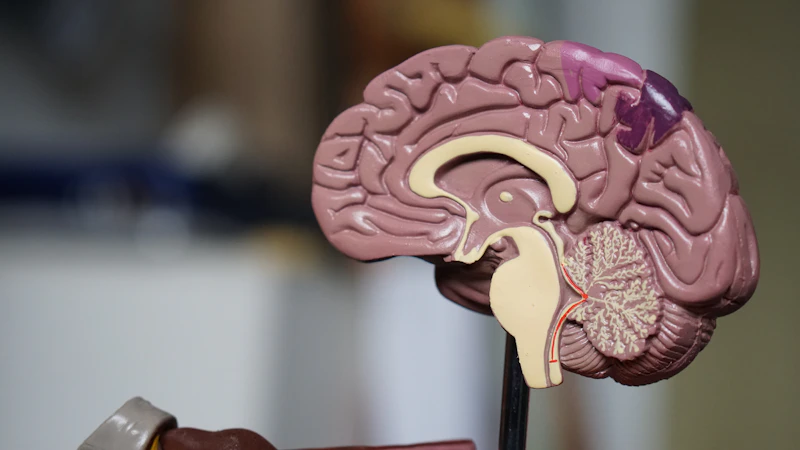
The Three Decision Neurons
The results were striking. The researchers identified three distinct types of neurons that formed a complete decision-making system 1 :
| Neuron Type | Function | Activation Timing | Role in Decision Process |
|---|---|---|---|
| Offer Value Neurons | Encode subjective value of specific offers | Immediately after option presentation | Create common currency for comparison |
| Chosen Value Neurons | Track value of selected option in universal currency | During and after choice | Post-decision valuation and learning |
| Taste Neurons | Respond to specific juice categories | After reward receipt | Sensory experience recording |
Perhaps most remarkably, these neurons demonstrated what economists call "menu invariance"—their response to a particular option remained consistent regardless of what other choices were available 1 . This neural consistency mirrors the rational choice principle of transitivity in decision theory, suggesting the brain has evolved mathematically robust decision algorithms.
From Biology to Technology: Implementing Nature's Strategies
The Swarm Intelligence Revolution
Inspired by flocking birds and social insects, swarm robotics represents one of the most successful applications of biological principles to autonomous systems .
Rather than relying on centralized control, each unit in a swarm follows simple local rules based on its neighbors' behavior, creating emergent intelligence at the group level.
| Biological Rule | Technical Implementation | AV Application |
|---|---|---|
| Maintain Minimum Distance | Short-range sensors (LiDAR, ultrasonic) with repulsion algorithms | Collision avoidance in dense formations |
| Align with Neighbors | Wireless communication of heading/velocity | Coordinated direction changes |
| Attract to Group Center | Averaging of neighbor positions | Maintaining formation integrity |
| Respond to Environmental Cues | Shared sensor data fusion | Collective obstacle navigation |
This approach enables remarkable capabilities: if one unit fails, the swarm automatically reorganizes itself, much like a flock adjusting to a predator's attack. This resilience to individual failure makes swarm systems ideal for missions in dangerous or unpredictable environments where reliability is critical .
Developing Risk-Aware Architectures
Drawing from both the primate valuation system and adolescent risk assessment strategies, researchers are developing autonomous systems with adaptive risk tolerance 3 .
Rather than simply avoiding all risks, these systems evaluate potential gains against possible costs, much like the brain's valuation mechanism.
- Mission Continuation vs. Abort: Weighing the value of continuing a mission against potential system damage or failure.
- Resource Management: Making strategic decisions about energy use, balancing current expenditure against future needs.
- Route Planning: Evaluating uncertain but potentially faster routes against safer, slower alternatives.
- Exploration vs. Exploitation: Deciding when to stick with known good options versus exploring potentially better alternatives.
These systems implement something similar to the brain's two-stage valuation and choice process, with separate modules for assessing options and executing decisions 1 . The result is autonomous aerial vehicles that don't just follow rules but make context-sensitive judgments based on multiple competing priorities.

The Scientist's Toolkit: Essential Components for Bio-Inspired Autonomy
What does it take to transform these biological principles into functional aerial systems? The following components form the essential toolkit for creating biologically-inspired autonomous vehicles:
| Component | Biological Inspiration | Function in AV Systems |
|---|---|---|
| Vision-Based Navigation | Insect compound eyes & motion detection | GPS-denied navigation in complex environments |
| Artificial Neural Networks | Primate brain valuation systems | Decision-making under uncertainty |
| LiDAR & Ultrasonic Sensors | Bat & dolphin echolocation | Obstacle detection and mapping |
| Swarm Communication Protocols | Bird flocking coordination rules | Decentralized fleet coordination |
| Reinforcement Learning Algorithms | Trial-and-error learning in animals | Adaptive behavior based on experience |
| Edge Computing Modules | Distributed neural processing | Real-time decision-making onboard |
| Morphing Wing Structures | Bird & insect wing adaptability | Optimized aerodynamics for different conditions |
Implementation Success Factors
These components work together to create systems that emulate biological intelligence. For instance, vision-based navigation inspired by insects allows drones to navigate dense urban environments without GPS, while reinforcement learning enables them to improve their performance over time based on experience, much as animals learn which choices yield the best outcomes .
Conclusion: The Future of Biologically-Inspired Autonomous Flight
The integration of biological strategies into autonomous aerial vehicles represents more than just another technological advance—it's a fundamental shift in how we approach machine intelligence. By learning from the sophisticated systems that evolution has refined over millennia, we're creating machines that operate with a level of flexibility, resilience, and intelligence previously seen only in nature.
Machine Intuition
Developing systems with contextual understanding
Creative Problem-Solving
Adaptive responses to novel situations
Advanced Applications
From urban air taxis to planetary exploration
As research continues, we can expect these systems to become increasingly sophisticated, potentially developing their own forms of machine intuition and creative problem-solving. The same neural mechanisms that allow primates to make efficient choices and enable birds to flock in perfect synchrony may soon guide autonomous delivery networks, urban air taxis, and exploration drones on other planets.
The next time you see a flock of birds moving as one or marvel at how quickly you can make a complex decision, remember: these everyday miracles of biology are inspiring a revolution in autonomous flight that will transform our relationship with the skies above us.