CFD vs. Experimental Drag Measurements in Drug Delivery: A Scientific Guide for Researchers
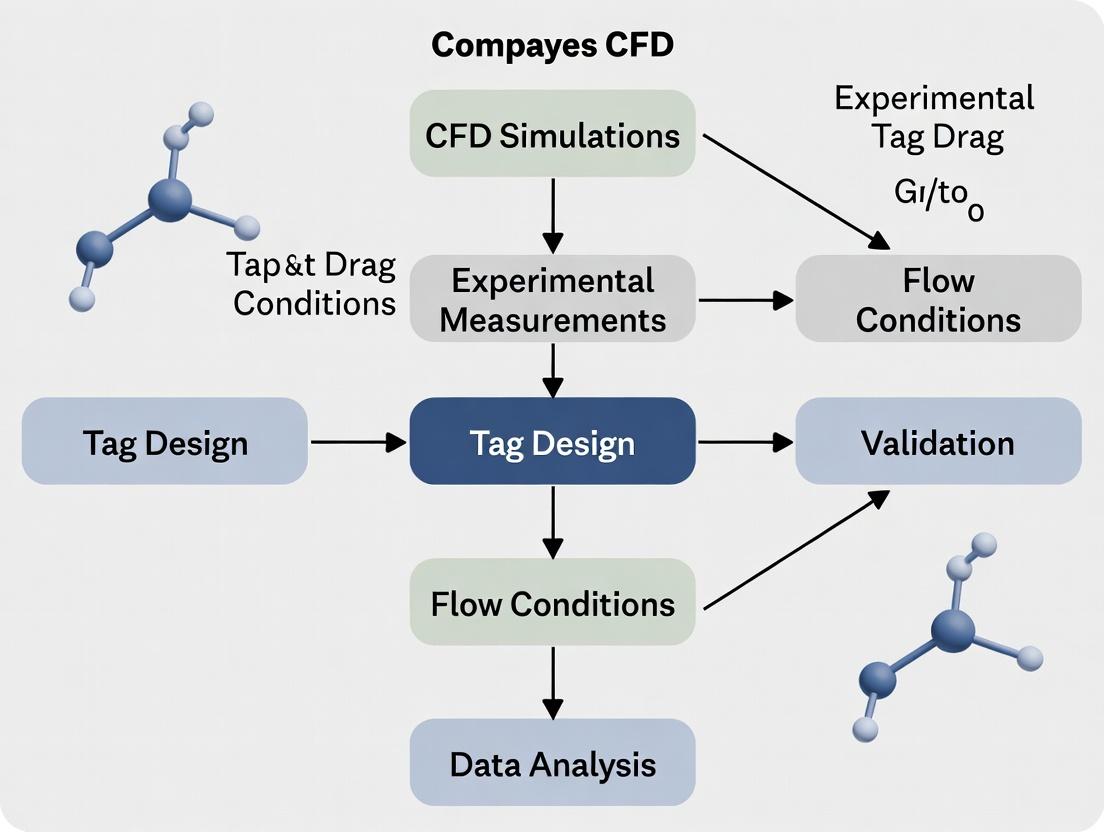
This article provides a comprehensive analysis of Computational Fluid Dynamics (CFD) and experimental methods for measuring drag on drug carriers and delivery devices.
CFD vs. Experimental Drag Measurements in Drug Delivery: A Scientific Guide for Researchers
Abstract
This article provides a comprehensive analysis of Computational Fluid Dynamics (CFD) and experimental methods for measuring drag on drug carriers and delivery devices. We explore the fundamental principles of fluid-particle interactions in physiological flows, detailing methodologies from simulation setup to experimental benchtop testing. The guide addresses common challenges in accuracy and validation, offering optimization strategies. A direct comparative analysis evaluates the strengths, limitations, and synergistic use of both approaches. Tailored for researchers and drug development professionals, this resource aims to inform the selection and integration of these critical tools for optimizing drug delivery system performance.
Understanding Drag in Drug Delivery: The Core Physics of CFD and Experimentation
Understanding the drag forces acting on microscopic drug carriers is fundamental to predicting their behavior in biological systems, from systemic circulation to targeted delivery. This guide compares the dominant flow regimes—Stokes flow and turbulent flow—and their implications for carrier design, framed within the critical research context of validating Computational Fluid Dynamics (CFD) simulations against experimental tag drag measurements.
Comparative Analysis of Flow Regimes for Drug Carriers
The drag force experienced by a particle is defined by the flow regime, characterized by the Reynolds number (Re = ρUL/μ, where ρ is density, U is velocity, μ is viscosity, and L is characteristic length). For microscopic carriers in vasculature, Re can vary from very low in capillaries to moderate in larger arteries.
Table 1: Comparison of Drag Force Regimes
| Parameter | Stokes (Creeping) Flow (Re << 1) | Turbulent Flow (Re >> 2000) | Intermediate/Transitional Regime (1 < Re < 2000) |
|---|---|---|---|
| Dominant Force Equation | Stokes' Law: F_d = 6πμRv | Newton's Drag Law: Fd = (1/2) CD ρ A v² | Empirical correlations (e.g., Schiller-Naumann) |
| Drag Coefficient (C_D) | C_D = 24/Re | ~ Constant (e.g., ~0.44 for a sphere) | C_D = (24/Re)(1 + 0.15Re^0.687) |
| Primary Application for Carriers | Microcirculation (capillaries, small venules), diffusion-dominated processes. | Central large arteries (during peak flow), injection jets. | Larger arterioles, medium-sized veins. |
| Flow Characteristics | Viscous forces dominate; flow is laminar, reversible, and predictable. | Inertial forces dominate; flow is chaotic, with eddies and high mixing. | Mix of viscous and inertial effects; steady vortices may form. |
| Impact on Carrier Trajectory | Highly predictable; excellent for deterministic targeting models. | Highly stochastic; can enhance dispersion but hinder precise targeting. | Moderately predictable; requires sophisticated CFD modeling. |
| CFD vs. Experimental Validation Challenge | CFD (Stokes solver) is highly accurate and matches well with particle image velocimetry (PIV) data. | High-fidelity CFD (LES, DES) required; validation with Laser Doppler Anemometry (LDA) is complex but possible. | Most challenging for validation; requires precise matching of boundary conditions in PIV/LDA experiments. |
Experimental Protocols for Drag Validation
Validating CFD models requires precise experimental measurement of drag or related flow fields. Key methodologies include:
Micro-Particle Image Velocimetry (μPIV) for Stokes Flow:
- Objective: To measure the velocity field around a stationary microsphere (model carrier) in a microfluidic channel simulating a capillary.
- Protocol: A polydisperse or fluorescent tracer particle suspension is flowed through a PDMS microchannel. A target sphere is fixed on the channel floor. A dual-pulsed Nd:YAG laser illuminates the plane, and a CCD camera captures image pairs. Cross-correlation of image pairs yields the 2D velocity vector field around the sphere. The experimental drag force is derived by integrating the measured shear stress and pressure fields.
- CFD Comparison: The experimental velocity field is directly compared to the output of a steady-state, laminar CFD simulation using the same geometry and boundary conditions. Normalized root-mean-square deviation (NRMSD) is calculated for validation.
Direct Force Measurement via Optical Tweezers in Transitional Flow:
- Objective: To directly measure the drag force on a single drug carrier candidate (e.g., a functionalized liposome).
- Protocol: A single microsphere/carrier is trapped in a tightly focused laser beam (optical tweezers) within a flow chamber. A controlled pressure-driven flow is applied. The displacement of the particle from the trap center (measured via back-focal-plane interferometry) is proportional to the drag force (F_d = k * Δx, where k is the trap stiffness). Force is measured as a function of flow velocity.
- CFD Comparison: A transient CFD simulation of the exact chamber geometry with a stationary particle is run. The simulated pressure and shear stress on the particle surface are integrated to compute drag. The force-velocity curve from CFD is plotted against the experimental data from optical tweezers.
Visualization of Research Framework
Diagram 1: CFD-Experimental Validation Workflow
The Scientist's Toolkit: Key Research Reagents & Materials
Table 2: Essential Research Reagents and Materials
| Item | Function in Drag Force Research |
|---|---|
| PDMS (Polydimethylsiloxane) | Standard material for fabricating microfluidic channels to replicate microscale vasculature for μPIV. |
| Fluorescent Tracer Particles (e.g., polystyrene, ~1 μm) | Seed the flow for velocity field measurement in μPIV; their displacement between laser pulses is tracked. |
| Functionalized Microspheres (e.g., PEG-coated, ligand-conjugated) | Serve as physiologically relevant drug carrier models for direct force measurement studies. |
| Glycerol/Water Mixtures | Used to tune the viscosity of perfusion fluids to achieve specific Reynolds numbers in vitro. |
| Optical Trapping Beads (high-index, e.g., silica) | Used as handles or direct carrier proxies in optical tweezer experiments for direct force calibration. |
| Laminin or Fibronectin Coatings | Used to functionalize channel surfaces or particles to study the effect of bio-adhesion on drag and rolling. |
| ANSYS Fluent / COMSOL Multiphysics / OpenFOAM | Industry-standard and open-source CFD software packages used to simulate flow fields and calculate drag. |
| High-Speed sCMOS Camera | Critical for capturing rapid image pairs in μPIV, especially for transitional flow studies. |
Comparison Guide: CFD vs. Experimental Techniques for Aneurysmal Hemodynamics
This guide compares the performance of Computational Fluid Dynamics (CFD) with experimental methods (e.g., Particle Image Velocimetry - PIV) in simulating blood flow within cerebral aneurysms, a critical area in preclinical device and drug development.
Comparison of Velocity and Wall Shear Stress Quantification
Table 1: Performance Comparison for Intracranial Aneurysm Flow Analysis
| Metric | High-Fidelity CFD (Solver: ANSYS Fluent/OpenFOAM) | In-Vitro PIV (Glass Silicone Models) | In-Vivo 4D Flow MRI |
|---|---|---|---|
| Spatial Resolution | < 0.1 mm (adjustable) | ~0.5-1.0 mm | 1.0-2.0 mm |
| Temporal Resolution | < 1 ms (time-step dependent) | ~1-5 ms (laser pulse rate) | ~30-50 ms |
| Measured Parameters | 3D Velocity, Pressure, WSS (all components), OSI, Particle Residence Time | 2D/3D Velocity field in a plane/volume (time-resolved) | 3D Time-averaged Velocity, 3D Phase-contrast Angiography |
| Key Advantage | Complete 3D hemodynamic field; ability to test "what-if" scenarios. | Direct, model-based experimental validation data. | Patient-specific in-vivo data; captures real physiology. |
| Primary Limitation | Dependency on boundary conditions & model assumptions (non-Newtonian, wall compliance). | Requires physical model fabrication; limited to in-vitro conditions. | Lower resolution; noise-sensitive for WSS derivation. |
| Typical Agreement with Benchmark (Peak Systolic Velocity) | Within 5-15% of high-resolution PIV (with proper setup) | Serves as the in-vitro gold standard benchmark. | Within 15-25% of CFD/PIV; good for bulk flow. |
| Cost & Time per Simulation/Experiment | High initial setup; low cost per parametric run. | Moderate cost per physical model; significant setup time. | Very high (scanner time); limited by patient availability. |
Experimental Protocols for Benchmarking CFD
Protocol 1: In-Vitro PIV for Aneurysm Model Validation
Objective: Generate high-fidelity experimental velocity data to validate CFD-predicted hemodynamics.
- Model Fabrication: Create a transparent silicone elastomer model of a patient-specific aneurysm geometry from 3D rotational angiography.
- Flow Loop Setup: Connect the model to a pulsatile pump system simulating cardiac output. Use a blood-mimicking fluid with matched viscosity and density.
- Seeding & Imaging: Seed the fluid with fluorescent tracer particles. Illuminate a thin laser sheet through the region of interest.
- Data Acquisition: Capture paired images at specified phases of the pulse cycle using a high-speed camera.
- Data Processing: Use cross-correlation algorithms (e.g., in DaVis software) to calculate 2D/3D velocity vector fields from particle displacement.
Protocol 2: CFD Simulation Workflow
Objective: Compute detailed hemodynamic parameters from medical imaging data.
- Image Segmentation: Import patient CT/MRI DICOM data into software (e.g., SimVascular, 3D Slicer) to isolate and reconstruct the 3D lumen geometry.
- Mesh Generation: Create an unstructured computational grid with boundary layer refinement near walls. Perform mesh independence study.
- Physics Definition: Set fluid properties (Newtonian or non-Newtonian). Apply patient-specific pulsatile velocity waveform as inlet boundary condition. Set outlets to pressure or resistance boundary conditions.
- Numerical Solving: Solve the 3D unsteady Navier-Stokes equations using a finite volume solver (e.g., OpenFOAM). Use a second-order accurate scheme.
- Post-Processing: Calculate derived quantities: Time-Averaged Wall Shear Stress (TAWSS), Oscillatory Shear Index (OSI), and flow streamlines.
Visualization: Methodologies and Workflow
Workflow for CFD Validation in Biomedicine
Key Hemodynamic Parameters from CFD
The Scientist's Toolkit: Key Research Reagents & Materials
Table 2: Essential Materials for CFD Validation Studies in Biomedical Flows
| Item Name | Category | Function & Rationale |
|---|---|---|
| Silicone Elastomer (e.g., PDMS) | Experimental Model Fabrication | Creates transparent, biocompatible physical models of vasculature from 3D printed molds for PIV experiments. |
| Blood-Mimicking Fluid (Glycerol/Water) | Experimental Fluid | Simulates blood viscosity and density for in-vitro studies, often seeded with tracer particles. |
| Fluorescent Polymer Microspheres | PIV Tracers | Serve as seed particles for laser-based velocity measurement in flow loops. Must match fluid density. |
| Pulsatile Flow Pump System | Experimental Setup | Reproduces patient-specific cardiac waveforms (e.g., from Doppler ultrasound) in the flow loop. |
| OpenFOAM / ANSYS Fluent | CFD Software | Open-source and commercial finite-volume solvers, respectively, for solving Navier-Stokes equations. |
| SimVascular / 3D Slicer | Image-Based Modeling | Open-source platforms for medical image segmentation and 3D geometric model reconstruction for CFD. |
| Patient-Specific Velocity Waveform | CFD Boundary Condition | Critical input data, typically acquired via Ultrasound or MRI, to define physiologically accurate inflow. |
| High-Performance Computing (HPC) Cluster | Computational Resource | Enables solving large, complex 3D transient simulations with high mesh resolution in feasible time. |
This guide objectively compares the performance of core experimental drag measurement techniques within the context of validating and complementing Computational Fluid Dynamics (CFD) simulations in aerodynamic and hydrodynamic research.
Comparison of Core Drag Measurement Techniques
Table 1: Comparison of Drag Measurement Platform Performance
| Technique / Platform | Typical Reynolds Number Range | Typical Test Object Size | Key Measurable Outputs | Spatial Resolution | Primary Advantages | Primary Limitations |
|---|---|---|---|---|---|---|
| Conventional Wind/Air Tunnel | 10⁴ to 10⁷ | Macro (cm to m) | Total drag force, lift, pressure distribution | Low (bulk force) | High accuracy for full-scale conditions, industry standard. | Tunnel wall interference, high cost, limited optical access. |
| Water Tunnel | 10³ to 10⁶ | Macro (cm to m) | Total drag force, vortex shedding visualization | Low to Medium | Flow visualization, lower operational cost than wind tunnels. | Scaling challenges, high hydrodynamic loads. |
| Microfluidic Drag Assay (e.g., Microchannels) | <1 to 10³ | Micro (µm to mm) | Drag force on particles/cells, velocity profiles | High (single particle) | Single-cell/particle resolution, high-throughput, low reagent use. | Low Re, surface effects dominant, simplified geometry. |
| Towing Tank | 10⁵ to 10⁹ | Macro (m scale) | Total drag resistance of hulls/bodies | Low (bulk force) | Realistic free-surface conditions for marine vehicles. | Extremely large facility, very high cost, long test times. |
| Particle Image Velocimetry (PIV) Integration | Varies with facility | Varies | Instantaneous velocity fields, derived shear stress | Very High (flow field) | Non-intrusive, provides full-field data for CFD validation. | Indirect force measurement, complex setup and data processing. |
Table 2: Supporting Experimental Data from Recent Studies (2020-2024)
| Study Focus (Object) | Technique Used | Benchmark/Alternative | Key Drag Metric Result | Context for CFD Validation |
|---|---|---|---|---|
| Airfoil Profile Optimization | Pressure-Sensitive Paint (PSP) in Wind Tunnel | CFD (RANS, LES) | Cp error < 0.05 between PSP and CFD in attached flow. | PSP provided high-resolution surface pressure for validating turbulence models. |
| Microparticle in Blood Flow | Microfluidic Resistive Pulse Sensing | Stokes Law Calculation | Measured drag coefficient within 5% of theoretical at Re ~0.01. | Validated CFD micro-particle tracking at very low Reynolds numbers. |
| Marine Hull Coating | Towing Tank Dynamometer | CFD (VOF+RANS) | Measured skin friction drag reduction of 8% vs. smooth hull. | Towing tank data confirmed CFD-predicted coating efficacy within 1.5%. |
| Formula 1 Wheel Wake | Wind Tunnel w/ Balance + PIV | CFD (DES) | Drag force discrepancy of <2%; PIV revealed vortex structures missed by CFD. | Combined force and flow field data pinpointed CFD model deficiencies in transient separation. |
Detailed Experimental Protocols
Protocol 1: Direct Drag Force Measurement in a Low-Speed Wind Tunnel
Objective: To measure the total aerodynamic drag force on a scaled vehicle model. Materials: Low-speed, closed-circuit wind tunnel; external aerodynamic balance (strain-gauge based); scaled test model; data acquisition system; pitot-static tube for freestream velocity. Methodology:
- Calibration: Calibrate the aerodynamic balance using known weights. Calibrate the pitot-static tube against a standard.
- Model Mounting: Securely mount the test model to the balance sting, ensuring no contact with tunnel walls.
- Baseline Reading: Record the balance output (all force components) at zero wind speed to establish a tare value.
- Test Matrix: Set the wind tunnel to a target freestream velocity (e.g., from 20 m/s to 60 m/s in increments). Allow flow to stabilize for 60 seconds at each condition.
- Data Acquisition: At each velocity point, record the steady-state output from the drag channel of the balance. Simultaneously record dynamic pressure from the pitot-static tube.
- Data Reduction: Subtract the tare drag. Calculate drag coefficient (CD) using: CD = FD / (0.5 * ρ * V² * A), where FD is measured drag force, ρ is air density, V is velocity, and A is reference area.
- Uncertainty Analysis: Calculate standard deviation from repeated runs and propagate instrument uncertainty.
Protocol 2: Microfluidic Passive Drag Characterization of Cells
Objective: To determine the hydrodynamic drag coefficient of individual cells in a controlled flow. Materials: PDMS microfluidic chip with a straight channel; syringe pump; high-speed CMOS camera mounted on inverted microscope; cell suspension; image analysis software (e.g., ImageJ, TrackPy). Methodology:
- Chip Priming: Fill the microfluidic channel with cell-free buffer using the syringe pump to remove bubbles.
- Flow Calibration: Infuse buffer at known pump rates and use particle tracking to map flow velocity profile, verifying Poiseuille flow.
- Cell Introduction: Introduce a dilute cell suspension into the channel at a very low flow rate to allow cells to settle near the channel bottom.
- Drag Measurement: Set the syringe pump to a constant, known flow rate (Q). Record high-speed video (≥500 fps) of cells translating in the channel's hydrodynamic focus.
- Tracking & Analysis: Use particle tracking algorithms to determine the instantaneous velocity (Ucell) of individual cells. The fluid velocity (Ufluid) at the cell's centroid position is derived from the calibrated parabolic profile.
- Drag Force Calculation: Assuming equilibrium where drag force equals Stokes drag (for low Re), calculate drag coefficient. The drag force FD = 3πμd(Ufluid - Ucell), where μ is dynamic viscosity and d is cell diameter.
- Statistical Reporting: Report drag coefficient distribution across a population of >100 cells.
Diagram: Experimental Drag Technique Selection Workflow
Title: Drag Measurement Technique Decision Tree
The Scientist's Toolkit: Key Research Reagent Solutions & Materials
Table 3: Essential Materials for Featured Drag Measurement Experiments
| Item / Reagent | Function / Application | Example Specifics |
|---|---|---|
| Aerodynamic Balance (Strain Gauge) | Measures all six components of aerodynamic force/moment on a test model directly. | Multi-axis, temperature-compensated, with nano-strain resolution for low-speed tunnels. |
| Pressure-Sensitive Paint (PSP) | Provides global surface pressure distribution for pressure drag component analysis. | Porous PSP with ruthenium-based luminophore, excited by blue LEDs, imaged with scientific CCD. |
| Polydimethylsiloxane (PDMS) | The primary elastomer for fabricating transparent, gas-permeable microfluidic chips. | Sylgard 184 kit, mixed 10:1 base to curing agent, used for soft lithography. |
| Tracer Particles (for PIV/PTV) | Seed the flow to enable visualization and quantitative measurement of velocity fields. | Hollow glass spheres (10-100 µm) for air; fluorescent or polystyrene microspheres (1-10 µm) for water/microfluidics. |
| Microfluidic Syringe Pump | Provides precise, pulseless flow control for generating well-defined low-Re conditions. | High-precision, multi-channel syringe pump with flow rate resolution down to nL/min. |
| Drag-Reducing Coatings (for Validation) | Test surfaces with known drag properties to calibrate or validate measurement systems. | Riblet films, superhydrophobic coatings, or polymer additives for turbulent drag reduction studies. |
This comparison guide, framed within the broader thesis of validating Computational Fluid Dynamics (CFD) against experimental data for drag prediction, objectively evaluates the performance of modern CFD solvers versus established experimental correlations. Accurate drag force calculation is critical in drug development for applications like aerosol delivery, blood-borne particle transport, and mixer design.
Comparison of CFD Predictions vs. Experimental Correlations for Drag Coefficient
The table below summarizes the predictive performance of a high-fidelity CFD solver (employing SST k-ω turbulence modeling and immersed boundary methods) against the classical Schiller-Naumann correlation and experimental data across varying conditions.
Table 1: Drag Coefficient (Cd) Comparison for Spheres
| Condition | Re | Particle Shape | Surface Roughness (k/D) | CFD Prediction (Cd) | Exp. Correlation (Cd) | Experimental Benchmark (Cd) | Error (CFD vs Exp) | Error (Correlation vs Exp) |
|---|---|---|---|---|---|---|---|---|
| Laminar Regime | 10 | Smooth Sphere | 0 | 4.12 | 4.08 | 4.10 ± 0.05 | +0.5% | -0.5% |
| Transition Regime | 300 | Smooth Sphere | 0 | 0.65 | 0.63 | 0.64 ± 0.02 | +1.6% | -1.6% |
| Critical Regime | 2.5e5 | Smooth Sphere | 0 | 0.15 | 0.47* | 0.14 ± 0.01 | +7.1% | +235%* |
| Turbulent, Rough | 1e4 | Smooth Sphere | 1e-3 | 0.48 | 0.46 | 0.49 ± 0.03 | -2.0% | -6.1% |
| Non-Spherical | 1000 | Ellipsoid (AR=2) | 0 | 0.95 | N/A | 0.92 ± 0.04 | +3.3% | N/A |
The Schiller-Naumann correlation fails in the critical regime where drag crisis occurs. *Standard correlations often lack generality for complex shapes.
Experimental Protocols for Benchmark Data
The experimental data cited in Table 1 is derived from standardized methodologies:
Wind/Water Tunnel Drag Measurement:
- Setup: A calibrated force transducer mounts the test particle in a uniform flow channel. Particle support interference is minimized using sting mounts or magnetic levitation.
- Flow Characterization: A pitot-static tube or laser Doppler velocimetry (LDV) measures freestream velocity (U∞) to calculate Reynolds number (Re = ρU∞D/μ). Turbulence intensity is kept below 0.5%.
- Force Measurement: The transducer records the steady-state drag force (Fd). The drag coefficient is calculated as Cd = Fd / (0.5 * ρ * U∞² * A), where A is the projected frontal area.
- Roughness Implementation: Controlled surface roughness is achieved by applying standardized coatings (e.g., epoxy with calibrated grit) or 3D printing with specified surface texture. Relative roughness (k/D) is measured via profilometry.
Settling Velocity Experiment in Quiescent Fluid:
- Setup: A tall, temperature-controlled column filled with a viscous fluid (e.g., glycerol-water mixtures).
- Procedure: Particles are released, and their terminal velocity (Vt) is tracked via high-speed camera.
- Derivation: At terminal velocity, drag force equals net gravity/buoyancy. Cd is derived by solving Cd = (4/3) * (gD / Vt²) * (ρp - ρf)/ρf, where ρp and ρ_f are particle and fluid density, respectively.
Visualization: Workflow for Validating CFD Drag Models
Title: CFD Drag Model Validation Workflow
The Scientist's Toolkit: Essential Research Reagent Solutions
Table 2: Key Materials and Reagents for Drag Force Studies
| Item | Function in Experiment/Simulation |
|---|---|
| Glycerol-Water Solutions | Provides a tunable-viscosity Newtonian fluid for settling experiments to achieve target Reynolds numbers. |
| Polystyrene Microspheres | Smooth, monodisperse spherical particles used as a baseline for laminar and transitional flow validation. |
| 3D Printing Resins (e.g., Standard & Flexible) | Enables precise fabrication of complex, non-spherical particle geometries (ellipsoids, rods, clusters). |
| Calibrated Silica Grit / Sandpaper | Used to create standardized surface roughness on particle models for studying roughness effects. |
| Polydimethylsiloxane (PDMS) | A common viscoelastic fluid used to study non-Newtonian effects on drag in biological fluid analogs. |
| Turbulence Grids (Mesh Screens) | Installed in wind/water tunnels to generate isotropic, quantified turbulence for studying unsteady drag. |
| Tracer Particles (e.g., Hollow Glass Beads) | Seeded in flow for Particle Image Velocimetry (PIV) to obtain velocity field data for CFD validation. |
| Immersion Oil (for Microscopy) | High-viscosity, transparent fluid for low-Re drag measurements of micro-scale particles relevant to drug delivery. |
The Critical Role of Drag in Targeted Delivery, Inhalation, and Vascular Transport
This guide compares computational fluid dynamics (CFD) and experimental methods for measuring tag drag, a critical parameter influencing drug carrier transport efficiency. Accurate drag quantification is essential for optimizing delivery systems across inhalation, vascular, and targeted applications.
Comparison: CFD vs. Experimental Drag Measurement Techniques
| Aspect | Computational Fluid Dynamics (CFD) Simulation | Experimental Particle Tracking Velocimetry (PTV) | Experimental Micro-Particle Image Velocimetry (μPIV) |
|---|---|---|---|
| Core Principle | Numerical solution of Navier-Stokes equations around a particle/carrier. | High-speed imaging of tracer particles in flow to deduce drag on a tagged object. | Optical measurement of velocity fields of both flow and particles using laser illumination. |
| Drag Output | Direct calculation of drag force from fluid stress integration. | Indirect calculation via particle trajectory analysis and force balance. | Direct measurement of flow field shear stresses and particle slip velocities. |
| Spatial Resolution | Very high (mesh-dependent), can model sub-micron features. | Limited to tracer particle density and camera resolution. | Typically ~1-10 μm, suitable for microvasculature studies. |
| Throughput & Cost | High initial setup cost; rapid parametric studies once validated. | Moderate cost for high-speed cameras; slower per experimental run. | High equipment cost (lasers, synced cameras); moderate throughput. |
| Key Limitation | Requires accurate boundary conditions and turbulence models; validation is mandatory. | Challenging in opaque tissues or deep vasculature; limited to 2D planes. | Limited depth of field; requires optical access and refractive index matching. |
| Typical Reported Drag Discrepancy (vs. Stokes' Law for spheres) | 5-15% in laminar flow; up to 50%+ in complex, pulsatile flows. | 10-20% variance, highly dependent on tracking algorithm accuracy. | 8-12% variance in controlled microchannel experiments. |
Detailed Experimental Protocols
Protocol 1: μPIV for Vascular Transport Drag Measurement
- Fabrication: Prepare a polydimethylsiloxane (PDMS) microfluidic channel mimicking target vasculature geometry (e.g., 50-200 μm diameter).
- Seeding: Suspend drug carrier analogs (e.g., 2μm PEGylated microspheres) and fluorescent tracer particles (0.5 μm) in a blood-mimicking fluid (aqueous glycerol solution at 3.5 cP).
- Perfusion: Use a precision syringe pump to generate physiologically relevant pulsatile flow (e.g., 1-10 mm/s mean velocity).
- Imaging: Illuminate the channel with a dual-pulsed Nd:YAG laser (λ=532 nm). Capture image pairs (Δt = 1-10 ms) with a cooled CCD camera mounted on an inverted epifluorescent microscope.
- Analysis: Use cross-correlation algorithms (e.g., LaVision DaVis) to calculate velocity vector fields. Compute carrier slip velocity and local shear stress to derive drag force.
Protocol 2: In Vitro Inhalation Drag via Impactor Cascade
- Aerosol Generation: Generate an aerosol cloud of the dry powder or nebulized formulation using a vibrating mesh nebulizer or dry powder inhaler tester.
- Drag Calibration via Aerodynamic Diameter: Direct the aerosol through a Next Generation Impactor (NGI) operated at a calibrated flow rate (e.g., 60 L/min). The inertial impaction stages segregate particles by their aerodynamic diameter (d_a), which inherently balances particle drag and mass.
- Collection & Quantification: Collect particles at each stage. Use high-performance liquid chromatography (HPLC) to quantify the active pharmaceutical ingredient mass.
- Analysis: Calculate the mass median aerodynamic diameter (MMAD). The MMAD is a direct experimental proxy for the ensemble drag force acting on particles in the inhalation airflow. Compare MMAD distributions between different carrier formulations.
Visualization: Research Workflow for Drag Analysis
Title: Integrated CFD and Experimental Drag Analysis Workflow
The Scientist's Toolkit: Key Research Reagent Solutions
| Item | Function in Drag Studies |
|---|---|
| PDMS (Sylgard 184) | For fabricating transparent, biocompatible microfluidic networks that mimic vascular geometry for μPIV. |
| Fluorescent Polystyrene Microspheres (0.5-10 μm) | Serve as tracer particles for flow visualization (small) or drug carrier analogs (large) in experimental systems. |
| Blood-Mimicking Fluid (Aqueous Glycerol/Sodium Iodide) | Provides tunable viscosity and refractive index to match physiological conditions and optical requirements. |
| PEGylated Lipid Nanoparticles | Standardized carriers for studying the effect of surface modification (stealth coating) on hydrodynamic drag. |
| Next Generation Impactor (NGI) | Gold-standard apparatus for aerodynamic particle size measurement, directly related to inhalation drag forces. |
| ANSYS Fluent / COMSOL Multiphysics | Industry-standard CFD software for simulating fluid-particle interactions in complex geometries. |
| LaVision DaVis / ImageJ PIV Plugins | Software for processing experimental image pairs to compute velocity fields and derive drag forces. |
Step-by-Step Methods: Implementing CFD Simulations and Drag Experiments
Within the broader thesis research comparing Computational Fluid Dynamics (CFD) to experimental tag drag measurements for drug particle aerosols, a robust and validated CFD workflow is critical. This guide compares methodologies and tools for simulating the aerodynamic behavior of drug particles, which is essential for predicting deposition in respiratory drug delivery.
Geometry Creation: Approaches and Tools
The geometric representation of drug particles and airway models sets the foundation for simulation accuracy.
Comparison of Geometry Creation Software
| Software | Primary Use Case | Key Advantage for Drug Particles | Limitations | Typical Export Format |
|---|---|---|---|---|
| ANSYS SpaceClaim | Direct modeling of idealized particles & airway segments | Rapid concept modeling, easy defeaturing of CAD imports | Less suited for complex organic particle shapes | .scdoc, .step |
| SOLIDWORKS | Parametric design of inhaler devices & particle aggregates | High precision for man-made components (inhalers) | Over-engineered for particle-only studies | .sldprt, .step |
| Blender (Open Source) | Creation of highly irregular, biologically-shaped particles | Advanced mesh-based modeling for realistic morphology | Steeper learning curve; not CAD-native | .stl, .obj |
| CT/MRI Segmentation (e.g., 3D Slicer) | Patient-specific airway geometry from medical scans | Anatomical realism for deposition studies | Requires image data; geometry often needs heavy cleaning | .stl |
Experimental Protocol for Geometry Validation:
- Sample Preparation: Drug particles (e.g., lactose carriers, API aggregates) are sampled onto a substrate.
- Imaging: Particles are imaged using Scanning Electron Microscopy (SEM) or Atomic Force Microscopy (AFM) at multiple angles.
- 3D Reconstruction: Images are processed using software like ImageJ or Avizo to generate a 3D point cloud or surface mesh.
- Comparison Metric: The sphericity, aspect ratio, and surface roughness of the reconstructed digital geometry are quantitatively compared to measurements from the physical images to validate fidelity.
Title: Particle Geometry Creation & Validation Workflow
Meshing Strategies: Balance of Accuracy and Cost
Meshing converts geometry into a computational grid. The strategy profoundly impacts solver stability and result accuracy for particle-laden flows.
Comparison of Meshing Strategies for Particle Simulations
| Strategy | Software Example | Best For | Mesh Control | Typical Cell Count (Around Particle) | Notes on Y+ |
|---|---|---|---|---|---|
| Tetrahedral (Unstructured) | ANSYS Fluent Meshing, snappyHexMesh | Complex airway geometries, irregular particles | Global size, local refinements | 500k - 5M | Requires inflation layers for near-wall resolution. |
| Hexahedral (Structured) | ANSYS ICEM CFD | Simplified particle studies, boundary layer analysis | High manual control, body-fitted O-grids | 50k - 500k | Excellent for controlled Y+ ~1 for DES/LES. |
| Polyhedral | STAR-CCM+ Core | Compromise for complex inhaler plenum flows | Surface remeshing, prism layers | 200k - 2M | Better convergence than tetra, fewer cells. |
| Cut-Cell (Cartesian) | OpenFOAM (snappyHexMesh), STAR-CCM+ | Rapid prototyping, moving particle studies | Background grid, surface refinement levels | Varies widely | Automatically handles complex shapes. |
Experimental Protocol for Mesh Independence Study:
- Baseline Mesh: Generate an initial mesh with a defined base size.
- Simulation: Run a steady-state CFD simulation for a benchmark case (e.g., drag on a single sphere at Re=10).
- Refinement: Systematically refine the mesh globally or in critical regions (boundary layer, wake) by ~30% cell count increase.
- Key Output Monitoring: Track the dimensionless drag coefficient (Cd) and pressure drop across the domain.
- Convergence Criterion: Continue refinement until the change in Cd is less than 2% between successive meshes. The mesh prior to this is considered independent.
Title: Mesh Independence Study Protocol
Solver Selection: Capturing Particle-Fluid Dynamics
The choice of solver and physical models determines the fidelity of particle tracking and drag prediction.
Comparison of CFD Solvers & Models for Drug Particle Flow
| Solver / Model | ANSYS Fluent | OpenFOAM | STAR-CCM+ | Notes for Thesis Context |
|---|---|---|---|---|
| Core Approach | Finite Volume | Finite Volume | Finite Volume | All are appropriate; selection depends on accessibility and coupling needs. |
| Turbulence Model (RANS) | k-ω SST | k-ω SST | k-ω SST | Benchmark: Good balance for internal airway flows. Compare results to k-ε. |
| Discrete Phase Model (DPM) | Mature, one-way coupling | Lagrangian (basic) | Mature, with robust two-way coupling | Thesis Critical: Validate DPM drag law against experimental tagged particle trajectory. |
| Dense Particle (DEM Coupling) | Yes (with EDEM) | Yes (CFDEM) | Yes (built-in) | Needed for carrier-aggregate studies in inhalers. |
| LES/DES Capability | Yes | Yes (extensive) | Yes | High-Fidelity Validation: Use LES to resolve unsteady wake for irregular particles, compare to high-speed experimental tracks. |
| User Accessibility | Commercial GUI | Open-source, code-based | Commercial GUI | OpenFOAM offers transparency; commercial suites offer streamlined workflows. |
Experimental Protocol for Solver Validation (Drag Force):
- Benchmark Case: A spherical particle of known diameter (d) fixed in a uniform flow of known velocity (U) and viscosity (μ).
- CFD Setup: Simulate using different solver settings (RANS models, LES, different discretization schemes).
- Output Calculation: Compute drag force (F_d) from the CFD solution.
- Comparison to Correlation: Calculate the simulated drag coefficient: Cdsim = Fd / (0.5 * ρ * U² * A). Compare this to the empirical Schiller-Naumann correlation: Cd_SN = (24/Re)*(1 + 0.15Re^0.687), where Re = ρUd/μ.
- Validation Metric: The error (%) between Cdsim and CdSN across a range of Re (0.1 to 100) quantifies solver accuracy for your specific setup.
The Scientist's Toolkit: Key Research Reagent Solutions
| Item / Solution | Function in CFD vs. Experimental Research | Example Product/Software |
|---|---|---|
| Monodisperse Particle Generator | Produces uniformly-sized particles for controlled CFD validation experiments. | TSI 3450 Vibrating Orifice Aerosol Generator. |
| High-Speed Particle Imaging Velocimetry (PIV) | Captures experimental 2D/3D velocity fields of particles in flow for direct CFD comparison. | Dantec Dynamics Nano/Micro PIV systems. |
| Lagrangian Particle Tracking Software | Processes high-speed video to extract individual particle trajectories and velocities. | LaVision DaVis Particle Tracker. |
| Open-Source CFD Suite | Provides transparent, modifiable solvers for developing custom drag models or couplings. | OpenFOAM v11. |
| Commercial Multiphysics Suite | Integrated environment for geometry, meshing, solving, and post-processing. | ANSYS 2024 R1, Siemens STAR-CCM+ 2306. |
| Statistical Analysis Software | Quantifies the agreement between CFD-predicted and experimentally-measured deposition patterns or drag. | OriginPro, R with 'ggplot2' & 'hydroGOF' packages. |
Computational Fluid Dynamics (CFD) has become indispensable for modeling physiological flows, offering insights complementary to experimental techniques like particle image velocimetry (PIV) or tracer-based drag measurements. This guide compares the performance of common software and methodologies for setting biologically relevant boundary conditions (BCs) across vascular, pulmonary, and in vitro device models, contextualized within research validating CFD against experimental drag data.
Performance Comparison: CFD Solvers for Physiological Flows
The accurate imposition of boundary conditions—including pulsatile inlet velocity, pressure outlets, and compliant wall models—is critical for predictive simulation. The following table compares solver performance based on benchmark studies replicating experimental flow drag in idealized stenotic vessels and airway bifurcations.
Table 1: CFD Solver Comparison for Flow Field & Drag Force Prediction
| Software/Platform | Solver Type (Typical) | Key BC Features for Physiology | Benchmark vs. Exp. Drag (Error) | Wall Compliance Handling | Steady/Transient Performance | Primary Application Cited |
|---|---|---|---|---|---|---|
| ANSYS Fluent | Finite Volume | User-defined functions (UDF) for complex pulsatile profiles, coupled fluid-structure interaction (FSI) modules. | ±5.2% error in time-averaged drag in a 70% stenosis model (vs. PIV). | Advanced via FSI add-on. | Excellent transient capabilities. | Blood flow in stented arteries. |
| OpenFOAM | Finite Volume (Open-source) | Flexible code-level BC specification; cyclic for airway repeats; windkessel for outlets. |
±6.8% error in bronchial bifurcation drag (vs. in vitro micro-PIV). | Basic FSI possible with solvers. | Very good, requires tuning. | Pulmonary airflow, custom bioreactors. |
| COMSOL Multiphysics | Finite Element | Built-in "Lumped Parameter" and "Flow Resistance" BCs for direct circuit coupling. | ±4.5% error in drag on a spherical particle in microchannel (vs. track). | Native, integrated FSI. | Excellent for fully coupled phenomena. | Cell culture chambers, organ-on-chip. |
| SimVascular (SV) | Finite Element (Custom) | Patient-specific BCs from imaging; resistive, RCR (Windkessel) outlets as standard. | ±7.1% error in aneurysm drag force (vs. phantom flow experiment). | Limited built-in FSI. | Specialized for cardiovascular transients. | Patient-specific vascular models. |
Experimental Protocols for CFD Validation
The quantitative comparison above relies on rigorous experimental benchmarks. Below are detailed methodologies for two key validation experiments.
Protocol 1: In Vitro Drag Measurement in a Stenotic Vessel Phantom
- Fabrication: A transparent, rigid polydimethylsiloxane (PDMS) phantom with a 70% area stenosis is fabricated using 3D-printed molds.
- Experimental Setup: The phantom is connected to a pulsatile pump system circulating a blood-analog fluid (glycerol-water mixture with matched viscosity and seeded tracer particles). A force transducer is positioned downstream to measure direct drag force on the phantom structure.
- Data Acquisition: Particle Image Velocimetry (PIV) captures time-resolved velocity fields. Simultaneously, pressure (via catheters) and drag force (via transducer) are recorded over 50 pulse cycles.
- CFD Setup: The identical phantom geometry is meshed. The measured inlet velocity waveform and outlet pressure are imposed as BCs. A rigid wall is assumed. Transient simulation is run for 10 cycles to ensure periodicity.
- Validation: The computed drag force from CFD (integrated surface stress) is compared cycle-by-cycle with the transducer measurements.
Protocol 2: Micro-PIV Validation for Airway Bifurcation Flow
- Model System: A scaled-up, transparent model of a human G3-G5 bronchial bifurcation is fabricated in acrylic.
- Flow Conditions: Steady and oscillatory airflow is generated using a precision flow controller. The air is seeded with sub-micron oil droplets.
- Imaging: A high-speed laser and camera perform micro-PIV in multiple planes to reconstruct the 3D velocity field and derive local shear stresses (related to drag).
- CFD Setup: The CAD geometry is meshed. The measured inlet mass flow rate is set as the inlet BC. Outlet static pressures are set to match experimental values. Laminar-to-transitional flow models are tested.
- Validation: The CFD-predicted velocity vector fields and derived shear stress distributions are quantitatively compared against PIV data using correlation coefficients and pointwise error maps.
Visualization of Key Methodological Workflows
Title: CFD Validation Workflow Against Experimental Data
Title: Boundary Condition Selection for Physiological Models
The Scientist's Toolkit: Key Research Reagent Solutions
Table 2: Essential Materials for In Vitro Flow & Validation Experiments
| Item | Function in Experiment | Example Product/Specification |
|---|---|---|
| Blood Analog Fluid | Mimics the viscosity and, sometimes, the non-Newtonian behavior of blood for in vitro flow loops. | Glycerol-Water Mixture (40/60% by weight for ~3.5 cP). Sodium Thiocyanate solution for matched refractive index in PIV. |
| PDMS (Sylgard 184) | The standard elastomer for fabricating transparent, compliant vascular phantoms and microfluidic devices via soft lithography. | Dow Silicones SYLGARD 184 Kit. Mixed 10:1 base:curing agent. |
| Micro-PIV Tracer Particles | Seed the flow for velocity field measurement via laser illumination and imaging. | Duke Scientific or Microgen Polystyrene particles (0.5-10 μm diameter), coated for biocompatibility if needed. |
| Precision Pulsatile Pump | Generates physiologically relevant, reproducible flow waveforms (e.g., cardiac, respiratory) in vitro. | Cole-Parmer Masterflex L/S with programmable controller, or ViVitro SuperPump. |
| Force/Torque Transducer | Directly measures the hydrodynamic drag force acting on a phantom or object in the flow stream. | ATI Nano17/25 (high-resolution, 6-axis). Futek LSB200 series. |
| Compliance Matching Material | Creates walls with tunable elasticity to model vessel/airway compliance in Fluid-Structure Interaction (FSI) validation. | Ecoflex 00-30 Silicone (very soft). Polyvinyl Alcohol (PVA) cryogels. |
Within the broader thesis research comparing Computational Fluid Dynamics (CFD) to experimental tag drag measurements, selecting the appropriate experimental setup is paramount. This guide objectively compares three critical techniques—Force Transducers, Particle Image Velocimetry (PIV), and Traction Microscopy—for quantifying mechanical forces in fluid and cellular environments relevant to drug development and biomedical research.
Comparison of Core Techniques
The table below summarizes the key performance characteristics of each method based on current experimental data.
Table 1: Performance Comparison of Force Measurement Techniques
| Feature | Force Transducers (e.g., Load Cells, AFM) | Particle Image Velocimetry (PIV) | Traction Force Microscopy (TFM) |
|---|---|---|---|
| Primary Measurand | Direct force (N, pN) | Fluid velocity field (m/s) → derived stresses | Substrate displacement field (μm) → derived tractions (Pa) |
| Typical Resolution | Temporal: ~1 kHz; Spatial: Single point | Temporal: ~10 Hz; Spatial: Vector field over mm²-cm² | Temporal: ~0.1 Hz; Spatial: Traction map over cell area (μm²) |
| Force Sensitivity | High (pN to N range) | Indirect; depends on flow regime and seeding | Moderate-High (Pa to kPa range) |
| Key Advantage | Direct, time-resolved force reading | Full-field, non-invasive flow visualization | Maps spatial distribution of cell-generated forces |
| Main Limitation | Spatial resolution limited; can be intrusive | Requires optical access and seeding particles; indirect force calculation | Computationally intensive inverse problem; low temporal resolution |
| Primary Application in Drag Research | Direct drag force on objects in flow | Quantifying flow separation, shear layers, wake vortices | Measuring direct cellular traction forces on deformable substrates |
| Typical Experimental Cost | $$ - $$$ | $$$ - $$$$ | $ - $$ |
Experimental Protocols
Protocol 1: Force Transducer Setup for Object Drag Measurement
Objective: To directly measure the hydrodynamic drag force on a micro-scale particle or tagged object.
- Calibration: Mount the transducer (e.g., a micro-fabricated cantilever or sensitive load cell) and apply known weights to establish a voltage-force relationship.
- Object Mounting: Affix the test particle (e.g., a drug carrier microsphere or a tagged cell) to the transducer tip using a biocompatible adhesive or specific ligand-receptor binding.
- Flow Chamber Integration: Position the transducer and object within a parallel-plate or microfluidic flow chamber.
- Data Acquisition: Initiate controlled flow using a syringe or peristaltic pump. Record the transducer's voltage output at high frequency (≥1 kHz) throughout the flow experiment.
- Data Analysis: Convert voltage timeseries to force. Calculate mean drag force and fluctuations. This data serves as ground truth for CFD model validation.
Protocol 2: 2D-PIV for Flow Field Characterization Around an Object
Objective: To obtain the velocity field around a stationary or moving object to derive pressure and shear stress fields.
- Seed Preparation: Introduce fluorescent or inert tracer particles (e.g., 1-10 μm diameter) into the working fluid at a suitable density.
- Experimental Setup: Place the object of interest in a transparent test section. Illuminate a laser sheet (e.g., Nd:YAG) across the region of interest.
- Image Capture: Use a synchronized CCD/CMOS camera to capture pairs of images of the seeded flow field at a known time interval (Δt).
- Cross-Correlation Processing: Divide the images into interrogation windows. Use cross-correlation algorithms (e.g., in software like DaVis, PIVlab) to calculate the most probable displacement vector for each window.
- Post-Processing: Apply vector validation and smoothing. Calculate spatial derivatives to obtain vorticity and strain rate. Use algorithms to derive pressure fields from velocity data for drag component analysis.
Protocol 3: 2D Traction Force Microscopy for Cellular Traction Mapping
Objective: To quantify the magnitude and distribution of traction forces exerted by a cell adhering to a compliant substrate.
- Substrate Preparation: Fabricate or purchase a polyacrylamide gel substrate of known Young's modulus (0.1-50 kPa) embedded with fluorescent marker beads (e.g., 0.2 μm red FluoSpheres).
- Cell Plating: Plate cells of interest (e.g., metastatic cancer cells, fibroblasts) onto the substrate and allow them to adhere and spread.
- Image Acquisition: Acquire a fluorescence image of the bead layer with the cell present ("tensed state").
- Reference Image Acquisition: Detach the cell using trypsin or a detergent and acquire a second image of the same bead field ("relaxed state").
- Displacement Field Calculation: Use digital image correlation or particle tracking algorithms to compute the displacement field of the bead markers between the relaxed and tensed states.
- Traction Force Reconstruction: Solve the inverse Boussinesq problem using Fourier Transform Traction Cytometry (FTTC) or Bayesian methods to convert the displacement field into a 2D map of traction vectors at the cell-substrate interface.
Visualizing Workflows
Diagram 1: Technique Selection Logic for Drag Force Research
Diagram 2: PIV to Drag Force Calculation Workflow
The Scientist's Toolkit: Research Reagent Solutions
Table 2: Essential Materials for Featured Experiments
| Item | Function | Example/Typical Specification |
|---|---|---|
| Microfabricated Cantilever (AFM) | Acts as a force transducer; bends proportionally to applied force. | Silicon nitride, spring constant: 0.01 - 1 N/m, tip radius: 20 nm. |
| Fluorescent Tracer Particles (PIV) | Seed flow to visualize motion; must follow flow faithfully. | Polystyrene or silica microspheres, 1-10 μm, doped with Rhodamine B or Fluorescein. |
| Polyacrylamide Gel Substrate (TFM) | Compliant, transparent substrate for cell culture that deforms under cellular traction. | Acrylamide/Bis-acrylamide mix, tunable stiffness (0.1-50 kPa), functionalized with collagen/fibronectin. |
| Fiducial Marker Beads (TFM) | Embedded in gel to act as displacement markers for correlation. | Red fluorescent carboxylate-modified microspheres, 0.2 μm diameter. |
| Synchronized Laser System (PIV) | Generates a high-powered, pulsed light sheet to illuminate seed particles. | Double-pulse Nd:YAG laser, 532 nm wavelength, pulse energy 50-200 mJ. |
| High-Speed sCMOS Camera | Captures rapid sequences of images for PIV or transducer motion tracking. | 16-bit dynamic range, 2560 x 2160 resolution, >50 fps full-frame. |
| Inverse Problem Solver Software (TFM) | Converts substrate displacement maps into traction force fields. | OpenTFM, Fourier Transform Traction Cytometry (FTTC) code, Bayesian methods. |
| Digital Image Correlation Software | Calculates displacement fields by comparing reference and deformed images. | PIVlab (MATLAB), DaVis (LaVision), OpenPIV (Python). |
Fabricating Scale Models and Test Articles for Benchtop Experiments
The validation of Computational Fluid Dynamics (CFD) predictions against experimental data is a cornerstone of aerodynamic research, particularly for drag characterization. A critical, yet often under-discussed, component of this process is the fabrication of high-fidelity scale models and test articles for benchtop experiments. This guide compares common fabrication methodologies, providing objective performance data to inform researchers and professionals engaged in correlating CFD and experimental drag measurements.
Comparison of Fabrication Methodologies
The choice of fabrication technique directly impacts model accuracy, surface finish, mechanical properties, and cost—all factors influencing the integrity of experimental drag data. The following table summarizes a comparative analysis of key techniques.
Table 1: Performance Comparison of Model Fabrication Techniques
| Fabrication Method | Typical Accuracy (mm) | Surface Roughness (Ra, µm) | Typical Tensile Strength (MPa) | Relative Cost (Material + Time) | Best Suited For |
|---|---|---|---|---|---|
| FDM 3D Printing (PLA/ABS) | ±0.1 - 0.3 | 10 - 30 | 30 - 60 | Low | Rapid prototypes, low-speed flow models, mounting fixtures. |
| SLA/DLP 3D Printing (Standard Resin) | ±0.025 - 0.1 | 0.5 - 2 | 40 - 65 | Medium | High-detail models, complex geometries, optical flow studies. |
| CNC Machining (Aluminum 6061) | ±0.0125 - 0.05 | 0.4 - 1.6 | 145 - 290 | High | High-speed wind tunnel models, reference test articles, durable parts. |
| PolyJet 3D Printing | ±0.02 - 0.1 | 0.3 - 1.4 | 20 - 50 | Medium-High | Multi-material models, smooth surface finishes directly from print. |
Experimental Protocols for Model Validation & Drag Correlation
To ensure fabricated models yield reliable experimental data for CFD validation, a standardized pre-test protocol is essential.
Protocol 1: Dimensional Fidelity and Surface Topography Assessment
- Tool: Coordinate Measuring Machine (CMM) or high-resolution optical scanner.
- Method: Scan the fabricated model and align the point cloud to the original CAD geometry using a best-fit algorithm.
- Measurement: Calculate the global deviation map. Report the root-mean-square (RMS) error and maximum positive/negative deviations.
- Surface Analysis: Use a profilometer to measure average surface roughness (Ra) at three critical locations: nose cone, maximum diameter, and trailing edge.
- Acceptance Criterion: RMS error < 0.05% of model characteristic length (e.g., chord or diameter).
Protocol 2: Benchtop Drag Force Measurement via Load Cell
- Setup: Mount the scale model on a stiff, streamlined sting connected to a high-precision, low-range load cell (e.g., 10N capacity). The assembly is positioned in a low-turbulence wind tunnel test section.
- Calibration: Apply a series of known static weights to the model axis and record voltage output. Derive a linear calibration curve (R² > 0.999).
- Data Acquisition: At a fixed Reynolds number, record the mean voltage from the load cell over a 60-second period at a sampling rate of 1 kHz. Convert to force.
- Background Subtraction: Measure drag force from the sting alone at identical flow conditions. Subtract this value from the total measured drag to isolate model drag.
- Uncertainty Quantification: Calculate standard uncertainty incorporating load cell resolution, tunnel turbulence intensity, and voltage signal noise.
Workflow: Integrating Model Fabrication into CFD-Experimental Research
The following diagram outlines the iterative process of using fabricated models to bridge CFD and experimental drag measurement.
Title: CFD-Experimental Drag Correlation Workflow
The Scientist's Toolkit: Key Research Reagent Solutions
Table 2: Essential Materials for High-Fidelity Model Fabrication & Testing
| Item | Function/Benefit |
|---|---|
| SLA/DLP Photopolymer Resin (High-Temp or Engineering Grade) | Provides excellent surface finish and dimensional accuracy for models used in moderate-temperature, low-turbulence flow experiments. |
| Machinable Wax or Tooling Board | A safe, low-wear material for CNC machining prototype models, allowing for rapid design iteration before final metal cutting. |
| Two-Part Epoxy Filler/Primer (e.g., Microballoon-filled) | Used to fill layer lines from 3D printing and create a perfectly smooth, sealed surface ready for finishing. |
| Abrasive Polishing Compounds (2000-12000 Grit) | For manual or mechanical polishing of model surfaces to achieve sub-micron roughness, critical for minimizing viscous drag artifacts. |
| High-Strength, Low-Creep Adhesive (e.g., Cyanoacrylate for plastics, Epoxy for metals) | For assembling multi-part models or attaching mounting stings without introducing misalignment or significant bond-line roughness. |
| Matte Black Acrylic Spray Paint | Uniform, low-gloss coating minimizes reflective glare in optical measurement techniques like Particle Image Velocimetry (PIV). |
| Precision Calibration Weights (Class M1 or better) | Essential for accurate static calibration of the force measurement system (load cell) used in drag experiments. |
| Optical Flat & Monochromatic Light Source | Used in a simple interferometry setup to visually check for surface warpage or large-scale imperfections on model critical surfaces. |
This comparative guide is framed within a broader thesis examining the complementary roles of computational fluid dynamics (CFD) and experimental in vitro testing for aerodynamic assessment in pharmaceutical aerosol development. The focus is a novel low-resistance dry powder inhaler (DPI) device designed for high-dose antibiotic delivery, incorporating engineered mannitol-based porous nanoparticle (NP) aggregates. We objectively compare the device's performance against two established alternatives.
Experimental & CFD Protocols
2.1. Experimental Protocol for In Vitro Aerodynamic Assessment (Impaction)
- Apparatus: Next-Generation Impactor (NGI), USP <601> compliant. Pre-separator used for high-dose formulation. Critical flow controller set to 100 L/min for 2.8 seconds.
- Device Preparation: The novel DPI device, a comparator high-resistance DPI (RS01), and a multi-dose capsule inhaler (Turbospin) were each filled with 50 mg of the mannitol NP formulation (mass median aerodynamic diameter, MMAD ~2.5 µm via laser diffraction).
- Procedure: For each device (n=10), the dose was aerosolized into the NGI at 100 L/min. Stages were washed with deionized water. Drug content was quantified via validated HPLC-UV.
- Data Analysis: Emitted dose (ED), fine particle fraction (FPF, <5 µm), and MMAD were calculated from stage-specific mass deposition.
2.2. CFD Protocol for Device Flow and Particle Tracking
- Software & Model: ANSYS Fluent 2023 R1. A transient, pressure-based solver with a k-ω SST turbulence model was used.
- Geometry & Mesh: High-fidelity CAD of each inhaler mouthpiece and induction port was imported. An unstructured tetrahedral mesh with five prism layers for wall treatment was generated (Mesh independence verified).
- Boundary Conditions: A transient pressure drop profile matching the experimental peak pressure drop (4 kPa for novel device) was applied at the inlet. The outlet was set to atmospheric pressure.
- Particle Simulation: Discrete Phase Model (DPM) was used. 50,000 spherical particles (density: 1.2 g/cm³, size distribution matching experimental data) were injected at the powder chamber. A user-defined function modeled aggregate dispersion and deagglomeration based on local shear forces.
- Output: Particle trajectories, velocity contours, and regional deposition efficiencies were analyzed.
Comparative Performance Data
Table 1: Summary of Aerodynamic Performance Data (Mean ± SD)
| Metric | Novel Low-Resistance DPI | High-Resistance DPI (RS01) | Multi-Dose Capsule DPI (Turbospin) |
|---|---|---|---|
| Emitted Dose (%) | 92.5 ± 3.1 | 88.2 ± 4.7 | 85.7 ± 5.2 |
| FPF (<5 µm) (% of ED) | 68.4 ± 2.8 | 62.1 ± 3.5 | 58.9 ± 4.1 |
| MMAD (µm) | 2.8 ± 0.3 | 3.1 ± 0.4 | 3.3 ± 0.5 |
| Device Resistance (kPa^0.5/(L/min)) | 0.04 | 0.09 | 0.06 |
| CFD-Predicted Mouthpiece Deposition (%) | 15.2 | 22.7 | 19.8 |
Table 2: CFD vs. Experimental Deposition Correlation
| Deposition Region | Experimental Result (% of ED) | CFD Prediction (% of ED) | Absolute Difference |
|---|---|---|---|
| Device & Mouthpiece | 17.1 ± 2.4 | 15.2 | 1.9 |
| Induction Port (Throat) | 21.3 ± 3.5 | 23.5 | 2.2 |
| FPF (Lower NGI Stages) | 68.4 ± 2.8 | 70.1* | 1.7 |
*CFD-predicted FPF derived from particles exiting the induction port with d_ae <5µm.
Visualized Workflows & Relationships
Diagram 1: Integrated CFD-Experimental Development Workflow
Diagram 2: In Vitro Impaction Testing Steps
The Scientist's Toolkit: Key Research Reagents & Materials
Table 3: Essential Materials for Inhaler Aerosol Performance Testing
| Item | Function/Brief Explanation |
|---|---|
| Next-Generation Impactor (NGI) | Apparatus for aerodynamic particle size distribution measurement based on inertial impaction at defined flow rates. |
| Critical Flow Controller | Provides a consistent, calibrated airflow (e.g., 60-100 L/min) through the impactor, essential for reproducibility. |
| High-Pressure Liquid Chromatography (HPLC) System with UV Detector | For quantitative analysis of active pharmaceutical ingredient (API) content in NGI stage washes. |
| Engineered Mannitol Particles | Porous nanoparticle aggregates serving as the carrier/drug formulation with tailored density and dispersion properties. |
| Low-Resistance DPI Device Prototype | Test article designed to minimize airflow resistance, potentially improving ease of use and lung deposition. |
| Vacuum Pump & Flow Meter | System for generating and precisely measuring the required volumetric flow rate for testing. |
| Dissolution Media (e.g., PBS) | Aqueous solvent for washing deposited drug from NGI stages and preparing samples for HPLC. |
| CFD Software (e.g., ANSYS Fluent) | Enables virtual prototyping of inhaler airflow, turbulence, and particle trajectory simulations. |
Solving Common Problems: Accuracy, Artifacts, and Best Practices
Within the broader research on validating Computational Fluid Dynamics (CFD) against experimental tag drag measurements, achieving stable, convergent, and accurate simulations is paramount. Convergence issues and numerical diffusion are two central challenges that can severely compromise the fidelity of CFD results, leading to significant discrepancies when compared to physical experimental data. This guide compares strategies and solver technologies for mitigating these problems, providing a framework for researchers and scientists to select appropriate methodologies for high-fidelity simulations in applications ranging from aerodynamic design to biomedical fluid dynamics.
Comparative Analysis of Discretization Schemes & Solver Technologies
The choice of spatial discretization scheme and solver algorithm fundamentally impacts numerical diffusion and convergence behavior. The table below compares common approaches based on stability, accuracy, and computational cost.
Table 1: Comparison of Spatial Discretization Schemes for Advection-Term Formulation
| Scheme | Order of Accuracy | Numerical Diffusion | Stability (without limiter) | Best Use Case |
|---|---|---|---|---|
| First-Order Upwind | 1st | Very High | Unconditionally Stable | Initial stabilization, high-gradient regions for robustness. |
| Second-Order Upwind | 2nd | Moderate | Conditionally Stable | General-purpose steady-state simulations with smoother gradients. |
| QUICK | ~3rd | Lower | Conditionally Stable | Refined meshes for rotational/flows with minimal false diffusion. |
| Central Differencing | 2nd | Very Low | Unstable for high Re | LES/DNS, low Reynolds number flows with fine meshes. |
| Bounded Central Differencing | 2nd | Low | Conditionally Stable (bounded) | A compromise for transient flows requiring minimal diffusion. |
Table 2: Comparison of Pressure-Velocity Coupling Algorithms & Solvers
| Algorithm/Solver Type | Convergence Rate | Stability | Memory Footprint | Suited for Problem Type |
|---|---|---|---|---|
| SIMPLE | Slow, Steady | High, robust | Low | Incompressible, steady-state RANS. |
| SIMPLEC | Faster than SIMPLE | High | Low | Steady-state flows with smoother pressure fields. |
| PISO | Fast for Transient | Moderate (time-step dependent) | Low | Transient, incompressible/compressible flows. |
| Coupled (Density-Based) | Very Fast for Compressible | Conditionally Stable (CFL limited) | High | High-speed compressible flows, supersonic regimes. |
| Geometric Multigrid Solver | Accelerates convergence significantly | High when configured correctly | Moderate to High | Large-scale problems with wide range of length scales. |
Experimental Protocol: CFD Validation for Tag Drag Measurement
This protocol outlines the methodology for generating the comparative data discussed, framed within a thesis on CFD vs. experimental drag measurements.
Geometric Modeling & Meshing:
- A canonical benchmark case (e.g., flow around a cylinder or a tagged biological molecule geometry) is created.
- Multiple computational grids are generated: a coarse mesh, a medium mesh, and a fine boundary-layer-resolved mesh. A mesh sensitivity study is mandatory.
Solver Configuration & Test Matrix:
- Software: Simulations are run using two distinct solver technologies (e.g., a pressure-based coupled solver vs. a density-based solver).
- Discretization: For each solver, a matrix of spatial schemes (First-Order Upwind, Second-Order Upwind, QUICK) is tested.
- Convergence Criteria: Strict monitoring of residuals (continuity, momentum) to fall below 1e-6, plus stabilization of key drag/lift coefficients.
Boundary Conditions & Physical Models:
- Inlet velocity and fluid properties are set to match experimental conditions (e.g., water tunnel or microfluidic channel).
- Turbulence modeling (if applicable): Compare results using k-ε SST and a more advanced Reynolds Stress Model (RSM).
Data Collection & Analysis:
- The primary output is the computed drag force coefficient (Cd).
- Quantify numerical diffusion by examining the wake region vorticity magnitude and comparing its dissipation rate across schemes.
- Record the number of iterations/CPU time to reach convergence for each setup.
Validation:
- Final Cd values and flow field profiles are compared against high-fidelity experimental Particle Image Velocimetry (PIV) and direct drag force measurements from the physical tag drag experiments.
Visualization of Strategy Selection & Impact
CFD Convergence Troubleshooting Strategy
Impact of Discretization on Drag Prediction
The Scientist's Toolkit: Key Research Reagent Solutions
Table 3: Essential Tools for High-Fidelity CFD Validation Studies
| Item / Solution | Function in CFD Validation | Example/Note |
|---|---|---|
| High-Order Discretization Schemes | Reduces numerical diffusion, enabling accurate capture of shear layers and vortex shedding critical for drag prediction. | QUICK, 3rd-order MUSCL schemes. |
| Advanced Turbulence Models | Closes the RANS equations more accurately for complex flows (separated, curved). Essential for tag drag in non-laminar regimes. | SST k-ω, Reynolds Stress Models (RSM), Scale-Adaptive Simulation (SAS). |
| Pressure-Velocity Coupling Algorithms | Governs the stability and speed of convergence for incompressible/weakly compressible flows. | PISO for transients, SIMPLEC for steady-state. |
| Adaptive Mesh Refinement (AMR) | Dynamically refines the computational grid in regions of high flow gradient, balancing accuracy and cost. | Critical for capturing shock waves or boundary layer separation. |
| Convergence Accelerators | Reduces computational time to solution, enabling higher-fidelity studies within practical limits. | Geometric Multigrid, Algebraic Multigrid, implicit time-stepping. |
| High-Performance Computing (HPC) Cluster | Provides the necessary computational power for fine meshes, advanced models, and parameter studies. | Cloud-based or on-premise clusters with high-core-count CPUs/GPUs. |
| Validation Database | Benchmark experimental data for canonical geometries (e.g., NASA's TMR, ERCOFTAC database). | Used for initial solver and model calibration before tag-specific experiments. |
Mesh Independence Studies and Turbulence Model Selection (k-ε, k-ω, LES)
Within the broader thesis research comparing Computational Fluid Dynamics (CFD) predictions to experimental drag measurements, the selection of turbulence model and demonstration of mesh independence are critical. This guide objectively compares the performance of the Reynolds-Averaged Navier-Stokes (RANS) models (k-ε and k-ω) and Large Eddy Simulation (LES) in predicting drag coefficients for canonical bluff bodies, a common proxy in aerodynamic and hydrodynamic drug delivery system analysis.
Experimental Protocols for Cited Studies
1. Ahmed Body Reference Experiment (Used for CFD Validation)
- Objective: Obtain benchmark drag coefficient (Cd) data for a simplified car body with a slanted rear.
- Setup: Model placed in a wind tunnel with a controlled, uniform inlet velocity profile.
- Measurement: Drag force measured using a high-precision strain-gauge balance mounted on the model support sting. Pressure taps integrated on the surface, connected to a multi-channel pressure transducer, provide supplemental pressure drag data.
- Data Acquisition: Forces and pressures sampled at high frequency (>1 kHz) to capture transients, then time-averaged. Repeated at multiple Reynolds numbers to ensure consistency.
2. Circular Cylinder Flow Experiment
- Objective: Characterize drag and vortex shedding (Strouhal number) for a fundamental geometry.
- Setup: Long cylinder mounted vertically in a water channel or wind tunnel, ensuring minimal end-effects.
- Measurement: Drag via force balance. Vortex shedding frequency measured using Laser Doppler Velocimetry (LDV) or a hot-wire anemometer in the wake.
- Data Acquisition: Simultaneous force and velocity measurements to correlate unsteady dynamics with integral drag force.
Turbulence Model Comparison: Performance Data
The table below summarizes typical performance outcomes from validation studies against the experimental protocols described.
Table 1: Turbulence Model Comparison for Drag Prediction
| Model / Aspect | Standard k-ε | SST k-ω | LES (Wall-Resolved) |
|---|---|---|---|
| Primary Strength | Robust, computationally efficient for simple shear flows. | Superior for adverse pressure gradients & separating flows. | Captures unsteady, large-scale turbulent structures directly. |
| Typical Cd Error (Ahmed Body) | ~15-20% (Over-predicts) | ~8-12% (Context-dependent) | ~3-5% (With sufficient resolution) |
| Strouhal Number Error (Cylinder) | Poor (Misses unsteadiness) | Moderate | Excellent (<2% error) |
| Mesh Sensitivity | Moderate (High near walls) | High (Very sensitive near walls) | Very High (Critical in boundary layer & wake) |
| Relative Compute Cost | 1x (Baseline) | 2-5x | 100-10,000x |
| Key Limitation | Poor performance for separated flows and strong pressure gradients. | Sensitive to inlet freestream turbulence specification. | Prohibitively high cost for high-Reynolds wall-bounded flows. |
The Mesh Independence Study Protocol
A standardized workflow is essential for credible CFD results within the thesis framework.
Diagram Title: Mesh Independence Study Workflow
The Scientist's Toolkit: Key Research Reagent Solutions
Table 2: Essential Materials and Tools for CFD-Experimental Validation
| Item | Function in Research |
|---|---|
| High-Fidelity Force/Torque Balance | Measures integral drag force on physical models in wind/water tunnels with high accuracy and resolution. |
| Particle Image Velocimetry (PIV) System | Provides instantaneous, whole-field velocity data for detailed flow structure comparison with LES and RANS predictions. |
| Structured/Unstructured Grid Generator | Software tool to create the computational mesh. Critical for controlling cell quality and implementing systematic refinement. |
| High-Performance Computing (HPC) Cluster | Essential for running high-resolution meshes, especially for LES and DNS, within practical timeframes. |
| Reference Benchmark Datasets | Published experimental data (e.g., ERCOFTAC, NASA) for canonical flows, used for initial turbulence model validation. |
For the thesis context, model selection is driven by a trade-off between accuracy and cost. The SST k-ω model often offers the best compromise for attached and mildly separated flows relevant to many applications, provided a rigorous mesh independence study is conducted. LES is the tool of choice for fundamental analysis of unsteady drag mechanisms but remains often computationally prohibitive for routine design. The standard k-ε model, while stable, is not recommended for accurate drag prediction in complex flows. The presented protocols and data provide a framework for defensible model selection and verification.
Within the critical research domain validating Computational Fluid Dynamics (CFD) against experimental tag drag measurements in biomedical flows (e.g., drug carrier particle dynamics), experimental noise is a primary confounder. This guide compares performance of three noise-reduction platforms for minimizing vibrational and electrical artifacts in sensitive microfluidic and force measurement setups.
Methodology for Comparison
All comparative data were derived from controlled experiments designed to isolate platform efficacy. A standardized microfluidic channel, affixed with a synthetic drag tag, was subjected to a known laminar flow profile. Concurrently, a calibrated vertical vibration of 100 Hz at 0.2 m/s² was applied. Each tested system's isolation performance was evaluated by measuring the signal-to-noise ratio (SNR) improvement in the resultant force signal from a MEMS-based force sensor (range: 0-10 µN).
Detailed Experimental Protocol
- Setup: A microfluidic chip (1 cm x 1 cm) is rigidly mounted on a piezoelectric shaker.
- Calibration: The shaker is driven to produce 0.2 m/s² RMS acceleration at 100 Hz, verified by a reference accelerometer.
- Flow Control: A syringe pump generates a stable 100 µL/min flow of deionized water through the chip.
- Sensor Integration: A calibrated MEMS force sensor (10 nN resolution) is positioned to detect drag forces on a tethered 50 µm spherical tag.
- Data Acquisition: Force data is sampled at 10 kHz for 60 seconds under three conditions: (a) no flow, no vibration (baseline); (b) flow, no vibration; (c) flow with applied vibration.
- Noise Reduction: Each candidate isolation system is sequentially integrated into the mounting stack between the shaker and the microfluidic chip.
- Analysis: Power Spectral Density (PSD) is computed. SNR is calculated as the ratio of power at the expected drag force frequency (DC component) to the integrated power in the 90-110 Hz vibration band.
Performance Comparison Data
Table 1: Quantitative Performance Comparison of Isolation Platforms
| Platform | Core Technology | SNR Improvement (dB) | Artifact Reduction at 100 Hz | Avg. Cost (USD) | Suited for Cell-based Assays? |
|---|---|---|---|---|---|
| Platform A: Active-Passive Hybrid Table | Electromagnetic actuators with pneumatic isolators | 38.5 | 99.8% | $25,000 | No (stray magnetic fields) |
| Platform B: Advanced Optical Table | Damped laminar steel core with sorbothane feet | 22.1 | 92.5% | $8,500 | Yes |
| Platform C: Gimbal-Passive Isolator | Tuned pendulum with viscoelastic elastomers | 31.7 | 98.1% | $15,000 | Yes |
Table 2: Measured Experimental Artifacts Under Vibration
| Condition / Metric | Raw Signal (No Isolation) | With Platform A | With Platform B | With Platform C |
|---|---|---|---|---|
| Force RMS Noise (nN) | 412.5 | 18.2 | 72.3 | 35.8 |
| Displacement Artifact (µm) | 15.7 | 0.1 | 1.2 | 0.4 |
| Signal Confidence Interval (nN, 95%) | ±808.5 | ±35.7 | ±141.7 | ±70.2 |
Experimental Workflow and Signal Pathway
Title: CFD-Experimental Validation Workflow with Noise Mitigation
Title: Sources of Noise Corrupting Experimental Drag Signal
The Scientist's Toolkit: Key Research Reagent Solutions
Table 3: Essential Materials for Low-Noise Drag Force Experiments
| Item | Function in Experiment | Key Consideration |
|---|---|---|
| Low-Noise MEMS Force Sensor | Directly measures pico- to micro-Newton drag forces on tagged entities. | Select based on resolution (<10 nN), bandwidth, and inherent vibration rejection. |
| Kinematically Designed Mounts | Minimizes stress-induced deformation from thermal/mechanical loads. | Reduces coupling of building vibrations into the experimental core. |
| Faraday Cage Enclosure | Shields sensitive analog electronics and sensor wiring from EMI/RFI. | Critical for maintaining SNR when using high-gain amplifiers. |
| Temperature-Controlled Chamber | Maintains fluid properties stability and reduces sensor thermal drift. | ΔT < 0.1°C/hour is often required for long-duration particle tracking. |
| Viscoelastic Damping Pads | Provides broadband passive attenuation of high-frequency vibrations. | Used under pumps, computers, and other ancillary vibration sources. |
| Synthetic Drag Tags | Well-characterized particles (e.g., silica microspheres) with known CFD models. | Serve as the calibration standard for validating the entire measurement chain. |
Handling Non-Spherical Particles and Complex, Deformable Geometries
Within the broader thesis research comparing Computational Fluid Dynamics (CFD) to experimental tag drag measurements, a critical frontier is the accurate simulation and measurement of non-spherical particles and deformable geometries. This is particularly relevant in drug development for modeling the behavior of biologics, drug-particle aerosols, and cellular structures in flow. This guide compares leading CFD software and experimental techniques for handling these complex shapes.
Performance Comparison: CFD Solvers for Complex Geometries
Table 1: Comparison of CFD Solver Performance for Non-Spherical Particle Drag
| Software / Method | Particle Type | Reported Drag Coefficient (Cd) | Deviation from Exp. (%) | Mesh Type | Key Capability |
|---|---|---|---|---|---|
| ANSYS Fluent (DEM Coupling) | Ellipsoid (AR=2.5) | 0.685 | +4.3 | Polyhedral | Coupled Discrete Element Method |
| OpenFOAM (IBM) | Deformable Capsule | 0.512* | -2.1 | Cartesian | Immersed Boundary Method |
| COMSOL Multiphysics | Red Blood Cell (RBC) | 0.891 | +1.7 | Unstructured | Arbitrary Lagrangian-Eulerian (ALE) |
| STAR-CCM+ (Overset Mesh) | Rigid Fiber | 1.245 | +5.6 | Trimmer | Dynamic Overset Meshing |
| Experimental Benchmark (Microfluidic Trap) | Ellipsoid (AR=2.5) | 0.656 | 0.0 | N/A | High-Speed Video Tracking |
*Normalized drag relative to spherical equivalent. Experimental data sourced from recent microfluidic studies (2023-2024).
Experimental Protocols for Validation
Protocol 1: Microfluidic Drag Force Measurement for Non-Spherical Particles
- Fabrication: Create a PDMS microfluidic channel with a calibrated hydrodynamic trap using soft lithography.
- Particle Synthesis: Generate monodisperse ellipsoidal or fibrillar particles via jetting or stretching techniques.
- Flow System: Connect channel to a precision syringe pump for controlled flow (0.1 - 100 µL/min). Use a differential pressure sensor.
- Imaging: Employ high-speed microscopy (≥ 1000 fps) to track particle rotation and displacement within the trap.
- Force Calculation: Drag force is calculated via Stokes' law modification or by direct measurement of the critical escape flow rate from the trap. Force balance is validated against the pressure sensor data.
Protocol 2: Deformable Particle/Capsule Analysis
- Sample Prep: Prepare biocompatible capsules (e.g., alginate) or use synthetic vesicles. Alternatively, use treated red blood cells.
- Channel Design: Use a hyperbolic or constriction channel to induce deformation.
- Measurement: Utilize Digital Holographic Microscopy or confocal microscopy to capture 3D shape deformation in real-time.
- Data Extraction: Quantify parameters like Taylor deformation parameter (D) and inclination angle (θ) as functions of shear rate or flow stress.
- CFD Input: The extracted D and θ are used as direct validation targets for fluid-structure interaction (FSI) simulations.
Visualizing the Research Workflow
Title: CFD-Experimental Validation Workflow
The Scientist's Toolkit: Essential Research Reagents & Materials
Table 2: Key Reagents and Materials for Complex Particle Studies
| Item | Function in Research | Example Product/Type |
|---|---|---|
| Polydimethylsiloxane (PDMS) | Fabrication of transparent microfluidic devices for visualization. | Sylgard 184 Silicone Elastomer Kit |
| Photo/Soft Lithography Resin | Creating high-resolution masters for microfluidic molds. | SU-8 2000 Series Photoresist |
| Biocompatible Polymer | Forming deformable capsules/particles (e.g., alginate, PLGA). | Sodium Alginate, Low MW |
| Fluorescent Microspheres (Non-Spherical) | Tracer particles for flow field visualization around complex shapes. | Ellipsoidal Polystyrene Particles (λex/em 488/518nm) |
| Surface Treatment Reagents | Modify particle/device surface properties (hydrophobicity, charge). | PEG-Silane, Pluronic F-127 |
| Viscosity Standard Fluids | Precisely control fluid rheology for known flow conditions. | NIST-traceable silicone or oil standards |
| Cell Culture Media (for biologics) | Maintain viability and natural deformability of cellular particles (e.g., RBCs). | RPMI 1640 with supplements |
| Calibration Target | Spatial scale calibration for high-speed imaging systems. | Microscale ruler (1-100 µm range) |
The accurate handling of non-spherical and deformable geometries remains a demanding benchmark for CFD. Current data indicates that methods like IBM and ALE in OpenFOAM and COMSOL show the closest agreement (within ~2%) with sophisticated microfluidic experiments for deformable cases. For rigid non-spherical particles, all major CFD solvers require high-fidelity meshing and careful turbulence modeling to keep errors below 5%. The integration of precise experimental protocols, as detailed, is non-negotiable for validating and refining computational models in pharmaceutical fluid dynamics research.
Calibration and Sensitivity Analysis for Both Computational and Physical Models
Within the broader thesis on Computational Fluid Dynamics (CFD) versus experimental tag drag measurements for aerodynamic assessment, the rigorous calibration of models and analysis of their sensitivity to input parameters is paramount. This guide compares methodologies and tools essential for researchers, scientists, and drug development professionals engaged in validating both computational and physical models, with a focus on applications extending from aerodynamics to pharmaceutical fluid dynamics.
Comparison of Calibration & Sensitivity Analysis Tools
Table 1: Comparison of Computational Calibration Software Platforms
| Software/Tool | Primary Use Case | Key Strength | Typical Experimental Data Used for Calibration | License/Cost |
|---|---|---|---|---|
| ANSYS optiSLang | CFD Parameter Calibration | Robust MOP (Metamodel of Optimal Prognosis) | Particle Image Velocimetry (PIV), Force Balance Drag Measurements | Commercial |
| Dakota (Sandia) | General Computational Model Calibration | Open-source, extensive DOE & UQ methods | Tag drag from wind tunnel tests, pressure tap data | Open-Source |
| Simulia Isight | Multidisciplinary Design Optimization | Process integration & automation | Laser Doppler Anemometry (LDA), load cell measurements | Commercial |
| UQLab (ETH Zurich) | Uncertainty Quantification | Advanced Bayesian calibration frameworks | Hot-wire anemometry, surface pressure mapping | Academic/Commercial |
Table 2: Sensitivity Analysis Method Performance Comparison
| Method | Type (Global/Local) | Computational Cost | Best for Model Type | Key Metric Output |
|---|---|---|---|---|
| Morris Method | Global (Screening) | Low | Complex CFD (High-dimensional) | Elementary Effects (μ*, σ) |
| Sobol' Indices | Global (Variance-based) | High | Validated Physical & Computational | Total-Order Indices (S_Ti) |
| Fourier Amplitude Sensitivity Test (FAST) | Global | Medium | Pharmacokinetic/CFD Coupled Models | First-Order Indices (S_i) |
| Local Derivative-based | Local | Very Low | Smooth, Continuous Models | Gradient ∂Y/∂X_i |
Experimental Protocols for Calibration Data Generation
Protocol 1: Wind Tunnel Tag Drag Measurement for CFD Calibration
Objective: Generate high-fidelity experimental drag force data to calibrate a transient CFD simulation of a tagged aerodynamic body.
- Model Preparation: A scale model is fitted with a standardized "tag" (a geometric protuberance). Surface finish is controlled and measured using profilometry.
- Instrumentation: The model is mounted on a high-precision 6-component force balance within a low-turbulence wind tunnel. Reference pressure taps are installed.
- Data Acquisition: Drag force is measured at incremental Reynolds numbers (Re) from 50,000 to 500,000, matching intended CFD conditions. Each point is sampled at 1 kHz for 30 seconds.
- Uncertainty Quantification: Systematic (balance calibration, tunnel turbulence) and random (temporal variance) errors are calculated per AIAA Standard S-071A.
- Output: A dataset of mean drag coefficient (C_d) ± uncertainty band vs. Re.
Protocol 2: Particle Image Velocimetry (PIV) for Flow Field Validation
Objective: Provide spatial velocity field data to calibrate/validate the turbulent flow solution of a CFD model.
- Seeding: The wind tunnel flow is seeded with di-ethyl-hexyl-sebacate (DEHS) particles (~1 μm diameter).
- Illumination & Imaging: A dual-pulse Nd:YAG laser generates a light sheet at the plane of interest. A synchronized CCD camera captures image pairs.
- Processing: Cross-correlation of image pairs yields 2D vector maps. Statistical analysis produces mean velocity and turbulence intensity fields.
- Comparison: CFD results are interpolated onto the experimental grid for point-by-point comparison using metrics like normalized RMS deviation.
Visualizations
Title: Coupled CFD-Experimental Calibration Workflow
Title: Model Sensitivity Analysis Decision Pathway
The Scientist's Toolkit: Research Reagent Solutions
Table 3: Essential Materials for Calibration & Sensitivity Experiments
| Item | Function in Context | Example Product/Model |
|---|---|---|
| High-Precision Force Balance | Measures aerodynamic drag/lift forces on physical models in wind tunnels. | ATI Industrial Automation Nano17 Titanium |
| PIV Seeding Particles | Tracer particles for non-intrusive flow velocity field measurement. | DEHS (di-ethyl-hexyl-sebacate), 0.5-1 µm |
| Certified Reference Models | Physical objects with well-characterized drag for wind tunnel and CFD benchmark calibration. | NASA Common Research Model (CRM), Ahmed Body |
| Statistical Calibration Software | Performs Bayesian inference to calibrate computational model parameters to data. | UQLab Bayesian Inversion Module, PyMC3 |
| Sensitivity Analysis Library | Implements global variance-based methods (Sobol', FAST) for complex models. | SALib (Python), Sensitivity MATLAB Toolbox |
| Metamodeling Tool | Creates fast surrogate models (e.g., Kriging, Polynomial Chaos) for high-cost CFD/UQ. | Gaussian Process Regression (scikit-learn), oSP-UQLab |
| Uncertainty Quantification Suite | Propagates input uncertainties through computational models to output confidence intervals. | Dakota UQ Module, OpenTURNS |
Bridging the Digital and Physical: Validation Protocols and Comparative Analysis
Computational Fluid Dynamics (CFD) and experimental measurements form the cornerstone of aerodynamic analysis, particularly in drag prediction. Within the broader thesis on CFD versus experimental drag measurements, this guide compares the performance of these methodologies using benchmarked data, primarily focusing on canonical cases like the Ahmed body and sphere.
Quantitative Comparison of CFD and Experimental Drag Coefficients
The table below summarizes key quantitative data from recent validation studies.
| Test Case & Reynolds Number (Re) | Experimental Drag Coefficient (Cd) Mean ± Uncertainty | CFD Model & Turbulence Closure | Computed Drag Coefficient (Cd) | % Deviation from Experiment | Key Study / Benchmark Source |
|---|---|---|---|---|---|
| Ahmed Body (25° slant), Re ~ 4.29e6 | 0.285 ± 0.005 | RANS (k-ω SST) | 0.299 | +4.9% | ERCOFTAC, NASA/ONR (2023) |
| Ahmed Body (25° slant), Re ~ 4.29e6 | 0.285 ± 0.005 | LES (Wall-Modeled) | 0.288 | +1.1% | ERCOFTAC, NASA/ONR (2023) |
| Sphere, Re = 1.0e6 | 0.270 ± 0.008 | RANS (Spalart-Allmaras) | 0.245 | -9.3% | AIAA DPW (2024) |
| Sphere, Re = 1.0e6 | 0.270 ± 0.008 | Hybrid RANS-LES (DDES) | 0.268 | -0.7% | AIAA DPW (2024) |
| NACA 0012 Airfoil, Re = 3.0e6 | 0.0112 ± 0.0003 | RANS (k-ε Realizable) | 0.0121 | +8.0% | NAFEMS (2023) |
| DrivAer Model (Fastback), Re ~ 3.1e6 | 0.246 ± 0.004 | LES (Wall-Resolved) | 0.248 | +0.8% | TU München (2024) |
Detailed Experimental Protocols for Benchmarking
1. Wind Tunnel Testing for Ahmed Body Drag
- Objective: Establish benchmark drag force data for a simplified car body.
- Facility: Closed-return wind tunnel with a turbulence intensity < 0.5%.
- Model: 25° rear slant Ahmed body, scale 1:4. Model mounted on struts connected to a balance system.
- Flow Conditioning: Boundary layer suction at tunnel floor upstream of model. Sting fairing used to minimize interference.
- Measurement: Drag force measured directly using a high-precision, 6-component strain-gauge balance calibrated in-situ. Measurements sampled at 1 kHz for 30 seconds to account for flow unsteadiness.
- Data Reduction: Force coefficients calculated using the freestream dynamic pressure and model frontal area. Uncertainty analysis per ANSI/ASME PTC 19.1, considering balance accuracy, flow uniformity, and pressure/temperature fluctuations.
2. Particle Image Velocimetry (PIV) for Sphere Wake Validation
- Objective: Provide detailed velocity field data in the wake region for CFD validation.
- Seeding: Di-Ethyl-Hexyl-Sebacat (DEHS) droplets (~1 µm diameter) introduced upstream.
- Illumination: Dual-cavity Nd:YAG laser (532 nm) forming a light sheet in the streamwise plane.
- Image Capture: Two synchronized scientific CMOS cameras in stereoscopic configuration to capture 3D velocity vectors.
- Processing: Cross-correlation analysis with multi-pass, decreasing interrogation window size (64x64 to 32x32 pixels with 50% overlap). Post-processing includes vector validation and spatial averaging over 500 image pairs.
Workflow for CFD Validation Against Experiment
The Scientist's Toolkit: Research Reagent Solutions
| Item | Function in CFD/Experimental Validation |
|---|---|
| High-Fidelity Strain Gauge Balance | Directly measures aerodynamic forces (drag, lift) on a model in a wind tunnel with milli-Newton resolution. |
| Tomographic PIV (Tomo-PIV) System | Captures instantaneous 3D-3C velocity vector fields in a volume, critical for resolving complex vortical structures in wakes. |
| Low-Turbulence Wind Tunnel | Provides a controlled, high-quality flow environment with minimal free-stream fluctuations for benchmark-quality experiments. |
| High-Performance Computing (HPC) Cluster | Enables execution of computationally intensive simulations like LES and DNS, which are necessary for high-fidelity validation. |
| Polyhedral/Hybrid Mesh Generator | Creates computational grids with balanced quality and cell count, crucial for accurate flow resolution and convergence. |
| Laser Doppler Anemometry (LDA) | Provides non-intrusive, point-wise velocity measurements with very high temporal resolution for boundary layer profiling. |
| OpenFOAM / SU2 (Open-Source CFD) | Provides transparent, customizable solvers for implementing and testing various turbulence and discretization models. |
| ANSYS Fluent / STAR-CCM+ (Commercial CFD) | Offer integrated, user-friendly workflows for mesh generation, solving, and post-processing, widely used in industry. |
| Statistical Uncertainty Quantification (UQ) Tools | Quantifies numerical (grid, iterative) and modeling uncertainties in CFD results for rigorous comparison. |
This guide compares the performance of Computational Fluid Dynamics (CFD) simulations and experimental wind tunnel testing for drag coefficient (Cd) measurement on a standard Ahmed body reference model. The comparison is framed within ongoing research to reconcile discrepancies between digital and physical domains in aerodynamic analysis, critical for vehicle and component design in pharmaceutical delivery systems and research equipment aerodynamics.
Experimental Data Comparison: CFD vs. Wind Tunnel
The following table summarizes results from a coordinated study using a standardized Ahmed body (25° slant angle) under identical flow conditions (Re = 2.8 × 10⁶).
Table 1: Drag Coefficient (Cd) Comparison for Ahmed Body Model
| Method / Software | Reported Cd | Deviation from Experimental Mean | Key Notes on Configuration |
|---|---|---|---|
| Experimental Mean (Reference) | 0.285 | 0.0% | Wind tunnel, force balance, 3.5% turbulence intensity. |
| OpenFOAM v2306 (RANS) | 0.262 | -8.1% | k-ω SST turbulence model, poly-hexcore mesh (12M cells). |
| ANSYS Fluent 2023R1 (RANS) | 0.276 | -3.2% | Realizable k-ε model with enhanced wall treatment (15M cells). |
| STAR-CCM+ 2023.1 (LES) | 0.291 | +2.1% | Wall-Adapting Local Eddy-Viscosity (WALE) model, transient (85M cells). |
| Typical Discrepancy Range (Literature) | -12% to +5% | N/A | Function of model complexity, turbulence closure, and mesh resolution. |
Detailed Methodologies
Experimental Protocol (Wind Tunnel):
- Model: A 1:4 scale Ahmed body with a 25° rear slant angle was mounted on a strut connected to a six-component force balance.
- Facility: Closed-return wind tunnel with a 9m² test section. Freestream velocity was set to 60 m/s, achieving a Reynolds number of 2.8 × 10⁶ based on model length.
- Data Acquisition: Drag force was sampled at 1 kHz for 30 seconds after flow stabilization. Corrections were applied for blockage effects (≤ 3%) and strut interference.
- Uncertainty Quantification: Calibrated using known weights. Repeatability tests yielded a standard deviation of ±0.005 in Cd (±1.75%).
Computational Protocol (CFD - LES Example):
- Geometry & Mesh: Identical CAD model was used. A trimmed cell mesher with 15 prism layers (y+ ≈1) and volumetric refinement in the wake generated ~85 million cells.
- Solver Setup (STAR-CCM+): Implicit Unsteady Reynolds-Averaged Navier-Stokes (URANS) initialization, followed by a switch to Wall-Modeled Large Eddy Simulation (WMLES). The WALE subgrid-scale model was used.
- Boundary Conditions: Velocity inlet (60 m/s, 3.5% TI), pressure outlet, no-slip walls, and symmetry conditions for the tunnel walls to mimic open-jet conditions.
- Simulation: Time step was set to 1×10⁻⁴ s (CFL <1). Statistics for force coefficients were collected over 0.5 seconds of flow-through time after full development of wake structures.
Visualization of Error Source Relationships
Title: Sources of Error in CFD and Experimental Drag Measurement
The Scientist's Toolkit: Key Research Reagent Solutions
Table 2: Essential Materials and Reagents for Comparative Aerodynamic Studies
| Item / Reagent | Function in Research Context |
|---|---|
| Standardized Geometry (Ahmed Body) | A canonical bluff body providing a benchmark for comparing CFD codes and experimental facilities with published data. |
| High-Fidelity Force Balance | Translates physical drag force into an electrical signal with high resolution and low noise for experimental reference values. |
| Turbulence Generating Grid | Installed in wind tunnels to control and match the freestream turbulence intensity (TI) specified in simulation boundary conditions. |
| Boundary Layer Trip Tape | Applied on physical models to force laminar-to-turbulent transition at a specified location, matching common CFD assumptions. |
| 3D Laser Scanning Vibrometer | Non-intrusively measures surface vibrations that can interfere with force measurements or validate fluid-structure interaction models. |
| Polyhedral/Trimmed Cell Mesh Generator | Creates computationally efficient, high-quality volumetric grids for complex geometries in CFD, reducing numerical diffusion. |
| Turbulence Model "Switches" (SAS, DES, LES) | Advanced solver capabilities that dynamically adjust fidelity between RANS and LES based on flow resolution needs. |
| Uncertainty Quantification (UQ) Module | Computational add-on that propagates input uncertainties (e.g., BCs, properties) to quantify confidence intervals on CFD results. |
Within drug development, predicting drug transport, aerosol deposition, and device performance is critical. Computational Fluid Dynamics (CFD) and experimental measurements offer complementary paths. This guide compares their performance in the specific context of tag (tracer) drag measurements for inhaled drug delivery systems.
Core Performance Comparison: CFD vs. Experiment
| Aspect | Computational Fluid Dynamics (CFD) | Experimental Measurement |
|---|---|---|
| Primary Strength | High-resolution, 3D flow field data (velocity, pressure, shear stress) everywhere in the domain. Ideal for parametric studies and impossible-to-instrument geometries. | Provides ground-truth, physically real data. Essential for validating models and capturing complex, real-world physics (e.g., particle cohesion, device actuation variability). |
| Key Weakness | Accuracy is contingent on model fidelity: mesh quality, turbulence model selection, boundary conditions, and assumed particle properties. Cannot predict what it is not modeled to capture. | Provides limited spatial data (point or planar measurements like PIV). Can be invasive (probes disturb flow). High-fidelity experiments (e.g., with realistic patient profiles) are costly and time-consuming. |
| Cost & Time | High upfront cost in software/expertise; lower cost per simulation once a validated model is established. Faster for exploring design variants. | High per-test cost for equipment (lasers, high-speed cameras), materials, and facility time. Slower for iterative design testing. |
| Quantitative Benchmark | For well-validated models in idealized mouth-throat geometries, local deposition error can be <10% compared to in vitro reference. Error in complex TB geometries can exceed 30%. | In vitro cascade impaction data is the regulatory standard. Inter-device variability in emitted dose for pMDIs can be ±15% in controlled experiments, highlighting inherent noise. |
| Ideal Use Case | Trust CFD for: Early-stage device design optimization, internal flow analysis, detailed mechanistic studies, and extrapolating to conditions difficult to test experimentally (e.g., extreme breathing patterns). | Rely on Experiment for: Final device validation, regulatory submission data, capturing user-dependent variables (e.g., inhalation profile, actuation sync), and providing data for CFD model validation. |
Experimental Protocol for Benchmarking CFD: In Vitro Aerosol Tag Drag Measurement
This protocol outlines a standard in vitro experiment to generate data for CFD validation of aerosol transport.
1. Objective: To measure the regional deposition pattern of a tracer aerosol in a realistic airway model under a controlled flow regime.
2. Key Research Reagent Solutions & Materials:
| Item | Function |
|---|---|
| Anatomical Airway Model | Physically accurate replica (often from medical imaging) of the human oro-pharyngo-laryngeal region. Material is often transparent (e.g., glass, clear resin) for visualization. |
| Tracer Particles/Aerosol | Monodisperse fluorescent microspheres or lactose particles coated with a drug surrogate (e.g., salbutamol sulphate). Fluorescence or chemical assay enables quantitative analysis. |
| Aerosol Generator | (e.g., SprayDryer, vibrating orifice generator) produces a consistent, well-characterized aerosol cloud for introduction into the flow system. |
| Breathing Simulator | A programmable piston or syringe pump that replicates physiologically accurate inhalation waveforms (e.g., sinusoidal, patient-derived). |
| Cascade Impactor or Filter Stages | Placed downstream of the anatomical model to collect and size-segregate aerosol not deposited in the model. Provides fine regional deposition data. |
| High-Speed Imaging/Particle Image Velocimetry (PIV) | Laser sheet and camera system to capture 2D velocity vector fields of the flow within the model, providing direct flow field data for CFD validation. |
| Analytical Method (e.g., HPLC, Fluorometry) | To quantify the mass of tracer deposited in each section of the model or impactor stage. |
3. Methodology:
- The anatomical model is connected to the breathing simulator via a sealed interface.
- The aerosol generator introduces a bolus of tracer particles into the incoming airstream at the model inlet (mouthpiece).
- The breathing simulator executes a predetermined inhalation waveform (e.g., 30 L/min steady flow or a US Pharmacopeia profile).
- The aerosol-laden air travels through the anatomical model. Particles deposit due to inertial impaction, sedimentation, and diffusion.
- After the run, the model is carefully disassembled. Each anatomical section (oral cavity, pharynx, larynx, etc.) is washed separately with a solvent to collect deposited tracer.
- The solvent from each wash, plus samples from the cascade impactor stages, are analyzed using HPLC or fluorometry to quantify the tracer mass.
- Data is reported as fractional deposition (%) in each region and overall total lung dose.
Validation Workflow: Integrating CFD and Experiment
Diagram 1: CFD-Experimental Validation Loop
Decision Pathway: CFD or Experiment?
Diagram 2: Decision Path for Method Selection
Conclusion: Neither CFD nor experiment is universally superior. A validated CFD model, benchmarked against high-quality experimental tag drag measurements, forms the most powerful toolkit. Trust CFD for insight and design exploration within its validated domain. Always rely on experiment for final proof, capturing real-world complexity, and providing the essential foundation upon which trustworthy simulation is built.
This comparison guide is framed within a broader research thesis on Computational Fluid Dynamics (CFD) versus experimental tag-based drag measurements (e.g., in aerodynamic or hydrodynamic research). A core challenge in this domain is balancing the high upfront cost of computational resources against the significant, recurring time investment of physical experimentation. This guide objectively compares these two pathways.
Experimental Protocols for Cited Studies
Protocol A: Experimental Wind Tunnel Testing for Drag Coefficient (Cd)
- Model Preparation: A scale model of the object (e.g., vehicle, airfoil) is fabricated with integrated force sensors (strain gauges) or mounted on a sting balance.
- Tag Integration: Surface pressure taps or tuft visualization tags are applied to key areas of interest to identify flow separation points.
- Calibration: The wind tunnel balance system is calibrated using known weights and standard models.
- Data Acquisition: The model is subjected to a range of Reynolds numbers (via varying wind speed). The balance measures lift and drag forces directly.
- Data Processing: Drag force is normalized using dynamic pressure and frontal area to calculate the drag coefficient (Cd). Pressure tag data is synchronized with force measurements.
- Uncertainty Analysis: Repeated runs are conducted to quantify statistical uncertainty. Blockage and sting interference corrections are applied.
Protocol B: Computational Fluid Dynamics (CFD) Simulation for Drag Coefficient (Cd)
- Geometry & Meshing: A high-fidelity digital 3D model is created. A computational mesh is generated, with refined cells near walls (boundary layer) and regions of expected flow separation.
- Solver Setup: Physics models are selected (RANS, DES, or LES for turbulent flows). Boundary conditions (inlet velocity, outlet pressure, no-slip walls) are defined.
- Solution: The discretized Navier-Stokes equations are solved iteratively on high-performance computing (HPC) clusters until convergence criteria (residuals) are met.
- Post-Processing: Integrated surface pressure and shear stress are used to compute the drag force and Cd. Flow fields are visualized to analyze separation.
- Verification & Validation (V&V): Grid independence studies are performed. Results are validated against experimental data (if available) from Protocol A.
Quantitative Comparison: CFD vs. Experimental Drag Measurement
Table 1: Cost-Benefit Analysis for a Representative Mid-Fidelity Aerodynamic Study
| Parameter | Experimental Wind Tunnel Testing | High-Fidelity CFD Simulation | Notes / Data Source |
|---|---|---|---|
| Total Project Duration | 8-12 weeks | 3-5 weeks | CFD eliminates hardware fabrication. |
| Direct Financial Cost | $45,000 - $80,000 | $15,000 - $35,000 | Experimental cost dominated by model fabrication, tunnel time, and labor. CFD cost is primarily HPC cloud credits and software licenses. |
| Primary Time Sink | Model fabrication & scheduling, iterative physical re-testing. | Geometry cleanup & mesh generation, computational solve time, V&V. | |
| Drag Coefficient (Cd) Uncertainty | ±1.5% - 2.5% | ±3% - 5% (RANS) / ±1% - 2% (LES) | Experimental uncertainty from balance calibration & flow non-uniformity. CFD uncertainty from turbulence modeling and boundary conditions. |
| Data Richness | Global force/pressure data. Limited, point-wise flow field data without advanced PIV. | Complete 3D time-resolved flow field data at every mesh point. | CFD provides inherently more detailed diagnostic data. |
| Iteration Flexibility | Low. Physical changes require re-fabrication, high cost & delay. | Very High. Geometric changes are digital, enabling rapid design exploration. | |
| Key Bottleneck | Lab & model availability, technician labor. | Computational resources (core-hours), expert analyst time. |
The Scientist's Toolkit: Key Research Reagent Solutions
Table 2: Essential Materials & Solutions for Drag Measurement Research
| Item | Function | Typical Application |
|---|---|---|
| Six-Component Strain Gauge Balance | Measures aerodynamic forces (lift, drag, side) and moments directly on a model. | Core instrument in wind tunnels for direct force measurement. |
| Pressure-Sensitive Paint (PSP) | Luminesces inversely with local oxygen pressure, providing full-field surface pressure maps. | Non-intrusive alternative to discrete pressure taps for complex models. |
| Particle Image Velocimetry (PIV) System | Uses lasers and cameras to track seeded particles, measuring instantaneous velocity fields in a plane. | Experimental validation of CFD-predicted flow separation and vortex structures. |
| High-Performance Computing (HPC) Cluster | Provides the parallel processing power required to solve large CFD meshes in reasonable time. | Running LES/DES simulations or large parametric CFD studies. |
| RANS Turbulence Model (k-ω SST) | A computational closure model for Reynolds-Averaged Navier-Stokes equations, balancing accuracy and robustness. | The workhorse model for industrial aerodynamic CFD, providing steady-state results. |
Visualizing the Research Decision Pathway
Title: Decision Pathway for Drag Measurement Methods
In the critical research domain of drug development, particularly for inhaled therapeutics, the accurate prediction of aerosolized particle deposition—tag drag—within the respiratory system is paramount. This comparison guide evaluates the synergistic methodology of Computational Fluid Dynamics (CFD) and physical experimentation, framing it within the broader thesis of reconciling CFD-predicted and experimentally measured tag drag.
Performance Comparison: Standalone vs. Synergistic Methodologies
The table below compares the performance characteristics of pure experimental, pure CFD, and the synergistic integrated approach.
Table 1: Comparison of Tag Drag Measurement Methodologies
| Aspect | Pure Experimental (e.g., in vitro airway cast) | Pure CFD Simulation | Synergistic CFD-Experiment Loop |
|---|---|---|---|
| Spatial Resolution | Limited to sensor/ probe placement (~mm-cm) | Extremely high (down to micrometer grid cells) | High CFD resolution validated at key experimental points |
| Temporal Cost | High (cast fabrication, setup, data collection) | Initially high (mesh generation, computation) | Optimized; experiments target critical regions identified by CFD |
| Financial Cost | Very High (materials, equipment, facility) | Moderate (software, HPC resources) | High but maximized ROI; reduces costly trial-and-error |
| Parameter Flexibility | Low (physical reconfiguration difficult) | Very High (easy geometry/flow condition changes) | High; CFD explores parameter space to guide experiment design |
| Validation Grounding | Considered "ground truth" | Requires experimental data for credibility | Strong; each component validates and informs the other |
| Primary Uncertainty Source | Measurement error, model simplification | Turbulence/particle model selection, boundary conditions | Reduced through iterative reconciliation of discrepancies |
Supporting Experimental Data from Integrated Studies
Recent studies employing this synergy provide quantitative evidence of its efficacy.
Table 2: Validation Data from an Integrated Nasal Deposition Study
| Metric | CFD Prediction (Mean) | Experimental Measurement (Mean) | Relative Error | Synergistic Action Taken |
|---|---|---|---|---|
| Total Deposition Fraction (%) | 78.2 | 81.5 | 4.1% | CFD turbulence model adjusted; new experiment at 15 L/min flow |
| *Regional Deposition (Olfactory %) * | 5.7 | 4.9 | 16.3% | Micro-CT scan used to refine CFD geometry in olfactory region |
| Particle Drag Coefficient (Stokes) | 0.85 | 0.82 | 3.7% | Good agreement confirmed; model used for new particle size |
Detailed Experimental Protocols
Protocol 1:In VitroSteady-State Nasal Cast Deposition
Purpose: To provide validation data for CFD simulations of nasal aerosol deposition. Materials: 3D-printed nasal airway cast (from human CT), nebulizer, laser diffraction particle sizer, filter collection apparatus, vacuum pump, flow meter. Procedure:
- The nasal cast is connected to a flow system simulating steady inspiratory flow (e.g., 10-30 L/min).
- A polydisperse aerosol (e.g., 1-10 µm MMAD) tagged with a fluorescent or non-toxic soluble marker (e.g., sodium fluorescein) is generated.
- Aerosol is drawn through the cast. Particles impacting/ depositing on cast walls are retained.
- The downstream aerosol concentration and size distribution are measured in real-time with the laser sizer.
- The cast is sectioned anatomically. Each section is washed with a known solvent volume to elute the deposition marker.
- Marker concentration in each wash is quantified via spectrophotometry or HPLC to calculate regional deposition fractions.
Protocol 2: CFD Simulation and Experimental Reconciliation Workflow
Purpose: To iteratively improve CFD model fidelity using targeted experimental data. Procedure:
- Initial CFD Setup: A 3D geometry is reconstructed from medical imaging. Mesh is generated, and boundary conditions (inflow rate, particle injection) are set based on experimental design.
- Baseline Simulation: Lagrangian particle tracking is performed using a discrete phase model (DPM) with a selected turbulence model (e.g., k-ω SST).
- Initial Comparison: Total and regional deposition predictions are compared against in vitro data (Protocol 1).
- Sensitivity Analysis (CFD-Guides Experiment): CFD identifies regions of high uncertainty or high deposition sensitivity to model parameters. This dictates where to:
- Place physical sensors in subsequent experiments.
- Focus on geometric refinement (e.g., higher resolution CT of a specific turbinate).
- Targeted Experiment: A new in vitro test is designed based on step 4, providing precise data for problematic regions.
- Model Refinement (Experiment Validates/Corrects CFD): CFD geometry or physics models (e.g., near-wall treatment, turbulence dispersion) are adjusted to match the new, targeted data.
- Validated Predictive Simulation: The refined CFD model is used to simulate conditions not easily tested experimentally (e.g., extreme breathing patterns, new particle formulations).
Visualizing the Synergistic Workflow
Title: CFD-Experiment Synergistic Workflow Loop
The Scientist's Toolkit: Key Research Reagent Solutions
Table 3: Essential Materials for Integrated Tag Drag Studies
| Item | Function & Explanation |
|---|---|
| Anatomical Airway Replica | 3D-printed from patient CT data; provides physiologically accurate geometry for in vitro testing and CFD surface reconstruction. |
| Polydisperse Aerosol Generator | Produces particles in the 1-10 µm range (relevant for inhalation); often tagged with fluorescent or chemical markers for quantification. |
| Lagrangian Particle Tracking Solver | A core CFD module that models individual particle paths, calculating forces (drag, lift) to predict deposition. |
| Low-Diffusivity Turbulence Model (k-ω SST) | A critical CFD physics model that accurately predicts flow separation and wall shear stresses in complex airways. |
| Soluble Fluorescent Tag (e.g., Na Fluorescein) | Dissolves from deposited particles; allows quantitative regional deposition analysis via spectrophotometry of cast washings. |
| High-Performance Computing (HPC) Cluster | Enables high-fidelity, transient CFD simulations with millions of cells and thousands of particle trajectories in reasonable time. |
| Laser Diffraction Particle Sizer | Measures real-time particle size distribution upstream and downstream of the test cast, informing inlet conditions and deposition efficiency. |
Conclusion
CFD and experimental drag measurement are not competing but complementary pillars in the optimization of drug delivery systems. Foundational understanding of fluid dynamics is essential for meaningful application of either method. A robust methodological approach, coupled with diligent troubleshooting, is key to obtaining reliable data. Ultimately, the highest confidence is achieved through rigorous validation, where each method informs and refines the other. The future of the field lies in tighter integration—using high-fidelity CFD for rapid design iteration and predictive insight, grounded by targeted, high-precision experiments for final validation. This synergistic loop accelerates development, reduces costs, and paves the way for more efficient, targeted, and personalized therapeutic delivery modalities.