Exploring the Deep: A Virtual Tour of Curtin University's Marine Science Frontier
Journey into the hidden world of ocean research through an immersive virtual lab experience
Start Virtual TourThe Unseen World Beneath the Waves
Imagine descending into the ocean's depths, where sunlight fades to twilight and mysterious sounds echo through the dark. This hidden world covers most of our planet, yet remains largely unexplored and misunderstood. At Curtin University's Centre for Marine Science and Technology (CMST), a team of dedicated scientists is pulling back the curtain on these marine mysteries using some of the most advanced technology on Earth 1 .
For over three decades, CMST has served as a hub of ocean innovation, bringing together multidisciplinary experts committed to understanding our oceans and developing technical solutions to preserve them. Their mission resonates with increasing urgency in an era of climate change and biodiversity loss: to conduct both basic and applied research that serves the needs of industry, government, and the community 1 .
While we might imagine marine scientists primarily diving among sea creatures, much of CMST's groundbreaking work happens in a different kind of environment—one filled with complex lab equipment, sophisticated computer models, and cutting-edge measurement tools. Today, we invite you on a unique journey: a virtual tour of this remarkable research center, where we'll explore how modern technology is helping decode the secrets of the deep blue.
The Science of Listening: CMST's Key Research Areas
Underwater Acoustics: The Ocean's Hidden Soundscape
At the heart of CMST's research lies a simple but profound truth: sound travels differently in water than in air. While we experience the world primarily through light, marine creatures often rely on sound to navigate, find food, communicate, and mate. CMST has established itself as a center of excellence in underwater acoustics, studying how sound propagates through water and how marine organisms use and are affected by these sounds 1 .
This research has taken on critical importance in recent decades as human-generated ocean noise—from shipping, construction, and energy exploration—has dramatically increased. CMST scientists work to understand how this anthropogenic noise affects marine ecosystems, from the smallest fish to the largest whales. Their findings help shape regulations and technologies to minimize human impact on these fragile underwater soundscapes.
Marine Habitat Mapping and Bioacoustics
Beyond sound alone, CMST researchers employ an integrated approach to marine science. Through marine habitat mapping, they create detailed three-dimensional maps of the seafloor, identifying different habitats and geological features. Stereoscopic imaging allows them to study marine organisms in precise detail without disturbing their natural behaviors 1 .
The centre's work in bioacoustics—the study of sound production and hearing in marine animals—has led to remarkable discoveries about how creatures from the tiniest shrimp to the most massive whales communicate and interact. By placing hydrophones (underwater microphones) in various marine environments, researchers can monitor biodiversity, track animal movements, and even identify new behaviors without intrusive human presence.
CMST Research Focus Distribution
A Virtual Tour of the CMST Experience
The Immersive Lab Environment
While we cannot physically transport you to CMST's facilities in Perth, Western Australia, we can guide you through a virtual experience of their cutting-edge laboratories. Picture yourself entering a room filled with large screens displaying three-dimensional models of oceanographic data. Researchers wearing 3D glasses collaborate as they analyze complex patterns of sound propagation through virtual water columns 1 .
In an adjacent space, you'd find the acoustic testing tank—a specialized container filled with water where researchers calibrate hydrophones and test new acoustic equipment. The walls of this facility are lined with sound-absorbing materials to prevent echoes and reflections that could compromise their precise measurements.
From Fieldwork to Analysis
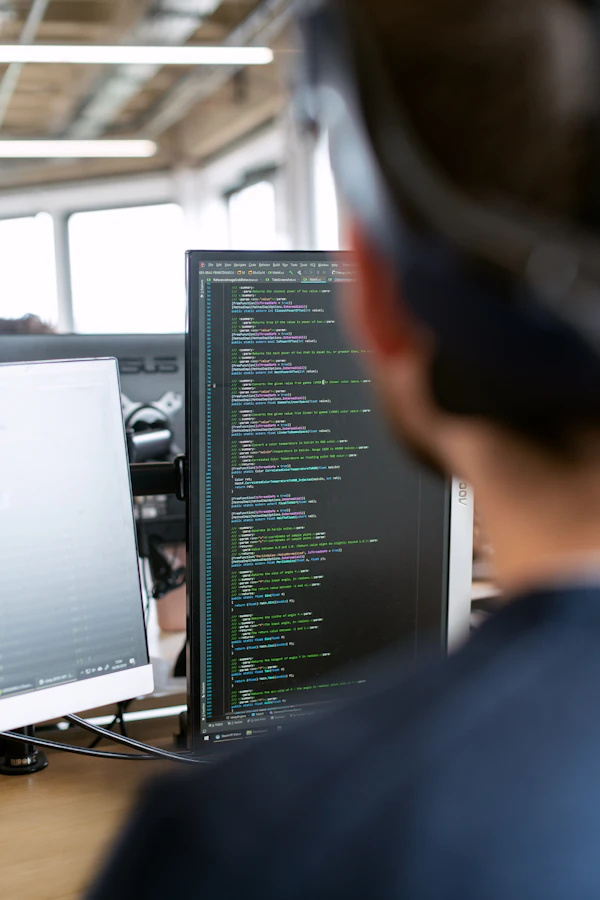
The virtual tour continues through the data visualization suite, where massive datasets collected from months of field deployments are transformed into intuitive visual representations. Here, complex mathematical models of ocean processes come to life as swirling colors and dynamic animations, helping researchers identify patterns that might otherwise remain hidden in spreadsheets of numbers 1 .
CMST's work extends far beyond the lab walls. The centre maintains active mooring deployments in coastal and open ocean environments, with sensors continuously collecting temperature, salinity, acoustic, and other data. This marriage of fieldwork and advanced laboratory analysis represents the future of marine science—blending traditional observation with cutting-edge technology.

Marine Research Process Timeline
Field Data Collection
Deployment of sensors, hydrophones, and AUVs to collect oceanographic data from various marine environments.
Data Processing
Raw data is cleaned, filtered, and prepared for analysis using specialized software and algorithms.
Laboratory Analysis
Advanced analysis in controlled lab environments including acoustic testing tanks and visualization suites.
Interpretation & Modeling
Researchers interpret findings and create predictive models of ocean processes and marine behaviors.
Application & Impact
Research findings are applied to real-world challenges in conservation, policy, and industry practices.
In-depth Look: Quantifying Uncertainty in Ocean Measurements
The Challenge of Measuring a Changing Ocean
To understand CMST's approach to marine science, let's examine a crucial experiment that highlights both the importance and difficulty of obtaining reliable ocean data. A 2022 study addressing uncertainty quantification of Essential Ocean Variables illustrates the meticulous process behind trustworthy marine measurements 4 .
Oceanographers face a fundamental challenge: unlike controlled laboratory experiments, field measurements are unique in space and time and are collected while the environment constantly changes. A temperature reading taken at a specific location and moment can never be perfectly repeated. This creates significant challenges for scientists trying to detect subtle but important trends, such as the gradual warming of deep waters due to climate change 4 .
As the study notes, "for the behavioral ecologist, a temperature dataset may be of sufficient quality with uncertainties of one degree Celsius, while studies of climate change-induced heat content changes in the deep sea require uncertainties that do not exceed one hundredth of a degree or even less." This distinction highlights why understanding measurement uncertainty isn't just academic—it's essential for drawing meaningful scientific conclusions 4 .
Experimental Design and Methodology
To address this challenge, researchers designed an experimental setup that mimics standard ocean monitoring programs while allowing for rigorous uncertainty analysis 4 :
This experimental approach allowed the team to develop a universally applicable procedure for evaluating the uncertainty of in situ measurements—a crucial step toward more reliable ocean observation 4 .
Results and Implications
The analysis revealed several important findings about ocean temperature measurement:
- Different sensor types showed distinct uncertainty signatures, with some exhibiting more random variation and others demonstrating systematic biases.
- Environmental factors like biofouling (accumulation of marine organisms on sensors) significantly impacted measurement reliability over time.
- The manufacturer's stated accuracy often didn't reflect real-world performance after months of deployment.
Most importantly, the research demonstrated that by following a systematic uncertainty quantification process, scientists could assign meaningful confidence intervals to each data point. For example, instead of simply reporting "14.345°C," they could now state "14.345±0.003°C," providing crucial context about the measurement's reliability 4 .
| Date | Sensor A | Sensor B | Sensor C | Average | Uncertainty |
|---|---|---|---|---|---|
| 2022-03-15 | 14.345°C | 14.342°C | 14.349°C | 14.345°C | ±0.003°C |
| 2022-04-02 | 14.561°C | 14.558°C | 14.567°C | 14.562°C | ±0.004°C |
| 2022-05-11 | 14.218°C | 14.210°C | 14.225°C | 14.218°C | ±0.007°C |
| Uncertainty Component | Magnitude | Type |
|---|---|---|
| Sensor Calibration | ±0.001°C | Systematic |
| Sensor Resolution | ±0.0005°C | Random |
| Environmental Variation | ±0.002°C | Random |
| Biofouling Effect | ±0.001°C | Systematic |
| Combined Uncertainty | ±0.003°C | Both |
| Sensor Type | Initial Accuracy | Post-Deployment Accuracy | Recommended Use |
|---|---|---|---|
| Type X | ±0.001°C | ±0.003°C | Climate trend detection |
| Type Y | ±0.002°C | ±0.008°C | Educational applications |
| Type Z | ±0.0005°C | ±0.005°C | Short-term research only |
Sensor Performance Over Deployment Period
The Scientist's Toolkit: Essential Research Equipment
Modern marine research relies on an array of sophisticated tools. At CMST, the "research reagent solutions" aren't just chemicals—they're the technologies and methodologies that enable world-class science 1 4 :

CTD Sensors
These devices measure Conductivity, Temperature, and Depth—the fundamental parameters of physical oceanography. Deployed on moorings, autonomous vehicles, or ship-based profilers, they form the backbone of ocean observation networks.

Hydrophone Arrays
Underwater microphones arranged in precise formations allow researchers to locate sound sources, track marine animals, and characterize ambient noise environments across different frequencies.
Multibeam Sonar Systems
Unlike simple depth sounders, these advanced systems create detailed three-dimensional maps of the seafloor, revealing underwater mountains, canyons, and habitats with remarkable resolution.
Autonomous Underwater Vehicles (AUVs)
These untethered robots pre-programmed to follow specific survey patterns can collect data in dangerous or inaccessible areas without risking human lives or disturbing natural behaviors.
Bioacoustic Recorders
Specialized systems designed to capture the full range of sounds produced by marine organisms, from the low-frequency groans of whales to the high-frequency clicks of dolphins and snapping shrimp.
Virtual Reality Visualization
Immersive technology that transforms complex oceanographic data into interactive 3D environments, helping researchers identify patterns and relationships that might be missed on traditional computer screens.
Beyond the Lab: Impact and Applications
CMST's research extends far beyond academic curiosity, with real-world applications that benefit both marine ecosystems and human society 1 :
Marine Soundscapes and Regulation
The centre's work on marine soundscapes helps regulatory agencies establish guidelines for underwater noise pollution from shipping, construction, and energy exploration. By understanding how different species use and are affected by sound, policymakers can implement measures to protect critical habitats and behaviors.
Sustainable Resource Management
Their habitat mapping research supports sustainable marine resource management, identifying biologically significant areas that warrant protection from destructive fishing practices or mineral extraction. The stereoscopic imaging systems developed at CMST allow for precise monitoring of coral health, sponge communities, and other sensitive ecosystems without physical contact.
Conservation Technology Development
Through collaboration with industry partners, CMST researchers have helped develop quieter marine technologies and monitoring systems that reduce the environmental impact of human activities at sea. Their work represents the growing field of conservation technology—using engineering innovation to address environmental challenges.
Educational Outreach
CMST's virtual lab experiences and public seminars help educate the next generation of marine scientists and raise public awareness about ocean conservation. Their annual newsletter provides updates on research discoveries and upcoming events—a digital window into the continuing exploration of our planet's final frontier.
Research Impact Areas
The Future of Marine Science
As our virtual tour of Curtin University's Centre for Marine Science and Technology concludes, we're left with a profound appreciation for the sophisticated science required to understand our changing oceans. What might seem like simple measurements of temperature or recordings of underwater sounds actually represent complex scientific challenges requiring multidisciplinary solutions 1 .
The future of marine science lies in this integrated approach—combining field observations with laboratory experiments, traditional methods with emerging technologies, and specialized expertise with collaborative problem-solving. As CMST Director Professor Christophe Gaudin notes, "We're not just studying the ocean; we're developing the tools that will help future generations study it more effectively and protect it more wisely."
For those inspired to learn more about marine science, CMST offers public seminars and educational opportunities. The centre's annual newsletter provides updates on research discoveries and upcoming events—a digital window into the continuing exploration of our planet's final frontier 1 .