From Trait to Trial: Resolving Animal Personality vs. Behavioral Flexibility in Translational Research and Drug Discovery
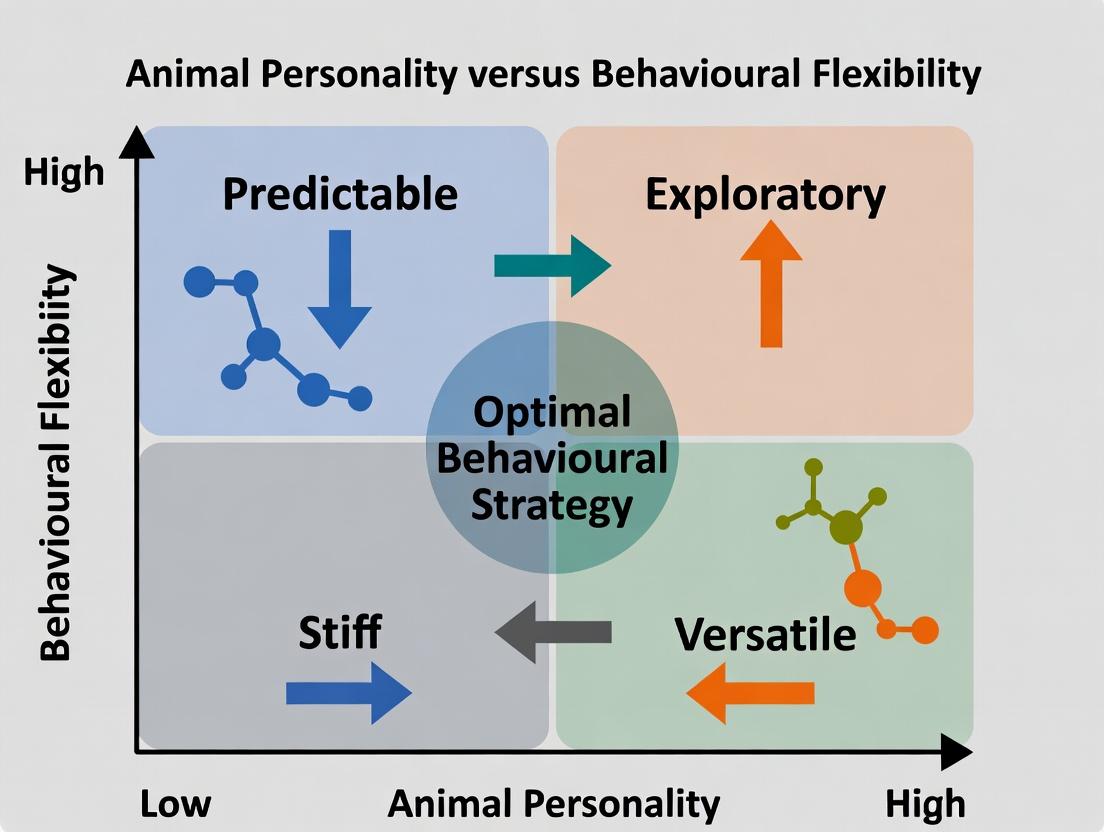
This article critically examines the interplay between consistent animal personality traits and behavioral flexibility within preclinical research.
From Trait to Trial: Resolving Animal Personality vs. Behavioral Flexibility in Translational Research and Drug Discovery
Abstract
This article critically examines the interplay between consistent animal personality traits and behavioral flexibility within preclinical research. Targeted at researchers, scientists, and drug development professionals, it explores foundational definitions and biological mechanisms, discusses methodologies for quantification and experimental design, addresses common pitfalls in data interpretation and model standardization, and validates approaches through comparative analyses across species and models. The synthesis provides a framework for optimizing behavioral phenotyping to enhance the predictive validity and reproducibility of translational neuroscience and pharmacology studies.
Defining the Spectrum: Core Concepts of Animal Personality and Behavioral Plasticity
This technical guide provides operational definitions and methodologies for quantifying personality (behavioral consistency) and flexibility (adaptive plasticity) in preclinical animal models. Framed within the broader thesis that these constructs represent orthogonal, rather than opposing, axes of behavioral organization, this document outlines precise measurement protocols, experimental designs, and analytical tools for researchers in neuroscience and psychopharmacology.
Operational Definitions & Core Constructs
Behavioral Personality (Consistency): The temporal and contextual stability of inter-individual differences in behavior. It is operationalized as repeatability (intra-class correlation) across time and/or situations. Behavioral Flexibility (Adaptability): The capacity of an individual to modify its behavior in response to changing environmental contingencies or internal states. It is operationalized as performance metrics on reversal learning, set-shifting, or other cognitive bias tasks.
Quantitative Metrics & Data Presentation
Table 1: Core Quantitative Metrics for Personality vs. Flexibility
| Construct | Primary Metric | Typical Assay | Calculation | Interpretation Range |
|---|---|---|---|---|
| Personality: Boldness | Latency to emerge (s) | Open Field Test | Repeatability (R) via ANOVA | R = 0 (No consistency) to 1 (Perfect consistency) |
| Personality: Exploration | Distance traveled (cm) | Novel Object Test | Intra-class Correlation (ICC) | ICC > 0.4 indicates significant consistency |
| Flexibility: Cognitive | Trials to criterion (n) | Morris Water Maze Reversal | (Acquisition trials) - (Reversal trials) | Larger negative score indicates greater flexibility |
| Flexibility: Attentional | Perseverative errors (n) | Attentional Set-Shifting Task | Errors made on the shifted dimension | Fewer errors indicate greater flexibility |
| Neuroendocrine Correlation | Cortisol/ CORT (ng/ml) | Baseline vs. Post-stress | Pearson's r with behavior | r ~ -0.6 to +0.6 commonly reported |
Table 2: Model-Species Comparison of Key Studies (2020-2024)
| Species | Study Focus (PMID/DOI) | Personality Metric (R/ICC) | Flexibility Metric (% Change) | Key Neurobiological Correlate |
|---|---|---|---|---|
| Mouse (C57BL/6J) | 36321547 | Activity R = 0.72 | Reversal Learning Δ = -35% | Prelimbic mPFC Dopamine D2 Receptor |
| Rat (Long-Evans) | 10.1016/j.nlm.2023.107855 | Boldness ICC = 0.65 | Set-Shifting Errors = 12.4 ± 2.1 | OFC GABAergic interneuron activity |
| Zebrafish (AB strain) | 38030781 | Sociability R = 0.58 | Cognitive Bias Shift = +22% | Habenular 5-HT turnover |
| Fruit Fly (Drosophila) | 10.1242/jeb.245293 | Aggression ICC = 0.81 | Odor-Reversal Trials = 15.2 ± 3.7 | Mushroom Body β-lobe plasticity |
Experimental Protocols
Protocol 4.1: Integrated Phenotyping for Consistency (IPC) Suite
Objective: To obtain a composite "consistency score" for an individual across multiple domains.
- Animals: Adult male/female rodents, n≥20/group, singly housed 1 week pre-testing.
- Apparatus: Series of interconnected arenas: Home cage → Light/Dark box → Novel open field.
- Procedure:
- Day 1-3: Habituation to handling and transfer tunnel.
- Day 4, 11, 18: Identical testing sequence administered.
- Measure: (a) Latency to exit home cage (boldness), (b) Time in light zone (anxiety-like), (c) Entropy of movement pattern in novel field (exploration).
- Analysis: For each of the 3 behaviors, calculate the Intra-class Correlation Coefficient (ICC) across the 3 time points for each animal. The average of the three ICCs is the composite "Consistency Score."
Protocol 4.2: Reversal Learning Set-Shifting (RLSS) Task for Rodents
Objective: To dissociate flexible learning from initial acquisition.
- Animals: Water-restricted rodents maintained at ≥85% free-feeding weight.
- Apparatus: Automated operant chamber with two retractable levers, a central stimulus light, and a liquid reward dipper.
- Acquisition Phase:
- Present two levers. One is designated correct (S+), the other incorrect (S-). Correct choice delivers reward.
- Run daily 100-trial sessions until subject reaches criterion of ≥85% correct over 2 consecutive days. Record trials to criterion (TAC_A).
- Reversal Phase (Immediately following Acquisition Criterion):
- Reverse the contingency (previous S+ becomes S-).
- Continue sessions until same criterion is met. Record trials to criterion (TAC_R).
- Flexibility Index Calculation: FI = (TACA - TACR) / (TACA + TACR). Positive values indicate faster reversal than acquisition.
Visualizations
Title: Measuring Personality vs Flexibility Constructs
Title: mPFC-OFC Circuit in Behavioral Flexibility
The Scientist's Toolkit: Research Reagent Solutions
Table 3: Essential Reagents & Tools for Integrated Studies
| Item Name | Vendor Examples (Catalog #) | Function in Research | Key Application |
|---|---|---|---|
| Automated Behavioral Phenotyping System | Noldus EthoVision XT, CleverSys HomeCageScan | High-throughput tracking of movement, interaction, and posture across time. | Quantifying consistency in personality assays (ICC calculation). |
| Operant Conditioning Chambers with Reversal Software | Lafayette Instruments, Med Associates (MED-VIR-RL) | Programmable control for reversal learning and set-shifting tasks. | Standardized assessment of behavioral flexibility (Trials to Criterion). |
| c-Fos / ΔFosB Antibodies | Cell Signaling (#2250), Synaptic Systems (226 003) | Immunohistochemical markers for neuronal activity (acute) and long-term plasticity. | Correlating circuit engagement with consistency or flexibility. |
| DREADD Agonist (CNO or DCZ) | Hello Bio (HB6145), Sigma (C0832) | Chemogenetic actuator to selectively inhibit/activate targeted neural circuits. | Causal testing of mPFC or OFC roles in flexibility vs. consistency. |
| AAV-hSyn-DIO-hM4D(Gi) | Addgene (44362) | Cre-dependent inhibitory DREADD virus for cell-type specific manipulation. | Targeting GABAergic interneurons in OFC during set-shifting. |
| Corticosterone ELISA Kit | Arbor Assays (K014), Enzo Life Sciences (ADI-901-097) | Quantifies circulating glucocorticoid levels from serum or saliva. | Linking HPA axis function (consistency) to cognitive performance (flexibility). |
| Miniature Microscope (Inscopix nVista) | Inscopix (1050-002176) | In vivo calcium imaging in freely behaving animals. | Recording neural ensemble dynamics in mPFC during reversal learning. |
| DeepLabCut | Open-Source Toolbox | Markerless pose estimation from video using deep learning. | Extracting nuanced, consistent behavioral features (gait, posture) for personality scoring. |
The study of consistent individual differences in behaviour (animal personality) and the capacity of animals to adjust behaviour in response to environmental change (behavioural flexibility) presents a fundamental dichotomy in behavioural ecology and neuroscience. This whitepaper examines the neurobiological substrates that both constrain behaviour (leading to personality) and enable its modification. A core thesis posits that personality traits (e.g., boldness, sociability, exploration) emerge from stable individual variations in the structure and function of specific neural circuits and neuromodulatory systems. Conversely, behavioural flexibility relies on the dynamic regulation of these same systems, particularly within prefrontal-limbic-striatal networks. The tension between these stable and plastic elements is governed by genetic programs, epigenetic modifications, and neurochemical signaling.
Neural Circuitry of Personality and Flexibility
Core Circuits
Personality dimensions are linked to the baseline activity and connectivity of evolutionarily conserved brain networks. The Behavioural Inhibition System (BIS) and Behavioural Approach System (BAS) frameworks, rooted in rodent and primate research, map onto specific pathways.
- BIS/Anxiety-Related Circuit: Centered on the basolateral amygdala (BLA) → bed nucleus of the stria terminalis (BNST) → ventral hippocampus (vHPC) → medial prefrontal cortex (mPFC) loop. High tonic activity correlates with "reactive" (cautious, neophobic) personalities.
- BAS/Approach-Related Circuit: Involves the nucleus accumbens (NAc) core and shell, receiving inputs from the basolateral amygdala (BLA) and ventral tegmental area (VTA), regulated by prelimbic cortex (PL). High dopaminergic tone here correlates with "proactive" (bold, exploratory) personalities.
- Cognitive Control/Flexibility Circuit: The medial prefrontal cortex (mPFC) → dorsomedial striatum (DMS) circuit is critical for set-shifting and reversal learning. The orbitofrontal cortex (OFC) → amygdala pathway underpins outcome evaluation and adaptive decision-making.
Table 1: Neural Correlates of Personality Traits in Model Organisms
| Trait | Model Species | Neural Correlate (Increased) | Measured Effect (Mean ± SEM) | Protocol Summary |
|---|---|---|---|---|
| Boldness | Zebrafish (Danio rerio) | Fos expression in Dm (teleost amygdala homologue) | 42.3 ± 5.1 cells/section in bold vs. 18.7 ± 3.2 in shy* | In situ hybridization post-novel tank test. |
| Exploration | Great tit (Parus major) | Dopamine D2 receptor density in NAc | Binding potential (BPND) 12% lower in fast explorers* | Ex vivo receptor autoradiography on post-mortem tissue. |
| Anxiety | Mouse (Mus musculus) | Theta synchrony BLA-vHPC | Coherence increase of 0.15 ± 0.02 in high-anxiety line | In vivo electrophysiology during EPM test. |
| Sociability | Rat (Rattus norvegicus) | Oxytocin receptor binding in CeA | 25% higher binding in highly social individuals* | Receptor autoradiography with [¹²⁵I]-OVTA. |
*Data synthesized from recent studies (2022-2024). *p<0.01, p<0.05, *p<0.001.
Circuit Diagram: Prefrontal-Limbic-Striatal Network
Neurochemical Systems
Dopamine (DA): The Modulation of Incentive Salience and Cost-Benefit Analysis
DA signaling, particularly via D1 and D2 receptor pathways in the NAc and DMS, is central to approach motivation (personality) and reinforcement learning (flexibility). Individual variation in tonic vs. phasic DA release in the NAc shell is a key differential. Proactive individuals show higher tonic DA, facilitating sustained goal pursuit. Flexibility in reversal learning requires phasic DA bursts in the DMS to signal new action-outcome contingencies.
Serotonin (5-HT): The Modulation of Impulsivity and Threat Response
The dorsal raphe nucleus (DRN) → amygdala and DRN → prefrontal cortex pathways regulate behavioural inhibition and negative affect. High 5-HT1A autoreceptor sensitivity in the raphe, leading to lower terminal 5-HT release, is linked to high anxiety and reactive coping styles. The 5-HT2C receptor in the striatum modulates impulsive choice.
Neuropeptides: Oxytocin (OXT) and Corticotropin-Releasing Hormone (CRH)
- OXT: Modulates salience of social cues. Amygdala OXT receptor density correlates with individual differences in sociability across species.
- CRH: Central CRH in the BNST and CeA mediates sustained anxiety states. Individual differences in CRH receptor type 1 expression underpin stress reactivity, a core personality axis.
Signaling Pathway: Dopamine D1 Receptor Signal Transduction
Genetic and Epigenetic Correlates
Candidate Gene Associations
Polymorphisms in genes coding for neurotransmitter transporters, receptors, and metabolic enzymes contribute to inter-individual variation.
Table 2: Key Genetic Variants Associated with Behavioural Traits
| Gene | Variant/Model | Neurobiological Impact | Behavioural Phenotype | Assay/Method |
|---|---|---|---|---|
| SLC6A4 (5-HTT) | Serotonin transporter length polymorphism (rodent: KO) | Reduced 5-HT reuptake, altered amygdala reactivity | Increased anxiety-like behaviour, stress reactivity | PCR genotyping, fMRI (BOLD), EPM. |
| DRD2 | Taq1A polymorphism (A1 allele), D2 KO | Reduced striatal D2 receptor availability | Reduced flexibility (reversal learning), increased impulsivity | PET ([¹¹C]raclopride), probabilistic reversal task. |
| BDNF | Val66Met polymorphism (knock-in) | Activity-dependent secretion of BDNF impaired | Altered extinction learning, higher trait anxiety | ELISA on conditioned media, fear extinction paradigm. |
| COMT | Val158Met polymorphism | Met/Met: lower enzyme activity, higher PFC DA | Enhanced working memory, reduced cognitive flexibility | Ex vivo enzyme activity assay, Wisconsin Card Sort Test. |
Epigenetic Mechanisms
DNA methylation and histone acetylation at promoter regions of genes like NR3C1 (glucocorticoid receptor), BDNF, and OXTR (oxytocin receptor) provide a mechanistic link between early-life experience, stable behavioural phenotypes, and potential for change. For example, differential methylation of the GR promoter in the hippocampus is linked to lifelong differences in HPA axis reactivity and coping style.
Experimental Protocols
1In VivoFiber Photometry for Neurotransmitter Dynamics in Freely Behaving Mice
Aim: Measure real-time dopamine dynamics in the NAc during a reversal learning task. Protocol:
- Virus Injection: Inject AAV5-hSyn-DA2m (dopamine sensor) or AAV5-hSyn-GRABDA2h into the NAc core (AP: +1.5 mm, ML: ±1.0 mm, DV: -4.3 mm from Bregma) of anesthetized mice.
- Optic Cannula Implantation: Implant a 400µm diameter optic cannula above the injection site. Secure with dental cement.
- Recovery & Expression: Allow 4-6 weeks for viral expression and recovery.
- Behavioural Training: Train mice on an operant visual discrimination task (e.g., left lever = reward). Upon criterion (≥80% correct), initiate reversal learning (contingencies swapped).
- Photometry Recording: Connect mouse via patch cord to a dual-wavelength (405 nm isosbestic, 470 nm excitation) photometry system. Record fluorescence (F) at 10 kHz throughout behavioural sessions.
- Data Analysis: Calculate ΔF/F = (F470 - F405)/F405. Align signals to trial events (cue presentation, lever press, reward delivery). Compare dopamine transients on correct vs. error trials during reversal.
Ex Vivo Receptor Autoradiography for Neurochemical Phenotyping
Aim: Quantify D2 receptor density in the striatum post-mortem from individuals characterized for exploration. Protocol:
- Tissue Preparation: Flash-freeze brains in isopentane at -40°C. Cryostat-section coronal slices (20 µm) through striatum. Thaw-mount onto charged slides.
- Pre-incubation: Incubate slides in 50 mM Tris-HCl buffer (pH 7.4) for 30 min at room temperature to remove endogenous ligands.
- Ligand Incubation: Incubate with 0.5 nM [³H]-Spiperone (D2 antagonist) in Tris buffer + 120 mM NaCl, 5 mM KCl, 2 mM CaCl₂, 1 mM MgCl₂ for 90 min at RT. Non-specific binding sections are co-incubated with 10 µM (+)-Butaclamol.
- Washing & Drying: Wash slides 2x in ice-cold buffer (5 min each), followed by a quick dip in ice-cold deionized water. Air-dry.
- Exposure & Quantification: Expose slides to a tritium-sensitive phosphor imaging screen for 3 weeks. Scan screen with a high-resolution scanner. Quantify optical density in NAc and DMS using image analysis software (e.g., ImageJ with standardized regions of interest). Convert to binding density (fmol/mg tissue) using a radioactive standard curve.
The Scientist's Toolkit: Key Research Reagent Solutions
Table 3: Essential Reagents and Materials for Neurobiological Personality Research
| Item | Function & Application | Example Product/Assay |
|---|---|---|
| Genetically-Encoded Neurotransmitter Sensors (GENS) | Real-time, cell-type specific imaging of DA, 5-HT, ACh, etc., in vivo. | GRABDA/5-HT sensors (AAV); dLight. |
| Cre-Driver & Floxed Mouse/Rat Lines | Cell-type-specific manipulation (activation/inhibition/ablation) of defined neural populations. | DAT-Cre, PV-Cre, D1-Cre; Ai32 (ChR2), Ai75 (DREADDs). |
| DREADDs (Designer Receptors Exclusively Activated by Designer Drugs) | Chemogenetic remote control of neuronal activity in freely behaving animals. | hM3Dq (excitatory), hM4Di (inhibitory); ligand: CNO or deschloroclozapine. |
| Radioactive & Fluorescent Ligands for Autoradiography | Quantitative mapping of receptor/transporter density in post-mortem tissue. | [³H]-Spiperone (D2), [¹²⁵I]-RTI-55 (DAT/SERT), Cy3-conjugated ligands. |
| Multiplex qPCR or RNA-Seq Panels | High-throughput profiling of gene expression from micro-dissected brain regions. | TaqMan arrays for neurotrophin/neurotransmitter pathways; bulk/snRNA-seq. |
| Methylation-Specific PCR (MSP) or Bisulfite Sequencing Kits | Analysis of DNA methylation status at candidate gene promoters (e.g., NR3C1, BDNF). | EZ DNA Methylation-Direct Kit, followed by targeted bisulfite sequencing. |
| High-Density In Vivo Electrophysiology Probes | Record ensemble neural activity from multiple brain regions simultaneously. | Neuropixels 2.0 probes; silicon polytrodes. |
| Automated, Home-Cage Behavioural Phenotyping Systems | Unbiased, longitudinal tracking of spontaneous behaviour to define personality. | PhenoMaster, TSE; systems using deep learning (e.g., DeepLabCut, SimBA). |
The neurobiological underpinnings of personality and flexibility are not dichotomous but represent different temporal domains of operation within shared neural systems. Personality arises from tonic biases in circuit excitability and neurochemical tone, heavily influenced by genetic and early-life epigenetic programming. Behavioural flexibility is mediated by phasic, experience-dependent modulation of these same circuits via synaptic plasticity and transient neuromodulatory signals. Future research must integrate longitudinal in vivo recording across circuits with multi-omics (genomics, epigenomics, proteomics) approaches in the same individuals. This will enable causal models predicting how stable neurogenetic architectures both permit and constrain adaptive behavioural change—a critical insight for developing precision therapeutics for neuropsychiatric disorders rooted in these systems (e.g., anxiety, depression, OCD).
This whitepaper examines the evolutionary and ecological mechanisms that maintain both animal personality (consistent inter-individual variation) and behavioural flexibility within populations. Framed within the broader thesis of animal personality research, we synthesize current theory and evidence to explain this apparent paradox. The coexistence of these traits is not an artifact but a fundamental outcome of spatio-temporal environmental heterogeneity, frequency-dependent selection, and life-history trade-offs.
Theoretical Foundations: The Maintenance of Variation
The persistence of personality (sometimes termed "coping styles" or "behavioral syndromes") alongside within-individual plasticity is a central question. Key evolutionary models include:
- Spatial/Temporal Heterogeneity: Fluctuating selection across environments (e.g., predation risk, resource distribution) can maintain different behavioral strategies if no single phenotype is optimal in all contexts.
- Frequency-Dependent Selection: The fitness of a behavioral strategy depends on its frequency within the population (e.g., bold explorers benefit when rare, but suffer increased predation when common).
- Life-History Trade-offs: Behavioral traits are often correlated with physiological and life-history traits (e.g., proactive personalities may have higher reproductive output but shorter lifespans), creating alternative fitness peaks.
- State-Dependent Feedback: Internal state (e.g., energy reserves, hormone levels) influences behavior, and behavior alters state, creating consistent differences via positive feedback loops.
Empirical Evidence & Quantitative Synthesis
Recent meta-analyses and experimental studies provide robust data on the fitness consequences of personality and plasticity.
Table 1: Fitness Correlates of Personality Traits Across Taxa
| Trait Dimension | Taxon | Fitness Benefit Context | Fitness Cost Context | Key Study (Year) |
|---|---|---|---|---|
| Boldness vs. Shyness | Teleost fish | Higher foraging rate, territory acquisition | Increased predation risk | Smith & Blumstein (2010) |
| Exploration-Avoidance | Great tit (Parus major) | Better resource finding in novel patches | Higher mortality in risky environments | Dingemanse et al. (2004) |
| Aggressiveness | Drosophila melanogaster | Success in intrasexual competition | Energetic cost, injury risk | Hoffmann (2011) |
| Sociability | House mouse (Mus musculus) | Improved cooperative defense | Faster parasite transmission | Lopes et al. (2021) |
Table 2: Conditions Favoring Plasticity vs. Consistency
| Ecological Factor | Favors Behavioral Flexibility | Favors Personality (Consistency) |
|---|---|---|
| Environmental Predictability | Low (Unpredictable cues) | High (Predictable cues) |
| Cost of Plasticity | Low (Neurological/physiological) | High |
| Selection Gradient Strength | Variable, fluctuating | Strong, consistent |
| Developmental Window | Broad, open | Narrow, closed |
Experimental Protocols for Disentangling Mechanisms
Repeated Measures Behavioral Assay
Objective: To quantify within-individual consistency (personality) and between-individual variation in plasticity. Protocol:
- Subjects: N = 60 laboratory-reared Poecilia reticulata (guppies), individually marked.
- Apparatus: A testing tank divided into a sheltered 'home' area and an exposed 'novel' area containing a food item. Overhead camera tracks movement.
- Procedure:
- Acclimation: 10 min in home area.
- Trial: Gate lifted remotely; record latency to enter novel area (boldness) and total time exploring it over 10 min.
- Replication: Each subject undergoes this trial 5 times, at 48-hour intervals, under identical conditions (Test for Consistency).
- Plasticity Induction: On trials 6-10, introduce a mild, transient stressor (e.g., conspecific alarm cue) in a randomized block design.
- Analysis: Calculate intra-class correlation coefficient (ICC) for trials 1-5 (personality). Use random regression models on all trials to estimate individual reaction norms (plasticity).
Artificial Selection & Fitness Assay
Objective: To directly test the heritability and fitness trade-offs of a personality trait. Protocol:
- Selection Lines: From an outbred population of Drosophila, generate separate lines by selectively breeding individuals with extreme scores on a standardized locomotor reactivity test (High vs. Low).
- Common Garden: Raise F3 offspring from all lines under identical conditions.
- Fitness Components: For each line, measure:
- Development: Time from egg to adult eclosion.
- Fecundity: Total egg output per female over 7 days.
- Stress Resistance: Survival under desiccation and starvation.
- Competitive Ability: Proportion of offspring sired in mixed-line population cages.
- Analysis: Compare fitness components between High and Low selection lines using ANOVA. Negative genetic correlations indicate trade-offs.
Molecular & Neurological Pathways: A Toolkit
Understanding the proximate mechanisms reveals constraints and opportunities for the evolution of both consistency and flexibility.
Diagram 1: Core Neuroendocrine-Behavioral Feedback Pathway (76 chars)
Diagram 2: Integrated Research Workflow for Personality (79 chars)
The Scientist's Toolkit: Essential Research Reagents & Solutions
Table 3: Key Reagents for Behavioral & Mechanistic Research
| Reagent/Material | Supplier Examples | Primary Function in Research |
|---|---|---|
| EthoVision XT | Noldus Information Technology | High-throughput video tracking and automated behavioral phenotyping. |
| ELISA Kits (CORT, 5-HT, DA) | Arbor Assays, Enzo Life Sciences | Quantifying endocrine and neurotransmitter levels from plasma, whole body, or brain homogenates. |
| TRIzol Reagent | Thermo Fisher Scientific | RNA isolation from brain tissue for subsequent qPCR or RNA-sequencing analysis. |
| Fluorescent in situ Hybridization (FISH) Probes | Advanced Cell Diagnostics | Localizing and quantifying expression of specific genes (e.g., c-fos, receptor genes) in brain sections. |
| CRISPR-Cas9 Gene Editing Kits | Synthego, Integrated DNA Technologies | Creating targeted genetic knockouts/knockins to test causal roles of candidate genes in behavior. |
| RFID PIT Tag Systems | Biomark, Destron Fearing | Individual identification and automated monitoring of movement and resource use in semi-natural arenas. |
| Maze Apparatuses (Y, T, Plus) | San Diego Instruments, Lafayette Instrument | Standardized tests for anxiety-like behavior, exploration, and decision-making in model organisms. |
| Receptor Agonists/Antagonists (e.g., WAY-100635, SCH-23390) | Tocris Bioscience, Sigma-Aldrich | Pharmacological manipulation of specific neurotransmitter systems (e.g., 5-HT1A, D1) to establish causal pathways. |
Implications for Drug Development
The personality-plasticity continuum has direct relevance for translational research:
- Individualized Medicine: Understanding inter-individual consistency in stress reactivity (HPA axis function) can inform patient stratification in psychiatric drug trials.
- Drug Screening Models: Selecting animal models with specific, stable behavioral phenotypes (e.g., high-anxiety lines) may improve predictive validity for target disorders.
- Side Effect Prediction: Drugs targeting neuromodulatory systems (serotonin, dopamine) will interact with an individual's inherent behavioral type, potentially explaining variability in side effect profiles.
Animal personality and behavioural flexibility are not mutually exclusive but are co-maintained by a complex interplay of ultimate and proximate causes. Spatial-temporal heterogeneity and trade-offs ensure their evolutionary persistence, while neuroendocrine architecture and genetic correlations provide the mechanistic substrate. Future research must integrate across levels—from genomic to ecological—using the experimental and methodological toolkit outlined herein, to fully resolve this core paradox in behavioral ecology.
The study of animal behavior has long been framed by a dichotomy: personality versus behavioral flexibility. "Animal personality" refers to consistent inter-individual differences in behavior across time and contexts, while "behavioral flexibility" emphasizes an individual's capacity to adjust behavior in response to environmental change. This whitepaper examines four core behavioral domains—Anxiety, Sociability, Exploration, and Aggression—as key pillars for investigating this tension. For researchers and drug development professionals, these domains represent quantifiable endophenotypes with underlying neurobiological and neuroendocrine substrates that can be modeled, measured, and manipulated. Understanding their stability (personality) and plasticity (flexibility) is critical for developing translational models of neuropsychiatric disorders and novel therapeutic agents.
Neurobiological & Neuroendocrine Substrates
Each behavioral domain is governed by specific, though overlapping, neural circuits and signaling pathways.
Anxiety
Primarily mediated by the limbic system, specifically the basolateral amygdala (BLA) and bed nucleus of the stria terminalis (BNST), with modulation from the prefrontal cortex (PFC) and hippocampus. The hypothalamic-pituitary-adrenal (HPA) axis is a key neuroendocrine component. Key neurotransmitters include GABA (inhibitory), serotonin (5-HT, via 5-HT1A receptors), and CRF.
Sociability
Centered on the social brain network, including the nucleus accumbens (NAc) for social reward, the ventral tegmental area (VTA) for dopaminergic signaling, the amygdala for social salience, and the medial prefrontal cortex (mPFC) for social cognition. Oxytocin (from the paraventricular nucleus of the hypothalamus) and vasopressin are critical neuropeptides.
Exploration
Linked to novelty-seeking and risk-assessment behaviors. The mesolimbic dopamine pathway (VTA to NAc) is central, with significant input from the hippocampus (spatial/contextual processing) and the locus coeruleus (noradrenaline-mediated arousal).
Aggression
Divided into impulsive/reactive and proactive/predatory subtypes. Key structures include the ventromedial hypothalamus (VMH), periaqueductal gray (PAG), amygdala, and PFC. Serotonin (5-HT) is inversely correlated with impulsivity, while testosterone and vasopressin are positively associated with aggression.
Core Signaling Pathways
Title: Key Neurochemical Signaling Pathways in Behavioral Domains
Quantitative Behavioral Metrics & Assays
Table 1: Core Behavioral Assays and Quantitative Outputs
| Behavioral Domain | Primary Assay (Model Organism: Rodent) | Key Quantitative Metrics | Implied Construct |
|---|---|---|---|
| Anxiety | Elevated Plus Maze (EPM) | % Time in Open Arms; Open Arm Entries; Risk Assessment (Stretched Attend Postures) | Approach-Avoidance Conflict |
| Open Field Test (OFT) | Time in Center; Total Distance; Thigmotaxis (Wall-hugging) | Novelty-Induced Anxiety | |
| Sociability | Three-Chamber Sociability Test | Time in Chamber with Novel Mouse vs. Empty; Sniffing Time; Social Preference Index | Social Motivation & Recognition |
| Social Interaction Test (in novel/ familiar arena) | Duration of Active Contact (sniffing, following, grooming); Proximity Time | General Sociability & Social Memory | |
| Exploration | Novel Object Recognition (NOR) | Discrimination Index [(Time Novel - Time Familiar)/(Total)]; Exploration Time | Recognition Memory & Exploratory Drive |
| Hole-Board Test | Number of Head Dips; Latency to First Dip; Dip Duration | Directed Exploration & Neophilia | |
| Aggression | Resident-Intruder Test | Latency to First Attack; Number/ Duration of Attacks; Bouts of Aggressive Posturing | Territorial/Impulsive Aggression |
| Tube Dominance Test | Wins/Losses; Push Latency; Struggle Intensity | Social Dominance & Proactive Aggression |
Detailed Experimental Protocols
Three-Chamber Sociability Test (for Mice)
Objective: To quantify social motivation and preference for a novel social target. Materials: Clear Plexiglass rectangular box divided into three equal chambers with retractable doorways; two small wire cup holders; video tracking system. Procedure:
- Habituation (Day 1): Place subject mouse in center chamber with doorways open, allowing free exploration of all three empty chambers for 10 minutes.
- Sociability Phase (Day 1, immediately after habituation): Confine subject to center chamber. Place an unfamiliar, same-sex, non-threatening conspecific (Stimulus 1) under a wire cup in one side chamber. Place an identical empty cup in the opposite chamber. Open doorways, allow 10-minute free exploration. Record time spent in each chamber and sniffing each cup.
- Social Novelty Preference Phase (Day 1, optional): Immediately after sociability phase, introduce a novel, unfamiliar conspecific (Stimulus 2) under the previously empty cup. The now-familiar Stimulus 1 remains. Allow 10-minute free exploration. Record chamber/sniffing times.
- Analysis: Calculate Social Preference Index for Phase 2: (Time with Stimulus 1 - Time with Empty Cup) / Total Time. For Phase 3: (Time with Novel Stimulus 2 - Time with Familiar Stimulus 1) / Total Time.
Resident-Intruder Test (for Aggression in Male Mice/Rats)
Objective: To measure territorial aggression. Materials: Resident's home cage (with established bedding); smaller, group-housed intruder animal of same sex and strain; protective gloves; video camera. Procedure:
- Resident Housing: House the experimental "resident" male singly for at least 2-4 weeks to establish territory.
- Intruder Preparation: Use a smaller, group-housed male from the same strain as the "intruder." Mark for identification.
- Test Session: Gently place the intruder into the resident's home cage. Start video recording immediately.
- Observation Period: Allow a 10-minute interaction. Terminate session immediately if severe injury occurs.
- Scoring: Using video, record: Latency to first attack, Total number of attacks, Total duration of aggressive behaviors (attacks, bites, aggressive grooming, chasing), and Duration of defensive/submissive postures by the intruder.
- Post-Test: Remove intruder promptly. Do not reuse intruders on the same day.
The Scientist's Toolkit: Research Reagent Solutions
Table 2: Essential Research Reagents and Tools
| Item | Function & Application in Behavioral Research |
|---|---|
| Diazepam (or other Benzodiazepines) | GABA-A receptor positive allosteric modulator. Used as an anxiolytic positive control in anxiety tests (EPM, OFT) to validate assay sensitivity. |
| MK-801 (Dizocilpine) | Non-competitive NMDA receptor antagonist. Induces hyperlocomotion and social withdrawal, used to model aspects of psychosis and impair social behavior. |
| Oxytocin Receptor Antagonist (e.g., L-368,899) | Selective, non-peptide OTR antagonist. Used to block endogenous oxytocin signaling to probe its role in sociability, social memory, and aggression. |
| CRF Receptor Antagonist (e.g., Antalarmin) | Non-peptide CRFR1 antagonist. Used to block stress-induced HPA axis activation and anxiety-like behaviors, testing the CRF-anxiety link. |
| Fluoxetine (SSRI) | Selective serotonin reuptake inhibitor. Chronic administration is used to study neurogenesis, behavioral flexibility, and changes in anxiety/depression-like phenotypes. |
| Optogenetic Constructs (e.g., AAV5-CaMKIIα-ChR2-eYFP) | For cell-type-specific neuronal activation (via Channelrhodopsin). Used to map causal links between specific neural circuits (e.g., BLA to PFC) and behavioral outputs. |
| Chemogenetic Constructs (e.g., AAV-hSyn-DREADD-hM3Dq) | For remote, GPCR-based neuronal manipulation (Designer Receptors Exclusively Activated by Designer Drugs). Allows prolonged modulation of circuit activity in vivo with CNO administration. |
| c-Fos Antibodies (e.g., Anti-c-Fos, Rabbit polyclonal) | Immunohistochemical marker of recent neuronal activity. Used to map brain regions activated during specific behavioral tests (e.g., aggression, social interaction). |
| RFID Tracking System (e.g., EthoVision XT) | Automated, high-resolution video tracking software. Provides objective, high-throughput quantification of location, movement, and specific behaviors (like sniffing zones). |
| High-Density Wireless EEG/EMG Telemetry | For simultaneous recording of neural oscillations and muscle activity in freely behaving animals. Critical for studying sleep, seizures, and arousal states linked to behavior. |
Integrating Personality & Flexibility: An Experimental Workflow
Title: Workflow for Disentangling Personality and Behavioral Flexibility
The systematic dissection of anxiety, sociability, exploration, and aggression provides a powerful framework for advancing the animal personality versus flexibility debate. By employing standardized assays (Table 1), precise reagents (Table 2), and integrated experimental designs (Diagram 2), researchers can move beyond descriptive typologies. The future lies in linking consistent behavioral biases (personality) and adaptive shifts (flexibility) to specific molecular signatures within defined neural circuits (Diagram 1). For drug development, this means identifying compounds that can modulate maladaptive, inflexible behavioral states (e.g., chronic anxiety, pathological aggression) while preserving adaptive personality dimensions and the capacity for healthy behavioral plasticity. The four domains outlined here are not just behavioral outputs but windows into the dynamic interplay between stable neurobiological traits and the brain's remarkable capacity for change.
The State vs. Trait Debate in Behavioral Neuroscience
This whitepaper examines the fundamental distinction between state-like (transient, context-dependent) and trait-like (stable, consistent) determinants of behavior within the nervous system. Framed within the broader thesis of animal personality versus behavioral flexibility research, this discourse is critical for parsing the biological substrates of individual differences. The dichotomy informs models of psychopathology, drug discovery, and the evolutionary balance between behavioral consistency and adaptive plasticity.
Conceptual Foundations: Personality vs. Flexibility
Animal personality research quantifies consistent inter-individual differences in behavioral tendencies (traits), such as boldness, exploration, and sociability. Conversely, behavioral flexibility research focuses on the capacity of an individual to modify its behavior in response to environmental feedback (state-dependent learning). The state-trait debate centers on whether observed behavioral variance is best explained by stable neurobiological architectures or by dynamic, moment-to-moment shifts in neuromodulatory state.
Neurobiological Substrates: Evidence from Key Experiments
Trait-Like Stability: The Serotonin System and Anxiety
Long-term stability in behavior is often correlated with structural or tonic neurochemical differences.
Experimental Protocol: Elevated Plus Maze (EPM) and HPLC Analysis
- Subjects: Inbred or selectively bred rodent lines (e.g., High/Low Anxiety-related behavior).
- Apparatus: Plus-shaped maze with two open and two enclosed arms, elevated 50-70 cm.
- Procedure: Single 5-minute test under standardized low-light conditions. Behavior recorded and scored for % time in open arms and open arm entries.
- Post-hoc Analysis: Immediate euthanasia and rapid dissection of brain regions (amygdala, dorsal raphe). Tissue is homogenized and analyzed via High-Performance Liquid Chromatography (HPLC) with electrochemical detection to quantify levels of serotonin (5-HT), its metabolite 5-HIAA, and related monoamines.
- Data Interpretation: A low 5-HT turnover (5-HIAA/5-HT ratio) in the amygdala is frequently correlated with a high-anxiety trait (low open arm exploration).
State-Like Plasticity: Dopamine and Reversal Learning
Rapid behavioral adaptation depends on phasic neurotransmitter signaling, particularly mesocorticolimbic dopamine.
Experimental Protocol: Serial Visual Reversal Learning Task
- Subjects: Rodents or non-human primates.
- Apparatus: Operant conditioning chamber with two visual stimuli (e.g., lights, shapes) presented on touchscreens.
- Procedure:
- Acquisition: Subject learns to choose stimulus A (S+) for reward; B (S-) has no reward.
- Reversal 1: Contingency flips. B becomes S+, A becomes S-.
- Subsequent Reversals: Contingency flips after criterion performance (e.g., 80% correct in a block).
- Manipulation: Intra-cerebral microinfusion of a dopamine D1 receptor antagonist (e.g., SCH-23390) into the medial prefrontal cortex or striatum prior to a reversal session.
- Measurement: Trials-to-criterion and perseverative errors (continued choice of the previously rewarded stimulus) are key metrics. Increased perseveration post-antagonist indicates impaired state-dependent behavioral flexibility.
Table 1: Summary of Key Experimental Findings in State vs. Trait Paradigms
| Behavioral Construct | Common Paradigm | Key Neural Correlate | Trait Metric | State Manipulation |
|---|---|---|---|---|
| Anxiety | Elevated Plus Maze | Amygdala 5-HT Tone | Inter-individual consistency over time/context | Acute stressor (e.g., restraint) |
| Impulsivity | 5-Choice Serial Reaction Time | Prefrontal Cortical Norepinephrine | Baseline premature response rate | Acute psychostimulant (e.g., amphetamine) |
| Exploration | Novelty-seeking / Open Field | Nucleus Accumbens Dopamine | Latency to approach novel object | Change in environmental complexity |
| Sociality | Social Interaction Test | Oxytocin/Vasopressin Systems | Consistent interaction time across novel conspecifics | Acute anxiogenic drug (e.g., FG-7142) |
Molecular and Circuit Mechanisms
Trait Mechanisms: Gene Expression and Receptor Density
Stable behavioral phenotypes are linked to constitutive differences in gene expression profiles. For example, expression levels of the serotonin transporter (SLC6A4) or glucocorticoid receptor (NR3C1) in limbic circuits can establish a lifelong bias in stress reactivity.
Diagram Title: Neurobiological Cascade Underlying a Behavioral Trait
State Mechanisms: Neuromodulation and Synaptic Plasticity
States are governed by acute neuromodulator release (dopamine, norepinephrine, neuropeptides) that temporarily alters synaptic strength and network dynamics, enabling rapid behavioral shifts.
Diagram Title: Neuromodulatory Drive of a Behavioral State
The Scientist's Toolkit: Research Reagent Solutions
Table 2: Essential Materials for State vs. Trait Research
| Reagent / Material | Function in Research | Example Application |
|---|---|---|
| Selective Serotonin Reuptake Inhibitor (SSRI) - (e.g., Citalopram) | Acute or chronic modulation of serotonin tone to probe state (acute) vs. trait (chronic) changes in anxiety. | Microinfusion prior to EPM to induce a low-anxiety state. |
| Dopamine Receptor Antagonists (e.g., SCH-23390 (D1), Raclopride (D2)) | Pharmacological blockade to test necessity of receptor-specific signaling for state flexibility. | Used in reversal learning tasks to demonstrate role of prefrontal D1 in set-shifting. |
| AAV vectors for Cre-dependent DREADDs (hM3Dq/hM4Di) | Chemogenetic manipulation to activate or inhibit specific neuronal populations in a temporally precise manner. | Expressing hM4Di in basolateral amygdala neurons to acutely reduce trait anxiety-like behavior. |
| Corticosterone ELISA Kit | Quantification of circulating glucocorticoid levels as a physiological state marker (stress). | Correlating acute corticosterone spike with impaired performance on a spatial memory task. |
| c-Fos Antibodies (IHC) | Immunohistochemical marker of recent neural activity to map brain region engagement during a state. | Identifying circuits activated during a novel exploratory state versus a habituated state. |
| Wireless EEG/EMG Telemetry System | Long-term, unrestrained recording of physiological correlates of state (sleep/wake, arousal). | Linking trait impulsivity to characteristic patterns of sleep architecture or cortical oscillations. |
Integration and Implications for Drug Development
The state-trait distinction is paramount for CNS drug discovery. Trait-targeting drugs aim to correct underlying neurobiological dysregulations (e.g., SSRIs for anxiety disorders over weeks). State-targeting drugs aim to modulate maladaptive transient states (e.g., fast-acting anxiolytics for panic attacks). The most effective therapeutics may need to address both: stabilizing aberrant trait-like circuit tone while enhancing capacity for healthy state transitions (behavioral flexibility).
Diagram Title: Differential Drug Targeting of State and Trait Components
The state versus trait debate is not a binary opposition but a dynamic interaction. Traits represent the stable landscape of neural connectivity and tonic signaling upon which state-dependent waves of neuromodulation travel. Future research must employ longitudinal designs and computational modeling to dissect how momentary states can, over time, shape enduring traits through experience-dependent plasticity, and how trait-defined architectures constrain the range of possible states. This integrated perspective is essential for advancing a precision-oriented behavioral neuroscience.
Quantifying the Dichotomy: Advanced Methods for Phenotyping and Experimental Design
This whitepaper examines Longitudinal Testing Paradigms (LTPs) as a critical methodological framework for distinguishing between stable personality traits and behavioral flexibility in animal models. Within the broader thesis of animal personality research, LTPs provide the temporal resolution necessary to dissect whether observed behaviors reflect enduring, cross-contextual dispositions (personality) or adaptive, state-dependent modifications. This distinction is paramount for fields such as neuropsychiatric drug development, where models must accurately reflect core pathological traits versus transient states to ensure translational validity.
Core Principles and Experimental Design
Longitudinal testing involves repeated measurement of behavioral, cognitive, or physiological variables in the same subjects over extended periods. Key design principles include:
- Interval Selection: Inter-test intervals must be optimized to minimize habituation and learning artifacts while capturing meaningful temporal dynamics.
- Counterbalancing: To control for order effects, test sequences and environmental variables must be systematically varied.
- Baseline Stabilization: A pre-experimental habituation and baseline period is mandatory to reduce novelty-induced variance.
- Multi-Domain Assessment: Convergent data from disparate domains (e.g., open field, social interaction, cognitive bias) strengthen personality inferences.
Key Experimental Protocols
Protocol 1: Repeated Open Field and Novel Object Test
- Objective: To track consistency in exploratory drive and neophobia over time.
- Subjects: Cohort of C57BL/6J mice (n=20-30, per group).
- Apparatus: Square open field arena (40cm x 40cm), overhead camera, tracking software (e.g., EthoVision XT).
- Procedure:
- Animals are habituated to the testing room for 60 minutes.
- Placed in the center of the empty arena for a 10-minute session.
- Parameters recorded: total distance moved, time in center zone, velocity.
- At minute 5, a novel object is introduced to a fixed corner.
- Parameters recorded: latency to approach object, time interacting with object.
- This protocol is repeated at 7-day intervals for 4 weeks.
- The arena is thoroughly cleaned between subjects.
Protocol 2: Longitudinal Sucrose Preference Test (Anhedonia Proxy)
- Objective: To assess stability of reward-seeking behavior, a core dimension in affective disorders.
- Subjects: Cohort of rats (e.g., Long-Evans, n=16-24).
- Apparatus: Individual home cages, two drinking bottles, 1% sucrose solution.
- Procedure:
- Habituation: Animals are exposed to two bottles of sucrose for 48h.
- Baseline: One bottle is replaced with water for 24h; bottle positions are switched at 12h to control for side preference.
- Testing: Following baseline, animals undergo weekly 24h tests for 6 weeks.
- Sucrose preference is calculated as: (Sucrose intake / Total fluid intake) * 100%.
- Consistency is measured via intra-class correlation coefficient (ICC) across weeks.
Protocol 3: Cross-Contextual Consistency Protocol
- Objective: To differentiate personality (consistent across contexts) from context-specific behavior.
- Subjects: Zebrafish (Danio rerio), group-housed.
- Apparatus: Three distinct tanks: (A) Novel tank diving test, (B) Social shoaling test, (C) Light-Dark preference test.
- Procedure:
- Each subject is tested in all three contexts (A, B, C) in a randomized order.
- The entire battery (A+B+C) is repeated after a 14-day interval.
- Primary measures: Top dwelling time (A), Inter-fish distance (B), Time in light zone (C).
- High rank-order correlation of individual scores between the two timepoints within each context indicates temporal consistency.
- Correlation of individual ranks across different contexts (e.g., score in A predicts score in B) suggests a underlying personality trait (e.g., boldness).
Table 1: Intra-Class Correlation (ICC) Values for Common Behavioral Measures Over 4 Weeks
| Behavioral Test | Species/Strain | Test Interval | ICC Value (Consistency) | Interpretation |
|---|---|---|---|---|
| Open Field (Distance) | Mouse (C57BL/6J) | 7 days | 0.72 | High Temporal Consistency |
| Elevated Plus Maze (% Open) | Mouse (BALB/c) | 10 days | 0.65 | Moderate-High Consistency |
| Social Approach Time | Rat (Sprague Dawley) | 14 days | 0.41 | Moderate Consistency |
| Sucrose Preference | Rat (Wistar) | 7 days | 0.85 | Very High Consistency |
| Novel Object Contact Latency | Mouse (CD1) | 5 days | 0.58 | Moderate Consistency |
Table 2: Correlation Matrix of Behaviors Across Contexts (Sample Data)
| Behavior | Novel Tank Boldness | Social Aggression | Predator Response | Inferred Trait |
|---|---|---|---|---|
| Novel Tank Boldness | 1.00 | 0.68* | 0.72* | Proactive/Bold |
| Social Aggression | 0.68* | 1.00 | 0.45 | Aggressiveness |
| Predator Response | 0.72* | 0.45 | 1.00 | Fearfulness |
| *Indicates significant cross-context correlation (p<0.05), supporting a personality axis. |
Visualizations
Title: Longitudinal Behavioral Testing Workflow
Title: Drivers of Behavioral Consistency vs. Flexibility
The Scientist's Toolkit: Essential Research Reagents & Materials
Table 3: Key Reagent Solutions for Longitudinal Behavioral Research
| Item / Reagent | Function / Application | Key Consideration for LTPs |
|---|---|---|
| Automated Video Tracking Software (e.g., EthoVision XT, ANY-maze) | Quantifies locomotion, position, and interaction from video files. | Essential for eliminating observer bias and ensuring identical analysis parameters across all timepoints. |
| RFID or Barcode Animal Identification System | Unique, permanent identification of individual subjects over long durations. | Critical for maintaining accurate identity from weaning to adulthood, especially in social housing. |
| Precision Sucrose Solutions (1-2% w/v) | Used in Sucrose Preference Tests to measure anhedonia. | Must be prepared fresh weekly with precise concentration to avoid taste preference drift. |
| Non-Invasive Fecal Corticosterone/Metabolite ELISA Kits | Measures chronic stress hormone output longitudinally. | Allows correlation of behavioral stability with physiological stress axis function without blood sampling. |
| Standardized Environmental Enrichment | Provides a complex housing environment (nesting, tunnels). | Must be kept constant in type and rotation schedule to avoid introducing novel enrichment as a confounding variable. |
| Data Integration Platform (e.g., R, Python with pandas) | Software for managing and analyzing large, multi-timepoint datasets. | Enables calculation of ICC, generalized linear mixed models (GLMMs), and cross-context correlations. |
High-Throughput Behavioral Batteries and Computational Ethology
The study of animal behavior has long been divided between two conceptual frameworks: animal personality (consistent inter-individual differences in behavioral traits) and behavioral flexibility (the capacity of an individual to modify its behavior in response to environmental changes). Historically, methodological limitations forced a trade-off: deep, nuanced observation of few subjects versus shallow, standardized testing of many. High-throughput behavioral batteries (HTBB) coupled with computational ethology now dissolve this dichotomy. These integrated frameworks enable the simultaneous capture of consistent traits and plastic responses across vast cohorts, offering unprecedented resolution for neuroscience research and psychopharmacology.
Core Components of a High-Throughput Behavioral Pipeline
Hardware & Arena Design
Modern HTBB systems employ modular, multiplexed arenas. Standardized designs like the Harvard Standard Behavioral Arena or Janelia Behavioral Rigs allow for parallel testing of dozens of subjects (e.g., mice, zebrafish, Drosophila). Key features include:
- RFID/PIT Tag Readers: For unique animal identification.
- Multi-modal Sensors: CMOS cameras (top and side views), audio recorders, piezoelectric floors, capacitive touch sensors.
- Controlled Stimuli Delivery: Programmable LEDs (visual), speakers (auditory), olfactometers, and dispensers for tastants.
- Environmental Control: Precise regulation of light, temperature, and humidity within each arena.
The Behavioral Battery Composition
A battery is a sequence of standardized assays run in succession on the same cohort. A typical rodent battery for personality/flexibility research might span 5-7 days.
Table 1: Example High-Throughput Behavioral Battery for Mice
| Day | Assay | Primary Constructs Measured | Duration | Key Quantifiable Variables |
|---|---|---|---|---|
| 1 | Open Field | General Locomotion, Anxiety-like Behavior | 30 min | Total distance, thigmotaxis ratio, velocity, immobility bouts |
| 2 | Elevated Plus Maze | Anxiety-like Behavior, Risk-Taking | 5 min | Open arm time/distance, entries, latency to first open entry |
| 3 | Social Interaction | Sociability, Social Memory | 10 min | Sniffing time (novel vs. familiar), proximity, social zone entries |
| 4 | Y-Maze (Free) | Spontaneous Alternation, Working Memory | 8 min | Alternation percentage, sequence of arm entries, total entries |
| 5 | Auditory Fear Conditioning | Associative Learning, Contextual/Cued Fear | 20 min (Acq) | Freezing (% time) to context, tone, and in a novel context |
| 6-7 | Probabilistic Reversal Learning | Cognitive Flexibility, Perseveration | 40-60 trials | Trials to criterion, win-stay/lose-shift probability, choice latency |
Computational Ethology & Feature Extraction
Raw sensor data is processed into quantitative features.
- Pose Estimation: Tools like DeepLabCut, SLEAP, or LEAP track multiple body parts (snout, ears, paws, tail base).
- Feature Engineering: From pose data, hundreds of features are derived (kinematics, distances, angles, temporal patterns).
- Unsupervised Behavior Mapping: Algorithms like Motion Sequencing (MoSeq) or B-SOiD identify recurrent, stereotyped "syllables" or "clusters" of behavior without human bias.
Detailed Experimental Protocol: A Probabilistic Reversal Learning Task
This protocol is central to dissecting behavioral flexibility from perseverative tendencies (a personality trait).
Objective: To measure an animal's ability to adapt its choice strategy when reward contingencies change.
Subjects: Cohort of 40-60 mice (C57BL/6J), water-restricted, maintained at >85% free-feeding weight.
Apparatus: A touchscreen operant chamber (e.g., Bussey-Saksida System) with a central magazine and two response screens. Liquid reward (strawberry milkshake) delivered via magazine.
Pre-training: Mice learn to initiate trials by nose-poking in the magazine, then touch a single illuminated stimulus on screen for reward.
Main Task Protocol:
- Initial Discrimination (Day 1-?): Two distinct visual stimuli (e.g., white circle vs. marbled pattern) are presented. Touching Stimulus A (S+) yields reward with 80% probability (P=0.8). Touching Stimulus B (S-) yields reward with 20% probability (P=0.2). Stimulus positions (left/right) are randomized.
- Criterion: Subject must achieve ≥80% correct choices (choice of S+) over a sliding window of 50 trials.
- Reversal (Immediately): Upon reaching criterion, contingencies reverse without signal. Now, Stimulus B becomes S+ (P=0.8) and Stimulus A becomes S- (P=0.2).
- Repeat: The subject must again learn to criterion. Multiple reversals can be run in a single session.
- Data Collection: Every trial logs: stimulus presented/position, subject's choice, outcome (reward/no reward), latency to choose, latency to collect reward.
Key Analysis Metrics:
- Trials to Criterion: For initial learning and each reversal.
- Win-Stay/Lose-Shift Probability: The probability to repeat a choice after a rewarded trial (win-stay) or switch after an unrewarded trial (lose-shift). Flexible animals show high lose-shift.
- Perseverative Errors: Errors made after reversal where the subject continues to choose the previously rewarded stimulus.
Quantitative Data Synthesis
Table 2: Representative Data from a Hypothetical HTBB Study (n=48 mice)
| Behavioral Dimension | Assay | Mean ± SEM | Range | Test-Retest Reliability (r) | Correlation with Reversal Learning |
|---|---|---|---|---|---|
| Activity | Open Field (Total Dist., cm) | 4523 ± 210 | 2100 - 6980 | 0.85* | -0.12 |
| Anxiety-like | EPM (% Open Arm Time) | 22.5 ± 2.1 | 5.4 - 48.7 | 0.72* | 0.18 |
| Sociability | Social Int. (Sniff Time Diff., s) | 45.2 ± 5.6 | -10.3 - 98.5 | 0.65* | 0.08 |
| Exploration | Y-Maze (% Alternation) | 68.1 ± 1.8 | 45.0 - 85.0 | 0.51 | 0.31* |
| Cognitive Flexibility | Rev. Learn. (Trials to Crit.) | 85 ± 6 | 45 - 150+ | 0.88* | 1.00 |
| Perseveration | Rev. Learn. (Persev. Errors) | 15.2 ± 1.5 | 5 - 32 | 0.90* | 0.92* |
Note: *p<0.001, *p<0.01, p<0.05. Reliability assessed via intra-class correlation across two battery runs, 2 weeks apart.
Signaling Pathways in Behavioral Flexibility & Perseveration
The balance between flexibility and perseverance is modulated by cortico-striatal circuits. Key pathways include:
Diagram Title: Cortico-Striatal Pathways in Behavioral Selection
The Scientist's Toolkit: Key Research Reagent Solutions
Table 3: Essential Materials for HTBB & Computational Ethology
| Item | Supplier Examples | Function in Research |
|---|---|---|
| Modular Behavioral Arenas | PhenoSys, Noldus, Sanworks, TriKinetics | Provides standardized, sensor-rich environments for parallel testing of multiple subjects. |
| High-Speed Cameras | Basler, FLIR, Allied Vision | Captures high-frame-rate video for detailed kinematic analysis and pose estimation. |
| Pose Estimation Software | DeepLabCut (Open Source), Simba (Open Source), EthoVision X (Noldus) | Tracks animal body parts from video without markers, enabling computational feature extraction. |
| Touchscreen Operant Systems | Lafayette Instruments, Campden Instruments | Presents complex visual discrimination and reversal learning tasks for rodents. |
| Automated Home-Cage Systems | Tecniplast, Actual Analytics, Omnitech | Allows for longitudinal, minimally invasive monitoring of behavior in social housing. |
| Data Integration & Analysis Platform | DeepEthogram (Open Source), ezTrack (Open Source), ANY-maze (Stoelting) | Provides pipelines for managing behavioral experiments, extracting features, and statistical analysis. |
| CRISPR/Cas9 Kits & Viral Vectors | Addgene, Jackson Labs, VectorBuilder | For genetic manipulation of specific neural circuits implicated in personality or flexibility. |
| Fiber Photometry Systems & Dyes | Doric Lenses, Neurophotometrics, Inscopix | Enables real-time recording of neural population activity (via GCaMP) in freely behaving animals. |
| Miniature Microscopes (Miniscopes) | Open Ephys, UCLA Miniscope Project | Allows for cellular-resolution calcium imaging in deep brain structures during complex behaviors. |
Integrated Workflow: From Data Acquisition to Phenotype
Diagram Title: HTBB & Computational Phenotyping Pipeline
HTBB and computational ethology provide the empirical tools to move beyond the personality-versus-flexibility debate. They reveal that behavior exists in a high-dimensional space where stable trait-like axes (personality) and dynamic state-like axes (flexibility) coexist and interact. In psychopharmacology, this allows for more precise phenotyping of disease models (e.g., is a drug-induced change in reversal learning due to altered flexibility or reduced perseverance?) and the discovery of more nuanced behavioral biomarkers for drug efficacy. The future lies in integrating these rich behavioral phenomes with neural circuit manipulations, transcriptomics, and pharmacogenetics, creating a truly holistic understanding of behavior.
The study of consistent inter-individual differences in behavior, termed "animal personality," has revealed that traits like boldness, exploration, and sociability exhibit remarkable stability. However, a critical frontier in behavioral ecology and neuroscience lies in understanding the interplay between these stable traits and behavioral flexibility—the capacity of an individual to modify its behavior in response to changing environmental contingencies. This whitepaper posits that challenge tests are essential tools for dissecting this relationship. By applying controlled cognitive and environmental challenges, researchers can probe the limits of flexibility inherent within different personality types and quantify latent states like cognitive bias, thereby moving beyond descriptive personality taxonomies towards a mechanistic understanding of adaptive behavior.
Core Theoretical Framework: Flexibility vs. Bias
Behavioral flexibility is often assessed through reversal learning, set-shifting, or adaptive decision-making tasks. In contrast, cognitive bias measures an individual's predisposition to process information positively or negatively under ambiguity, reflecting an affective state. The hypothesis within personality research is that certain personality types (e.g., consistently "pessimistic" or "neophobic" individuals) may exhibit reduced behavioral flexibility and a stronger negative cognitive bias, potentially mediated by shared neuroendocrine mechanisms.
Key Experimental Paradigms and Protocols
Reversal Learning Task (Rodent)
Objective: To assess cognitive flexibility by measuring the ability to inhibit a previously learned association and learn a new one. Protocol:
- Subjects: Cohort of rodents characterized for personality (e.g., High vs. Low Exploratory).
- Apparatus: Operant conditioning chamber with two retractable levers or nose-poke holes.
- Phase 1 - Initial Discrimination: Train subjects that stimulus A (e.g., left lever) is rewarded (food pellet) and stimulus B (right lever) is not. Criterion: ≥80% correct responses over two consecutive days.
- Phase 2 - Reversal: Without warning, reverse the contingency. Stimulus B is now rewarded, and stimulus A is not.
- Key Metrics: Record number of trials to reach criterion post-reversal, perseverative errors (continued responses to the previously rewarded stimulus), and regressive errors.
Judgement Bias Task (Juvenile Porcine Model)
Objective: To quantify optimistic/pessimistic bias in response to ambiguous cues. Protocol:
- Subjects: Pigs previously assessed for behavioral reactivity.
- Apparatus: A test arena with three distinct locations, each with a feed bowl.
- Training: Train that a Positive Cue (e.g., white bowl) always contains a large sucrose reward. A Negative Cue (e.g., black bowl) is empty and may have a mild avetrsive element (e.g., bitter quinine). Training continues until a discriminative latency criterion is met.
- Probe Testing: Introduce ambiguous cues spatially located between the trained cues: Near-Positive, Middle, and Near-Negative. Present probes in a randomized, counterbalanced order. Do not reward probe trials.
- Key Metric: Latency to approach and sniff the probe cue. Shorter latencies indicate an expectation of reward (optimistic bias).
Environmental Challenge: Unpredictable Chronic Mild Stress (UCMS) Paradigm
Objective: To probe flexibility and bias resilience under chronic stress. Protocol:
- Subjects: Cohort of mice or rats with pre-existing personality assessments.
- Schedule: Over 4-8 weeks, expose subjects to 2-3 mild, unpredictable stressors per day (e.g., cage tilt, damp bedding, white noise, overnight illumination, periods of social isolation).
- Intervention Testing: Before, during, and after UCMS, subject cohorts to the Reversal Learning and/or Judgement Bias tasks.
- Analysis: Compare the degradation or resilience of flexible performance and shift in cognitive bias, correlating with baseline personality.
Table 1: Performance of High- vs. Low-Explorer Rodents in Reversal Learning
| Personality Cohort | Trials to Criterion (Initial) | Trials to Criterion (Reversal) | Perseverative Errors | n |
|---|---|---|---|---|
| High Explorer | 45.2 ± 5.1 | 68.3 ± 7.8 | 12.5 ± 2.3 | 12 |
| Low Explorer | 62.7 ± 6.8 | 112.4 ± 10.5 | 24.8 ± 3.6 | 12 |
| p-value | <0.01 | <0.001 | <0.001 |
Table 2: Judgement Bias Latencies in Pigs Following Social Stress
| Experimental Group | Positive Cue (s) | Near-Positive Probe (s) | Middle Probe (s) | Negative Cue (s) |
|---|---|---|---|---|
| Control (n=10) | 1.5 ± 0.3 | 3.8 ± 0.9 | 7.2 ± 1.5 | 15.0 ± 2.1 |
| Stressed (n=10) | 1.7 ± 0.4 | 6.4 ± 1.3* | 12.9 ± 2.1* | 16.2 ± 2.4 |
- p < 0.05 vs. Control, indicating a negative cognitive bias shift.
Mechanistic Pathways and Neurobiology
The behavioral output in challenge tests is governed by interacting neural circuits. Key pathways involve the prefrontal cortex (PFC), amygdala, and striatum, modulated by monoaminergic and hypothalamic-pituitary-adrenal (HPA) axis activity.
Neurocircuitry of Challenge Response
Experimental Workflow for Probing Flexibility
The Scientist's Toolkit: Key Research Reagent Solutions
Table 3: Essential Materials and Reagents for Challenge Test Research
| Item | Function/Description | Example Vendor/Catalog |
|---|---|---|
| Operant Conditioning Chambers | Modular systems for automated rodent reversal learning and decision-making tasks. | Lafayette Instruments, Med Associates |
| Judgement Bias Arena (Custom) | A specialized testing arena with distinct cue locations for large animals (e.g., pigs, dogs). | Custom-built per protocol specifications. |
| Automated Tracking Software (EthoVision XT) | High-definition video tracking for unbiased latency and movement analysis in judgement bias and open field tests. | Noldus Information Technology |
| Corticosterone ELISA Kit | Quantifies HPA axis activation (stress response) from plasma, serum, or fecal samples. | Arbor Assays, Enzo Life Sciences |
| c-Fos Antibody (IHC validated) | Marker for neuronal activation to map brain regions responsive to challenges. | Cell Signaling Technology (2250S) |
| Dopamine D1/D2 Receptor Antagonists (SCH-23390, Raclopride) | Pharmacological tools to dissect the role of dopaminergic signaling in flexible behavior. | Tocris Bioscience |
| Chronic Stressors Kit (UCMS) | Standardized set of materials for unpredictable mild stress protocols (damp bedding, white noise generator, etc.). | Custom assembled, suppliers like Pettersson for white noise. |
| Positive/Negative Reinforcers | Sucrose pellets, condensed milk, or palatable food for rewards; diluted quinine or air puff for mild punishment. | TestDiet (Purified Sucrose Pellets), Sigma-Aldrich (Quinine hydrochloride) |
The study of animal personality (consistent inter-individual differences in behavior) and behavioral flexibility (the ability to adjust behavior to changing environmental contingencies) presents a fundamental paradox. Personality implies consistency, while flexibility implies variability. A central thesis in contemporary behavioral neuroscience posits that these are not opposing ends of a spectrum but interacting dimensions, mediated by discrete neurochemical systems. Pharmacological probes—selective receptor agonists, antagonists, and modulators—provide the essential tools to experimentally dissect these interactions, moving beyond correlation to establish causality. This guide details the technical application of these probes to unravel how stable personality traits modulate, and are modulated by, the neural substrates of cognitive flexibility.
Core Neurochemical Systems as Targets
Current research implicates several neurotransmitter systems in the personality-flexibility interface. Quantitative findings from recent studies (2022-2024) are summarized below.
Table 1: Key Neurochemical Systems and Their Roles in Personality-Flexibility Interactions
| System / Target | Personality Trait Association (e.g., Boldness, Exploration, Anxiety) | Role in Behavioral Flexibility (e.g., Reversal Learning, Set-Shifting) | Exemplary Pharmacological Probes (Selective Agents) |
|---|---|---|---|
| Dopaminergic (D1/D2 receptors) | Approach motivation, novelty seeking (High trait). | Reinforcement learning, updating of action-outcome contingencies. | D1 Agonist: SKF-81297; D1 Antagonist: SCH-23390. D2 Agonist: Quinpirole; D2 Antagonist: Eticlopride. |
| Serotonergic (5-HT1A, 5-HT2C receptors) | Anxiety/neophobia (High 5-HT1A activation), impulsivity (Low 5-HT2C). | Response inhibition, patience, adapting to negative feedback. | 5-HT1A Agonist: 8-OH-DPAT; Antagonist: WAY-100635. 5-HT2C Agonist: Lorcaserin; Antagonist: SB-242084. |
| Noradrenergic (α2A receptors) | Vigilance, arousal. | Attentional set-shifting, distraction filtering. | α2A Agonist: Guanfacine; Antagonist: Yohimbine/Atipamezole. |
| Glutamatergic (mGluR5, NMDA receptors) | Less defined for personality; related to cognitive style. | Cognitive stability vs. flexibility balance, synaptic plasticity. | mGluR5 NAM: MTEP; NMDA Antagonist: MK-801 (non-selective). |
| Cannabinoid (CB1 receptors) | Stress coping, sociality. | Habit formation vs. goal-directed action shift. | CB1 Agonist: WIN-55,212-2; Antagonist: Rimonabant (SR141716). |
Experimental Protocols for Dissecting Interactions
Baseline Phenotyping Protocol
Objective: To quantify stable personality traits before pharmacological manipulation. Subjects: Rodents (e.g., outbred mice, rats), typically n ≥ 24 to capture trait variance. Apparatus: Open Field Test (OFT), Elevated Plus Maze (EPM), Novel Object Test (NOT). Procedure:
- Habituation: Animals acclimate to housing and handling for 7 days.
- Testing Battery: Conduct behavioral assays over 3 consecutive days, in a fixed order (e.g., Day 1: OFT; Day 2: EPM; Day 3: NOT), with 24-hour intervals. Each test lasts 10 minutes. Environments are thoroughly cleaned between subjects.
- Quantification: Extract principal components (e.g., PCA) from measures like distance traveled (OFT), time in open arms (EPM), and latency to approach/contact novel object (NOT). Individuals are classified into "High Explorer/Bold" vs. "Low Explorer/Anxious" cohorts based on median splits of composite scores.
Pharmacological Modulation of Flexibility Task Performance
Objective: To test the causal effect of a neurochemical system on flexibility, and how this effect depends on baseline personality. Task: Serial Visual Reversal Learning Task (Operant Chamber). Drug Administration: A within-subjects or between-subjects design is used. Example using a D2 antagonist.
- Pretreatment Time: Intraperitoneal (i.p.) injection of Eticlopride (0.03 mg/kg, saline vehicle) 30 minutes prior to behavioral session.
- Dose Selection: Based on prior literature (e.g., Verharen et al., 2020, Neuropsychopharmacology). A low dose is critical to avoid motor impairment. Protocol:
- Initial Discrimination: Animals learn to nose-poke at one of two illuminated stimuli (S+) for a food reward. The other stimulus (S-) is not rewarded. Criterion: ≥80% correct over 30 trials.
- First Reversal: The contingency is reversed without warning. The previous S+ becomes S-, and vice versa. Sessions run for a maximum of 100 trials or until criterion is re-attained.
- Probe: The number of trials to reach criterion post-reversal and the number of perseverative errors (continued responses to the old S+) are the key dependent variables.
- Analysis: A 2x2 ANOVA with factors Personality (Bold, Anxious) and Drug (Vehicle, Eticlopride) is performed on perseverative errors.
Diagram 1: Experimental Workflow for Pharmacological Dissection
Neurochemical Verification Protocol (Microdialysis/HPLC)
Objective: To correlate behavioral flexibility measures with extracellular neurotransmitter levels, segmented by personality. Procedure:
- Surgery: Implant guide cannula targeting medial prefrontal cortex (mPFC) or striatum.
- Recovery & Habituation: 7 days recovery, then habituation to tethering and chamber.
- Baseline Sampling: Collect 3x 20-minute dialysate samples prior to reversal learning task.
- Task Sampling: Collect dialysate during the reversal phase.
- Analysis: Analyze samples via High-Performance Liquid Chromatography (HPLC) for monoamines (DA, 5-HT, metabolites). Express task levels as percent change from baseline.
Signaling Pathways in Personality-Flexibility Nodes
Diagram 2: mPFC Dopamine-Glutamate Interaction in Set-Shifting
The Scientist's Toolkit: Research Reagent Solutions
Table 2: Essential Materials for Pharmacological Dissection Experiments
| Item / Reagent | Function / Role | Example Product & Key Specification |
|---|---|---|
| Selective D1 Antagonist | Blocks D1 receptors to test necessity in flexibility. | SCH-23390 hydrochloride (Tocris, #0925): ≥98% HPLC purity. Reconstitute in sterile saline. |
| Selective 5-HT2C Agonist | Activates 5-HT2C receptors to probe inhibitory control. | Lorcaserin hydrochloride (Hello Bio, HB6124): >99% purity. Administered subcutaneously (s.c.). |
| α2A Adrenoceptor Agonist | Enhances prefrontal function via postsynaptic receptors. | Guanfacine hydrochloride (Sigma, G108): Suitable for in vivo studies. Dissolve in DMSO/saline. |
| mGluR5 Negative Allosteric Modulator | Selectively inhibits mGluR5 to disrupt glutamatergic signaling. | MTEP hydrochloride (Tocris, #2921): Highly selective, brain-penetrant. |
| CB1 Receptor Antagonist | Blocks endocannabinoid signaling to assess habit formation. | Rimonabant (Cayman Chemical, #90048): Potent and selective. Requires ethanol/cremophor vehicle. |
| Operant Conditioning Chamber | Automated apparatus for reversal/set-shifting tasks. | Med Associates ENV-307W: Configurable with nose-poke ports, stimulus lights, pellet dispenser. |
| Video Tracking Software | Quantifies locomotion and exploration in phenotyping assays. | EthoVision XT (Noldus): Allows multi-zone analysis, path tracing, and integration with other data. |
| Microdialysis Kit | For in vivo neurochemical sampling during behavior. | CMA 7 Guide Cannula & Probes (Harvard Apparatus): 1-4 mm membrane, suitable for rodent mPFC/striatum. |
| HPLC-ECD System | Quantifies monoamine levels from dialysate or tissue. | Antec DECADE II Electrochemical Detector with C18 column: Femtomole sensitivity for DA, 5-HT, DOPAC, HVA, 5-HIAA. |
Integrating Personality Typing into Standard Preclinical Study Protocols
1. Introduction & Thesis Context The study of animal personality (consistent inter-individual differences in behavior across time and context) and behavioral flexibility (the capacity to adjust behavior in response to environmental changes) represents a critical dichotomy in preclinical research. The broader thesis posits that these are not mutually exclusive but exist on a continuum, with profound implications for data interpretation. Integrating standardized personality typing into preclinical protocols allows for stratification of subject populations, transforming behavioral "noise" into a quantifiable variable. This enhances the detection of treatment effects, improves translational predictive validity, and directly tests hypotheses about personality-flexibility interactions in disease models.
2. Core Behavioral Typing Assays: Methodologies Personality typing must be conducted prior to experimental manipulations (e.g., drug administration, disease induction) to establish a baseline phenotype.
2.1. Open Field Test (OFT) – For Exploration/Activity Axis
- Purpose: To assess general locomotor activity, exploration in a novel environment, and anxiety-like behavior (thigmotaxis).
- Detailed Protocol:
- Apparatus: A square arena (e.g., 100 cm x 100 cm for rodents). An overhead camera and tracking software (e.g., EthoVision, ANY-maze) are used.
- Procedure: The subject is placed in the center of the arena and allowed to explore freely for 10-15 minutes. The test is conducted under consistent, dim lighting.
- Key Metrics: Total distance moved, velocity, time spent in the center zone (≥20 cm from walls) vs. periphery.
- Typing Criteria: Subjects are classified via median split or cluster analysis (e.g., High Explorers vs. Low Explorers based on center time and total distance).
2.2. Novel Object Exploration (NOE) – For Boldness/Neophobia Axis
- Purpose: To measure boldness and reaction to novelty.
- Detailed Protocol:
- Apparatus: The same OFT arena, with two identical, neutral objects placed in the center during a habituation trial.
- Procedure: After OFT/habituation, one familiar object is replaced with a novel object of similar size but different shape/texture. The subject is reintroduced for a 5-10 minute session.
- Key Metrics: Latency to approach the novel object, time spent sniffing/exploring the novel vs. familiar object.
- Typing Criteria: Bold (short latency, high novel object interaction) vs. Cautious (long latency, low interaction).
2.3. Social Interaction Test (SIT) – For Sociability Axis
- Purpose: To assess proactive vs. reactive social tendencies.
- Detailed Protocol:
- Apparatus: A three-chambered arena or an open field with a wire mesh container.
- Procedure: The test subject is given a choice between a chamber/area containing a novel conspecific (stranger animal) and an empty chamber/area or an inanimate object.
- Key Metrics: Time spent in direct social investigation (sniffing, following) of the conspecific.
- Typing Criteria: Pro-social (high interaction time) vs. A-social/Avoidant (low interaction time).
3. Quantitative Data Summary: Phenotype Prevalence and Impact
Table 1: Prevalence of Behavioral Phenotypes in Common Inbred Mouse Strains (Example Data)
| Mouse Strain | High Explorer (%) | Low Explorer (%) | Bold (%) | Cautious (%) | Pro-Social (%) | A-Social (%) |
|---|---|---|---|---|---|---|
| C57BL/6J | ~60 | ~40 | ~55 | ~45 | ~65 | ~35 |
| BALB/c | ~25 | ~75 | ~30 | ~70 | ~40 | ~60 |
| DBA/2 | ~50 | ~50 | ~40 | ~60 | ~50 | ~50 |
Table 2: Impact of Personality Stratification on Drug Response Variability (Hypothetical Study: Anxiolytic)
| Subject Group | Mean Reduction in Anxiety-Like Behavior (%Δ from Baseline) | Standard Deviation | Effect Size (Cohen's d) | p-value vs. Control |
|---|---|---|---|---|
| Unstratified Population | 22% | ±18 | 0.8 | 0.04 |
| Stratified "High-Anxiety" (Cautious/Low Explorer) | 38% | ±12 | 1.6 | 0.003 |
| Stratified "Low-Anxiety" (Bold/High Explorer) | 8% | ±10 | 0.3 | 0.42 |
4. Integration into Standard Disease Model Protocols
4.1. Chronic Stress Models (e.g., Chronic Social Defeat Stress, CSDS)
- Workflow: Pre-stress personality typing → Stratification into balanced groups → CSDS protocol → Post-stress behavioral and molecular assays.
- Outcome: Identifies "stress-resilient" and "stress-susceptible" phenotypes a priori, allowing for targeted investigation of underlying neural mechanisms (e.g., ventral tegmental area to nucleus accumbens pathway activity).
4.2. Neurodegenerative Disease Models (e.g., Alzheimer's Mouse Models)
- Workflow: Early-life personality typing (e.g., at 3 months) → Longitudinal tracking of behavior and cognition (e.g., every 2 months) → End-point neuropathology.
- Outcome: Correlates baseline personality with rate of cognitive decline and Aβ/tau pathology, testing if certain phenotypes confer resilience or vulnerability.
5. Signaling Pathways in Personality-Flexibility Neurobiology Personality traits are linked to individual differences in key neuromodulatory systems. The following diagram outlines the core pathways.
Diagram 1: Neurobiological pathways linking personality to flexibility.
6. Experimental Workflow for Integrated Studies
Diagram 2: Integrated experimental workflow with personality typing.
7. The Scientist's Toolkit: Key Research Reagent Solutions
Table 3: Essential Materials for Integrated Personality Typing Studies
| Item/Category | Function & Rationale |
|---|---|
| High-Throughput Behavioral Tracking Software (e.g., EthoVision XT, ANY-maze) | Automated, unbiased quantification of locomotion, zone occupancy, and object interaction across multiple arenas simultaneously. Essential for consistent scoring of subtle differences. |
| Modular Behavioral Arenas (e.g., from TSE Systems, San Diego Instruments) | Interchangeable walls, floors, and lids to configure Open Field, Novel Object, and Social Interaction tests in the same physical space, reducing environmental confounds. |
| Phenotyper Cages / Home Cage Monitoring Systems | Allows for longitudinal assessment of activity, circadian patterns, and unsolicited behaviors in the home environment, complementing forced-task assays. |
| Salivary/Plasma Corticosterone ELISA Kits | To quantify HPA axis reactivity as a physiological correlate of personality (e.g., stress reactivity in "cautious" types). Non-invasive salivary sampling is preferable for longitudinal designs. |
| c-Fos & ΔFosB Antibodies (IHC/ICC) | Standard markers for neuronal activity (c-Fos) and chronic adaptation (ΔFosB) to map brain region engagement (e.g., in NAc, PFC, amygdala) specific to phenotype and treatment. |
| CRISPR/dCas9-KRAB or DREADD Viral Vectors | For causal manipulation of gene expression (epigenetic silencing) or neuronal activity in circuits linked to personality traits (e.g., silencing amygdala projections to NAc in "bold" types). |
| Multivariate Statistical Software (e.g., R, PRISM with PCA plugins) | To perform cluster analyses and principal component analysis (PCA) on behavioral batteries, identifying composite personality dimensions rather than relying on single tests. |
Mitigating Variability: Strategies to Control for and Leverage Individual Differences
The study of consistent individual differences in behavior, termed animal personality or behavioral syndromes, has revolutionized behavioral ecology, neuroscience, and translational research. A core tenet of this paradigm is the quantification of between-individual variance and temporal consistency (repeatability). However, a significant pitfall emerges when researchers conflate high within-individual behavioral variability with measurement "noise" or poor test-retest reliability. This misinterpretation often stems from a fundamental expectation of stereotyping inherent to the personality framework, thereby overlooking adaptive behavioral flexibility—the capacity of an individual to adjust its behavior plastically in response to environmental cues, internal state, or experience.
This whitepaper argues that what is often dismissed as unreliable data may instead be a quantifiable and meaningful expression of an individual's reactive scope, decision-making strategy, or cognitive style. For drug development professionals, this distinction is critical: a compound intended to reduce pathological inflexibility (e.g., in autism spectrum disorder or obsessive-compulsive disorder models) might be mischaracterized as simply increasing noise if the experimental paradigm cannot dissect flexibility from stochasticity.
Core Concepts: Defining the Constructs
- Behavioral Noise (Poor Reliability): Unexplained, stochastic variance in behavioral measurements. It arises from measurement error, uncontrolled environmental fluctuations, or inherent biological stochasticity. It provides no adaptive information and obscures true signal.
- Behavioral Flexibility (High-Validity Signal): Non-random, functional within-individual variance. It is characterized by:
- Predictability of Change: The magnitude/direction of behavioral shift is correlated with a specific contextual variable (e.g., threat level, reward history, social partner).
- Individual Differences in Flexibility: The rate or extent of behavioral change itself can be a stable individual trait (i.e., "plasticity personality").
- Neurological Substrate: Mediated by defined neural circuits governing cognitive control, associative learning, and state evaluation.
Quantitative Signatures: Differentiating Noise from Flexibility
The table below summarizes key analytical approaches to distinguish measurement noise from behavioral flexibility.
Table 1: Analytical Distinctions Between Noise and Flexibility
| Metric/Approach | Indicative of Noise/Poor Reliability | Indicative of Behavioral Flexibility |
|---|---|---|
| Classic Repeatability (R) | Low intra-class correlation coefficient (ICC). High within-individual variance relative to between-individual variance. | A low R can result from high flexibility. R must be interpreted in environmental context. |
| Temporal Autocorrelation | No correlation between sequential measurements; behavior appears random. | Significant autocorrelation (positive or negative), indicating behavioral carry-over or compensatory shifts. |
| Multivariate Reaction Norms | Behavioral scores show no consistent relationship with a graded environmental predictor. | Behavior changes systematically along an environmental gradient (e.g., boldness decreases linearly with predator odor concentration). |
| Residual Intra-Individual Variance (RIIV) | High RIIV uncorrelated with any measured covariate. | High RIIV is significantly predicted by measured contextual variables. |
| Structural Equation Modeling | Poor model fit when including environmental moderators; paths are non-significant. | Excellent model fit for models where context moderates the behavior-trait relationship. |
Experimental Protocols for Dissociation
Protocol 1: The Contextual Manipulation Test
Objective: To determine if within-individual variance is correlated with controlled changes in environment. Methodology:
- Subjects: Cohort of laboratory rodents (e.g., C57BL/6J mice, n=40).
- Behavioral Assay: Open Field Test (OFT) modified with interchangeable contextual cues.
- Design: A repeated-measures crossover design. Each subject undergoes OFT in four contexts over four days: (A) Standard clean arena; (B) Arena with novel odor (amyl acetate); (C) Arena with a covered shelter; (D) Arena with mild aversive stimulus (e.g., bright light).
- Data Analysis: Calculate activity for each subject in each context. Use linear mixed-effects models with
Activity ~ Context + (1|Subject_ID). Significant fixed effect ofContextindicates population-level flexibility. Significant variance in subject-specific random slopes (Subject_ID:Context) indicates individual differences in flexibility, a trait itself.
Protocol 2: The Predictability of Sequential Behavior Analysis
Objective: To assess if behavioral sequences are stochastic or follow a learnable structure. Methodology:
- Subjects: Zebrafish (Danio rerio) in a learning paradigm.
- Assay: T-maze with visual cue-based reversal learning.
- Design: Fish are trained to choose the arm with a blue cue for reward. After reaching criterion (e.g., 80% correct in a session), the contingency is reversed (red cue rewarded). The key measure is not just accuracy, but the pattern of errors post-reversal.
- Data Analysis: Use maximum likelihood models to fit different decision-making rules (e.g., win-stay-lose-shift vs. perseverative vs. random) to each fish's choice sequence. High within-individual variance that is best explained by a "win-stay-lose-shift" rule is evidence of strategic flexibility, not noise.
Neurological Substrates: Signaling Pathways of Flexibility
Behavioral flexibility is governed by specific, conserved neural circuits, primarily involving the prefrontal cortex (PFC) and its homologs, the basal ganglia, and neuromodulatory systems (dopamine, serotonin).
The Scientist's Toolkit: Essential Research Reagents
Table 2: Key Reagent Solutions for Studying Flexibility
| Reagent/Material | Function in Flexibility Research | Example Use Case |
|---|---|---|
| DREADDs (Designer Receptors Exclusively Activated by Designer Drugs) | Chemogenetic tool for transient, reversible activation/inhibition of specific neuronal populations. | Inhibiting PFC→striatum projections during a reversal learning task to induce selective, reversible flexibility deficits. |
| Fibre Photometry System | Records real-time calcium or neurotransmitter dynamics in freely behaving animals. | Measuring dopamine transients in the striatum during unexpected contingency changes (reward omission). |
| Automated Home-Cage Monitoring (e.g., Phenotyper, TSE systems) | Provides longitudinal, multi-parametric behavioral data in a low-stress environment. | Quantifying natural within-individual variance in activity, sociality, and circadian patterns as a baseline flexibility measure. |
| Touchscreen Operant Chambers (e.g., Lafayette, Campden) | Enables complex cognitive tasks (reversal, set-shifting) with high trial counts and precise stimulus control. | Conducting the 5-Choice Serial Reaction Time Task (5-CSRTT) to measure attentional set-shifting capability. |
| CRISPR-Cas9 Gene Editing | Creation of transgenic animal models with mutations in genes associated with neuropsychiatric disorders. | Developing a mouse model with a Shank3 mutation to study the link between synaptic plasticity deficits and cognitive inflexibility. |
Implications for Drug Development
In preclinical psychopharmacology, failure to account for flexibility leads to Type I and II errors. A drug that increases exploratory diversity in a novel environment might be a false positive for "anxiogenic" effects if the baseline testing context was overly stressful, suppressing natural exploratory flexibility. Conversely, a pro-cognitive drug that genuinely improves set-shifting may be deemed ineffective if the behavioral assay has a low ceiling, where control animals already perform at maximum, masking the drug's effect on flexible responders.
Standardized Experimental Workflow:
Moving beyond the animal personality paradigm's focus on static traits requires a paradigm shift in measurement and analysis. Behavioral flexibility is not the antithesis of reliability but a higher-order, quantifiable dimension of personality itself—"plasticity as a trait." Researchers and drug developers must adopt longitudinal, context-rich designs and sophisticated mixed-model analyses to capture this dynamic reality. By doing so, we transform apparent noise into a profound signal, revealing the adaptive interplay between stable predispositions and the intelligent capacity for change.
1. Introduction: The Animal Personality Paradigm Traditional preclinical behavioral research prioritizes standardization—genetically identical animals, uniform housing, and controlled testing—to minimize "noise" and isolate treatment effects. However, this paradigm clashes with the growing body of animal personality and behavioral flexibility research. This field asserts that consistent inter-individual differences (personality) and adaptive behavioral shifts (flexibility) are biologically significant, ecologically relevant, and heritable. Excessive standardization may create fragile, non-generalizable results by filtering out this inherent biological variation, thereby compromising translational validity for human populations, which are inherently heterogeneous.
2. Quantitative Evidence: The Impact of Heterogenization Recent meta-analyses and empirical studies provide quantitative support for introducing systematic heterogenization into cohort design.
Table 1: Comparative Outcomes of Standardized vs. Heterogenized Preclinical Designs
| Metric | Standardized Design | Heterogenized Design | Implication |
|---|---|---|---|
| Effect Size Reproducibility | Often inflated; high within-lab, low between-lab. | More realistic; improved between-lab replicability. | Heterogenization reduces false positives and overestimation. |
| External Validity | Low; results apply to a narrow phenotypic slice. | High; results are generalizable across a population. | Improves predictive value for human clinical outcomes. |
| Variance Explained by Treatment | Can be artificially high due to suppressed background variance. | Proportionally accurate against natural biological variance. | Provides a true estimate of treatment effect robustness. |
| Required Sample Size | Lower per experiment, but higher across replication studies. | Potentially higher per experiment to capture variation. | Higher initial N is offset by reduced need for replication. |
| Detection of Individual Differences | Actively suppressed; treated as error variance. | Explicitly modeled as a source of biological information. | Enables research into treatment-by-personality interactions. |
Table 2: Common Heterogenization Factors and Their Implementation
| Factor | Standardized Approach | Heterogenization Strategy | Rationale |
|---|---|---|---|
| Genetics | Single inbred strain. | Use of multiple strains, outbred stocks, or recombinant populations. | Captures genetic diversity impacting drug metabolism & behavior. |
| Housing | Identical cages, grouped by treatment. | Balanced dispersal of cage, rack, and room locations across groups. | Controls for microenvironmental gradients (light, noise, temperature). |
| Testing | All animals tested in same order/time. | Counterbalancing of test order and time of day across treatment groups. | Mitigates effects of circadian rhythms and experimenter drift. |
| Age/Sex | Tightly matched cohorts. | Inclusion of multiple age cohorts or both sexes in factorial design. | Reveals age- and sex-dependent effects critical for translation. |
3. Experimental Protocols: Integrating Personality Assessment The following protocol outlines a cohort design that explicitly measures baseline personality before intervention.
Protocol: Baseline Phenotyping for Stratified Randomization
- Subjects: Source animals from at least two distinct genetic backgrounds (e.g., C57BL/6J and BALB/cJ) or an outbred stock (e.g., CD-1).
- Housing Heterogenization: Upon arrival, assign animals to home cages in a stratified manner so that each cage contains animals from different source litters and, where applicable, strains. Position cages across multiple racks and room shelves.
- Open Field Test (Personality Proxy): After acclimation, subject all animals to a 10-minute open field test. Record total distance moved (exploration) and time spent in the center (boldness/anxiety-like behavior). Perform tests across multiple times of day (AM/PM blocks).
- Behavioral Stratification: Calculate quartiles for each behavioral metric within the entire cohort. Assign each animal a composite "behavioral type" score (e.g., High Explorer/Low Bold, Low Explorer/High Bold).
- Stratified Randomization: Use the composite types to block-randomize animals into experimental treatment groups (e.g., Vehicle vs. Drug), ensuring each group contains an equal representation of all behavioral types, genetic backgrounds, housing locations, and test times.
- Intervention & Outcome Measurement: Proceed with the experimental intervention (e.g., chronic drug administration). The primary behavioral or physiological outcome is then analyzed using linear mixed models, with treatment as a fixed effect and factors like strain, behavioral type, and cage location as random effects.
4. Molecular Workflow: From Behavior to Signaling Pathway Analysis A key application is testing if treatment efficacy covaries with baseline personality, potentially mediated by differential neural signaling.
Title: Workflow: Linking Behavior to Molecular Pathways
5. Key Signaling Pathways in Personality & Treatment Response Personality traits like neophobia and exploration are linked to specific neuromodulatory systems. Treatments (e.g., antidepressants) target these pathways, with effects likely modulated by baseline states.
Title: Key Pathways in Trait-Modulated Treatment Response
6. The Scientist's Toolkit: Essential Reagents & Resources
Table 3: Research Reagent Solutions for Heterogenized Studies
| Item | Function & Relevance | Example/Supplier |
|---|---|---|
| Outbred or Multiple Inbred Rodent Strains | Introduces genetic and phenotypic diversity as a controlled variable. | CD-1 (Charles River), Swiss Webster; The Jackson Laboratory panel. |
| Automated Behavioral Phenotyping Systems | Unbiased, high-throughput assessment of baseline traits (exploration, sociability, anxiety-like). | Noldus EthoVision XT, San Diego Instruments Open Field, etc. |
| Phospho-Specific Antibodies | Detecting activity-dependent changes in signaling pathways (e.g., pCREB, pERK, p-mTOR). | Cell Signaling Technology, Abcam. |
| Luminex/xMAP Multiplex Assays | Quantify multiple neuroendocrine (CORT, ACTH) or inflammatory cytokines from single small samples. | Millipore Sigma, R&D Systems. |
| Linear Mixed Modeling Software | Statistically models fixed (treatment) and random (strain, cage, litter) effects. | R (lme4), SPSS, SAS. |
| Stratified Randomization Software | Automates balanced allocation of subjects to groups based on multiple covariates. | GraphPad Prism, R (blockrand). |
Within the burgeoning field of animal personality and behavioural flexibility research, robust statistical frameworks are indispensable. The central thesis interrogates whether observed behaviours are stable traits (personality) or plastic responses to environmental context (flexibility). Resolving this requires methods that can parse within-individual variance from between-individual differences, uncover underlying constructs, and identify meaningful behavioural syndromes. This guide details three core statistical approaches—Mixed Models, Latent Variable Analysis, and Cluster Analysis—providing the technical scaffolding for this scientific inquiry.
Mixed Effects Models
Mixed models (Linear/NLME, GLMM) are the cornerstone for analysing repeated measures data, essential for distinguishing personality (consistent between-individual differences) from flexibility (within-individual variation).
Core Experimental Protocol (e.g., Repeated Open Field Test):
- Subjects: N=50 individuals (e.g., Mus musculus), each with a unique ID.
- Design: Repeated exposure to an open-field arena (1m x 1m) under two conditions: "Control" and "Novel Object." Each individual is tested 5 times per condition over 10 days, in randomized order.
- Response Variables: Distance traveled (cm, Gaussian), time spent in center zone (seconds, Gaussian), number of rearing events (count, Poisson).
- Fixed Effects: Condition (Control vs. Novel), Trial Number (continuous, for habituation), Sex, Weight.
- Random Effects: Intercept for Individual ID (captures consistent personality). Random slope for Condition by Individual ID (captures individual differences in flexibility).
- Model Specification (R, lme4):
lmer(Distance ~ Condition * Trial + Sex + Weight + (1 + Condition | IndividualID), data = df)
Table 1: Hypothetical GLMM Output for Distance Traveled
| Fixed Effect | Estimate (β) | Std. Error | p-value | Interpretation |
|---|---|---|---|---|
| (Intercept) | 2500.10 | 120.50 | <0.001 | Baseline activity. |
| ConditionNovel | 450.30 | 65.80 | <0.001 | Mean increase in activity with novelty. |
| Trial | -85.25 | 12.40 | <0.001 | General habituation. |
| SexMale | 180.50 | 90.20 | 0.045 | Males more active. |
| ConditionNovel:Trial | -30.15 | 8.90 | 0.001 | Habituation stronger in novel context. |
| Random Effect | Variance | Std. Dev. | ||
| IndividualID (Intercept) | 15500.00 | 124.50 | Personality Variance | |
| IndividualID (Condition) | 3200.00 | 56.57 | Flexibility Variance | |
| Residual | 8500.00 | 92.20 | Within-indidual, unexplained variance |
Latent Variable Models
Latent variable models (Factor Analysis, Structural Equation Models) test hypotheses about unobserved (latent) constructs, such as "Boldness" or "Exploration," that underlie multiple observed behavioural measures.
Core Experimental Protocol (e.g., Multi-Test Battery for Syndrome Identification):
- Subjects: N=200 individuals from a wild or captive population.
- Assays: Each individual undergoes a standardized battery:
- Open Field: Latency to enter center, total movement.
- Novel Object: Latency to approach, time investigating.
- Social Interaction Test: Time near conspecific vs. empty chamber.
- Startle Response: Magnitude of jump to acoustic stimulus.
- Data Collection: All tests are video-recorded and scored automatically (e.g., EthoVision) or by blind observers. Measures are standardized (z-scored) within assay.
- Analysis: Confirmatory Factor Analysis (CFA) is used to test an a priori model of behavioural syndromes (e.g., a "Proactivity" factor loading on exploration, boldness, and social engagement).
Table 2: CFA Factor Loadings for a Hypothetical "Proactivity" Syndrome
| Observed Behavioural Variable | Standardized Factor Loading (λ) | 95% CI | p-value |
|---|---|---|---|
| Open Field: Movement (cm) | 0.75 | [0.68, 0.82] | <0.001 |
| Novel Object: Inverse Latency | 0.82 | [0.76, 0.88] | <0.001 |
| Social Test: Interaction Time | 0.65 | [0.57, 0.73] | <0.001 |
| Startle Response: Inverse Magnitude | 0.58 | [0.49, 0.67] | <0.001 |
| Model Fit Indices | Value | Threshold | |
| χ²/df | 2.1 | <3.0 | |
| CFI | 0.96 | >0.95 | |
| RMSEA | 0.05 | <0.08 |
Cluster Analysis
Cluster analysis (e.g., k-means, Gaussian Mixture Models, Hierarchical) is used for data-driven identification of discrete behavioural types or "coping styles" (e.g., proactive vs. reactive) without a priori labels.
Core Experimental Protocol (e.g., Identifying Behavioural Types in Response to Stress):
- Subjects & Stress Exposure: N=150 animals exposed to a standardized mild stressor (e.g., 1 min restraint).
- Post-Stress Phenotyping: In the 30 minutes post-stress, measure:
- Corticosterone level (ng/mL, from blood/tail tip).
- Immobility time in a forced swim test (seconds).
- Preference for sucrose solution (anhedonia measure).
- Heart rate variability (RMSSD, ms).
- Preprocessing: All 4 variables are scaled (mean=0, SD=1). Dimensionality reduction (PCA) may be applied first.
- Clustering: Gaussian Mixture Model (GMM) with Bayesian Information Criterion (BIC) to determine optimal number of clusters (k). GMM accounts for covariance within clusters.
Table 3: Centroids of Identified Clusters (Standardized Z-Scores)
| Behavioural Profile | Cluster 1 (n=62) "Resilient" | Cluster 2 (n=45) "Reactive" | Cluster 3 (n=43) "Proactive" |
|---|---|---|---|
| Corticosterone | -0.8 | +1.6 | +0.2 |
| Immobility Time | -1.1 | +1.8 | -0.5 |
| Sucrose Preference | +0.9 | -1.5 | +0.1 |
| Heart Rate Variability | +0.7 | -1.2 | +0.9 |
| Interpretation | Low stress response, active coping | High stress response, passive coping | Moderate stress, high autonomic flexibility |
The Scientist's Toolkit: Research Reagent Solutions
Table 4: Essential Materials for Behavioural & Physiological Research
| Item/Category | Example Product/Assay | Function in Research Context |
|---|---|---|
| Automated Behavioural Tracking | EthoVision XT, DeepLabCut | Provides high-throughput, objective, and continuous quantitative data (distance, velocity, zone occupancy) for Mixed Models. |
| Hormone Assay Kits | Corticosterone ELISA Kit (Enzo Life Sciences), Salivary Cortisol CLIA | Quantifies endocrine stress response, a key physiological correlate for latent constructs (e.g., reactivity) or cluster variables. |
| Data Loggers & Telemetry | implantable ECG/EEG telemetry (DSI), RFID tags | Enables continuous collection of physiological (HRV) or location data in social groups for longitudinal Mixed Models. |
| Statistical Software Packages | R (lme4, lavaan, mclust), Mplus, SAS PROC MIXED |
Implements advanced statistical models (GLMM, SEM, GMM) with flexibility for complex experimental designs. |
| Standardized Test Arenas | Open Field, Elevated Plus Maze, Operant Chambers (Campden) | Provides controlled, replicable environments for behavioural phenotyping across labs, ensuring data comparability. |
Optimizing Housing and Enrichment to Modulate Baseline Phenotypes
1. Introduction: Within the Animal Personality-Flexibility Spectrum
The study of consistent inter-individual differences in behavior (animal personality) and the capacity for behavioral change (flexibility) forms a core dichotomy in behavioral neuroscience. Research paradigms, particularly in rodent models for drug discovery, risk conflating these constructs. A subject's "baseline phenotype"—measured in standardized behavioral assays—is a product of intrinsic predispositions and the cumulative environmental history. This guide posits that deliberate optimization of housing and enrichment is not merely an animal welfare concern but a critical experimental variable. It allows for the selective modulation of baseline phenotypes, thereby reducing noise from undesirable extremes (e.g., profound anxiety or hyperactivity) and providing a more refined canvas for testing interventions, ultimately enhancing translational predictive validity.
2. Core Environmental Variables: Parameters for Modulation
The impact of housing can be dissected into key modifiable variables, each with quantifiable effects on neurobiological and behavioral outcomes.
Table 1: Quantitative Effects of Key Housing Variables on Rodent Phenotypes
| Variable | Standard/Condition | Key Measured Outcomes | Typical Effect Size (vs. Standard Housing) | Primary Neurobiological Correlates |
|---|---|---|---|---|
| Social Housing | Group-housed (3-5) vs. Isolated | ↑ Social interaction, ↓ Anxiety-like behavior (EPM), ↑ Resilience to stress. | Cohen's d: 0.8-1.2 (social interaction) | ↑ BDNF in prefrontal cortex & hippocampus; ↑ Oxytocin receptor binding. |
| Physical Enrichment | Complex environment (tunnels, shelves, nesting) vs. Empty cage | ↑ Spatial memory (MWM), ↑ Cognitive flexibility (attentional set-shifting), ↑ Exploratory behavior. | Cohen's d: 0.7-1.0 (MWM latency) | ↑ Synaptic density (hippocampus); ↑ Neurogenesis (dentate gyrus). |
| Cognitive Enrichment | Access to puzzle feeders, rotating tasks vs. Ad libitum feeding | ↓ Impulsivity (5-CSRTT), ↑ Learning speed, ↑ Frustration tolerance. | Cohen's d: 0.5-0.9 (impulsive responses) | ↑ Dopamine D1 receptor density in striatum; ↑ Prefrontal cortex activation. |
| Handling & Gentling | Positive, regular human interaction vs. Minimal handling | ↓ Stress reactivity (CORT levels), ↑ Willingness to interact with experimenter. | ↓ ~30-40% basal CORT | ↓ Amygdala CRH expression; ↑ Glucocorticoid receptor sensitivity. |
3. Experimental Protocols for Establishing and Validating Modulated Baselines
Protocol 3.1: The Tiered Enrichment Implementation (TEI) Paradigm. Objective: To systematically elevate baseline cognitive and exploratory phenotypes while minimizing anxiety. Duration: 6-8 weeks pre-testing. Week 1-2 (Acclimation & Social): House in stable triads of same-sex littermates. Provide standard nesting material and one opaque shelter. Week 3-4 (Physical Complexity): Introduce a multi-level environment (e.g., raised platform, climbing mesh, PVC tunnels). Rotate two novel objects (different materials) into the cage bi-weekly. Week 5-6 (Cognitive Engagement): Implement a simple foraging challenge. Replace 20% of standard chow with food hidden in bedding or within a non-escape puzzle feeder (e.g., a ball with adjustable openings). Week 7-8 (Consolidation & Handling): Maintain full enrichment. Perform 5-minute positive handling sessions 3x/week (non-aversive pickup, tunneling into experimenter's hand). Validation: Cohort is tested in Open Field and Novel Object Recognition at week 8. Success criterion: >70% of animals show center time >15% of total and discrimination index >0.3, indicating low anxiety and functional memory.
Protocol 3.2: The Low-Anxiety Baseline (LAB) Protocol. Objective: To produce a cohort with specifically reduced anxiety-like and stress-reactive phenotypes for anxiolytic or antidepressant screening. Duration: 4 weeks minimum. Housing: Pairs or triads to prevent isolation stress. Cage contains deep (~5cm) aspen woodchip bedding, two identical opaque, enclosed shelters, and a red-transparent plastic hut. Environmental Consistency: Strictly minimize sudden light, noise, and olfactory disturbances. Cage changes use "dirty-bedding transfer" technique to retain familiar olfactory cues. Pharmacological Validation (Optional): A sub-cohort can be challenged with a low dose of anxiogenic drug (e.g., FG-7142 5 mg/kg i.p.) to confirm that observed low anxiety is modulable and not a floor effect.
4. Mechanistic Pathways: From Environment to Phenotype
Environmental signals are transduced into neural changes via conserved molecular pathways.
Diagram 1: BDNF Signaling in Enrichment-Induced Plasticity
Diagram 2: HPA Axis Modulation via Enriched Housing
5. The Scientist's Toolkit: Essential Reagent Solutions
Table 2: Key Research Reagents for Mechanistic Validation
| Reagent / Material | Supplier Examples | Primary Function in Validation |
|---|---|---|
| Recombinant BDNF | R&D Systems, PeproTech | Positive control for TrkB activation; rescue experiments in enrichment-deprived models. |
| ANA-12 (TrkB Antagonist) | Tocris, Sigma-Aldrich | To antagonize BDNF/TrkB signaling and test necessity of this pathway in enrichment effects. |
| K252a (Tyrosine Kinase Inhibitor) | Abcam, Cayman Chemical | Broad inhibitor of Trk receptors, used to block neurotrophin signaling. |
| Corticosterone ELISA Kit | Arbor Assays, Enzo Life Sciences | Quantification of plasma/tissue corticosterone levels to measure HPA axis tone. |
| Mifepristone (GR Antagonist) | Sigma-Aldrich | To block glucocorticoid receptors and test the role of GR-mediated feedback in stress resilience. |
| BrdU / EdU Proliferation Kits | Thermo Fisher, Abcam | Label dividing cells to quantify hippocampal neurogenesis following enrichment. |
| c-Fos Antibodies (IHC validated) | Cell Signaling, Synaptic Systems | Marker of neuronal activation to map brain region engagement after environmental manipulation. |
| Custom Puzzle Feeders | Bio-Serv, in-house 3D printing | To deliver cognitive challenges and controllable reward schedules. |
6. Integration into Drug Development Pipelines
Optimized baseline cohorts reduce variance in high-throughput screens. For example, a cohort modulated via the TEI protocol (Section 3.1) presents a higher, more stable baseline of cognitive performance, making subtle procognitive effects of novel compounds more detectable. Conversely, the LAB protocol (Section 3.2) provides a cohort where anxiogenic effects of candidate drugs can be identified without the confound of ceiling-level baseline anxiety. This strategic environmental preparation refines the phenotypic screen, improving signal-to-noise and potentially reducing the number of animals required to achieve statistical power by minimizing outlier-driven variance.
7. Conclusion
Deliberate environmental optimization is a powerful, non-invasive tool for phenotype modulation. By moving beyond viewing housing as a standardized constant and instead treating it as an experimental parameter, researchers can generate more reproducible, translationally relevant, and ethically sound animal models. This approach directly addresses the core thesis by allowing the experimenter to shape the "personality" baseline of a cohort, thereby creating a clearer backdrop against which to measure true "behavioral flexibility" in response to pharmacological or other challenges.
Benchmarking and Reporting Guidelines for Reproducible Behavioral Pharmacology
Behavioral pharmacology seeks to understand how drugs alter behavior. A critical, yet often underappreciated, dimension is the inherent inter-individual variability in animal subjects. This field sits at a crossroads of two complementary research frameworks: animal personality (consistent inter-individual differences in behavior across time and contexts) and behavioral flexibility (the capacity of an individual to adapt its behavior to changing environmental contingencies). The former suggests stable traits that may predict drug response, while the latter probes dynamic cognitive and emotional processes that drugs may enhance or impair.
Reproducibility in this domain requires rigorous benchmarking that accounts for these sources of variance. These guidelines provide a framework for designing, executing, and reporting studies that dissect drug effects from underlying behavioral phenotypes, ensuring findings are robust, comparable, and informative for drug development.
Core Principles for Reproducible Benchmarking
- Phenotype First: Characterize baseline behavioral dimensions (e.g., novelty-seeking, anxiety-like behavior, cognitive bias) prior to pharmacological intervention.
- Contextualization: Design experiments where behavioral flexibility (e.g., reversal learning, set-shifting) can be quantified alongside stable trait measures.
- Standardized Baselines: Implement and report acclimatization, handling, and habituation protocols in detail.
- Blinding & Randomization: Mandate double-blind drug administration and counterbalanced treatment order across phenotyped groups.
- Positive & Negative Controls: Include benchmark compounds and vehicle controls in every study.
- Data & Metadata Richness: Report all raw data, including individual animal data points, alongside complete experimental metadata (environmental conditions, experimenter ID, time of day).
Essential Methodological Protocols
Protocol 1: Phenotypic Screening for High/Low Trait Expression
Aim: To stratify subjects into distinct personality groups (e.g., high vs. low impulsivity) for subsequent pharmacological testing. Method (Example: Impulsivity via 5-Choice Serial Reaction Time Task - 5-CSRTT):
- Habituation: Handle animals for 5 min/day for 5 days.
- Magazine Training: Train animals to collect food reward from magazine. Session lasts 30 min or until 100 rewards earned.
- Initial Training: Introduce trials where a brief light (0.5-10 sec, variable) illuminates one of 5 apertures. A nose-poke in the lit aperture within a limited hold period (e.g., 5 sec) yields a reward. Incorrect responses or failures result in a short timeout (5 sec).
- Baseline Performance: Over 20-30 daily sessions, reduce stimulus duration to target level (e.g., 0.5 sec). Stable baseline is defined as >80% accuracy and <20% omission rate for 3 consecutive days.
- Phenotyping Metric: Calculate the number of premature responses (nose-pokes before stimulus onset) per session as the primary index of waiting impulsivity. Use a median split or latent profile analysis across the final 5 baseline sessions to classify animals as "High-Impulsive" or "Low-Impulsive."
Protocol 2: Assessing Behavioral Flexibility via Attentional Set-Shifting
Aim: To quantify cognitive flexibility, a key component of behavioral adaptability. Method (Rodent Digging-Based Set-Shifting):
- Habituation & Training: Animals are habituated to a plexiglass arena and trained to dig in bowls filled with bedding to retrieve food reward.
- Simple Discrimination (SD): Learn to discriminate based on one perceptual dimension (e.g., odor: cumin vs. thyme). Two bowls with different odors but identical digging media are presented. The rewarded exemplar is consistent.
- Compound Discrimination (CD): A second, irrelevant dimension is introduced (e.g., texture of digging media). The correct relevant dimension (odor) remains the same.
- Intra-Dimensional Shift (IDS): Novel exemplars of both dimensions are introduced, but the same dimension (odor) remains relevant. Measures learning of the rule.
- Extra-Dimensional Shift (EDS): The relevant dimension shifts (e.g., from odor to texture). Measures cognitive flexibility. The critical measure is the number of trials to reach criterion (e.g., 6 consecutive correct trials) in the EDS phase.
Key Signaling Pathways in Behavioral Pharmacology
Pharmacological agents target specific neural pathways. Understanding these is crucial for interpreting behavioral outcomes within the personality/flexibility framework.
Title: Core Signaling Pathways Targeted by Psychoactive Drugs
Standardized Experimental Workflow
A reproducible study integrates phenotypic assessment with pharmacological challenge.
Title: Integrated Phenotype & Pharmacology Workflow
Quantitative Data Presentation & Benchmarking
Table 1: Example Benchmark Data from a Hypothetical Anxiolytic Study Context: Effects of a novel anxiolytic (Drug X) versus diazepam in rats phenotyped as High-Anxiety (HA) or Low-Anxiety (LA) in the Elevated Plus Maze (EPM).
| Phenotype Group | Treatment (Dose) | N | % Time Open Arm (EPM) Mean ± SEM | Open Arm Entries Mean ± SEM | General Locomotion (Closed Arm Crosses) Mean ± SEM |
|---|---|---|---|---|---|
| High-Anxiety | Vehicle | 12 | 15.2 ± 2.1 | 3.1 ± 0.5 | 18.5 ± 1.8 |
| High-Anxiety | Diazepam (1 mg/kg) | 12 | 35.8 ± 3.4 | 6.9 ± 0.8 | 17.1 ± 2.0 |
| High-Anxiety | Drug X (3 mg/kg) | 12 | 32.5 ± 2.9 | 6.2 ± 0.7 | 19.0 ± 1.6 |
| Low-Anxiety | Vehicle | 12 | 40.5 ± 3.8 | 8.5 ± 0.9 | 20.2 ± 2.1 |
| Low-Anxiety | Diazepam (1 mg/kg) | 12 | 55.1 ± 4.2* | 10.2 ± 1.1 | 16.0 ± 1.5* |
| Low-Anxiety | Drug X (3 mg/kg) | 12 | 45.8 ± 4.0 | 9.1 ± 1.0 | 19.8 ± 1.9 |
Note: *p<0.01 vs. Vehicle within phenotype; p<0.05 vs. Vehicle within phenotype. SEM = Standard Error of the Mean. Data illustrates a phenotype-dependent effect: robust efficacy only in HA phenotype, with no sedative effect (closed arm crosses unchanged).
Table 2: Key Behavioral Assays & Their Measured Constructs
| Assay | Primary Construct Measured | Links to Personality | Links to Flexibility | Common Pharmacological Targets |
|---|---|---|---|---|
| Elevated Plus Maze | Approach-Avoidance Conflict | Anxiety Trait | State Anxiety Change | Benzodiazepines, SSRIs, 5-HT1A agonists |
| 5-CSRTT | Attention, Impulse Control | Impulsivity Trait | Attentional Control | Psychostimulants, α2-adrenoceptor agonists, NMDA antagonists |
| Morris Water Maze | Spatial Learning & Memory | -- | Cognitive Adaptation | Cholinergic agents, AMPAkines, nootropics |
| Attentional Set-Shifting | Cognitive Flexibility | -- | Core Measure | Dopamine D2, norepinephrine, mGluR5 modulators |
| Probabilistic Reversal Learning | Reward Sensitivity, Perseveration | Optimism/Pessimism Bias | Core Measure | Serotonin, Dopamine, Glutamate |
The Scientist's Toolkit: Essential Research Reagents & Materials
Table 3: Key Reagent Solutions for Reproducible Behavioral Pharmacology
| Item Category | Specific Example & Function | Critical for Reproducibility |
|---|---|---|
| Reference Agonists/Antagonists | (+)-MK-801 hydrogen maleate (NMDA receptor non-competitive antagonist). Serves as a benchmark for glutamatergic manipulation in cognitive flexibility tasks. | Allows cross-study comparison and validation of experimental systems. |
| Precision Delivery Systems | Alzet osmotic minipumps for continuous subcutaneous infusion. Enables stable drug levels, critical for studying neuroadaptive changes. | Reduces variability from repeated injections and stress. |
| Behavioral Apparatus Software | AnyMaze, EthoVision XT. Provides automated, unbiased tracking and analysis of animal movement and behavior. | Eliminates experimenter bias, ensures standardized metric calculation across labs. |
| Phenotyping Assay Kits | High-throughput fear conditioning systems (e.g., from Med Associates). Standardizes delivery of conditioned and unconditioned stimuli. | Ensures consistent and quantifiable measurement of learning & memory traits. |
| Data Repository Platforms | Open Science Framework (OSF), GitHub. For sharing protocols, raw data, and analysis scripts. | Enables full transparency, re-analysis, and meta-analytic benchmarking. |
| Standardized Bedding & Diet | Consistent vendor and lot for corn cob bedding and irradiated diet (e.g., from Envigo). | Minimizes confounding olfactory cues and nutritional variability. |
Minimum Reporting Guidelines (ARRIVE 2.0 Enhanced)
All publications must include the following as a supplement:
- Animal Details: Strain, source, sex, age, weight, housing (cage type, group size, enrichment), and prior history.
- Phenotyping Data: Full baseline data for all subjects, including criteria for stratification.
- Pharmacology: Drug source, catalog #, batch #, vehicle, dose rationale, route, volume, time of administration relative to test.
- Experimental Design: Detailed timeline, blinding method, randomization method, unit of analysis, sample size justification.
- Procedural Details: Exact test protocol, apparatus specifications (vendor, model), software settings, environmental conditions (light, sound, temperature).
- Statistical Analysis: Software, exact test, post-hoc tests, data transformation, handling of outliers, individual subject data plots.
- Data Access: Permanent repository link for raw data and analysis code.
Cross-Species and Cross-Model Validation: Translational Relevance and Predictive Power
1. Introduction: Within the Animal Personality vs. Behavioural Flexibility Debate
The study of consistent inter-individual differences in behaviour—animal personality—presents a critical counterpoint to the paradigm of behavioural flexibility. This analysis posits that personality constructs are not antithetical to flexibility but represent stable baseline tendencies upon which flexible responses are built. Cross-species comparison of these constructs is essential for discerning evolutionarily conserved traits, informing translational models in psychiatry and neuropharmacology, and understanding the biological constraints on behavioural adaptation.
2. Core Personality Constructs: Definitions and Operationalizations
Table 1: Operationalized Constructs Across Species
| Construct | Human (Big Five/NEO-PI-R) | Non-Human Primate (HCPP/IPP) | Rodent (Principal Ethograms) |
|---|---|---|---|
| Neuroticism / Emotional Reactivity | Anxiety, vulnerability, impulsiveness vs. calmness. | Frequency of anxiety-related behaviors (e.g., scratching, pacing), startle response. | Defecation/urination in open field, acoustic startle amplitude, elevated plus-maze avoidance. |
| Extraversion / Sociability | Warmth, gregariousness, activity, assertiveness. | Social grooming initiations, proximity time, vocalization rate. | Social interaction time (3-chamber test), ultrasonic vocalizations (50-kHz), play behavior. |
| Openness / Exploration | Ideas, fantasy, aesthetics, curiosity. | Novel object manipulation time, diversity of foraging techniques. | Novel object investigation, time in novel arm (Y-maze), hole-board exploration. |
| Agreeableness / Affiliation (Pro-sociality) | Trust, altruism, compliance, modesty. | Reconciliation tendency, tolerance in food sharing, gentle reactions. | Pro-social choice in helping paradigms, allogrooming, cooperative food retrieval. |
| Conscientiousness / Impulse Control | Competence, order, dutifulness, deliberation. | Tool-use precision, rate of rule learning reversal, impulsive choice (delay discounting). | Premature responses (5-choice serial reaction time), perseverance in reversal learning, nest-building complexity. |
3. Methodological Protocols for Key Comparative Assessments
Protocol A: Novelty/Threat Response (Neuroticism/Exploration)
- Objective: Quantify the trade-off between exploratory drive and threat avoidance.
- Human: Laboratory: Combined use of Virtual Reality environments and skin conductance response (SCR). Self-report on STAI. Naturalistic: Experience sampling of daily stressors.
- NHP: Human Intruder Test: Subject views a familiar/unfamiliar human (profile/stare). Behaviors scored: locomotion, threat faces, vocalizations, scratching (anxiety indicator).
- Rodent: Elevated Plus Maze (EPM): Apparatus: Plus-shaped, two open & two closed arms, elevated. Protocol: Single rodent placed in center, facing open arm. 5-minute trial. Measures: % time in open arms, entries, risk assessment (stretched attend posture).
Protocol B: Social Motivation/Interaction (Extraversion/Sociability)
- Objective: Measure spontaneous preference for social vs. non-social stimuli.
- Human: Social Network Analysis metrics, Social Approach Task (reaction time to social cues).
- NHP: Partner Preference Test: Subject can choose to spend time in proximity to either a familiar conspecific (cage) or an empty cage/appealing food item. Interaction latency and duration are scored.
- Rodent: Three-Chamber Sociability Test: Apparatus: Rectangular box divided into three chambers. Protocol: Habituation to empty arena. Test: Novel object in one side chamber, novel conspecific (within a cup) in the other. 10-minute session. Measures: Time sniffing each cup, time in each chamber.
Protocol C: Cognitive Flexibility/Impulse Control (Conscientiousness)
- Objective: Assess ability to inhibit a prepotent response and shift learned rules.
- Human: Wisconsin Card Sorting Test (WCST), Go/No-Go Task, self-report questionnaires.
- NHP/Rodent: Serial Reversal Learning Task: Apparatus: Touchscreen (NHP) or operant chamber (rodent). Protocol: Learn stimulus-reward contingency (e.g., image A = reward). After criterion met, contingency is reversed (image B = reward). This repeats. Measures: Trials to criterion per reversal, perseverative errors.
4. Neural and Neurochemical Correlates
Personality dimensions are underpinned by conserved neuromodulatory systems. Individual differences arise from genetic polymorphisms, early life experience, and resulting neurodevelopmental tuning of these circuits.
Diagram 1: Conserved Neurobiological Pathways of Core Constructs
Diagram 2: Experimental Workflow for Cross-Species Trait Validation
5. The Scientist's Toolkit: Key Research Reagent Solutions
Table 2: Essential Materials for Comparative Personality Research
| Item / Reagent | Function in Research | Example Application |
|---|---|---|
| Automated Behavioral Tracking Software (e.g., EthoVision, DeepLabCut) | High-resolution, unbiased quantification of locomotion, position, and specific postures across species. | Tracking open field exploration in mice, primate social proximity. |
| Touchscreen Operant Chambers (e.g., Bussey-Saksida) | Allows presentation of complex cognitive tasks identical in format for rodents and NHPs, enabling direct cross-species comparison of cognitive traits. | Reversal learning, 5-choice serial reaction time task. |
| CRISPR-Cas9 Gene Editing Tools | Enables creation of genetic models of human personality-relevant polymorphisms (e.g., SLC6A4, COMT, DRD4) in rodents. | Studying the impact of a specific serotonin transporter variant on anxiety-like traits. |
| DREADDs (Designer Receptors Exclusively Activated by Designer Drugs) | Chemogenetic tool for transient, reversible neuronal activation/inhibition in specific circuits. | Testing causal role of amygdala-PFC circuit in emotional reactivity. |
| Liquid Chromatography-Mass Spectrometry (LC-MS) | Quantifies neurotransmitter, metabolite, and hormone levels from micro-dialysates or post-mortem tissue with high sensitivity. | Correlating cortical dopamine levels with impulsivity scores across species. |
| Wireless Electroencephalography (EEG) & Photometry Systems | Allows recording of neural oscillations or calcium dynamics in freely behaving animals during personality-relevant tasks. | Linking prefrontal theta oscillations to impulse control during a delay discounting task. |
| Species-Adpted Personality Questionnaires (e.g., HCPP, IPP) | Standardized rating scales for caregivers/researchers to quantify personality in group-housed NHPs, providing a "whole animal" measure. | Correlating keeper ratings of chimpanzee agreeableness with physiological stress markers. |
6. Quantitative Data Synthesis
Table 3: Quantitative Correlates of High Neuroticism/Emotional Reactivity
| Metric | Human (High N) | Rhesus Macaque (High Reactivity) | Rat/Mouse (High Reactivity) |
|---|---|---|---|
| Baseline Cortisol (Awakening Response) | +20-35% increase | +15-25% increase (plasma) | +30-50% increase (fecal corticosterone) |
| Amygdala BOLD Response to Threat | +25% signal change | N/A (fMRI feasible) | N/A |
| Amygdala c-Fos Expression Post-Stress | N/A (post-mortem) | +40-60% increase | +50-80% increase |
| Acoustic Startle Response Magnitude | +15-20% increase | +25-40% increase (eyeblink/whole-body) | +30-60% increase |
| Latency to Approach Novel Object | N/A (behavioral) | +200% increase | +150-300% increase |
Table 4: Heritability Estimates (h²) of Broad Personality Dimensions
| Construct | Human (Twin Studies) | Non-Human Primate (Pedigree) | Rodent (Inbred/Selected Lines) |
|---|---|---|---|
| Neuroticism / Reactivity | 0.40 - 0.60 | 0.20 - 0.35 (macaque) | 0.30 - 0.50 (EPM behavior) |
| Extraversion / Sociability | 0.45 - 0.65 | 0.15 - 0.30 (chimp) | 0.25 - 0.40 (social interaction) |
| Impulse Control / Perseverance | 0.35 - 0.55 | 0.10 - 0.25 (marmoset) | 0.35 - 0.60 (reversal learning) |
7. Conclusion and Translational Implications
A comparative framework demonstrates that core personality constructs reflect evolutionarily conserved systems regulating threat response, reward acquisition, and environmental engagement. These stable traits provide the scaffold upon which behavioural flexibility operates. For translational research, this validates the use of rodent and NHP models for screening pharmacological agents targeting specific trait extremes (e.g., high neuroticism/anxiety). The future lies in moving beyond simple behavioural analogies to identifying homologous neural circuit phenotypes, thereby enabling more precise neuropsychiatric drug development and a deeper understanding of the biological roots of individual differences.
Face, Construct, and Predictive Validity of Personality-Flexibility Assays
The study of animal personality (consistent inter-individual differences in behavior) and behavioral flexibility (the ability to adjust behavior to changing contexts) represents a core dichotomy in behavioral neuroscience. A significant methodological challenge lies in developing assays that dissociate trait-like consistency from state-dependent plasticity. This whitepaper details the validation of experimental paradigms designed to quantify this interplay, focusing on a multi-tiered validation framework: Face Validity (does the assay measure what it appears to measure?), Construct Validity (does it accurately measure the theoretical construct?), and Predictive Validity (can it forecast performance in unrelated, biologically or clinically relevant scenarios?).
Core Behavioral Assays and Protocols
This section outlines three primary assay archetypes for probing personality-flexibility interactions.
1.1. Reversal Learning Task (Cognitive Flexibility)
- Protocol: Subjects are first trained on a simple discrimination (e.g., Stimulus A rewarded, Stimulus B not). After reaching a proficiency criterion (e.g., >80% correct over 20 trials), reinforcement contingencies are reversed without warning (Stimulus B now rewarded). Key measures include trials to criterion post-reversal and perseverative errors (continued choice of the previously rewarded stimulus).
- Validation Target: Primarily assesses cognitive flexibility. High perseverance relates to low flexibility, a potential personality trait.
1.2. Automated Plus-Maze Assay (Exploration vs. Risk-Assessment)
- Protocol: An elevated plus-maze with automated gait and posture tracking. The standard 5-minute test measures traditional parameters (time in open arms). The flexibility component is introduced via a within-session habituation-disinhibition probe: a novel object is placed at the end of an open arm midway through the session. Measures include latency to approach the novel object and changes in exploration budget before and after its introduction.
- Validation Target: Dissociates trait anxiety (consistent open-arm avoidance) from exploratory flexibility (adaptive response to novel stimulus).
1.3. Social Interaction Flexibility Task
- Protocol: A three-chambered apparatus is used. Phase 1: Subject freely explores a familiar conspecific vs. an empty chamber (sociability baseline). Phase 2: After a short interval, the familiar conspecific is replaced with an unfamiliar one. A flexible subject will show renewed investigation of the novel social stimulus.
- Validation Target: Assesses social novelty preference as a measure of social motivational flexibility, distinct from general sociability.
Table 1: Validation Correlates for Key Assay Measures
| Assay | Primary Measure | Construct Correlate (Face/Construct Validity) | Predictive Validity Correlation (Example) |
|---|---|---|---|
| Reversal Learning | Perseverative Errors | Inverse correlation with prefrontal cortex (PFC) dopamine D2 receptor binding (r = -0.72, p<0.01) | Predicts resistance to stereotype in chronic stress model (β = 0.65, p<0.005) |
| Automated Plus-Maze | Δ Exploration (Post-Pre Novelty) | Correlates with amygdala BDNF mRNA levels (r = 0.68, p<0.01) | Forecasts individual response to anxiolytic Drug X (AUC = 0.82) |
| Social Flexibility | Social Novelty Preference Score | Associated with hippocampal neurogenesis rate (r = 0.61, p<0.05) | Predicts affiliative behavior in group-housing paradigm (R² = 0.44) |
| Common | Intra-individual Variability (IIV) | Inversely correlated with serotonin transporter (SERT) density in raphe nuclei (r = -0.70, p<0.01) | General predictor of resilience in probabilistic reward tasks |
Table 2: Pharmacological Challenges for Construct Validation
| Compound (Target) | Expected Effect on Flexibility | Outcome in Reversal Learning (Mean % Impairment ±SEM) | Confirmatory Construct? |
|---|---|---|---|
| MK-801 (NMDA-R antagonist) | Impairs set-shifting | +45.3% ± 5.2 | Yes - disrupts PFC plasticity |
| SCH-23390 (D1-R antagonist) | Reduces behavioral switching | +32.1% ± 4.8 | Yes - dampens incentive salience update |
| Citalopram (SSRI) | Enhances flexibility in high-impulsive subjects | -25.7% ± 6.1 (in specific phenotype) | Yes - modulates serotoninergic tone on impulsivity |
| Prazosin (α1-adrenergic antagonist) | Minimal effect on reversal | +5.2% ± 3.1 (n.s.) | Yes - confirms noradrenaline's primary role in alertness, not strategy shift |
Molecular Pathways and Experimental Workflows
The Scientist's Toolkit: Essential Research Reagents & Solutions
| Item | Function in Personality-Flexibility Research |
|---|---|
| High-Throughput Behavioral Phenotyping System (e.g., Noldus PhenoTyper, TSE Multi-Conditioning) | Automated, longitudinal tracking of multiple subjects in home-cage or task environments, enabling decomposition of behavior into stable traits and flexible states. |
| Wireless Neuromodulation Kit (e.g., Doric Lenses, NeuroLight opto/chemogenetics) | For causal manipulation of specific neural circuits (e.g., PFC-amygdala pathway) during flexibility tasks to establish mechanistic construct validity. |
| c-Fos & ΔFosB Antibodies | Immunohistochemical markers for immediate-early gene activation (c-Fos, acute neural activity) and sustained transcription factor accumulation (ΔFosB, chronic adaptation), differentiating state from trait neural correlates. |
| Dopamine and Serotonin Enzyme-Linked Electrochemical Sensors (e.g., Pinnacle Technology) | In vivo fast-scan cyclic voltammetry or amperometry for real-time measurement of neurotransmitter dynamics in striatum or PFC during task shifts. |
| Bespoke Operant Chambers with Reconfigurable Stimuli | Chambers equipped with interchangeable nose-poke/lever arrays and stimulus lights/screens to rapidly implement reversal, set-shifting, and probabilistic reward schedules. |
| Whole-Brain Clearing & Imaging Kit (e.g., iDISCO, SHIELD) | For post-mortem brain-wide mapping of neural activity patterns associated with specific behavioral phenotypes, linking circuit-wide activity to individual differences. |
| Machine Learning Video Analysis Software (e.g., DeepLabCut, SLEAP) | Enables unsupervised, markerless pose estimation to quantify subtle, ethologically rich behavioral features beyond simple locomotion. |
| CRISPR-Cas9 Viral Vectors for Gene Editing | Allows targeted manipulation of candidate genes (e.g., BDNF, SERT, COMT) in specific brain regions to probe genetic contributions to flexibility traits. |
This whitepaper examines central nervous system (CNS) drug development through the lens of phenotypic precision, framed within the broader research thesis contrasting rigid animal personality traits with behavioral flexibility. The high failure rate of CNS therapies, often attributed to poor target validation and translational gaps, underscores the necessity of moving beyond syndromic diagnoses towards quantifiable, biologically anchored phenotypes. This approach is critical for defining patient subgroups, selecting appropriate animal models, and interpreting preclinical behavioral data where the interplay of inherent behavioral biases (personality) and adaptive responses (flexibility) complicates prediction of clinical outcomes.
The Phenotypic Imperative in CNS Trials
CNS disorders are inherently heterogeneous. Traditional diagnostic categories (e.g., Major Depressive Disorder, Alzheimer's disease) encompass multiple underlying pathophysiologies. Drug candidates that fail in broad, syndromically defined populations may demonstrate efficacy in biologically defined subsets. Conversely, success often hinges on linking a drug's mechanism of action (MoA) to a specific, measurable neural phenotype.
Quantitative Analysis of Success and Failure
The following table summarizes pivotal case studies where phenotypic stratification directly influenced clinical outcomes.
Table 1: CNS Drug Development Case Studies Linked to Phenotype
| Drug Candidate / Class | Target / MoA | Indication (Broad) | Phenotypic Subgroup / Biomarker | Outcome | Key Reason Linked to Phenotype |
|---|---|---|---|---|---|
| Pimavanserin | 5-HT2A inverse agonist | Parkinson's Disease Psychosis (PDP) | Patients with PDP; lack of D2 blockade avoids motor worsening. | FDA Approved (2016) | Precise targeting of psychosis phenotype without exacerbating core motor phenotype. |
| Aducanumab, Lecanemab | Anti-Aβ monoclonal antibody | Alzheimer's Disease (AD) | Patients with early AD, confirmed amyloid pathology via PET or CSF. | Conditional/FDA Approved | Efficacy demonstrable only in population defined by amyloid biomarker phenotype. |
| BACE Inhibitors (e.g., Verubecestat) | Beta-secretase 1 (BACE) | Prodromal to Mild AD | Broad AD population, including amyloid-positive. | Phase 3 Failure | Lack of phenotypic differentiation; toxicity and lack of benefit in broad group. |
| Tanezumab | Anti-Nerve Growth Factor (NGF) mAb | Osteoarthritis Pain | Patients with moderate-severe pain, inadequate responders to analgesics. | Phase 3 Failure (FDA CRL) | Efficacy outweighed by joint safety phenotype (rapidly progressive osteoarthritis). |
| Bitopertin | GlyT1 inhibitor (Glycine reuptake) | Schizophrenia (negative symptoms) | Patients with predominant, stable negative symptoms. | Phase 3 Failure | Inability to robustly define and select the negative symptom phenotype for enrollment. |
| CVL-231 | M4 PAM (Muscarinic M4 receptor) | Schizophrenia | Not publicly disclosed; likely broader population. | Phase 2 Failure (2024) | Potential failure to link M4 PAM MoA to a specific symptomatic or circuit-based phenotype. |
Experimental Protocols: Phenotype-Driven Preclinical to Clinical Translation
Protocol 1: Phenotypic Screening in Animal Models of Depression (Anhedonia Focus)
Objective: To evaluate a novel antidepressant compound specifically on the anhedonia phenotype, dissociating it from general locomotor effects, within the context of individual differences in stress susceptibility (animal "personality").
- Animal Model: Male and female C57BL/6J mice (n=12/group). Pre-screen for baseline saccharin preference.
- Chronic Stress Paradigm: 6 weeks of chronic variable mild stress (CVMS) protocol (e.g., damp bedding, cage tilt, white noise, social isolation on random schedule).
- Phenotype Stratification: Post-stress, mice are stratified into "Anhedonic" (≥40% reduction in sucrose/saccharin preference test) vs. "Resilient" (<20% reduction) phenotypes.
- Drug Administration: Only "Anhedonic" phenotype mice are randomized to receive either vehicle or drug candidate (e.g., a putative kappa opioid receptor antagonist) for 14 days.
- Primary Outcome: Sucrose preference test, conducted weekly.
- Secondary Outcomes: Intra-cranial self-stimulation (ICSS) threshold (direct brain reward circuitry measure), forced swim test (behavioral despair), open field test (general locomotion).
- Analysis: Compare drug vs. vehicle within the "Anhedonic" phenotype. Correlation of drug response with pre-stress behavioral traits (e.g., novelty-seeking) assesses "personality" interaction.
Protocol 2: CSF Biomarker Stratification in Early Alzheimer's Trial
Objective: To enroll only amyloid-positive participants in a Phase 3 trial of an anti-amyloid biologic.
- Participant Recruitment: Individuals aged 60-85 with Mild Cognitive Impairment (MCI) or mild dementia, and objective cognitive impairment.
- Phenotypic Screening: All potential participants undergo cerebrospinal fluid (CSF) collection via lumbar puncture.
- Biomarker Assay: CSF is analyzed using validated ELISA or automated immunoassay platforms (e.g., Lumipulse, Elecsys) for Aβ42/Aβ40 ratio and p-tau181.
- Enrollment Criterion: Only participants with a CSF profile indicative of amyloid pathology (e.g., Aβ42/Aβ40 ratio below a pre-defined cut-point) are randomized.
- Randomization & Dosing: Eligible amyloid-positive participants are randomized to placebo or active drug. Dosing is per protocol (e.g., monthly IV infusion).
- Endpoint Analysis: Primary clinical endpoint (e.g., CDR-SB) is analyzed only within this phenotypically defined cohort. Biomarker changes (amyloid PET) are a key secondary endpoint.
Visualization of Key Concepts
Phenotype-Driven CNS Drug Development Pathway
Stress-Induced Phenotypes & Putative Drug Modulation
The Scientist's Toolkit: Key Research Reagent Solutions
Table 2: Essential Reagents for Phenotype-Based CNS Research
| Reagent / Tool | Function & Application in Phenotyping | Example Vendor/Assay |
|---|---|---|
| Validated Behavioral Assay Suites | Standardized, high-throughput phenotyping of animal models (e.g., anxiety, anhedonia, social, cognitive flexibility). | Noldus EthoVision, Harvard Apparatus Fear Conditioning, O-H迷宫, 自身给糖实验 |
| CSF & Plasma Biomarker Kits | Quantify pathophysiological molecules (Aβ, tau, pNfL, cytokines) for patient stratification and target engagement. | Fujirebio Lumipulse (Aβ42/40, p-tau), Quanterix SIMOA (超敏检测) |
| Chemogenetic & Optogenetic Tools | (DREADDs, Channelrhodopsins) for circuit-specific manipulation to link neural activity to behavioral phenotypes. | AAV vectors from Addgene, Charles River; ligands like CNO, JHU. |
| Polygenic Risk Score (PRS) Panels | Calculate genetic liability for disorders to define high-risk phenotypic subgroups in cohort studies. | Illumina Global Screening Array, UK Biobank PRS calculators. |
| Radiotracers for Neuroimaging | PET ligands (e.g., for TSPO, SV2A, dopamine receptors) for in vivo quantification of neuroinflammation, synaptic density, receptor occupancy. | [11C]PBR28, [11C]UCB-J, [18F]fallypride; synthesized per protocol. |
| Electrophysiology Systems | Measure in vitro or in vivo neural activity patterns (oscillations, LTP) as electrophysiological phenotypes. | Multi-electrode arrays (MEAs, Axion), in vivo recording systems (NeuroNexus). |
| Single-Cell/Nucleus RNA-Seq Kits | Profile cell-type-specific transcriptional changes underlying phenotypic states from post-mortem or animal model tissue. | 10x Genomics Chromium, Parse Biosciences kits. |
1. Introduction: Within the Animal Personality vs. Flexibility Paradigm The debate in behavioral ecology and neuroscience between animal personality (consistent inter-individual differences) and behavioral flexibility (context-dependent plasticity) provides the critical framework for this work. True personality biomarkers must distinguish stable trait-like signatures from state-dependent fluctuations. Convergent data from behavioral typing, -omics, and neuroimaging is essential to disentangle these components, identifying biomarkers that are predictive of long-term individual behavioral predispositions, which are crucial for modeling neuropsychiatric disorders and screening therapeutic interventions.
2. Core Methodologies and Experimental Protocols
2.1. Integrated Behavioral Typing Protocol
- Objective: To quantitatively score individual behavioral phenotypes along defined axes (e.g., boldness/shyness, exploration/avoidance, sociability).
- Apparatus: Open Field Test (OFT), Elevated Plus Maze (EPM), Light/Dark Box, Social Interaction Arena, Novel Object Test.
- Procedure:
- Habituation: Animals are acclimated to the testing room for >60 minutes.
- Test Battery: Subjects undergo a standardized sequence (e.g., OFT → EPM → Social Test) over 3-5 days, with sessions recorded.
- Analysis: Automated tracking software (e.g., EthoVision, DeepLabCut) extracts metrics: distance traveled, time in center/threat zones, social contact duration, latency to approach.
- Classification: Principal Component Analysis (PCA) on all behavioral metrics reduces dimensionality. K-means clustering on primary component scores assigns individuals to discrete "personality" types (e.g., proactive vs. reactive).
2.2. Multi-Omics Sampling & Processing Protocol
- Objective: To capture molecular correlates of behavioral types from brain region-specific tissue.
- Tissue Collection: Immediately following final behavioral test, animals are sacrificed, and target brain regions (e.g., prefrontal cortex, amygdala, nucleus accumbens) are rapidly dissected, snap-frozen in liquid nitrogen, and stored at -80°C.
- Protocols:
- Transcriptomics (RNA-seq): Total RNA is extracted, library prepared with poly-A selection, and sequenced on an Illumina platform (minimum 30M paired-end reads/sample). Differential expression analysis is performed (DESeq2, edgeR).
- Proteomics (LC-MS/MS): Tissue is homogenized, proteins digested with trypsin, and peptides analyzed by liquid chromatography-tandem mass spectrometry. Label-free quantification is used to identify differentially abundant proteins.
- Metabolomics (NMR/LC-MS): Metabolites are extracted in methanol/water. Samples are analyzed via targeted LC-MS or 1H-NMR spectroscopy. Multivariate analysis (PLS-DA) identifies metabolic profiles associated with behavioral clusters.
2.3. In Vivo Neuroimaging Protocol (Rodent fMRI/MRS)
- Objective: To link behavioral phenotype to brain-wide functional connectivity and neurochemistry.
- Animal Preparation: Animals are anesthetized, intubated, and maintained under medetomidine/isoflurane. Physiological parameters (respiration, temperature, pCO2) are continuously monitored.
- Acquisition (7T MRI):
- Anatomical Scan: T2-weighted RARE sequence for localization.
- Resting-state fMRI (rs-fMRI): Gradient-echo EPI sequence (TR=1s, TE=15ms). Scan duration: 30 minutes.
- Magnetic Resonance Spectroscopy (MRS): PRESS sequence localized to the prefrontal cortex (voxel size ~2x2x2 mm³) to quantify GABA, glutamate, and other neurometabolites.
- Analysis: Rs-fMRI data is preprocessed (motion correction, filtering). Seed-based or independent component analysis (ICA) determines functional connectivity networks. MRS data is fitted with LCModel for metabolite quantification.
3. Data Integration and Key Findings Quantitative data from recent studies integrating these modalities are summarized below.
Table 1: Convergent Biomarkers of Proactive vs. Reactive Behavioral Types
| Modality | Biomarker / Signature | Proactive Phenotype Association | Reactive Phenotype Association | Reported p-value / Effect Size |
|---|---|---|---|---|
| Behavior | Latency to Novel Object | Lower (Faster Approach) | Higher (Slower Approach) | p < 0.001, d = 1.8 |
| Transcriptomics | Bdnf Expression in PFC | Upregulated | Downregulated | p.adj < 0.01, log2FC = 1.5 |
| Proteomics | DRD1 Receptor Abundance in NAc | Higher | Lower | p < 0.05, FC = 1.3 |
| Metabolomics | Prefrontal GABA/Glutamate Ratio | Lower | Higher | p < 0.001, d = 2.1 |
| rs-fMRI | Amygdala-PFC Connectivity | Weaker Functional Coupling | Stronger Functional Coupling | p < 0.005, r = -0.75 |
| MRS | In Vivo Prefrontal Glutamate | Higher Concentration | Lower Concentration | p < 0.01, d = 1.5 |
Table 2: The Scientist's Toolkit: Essential Research Reagents & Materials
| Item | Function / Application | Example Product/Catalog |
|---|---|---|
| Automated Behavioral Tracking Software | Quantifies movement, position, and interaction from video data. | Noldus EthoVision XT, DeepLabCut |
| RNA Stabilization Reagent | Preserves RNA integrity immediately post-dissection for transcriptomics. | Qiagen RNAlater, Invitrogen TRIzol |
| Mass Spectrometry Grade Trypsin | Enzyme for proteomic sample preparation (protein digestion). | Promega Trypsin Gold, Thermo Trypsin/Lys-C Mix |
| MRS Phantom (e.g., Braino) | Calibration standard for quantitative MR Spectroscopy. | GE BRAINO phantom, Eurospin II |
| Medetomidine HCl | α2-adrenergic agonist for sedation in rodent fMRI, maintains neural activity. | Pfizer Domitor, ZooPharm |
| PCR Array for Neurotransmitter Receptors | Targeted profiling of key gene expression pathways. | Qiagen RT² Profiler PCR Arrays |
4. Visualizing Convergence: Pathways and Workflows
Biomarker Discovery Workflow
BDNF Signaling in Behavioral Phenotype
5. Conclusion and Translational Outlook The convergence of behavioral clustering, multi-omics, and neuroimaging data moves the field beyond descriptive personality traits toward mechanistic, multi-scale biomarkers. This approach robustly identifies signatures resilient to transient state changes, addressing the core personality-flexibility debate. For drug development, these convergent biomarkers provide validated, high-dimensional endpoints for preclinical screening of compounds aimed at modulating specific behavioral domains (e.g., anxiety, social withdrawal), thereby de-risking the translation to human clinical trials in neuropsychiatry.
The Role of Personality in Disease Model Trajectories (e.g., Depression, Addiction)
The study of individual differences in non-human animals, conceptualized as "animal personality" (consistent behavioral tendencies across contexts and time), provides a powerful lens through which to examine vulnerability and resilience in disease models. This contrasts with the concept of behavioral flexibility—the capacity to adjust behavior to changing environmental demands. A core thesis in contemporary psychopathology research posits that certain personality dimensions (e.g., high trait anxiety/neophobia, low exploratory drive, or high impulsivity) may represent a lack of flexibility, thereby canalizing individuals toward specific pathological trajectories. This whitepaper synthesizes current research on how pre-existing personality traits influence the development, severity, and treatment response in models of depression and addiction, integrating quantitative behavioral phenotyping with neurobiological mechanisms.
Key Personality Dimensions and Their Operationalization in Rodent Models
Personality in rodents is typically quantified through standardized behavioral batteries. Core dimensions relevant to disease models include:
- Exploratory/Approach-Avoidance: Measured in the Open Field Test (OFT) and Novel Object Test.
- Anxiety/Neophobia: Measured in the Elevated Plus Maze (EPM) and Light/Dark Box.
- Impulsivity/Response Inhibition: Measured in the 5-Choice Serial Reaction Time Task (5-CSRTT) and Go/No-Go tasks.
- Sociability: Measured in the 3-Chamber Social Interaction Test.
- Coping Style (Proactive vs. Reactive): Measured in the Forced Swim Test (FST) and behavioral responses to chronic stress.
Table 1: Correlation of Baseline Rodent Personality Traits with Disease Model Outcomes
| Personality Dimension (Assay) | Depression Model (e.g., CSDS) Outcome Correlation | Addiction Model (e.g., SA) Outcome Correlation | Proposed Neurobiological Substrate |
|---|---|---|---|
| High Anxiety (EPM Time in Open Arms) | Strong Positive (+): Greater susceptibility to social defeat, longer latency to social interaction. | Mixed: May predict faster acquisition of stimulant SA but slower opioid SA. | Hyperactive BLA, low ventral hippocampal PV interneurons, low mPFC-BLA connectivity. |
| Low Exploration (OFT Center Time) | Strong Positive (+): Predicts greater anhedonia (sucrose preference) post-stress. | Negative (-): Associated with lower motivation for drug (progressive ratio). | Low dopaminergic tone in NAc, high CRF in CeA. |
| High Impulsivity (5-CSRTT Premature Responses) | Moderate Positive (+): Linked to behavioral despair (FST immobility). | Strong Positive (+): Predicts faster acquisition, higher breakpoints, greater compulsivity. | Low frontostriatal (mPFC-dStr) serotonin, blunted D2R in ventral striatum. |
| Passive Coping (High Immobility in FST) | Strong Positive (+): Core behavioral indicator in depression models. | Positive (+): Predicts vulnerability to stress-induced reinstatement. | High VTA CRF-R1 signaling, low BDNF in PFC and hippocampus. |
Experimental Protocols for Personality-Trait-Linked Disease Modeling
Protocol 3.1: Predictive Phenotyping for Chronic Social Defeat Stress (CSDS)
Objective: To test if baseline personality predicts susceptibility to depression-like phenotypes.
- Pre-Screen Phase (Week 1): Cohort of C57BL/6J males (n=40) undergo behavioral battery: EPM (Day 1), OFT (Day 2), FST (Day 3). Rest day between tests.
- Cluster Analysis: Subjects are partitioned via k-means clustering into "High-Vulnerability" (high anxiety, low exploration) and "Low-Vulnerability" profiles.
- CSDS Phase (Weeks 2-4): Mice undergo 10-minute physical defeat by a resident aggressive CD-1 mouse daily for 10 days. Control group experiences housing division without contact.
- Post-Test Phase (Week 5): All subjects undergo the Social Interaction Test (SIT). Susceptibility is defined as a SIT ratio (time in interaction zone with target present/absent) < 1.0.
- Analysis: Correlation between pre-screen cluster assignment and post-CSDS susceptibility status is calculated (Chi-square). Neurobiological analysis (e.g., FosB in NAc) is performed on subsets.
Protocol 3.2: Trait Impulsivity and Cocaine Self-Administration (SA) Trajectory
Objective: To determine if baseline impulsivity predicts escalation and compulsivity.
- Impulsivity Screening: Rats are trained on the 5-CSRTT. Stable performance (≥80% accuracy, ≤20% omissions) is required. "High-Impulsive (HI)" vs. "Low-Impulsive (LI)" groups are defined by a median split of premature responses.
- Intravenous Surgery: All subjects are implanted with jugular vein catheters.
- Acquisition (Fixed Ratio 1): 2-hour sessions daily for 10 days. Active nose-poke delivers cocaine infusion (0.75 mg/kg/infusion).
- Escalation (Long Access): HI and LI groups subdivided. Half receive 6-hour access (LgA) to cocaine, half remain on 1-hour access (ShA) for 10 days.
- Compulsivity Tests: (a) Progressive Ratio: Final breakpoint is recorded. (b) Resistance to Punishment: Cocaine is paired with increasing probability of foot shock.
- Analysis: Mixed-model ANOVA for group (HI vs LI) x access (LgA vs ShA) across time. Regression of baseline impulsivity on breakpoint and shock resistance.
Neurobiological Mechanisms: Signaling Pathways
Personality traits modulate key signaling pathways within the mesocorticolimbic and stress-response systems, setting the stage for disease.
Diagram 1: High Anxiety/Impulsivity to Addiction Vulnerability Pathway
Diagram 2: Low Exploration/Passive Coping to Depression Vulnerability Pathway
The Scientist's Toolkit: Key Research Reagent Solutions
Table 2: Essential Reagents for Personality & Disease Trajectory Research
| Reagent / Material | Function & Application in This Field | Example Product/Catalog # |
|---|---|---|
| Automated Behavioral Phenotyping System (e.g., Home Cage, Plus Maze) | High-throughput, unbiased scoring of personality dimensions across multiple cohorts. Eliminates observer bias. | Noldus EthoVision XT, San Diego Instruments Photobeam System |
| Wireless EEG/EMG & Photometry Kits | Chronic recording of neural oscillations (e.g., PFC-hippocampal theta coherence) linked to trait anxiety during free behavior. | NeuroLux, Kendall Research systems |
| c-Fos & ΔFosB Antibodies (IHC validated) | Mapping neuronal activation (c-Fos) or chronic adaptation (ΔFosB) in specific circuits post-disease induction in pre-screened animals. | Synaptic Systems #226 003, Santa Cruz sc-48 |
| CRF Receptor 1 (CRFR1) Antagonist (e.g., R121919) | Pharmacological tool to test causal role of stress neuropeptide signaling in trait-dependent vulnerability during CSDS or reinstatement. | Tocris #2410 |
| DREADD/CRISPR Kit (AAV vectors) | Chemogenetic (hM3Dq/hM4Di) or genetic editing to manipulate circuit activity (e.g., BLA to NAc) in trait-selected animals to reverse vulnerability. | Addgene AAV-hSyn-DIO-hM4D(Gi)-mCherry |
| High-Temporal Resolution Microdialysis System | Measuring extracellular dopamine/serotonin flux in NAc or mPFC during trait-relevant challenges (e.g., novel object, drug cue). | CMA 7 (1mm) probes with fraction collectors. |
| Strain/Species Variations (e.g., BALB/cJ, WKY rats) | Utilizing inbred lines with inherent high-anxiety or depressive-like traits as a genetic model of personality predisposition. | The Jackson Laboratory, Charles River |
Implications for Drug Development
Integrating personality assessment preclinically refines disease modeling and drug screening:
- Patient Stratification Modeling: Drugs can be tested in "vulnerable" vs. "resilient" preclinical subgroups, predicting efficacy in clinical subpopulations.
- Target Identification: Traits highlight specific neurobiological mechanisms (e.g., CRFR1 in high-anxiety vulnerability) for targeted pharmacotherapy.
- Prevention Screening: Behavioral phenotyping can identify at-risk individuals in colony populations for preventative interventions.
- Translational Biomarkers: Rodent personality assays guide the development of analogous human behavioral or EEG biomarkers for personalized medicine trials in psychiatry and addiction.
Conclusion
The dynamic tension between animal personality and behavioral flexibility is not a confound to be eliminated but a fundamental biological variable to be measured and integrated. A sophisticated understanding of this interplay enhances model validity, explains treatment response heterogeneity, and improves translational predictability. Future directions must prioritize the development of standardized, high-dimensional phenotyping pipelines and analytical frameworks that capture intra-individual stability and inter-individual variability. For biomedical research, this paradigm shift promises more personalized therapeutic strategies, refined animal models that better reflect human diversity, and ultimately, higher success rates in clinical drug development for neuropsychiatric and neurological disorders.