GPS Collars in Animal Research: A Modern Guide for Biomedical Scientists and Drug Development
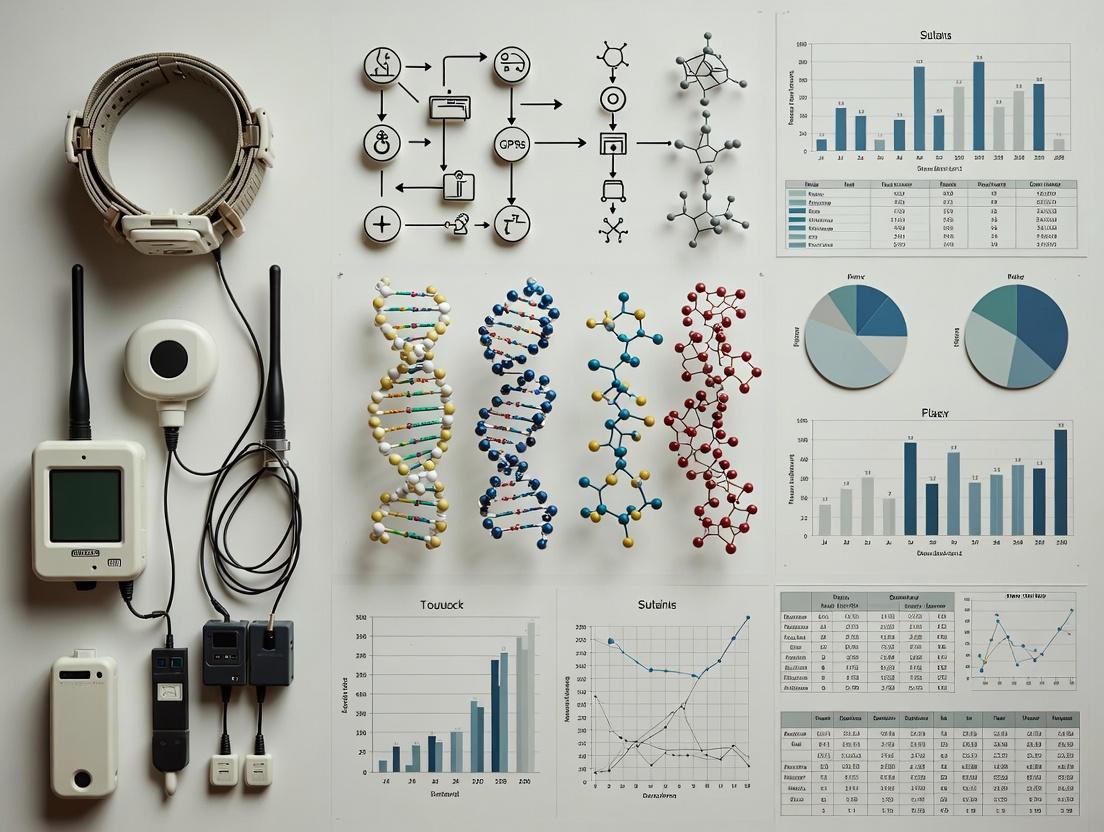
This comprehensive guide explores the application of GPS collar technology in animal research, tailored for biomedical and pharmaceutical professionals.
GPS Collars in Animal Research: A Modern Guide for Biomedical Scientists and Drug Development
Abstract
This comprehensive guide explores the application of GPS collar technology in animal research, tailored for biomedical and pharmaceutical professionals. It covers foundational principles, advanced methodological considerations for study design, practical troubleshooting strategies, and a critical evaluation of validation and comparative data. The article provides actionable insights for integrating high-resolution movement and behavioral data into translational research, toxicology studies, and drug efficacy trials, highlighting best practices for data integrity and scientific rigor.
What Are GPS Collars and Why Are They Revolutionary for Animal Research?
Telemetry, the remote measurement of physiological and positional data, has undergone a radical evolution. Originating in wildlife ecology with bulky VHF radio collars for coarse location tracking, the technology has been refined through the demands of animal research. The advent of miniaturized Global Positioning System (GPS) collars and biologgers provided the foundational thesis for modern biomedical applications: continuous, high-resolution, longitudinal data from freely moving subjects is paramount for understanding complex biological systems. This whitepaper details the core technical evolution, from ecological field studies to controlled biomedical experiments, framing GPS-collar-based animal research as the prototype for today's implantable and wearable medical telemetry.
Quantitative Evolution: From Macro to Micro
The table below summarizes the key quantitative shifts in telemetry specifications driven by the miniaturization and precision demanded first by wildlife studies and now by biomedical science.
Table 1: Evolution of Telemetry Specifications Across Domains
| Parameter | Wildlife Ecology (VHF/GPS Collar) | Biomedical Research (Implantable Telemetry) | Clinical/Consumer Wearables |
|---|---|---|---|
| Primary Metrics | Location (GPS fix), activity (accelerometer), mortality (mortality sensor) | ECG, EEG, blood pressure, temperature, biopotentials, drug infusion | Heart rate, SpO₂, activity, sleep stages, single-lead ECG |
| Size & Weight | 100g - 2000g; <3-5% of animal body weight rule | <10g (mice), ~15-20g (rats); designed for chronic implantation | 5g - 50g; ergonomic wearability |
| Data Resolution | GPS: 1 fix/15min to 1 fix/sec; Accel: 10-40 Hz | ECG: 1-5 kHz; BP: 500 Hz; Temp: 0.1 Hz | HR: 1 Hz; Accel: 25-100 Hz; ECG: 125-512 Hz |
| Range | Satellite (global) or UHF/VHF (1-30 km) | Short-range (10m - 100m) to room-based receivers | Bluetooth (10m) to cellular (global) |
| Power Lifetime | Months to years via primary cell batteries | Days to months via rechargeable or primary cells | Hours to days, rechargeable |
| Key Driver | Maximize data per unit weight for migration/behavior | Maximize signal fidelity and animal welfare in controlled settings | Maximize user compliance and battery life |
Core Experimental Protocol: From Field Deployment to Lab Validation
The methodology for deploying telemetry has structured parallels across fields. The following protocol outlines a standard procedure for a biomedical study, directly evolved from wildlife collar deployment.
Protocol: Surgical Implantation of a Physio-telemetry Transmitter in a Rodent Model for Cardiovascular Safety Pharmacology
Aim: To chronically monitor arterial blood pressure, ECG, and body temperature in a freely moving rat for the assessment of compound effects on cardiovascular function.
Materials & Pre-Surgical:
- Animal: Rat (e.g., Sprague-Dawley), acclimatized.
- Device: Implantable telemetry transmitter (e.g., HD-S11, Data Sciences International) pre-sterilized.
- Anesthesia: Isoflurane (3-5% induction, 1-3% maintenance) in medical-grade O₂.
- Analgesia: Buprenorphine SR (0.5-1.0 mg/kg, SC) administered pre-operatively.
- Surgical Suite: Aseptic technique maintained throughout.
Procedure:
- Anesthesia & Preparation: Induce anesthesia. Shave and aseptically prepare the left flank and neck regions. Place animal on a heated surgery table.
- Incisions: Make a 2-3 cm midline skin incision in the abdomen. Create a subcutaneous pocket towards the left flank for transmitter body placement.
- Catheterization: Isolate the left femoral artery. Make a small puncture and insert the transmitter's fluid-filled catheter. Secure with suture and tissue adhesive. The catheter tip is advanced into the abdominal aorta.
- Electrode Placement: Tunnel the bipolar ECG lead subcutaneously to the right anterior chest (negative) and left posterior abdomen (positive). Secure electrodes in a Lead II configuration.
- Closure & Recovery: Suture the transmitter body into the pocket. Close incisions. Administer fluids (warm saline, SC). Monitor animal until fully recovered from anesthesia in a warmed, clean cage.
- Data Acquisition: Place the animal cage atop a receiver plate connected to a data acquisition system. Begin continuous recording after a 7-10 day surgical recovery and device stabilization period.
Data Analysis: Use dedicated software (e.g., Ponemah) for waveform analysis. Extract parameters: systolic/diastolic/mean arterial pressure, heart rate, PR/QRS/QT intervals, and body temperature.
The Scientist's Toolkit: Essential Research Reagent Solutions
Table 2: Key Reagents & Materials for Implantable Telemetry Studies
| Item | Function & Explanation |
|---|---|
| Implantable Telemetry Transmitter | Core device for sensing biopotentials (ECG), pressure, temperature, and transmitting data wirelessly. |
| Physiological Data Acquisition Software | Software suite for configuring devices, recording, visualizing, and analyzing high-fidelity waveform data. |
| Receiver Plates/Arrays | Placed under animal cages to capture RF signals from implants and relay them to the acquisition system. |
| Isoflurane & Vaporizer | Gold-standard inhalant anesthetic for safe and reversible induction and maintenance of surgical anesthesia. |
| Sustained-Release Buprenorphine | Provides 72 hours of post-operative analgesia, minimizing animal distress and data artifacts from pain. |
| Sterile Surgical Instrument Kit | Includes forceps, scissors, needle drivers, and retractors for maintaining aseptic technique. |
| Suture & Tissue Adhesive | For securing catheters, electrodes, and closing surgical incisions. |
| Programmable Infusion Pump (Osmotic Mini-Pump) | Often co-implanted for chronic, controlled delivery of test compounds, enabling pharmacokinetic/pharmacodynamic studies. |
Visualizing the Telemetry Data Workflow
The logical flow of data from subject to analysis is fundamental to both ecological and biomedical telemetry.
Data Flow in Modern Biotelemetry Systems
Key Biomedical Application: Safety Pharmacology & Drug Development
The most direct translation from wildlife tracking to regulated labs is in safety pharmacology. Continuous cardiovascular monitoring in conscious animals, a direct analog to tracking migratory paths, is a regulatory (ICH S7A/B) requirement. An evolved experimental workflow is visualized below.
Safety Pharmacology Telemetry Study Timeline
The evolution continues toward greater miniaturization (ingestible sensors), multi-omics integration (coupling telemetry with biofluid sampling), and advanced analytics (machine learning for pattern detection). The core thesis established by GPS collar research—that undisturbed, longitudinal data is irreplaceable—now underpins a new era of digital biomarkers and continuous health monitoring in both preclinical and clinical spheres. Telemetry has successfully migrated from tracking herds on the savanna to monitoring the vital signs of a single cell's functional output within a living organism.
Within the foundational thesis of GPS collar technology for animal research, understanding the core hardware components is paramount. This technical guide deconstructs the four principal subsystems that enable the remote collection of high-fidelity biologging data. For researchers, scientists, and drug development professionals, this whitepaper provides a detailed examination of each component's function, technical specifications, and integration within the experimental framework of wildlife telemetry and behavioral pharmacology studies.
GPS Receiver
The GPS receiver is the cornerstone of spatial data acquisition. Modern wildlife collars utilize chip-scale receivers that access multiple satellite constellations (GPS, GLONASS, Galileo) for improved accuracy and fix rates, especially in challenging environments like dense canopy or urban interfaces.
Key Technical Parameters
- Fix Rate & Schedule: Programmable from seconds to hours, balancing temporal resolution against battery life.
- Horizontal Positional Accuracy: Typically 2.5m to 5m under open sky conditions.
- Cold/Warm Start Time: Time to First Fix (TTFF) critical for intermittent operation.
- Sensitivity: Measured in dBm, with modern receivers operating below -160 dBm for weak signal acquisition.
Table 1: Comparative Performance of Modern GPS Receiver Chipsets in Wildlife Research
| Chipset Model | Constellations Supported | Typical Accuracy (CEP) | Acquisition Sensitivity | Avg. Power Consumption (Active) |
|---|---|---|---|---|
| u-blox ZOE-M8B | GPS, GLONASS, Galileo | <2.5 m | -167 dBm | 27 mW |
| MediaTek MT3333 | GPS, QZSS, SBAS | 2.0 m | -165 dBm | 25 mW |
| Sony CXD5603GF | GNSS (All major) | 1.0 m (with augmentation) | -163 dBm | 30 mW |
Experimental Protocol: Assessing GPS Accuracy in Habitat-Specific Contexts
Objective: To quantify the empirical GPS positional error of a collar system across distinct habitat types (open field, deciduous forest, urban canyon). Methodology:
- Control Points: Establish a series of known ground control points (GCPs) using survey-grade GNSS equipment (<1 cm accuracy).
- Collar Deployment: Securely mount multiple test collars on stationary posts at each GCP across the habitat gradient.
- Data Collection: Program collars to collect a high-frequency fix (e.g., every 30 seconds) over a continuous 72-hour period.
- Error Calculation: Compute the 2D Euclidean distance between each recorded collar fix and its known GCP coordinate.
- Statistical Analysis: Report habitat-specific error as the 50th (CEP), 68th (1-sigma), and 95th percentile values. Compare distributions using ANOVA or Kruskal-Wallis tests.
Auxiliary Sensors
Beyond location, integrated sensors provide critical contextual and physiological data, enabling a multidimensional understanding of animal state and environment.
Primary Sensor Types:
- Tri-axial Accelerometers: Quantify activity budgets, classify behaviors (foraging, running, resting), and estimate energy expenditure (via Overall Dynamic Body Acceleration - ODBA).
- Magnetometers: Determine heading and provide compass direction, often fused with accelerometer data for dead-reckoning movement paths.
- Temperature Sensors: Measure ambient or epidermal temperature for thermoregulation studies or microenvironment logging.
- Bioimpedance Sensors: Estimate heart rate, respiration rate, or body composition in specialized physiological collars.
Data Logger (Microcontroller & Memory)
The data logger, centered on a low-power microcontroller, is the system's brain. It manages power, schedules sensor sampling, pre-processes raw data (e.g., calculating ODBA), and formats data packets for storage.
Core Functions:
- Power Management: Implements sleep/wake cycles to minimize energy use.
- Sensor Fusion: Algorithms (e.g., Kalman filters) combine accelerometer, magnetometer, and gyroscope data to derive precise orientation.
- Data Compression: Applies lossless or lossy compression algorithms to maximize storage efficiency.
Transmission Systems
Transmission subsystems move data from the animal to the researcher. The choice depends on required latency, data volume, and study geography.
Table 2: Transmission System Modalities in Wildlife Telemetry
| System | Typical Data Rate | Range/Latency | Best Use Case | Power Cost |
|---|---|---|---|---|
| UHF/VHF | Low (Sensor triggers) | 1-30 km / Real-time | Proximity-triggered downloads, mortality alerts | Low-Moderate |
| Global GSM (4G/LTE-M) | High (>1 Mbps) | Cellular coverage / Minutes | Large datasets (audio, video), suburban habitats | High during Tx |
| Satellite (Argos, Iridium SBD) | Low-Medium (~340 bytes/message) | Global / Hours-Days | Remote, pelagic, or wide-ranging migratory species | Very High |
| LoRaWAN | Low-Medium (27 kbps max) | 10-15 km (rural) / Minutes | Local/regional networks, fixed infrastructure studies | Low |
Experimental Protocol: Evaluating Transmission Success Rates
Objective: To determine the success rate and latency of data retrieval via Iridium Satellite vs. GSM in a mixed-habitat landscape. Methodology:
- Collar Configuration: Deploy dual-transmission collars (Iridium SBD & GSM) on a sample of study animals.
- Data Packet Design: Generate standardized data packets containing timestamp, GPS fix, and accelerometer summary statistics.
- Scheduled Transmission: Program collars to attempt transmission of identical packets via both systems at synchronized intervals (e.g., every 6 hours).
- Reception Logging: Record timestamp of receipt for each successful packet at the server.
- Metric Calculation: For each system and habitat, calculate: Success Rate = (Packets Received / Packets Scheduled) * 100%; Latency = Reception Timestamp - Collar Timestamp.
- Analysis: Compare success rates using a generalized linear mixed model (GLMM) with transmission mode and habitat as fixed effects and individual as a random effect.
System Integration & Data Flow
The operational efficacy of a GPS collar relies on the orchestrated interaction of these four core components.
Diagram Title: GPS Collar System Data Flow & Control
The Scientist's Toolkit: Essential Research Reagent Solutions
Table 3: Key Materials & Reagents for GPS Collar Field Research
| Item | Function & Application in Research |
|---|---|
| Survey-Grade GNSS Base Station | Provides differential correction for establishing high-accuracy Ground Control Points (GCPs) to validate collar GPS error. |
| RFID Tag & Scanner System | Enables automatic, proximity-based data offload from collar to fixed station (e.g., at a den or watering hole), conserving battery. |
| Programmable UHF Beacon Receiver | Used in experimental protocols to track test collar signals for recovery or to validate transmission range in the field. |
| Low-Temperature Lithium Primary Cells | The standard power source for long-term deployments; selection (e.g., Li-SOCL2) is critical for cold-climate studies. |
| Biocompatible Silicone Encapsulant | Protects electronics from moisture, dust, and animal fluids; must be tested for epidermal tolerance. |
| Time-Sync Beacon (e.g., WWVB) | Allows for temporal synchronization of all collars in a study to a universal clock, essential for interaction studies. |
| Data Fusion & Annotation Software (e.g., Movebank) | Cloud-based platform for collating GPS, sensor, and transmission data with environmental layers (NDVI, precipitation). |
Within the foundational thesis of GPS collar-based animal research, the simultaneous capture of geolocation, activity, proximity, and biometric parameters represents a paradigm shift. This multi-modal data fusion enables unprecedented insight into animal physiology, behavior, and ecology, directly impacting fields from conservation biology to pharmaceutical development. This technical guide details the core data types, their acquisition, and their integrative analysis.
Core Data Types: Technical Specifications
Geolocation
The primary function, typically acquired via GNSS (Global Navigation Satellite System) modules.
| Parameter | Typical Specification | Accuracy | Sampling Frequency |
|---|---|---|---|
| Latitude/Longitude | GPS, GLONASS, Galileo | 2-10 m (Standard), <1 m (Precision DGPS/RTK) | 1 sec to 24 hrs |
| Altitude | Derived from GNSS | 5-15 m | Same as position |
| Fix Success Rate | Environment-dependent | 60-99% (open sky to dense forest) | N/A |
| Speed Over Ground | Calculated from positional changes | ±0.2 m/s | Derived |
Experimental Protocol for Accuracy Validation:
- Static Test: Deploy collars at geodetically surveyed control points for ≥24 hours.
- Dynamic Test: Attach collar to a moving platform following a predetermined path with known coordinates (e.g., via survey-grade GNSS).
- Analysis: Calculate Root Mean Square Error (RMSE) and Circular Error Probable (CEP) for positional data against ground truth.
Activity
Quantified via inertial measurement units (IMUs): accelerometers, gyroscopes, and magnetometers.
| Parameter | Sensor Type | Typical Range | Resolution | Output Metric |
|---|---|---|---|---|
| Acceleration | 3-axis Accelerometer | ±16 g | 0.0005 g | Vector Sum Dynamic Body Acceleration (VeDBA) |
| Body Orientation | 3-axis Gyroscope | ±2000 dps | 0.06 dps | Pitch, Roll, Yaw |
| Heading | Magnetometer | ±49 Gauss | 0.0015 G | Degrees from North |
Experimental Protocol for Behavioral Classification:
- Sensor Calibration: Perform static and dynamic calibration routines for IMU axes.
- Ground Truthing: Synchronize collar data with direct visual/video observation of animal behavior (e.g., resting, walking, foraging, running).
- Machine Learning Model Training: Use labeled data to train algorithms (e.g., Random Forest, SVM) on feature vectors (e.g., frequency-domain transforms of acceleration).
- Validation: Apply k-fold cross-validation to report classification accuracy, precision, and recall for each behavior.
Proximity
Derived from inter-collar radio communication (e.g., UHF) or Bluetooth Low Energy (BLE).
| Parameter | Technology | Typical Range | Data Captured |
|---|---|---|---|
| Signal Strength | UHF/BLE RSSI | 0-500 m | Received Signal Strength Indicator (RSSI) |
| Contact Log | Custom Protocol | Up to 1 km | Timestamp, Collar ID, RSSI |
| Contact Duration | Derived from logs | N/A | Seconds of sustained proximity |
Experimental Protocol for Proximity Validation:
- Controlled Distance Test: Place collars at known, increasing distances in an open field.
- RSSI-Distance Model: Log RSSI values to establish a decay model. Note: Highly environment-sensitive.
- Dyadic Interaction Test: Deploy on tame animals with videography; validate logged "contact events" against observed interactions.
Biometric Parameters
Physiological data from integrated or implanted sensors.
| Parameter | Sensor Method | Typical Specs | Biological Significance |
|---|---|---|---|
| Heart Rate | Photoplethysmography (PPG) / ECG | 30-200 BPM, ±2 BPM | Stress, Energetic Expenditure |
| Body Temperature | Thermistor/ Thermocouple | 30-45°C, ±0.1°C | Fever, Metabolic State, Circadian Rhythm |
| Respiratory Rate | Thoracic Impedance | 5-80 BrPM, ±1 BrPM | Stress, Physiological Load |
Experimental Protocol for Biometric Calibration:
- Bench Calibration: Submerge temperature probe in controlled water bath across operational range.
- In-vivo Validation (Ethics Approval Required): Simultaneously record collar ECG/PPG and a gold-standard clinical monitor on a sedated/supervised animal. Perform Bland-Altman analysis for agreement.
Integrative Data Analysis: A Signaling Pathway Analogy
The confluence of these data types creates a "signaling pathway" for ecological and physiological inference. Raw sensor inputs are processed into biological states, which synthesize into holistic insights.
Title: Data Integration Pathway for Ecological Inference
Experimental Workflow for Multi-Modal Study
Title: End-to-End Experimental Workflow for Multi-Modal Study
The Scientist's Toolkit: Research Reagent Solutions
| Item | Function & Specification |
|---|---|
| Survey-Grade GNSS Receiver | Provides ground-truth location data for collar GPS accuracy validation (e.g., RTK-capable). |
| Programmable UHF/BLE Base Station | Logs proximity signals in a fixed area to construct detailed social interaction maps. |
| Calibrated Temperature Chamber | For bench calibration of biometric temperature sensors across environmental extremes. |
| Data Synchronization Hub | Hardware/software solution to precisely time-sync data streams from multiple collars post-retrieval. |
Open-Source Analysis Suite (e.g., Movebank R) |
Platform for storing, visualizing, and analyzing multi-track movement and sensor data. |
| IMU Calibration Jig | A precision machined fixture to rotate collars through known orientations for IMU calibration. |
| Controlled-Access Animal Facility | For in-vivo validation of biometric sensors under ethical supervision. |
Machine Learning Pipelines (e.g., Python scikit-learn) |
Custom codebases for behavioral classification from IMU data. |
Within the broader thesis on GPS collar animal research basics, this whitepaper details the fundamental advantages of integrating high-resolution biologging with physiological sensing. While basic GPS collars provide essential movement data (fix rate, home range), the next evolution lies in quantifying the drivers and consequences of that movement. This involves the precise, in vivo measurement of behavior, fine-scale movement kinematics, and correlated physiological responses. This multi-parametric approach transforms observational ecology into a mechanistic science, crucial for researchers and drug development professionals studying animal models in ethology, conservation, and preclinical research.
Core Quantifiable Parameters & Data
The fundamental advantage is the simultaneous acquisition of spatially referenced, time-series data across modalities.
Table 1: Core Quantifiable Parameters In Vivo
| Modality | Specific Metrics | Sensor/Technique | Biological Insight |
|---|---|---|---|
| Movement Patterns | Tri-axial acceleration (10-100 Hz), Heading, Pitch/Roll, Step count, Dead-reckoned path | GPS/GLONASS, IMU (Accelerometer, Gyroscope, Magnetometer) | Activity budget (foraging, resting), gait, energy expenditure, fine-scale habitat use. |
| Behavior | Classification of discrete states (e.g., grazing, running, grooming), bite counts, vocalizations. | Machine learning on IMU data, Audio recorders, Proximity sensors. | Behavioral phenotyping, response to stimuli/intrusion, social interactions. |
| Physiology | Heart Rate (HR), Heart Rate Variability (HRV), Electrocardiogram (ECG), Body Temperature, Respiratory Rate. | Bio-potential electrodes, Thermistors, Optical PPG sensors. | Stress response (sympathetic tone), metabolic rate, fever onset, autonomic nervous system activity. |
| Environment | Ambient Temperature, Barometric Pressure, Light Level, Humidity. | On-board environmental sensors. | Context for physiological & behavioral data (thermoregulatory challenge, etc.). |
Table 2: Exemplar Quantitative Data from Integrated Studies
| Species/Model | Intervention/Context | Key Quantitative Results | Implication |
|---|---|---|---|
| Ruminants (Cattle) | Pasture vs. feedlot | HR decreased by 22±5 bpm during rumination vs. active foraging. Activity classifier accuracy >95%. | Precise welfare assessment; quantifies behavioral states' physiological cost. |
| Ungulates (Elk) | Human recreational activity | Flight response increased movement rate by 300% and HR from 80 to 180 bpm, with recovery to baseline taking >4 hours. | Quantifies non-consumptive human disturbance impact. |
| Preclinical (Canine) | Administration of novel cardio-drug | Drug A reduced stress-induced tachycardia by 40% vs. placebo (p<0.01), without altering locomotor activity. | Enables in vivo efficacy & safety pharmacology in a naturalistic setting. |
Detailed Experimental Protocols
Protocol 1: Simultaneous Quantification of Stress Response and Movement Ecology
- Objective: To link a discrete environmental stressor with physiological (autonomic) and behavioral escape responses.
- Subjects: Instrumented large herbivores (e.g., deer, elk) with integrated GPS-IMU-ECG collars.
- Procedure:
- Baseline Recording: Collect 24-hour baseline data of HRV (RMSSD, LF/HF ratio), tri-axial acceleration, and location (1 fix/min).
- Controlled Stressor: Implement a standardized, ethically-approved approach stimulus by a researcher on foot at a distance of 200m from the animal.
- Response Phase: Log data at maximum frequency (GPS: 1 Hz, ECG: 250 Hz, IMU: 50 Hz) from stimulus onset through full recovery.
- Analysis:
- Behavior/Movement: Use Dynamic Body Acceleration (DBA) from IMU to classify burst movement. Calculate flight initiation distance, speed, and path tortuosity.
- Physiology: Extract instantaneous HR from ECG. Calculate HRV metrics in 5-minute windows pre-, during, and post-stressor.
- Integration: Spatially map HR traces onto flight path using timestamps. Correlate peak HR with maximum running speed.
Protocol 2: Preclinical In Vivo Efficacy of an Anxiolytic Candidate in a Naturalistic Model
- Objective: To evaluate a drug's effect on anxiety-related behaviors and physiology in group-housed animals.
- Subjects: Laboratory-housed non-human primates or canines implanted with subcutaneous biotelemetry devices and wearing proximity loggers.
- Procedure:
- Habituation & Baseline: Animals habituated to collars. 72-hour baseline data for activity, intra-group proximity, and core temperature collected.
- Challenge & Drug Testing: Employ a randomized, placebo-controlled crossover design.
- Day 1 (Challenge): Introduce a mild, novel environmental stressor (e.g., unfamiliar object). Record data for 6 hours.
- Washout: 7-day washout period.
- Day 8 (Drug + Challenge): Administer anxiolytic candidate or placebo per os. After Tmax, reintroduce the same stressor.
- Analysis:
- Primary Endpoint: % time engaged in vigilant behavior (classified via IMU).
- Secondary Endpoints: Social proximity duration, HRV, and circadian rhythm of activity pre- vs. post-dose.
Signaling Pathways & Workflow Visualizations
Pathway: Stress Response & Biologging Measurables
Workflow: Integrated Biologging Data Pipeline
The Scientist's Toolkit: Key Research Reagent Solutions
Table 3: Essential Materials for Integrated In Vivo Quantification
| Item / Solution | Function & Technical Role | Example/Notes |
|---|---|---|
| Integrated Biologging Collar | Platform housing GPS, IMU, physiological, and environmental sensors. Enables time-synced data collection. | Units from manufacturers like Vectronic-Aerospace, Lotek, or custom-built solutions. |
| Implantable Biotelemetry Transmitter | For core physiology (ECG, temperature, BP) in preclinical models. Provides clinical-grade data streams. | Devices from Data Sciences International (DSI) or Konigsberg Instruments. |
| Low-Energy Bluetooth Proximity Loggers | Quantifies social network structure by logging close-contact events between individuals. | Used in disease transmission or social behavior studies. |
| Ethograms & Behavioral Classification Algorithms | Translates raw sensor data (e.g., IMU) into discrete behavioral states. | Pre-trained ML models (Random Forest, SVM) or supervised learning using labeled video data. |
| Data Synchronization Software | Aligns all data streams (GPS, ACC, ECG) to a unified microsecond-level timestamp. | Critical for causal inference. Custom scripts or vendor software (e.g., Vectronic's GPS Plus). |
| Dynamic Body Acceleration (DBA) Algorithms | Derives a proxy for energy expenditure from tri-axial acceleration data. | Calculated as Vectorial DBA (VeDBA) or Overall DBA (ODBA). |
| Heart Rate Variability (HRV) Analysis Suite | Processes inter-beat intervals to quantify autonomic nervous system tone. | Software like Kubios HRV or custom R/Python scripts using time/frequency domain metrics. |
Within the foundational thesis of GPS collars in animal research, which provides critical longitudinal, high-resolution spatial and activity data, primary research applications in drug development achieve unprecedented rigor and translational relevance. This technical guide details the integration of these tools for behavioral phenotyping, safety pharmacology, and efficacy monitoring, forming a triad essential for modern preclinical pipelines.
Behavioral Phenotyping: Quantifying the Behavioral Fingerprint
Behavioral phenotyping establishes a comprehensive baseline of an animal's behavioral repertoire, crucial for detecting drug-induced alterations.
Core Quantitative Metrics from GPS & Integrated Sensors
Data from GPS collars, often combined with accelerometers and gyroscopes, yield key quantitative endpoints.
Table 1: Key Quantitative Metrics for Behavioral Phenotyping
| Metric Category | Specific Parameter | Typical Baseline Value (Rodent, Open Field) | Interpretation in Drug Development |
|---|---|---|---|
| Locomotor Activity | Total Distance Traveled (m) | 20-40 m / 10 min trial | Hyperactivity or sedation. |
| Exploratory Pattern | Mean Movement Velocity (m/s) | 0.05 - 0.15 m/s | Motivational state, motor function. |
| Spatial Utilization | Time in Center Zone (%) | 10-30% | Anxiolytic (increase) or anxiogenic (decrease) effect. |
| Behavioral Complexity | Meander (Degrees/cm) | 20-50 deg/cm | Navigational strategy, cognitive flexibility. |
| Circadian Rhythm | Rest-Activity Amplitude | Species-specific | Disruption indicates neurotoxicity or efficacy on sleep disorders. |
Detailed Experimental Protocol: Novelty-Suppressed Feeding with GPS Tracking
Objective: To assess anxiolytic drug efficacy by measuring latency to feed in a novel, anxiogenic environment while tracking precise movement.
Materials:
- GPS-enabled collar with <10cm precision.
- Open-field arena with a centrally placed food pellet.
- Food-deprived (24h) rodent model.
- Video recording system for validation.
Procedure:
- Habituation: Animal is placed in the testing room for 1 hour.
- Baseline Tracking: Animal is placed in the arena (without food) for 5 minutes; GPS tracks baseline exploration.
- Test Trial: A familiar food pellet is placed in the center. The animal is returned to the arena.
- Data Acquisition: GPS collar records the animal's path at 10Hz. The primary endpoint is latency to first bite (seconds). Secondary GPS endpoints include: path efficiency to the center, velocity pre- and post-feed, and thigmotaxis (wall-hugging).
- Analysis: GPS traces are analyzed to correlate spatial decision-making with the behavioral endpoint.
Visualization: Behavioral Phenotyping Workflow
Behavioral Data Acquisition & Processing Pipeline
Safety Pharmacology: CNS and Cardiovascular Assessment
Safety pharmacology evaluates potential adverse effects, with CNS and cardiovascular function as primary concerns.
Integrating Telemetry for Core Safety Endpoints
Implantable telemetry combined with external GPS enables correlative safety assessment in freely moving animals.
Table 2: Core Safety Pharmacology Parameters from Integrated Telemetry/GPS
| System | Parameter | Normal Range (Rodent) | Safety Alert Threshold |
|---|---|---|---|
| Cardiovascular | Heart Rate (bpm) | 300-500 | >20% change from baseline |
| Blood Pressure (mmHg) | 110-130 / 70-90 | >20% change | |
| QTc Interval (ms) | Species-specific | Significant prolongation | |
| CNS | EEG Power Spectrum | Baseline profile | Seizure activity (spike-wave) |
| Motor | Abnormal Movement Index | Baseline defined | Significant increase |
Detailed Experimental Protocol: Irwin/FOB Screen Enhanced with GPS
Objective: To conduct a comprehensive Functional Observational Battery (FOB) with quantitative locomotor and spatial data.
Materials:
- GPS collar.
- Standard FOB scoring sheet.
- Open-field apparatus.
- Light/dark box (optional).
Procedure:
- Pre-dose Baseline: Record 30 minutes of GPS/activity data and perform FOB.
- Dosing: Administer test compound or vehicle.
- Post-dose Monitoring: At T+30, T+60, T+120, T+240 minutes: a. Animal is placed in the open field for 10 minutes with GPS recording. b. Immediately after, a manual FOB is performed (reactivity, tremor, gait, etc.).
- Data Integration: GPS metrics (e.g., velocity decay, circling behavior) are quantitatively correlated with observer-scored neurobehavioral deficits.
Visualization: Integrated Safety Assessment Pathway
Multisystem Safety Pharmacology Integration
Efficacy Monitoring: Disease Models and Therapeutic Response
GPS collars provide objective, continuous measures of disease progression and drug response, reducing observer bias.
Quantitative Efficacy Endpoints in Common Models
Table 3: Efficacy Monitoring with GPS in Disease Models
| Disease Model | GPS-Derived Efficacy Endpoint | Vehicle Group Typical Value | Expected Drug Effect |
|---|---|---|---|
| Neuropathic Pain | Spontaneous Activity Bursts (count/hr) | Reduced (>50% from naive) | Increase toward naive levels |
| Anxiety/Depression | Time in Open Arm/Arena Center (%) | Decreased | Significant Increase |
| Neurodegeneration (e.g., HD) | Circadian Rhythm Fragmentation Index | High (>0.7) | Reduction (improved rhythm) |
| Arthritis | Movement Velocity (m/s) | Decreased | Increase |
Detailed Experimental Protocol: Efficacy in a Neuroinflammatory Model
Objective: To assess a novel anti-inflammatory drug's efficacy on reversing sickness-induced hypoactivity.
Materials:
- LPS (lipopolysaccharide) to induce neuroinflammation.
- GPS collars.
- Activity monitoring home-cages.
Procedure:
- Baseline Phase (7 days): Animals in home-cages with ad libitum GPS/activity monitoring. Establish 24h circadian activity profiles.
- Disease Induction: Administer LPS (0.5 mg/kg, i.p.) to all animals.
- Treatment Phase: Randomize into Vehicle and Drug groups. Administer treatments at T+2h and T+24h post-LPS.
- Monitoring: Continuous GPS/activity tracking for 72h post-LPS.
- Primary Analysis: Compare the area under the curve (AUC) for total distance traveled over 24-48h post-LPS between groups. Secondary: Analysis of nocturnal activity restoration.
The Scientist's Toolkit: Key Research Reagent Solutions
Table 4: Essential Materials for GPS-Integrated Drug Development Research
| Item / Reagent Solution | Function in Research |
|---|---|
| High-Precision GPS Collar | Provides core spatial (x,y,z) and temporal data for locomotion and place preference. |
| Tri-Axial Accelerometer/Gyroscope | Quantifies fine motor activity, gait, posture, and behavioral states (e.g., resting, grooming). |
| Implantable Telemetry System | Enables continuous, stress-free monitoring of ECG, blood pressure, EEG, and temperature. |
| Video Tracking Software (e.g., EthoVision) | Validates and supplements GPS data, allowing for detailed ethological analysis. |
| Data Fusion & Analysis Platform (e.g., MATLAB, Python w/ Pandas) | Essential for synchronizing, processing, and analyzing multi-modal data streams. |
| Standardized Behavioral Arenas | Provides controlled environments for tests like open field, elevated plus maze, etc. |
| Lipopolysaccharide (LPS) | Standard reagent for inducing systemic inflammation and sickness behavior. |
| Reference Compounds (e.g., Diazepam, Amphetamine) | Positive controls for anxiolysis, hyperactivity, or other expected phenotypes in assays. |
Designing and Executing a GPS Collar Study: Protocols for Scientific Rigor
Within the broader thesis on GPS collar animal research basics, the foundational step is not technological but logistical and ethical. A study's scientific validity and ethical integrity are established before any device is deployed. This guide details the critical pre-study considerations of species selection, animal size and weight limits, and the mandatory Institutional Animal Care and Use Committee (IACUC) approval process, providing a framework for robust, reproducible, and humane wildlife telemetry research.
Species-Specific Considerations
The target species dictates every subsequent choice. Key biological and behavioral factors must be evaluated.
Table 1: Species-Specific Biological Factors for GPS Collar Studies
| Factor | Considerations | Impact on Study Design |
|---|---|---|
| Neck Morphology | Cylindrical vs. tapered neck; presence of mane or sagittal crest. | Collar fit, potential for slippage or chafing; may require custom design. |
| Growth Rate | Rapid growth in juveniles vs. stable adult size. | May require expandable or break-away collars to prevent injury. |
| Behavior | Grooming, scratching, social interaction (allogrooming), den/burrow use. | Risk of collar snagging or animal-mediated removal; need for low-profile hardware. |
| Life History | Molting (birds, some mammals), antler cycles (cervids). | Timing of attachment; collar may be shed naturally if timed with molt. |
| Habitat Use | Dense canopy, aquatic environments, subterranean movement. | GPS fix success rate; may require integrated Argos or VHF for backup. |
Experimental Protocol: Species Suitability Assessment
- Objective: To determine if the target species is a viable candidate for GPS collar deployment based on morphology and behavior.
- Methodology:
- Conduct a thorough literature review of previous telemetry studies on the species or close relatives.
- Perform morphometric analysis on a subset of the population (or from museum specimens) to characterize neck circumference variability and shape.
- Undertake direct observational study (via camera traps or focal animal sampling) to document behaviors that may interact with a collar (e.g., rubbing against trees, swimming).
- Analyze habitat structure via GIS or field surveys to estimate GPS signal obstruction.
- Outcome: A feasibility report justifying species selection or recommending modifications (e.g., collar type, attachment method).
Animal Size and Weight Limits
The cornerstone of ethical device deployment is the weight rule. The device must not impair the animal's normal function.
Table 2: Established Weight Guidelines for Telemetry Devices
| Animal Group | General Guideline (Device % of Body Weight) | Key Citations & Rationale |
|---|---|---|
| Birds (Flying) | 3-5% maximum, with ≤3% being ideal for long-distance migrants. | Cochran (1980), Vandenabeele (2012). Exceeding 3-5% can alter flight kinematics, increase metabolic cost, and reduce survival. |
| Terrestrial Mammals | Typically 2-5%, with a strong preference for ≤2-3% for cursorial species. | Sikes & Gannon (2011), IACUC Guidelines. Lower percentages minimize impact on energetics, foraging, and predator evasion. |
| Marine Mammals | Often <1% due to hydrodynamic drag and high energy expenditure for swimming. | McMahon et al. (2008). Streamlined form is critical; devices are often integrated into tags rather than collars. |
Experimental Protocol: Establishing Study-Specific Weight Limits
- Objective: To define an absolute maximum device weight for a specific study population.
- Methodology:
- Determine the average body mass (Mavg) and the mass of the smallest individual likely to be collared (Mmin) from field data.
- Apply the most conservative relevant guideline (e.g., 2% for a terrestrial carnivore) to M_min:
Max Device Weight = M_min * 0.02. - Calculate the total device weight, including collar material, battery, GPS module, antenna, and any peripherals (e.g., VHF beacon, accelerometer).
- If the total device weight exceeds the calculated max, redesign the system (e.g., use a smaller battery, solar power, or a lighter housing) until the threshold is met.
- Outcome: A finalized device specification sheet with a total mass under the established ethical limit.
Ethical Approvals: The IACUC Protocol
IACUC review is a legal and ethical mandate in the U.S. (similar bodies exist globally, e.g., Animal Ethics Committees). The protocol is a comprehensive justification of the study.
Table 3: Core Components of an IACUC Protocol for GPS Collaring
| Protocol Section | Critical Content Requirements |
|---|---|
| Rationale & Objectives | Clear scientific justification; why GPS data is essential and cannot be obtained by less invasive means. |
| Species & Numbers | Justification for target species and sample size (statistical power analysis). |
| Procedure Description | Step-by-step capture, restraint, handling, collar fitting, and release methods. |
| Animal Welfare Considerations | The 3Rs: Reduction (minimize numbers), Refinement (minimize pain/distress), Replacement (use non-animal alternatives if possible). |
| Device Details | Collar weight relative to animal weight; materials; attachment method; deployment duration. |
| Monitoring Plan | Post-release animal monitoring schedule for signs of distress or collar-related injury. |
| Contingency Plans | Procedures for collar removal (remote drop-off, recapture), animal injury, or device failure. |
| Qualifications | Documentation of team training in animal handling, anesthesia, and field procedures. |
Experimental Protocol: IACUC Protocol Development and Field Implementation
- Objective: To obtain ethical approval and execute a study in compliance with the approved protocol.
- Methodology – Pre-Study:
- Draft the full IACUC protocol incorporating all elements from Table 3.
- Consult with veterinarians on capture anesthesia (drugs, doses, reversal) and pain management.
- Submit the protocol for IACUC review; address all committee questions and revise as required.
- Obtain all necessary permits (state, federal, tribal, landowner) before field work begins.
- Methodology – In-Field Execution:
- Conduct a safety and procedure briefing for all field personnel prior to each capture session.
- Document all procedures: capture time, anesthesia induction/recovery times, physiological parameters (heart rate, temperature, respiration), collar fit (allow 1-2 fingers between collar and neck).
- Implement post-release monitoring via remote VHF tracking or visual observation as per the approved plan.
- Outcome: Approved IACUC protocol (#IACUC-XXXX-XX), complete field records, and ethically collected GPS data.
The Scientist's Toolkit: Research Reagent Solutions
Table 4: Essential Materials for GPS Collar Field Deployment
| Item | Function & Rationale |
|---|---|
| GPS Collar Unit | Core device for logging location data. Must be selected based on weight, fix schedule, data retrieval method (UHF, GSM, satellite), and battery life. |
| Telazol or Ketamine-Xylazine | Injectable anesthetic combinations commonly used for safe immobilization of medium to large mammals. Provide reversible sedation and analgesia for handling. |
| Naltrexone or Atipamezole | Reversal agents (antagonists) for specific anesthetics (e.g., for opioids or medetomidine). Critical for rapid recovery and animal welfare. |
| Collar Fitting Tools | Includes adjustable sizing jigs, specialized pliers for rivets or bolts, and tape measures. Ensures consistent, safe, and secure collar attachment. |
| Veterinary Monitor | Portable device to track vital signs (pulse oximetry, heart rate, temperature, respiration) under anesthesia. Essential for animal safety. |
| Biologger/Sensor Module | Optional integrated sensors (accelerometer, magnetometer, temperature, audio). Adds behavioral or environmental context to GPS fix data. |
| Remote Drop-Off Mechanism | Timed or command-release system (burn wire, mechanical bolt). Allows for non-recapture collar retrieval, mandated in many protocols. |
| VHF Beacon | Integrated very high frequency transmitter. Enables manual ground-tracking for animal monitoring, recovery, or collar retrieval after drop-off. |
Visualizing the Pre-Study Workflow and Ethical Framework
Title: GPS Animal Research Pre-Study Workflow
Title: IACUC Review and the 3Rs Ethical Framework
Within the foundational thesis of GPS collar-based animal research, selecting the appropriate telemetry device is a critical determinant of study success. This technical guide provides an in-depth analysis of core collar specifications—accuracy, fix success rate, battery life, and sensor suites—enabling researchers and drug development professionals to make informed, hypothesis-driven decisions. The integration of auxiliary sensors like accelerometers and thermometers transforms GPS collars from simple tracking tools into holistic biologging platforms, unlocking novel physiological and behavioral metrics.
Core Performance Metrics: Quantitative Comparison
Table 1: Comparative Performance of Modern GPS Collar Technologies
| Metric | Traditional GPS (≤5 Hz) | High-Fix Rate GPS (≥10 Hz) | GPS+GLONASS | GPS+Low Earth Orbit (LEO) |
|---|---|---|---|---|
| Typical Horizontal Accuracy | 5 - 20 m | 2 - 10 m | 3 - 15 m | < 5 m |
| Minimum Fix Interval | 1 second - 1 minute | < 1 second | 1 second - 1 minute | < 30 seconds |
| Avg. Fix Success Rate (Forest) | 60-80% | 70-85% | 75-90% | 90-99% |
| Avg. Fix Success Rate (Open) | 85-99% | 90-99% | 95-99% | 99%+ |
| Battery Impact of High Fix Rate | Low | Very High | Moderate | Low-Moderate |
| Primary Use Case | Home range, migration | High-speed movement, fine-scale behavior | High latitude/urban canyon studies | Critical, real-time data needs |
Table 2: Sensor Suite Additions & Their Impact
| Sensor | Sampling Rate Range | Data Output | Power Consumption | Primary Research Application |
|---|---|---|---|---|
| 3-Axis Accelerometer | 10 Hz - 100 Hz | Body acceleration (g), posture, activity counts | Low to Moderate | Behavior classification, energy expenditure, gait analysis. |
| Thermometer | 0.1 Hz - 1 Hz | Ambient or skin temperature (°C) | Very Low | Microhabitat use, fever detection (disease trials), thermoregulation. |
| Magnetometer | 1 Hz - 10 Hz | Heading, directionality | Low | Dead-reckoning, compass orientation. |
| Audio Recorder | 8 kHz - 48 kHz | Acoustic waveforms | Very High | Communication studies, predator-prey interactions, biodiversity assessment. |
| Barometric Pressure | 0.1 Hz - 1 Hz | Pressure (hPa) | Very Low | Altitude, den/rookery use, weather logging. |
Experimental Protocols for Key Metrics
Protocol 1: Field Validation of GPS Accuracy and Fix Success Rate
- Objective: Empirically determine the collar's positional error and fix rate under controlled field conditions.
- Materials: Test collars, known geodetic survey points, open and forested test sites, handheld high-accuracy GPS receiver (e.g., RTK-GPS), data logging software.
- Methodology:
- Place collars statically at multiple known survey points across habitat types.
- Program collars to attempt fixes at the study's intended rate (e.g., every 15 minutes) for a minimum 48-hour period.
- Simultaneously, log true position with the reference GPS.
- Calculate Horizontal Positional Error as the Euclidean distance between the collar fix and the true position.
- Calculate Fix Success Rate as (Successful Fixes / Attempted Fixes) * 100% per habitat.
Protocol 2: Calibration of Accelerometer for Behavior Classification
- Objective: Create a labeled dataset to train machine learning algorithms for behavior inference.
- Materials: Collars with accelerometers, captive or temporarily restrained study species, video recording system, synchronization tool (e.g., LED flash), data processing software (e.g., R, Python).
- Methodology:
- Securely fit collar on animal. Synchronize collar internal clock and video camera timestamp using a visible/audible signal.
- Record animal while it performs natural behaviors (resting, foraging, walking, running, climbing).
- Extract tri-axial accelerometry data (VeDBA - Vectorial Dynamic Body Acceleration is common) for the recorded periods.
- Manually label video footage to correspond with accelerometry data streams.
- Use labeled data to train and validate a Random Forest or Support Vector Machine classifier.
Protocol 3: Integrating Thermometry for Fever Response in Pharmaceutical Trials
- Objective: Detect febrile response in animals as a biomarker for drug efficacy or side effects.
- Materials: Collars with calibrated thermometers, experimental and control animal groups, subcutaneous temperature datalogger (gold standard), drug/placebo administration tools.
- Methodology:
- Implant subcutaneous dataloggers in a subset of animals for core temperature validation.
- Administer the experimental compound or pathogen challenge.
- Collect continuous collar-based ambient/skin temperature and core temperature from implants.
- Model the relationship between external collar temperature and core temperature.
- Establish a statistical threshold for fever detection based on collar data alone for large-scale trials.
Visualizing Collar Data Integration Pathways
Title: GPS Collar Data Flow from Animal to Analysis
Title: Hypothesis-Driven Collar Selection & Configuration Workflow
The Scientist's Toolkit: Essential Research Reagents & Materials
Table 3: Key Tools for GPS Collar Research
| Item | Function in Research | Example/Note |
|---|---|---|
| High-Accuracy Reference GPS (RTK/PPK) | Provides "ground truth" location for validating collar GPS accuracy. | e.g., Trimble R series, Emlid Reach. Critical for Protocol 1. |
| Time-Synchronization Tool | Aligns data streams from collars, video, and other sensors. | LED flash, audio clapper, NTP servers for cellular collars. |
| Biologging Data Processing Software | Cleans, filters, and analyzes complex multi-sensor data. | movebankR, ACCELA, custom Python/R scripts (using pandas, numpy). |
| Machine Learning Library | Develops classifiers for accelerometry and other high-dimensional data. | scikit-learn (Python), caret (R) for Protocol 2. |
| Temperature Calibration Bath | Calibrates collar thermometers against a known standard. | Required for physiological studies; ensures data accuracy for Protocol 3. |
| Programmable Release Mechanism | Enorses non-invasive recovery of collars at study end. | Drop-off via VHF/UHF signal, galvanic timed release. Ethical best practice. |
| UHF/VHF Base Station & Antenna | For local data download and collar recovery in the field. | Yagi antenna, SDR (Software Defined Radio) receivers. |
| Battery Life Calculator | Estimates deployment duration based on sampling profile. | Often provided by collar manufacturers; essential for study design. |
Within the foundational thesis of GPS-collar-based animal research, raw location data achieves scientific utility only through the derivation of standardized behavioral and ecological metrics. This technical guide details the core quantitative pillars of such analysis: Home Range, Path Complexity, Activity Budgets, and Social Interactions. These metrics transform spatio-temporal tracks into insights on habitat use, energetics, behavioral states, and population structure, with direct applications in conservation biology, ethology, and ecological modeling for environmental impact assessments.
Key Metrics: Definitions & Quantitative Frameworks
Home Range Analysis
The home range is the area routinely used by an animal for survival and reproduction. It is distinct from the total "utilization distribution," which describes the probability density of an animal's occurrence.
Core Methods & Data:
- Minimum Convex Polygon (MCP): The simplest polygon encompassing all locations. Highly sensitive to outliers.
- Kernel Density Estimation (KDE): The statistical standard, producing a probability density surface. Performance hinges on bandwidth selection.
- Autocorrelated Kernel Density Estimation (AKDE): A modern advancement that explicitly models temporal autocorrelation in GPS data, reducing bias in range estimates.
Table 1: Comparative Home Range Estimation Methods
| Method | Key Parameter | Advantage | Limitation | Primary Use Case |
|---|---|---|---|---|
| MCP | Percentile (e.g., 95%) | Simple, comparable, geometry-based | Sensitive to outliers, overestimates area | Initial data exploration, legacy comparisons |
| KDE | Bandwidth (h) / Smoothing factor | Probabilistic, visualizes core areas | Assumes independence of fixes; bandwidth choice is critical | Standard home range and core area definition |
| AKDE | Movement model & bandwidth | Accounts for autocorrelation, unbiased with modern data | Computationally intensive, requires specialized software (e.g., ctmm) |
Research requiring statistically robust area estimates from high-frequency data |
Path Complexity (Movement Analysis)
This metric quantifies the tortuosity and structure of an animal's movement path, inferring behaviors like foraging, directed travel, or resting.
Core Metrics:
- Step Length: The straight-line distance between consecutive GPS fixes.
- Turning Angle: The change in direction between successive steps.
- Net Squared Displacement (NSD): The squared linear distance from the starting point over time, used to classify movement modes (e.g., migratory vs. sedentary).
- First-Passage Time (FPT): Time spent within a circle of a given radius, identifying areas of intensive use (resting/foraging sites).
Table 2: Path Complexity Metrics and Behavioral Inferences
| Metric | Calculation | High Value Indicates | Low Value Indicates |
|---|---|---|---|
| Mean Step Length | Mean distance between sequential fixes | Directed travel, dispersal | Resting, localized activity |
| Turning Angle Concentration | Circular variance of angles between steps | Directed, persistent movement (mean ~ 0°) | Tortuous, area-restricted search (angles ~ ±180°) |
| FPT Peak | Radius at which FPT variance is maximized | Scale of intensive area use | Homogeneous movement, no focused area use |
Activity Budgets
Activity budgets partition an animal's time into discrete behavioral states (e.g., resting, foraging, traveling) derived from movement metrics or sensor data.
Experimental Protocol: Behavioral State Classification
- Data Collection: Deploy GPS collars with integrated tri-axial accelerometers (sampling at 10-40 Hz). Collect concurrent ground-truthed behavioral observations via direct observation or video.
- Feature Extraction: For accelerometer data, calculate statistics (mean, variance, pitch/roll) over 3-5 second epochs for each axis (X, Y, Z).
- Model Training: Use observed behaviors as labels to train a supervised machine learning classifier (e.g., Random Forest, Support Vector Machine) on the accelerometry features.
- Prediction & Budgeting: Apply the trained model to the full dataset to predict behavioral states for all epochs. Sum the time spent in each state to create the budget.
Table 3: Typical Accelerometer Signatures for Behavioral States
| Behavioral State | Tri-axial Accelerometer Signature (Dynamic Acceleration) |
|---|---|
| Resting | Very low variance on all axes. |
| Foraging/Walking | Moderate, regular periodic signal on the surge (X) axis. |
| Running/Traveling | High-amplitude, high-frequency periodic signal on the surge (X) axis. |
| Grazing/Head Down | Sustained pitch (orientation) change on the heave (Z) axis. |
Social Interactions
Defining interactions from GPS data involves quantifying spatio-temporal co-occurrence, which may indicate social bonding, mating, or competition.
Core Metric: Proximity Analysis
- Definition: Two individuals are defined as "interacting" when their simultaneous GPS fixes are within a specified proximity threshold (e.g., 50m) and for a minimum duration threshold (e.g., > 5 minutes).
- Null Model: Significance is assessed by comparing observed contact rates to those generated from randomized paths (e.g., step selection functions) that preserve individual movement patterns but remove temporal correlation.
Experimental Protocol: Dyadic Interaction Analysis
- Synchronization: Align GPS fixes from collared individuals to a common timestamp.
- Proximity Calculation: For each timestamp, compute the pairwise distance between all individuals.
- Event Definition: Flag sequences where pairwise distance remains below the proximity threshold for consecutive fixes exceeding the duration threshold.
- Network Construction: Create a weighted directed or undirected network where nodes are individuals, and edge weights are the frequency or total duration of proximity events.
The Scientist's Toolkit: Research Reagent Solutions
Table 4: Essential Materials & Analytical Tools for GPS-Based Animal Research
| Item / Solution | Function & Purpose |
|---|---|
| High-Resolution GPS/Accelerometer Collar | Primary data logger. Provides spatio-temporal coordinates (GPS) and fine-scale body movement (accelerometer) for behavioral classification. |
| CTMM (Continuous-Time Movement Modeling) R Package | Statistical software for implementing AKDE, estimating home ranges, and modeling autocorrelated movement trajectories. |
movebank |
Online data repository and platform for managing, sharing, and analyzing animal tracking data. |
amt (Animal Movement Tools) R Package |
Comprehensive toolkit for calculating step lengths, turning angles, NSD, FPT, and conducting habitat selection analyses. |
Random Forest Classifier (e.g., in caret or scikit-learn) |
Machine learning algorithm used to classify behavioral states from accelerometer data using ground-truthed observations. |
Circular Statistics Library (e.g., circular in R) |
Essential for correctly analyzing turning angle data, accounting for its cyclic nature (0° = 360°). |
Network Analysis Software (e.g., igraph) |
For constructing and analyzing social interaction networks from proximity data. |
| Null Model Simulation Scripts (Custom R/Python) | To randomize animal trajectories for statistically testing the significance of observed social interactions or habitat selection. |
Visualized Workflows & Relationships
Title: Data Flow from GPS Collars to Key Metrics
Title: Activity Budget Creation Workflow
Title: Protocol for Social Interaction Analysis
In GPS collar-based animal research, the spatial and movement data provided by telemetry is foundational. However, its integration with complementary data streams—video monitoring, clinical pathology, and pharmacokinetic (PK) sampling—creates a multidimensional dataset that vastly enhances the interpretation of animal behavior, physiology, and pharmacology. This integration is critical in fields like ethology, wildlife ecology, and especially in preclinical drug development, where understanding a compound's effects in a biologically complex, unrestrained system is paramount. This guide details the technical methodologies for synergistic data collection and analysis, framed within the core thesis of advancing holistic animal research.
Synchronized Video Monitoring Integration
Purpose and Rationale
Video monitoring provides contextual validation for GPS-derived movement metrics. A spike in locomotor activity (e.g., from accelerometer data) could indicate agitation, seizure, or normal exploratory behavior; video is the discriminator. Synchronization allows for direct correlation between spatial location, physical movement, and observable behavior or clinical signs.
Experimental Protocol: Synchronized GPS-Video Data Collection
Objective: To correlate fine-scale GPS/accelerometer data with continuous behavioral observation. Materials: GPS collar with 3-axis accelerometer and UHF/Wi-Fi/Bluetooth transmit capability; synchronized time-locked video recording system (e.g., multiple overhead/angled cameras with IR capability for dark cycles); dedicated data aggregation server with precision time protocol (PTP) network. Procedure:
- Synchronization: All devices (GPS collar internal clock, video system timestamps, central server) are synchronized to a network time protocol (NTP) server with millisecond precision at the start of the study.
- Calibration: Place the instrumented animal in the video-monitored arena (e.g., open field, home cage). Record a calibration event visible to both systems (e.g., a distinct light flash or physical tag tap logged by the collar as an event marker).
- Continuous Data Acquisition: Initiate continuous GPS/accelerometer sampling (e.g., at 10-25 Hz for accelerometer, 1 Hz for GPS) and video recording.
- Event Logging: Researchers log specific behavioral events (e.g., grooming, rearing, consumption) directly into the video annotation software, creating time-stamped ethograms.
- Data Fusion: Use the common timeline to merge GPS location/velocity, accelerometer bursts (vectorial dynamic body acceleration), and video-derived behavioral labels into a unified database.
Key Research Reagent Solutions
| Item | Function |
|---|---|
| GPS/Accelerometer Collar (e.g., Technosmart, Telemetry Solutions) | Provides core spatial and movement metrics. Integrated accelerometers measure fine-scale activity and posture. |
| Time-Locked Video System (e.g., Noldus EthoVision, ANY-maze) | Automated video tracking and behavioral annotation software. Ensures all video frames have a precise, synchronized timestamp. |
| IR Illumination Panels | Enables continuous video monitoring during dark/active phases without disrupting animal circadian rhythms. |
| Data Aggregation Middleware (e.g., LabKey Server, custom Python/R scripts) | Software platform to ingest, synchronize, and time-align heterogeneous data streams based on universal timestamps. |
Clinical Pathology Data Integration
Purpose and Rationale
Integrating clinical pathology (hematology, clinical chemistry, urinalysis) with telemetry data links physiological state with behavior and movement. For example, a GPS-tracked reduction in home range or activity could be explained by hematology revealing anemia or chemistry indicating renal impairment.
Experimental Protocol: Telemetry-Guided Biopsy or Blood Sampling
Objective: To obtain physiological samples correlated with specific behavioral or locomotor states identified via telemetry. Materials: GPS collar with remote sampling trigger or alert function; portable clinical analyzer (e.g., IDEXX VetStat, i-STAT); microsampling kits (e.g., ~50 µL volumetric absorptive microsampling - VAMS). Procedure:
- Baseline Establishment: Collect and analyze baseline pathology samples prior to collar deployment.
- Remote Monitoring & Triggering: Monitor telemetry data streams in near real-time. Define automated triggers (e.g., "if activity level drops below 10% of baseline for 30 minutes, send alert").
- Targeted Sampling: Upon trigger alert or at pre-determined, GPS-logged timepoints (e.g., immediately after a long-distance foraging bout), the researcher briefly restrains the animal for rapid minimally-invasive sampling (e.g., submandibular blood microsample, urine collection).
- Sample Analysis: Analyze samples immediately with a point-of-care analyzer or stabilize for central lab analysis (VAMS samples are dried, stabilizing many analytes).
- Data Correlation: Pathology results are tagged with the GPS/activity data from the preceding hours and the exact location of sampling, enabling direct correlation.
Data Integration Workflow
Diagram Title: Integration Workflow for Multi-Modal Animal Data
Key Research Reagent Solutions
| Item | Function |
|---|---|
| Portable Clinical Analyzer (e.g., Heska Element POC, i-STAT) | Provides rapid, on-site analysis of key blood gases, electrolytes, and chemistries from small sample volumes. |
| Volumetric Absorptive Microsampling (VAMS) Kits | Enables reliable, low-volume (~10-50 µL) blood collection with improved analyte stability and reduced stress from traditional phlebotomy. |
| Remote Alert Software (e.g., custom dashboard with Grafana) | Monitors incoming telemetry data in real-time and pushes alerts (SMS/email) based on user-defined thresholds to prompt targeted sampling. |
Pharmacokinetic Sampling Integration
Purpose and Rationale
In PK/PD (pharmacodynamics) studies, understanding the relationship between drug exposure (PK) and a physiological/behavioral outcome (PD) is critical. Integrating serial PK sampling with continuous GPS/accelerometer data transforms the collar into a real-time PD monitor, linking drug concentration to changes in activity patterns, circadian rhythm, or spatial behavior.
Experimental Protocol: PK-Telemetry Study in Instrumented Animals
Objective: To establish a concentration-effect relationship by correlating serial plasma drug concentrations with continuous telemetry metrics. Materials: GPS/physiology telemetry collar (capable of measuring, e.g., activity, body temperature, ECG); catheterization kit for chronic venous access (e.g., jugular vein catheter); automated or manual microsampling system; LC-MS/MS for drug concentration analysis. Procedure:
- Surgical Preparation: Implant a telemetry device (sensitive to PD endpoints) and a chronic indwelling venous catheter (connected to a subcutaneous access port) in the animal. Allow for surgical recovery and baseline data collection.
- Dosing & Data Collection: Administer the test compound. Initiate continuous telemetry recording (GPS, activity, physiology).
- Serial Microsampling: At pre-defined timepoints (e.g., 0.25, 0.5, 1, 2, 4, 8, 12, 24h post-dose), collect blood microsamples (e.g., 50 µL via catheter port or VAMS) with minimal disturbance. Log exact sample time.
- Sample Analysis: Determine plasma drug concentration using a validated bioanalytical method (LC-MS/MS).
- PK/PD Modeling: Align the PK concentration-time profile with the telemetry-derived PD parameter-time profile (e.g., total distance traveled, heart rate). Use software (e.g., Phoenix WinNonlin) to model the relationship (direct, indirect, hysteresis).
PK/PD Modeling Pathway
Diagram Title: PK/PD Modeling from Integrated Telemetry and Sampling
Table 1: Example Data from a Hypothetical CNS-Active Compound Study in a Model Species.
| Time Post-Dose (h) | Mean Plasma Conc (ng/mL) | Mean Locomotor Activity (beam breaks/5min) | GPS-Defined Home Range Utilization (% of baseline) |
|---|---|---|---|
| 0 (Pre-dose) | 0 | 125 ± 15 | 100 |
| 0.5 | 450 ± 120 | 410 ± 85 | 95 |
| 1 | 780 ± 95 | 680 ± 110 | 45 |
| 2 | 620 ± 150 | 320 ± 75 | 30 |
| 4 | 310 ± 80 | 150 ± 30 | 60 |
| 8 | 95 ± 25 | 110 ± 20 | 85 |
| 24 | 5 ± 3 | 130 ± 18 | 98 |
Key Research Reagent Solutions
| Item | Function |
|---|---|
| Chronic Vascular Access Port & Catheter | Allows repeated, stress-free blood sampling in conscious, freely moving animals without the need for restraint or needle sticks. |
| Automated Blood Sampler (e.g., Culex, DiLab) | Fully automated system for programmed, serial microsampling from freely moving animals, ideal for circadian/PK studies. |
| LC-MS/MS System with Validated Method | Gold standard for sensitive and specific quantification of drug concentrations in small-volume biological samples (e.g., 10 µL plasma). |
| PK/PD Modeling Software (e.g., Phoenix WinNonlin, NONMEM) | Industry-standard tools for non-compartmental analysis and modeling of concentration-effect relationships. |
The integration of GPS and biotelemetry with video, clinical pathology, and PK sampling creates a powerful paradigm for holistic animal research. This multi-stream approach moves beyond correlation to causation, enabling researchers to decipher why animals move and behave as they do. For drug development, this framework offers an unparalleled view of in vivo compound effects, strengthening the translational bridge between preclinical models and clinical outcomes. Success hinges on meticulous experimental design, precise temporal synchronization, and the use of specialized tools for minimally disruptive data and sample collection.
This technical guide explores the innovative application of GPS-derived mobility data in human biomedical research, a conceptual translation from foundational GPS collar tracking in animal models. The core thesis posits that detailed, continuous location data serves as a rich, ecologically valid digital biomarker for disease progression and treatment response across neurological and systemic disorders, mirroring how spatial behavior is quantified in preclinical ethology.
Core Case Studies & Quantitative Data Synthesis
| Disease Domain | Primary GPS Metrics Used | Key Correlations / Findings (Effect Size / p-value) | Sample Size (N) | Study Duration |
|---|---|---|---|---|
| Neurodegenerative (Alzheimer's) | Home Dwell Time, Circadian Rhythmicity (IS), Roaming Entropy | Reduced roaming entropy correlated with MMSE decline (r = 0.72, p<0.001). IS disruption >0.15 predicted clinical progression. | 142 | 18 months |
| Psychiatric (MDD) | Location Variance, Routine Stickiness, Social Visit Frequency | Location variance increased by 40% post-CBT (p=0.003). Low social visit frequency predicted non-response to SSRIs (OR=2.3). | 89 | 6 months |
| Cardiovascular (HF) | Daily Travel Distance, Climbed Elevation | Daily distance <1.2km associated with 30% higher risk of HF hospitalization (HR=1.3, CI:1.1-1.6). | 205 | 12 months |
| Parkinson's Disease | Movement Smoothness (Jerk), Path Efficiency | Path inefficiency correlated with UPDRS-III gait scores (ρ = 0.68, p<0.001). Levodopa improved jerk metric by 22%. | 76 | 9 months |
Detailed Experimental Protocols
Protocol 1: Assessing Circadian Disruption in Prodromal Alzheimer's
- Objective: Quantify disintegration of daily activity rhythms via GPS-derived mobility.
- Participants: N=142, amnestic MCI diagnosis.
- Equipment: Study-provided smartphones with dedicated GPS logger app (e.g., AWARE Framework) or wearable GPS datalogger.
- Data Acquisition: Continuous GPS sampling at 5-minute intervals for 14-day baseline, repeated quarterly. Permissions: Full location tracking.
- Preprocessing: Clean data using speed/time filters. Impute short gaps (<30 min) with linear interpolation. Anonymize by hashing location coordinates.
- Core Metric Calculation:
- Interdaily Stability (IS): Calculated via periodogram analysis of 24-hour location variance. Higher IS indicates stronger circadian anchoring.
- Home Dwell Time: Define home as 500m radius around nighttime cluster centroid. Compute percentage of 24hr spent within.
- Statistical Analysis: Linear mixed models to associate IS and dwell time with quarterly cognitive scores (MMSE), controlling for age, sex, and APOE4 status.
Protocol 2: Evaluating Sociospatial Engagement in Major Depressive Disorder
- Objective: Link GPS-derived social and exploratory behavior with treatment outcomes.
- Participants: N=89, moderate-to-severe MDD initiating treatment.
- Equipment: Participant personal smartphones with researchkit app for passive GPS collection.
- Data Acquisition: 1 Hz GPS for 2 minutes every 10 minutes, over 1-week pre-treatment and weeks 7-8 of treatment.
- Preprocessing: Cluster stops using DBSCAN (epsilon=50m, min_samples=3). Label clusters as "home," "work," or "social" (via POI database cross-reference).
- Core Metric Calculation:
- Social Visit Frequency: Count of unique "social" clusters visited per week.
- Routine Stickiness: Jaccard similarity index of visited clusters week-over-week.
- Location Variance: Log-transformed standard deviation of all coordinate points.
- Analysis: Compare pre/post-treatment metrics using paired t-tests. Logistic regression to test if baseline social visit frequency predicts treatment response (≥50% reduction in HAM-D score).
Visualizations of Pathways and Workflows
GPS Data to Digital Biomarker Pipeline
GPS Links Neuropathology to Clinical Decline in AD
Longitudinal GPS Biomarker Study Workflow
The Scientist's Toolkit: Research Reagent Solutions
Table 2: Essential Tools for GPS-Based Digital Phenotyping Research
| Item / Solution | Function in Research | Key Consideration / Example |
|---|---|---|
| High-Frequency GPS Loggers | Provides raw, timestamped geolocation data at programmable intervals. | Wearable devices (e.g., DG-100) offer higher compliance than smartphone-only. Sampling rate (1Hz vs 1/5min) balances detail vs. battery. |
| Smartphone Research Frameworks | Enables secure, passive data collection from participant-owned devices. | AWARE Framework (open-source) or Beiwe platform; manage privacy, data pipeline, and participant consent. |
| Geospatial Clustering Algorithms | Identifies meaningful "places" (home, work) from raw coordinate streams. | DBSCAN or OPTICS preferred over k-means for unknown cluster count and noise handling (e.g., in-transit points). |
| Circadian Rhythm Analysis Suite | Calculates interdaily stability (IS), intradaily variability (IV), and phase from activity time series. | Use non-parametric methods (NPCRA) in R (circadian package) or Python on GPS-derived mobility magnitude. |
| Spatio-Temporal Entropy Libraries | Quantifies predictability and variety in movement patterns. | Implement Shannon entropy or Lempel-Ziv complexity on sequences of visited location clusters. |
| Clinical Data Integration Platform | Securely merges anonymized GPS features with electronic health records (EHR) and biomarker data. | REDCap with external modules or custom SQL database with strict HIPAA/GDPR compliance. |
| Movement-Derived Kinematic Calculator | Extracts movement quality metrics (e.g., jerk, velocity smoothness) from high-frequency GPS. | Critical for Parkinson's studies. Requires >1Hz GPS and careful filtering of signal noise. |
Solving Common GPS Collar Challenges: From Data Gaps to Analytical Pitfalls
Within the framework of a broader thesis on the fundamentals of GPS collar research for wildlife, technical reliability is paramount. The core metrics of data yield—fix success rate (FSR), signal obstruction handling, and operational longevity—directly determine the scientific validity of studies tracking animal movement for ecological research, conservation, and related biomedical applications (e.g., zoonotic disease modeling). This guide provides an in-depth technical analysis of these issues and presents current mitigation strategies.
Table 1: Typical Fix Success Rates and Influencing Factors
| Environmental Condition | Typical FSR Range | Primary Constraint |
|---|---|---|
| Open, unobstructed sky | 95 - 99% | Satellite geometry, receiver sensitivity |
| Moderate forest canopy | 70 - 90% | Canopy density, leaf-on vs. leaf-off |
| Dense tropical forest | 30 - 60% | Persistent signal attenuation & multipath |
| Urban canyons / Rugged terrain | 40 - 80% | Acute signal blockage & reflection |
| Table 2: Battery Performance Drivers (Li-SOCl₂ Primary Cells) | ||
| Factor | Impact on Capacity | Notes |
| :--- | :--- | :--- |
| Temperature (-20°C vs +25°C) | -40% to +15% | Reduced chemical kinetics at low temp |
| Fix Attempt Interval | Linear drain increase | Includes GPS acquisition & UHF transmit |
| UHF Transmission Power/Distance | Exponential drain increase | Largest variable power draw |
| Table 3: Impact of Modern Positioning Engines | ||
| Technology/Feature | FSR Improvement | Battery Cost |
| :--- | :--- | :--- |
| Standard GPS | Baseline | Baseline |
| GPS + GLONASS/Galileo | 5-15% | +5-10% |
| Predictive Ephemeris (EPH) | 10-25% (cold start) | Minimal |
| Advanced Multipath Rejection | 5-10% (urban/forest) | Minimal |
Experimental Protocols for Validation
Protocol 1: Controlled Fix Success Rate Test Objective: Quantify FSR under standardized obstruction conditions. Materials: Multiple collar units, anechoic chamber with GPS signal simulator, programmable attenuator, foliage simulator mesh. Methodology:
- Mount collars in a fixed position within the chamber.
- Using the signal simulator, broadcast a defined constellation (e.g., 12 GPS satellites).
- Record baseline FSR over 1000 fix attempts.
- Introduce calibrated attenuation (e.g., 5 dB increments) to simulate canopy.
- At each attenuation level, record FSR over 500 fix attempts.
- Introduce a multi-path simulator to reflect signals with a 10ns delay.
- Repeat step 5 with combined attenuation and multipath. Data Analysis: Calculate FSR (%) per condition. Perform ANOVA to compare collar models or firmware versions.
Protocol 2: Battery Life Cycle Simulation Objective: Model field longevity under different duty cycles. Materials: Collar connected to a programmable load, environmental chamber, precision multimeter. Methodology:
- Characterize the current draw (mA) for each operational state: sleep, GPS fix acquisition, satellite data log, UHF transmission.
- Program the load to replicate a 24-hour duty cycle (e.g., 1 fix/hour, 2 data transmissions/day).
- Place the setup in the environmental chamber set to a target field temperature (e.g., 10°C).
- Run the cycle continuously, monitoring voltage drop.
- Define endpoint voltage (e.g., 2.8V for Li-SOCl₂).
- Repeat for varying duty cycles and temperatures. Data Analysis: Calculate total charge consumed (mAh). Extrapolate to predict days of operation for a given battery capacity.
Diagrams
Title: GPS Signal Acquisition Pathway and Failure Points
Title: Workflow for Optimizing Collar Performance in Animal Research
The Scientist's Toolkit: Research Reagent Solutions
Table 4: Essential Materials for GPS Collar Research & Validation
| Item | Function & Specification |
|---|---|
| GPS Signal Simulator | Provides controlled, repeatable RF signals for testing FSR and time-to-first-fix (TTFF) in lab conditions, independent of live sky variability. |
| Programmable RF Attenuator | Used in tandem with a simulator to precisely introduce signal loss, mimicking specific levels of canopy obstruction. |
| Environmental Chamber | Simulates field temperature extremes (-30°C to +50°C) to test battery performance and electronics reliability. |
| Precision Digital Multimeter/Data Logger | Measures μA to mA current draws across sleep/active states to accurately profile power consumption. |
| UHF Test Receiver & Spectrum Analyzer | Validates collar data transmission integrity, range, and power output in the field. |
| Canopy Densiometer | Field tool to quantitatively measure percent canopy cover at animal locations for correlating with FSR. |
| 3D Animal Movement Simulator | Software that models hypothetical animal paths to run synthetic battery life tests under different movement-triggered schedules. |
| High-Capacity Li-SOCl₂ Batteries | The standard primary cell for long-term deployments; selected for low self-discharge and wide temperature range. |
Within the foundational thesis of GPS collar-based animal research, the integrity of collected data is inextricably linked to ethical animal welfare practices. This technical guide examines the critical intersection of collar hardware deployment and its biological impact, focusing on three pillars: collar fit, habituation protocols, and the quantification of behavioral impacts. Improper attention to these factors introduces significant data artifacts—non-biological signals arising from the research methodology itself—that can compromise study validity. This document provides researchers and drug development professionals with evidence-based protocols to minimize welfare burdens and enhance data fidelity.
Core Principles: Welfare, Artifacts, and Data Fidelity
The primary objective is to collect data representative of an animal's natural state. An ill-fitted collar or inadequate habituation can induce stress, alter movement ecology, social interactions, and physiological states, thereby creating artifacts that mask true biological signals. For instance, a collar causing irritation may increase scratching behaviors, erroneously inflating activity metrics or displacing an animal from preferred habitats.
Recent studies provide quantitative evidence of the impacts of collar deployment and design. The following table synthesizes key findings:
Table 1: Documented Impacts of Tracking Device Deployment on Animal Welfare & Behavior
| Species (Study) | Device Type | Key Welfare/Behavioral Metric | Impact Findings | Recommended Threshold |
|---|---|---|---|---|
| Wild Canids (Kays et al., 2020) | GPS Collar | Collar Weight (% of body mass) | Devices >3% body mass significantly altered daily travel distance & energy expenditure. | ≤3% of body mass |
| Various Mammals (Portugal & White, 2018) | GPS/Radio Collar | Device-to-Body Mass Ratio | A review concluded devices should ideally be <2%, with 3% as an absolute maximum for non-flying mammals. | Ideal: <2% Max: 3% |
| African Elephants (Jachowski et al., 2018) | GPS Collar | Habituation Period (Post-collaring) | Movement parameters (step length, turning angle) stabilized after ~10 days, indicating end of acute disturbance period. | ≥10-day post-deployment acclimation |
| Urban Foxes (Díaz-Ruiz et al., 2023) | GPS Collar | Baseline Behavior (Pre vs. Post) | Home range size and nocturnal activity returned to pre-collaring baselines after a 7-day habituation period. | 7-day habituation before data use |
| White-tailed Deer (Flerlage et al., 2021) | GPS Collar | Neck Wear & Injury | Incidence of superficial hair loss/minor irritation was <5% with properly fitted collars allowing full rotation. | Allow >2 cm rotation on neck |
Experimental Protocols for Assessment
Protocol for Assessing Collar Fit and Wear
Objective: To quantitatively evaluate collar fit and monitor for long-term physical impacts. Materials: Digital calipers, body condition score sheets, infrared camera (for remote assessment), standardized photography setup. Method:
- Pre-Deployment Measurement: Measure neck circumference at three points (anterior, mid, posterior) without compression.
- Collar Sizing: Select a collar allowing for seasonal fur growth and weight fluctuation. The rule of thumb is that two adult human fingers should fit snugly between the collar and the animal's neck at all measured points, ensuring >2 cm of rotational movement.
- Deployment Check: Under sedation/anesthesia, post-fitting, re-check fit. Ensure no fur is caught and the skin can be gently pinched beneath the collar.
- Long-Term Monitoring: For studies involving recapture or close-range observation, systematically document:
- Hair loss, abrasions, or swelling (score on a 0-3 scale).
- Change in neck circumference relative to collar inner diameter.
- Body condition score adjacent to collar site.
- Remote Monitoring: Use high-frequency GPS fixes or accelerometer data to detect abnormal, repetitive movements (e.g., excessive scratching or neck stretching) indicative of irritation.
Protocol for Structured Habituation
Objective: To establish a post-deployment period that allows animal behavior to stabilize before research data is collected. Method:
- Define Behavioral Metrics: Pre-define key metrics for stabilization (e.g., home range size, daily path length, activity budget proportion, diel pattern consistency).
- Establish Baseline (Pre-Collaring): Where possible, collect baseline data via remote cameras or observational surveys.
- Post-Deployment Monitoring: Collect device data but flag it as "habituation period" data. Do not include this in primary analysis.
- Stability Analysis: Using sequential daily data, apply changepoint analysis or moving window statistics (e.g., 3-day rolling mean) to the defined metrics. Habituation is complete when metrics show no significant directional trend for a minimum predefined period (e.g., 5 consecutive days).
- Discard Period: Formally discard all data from the collaring event until the point of statistical stability. The studies in Table 1 suggest a minimum of 7-10 days as a general guideline, but stability analysis is superior.
Protocol for Controlled Behavioral Impact Experiment
Objective: To empirically test the impact of collar design (e.g., weight, profile) on specific behaviors. Method (Using a Captive or Semi-Captive Cohort):
- Randomized Cross-over Design: Subjects are randomly assigned to sequences wearing a "standard" collar, a "miniaturized" collar, and a no-collar control. Each condition lasts 1-2 weeks with a washout period.
- Data Collection: Use onboard accelerometers, video ethograms, and RFID feeders to measure:
- Activity Budgets: Time spent resting, foraging, locomoting.
- Energetics: Estimated via overall dynamic body acceleration (ODBA) from accelerometers.
- Task Performance: Success rate/time in a cognitive or foraging task.
- Analysis: Compare metrics between collar conditions and control using repeated-measures ANOVA. This directly quantifies the behavioral artifact introduced by the device.
Visualizing the Interaction of Factors
Diagram 1: Welfare Impacts Lead to Data Artifacts
Diagram 2: Integrated Deployment & Monitoring Workflow
The Scientist's Toolkit: Essential Research Reagents & Materials
Table 2: Key Reagents and Materials for Ethical GPS Collar Studies
| Item | Category | Function & Rationale |
|---|---|---|
| Digital Calipers | Measurement Tool | For precise, repeatable measurement of neck circumference and collar gap to ensure consistent, species-specific fit. |
| Biodegradable Latex-Free Tape | Deployment Aid | For temporarily securing fur during collar fitting without causing damage or residue, improving fit accuracy. |
| Thermochromic Indicators | Welfare Monitoring | Small, passive stickers applied near the collar; color change indicates prolonged friction or elevated skin temperature, signaling potential abrasion risk. |
| Tri-Axial Accelerometers | Integrated Sensor | Embedded in collars to quantify activity budgets (via ODBA) and identify artifact behaviors (e.g., repetitive scratching, collar tampering). |
| Programmable Drop-Off Systems | Collar Hardware | Mechanical or chemical releases timed to automatically remove the collar at study end, eliminating recapture necessity for retrieval. |
| Remote Download Systems (UHF/Iridium) | Data System | Allows for data retrieval without disturbing the animal, reducing the need for follow-up captures and associated stress. |
Changepoint Analysis Software (R bcp/changepoint) |
Analytical Tool | Statistically identifies the point where post-deployment behavioral metrics stabilize, objectively defining the end of the habituation period. |
| Standardized Ethogram & Scoring Sheets | Protocol | Ensures consistent, quantitative assessment of physical welfare (e.g., wound scores) and behavioral states during any animal recapture or observation. |
Within the broader thesis on GPS collars for animal research, robust data processing is foundational. Raw GPS data streams from animal-borne collars are inherently noisy and incomplete. Effective cleaning and gap-handling are not mere technical steps; they are critical to ensuring the biological validity of movement models, home range estimates, and behavioral analyses that form the basis for ecological insights, conservation strategies, and even pharmaceutical development (e.g., assessing drug impacts on animal activity patterns).
Core Data Cleaning Procedures
Raw GPS fixes contain errors from atmospheric interference, multipath effects, and satellite geometry, quantified by Dilution of Precision (DOP) values. The following filters are sequentially applied.
Table 1: Standard GPS Data Cleaning Filters and Thresholds
| Filter Parameter | Typical Threshold | Rationale |
|---|---|---|
| 2D/3D Fix Mode | Prefer 3D | 2D fixes lack altitude, have higher horizontal error. |
| Number of Satellites | ≥ 4 | Minimum for a 3D fix. Higher counts improve accuracy. |
| HDOP (Horizontal DOP) | < 5 | Lower HDOP indicates better satellite geometry for horizontal positioning. |
| Maximum Speed | Species-specific (e.g., 10 m/s for deer) | Removes physiologically improbable spikes in movement. |
| Distance from Median | 500m radius over a 5-fix window | Identifies and removes spatial outliers. |
Experimental Protocol: Implementing a Speed-Distance-Angle Filter
- Input: A time-ordered series of coordinates after basic DOP/satellite filtering.
- Calculate Step Metrics: For each consecutive fix pair (i, i+1), compute:
- Step Distance (
d): Great-circle distance. - Step Speed (
s):d/ time difference. - Turning Angle (
θ): The change in bearing between step (i-1, i) and step (i, i+1).
- Step Distance (
- Apply Thresholds: Flag fixes where:
s>s_max(species-specific maximum sustainable speed).- If
sis implausible, also checkθ. An improbable speed coupled with an acute turn (e.g., > 150°) is a strong indicator of a data error.
- Iterative Review: Remove flagged fixes. Recalculate metrics for the new sequence and repeat once to catch secondary outliers.
Handling Missing Fixes and Data Gaps
GPS fix success rate is rarely 100% due to habitat, collar orientation, or behavior. Missing data must be handled statistically.
Table 2: Common Causes and Rates of GPS Fix Failure
| Cause of Failure | Typical Impact on Fix Success Rate | Mitigation Strategy |
|---|---|---|
| Dense Canopy Cover | Can reduce success by 20-50% | Deploy collars with high-sensitivity receivers; apply habitat-specific filtering. |
| Animal Demeanor (e.g., head-down feeding) | Variable, location-specific | Use activity sensors to correlate with missing data periods. |
| Topography (Canyons) | Highly localized, up to 100% failure | Model gap probability as a covariate in movement analyses. |
| Battery Saving Modes | Scheduled, known gaps | Document duty cycle for accurate interpretation. |
Experimental Protocol: Characterizing the Missing Data Mechanism
- Data Preparation: Use a cleaned dataset. Create a binary series: 1 (successful fix), 0 (missing fix).
- Covariate Extraction: For each scheduled fix time, extract environmental (habitat type, NDVI) and technical (DOP forecast, time of day) covariates.
- Logistic Regression: Model fix success (1/0) as a function of the covariates.
- Function:
logit(p) = β₀ + β₁*covariate₁ + ... - Interpretation: Significant covariates (e.g., forest cover) indicate Missing At Random (MAR). If no covariates predict missingness, it may be Missing Completely At Random (MCAR). If missingness depends on the unobserved true location (e.g., animal seeking dense cover), it is Missing Not At Random (MNAR), the most problematic scenario.
- Function:
- Reporting: The identified mechanism informs the choice of gap-handling and analysis techniques to reduce bias.
Pathway & Workflow Visualization
GPS Data Cleaning and Gap-Filling Workflow
Decision Pathway for Missing Data Mechanism
The Scientist's Toolkit: Research Reagent Solutions
Table 3: Essential Tools for GPS Data Processing in Animal Research
| Tool / Reagent | Category | Primary Function in Data Processing |
|---|---|---|
GPS Pre-processing Software (e.g., GPSbabel) |
Software | Converts raw collar manufacturer formats (e.g., .cor, .gpx) to standard formats (.csv, .shp) for analysis. |
Movement Ecology Libraries (e.g., ctmm, amt in R) |
Software/Code | Provides specialized functions for trajectory analysis, autocorrelation modeling, and robust gap handling. |
| Continuous-Time Movement Models (CTMM) | Statistical Model | A primary method for handling irregular and missing fixes by modeling movement as a continuous stochastic process. |
| Environmental Covariate Rasters (e.g., Copernicus Land) | Data | High-resolution layers of habitat, topography, and human impact used to model the probability of fix failure and movement. |
| High-Sensitivity GPS Receiver Logs | Hardware Data | Provides diagnostic information (e.g., signal-to-noise ratios) to tag potentially low-quality fixes before cleaning. |
| Integrated Activity/Sensor Data | Collar Data | Accelerometer and mortality sensor data help distinguish true missing fixes (equipment failure) from habitat-induced gaps. |
In GPS-based animal ecology and pharmacology research, the sampling schedule is the primary determinant of both data utility and device operational lifespan. A higher fix rate yields finer-grained movement paths and richer behavioral data but exponentially depletes the battery. This whitepaper provides a technical guide to optimizing this trade-off, framing it as a core experimental design principle within wildlife telemetry.
Quantitative Foundations: The Battery-Datalogy Relationship
The relationship between sampling interval, battery life, and data volume is non-linear. Key equations govern this dynamic:
- Battery Life (Days) ≈ (Battery Capacity (mAh) / Average Current Draw (mA))
- Average Current Draw is dominated by the GPS fix attempt cycle. A device cycling between sleep, acquisition, and transmission modes has an average current heavily influenced by the frequency and duration of active states.
- Total Possible Fixes ≈ Battery Life (Days) × (Fixes per Day)
The following table summarizes modeled outcomes for a hypothetical GPS collar with a 4000 mAh battery, based on standard power consumption profiles.
Table 1: Impact of Sampling Interval on Collar Performance
| Sampling Interval | Fixes per Day | Estimated Battery Life (Days) | Total Possible Fixes | Primary Data Resolution Use Case |
|---|---|---|---|---|
| 1 second | 86,400 | ~0.7 | ~60,480 | Micro-behavior, biomechanics |
| 1 minute | 1,440 | ~42 | ~60,480 | Detailed habitat use, short trials |
| 15 minutes | 96 | ~625 | ~60,000 | Standard home range, daily movement |
| 1 hour | 24 | ~2,500 | ~60,000 | Large-scale migration, phenology |
| 6 hours | 4 | ~15,000 | ~60,000 | Presence/absence, mortality check |
Key Insight: Total possible fixes often plateaus because the energy cost per fix decreases at longer intervals (less frequent cold starts). The optimal schedule maximizes data relevance within the project's temporal scope.
Experimental Protocols for Schedule Optimization
Protocol A: Power Consumption Profiling
- Objective: Empirically measure current draw for specific collar models under varied schedules.
- Methodology:
- Connect the GPS collar's power terminals to a calibrated digital multimeter/data logger in series with a stable power supply.
- Program the collar with a target sampling interval (e.g., 5 min, 30 min, 2 hr).
- Log current (mA) at a high frequency (e.g., 10 Hz) over at least 10 complete GPS fix cycles.
- Calculate the average current per cycle: Integrate the current-time curve for one full cycle (sleep, wake, GPS fix attempt, data log/transmit) and divide by cycle duration.
- Repeat for multiple sampling intervals and environmental conditions (open sky vs. forest canopy).
Protocol B: Behavioral Bout Analysis to Determine Critical Sampling Rate
- Objective: Identify the minimum sampling frequency required to capture a target behavior without aliasing.
- Methodology:
- Collect a high-frequency "reference" dataset (e.g., 1 Hz) from a pilot study or controlled experiment.
- Algorithmically segment behavior into discrete bouts (e.g., foraging, resting, traveling) using movement metrics (step length, turning angle).
- Systematically sub-sample this high-frequency data at increasing intervals (e.g., 15 sec, 30 sec, 1 min, 5 min).
- Compare the bout start/end times and durations detected in each sub-sampled dataset to the "gold standard" reference.
- Define the Critical Sampling Rate as the longest interval that results in >95% accuracy in bout classification and duration estimation.
Adaptive Scheduling: A Hierarchical Logic Model
Modern collars enable adaptive schedules (e.g., burst sampling during high activity). The logic for such a system is defined below.
Diagram 1: Adaptive GPS Sampling Logic Flow (760px)
The Scientist's Toolkit: Research Reagent Solutions
Table 2: Essential Toolkit for Sampling Schedule Research
| Item | Function in Schedule Optimization |
|---|---|
| Programmable GPS Collar | Core device. Must allow flexible programming of fix intervals, duty cycles, and adaptive rules. |
| Current Tracer / Power Profiler | High-precision instrument to measure milliamp (mA) draw during different device states for battery life modeling. |
| GPS Simulator / Test Chamber | Allows controlled, repeatable testing of GPS acquisition times and success rates under varying "signal" conditions without field deployment. |
| Behavioral Annotation Software | Used to label high-frequency pilot data (e.g., VIDEO or ACC-based) to establish "ground truth" for determining critical sampling rates. |
| Movement Ecology R Packages | Tools like amt, move, ctmm for trajectory simulation, sub-sampling analysis, and estimating the error introduced by various fix intervals. |
| Lithium Primary Cells | High-energy density batteries (e.g., Li-SOCI₂). Understanding their discharge curve is critical for long-term project planning. |
A Decision Workflow for Schedule Design
The final optimization process integrates technical constraints and biological questions.
Diagram 2: Sampling Schedule Design Decision Tree (760px)
Optimizing sampling schedules is a foundational step in GPS wildlife research, directly analogous to dose-frequency optimization in pharmacology. By rigorously profiling device power consumption, defining biologically critical sampling rates through pilot studies, and leveraging adaptive technologies, researchers can design schedules that yield high-resolution data over ecologically relevant timeframes, maximizing the return on each deployment.
Within the foundational framework of GPS collar-based animal research, the primary objective is to translate raw spatial-temporal coordinates into quantifiable insights about behavior, physiology, and ecology. Traditional analytical methods often fail to capture the complex, non-linear patterns inherent in movement data. This technical guide posits that machine learning (ML) is not merely an adjunct but a necessary evolution for pattern recognition, enabling the discovery of latent behavioral states, predicting physiological events, and ultimately enhancing the translational value of wildlife research for applications in ethology, conservation, and biomedical drug development, where animal models are pivotal.
Core Machine Learning Paradigms for Movement Data
Movement data from GPS collars is typically a multivariate time series including parameters like latitude, longitude, speed, heading, and often ancillary sensor data (e.g., accelerometry, temperature). The following ML approaches are central to its analysis.
| ML Paradigm | Primary Function | Typical Input Features | Output/Recognition Goal |
|---|---|---|---|
| Unsupervised Clustering | Discover latent behavioral states without labeled data. | Step length, turning angle, time of day, acceleration variance. | Discrete behavioral clusters (e.g., resting, foraging, traveling). |
| Supervised Classification | Assign pre-defined behavioral labels to new movement sequences. | Labeled sequences of GPS-derived features & sensor fusion data. | Predicted behavioral state (e.g., hunting, nesting, fleeing). |
| Deep Learning (RNNs/LSTMs) | Model long-term temporal dependencies in sequential movement. | Raw or processed time-series sequences of all collar sensor data. | Predictive trajectory, anomaly detection, continuous behavior scoring. |
| Reinforcement Learning | Model decision-making processes and habitat selection strategies. | Animal state (location, internal cues), environmental rewards. | Policy maps predicting movement choices in a dynamic landscape. |
Detailed Experimental Protocol: Behavioral State Classification
This protocol details a standard workflow for applying supervised ML to classify animal behavior from GPS and tri-axial accelerometer data.
Objective: To train and validate a model that classifies fine-scale behaviors (e.g., grazing, walking, running, resting) in ungulates fitted with GPS/accelerometer collars.
Step 1: Data Collection & Labeling
- Equipment: GPS-ACC collars (e.g., Vertex Plus, Iridium) programmed to collect GPS fixes at 15-minute intervals and accelerometer data at 20 Hz on three axes (X, Y, Z).
- Ground Truthing: Simultaneous direct behavioral observation (focal animal sampling) or videography for a subset of individuals to create a labeled dataset. Observations are synchronized to GPS timestamps.
Step 2: Feature Engineering
- GPS-derived Features: Calculate step length (distance between fixes), turning angle, net displacement, and overall dynamic body acceleration (ODBA) from vectorial dynamic body acceleration.
- ACC-derived Features: For each axis and a 3-second window, calculate:
- Statistical: mean, variance, skewness, kurtosis.
- Spectral: dominant frequency, magnitude via Fast Fourier Transform (FFT).
- Signal magnitude area (SMA), pitch, and roll.
Step 3: Model Training & Validation
- Algorithm Selection: Train multiple classifiers (e.g., Random Forest, Gradient Boosting, SVM) on 70% of the labeled data.
- Validation: Use 30% held-out test set for validation. Employ k-fold cross-validation to mitigate overfitting.
- Performance Metrics: Report precision, recall, F1-score, and overall accuracy in a confusion matrix.
Step 4: Application & Prediction
- Apply the best-performing model to the full, unlabeled dataset to generate a continuous time-series of predicted behaviors.
Workflow Diagram:
Diagram Title: ML Workflow for Animal Behavior Classification
Key Research Reagent Solutions & Essential Materials
| Item / Solution | Function in Research |
|---|---|
| Programmable GPS-ACC Collar | Core data logging device. Provides spatiotemporal trajectory and high-resolution accelerometry for fine-scale movement and posture analysis. |
| Tri-axial Accelerometer Sensor | Embedded in collar. Measures acceleration in three perpendicular axes, enabling calculation of ODBA and behavior-specific movement signatures. |
| Behavioral Labeling Software | Platform for synchronizing observed behaviors with sensor data timestamps to create labeled training datasets (e.g., BORIS, Animal Tagger). |
| Machine Learning Library | Software suite for developing and training models (e.g., scikit-learn for classic ML, TensorFlow/PyTorch for deep learning in Python). |
| Movement Analysis Toolkit | Specialized software for pre-processing and extracting features from movement data (e.g., movebankR, acc package in R). |
| Cloud Computing Credits | For processing large datasets and training complex models, especially deep neural networks, requiring GPU resources (e.g., AWS, GCP). |
Signaling Pathway: From Data to Biomedical Insight
The integration of ML-driven behavioral pattern recognition creates a novel pathway for generating physiological and pharmacological hypotheses.
Diagram Title: Pathway from Movement Data to Biomedical Insight
Table 1: Performance Comparison of ML Classifiers on Ungulate Behavior (Sample Study Data)
| Model | Accuracy | Precision (Resting) | Recall (Foraging) | F1-Score (Traveling) | Computational Cost (Training Time) |
|---|---|---|---|---|---|
| Random Forest | 94.2% | 0.96 | 0.92 | 0.95 | Medium |
| Gradient Boosting | 93.8% | 0.95 | 0.93 | 0.94 | High |
| Support Vector Machine | 89.5% | 0.91 | 0.88 | 0.90 | High |
| Deep Neural Network | 95.1% | 0.97 | 0.94 | 0.96 | Very High |
Table 2: Impact of Feature Sets on Classification Accuracy
| Feature Set | Description | Resulting Accuracy | Key Limitation |
|---|---|---|---|
| GPS Only | Step length, turning angle, displacement. | 68% | Cannot distinguish static behaviors (e.g., resting vs. grazing). |
| ACC Statistical | Mean, variance, skew of ACC axes. | 82% | Misses repetitive, periodic behaviors. |
| ACC Spectral | Dominant frequency, magnitude from FFT. | 85% | Sensitive to noise; requires high-frequency data. |
| Fused GPS + ACC | Combined statistical, spectral, and spatial features. | 94% | Requires sensor synchronization and complex processing. |
The application of advanced machine learning tools to movement data represents a paradigm shift within GPS-collar animal research. By moving beyond descriptive statistics to automated, high-dimensional pattern recognition, researchers can uncover previously opaque behavioral phenotypes. This capability is crucial not only for advancing fundamental ecology but also for refining animal models in drug development, where subtle behavioral changes may signal efficacy, toxicity, or novel neurological mechanisms. The integration of robust experimental protocols, clear quantitative benchmarks, and visualized analytical pathways, as outlined in this guide, provides a foundational framework for rigorous, translatable research at this intersection.
Validating GPS Collar Data and Comparing to Alternative Behavioral Tools
In wildlife ecology and behavioral pharmacology, GPS collars provide unparalleled spatial-temporal data on animal movement. However, raw positional fixes are proxies for behavior. Ground-truthing—the process of validating inferred behaviors against direct observation—is critical for calibrating algorithms and ensuring research validity. This guide details two core ground-truthing methodologies: Video Validation and Controlled Arena Testing. These methods are essential for linking GPS-derived metrics (e.g., step-length, turning angles) to discrete behaviors (e.g., foraging, resting, stereotypic movements) or physiological states in basic research and preclinical drug efficacy/safety studies.
Video Validation: Synchronized Observation
Video validation involves the simultaneous recording of an animal's behavior and GPS collar output, creating a labeled dataset for algorithm training.
Experimental Protocol
Objective: To establish a definitive correspondence between GPS telemetry metrics and observed behaviors. Materials: GPS collar with onboard storage or UHF download, synchronized time-source (e.g., NTP server), high-resolution video cameras (thermal/low-light capable), weatherproof housing, and behavioral coding software (e.g., BORIS, EthoVision XT). Procedure:
- Site Selection: Identify a location frequented by the study species (e.g., waterhole, den, feeding station). Ensure camera coverage of the entire area.
- Synchronization: Synchronize the internal clock of all GPS collars and video cameras to a common time standard (e.g., GPS time or coordinated universal time) prior to deployment. Document the sync error (<1 second target).
- Deployment: Fit collars on subjects. Ensure minimal observer interference post-deployment.
- Recording: Continuously record video during target periods (e.g., diurnal cycles, specific pharmacological time-windows).
- Data Processing:
- Download GPS data (timestamp, latitude, longitude, HDOP, fix interval).
- Extract movement metrics: step length (distance between successive fixes), turning angle, velocity.
- Behavioral Coding: Using video, annotate the exact start/end times of specific behaviors (see Table 1).
- Temporal Alignment: Merge the video-derived behavior log with the GPS movement metrics using synchronized timestamps.
Data Presentation
Table 1: Example Correlation of GPS Metrics and Video-Observed Behaviors (Canis lupus)
| Behavior (Ethogram Code) | Mean Step Length (m) ± SD | Mean Velocity (m/s) ± SD | GPS Fix Success Rate (%) | Typical HDOP Value |
|---|---|---|---|---|
| Resting (RST) | 1.2 ± 0.8 | 0.1 ± 0.05 | 99.5 | 1.2 |
| Foraging (FRG) | 15.3 ± 6.5 | 0.4 ± 0.15 | 98.7 | 1.5 |
| Traveling (TRV) | 125.7 ± 45.2 | 1.8 ± 0.6 | 99.1 | 1.8 |
| Stereotypic Pacing (STP) | 8.5 ± 0.3* | 0.7 ± 0.1* | 99.8 | 1.1 |
Note: Low standard deviation indicates highly repetitive movement, a potential biomarker in neuropharmacological studies. HDOP = Horizontal Dilution of Precision.
Controlled Arena Testing: Precision Pharmacology
Controlled arena testing involves observing collared animals in a structured environment where variables (e.g., stimuli, drug administration) are precisely manipulated.
Experimental Protocol
Objective: To causally link pharmacological interventions or specific stimuli to changes in GPS-derived movement profiles. Materials: Controlled indoor/outdoor arena, automated drug delivery system (e.g., osmotic mini-pump, timed injection), RFID or UHF trigger systems, multiple GPS/IMU (Inertial Measurement Unit) collars, overhead video tracking. Procedure:
- Arena Design: Construct an arena with geofenced zones (e.g., shelter, food patch, novel object area). Size must accommodate species-typical movement while ensuring GPS fix accuracy.
- Baseline Phase: Place the collared animal in the arena. Record GPS tracks and video for a defined baseline period (e.g., 1 hour).
- Intervention Phase: Administer treatment (e.g., vehicle, drug candidate, anesthetic) via pre-implanted method or remote delivery.
- Post-Intervention Tracking: Continuously monitor GPS tracks and behavior. Note the latency to first effect on movement parameters.
- Analysis: Compare pre- and post-intervention movement ecology metrics (see Table 2). Use machine learning classifiers (e.g., Random Forest) trained on arena data to identify behavioral states from GPS/IMU data alone.
Data Presentation
Table 2: Controlled Arena Test Results for a Novel Anxiolytic (Rodent Model)
| Treatment Group (n=10) | Mean Path Tortuosity (0-1) ± SEM | Time in Center Zone (s) ± SEM | Total Distance Moved (m) ± SEM | GPS-Video Classification Accuracy (%) |
|---|---|---|---|---|
| Vehicle Control | 0.85 ± 0.03 | 45.2 ± 12.1 | 125.5 ± 10.8 | 92.5 |
| Anxiolytic (Low Dose) | 0.60 ± 0.05* | 180.7 ± 25.4* | 98.3 ± 8.7* | 94.1 |
| Anxiolytic (High Dose) | 0.40 ± 0.04*† | 310.5 ± 30.8*† | 45.2 ± 5.2*† | 95.3 |
SEM = Standard Error of the Mean; * p<0.05 vs. Vehicle; † p<0.05 vs. Low Dose. Path Tortuosity (0=straight line, 1=highly convoluted).
The Scientist's Toolkit: Research Reagent Solutions
Table 3: Essential Materials for Ground-Truthing Experiments
| Item | Function & Specification |
|---|---|
| GPS/IMU Collar | Integrates GPS receiver, accelerometer, gyroscope, and magnetometer. Logs raw location and movement data for later download or transmits via UHF/satellite. Key for calculating movement metrics. |
| Thermal Camera | Enables 24/7 video validation in total darkness by detecting infrared radiation. Critical for nocturnal species or studies in enclosed burrow/dark cycle environments. |
| Behavioral Coding Software (e.g., BORIS) | Open-source or commercial tool for annotating video footage. Creates time-stamped ethograms that can be directly aligned with sensor data streams. |
| Programmable Drug Delivery Pump | Miniaturized, implantable, or wearable pump for precise, timed administration of compounds in controlled arena studies, enabling pharmacokinetic/pharmacodynamic (PK/PD) linkage. |
| UHF Base Station | Fixed receiver for downloading high-frequency data from collars as animals pass by, avoiding the need for recapture. Essential for long-term studies in controlled environments. |
| Synchronization Beacon | Emits a time signal (e.g., radio clock) to periodically re-synchronize all recording devices in the field, minimizing temporal drift error. |
Visualization of Methodological Workflows
Title: Video Validation & Behavioral Classification Workflow
Title: Controlled Arena Testing Protocol
Assessing Accuracy and Precision in Laboratory and Field-Simulated Environments
In the context of GPS collar-based animal research, assessing the accuracy and precision of data collection systems is paramount. This whitepaper serves as a technical guide for researchers and drug development professionals, detailing methodologies to quantify and validate these metrics in both controlled laboratory settings and field-simulated environments. The reliability of spatial data underpins all subsequent ecological, behavioral, and physiological inferences, making rigorous assessment a foundational step.
Core Definitions and Metrics
Accuracy refers to the closeness of a measured value to a known true value or reference standard. Precision denotes the repeatability or consistency of measurements under unchanged conditions. In GPS telemetry, accuracy is often reported as the error distance (e.g., median, 95th percentile), while precision relates to the spread or variance of repeated fixes at a static location.
Key quantitative metrics are summarized below.
Table 1: Key Performance Metrics for GPS Collar Assessment
| Metric | Definition | Typical Industry Target (for wildlife research) |
|---|---|---|
| Horizontal Accuracy (95%) | The radius within which 95% of fixes fall relative to the true point. | < 10-30 meters (varies by canopy, topography) |
| Fix Success Rate (FSR) | Percentage of successful location attempts per scheduled fix. | > 85% in moderate canopy cover |
| Positional Dilution of Precision (PDOP) | A unitless measure of satellite geometry quality; lower is better. | < 6 for acceptable precision |
| Cold Start Time to First Fix (TTFF) | Time required for a powered-off collar to acquire first fix. | < 60 seconds |
| Static Test CV (Coefficient of Variation) | (Standard Deviation of Errors / Mean Error) * 100; lower indicates higher precision. | < 15% |
Experimental Protocols for Assessment
Laboratory Protocol: Controlled Static Accuracy Test
Objective: To establish baseline collar performance in an open-sky, controlled environment. Materials: Test collars, calibrated geodetic survey marker (known coordinate), secure mounting platform, data logging software, clear-sky environment. Methodology:
- Securely mount the GPS collar on a non-metallic platform directly over the survey marker.
- Power on the collar and configure it to collect fixes at its maximum rate (e.g., every 1 minute) for a minimum of 24 hours.
- Log all generated fixes, including timestamp, coordinates, PDOP, and number of satellites used.
- Calculate the Euclidean distance (error) between each logged fix coordinate and the known marker coordinate.
- Analyze the error distribution to determine median error, 95th percentile error, and coefficient of variation.
Field-Simulation Protocol: Dynamic and Occluded Environment Test
Objective: To assess performance under conditions mimicking real-world animal movement and habitat obstructions. Materials: Test collars, handheld high-precision GPS unit (e.g., RTK-GPS), predefined transect route (including open, forested, and urban canyon areas), vehicle or robotic test platform. Methodology:
- Synchronously mount the test collar and the reference GPS unit on a platform.
- Navigate the predefined transect at speeds relevant to the study species (e.g., walking pace).
- Record continuous tracks from both devices, ensuring timestamps are synchronized.
- Post-process reference track data for sub-meter accuracy.
- Perform trajectory matching by time-stamping. For each test collar fix, calculate the error distance to the reference track's interpolated position at that exact time.
- Stratify results by habitat type (open, moderate canopy, heavy canopy) to analyze environmental effects.
Diagram 1: GPS Assessment Workflow
Data Analysis and Visualization
Analysis should focus on error distribution. Present data in comparative tables.
Table 2: Sample Results from a Hypothetical Collar Test
| Test Environment | n (Fixes) | Median Error (m) | 95% Error (m) | Fix Success Rate (%) | Mean PDOP |
|---|---|---|---|---|---|
| Laboratory (Open Sky) | 1440 | 2.1 | 5.8 | 100.0 | 1.8 |
| Field-Sim: Open Field | 500 | 4.7 | 12.3 | 98.5 | 2.5 |
| Field-Sim: Moderate Forest | 500 | 8.9 | 28.5 | 87.2 | 4.1 |
| Field-Sim: Urban Canyon | 500 | 15.3 | 52.7 | 75.6 | 6.8 |
Diagram 2: Error Cause Analysis
The Scientist's Toolkit: Research Reagent Solutions
Table 3: Essential Materials for GPS Collar Assessment
| Item | Function in Assessment |
|---|---|
| Geodetic Survey Marker | Provides a known, stable ground truth point with millimeter-level accuracy for static tests. |
| Real-Time Kinematic (RTK) GPS Unit | Serves as the high-precision (centimeter-level) mobile reference standard in dynamic field-simulation tests. |
| Non-Metallic Test Platform | Eliminates signal interference during controlled testing, ensuring measured error stems from the GPS unit itself. |
| Programmable Robotic Rover | Allows for highly repeatable, precise movement along transects for dynamic testing, removing human variable. |
| Signal Attenuation Canopy Simulator | A controlled physical structure (e.g., wire mesh) to consistently simulate varying levels of canopy cover in a lab setting. |
| Precision Timestamp Synchronizer | Ensures microsecond-level synchronization between test collar data and reference device data for valid error calculation. |
| Data Processing Script Suite (Python/R) | Custom code for automated calculation of error distances, statistical summaries, and visualization of error distributions. |
Robust assessment of GPS collar performance requires a dual-phase approach: foundational testing in controlled laboratory conditions followed by rigorous validation in environments that simulate field complexities. By adhering to the protocols outlined and utilizing the recommended toolkit, researchers can generate transparent, quantifiable metrics for accuracy and precision. This foundational data is critical for selecting appropriate technology, designing robust animal studies, and correctly interpreting spatial data within the broader thesis of wildlife ecology, behavior, and conservation research.
This technical guide provides a comparative analysis of four primary methodologies in animal behavior and movement ecology research: GPS collars, RFID, video tracking, and manual observation. Framed within the broader thesis on GPS collar basics for animal research, this analysis delineates the technical specifications, experimental applications, and data outputs of each system to inform researchers and drug development professionals in their selection of appropriate tracking technologies.
Table 1: Core Technical Specifications & Data Outputs
| Parameter | GPS Collars | RFID Systems | Video Tracking | Manual Observation |
|---|---|---|---|---|
| Spatial Resolution | 3-5 m (Standard); <1 m (Differential/RTK) | Reader Antenna Range (cm to m) | Pixel-dependent (mm to cm) | Subjective; often >1 m |
| Temporal Resolution | Seconds to Hours (programmable) | Instantaneous at reader | Up to 100+ Hz (frame rate dependent) | Real-time, but limited by human focus |
| Data Granularity | 3D coordinates (Lat, Long, Alt), speed, heading | Presence/Absence, ID at a point | 2D/3D pose estimation, kinematics | Ethogram codes, narrative notes |
| Range & Scale | Global (satellite-dependent) | Local (specific choke points) | Line-of-sight within camera FOV | Visual/auditory range of observer |
| Animal ID Capability | Per collar (usually 1 animal) | High (unique tag per animal) | Moderate (requires marking or AI recognition) | High (with known individuals) |
| Primary Data Type | Quantitative, movement paths | Quantitative, binary encounter logs | Quantitative, pose & trajectory | Qualitative & Quantitative |
| Automation Level | High | High | High to Moderate | Low |
| Cost (Approx. Setup) | High ($1,500 - $4,500+ per collar) | Low-Moderate ($200 - $2,000 per station) | Moderate-High ($500 - $5,000+ per system) | Low (equipment for notes) |
Table 2: Suitability for Research Objectives
| Research Objective | GPS Collars | RFID | Video Tracking | Manual Observation |
|---|---|---|---|---|
| Home Range Analysis | Excellent | Poor | Good (in limited arena) | Poor |
| Migration/Dispersal | Excellent | Poor | Poor | Fair (with immense effort) |
| Resource Selection | Excellent | Fair (point data only) | Good | Fair |
| Social Interaction | Fair (proximity logs) | Good (at specific sites) | Excellent | Excellent (context rich) |
| Detailed Ethology | Poor (inferred) | Poor | Excellent (high-resolution) | Excellent |
| Long-term Monitoring | Good (battery-limited) | Excellent (passive tags) | Moderate (storage limits) | Poor (labor-intensive) |
| Physiological Data | Good (with integrated sensors) | Poor | Poor (visual cues only) | Fair (visual assessment) |
Experimental Protocols
Protocol 1: GPS Collar Deployment for Home Range Estimation
- Objective: To quantify the home range and core utilization areas of a medium-to-large terrestrial mammal over a seasonal cycle.
- Materials: GPS collars with programmable fix schedules, drop-off mechanism, data retrieval system (UHF/VHF/download), capture & anesthesia equipment, calibration stations.
- Procedure:
- Collar Configuration: Program collars to acquire fixes at intervals balancing battery life and resolution (e.g., 1 fix/15 min). Set drop-off mechanism for 12 months.
- Calibration: Test collar accuracy at a known, open-sky geodetic point prior to deployment.
- Animal Capture & Fitting: Safely capture target animal following IACUC protocols. Anesthetize, measure, and fit collar ensuring proper fit (<3% of body weight). Record animal metadata.
- Deployment & Monitoring: Release animal at capture site. Monitor via VHF beacon for animal welfare and preliminary data checks.
- Data Retrieval: Upon collar drop-off or recapture, retrieve collar and download data.
- Data Processing: Filter fixes using Dilution of Precision (DOP) and fix-success criteria. Use Kernel Density Estimation (KDE) or Minimum Convex Polygon (MCP) in software (e.g., R
adehabitatHR, ArcGIS) to calculate home ranges.
Protocol 2: RFID-Based Automated Attendance Logging
- Objective: To monitor individual visitation rates at a specific resource (e.g., feeder, nest, watering hole).
- Materials: Passive Integrated Transponder (PIT) tags, RFID reader, antenna, data-logging computer, power supply.
- Procedure:
- System Setup: Install RFID antenna(s) to create a detection zone around the resource. Connect antenna to reader and reader to a powered, logging computer.
- Animal Tagging: Subcutaneously inject or attach PIT tags to all study animals. Record Tag ID-Animal ID associations.
- Data Collection: System logs timestamp and Tag ID whenever a tagged animal enters the detection field. Ensure system runs continuously.
- Data Analysis: Parse log files. Calculate visitation frequency, duration (from sequential logs), and inter-visit intervals per individual using statistical software.
Protocol 3: Multi-Camera Video Tracking for Social Dynamics
- Objective: To quantify the kinematic and social interactions of multiple animals in a semi-natural enclosure.
- Materials: Synchronized high-speed cameras, computer with tracking software (e.g., DeepLabCut, EthoVision), animal markers (if needed), calibration object.
- Procedure:
- Arena & Camera Setup: Position cameras to cover the entire arena with overlapping fields of view. Ensure uniform, consistent lighting.
- Calibration: Record a calibration object (e.g., wand with known points) moved throughout the arena to establish 3D coordinate space.
- Animal Marking (if necessary): Apply unique, high-contrast markers to animals if model-based tracking is not used.
- Recording: Synchronize and record video sessions at a frame rate sufficient for the behavior of interest (e.g., 30fps for general activity, 100+ fps for aggression).
- Video Processing: Use software to identify animal bodies/parts in 2D per camera view.
- 3D Reconstruction & Analysis: Triangulate 2D points from multiple cameras to 3D coordinates. Analyze distances, velocities, and interaction networks.
Visualizations
GPS Collar Data Flow from Collection to Model
Method Selection Logic Tree
The Scientist's Toolkit: Essential Research Reagents & Materials
Table 3: Key Research Materials & Solutions
| Item Category | Specific Example/Product | Primary Function in Research |
|---|---|---|
| GPS Collar Systems | Lotek, Vectronic Aerospace, or Telonics collars with UHF download | Primary device for collecting high-resolution, large-scale spatial movement data. |
| RFID Hardware | Biomark HPTS or ISO FDX-B PIT tags & readers | Enables automated, individual-specific logging of animal presence at fixed points. |
| Video Tracking Software | DeepLabCut (open-source), Noldus EthoVision | Provides tools for automated pose estimation, trajectory analysis, and behavioral classification from video. |
| Data Loggers | Onboard SD card or LoRaWAN/GSM transmitters | Stores or transmits collected data (GPS, accelerometer) from the animal to the researcher. |
| Spatial Analysis Software | R (adehabitatLT, amt), QGIS, ArcGIS Pro |
Processes GPS data for home range estimation, path segmentation, and resource selection analysis. |
| Animal Markers | Non-toxic fur dye, ear tags, unique colored beads | Provides individual visual identification for video tracking or manual observation studies. |
| Calibration Tools | Survey-grade GPS unit, camera calibration chessboard | Establishes ground truth for GPS accuracy and corrects for lens distortion in video systems. |
| Data Management Platform | Movebank (open-data repository) | Securely stores, manages, shares, and documents animal tracking data from various sources. |
The selection of an animal tracking methodology is contingent upon the specific research question, spatial and temporal scales, species, and available resources. GPS collars are unparalleled for macro-scale movement ecology, while RFID excels at automated point monitoring. Video tracking provides unmatched detail for kinematics and behavior in confined settings, and manual observation remains vital for discovering novel behavioral contexts. An integrative approach, combining technologies (e.g., GPS with accelerometers), is increasingly the standard for a holistic understanding of animal behavior and ecology, forming a robust foundation for related research in conservation, wildlife management, and behavioral pharmacology.
Within the broader thesis on GPS collar animal research basics, selecting the appropriate tracking or imaging modality is a foundational decision. This guide provides an in-depth technical comparison of GPS collars against alternative telemetry (VHF, Argos, Acoustic) and imaging (Camera Traps, Satellite Imagery, Drones) modalities to inform ethical and effective study design.
Core Modalities: Technical Specifications & Quantitative Comparison
Table 1: Comparison of Primary Animal Tracking & Imaging Modalities
| Modality | Spatial Accuracy (Typical Range) | Fix Interval/Data Rate | Effective Range | Key Limiting Factors |
|---|---|---|---|---|
| GPS Collars (Iridium) | 5 - 30 m | Minutes to Days | Global | Canopy cover, topography, battery life |
| GPS Collars (UHF Download) | 2 - 20 m | Seconds to Hours | 1-30 km line-of-sight | Terrain, need for ground receiver |
| VHF Radio Telemetry | 30 - 1000 m (from ground) | Manual tracking required | 1-15 km line-of-sight | Manual effort, terrain, signal interference |
| Argos PTT | 150 m - 10 km | 45-90 min intervals | Global | Low spatial accuracy, high power use |
| Acoustic Telemetry | 1 - 10 m | Seconds to Minutes | 0.1-1 km (aquatic) | Water conductivity, noise, range |
| Camera Traps | N/A (image-based) | Motion/heat triggered | 5-30 m (trigger zone) | Weather, theft, target identification |
| Satellite Imagery | 0.3 - 10 m/pixel | Days to Weeks revisit | Global | Cost, cloud cover, species ID difficulty |
| Drone/UAV Imaging | 0.01 - 0.5 m/pixel | On-demand flights | Visual line-of-sight | Flight time, regulations, animal disturbance |
Key Decision Variables Table
Table 2: Modality Selection Guide Based on Study Parameters
| Study Objective | Recommended Primary Modality | Complementary Modality | Rationale |
|---|---|---|---|
| Fine-scale Movement | GPS Collar (UHF) | Camera Traps | High frequency & accuracy; visuals for context |
| Large-scale Migration | GPS Collar (Iridium) / Argos PTT | Satellite Imagery | Global coverage, habitat context |
| Aquatic Species Tracking | Acoustic Telemetry | Drone Imaging | Underwater range; surface observation |
| Behavioral Observation | Camera Traps | VHF Telemetry | Unobtrusive visual data; location backup |
| Population Census | Drone/UAV Imaging | Satellite Imagery | Broad-area coverage; individual identification |
| Short-term, High-res | GPS Collar (UHF) | Drone Imaging | Max resolution & data rate; visual verification |
Experimental Protocols for Key Methodologies
Protocol: Deploying GPS Collars for Terrestrial Mammals
Objective: To collect continuous, high-resolution spatiotemporal data on animal movement and habitat use. Materials: See "The Scientist's Toolkit" (Section 5). Procedure:
- Animal Capture & Handling: Use species-appropriate, ethically-approved methods (e.g., box traps, chemical immobilization). Minimize handling time.
- Collar Fitting: Fit collar to ensure contact with skin without abrasion. Maintain a fit allowing for growth (seasonal weight gain) and airflow. Weight must be <5% of animal's body mass.
- Programming: Pre-program collar via UHF or Bluetooth using manufacturer software. Set fix schedule (e.g., 1 fix/15 min), data transmission schedule (if satellite), and mortality sensor parameters.
- Release & Monitoring: Release animal at capture site. Monitor initial movements via remote download or satellite health messages.
- Data Retrieval: For UHF collars, establish remote base stations or conduct periodic aerial downloads. For satellite collars, configure automated data pushes to web server.
- Data Processing: Filter fixes based on Dilution of Precision (DOP), number of satellites, and fix type (2D/3D). Apply movement or rate-based filters to identify and remove erroneous fixes.
Protocol: Integrating VHF with GPS for Mortality and Recovery
Objective: To rapidly locate and recover GPS collars, especially upon mortality signal. Materials: GPS collar with integrated VHF beacon; handheld Yagi antenna and receiver; GPS unit. Procedure:
- Collar Configuration: Enable integrated VHF mortality mode (increased pulse rate upon prolonged inactivity).
- Signal Triangulation: Using a handheld receiver, take bearings from ≥3 known locations to triangulate the collar's position.
- Ground Search: Follow signal strength to precise location for collar recovery and carcass investigation.
Visualizing the Modality Selection Workflow
Title: Decision Workflow for Selecting Tracking Modalities
The Scientist's Toolkit: Essential Research Reagent Solutions
Table 3: Key Materials for GPS Collar Deployment & Telemetry Studies
| Item / Reagent Solution | Function / Purpose | Example & Notes |
|---|---|---|
| GPS Collar Unit | Core data logger and transmitter. | Lotek, Vectronic Aerospace, or Telonics models. Select battery type (Li-ion), weight, and download type. |
| Chemical Immobilants | Safe, reversible sedation for collar fitting. | Ketamine-Xylazine mixtures, Etorphine (large game). Requires veterinary expertise and permits. |
| Biocompatible Padding | Prevents collar abrasion and ensures proper fit. | Closed-cell foam or neoprene inserts custom-fitted between collar and skin. |
| VHF Receiver & Antenna | For ground tracking, recovery, and signal verification. | Lotek or Communications Specialists receiver with 3-element Yagi antenna. |
| UHF Base Station | For remote download of stored GPS data from collars. | Tower- or vehicle-mounted system with omni-directional antenna. |
| Data Processing Software | Filter, manage, analyze, and visualize location data. | Movebank (free platform), or manufacturer-specific software (e.g., GPS Host). |
| Argos/GPS Processing Service | Satellite data retrieval and initial processing. | CLS America; provides platform for Iridium/Argos data delivery. |
| Collar Recovery Tool Kit | For field retrieval of dropped collars. Includes heavy-duty cutters, GPS unit, and protective case. |
Evaluating Cost-Benefit and ROI for Preclinical and Translational Research Programs
In the pursuit of scientific advancement, particularly within specialized fields such as GPS collar animal research for basic pharmacological and disease modeling, the efficient allocation of resources is paramount. This whitepaper provides a technical guide for researchers and drug development professionals on evaluating the cost-benefit and Return on Investment (ROI) of preclinical and translational research programs. The focus is on creating a rigorous, data-driven framework to justify funding, optimize experimental design, and enhance the probability of translational success.
Core Financial Metrics and Quantitative Frameworks
Effective evaluation requires moving beyond simple cost accounting. Key metrics must capture both direct financial outlays and the intrinsic scientific value generated. The following table summarizes primary quantitative metrics used in evaluation.
Table 1: Core Financial and Value Metrics for Research Program Evaluation
| Metric | Formula | Interpretation & Application in Research |
|---|---|---|
| Net Present Value (NPV) | NPV = ∑ (Net Cash Flow_t / (1 + r)^t) | Estimates the present value of future benefits (e.g., licensing revenue, reduced clinical failure costs) minus present costs. A positive NPV indicates a financially viable program. |
| Return on Investment (ROI) | ROI = (Net Benefits / Total Costs) x 100% | A percentage measure of profitability. In non-profit research, "benefits" can be quantified as cost-avoidance (e.g., halting a doomed candidate early). |
| Internal Rate of Return (IRR) | The discount rate (r) that makes NPV = 0. | The effective annual compounded return rate expected from the project. Used to prioritize programs against a hurdle rate (e.g., 12-15% for biotech). |
| Probability of Technical Success (PTS) | PTS = p(Phase1) x p(Phase2) x p(Preclinical) | A composite, stage-gated probability estimating the likelihood of advancing to market. Derived from historical industry benchmarks. |
| Expected Net Present Value (eNPV) | eNPV = NPV x PTS | Risk-adjusted NPV. Integrates the probability of failure at each stage, providing a more realistic valuation. |
| Cost per Qualified Target | Total Program Cost / # of Novel Targets Validated | Measures efficiency of early discovery. Links investment directly to a key translational output. |
Data Source: Analysis compiled from recent industry reports (2023-2024) by Deloitte, BIO, and Nature Reviews Drug Discovery on R&D productivity.
Integrated Evaluation Framework: From Animal Research to Translation
The evaluation must be embedded within the scientific workflow. Using GPS collar wildlife research as a model for longitudinal, in vivo data collection, we outline a protocol and its associated value assessment.
Experimental Protocol: Longitudinal Pharmacokinetic/Pharmacodynamic (PK/PD) Study in a Free-Roaming Animal Model
- Objective: To evaluate the sustained release and efficacy of a novel anti-parasitic drug candidate in its natural environment, minimizing laboratory artifact.
- Model: Wild equine population instrumented with advanced GPS/physiological telemetry collars.
- Materials:
- Drug Candidate: Biodegradable polymer-based slow-release implant containing novel antiparasitic compound X.
- GPS/Telemetry Collars: Equipped with accelerometers, heart rate monitors, and automated injection systems for biomarker sampling.
- Biomarker Assay Kits: For quantifying parasite load (e.g., PCR for strongyle egg count) and inflammatory markers (e.g., CRP) from remotely collected micro-samples.
- Data Analytics Platform: Cloud-based AI platform for integrating movement ecology data (from GPS) with physiological and biomarker data.
- Methodology:
- Baseline Phase (4 weeks): Capture and collar a cohort (n=20). Administer placebo implant. Collect baseline movement (activity, range), physiology, and biomarker data.
- Treatment Phase: Administer active drug implant to treatment group (n=10); control group (n=10) receives placebo.
- Monitoring Phase (12 months): Continuously collect GPS/activity data. Automatically collect and store micro-blood samples bi-weekly via collar system.
- Endpoint Analysis: Compare parasite load, inflammatory markers, and animal fitness proxies (e.g., daily distance traveled, social interaction proxies from proximity data) between groups.
- Cost-Benefit Analysis Link: This in natura model, while high in initial technology cost, provides superior predictive PK/PD data compared to constrained laboratory models. The benefit is a higher PTS for the drug candidate entering formal regulatory toxicology studies, thereby reducing the risk and cost of late-stage failure. The ROI is calculated by comparing the cost of this study against the potential cost avoided by halting development of a non-viable candidate earlier.
Visualizing the Evaluation Workflow and Value Chain
The logical flow from investment to decision is critical.
Diagram 1: Research Investment Decision Pipeline
The Scientist's Toolkit: Essential Research Reagent Solutions
Critical materials and their functions for the featured longitudinal in vivo research.
Table 2: Key Research Reagent Solutions for Advanced In Vivo Studies
| Item | Function & Relevance to Cost-Benefit |
|---|---|
| Advanced Biotelemetry Collars | Integrate GPS, VHF, and physiological sensors (ECG, temperature, accelerometry). Enable continuous, high-resolution data collection in natural environments, improving data richness and reducing the need for invasive procedures. |
| Slow-Release Drug Formulations | (e.g., biodegradable polymer implants). Allow for sustained drug exposure from a single administration, critical for studying chronic conditions and improving animal welfare—a key ethical and cost factor. |
| Remote Biofluid Samplers | Miniaturized, collar-integrated systems that collect and stabilize micro-samples of blood or interstitial fluid at programmed intervals. Enables longitudinal biomarker analysis without recapturing animals, saving labor and reducing stress-induced data artifacts. |
| Multi-Omics Assay Kits | Targeted PCR, metabolomic, or proteomic panels for analyzing remote micro-samples. Generate deep mechanistic data (PD) alongside PK from the same subject, increasing the informational value per data point. |
| AI-Driven Movement Ecology Software | Platforms that translate raw GPS/accelerometer data into behavioral phenotypes (e.g., "foraging," "lethargic," "social"). Provides quantitative, objective efficacy endpoints that are clinically translatable (e.g., patient activity levels). |
Translational Value Score (TVS): A Composite Metric
We propose a Translational Value Score (TVS) to integrate disparate data points into a single evaluative metric.
TVS = (Scientific Robustness Score x 0.4) + (Strategic Alignment Score x 0.3) + (Financial Efficiency Score x 0.3)
Each component (scored 1-10) is derived from sub-metrics:
- Scientific Robustness: Effect size, reproducibility in in natura model, biomarker concordance.
- Strategic Alignment: Unmet medical need, fit with portfolio, regulatory path clarity.
- Financial Efficiency: Cost per target, data points per dollar, projected eNPV.
Programs with a TVS > 7.0 warrant accelerated investment; those < 4.0 require reevaluation or termination.
A disciplined, quantitative approach to evaluating preclinical and translational research programs is no longer optional. By integrating financial metrics like eNPV with robust experimental protocols—exemplified by advanced GPS collar animal research—and translating outputs into a composite Translational Value Score, organizations can optimize resource allocation, derisk development, and ultimately enhance the ROI of their research endeavors, both financial and scientific.
Conclusion
GPS collar technology provides an unprecedented, objective window into the in vivo behavior and movement of animal models, offering rich, quantitative datasets crucial for modern biomedical research. By mastering foundational knowledge, rigorous methodology, proactive troubleshooting, and validation practices, researchers can reliably translate movement and behavioral data into insights on disease progression, drug safety, and therapeutic efficacy. Future directions point toward miniaturization, multi-modal sensor integration, and advanced AI-driven analytics, promising to further cement GPS telemetry as an indispensable tool for generating robust, translatable findings in pharmacology and drug development. The continued refinement of these tools will enhance the predictive power of preclinical studies, bridging the gap between animal models and human clinical outcomes.