Of Grids and Jars
How Scientists and Students Use Maps and Models to See the World
A Comparative Analysis of Representational Infrastructure and Learning Opportunities in Middle School and Professional Science
Introduction: The Maps We Think With
Imagine a team of entomologists studying how termites forage across a vast forest floor. Simultaneously, a classroom of sixth graders is observing the changing ecology of a sealed pond in a jar. While separated by scale and expertise, both groups are engaged in the same fundamental human endeavor: making sense of a complex natural system. The key to their understanding lies not just in their powers of observation, but in the representational infrastructures they use—the grids, maps, graphs, and diagrams that allow them to render the invisible visible, the chaotic orderly, and the complex comprehensible.
This article explores the surprising connections between how professional scientists and middle school students build and use these infrastructures. It reveals that the opportunity to learn is not just about access to information, but about the chance to work with—and even reinvent—the very tools we use to represent the world 7 .

What is Representational Infrastructure?
At its core, a representational infrastructure is a system of tools and conventions that allows people to externalize their thinking. It's the scaffolding for sensemaking 2 .
For the field entomologists, this might be a detailed grid map of the forest floor, allowing them to precisely chart insect movement over time. For the sixth graders, it could be a simple data table or a series of labeled drawings tracking the growth of algae in their jar. These infrastructures are more than just recording devices; they are cognitive partners. They shape how questions are asked, how data is interpreted, and, ultimately, how discoveries are made.
The common thread is that learning is most powerful when students and scientists are not just passive users of pre-made representations, but active participants in their development 7 . When a student decides to draw a graph instead of writing a paragraph to explain their pond water data, they are engaging in the same kind of representational innovation that a scientist uses.
Maps & Grids
Spatial representations that organize and locate phenomena
Graphs & Charts
Visualizations that reveal patterns and relationships in data
Data Tables
Structured formats for organizing and recording observations
Diagrams & Models
Schematic representations that explain systems and processes
A Tale of Two Labs: A Comparative Experiment
A comparative analysis sheds light on how these infrastructures create learning opportunities in both a professional research setting and a middle school classroom 7 .
The Professional Context: Entomologists Mapping a Forest
-
Research Focus
A team of field entomologists studied the foraging behavior of a termite colony.
-
The Infrastructure Challenge
Their existing maps and grids were insufficient to capture the dynamic, multi-path routes of the termites.
-
The Innovation
The researchers had to develop new graphical and cartographic techniques to adequately represent the complexity of the insects' movement. Their learning was deeply tied to this act of refining their representational infrastructure.
The Classroom Context: Sixth Graders Modeling a Pond
-
Research Focus
An integrated science and math class took on the project of understanding the ecology of a closed pond.
-
The Infrastructure Challenge
Students needed to find ways to represent changes in water quality, plant growth, and animal life over time.
-
The Innovation
The students were not given a single "right" way to represent their data. Instead, they were encouraged to create, test, and refine their own diagrams, charts, and physical models. Their learning was rooted in deciding how to show what they were seeing.
Key Finding: The critical finding was that in both cases, the depth of learning was connected to whether the participants could use the infrastructure in routine ways or had the opportunity to innovate and adapt it for their own needs 7 . The sixth graders, in their own way, were mirroring the creative and cognitive processes of the professional scientists.
The Scientist's Toolkit: Key Tools for Representation
Whether in a professional lab or a middle school classroom, certain fundamental tools form the backbone of scientific representation. The following table outlines some of the most common reagents and materials used in experiments like the pond ecology study, highlighting their function in both a practical and a representational context.
| Item | Function in an Experiment |
|---|---|
| Sealed Aquarium/Jar | Creates a controlled, closed ecosystem (a "microcosm") to study ecological interactions without external interference. Its transparency allows for direct observation. |
| Water Testing Kits (pH, Nitrates, etc.) | Transform invisible chemical properties into quantifiable numerical data. This data can then be graphed to show trends over time. |
| Gridded Transect Sheet | When placed behind or under the jar, this grid provides a spatial reference frame, allowing for precise counting of organisms and mapping of their locations. |
| Data Table/Logbook | Serves as the primary record for raw, time-stamped observations and measurements, forming the foundational dataset for all subsequent analysis and representation. |
| Digital Microscope with Camera | Captures images and video, creating permanent visual representations of phenomena that are too small or fast for the naked eye to see clearly. |

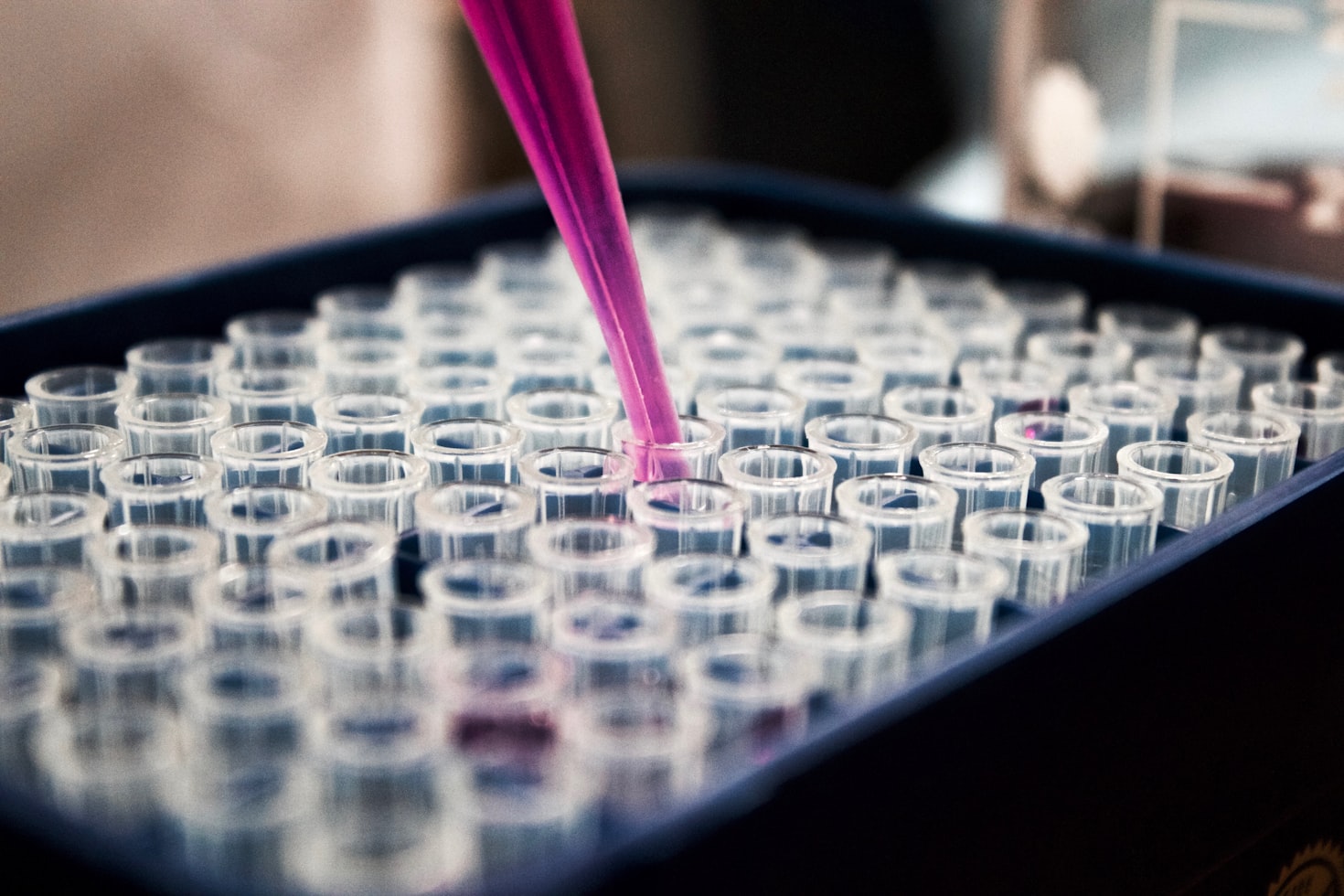

How Representation Drives Discovery: A Closer Look at the Data
Let's dive deeper into the middle school pond experiment. By systematically recording data, students can move from vague impressions to concrete, evidence-based conclusions. The following tables illustrate the kind of data a student group might collect and how they can represent it to reveal underlying patterns.
Table 1: Weekly Water Quality Measurements
This table shows the raw data collected from the pond ecosystem over time.
| Date | Water Clarity (cm) | pH Level | Nitrate Level (ppm) | Qualitative Observations |
|---|---|---|---|---|
| Week 1 | 15.0 | 7.2 | 5.0 | Water clear, 3 small pond snails visible. |
| Week 2 | 14.5 | 7.1 | 7.5 | First signs of green algae on jar walls. |
| Week 3 | 10.0 | 7.8 | 15.0 | Algae growth increased, water slightly green. |
| Week 4 | 5.5 | 8.2 | 25.0 | Dense algae, water very green, snails more active. |
| Week 5 | 4.0 | 8.5 | 35.0 | Algae beginning to clump, water discolored. |
Table 2: Snail Population Count Over Time
This table focuses on a single biotic factor, tracking the population of a key organism.
| Date | Number of Snails Observed | Average Snail Activity (Scale 1-5) |
|---|---|---|
| Week 1 | 3 | 2 (Slow) |
| Week 2 | 3 | 2 (Slow) |
| Week 3 | 3 | 3 (Moderate) |
| Week 4 | 3 | 4 (Active) |
| Week 5 | 3 | 5 (Very Active) |
Water Clarity vs. Nitrate Levels
Visualizing the inverse relationship between water clarity and nitrate levels
Snail Activity and Algae Growth
Correlation between snail activity and increasing algae
On their own, these tables are just organized numbers. The real power of the representational infrastructure emerges when students transform this data into graphs. By plotting water clarity against nitrate levels, a clear inverse correlation emerges: as nitrates rise, clarity drops. This visual representation makes the chemical relationship between nutrient pollution and algal blooms immediately apparent.
Furthermore, comparing the snail activity data with the algae growth suggests a trophic relationship. The snails become more active as their food source (algae) becomes more abundant. These patterns, obvious once graphed, are the first steps toward understanding fundamental ecological principles like nutrient cycling and food webs.
Building Better Learning in Middle School Science
The principles of representational infrastructure are now being actively woven into modern middle school science education. The goal is to move beyond textbooks where students simply "learn about" science and into classrooms where they actively "figure out" science 2 .
High-Quality Instructional Materials (HQIM)
These materials are designed not just to provide information, but to support teachers in creating learning environments where students can engage in sensemaking. When paired with professional development, HQIM helps teachers guide students in building and using representations effectively 2 .
The Role of Professional Learning
For teachers to foster this skillset in students, they themselves need robust, ongoing professional learning. Effective professional development models the same principles—it's transformative, collaborative, and gives teachers the experience of being active "sensemakers" themselves 2 .

Conclusion: The Universal Toolbox
The journey from the entomologist's forest grid to the student's pond jar reveals a profound truth about how we learn. Representational infrastructure is a universal scientific toolbox. It contains the maps, models, and graphs that allow us, regardless of our age or expertise, to capture our questions and document our discoveries.
By giving students the tools—and the freedom—to not just use these infrastructures but to build and adapt them, we do more than just teach science. We empower them to think like scientists, to see the world as a place full of patterns waiting to be uncovered, and to become the next generation of curious, problem-solving minds.
References
References to be added manually here.