The Blueprint of Life
How Modern Biology Education Shapes Tomorrow's Scientists
Why Biology Education Matters More Than Ever
Imagine holding the keys to solving climate change, curing genetic diseases, or even creating synthetic life.
Today's undergraduate biology courses are no longer just memorizing taxonomy; they're immersive laboratories where students engage with cutting-edge discoveries while mastering timeless scientific principles. With breakthroughs like CRISPR-based gene therapies and synthetic life experiments redefining science's boundaries, biology education has transformed into a dynamic fusion of theory, experimentation, and real-world problem-solving 1 9 .
Did You Know?
Modern biology students work with real-world datasets from projects like the Earth BioGenome Project, which aims to sequence all eukaryotic life.
Lab Revolution
Undergraduate labs now include CRISPR gene editing experiments that were Nobel Prize-winning research just a decade ago.
This revolution isn't accidental. Institutions worldwide now align curricula with the Vision and Change framework, which distills biology into five core concepts that empower students to navigate everything from molecular pathways to ecosystem dynamics 5 . Here's what this means for the next generation of scientists.
Core Concepts: The Pillars of Biological Understanding
Evolution: Nature's Master Algorithm
Evolution isn't just "change over time"—it's the unifying theory explaining life's staggering diversity. Courses emphasize how:
Structure and Function: The Architecture of Life
Every biological structure, from proteins to organs, exists for a reason. Students explore:
- How deep-sea fish excrete carbonate minerals despite extreme pressure 1 .
- Apple snail genes that enable full eye regeneration—a model for human regenerative medicine 1 .

Information Flow: Life's Instruction Manual
Genetic and epigenetic information directs growth, behavior, and inheritance. Labs focus on:
Energy and Matter: The Currency of Survival
Organisms trade resources to power life processes. Case studies include:
- Metal-organic frameworks (MOFs) that capture carbon by mimicking photosynthetic efficiency 2 .
- Metabolic pathways in extremophiles living in hydrothermal vents.
Spotlight Experiment: Building Synthetic Life from Scratch
The Question:
Can non-living chemicals "boot up" life's essential processes?
Harvard researchers led by Juan Pérez-Mercader simulated primordial Earth conditions:
- Mix: Combined four carbon-based molecules in water-filled vials.
- Energize: Exposed mixtures to pulsing green LED light (simulating solar energy).
- Observe: Tracked self-assembly via microscopy and spectrometry 9 .
Results: Lifelike Behaviors Emerge
Within hours, molecules formed amphiphiles (with water-loving/hate ends), which self-organized into cell-like vesicles. These structures:
- Trapped internal chemicals, creating distinct micro-environments.
- "Reproduced" by ejecting amphiphile spores or bursting to spawn new vesicles.
- Showed heritable variation: Some vesicles outcompeted others in stability or replication speed 9 .
Table 1: Synthetic Life Experiment Outcomes
| Condition | Time to Vesicle Formation | Reproduction Rate | Key Insight |
|---|---|---|---|
| Green light pulses | 2–4 hours | 1.2× per generation | Light energy drives self-assembly |
| No light | No vesicles formed | — | Energy input is essential |
| Added surfactants | <30 minutes | 3.5× per generation | Chemical environment shapes evolution |
Scientific Impact
This experiment models how life could arise from interstellar chemistry—no DNA required. It suggests evolution could begin before genetics, guided purely by physics and environmental constraints 9 .
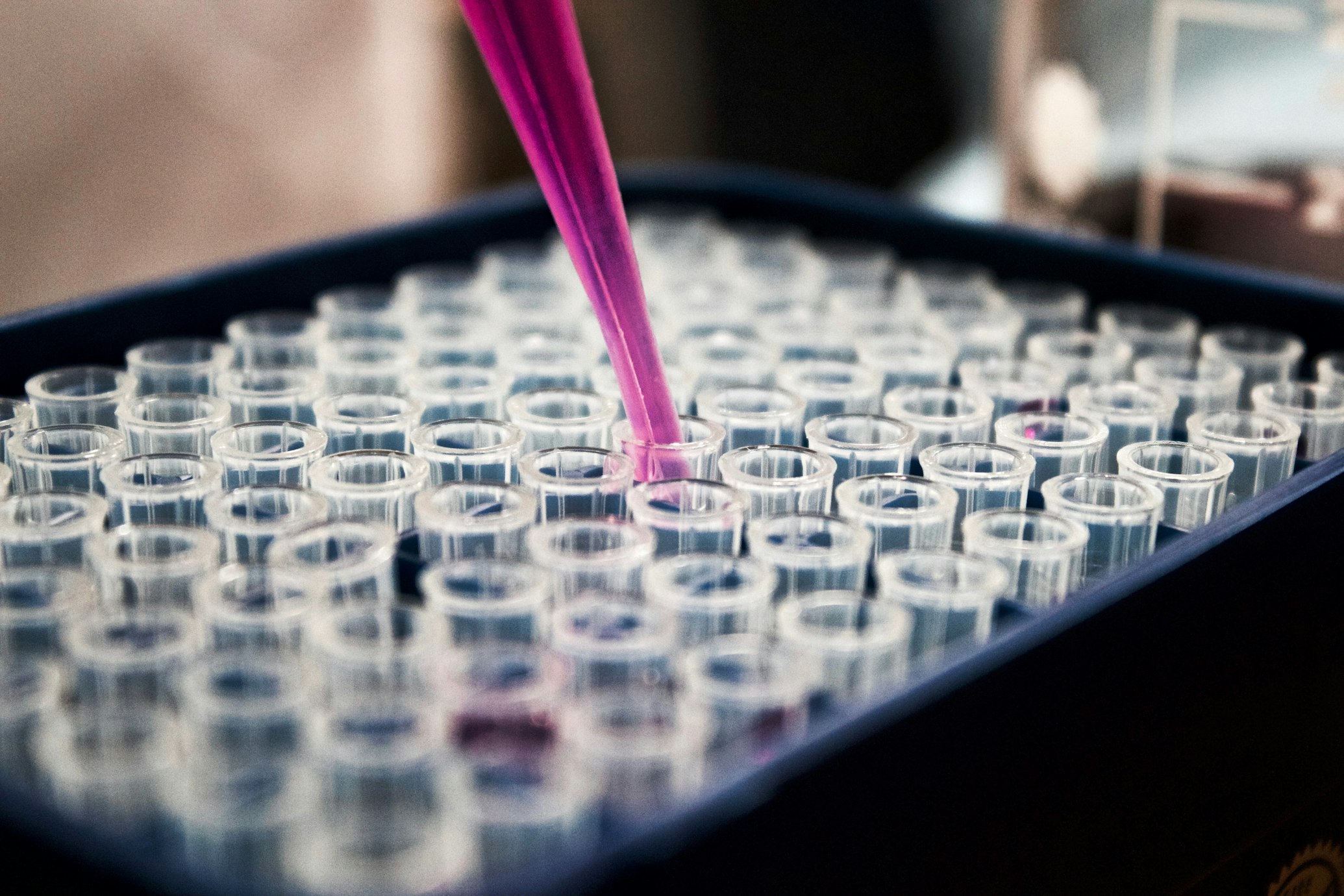
The Scientist's Toolkit: Essential Reagents & Resources
Modern labs equip students with tools bridging classical and digital biology:
Table 2: Undergraduate Biology Research Essentials
| Tool/Reagent | Function | Real-World Example |
|---|---|---|
| CRISPR-Cas9 kits | Gene editing | Correcting mutations in zebrafish disease models |
| PCR Master Mix | DNA amplification | Studying kakapo parrot parasites from ancient feces 1 |
| eBird/iNaturalist | Citizen science data collection | Documenting turtle declines or invasive species 4 |
| Fluorescent antibodies | Protein visualization | Tagging neuron receptors in brain organoids |
| R/Python scripts | Big data analysis | Analyzing 41,000+ turtle nesting sites via drone surveys 1 |
Genomics
From nanopore sequencing to genome assembly pipelines
Bioinformatics
Machine learning for protein structure prediction
Wet Lab
CRISPR, microfluidics, and synthetic biology kits
The Future Is Interdisciplinary
Biology education now merges fields once considered separate:
- AI & Machine Learning: Predicting protein folding or species distributions 2 7 .
- Materials Science: Designing COF filters to remove toxins from water 2 .
- Quantum Computing: Modeling enzyme reactions too complex for classical computers 2 .
Emerging Technologies
Students now learn to work with lab automation robots and AI-assisted microscopy platforms that were previously only in research labs.
Interdisciplinary Connections

Courses also emphasize ethics—like debating gene-drive use in conservation—and skills like statistical literacy to avoid pitfalls in omics-data interpretation 7 .
Conclusion: Beyond the Textbook
Today's biology classrooms are incubators for innovators. Whether analyzing brittle star DNA to map deep-sea ecosystems or engineering plastic-eating bacteria, students don't just learn concepts—they apply them to humanity's greatest challenges 1 9 . As synthetic life experiments prove, even the simplest systems can unlock profound truths about our existence.
"Biology is no longer about cataloging life; it's about comprehending its blueprint—and rewriting it responsibly." 9
Key Takeaways
- Five core concepts structure modern biology education
- Hands-on experiments now include synthetic biology
- Interdisciplinary approaches are essential
- Ethical considerations are integrated throughout