The Silent Click: How Dolphins' Secret High-Frequency Sounds Are Rewriting Science
In the ocean's depths, where light vanishes, dolphins navigate a hidden world not with light, but with sound. Their secret? A sophisticated sonar so advanced it can detect a fish buried in sand from over a hundred meters away.
The ocean is a world of sound. For dolphins and other toothed whales, known as odontocetes, this is a literal truth. In the murky depths where vision fails, they rely on biological sonar, or echolocation, to navigate, hunt, and socialize. For decades, scientists classified these animals into two simple groups: those that produce broadband clicks and those that produce narrowband high-frequency (NBHF) clicks. However, a groundbreaking study on Hector's dolphins is shattering this long-held belief, revealing a soundscape far more complex and fascinating than ever imagined 1 .
The Basics of Biosonar: Seeing with Sound
Echolocation is a biological masterpiece. It is the process of producing sharp, clicking sounds and then interpreting the returning echoes to create a detailed three-dimensional "image" of the surroundings.
Animation showing dolphin echolocation: the dolphin emits sound waves that bounce off prey and return as echoes
Sound Production
Dolphins generate clicks not from their throats, but in a complex system deep within their nasal passages. Air is forced across specialized "phonic lips," causing them to vibrate and produce the sound 4 .
Sound Focusing
The resulting sound waves are then focused and projected forward by a fatty, dome-shaped structure in the forehead called the melon. This organ acts like an acoustic lens, allowing the dolphin to direct a narrow beam of sound 4 .
Echo Reception
The returning echoes are primarily received through the dolphin's lower jaw. This bone contains specialized fats that channel sound vibrations directly to the middle and inner ear, bypassing the external ears entirely 4 .
Brain Processing
The auditory information is sent to the brain at incredible speeds. Dolphins possess highly developed brain regions that can process thousands of clicks per second, allowing them to determine an object's size, shape, distance, density, and even its internal structure .
This system is so precise that dolphins can distinguish between different species of fish based on the echo signatures of their swim bladders and can locate prey hidden beneath the seabed 4 .
The Great Divide: NBHF vs. Broadband Signals
The traditional classification of toothed whales was based on the physical properties of their echolocation clicks, primarily their frequency and bandwidth.
| Feature | Narrowband High-Frequency (NBHF) Signals | Broadband Signals |
|---|---|---|
| Frequency | Very high (median ~130 kHz for Hector's dolphin) 1 | Lower and more variable (median ~120-124 kHz for Hector's dolphin) 1 |
| Bandwidth | Narrow (median ~30 kHz for Hector's dolphin) 1 | Wide (median ~70 kHz for Hector's dolphin) 1 |
| Source Level | 116-171 dB re 1 μPa at 1 m 1 | 138-184 dB re 1 μPa at 1 m 1 |
| Perceived Stealth | Potentially less detectable by some predators | More powerful and detectable |
| Example Species | Hector's dolphin, porpoises 1 | Bottlenose dolphins, sperm whales |
Source: Adapted from 1
This binary classification was widely accepted until recent research began to reveal a much more complicated and fascinating reality.
A Paradigm Shift: Hector's Dolphins Break the Mold
In 2024, a landmark study on Hector's dolphins (Cephalorhynchus hectori) fundamentally challenged the old categories. Researchers discovered that these dolphins do not produce just one type of click; they have a diverse repertoire that includes both highly stereotypical NBHF clicks and far more variable broadband clicks, with some signals falling into an intermediate category 1 .
The study found that both NBHF and broadband clicks were used in various behavioral contexts, including click trains, buzzes (rapid clicking during prey capture), and burst-pulses (thought to be used for communication) 1 . This was a startling finding, as it demonstrated that a single species could flexibly produce signals characteristic of both echolocation "groups."
Inside the Key Experiment: Recording a Dolphin's Repertoire
Data Collection
Scientists recorded acoustic data from Hector's dolphins using a vertical hydrophone array deployed in their natural habitat. This array allowed them to capture the dolphins' clicks with high precision 1 .
Ranging with Drones
In an innovative approach, the team also used a drone to measure the exact distance between a vocalizing dolphin and a single hydrophone. This provided an independent method to verify the source levels of the clicks 1 .
Signal Analysis
The recorded clicks were then analyzed for their acoustic properties, including centroid frequency (the "pitch" of the click) and bandwidth (the range of frequencies it covers). The researchers classified the clicks into NBHF, broadband, and intermediate types based on these metrics 1 .
Results and Analysis
The core results were clear and revolutionary. The Hector's dolphins did not stick to one type of signal. The data showed that while most clicks in a train were classic NBHF signals, the dolphins frequently produced broadband clicks as well, especially in buzzes and burst-pulses 1 . The tables below summarize the key findings from this experiment.
| Acoustic Properties of Hector's Dolphin Clicks in Different Contexts | ||
|---|---|---|
| Signal Type | Behavioral Context | Median Frequency (kHz) |
| NBHF | Click Trains | 130.3 |
| Broadband | Click Trains | 123.8 |
| NBHF | Buzzes | 129.5 |
| Broadband | Buzzes | 120.7 |
| Measured Source Levels of Click Types | ||
|---|---|---|
| Signal Type | Method | Source Level Range (dB) |
| NBHF Clicks | Drone & Hydrophone Array | 116 - 171 |
| Broadband Clicks | Hydrophone Array | 138 - 184 |
Source: Adapted from 1
The scientific importance of this is profound. It challenges the fundamental way we group and understand toothed whales. Instead of being a fixed trait for a species, echolocation type may be a flexible tool that dolphins can deploy situationally. This suggests a higher level of cognitive control over their vocalizations than previously thought.
The Brain Behind the Sound: A Neuroscientific Revelation
Complementing the behavioral acoustics research, a 2025 brain imaging study offered a tantalizing clue about how dolphins perform this acoustic feat. By comparing the brains of echolocating dolphins and non-echolocating sei whales, researchers discovered a key difference not in the auditory cortex, but in the cerebellum 2 3 .
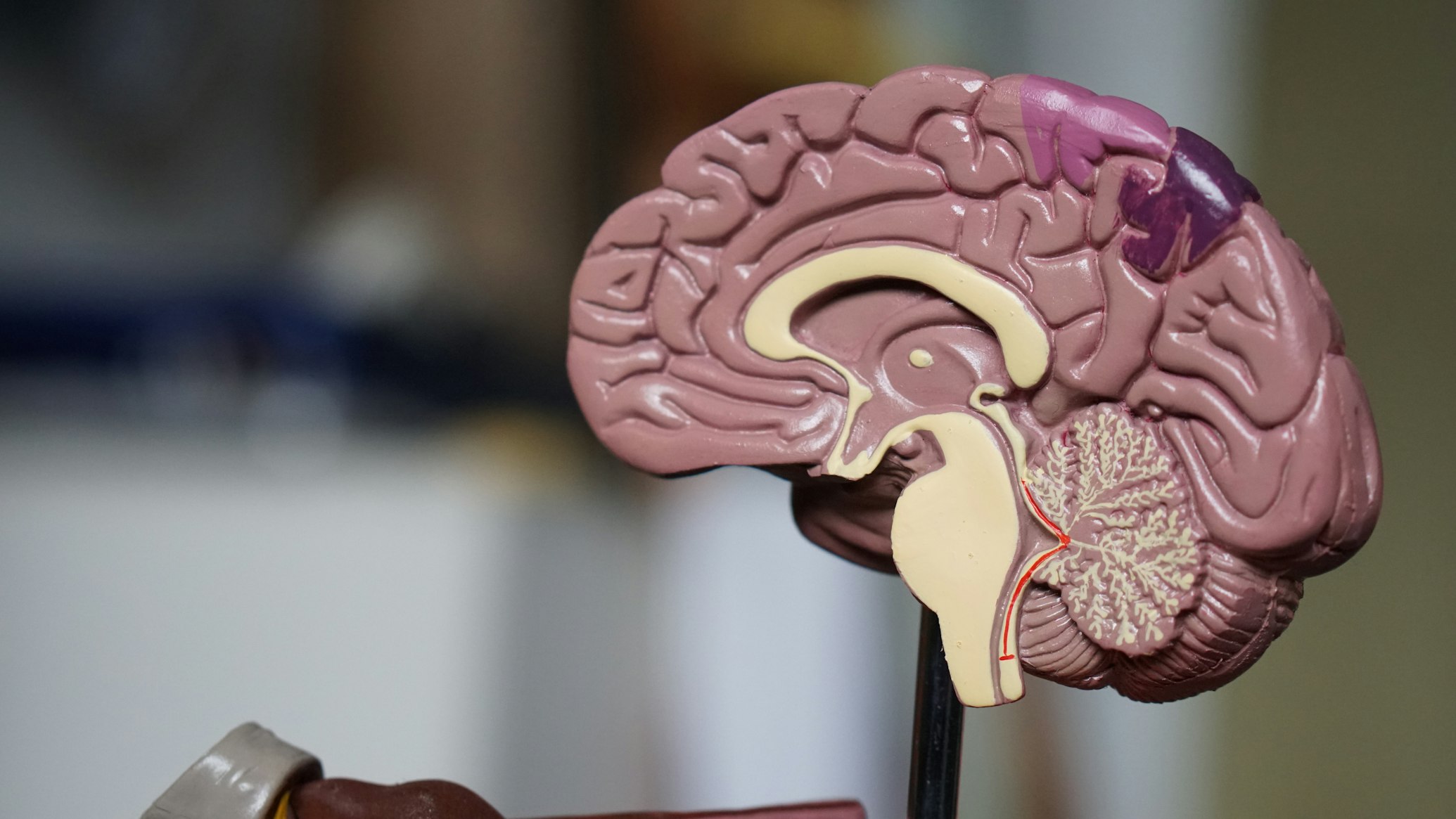
Dolphins showed much stronger neural connections from the auditory waystation (the inferior colliculus) down to the cerebellum, which is now understood to be a center for rapid sensory-motor integration and prediction 2 3 . This suggests that echolocation is less like "seeing" with sound and more like "touching" with sound.
A dolphin must actively control the production and direction of its clicks and integrate that motor command with the returning echo feedback to explore its environment 2 3 . The stronger cerebellar connections are likely what allow them to perform this complex, active sensing so seamlessly.
The Scientist's Toolkit: Decoding Dolphin Sonar
Studying these elusive sounds requires a suite of sophisticated technologies. Below are some of the key tools and techniques used by marine biologists.
| Tool | Function | Key Insight |
|---|---|---|
| Hydrophone Array | An array of underwater microphones that records dolphin clicks and allows scientists to triangulate the position of the animal and calculate source levels 1 . | Enabled the discovery that Hector's dolphins produce both NBHF and broadband clicks from the same individual 1 . |
| Digital Acoustic Tag (DTAG) | A non-invasive, suction-cup tag that records audio, depth, and movement, providing context for vocalizations 5 . | Allows researchers to match specific sounds with a dolphin's exact behavior, such as deep diving or prey capture attempts 5 . |
| Aerial Drones | Provides a precise, overhead view to measure the distance between a dolphin and a hydrophone, and to observe group behavior without disturbance 1 5 . | Used to accurately calculate the source level of echolocation clicks by providing exact range-to-animal data 1 . |
| Advanced Brain Imaging | Uses diffusion-weighted MRI on ethically sourced stranded cetacean brains to map neural pathways 2 3 . | Revealed the strengthened connection between the auditory and motor centers in dolphin brains, explaining the neural basis for their active sensing 2 3 . |
Conservation in a Noisy Ocean
Understanding the nuances of dolphin echolocation is not just an academic pursuit; it is critical for their survival. The ocean is becoming increasingly noisy due to shipping, sonar, and offshore construction 4 . This human-made noise pollution can mask the faint echoes dolphins rely on, effectively blinding them.
Threats
If dolphins are using specific frequency bands for specific tasks, noise in those bands could disrupt essential behaviors like finding food.
- Shipping traffic creates low-frequency noise
- Military sonar uses mid-frequency ranges
- Construction activities generate broad-spectrum noise
Implications
The discovery that some species, like Hector's dolphin, use a wider range of frequencies than thought is a double-edged sword:
- May offer flexibility in noisy conditions
- Exposes them to a broader spectrum of disruptive noise
- Highlights need for frequency-specific noise regulation
Conclusion: An Ever-Evolving Picture
The simple story of two echolocation types is no longer sufficient. Research on Hector's dolphins has revealed a fluid and dynamic acoustic world, showing that these animals possess a versatile sonar system they can tailor to their needs. Coupled with neuroscientific findings that highlight the deep integration of hearing and movement in the dolphin brain, we are gaining an unprecedented appreciation for one of nature's most sophisticated sensory abilities.
As technology advances, allowing us to listen more closely and peer into the brains of these incredible creatures, we can expect to uncover even deeper layers of complexity in their hidden world of sound. The silent clicks echoing through the deep are, in fact, packed with information—and we are only just beginning to learn how to listen.